
By Thapelo Molefe
The Department of Basic Education has withheld the 2025 matric results of 40 learners implicated in a national exam leak investigation, as it moves to contain the fallout from one of the most serious breaches of the National Senior Certificate (NSC) system in recent years.
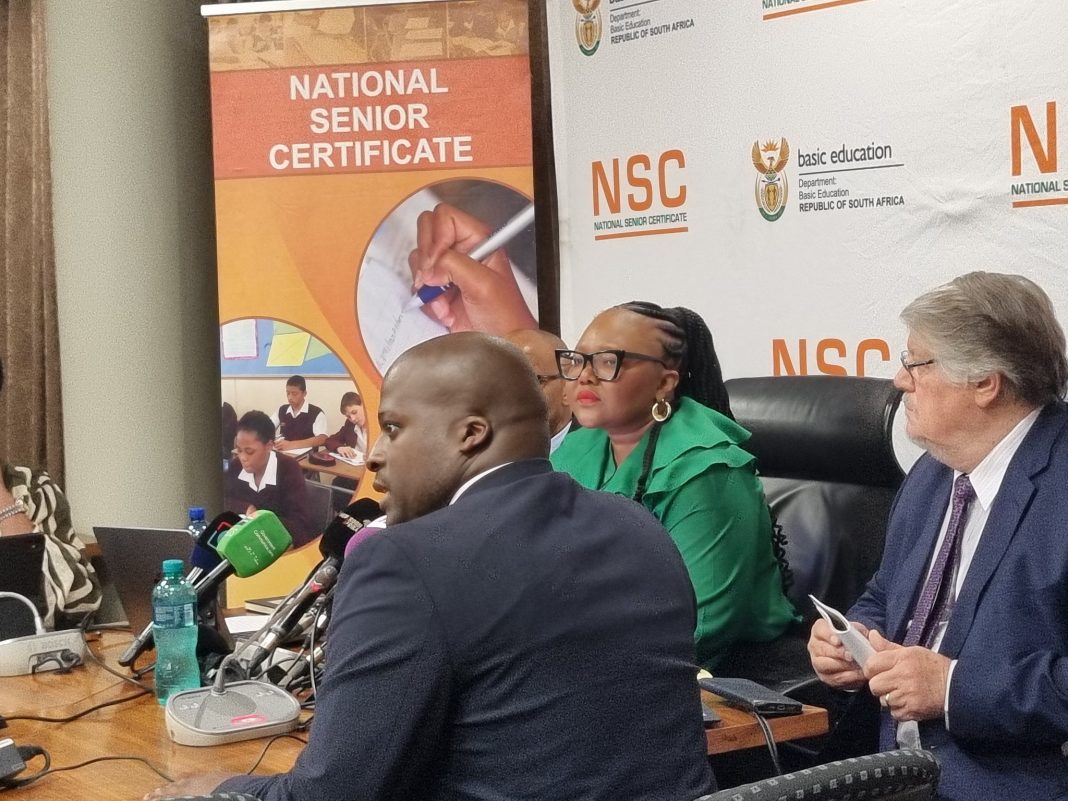
Basic Education Minister Siviwe Gwarube on Friday released the interim findings and recommendations of the National Investigation Task Team (NITT), established after reports emerged of leaked question papers and irregular conduct during the 2025 matric examinations.
Gwarube confirmed that the affected candidates will be subjected to independent disciplinary hearings after interim findings by the National Investigation Task Team (NITT) established that they had accessed leaked examination material.
“As part of these processes, each of the 40 candidates will be subjected to an independent hearing,” Gwarube said.
“Where a candidate is found guilty by an independent presiding officer, this finding together with the recommendations will go through the provincial and national examination irregularity committees, and ultimately Umalusi will be the final arbiter.”
The hearings follow evidence that seven NSC papers were unlawfully accessed and circulated ahead of the 2025 examinations. These include English Home Language Papers 1 and 2, Mathematics Papers 1 and 2, and Physical Sciences Papers 1 and 2.
The breach was detected after markers identified unusual similarities between learner scripts and official marking guidelines.
According to the NITT’s interim report, the leak originated from within the Department of Basic Education’s secure examination environment, where question papers are set and stored. One departmental official whose child wrote the 2025 NSC is alleged to have been involved, with evidence suggesting the learner further distributed the material.
“Candidate one received the USB with the question papers and the marking guidelines from their mother, an employee at the Department of Basic Education in Pretoria,” the report states.
Investigators interviewed 21 learners and analysed 17 written statements, ultimately identifying 40 candidates in the Tshwane area who had accessed the leaked papers. The materials were shared through USB drives, WhatsApp messages, screenshots and printed copies, with some candidates using artificial intelligence tools to structure and reformulate their answers.
Despite the breach, Gwarube stressed that the matter was localised and did not undermine the credibility of the overall examination process.
“Forty is a very small number compared to the almost 900,000 candidates who wrote the 2025 examinations,” she said.
“Because the number of implicated candidates is so small, the NSC remains credible.”
Umalusi has since certified the integrity of the 2025 NSC examinations, allowing results to be released to non-implicated learners. However, the 40 identified candidates will not receive their results until the disciplinary process is finalised.
Department of Basic Education Director-General Mathanzima Mweli said criminal charges may also follow, particularly for learners who are legally adults.
“The new development from the NITT is that there are learners who are 18 years and above, and those learners can be pursued in terms of criminal charges,” Mweli said.
“We have done it before and we are going to do it with those learners who are 18 years and above.”
Possible sanctions include the nullification of results in affected subjects and a ban from rewriting those subjects for up to three examination sessions.
“We will not compromise the future of thousands of honest learners because of the actions of a few,” Gwarube said.
“Those who compromise the NSC don’t only break rules, they attempt to steal opportunities from honest learners.”
The NITT’s investigation continues, with forensic examinations of electronic devices and financial records under way as the department moves to tighten exam security and prevent future breaches.
INSIDE EDUCATION