
By Johnathan Paoli
Across the country, provincial education leaders are moving decisively to tackle long-standing challenges in early childhood education, with a sharp focus on improving access, quality and outcomes for young learners.
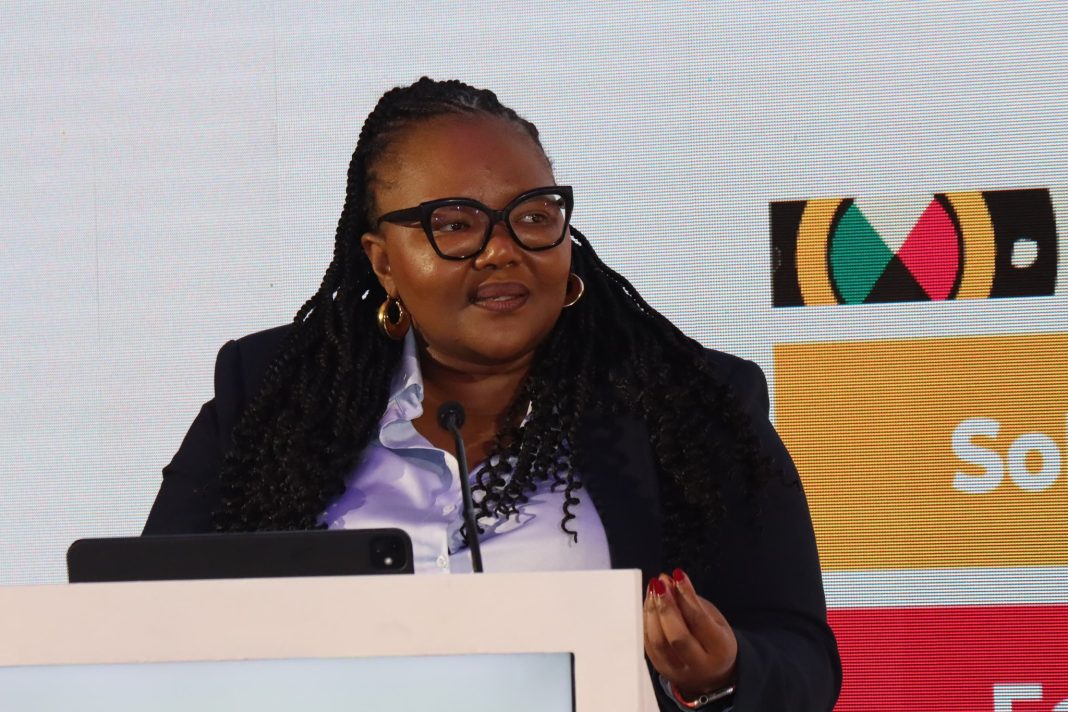
MECs and representatives from all nine provinces gathered in Cape Town for the G20 National Education Indaba on Monday to share lessons from their provincial indabas and map a way forward in strengthening early childhood education, literacy and numeracy.
“I’m going to just contextualise where we are with this programme. So, what we have to do is we have to reflect on all of the provincial izindaba that many of you attended and where you gave our leadership a mandate for action. We have to reflect on the outcomes, but also be pushed on action,” said National Planning Commission commissioner Mary Metcalfe.
In Gauteng, education HOD Albert Chanee described the challenge of balancing mother-tongue education with English-dominated instruction in multilingual communities such as Soweto.
He raised the fact that many learners entered schools where multiple languages co-existed, yet English often became the default, creating a mismatch between home language and language of instruction.
In response, the province is training every Grade R practitioner in early reading and maths and is introducing oral fluency assessments in Grade 3.
Chanee stressed that coherent teaching strategies, supported by donors, were beginning to show promising results.
Free State MEC Julia Maboya highlighted her province’s shift from a supply-driven to a demand-driven approach, prioritising community voices and stakeholder collaboration.
To address literacy and numeracy challenges in township schools, the province has identified 150 primary schools to be transformed into “schools that work”, with plans to expand to 350 more.
She said that functional schools were the foundation for long-term improvements, underscoring the importance of evidence-based strategies and whole-school evaluation.
Mpumalanga education MEC Lindi Masina emphasised the need to translate policy into measurable outcomes.
Key goals include increasing rural Grade R enrolment, improving school readiness and ensuring more learners in Grades 1–3 read with comprehension in their home languages by 2027.
The province is also distributing 60,000 tablets to Grade 12 learners as part of an expanding e-learning initiative, with teacher professional development central to sustaining improvements.
In the Eastern Cape, deputy director-general Ray Tywakadi stressed the significance of the “first 1000 days” in a child’s development and the importance of supporting community-driven ECD centres.
The province is adopting a Kenyan-inspired model, registering centres in partnership with local governments, improving compliance and professionalising practitioners through training, while integrating ECD into intergovernmental structures.
North West MEC Viola Motsumi identified inadequate infrastructure as a key barrier.
The province is collaborating with municipalities, the public works department and farmers to expand facilities, scaling up the successful “40 pockets of excellence” model to 200 centres within five years.
Limpopo MEC Mavhungu Lerule-Ramakhanya prioritised teacher development and support for learners with special educational needs, linking schools with universities and TVET colleges to improve practitioner skills and post-school opportunities.
In the Western Cape, MEC David Maynier argued that technology could reduce inequality if applied strategically.
Pilot projects in no-fee schools showed how digital platforms could lower costs, reduce reliance on textbooks and enable real-time learner assessment. This included using widely accessible tools such as WhatsApp and zero-rated data.
Northern Cape MEC Abraham Vosloo praised the province’s indaba’s unprecedented stakeholder engagement, noting that strategic plans must remain adaptable to evolving insights.
KwaZulu-Natal echoed these themes, focusing on partnerships to bridge the gap between policy ambitions and classroom realities.
Deputy director-general for curriculum management and delivery, Mbongiseni Mazibuko, highlighted the province’s stark challenges in implementing early childhood care and education (ECCE) goals. Two critical barriers were the limited professional capacity of ECCE practitioners and the inadequate infrastructure of many centres, particularly in rural and township communities.
With government resources stretched thin, the province has turned to partnerships with organisations such as the National Education Collaboration Trust to provide capacity-building workshops and assist with upgrading infrastructure.
Across provinces, the discussion revealed common themes such as the urgent need for infrastructure, professional teacher development, stakeholder collaboration and strategies to overcome inequality.
Victories were evident, ranging from Free State’s refocus on primary schools, to Mpumalanga’s measurable targets, to the Western Cape’s digital innovations.
Yet challenges persist, especially in rural access, multilingual instruction and support for learners with special needs.
Metcalfe concluded that while progress was being made, success would depend on each province’s ability to sustain momentum, embed lessons into planning and deliver results in classrooms.
INSIDE EDUCATION