By Lungile Ntimba
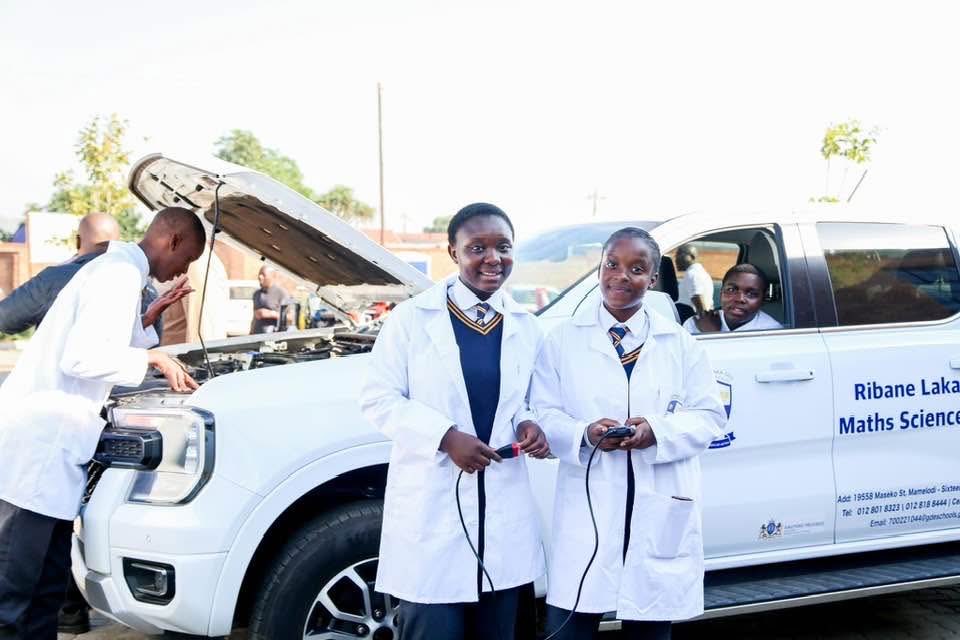
In an effort to equip learners with automotive engineering knowledge and electronic systems, the Gauteng government has launched the revamped Ribane-Laka Maths, Science & ICT School of Specialisation in Mamelodi East, Pretoria.
Premier Panyaza Lesufi said that in a rapidly changing world this was “education that makes economic sense, education that works and education that empowers”.
Accompanied by education MEC Matome Chiloane and his infrastructure counterpart, Jacob Mamabolo, Lesufi reminded learners that they were the innovators and leaders to tomorrow.
The school has been extensively renovated. New additions include modern ICT infrastructure, specialised classrooms that merge theory with practice, science labs and a multipurpose auditorium.
Boasting a 95.24% National Senior Certificate pass rate in 2024 and 98% for the term ending March, Ribane-Laka’s academic excellence complements its technical focus, according to the department.
The launch featured demonstrations by learners, including advanced engine diagnostics, working engine models and two custom-built cars — Chi-Panya Panya and Ngom Ngom — both capable of transporting up to 500kg.
Learners also showcased a conceptual mobile fuel and mechanical support company, as well as projects in drone, coding, and robotics technology.
“We are not just teaching learners about engines or electronics — we are equipping them with tools to drive the future of this country,” said Chiloane.
He emphasised the transformative role of the school, saying it represented the intersection of innovation, technical knowledge and opportunity.
SAAB Grintek Defence, Ford Motor Company, Tshwane Automotive Special Economic Zone and Lanseria Airport are involved in the school through various initiatives.
SAAB provides academic recognition support and mentorship programmes. The partnership with the education department aims to empower high-performing students, some of whom have gone on to join Saab Grintek Defence, creating a full-circle approach to talent development.
The partnerships are important, as they ensure that learners are immersed in real-world engineering environments, tackling authentic industry challenges and preparing for employment in high-demand sectors.
In South Africa, high-demand education and career sectors include technology – specifically cybersecurity, software development and data science – engineering, healthcare, finance and business.
INSIDE EDUCATION