
By Charmaine Ndlela
The start of a new academic year is meant to bring hope and excitement. Instead, for thousands of students across South Africa, it begins with anxiety and uncertainty over one basic necessity — accommodation.
At several institutions, on-campus residences are prioritised for first-year students, leaving unfunded and postgraduate students scrambling for alternatives.
While some postgraduate students secure funding before registering, many do not and are left juggling tuition, food and accommodation costs at the same time.
Students across the country have raised serious concerns about the shortage of available beds. Many come from other provinces and have no relatives nearby to rely on.
A young female student at Nelson Mandela University in the Eastern Cape, who spoke on condition of anonymity, shared her traumatic experience with Inside Education.
“I need help. I had sexual intercourse with the residence owner in Summerstrand because he promised to get me accommodation afterwards. I’m unfunded. Now he’s ghosting my texts when I ask about the accommodation. Where can I report this? I feel betrayed and manipulated. I’m stranded.”
Her account illustrates the dangerous situations students can find themselves in when desperation overrides safety.
At Stellenbosch University, management says that while the national demand for student accommodation is well documented, the primary challenge facing its students is affordability rather than availability.
Meanwhile, the National Student Financial Aid Scheme (NSFAS) has launched door-to-door inspections of student accommodation facilities. Unsafe properties are being flagged and students relocated, while non-compliant providers are ordered to improve conditions.
However, NSFAS currently owes accommodation providers R44 million in overdue rental fees. As a result, some landlords have threatened to evict students, leaving them without clear alternatives.
Across the country, universities are facing mounting pressure as protests over unpaid fees and housing shortages intensify. At the University of Cape Town (UCT), a student has already been provisionally suspended, with further disciplinary action possible.
Private housing providers argue that strict accreditation standards set by government and higher education authorities are increasing development costs. Buildings must meet specific design and safety requirements before qualifying for student funding support, limiting how cheaply accommodation can be developed.
According to private sector stakeholders, the problem is not excessive profit margins but a mismatch between actual development costs and what NSFAS contributes toward student accommodation.
The crisis extends beyond universities to TVET colleges, where access to housing has become one of the most significant barriers to higher education.
Kamogelo Nkabinde, a second-year accounting student at Tshwane University of Technology (TUT), said he is being pushed toward deregistration.
“I’m being pushed into a corner to deregister, but I’m still looking for other options. The SRC organised a strike, but Red Ants were deployed around campus to prevent mass gatherings. They did collect a list of students without residence.”
A report by the International Finance Corporation states that hundreds of thousands of students struggle each year to secure decent housing. Without dignified accommodation, students face costly commutes or unsafe living conditions, adding financial stress and distracting them from their academic responsibilities.
Leading institutions such as the University of the Witwatersrand and UCT can accommodate only a fraction of qualifying students. At the University of Johannesburg, nearly 359,000 applications compete for just over 10,500 undergraduate spaces.
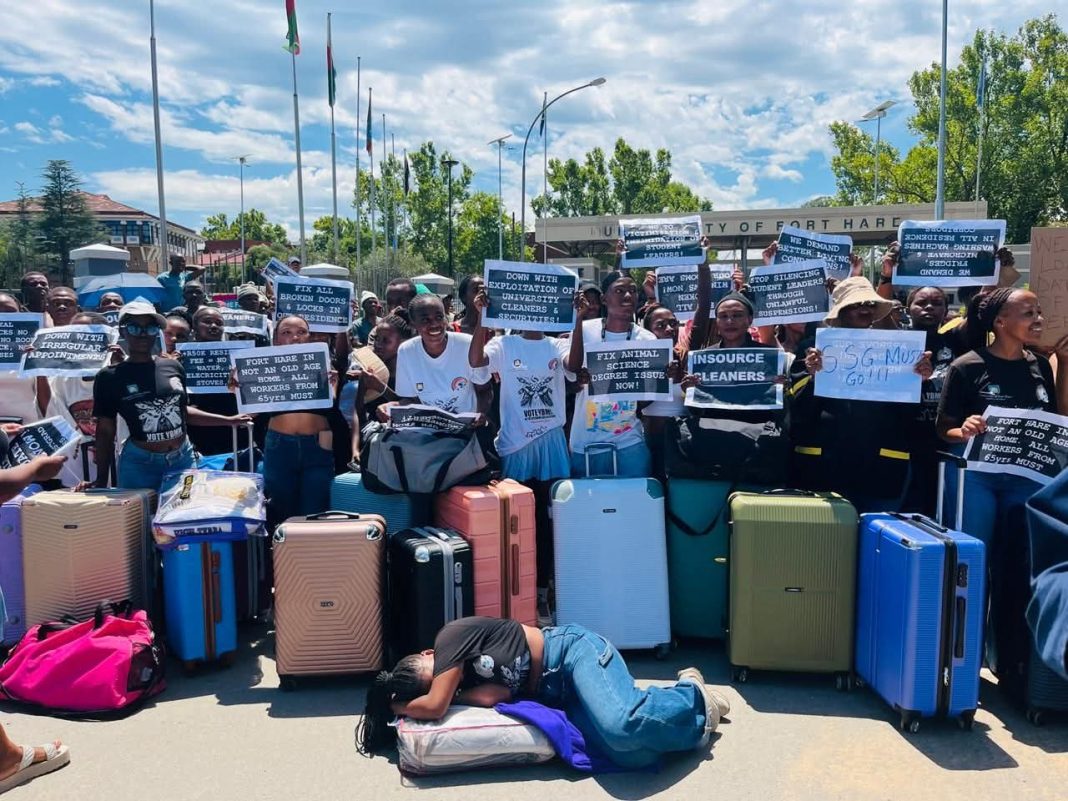
At Rhodes University, students have reportedly resorted to sleeping outside due to housing shortages — a stark reflection of the severity of the crisis.
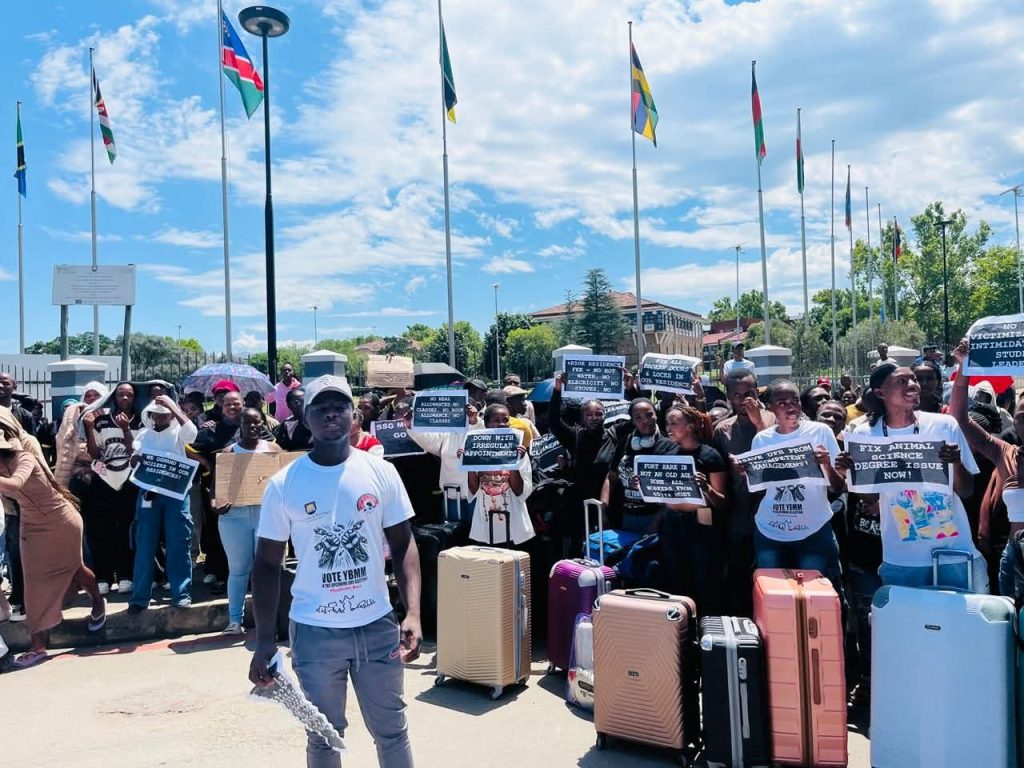
Student accommodation crisis. PHOTO: X/Supplied
According to the Tiso Foundation, 30% of students are unable to graduate due to outstanding fees, some of which are linked to accommodation costs.
Speaking to Inside Education, the foundation’s programme manager, Miriam Mokwena, said affordability remains the biggest challenge.
“It’s not just the availability of accommodation — it’s the cost. When students are forced to rely on private accommodation, it doesn’t come cheap. We’ve seen accommodation costs more than double over the past five years.”
She said the foundation provides holistic bursaries covering tuition, accommodation, textbooks, meals and learning materials. However, rising accommodation costs have forced it to reduce the number of students it can support.
“If we planned to take 100 students, we now have to lower that number because accommodation costs have escalated. If affordable university accommodation were available, we could support more students.”
Mokwena added that many private funders prioritise tuition and exclude accommodation from funding packages, further worsening the crisis.
“We often see students who receive partial funding — tuition is covered, but accommodation is not. That leaves them stranded.”
She believes the Department of Higher Education must invest more in infrastructure and consider reclaiming or purchasing properties near universities that have been sold to private entities.
“They need to invest more in infrastructure and purchase available properties around universities.”
She also called for improved coordination between universities and Student Representative Councils (SRCs).
“Universities already know how many students they plan to onboard and how many beds are available. That information should be shared early so students can plan accordingly.”
For Gugulethu Mashinini, a postgraduate student at the University of the Free State, January was one of the most difficult months of her life.
She returned to campus without accommodation and moved from one friend’s room to another before eventually securing a place to stay. She recalls sleepless nights, overwhelming pressure and financial strain at home, where her grandmother was unemployed.
The student accommodation crisis is not new, but it is deepening. With an estimated national shortage of more than 200,000 beds, the problem reflects systemic failures that stretch from university admissions to daily student living conditions.
INSIDE EDUCATION