
By Akani Nkuna
Experts at the inaugural National Education Summit called on Monday for South Africa’s early childhood development sector to be professionalised, saying stronger standards are needed to improve the curriculum while preserving play-based learning.
“It is important for us to start with the curriculum to ensure that it is engaging and creative, but also to make sure that there is capacity building so that ECD practitioners are properly trained,” said Victor Ngobeni, Director of School Leadership and Management at the Matthew Goniwe School of Leadership and Governance.
ALSO READ: Manamela tells summit SA education system must produce job creators
“For the longest time, it has been Gogos who love children that have been running ECDs,” said Ngobeni, who was speaking as part of a four-person panel.
He said the ECD sector needed to be professionalised so that those working in it were properly qualified and understood their role, adding that the content must be robust, engaging and appropriate for children.
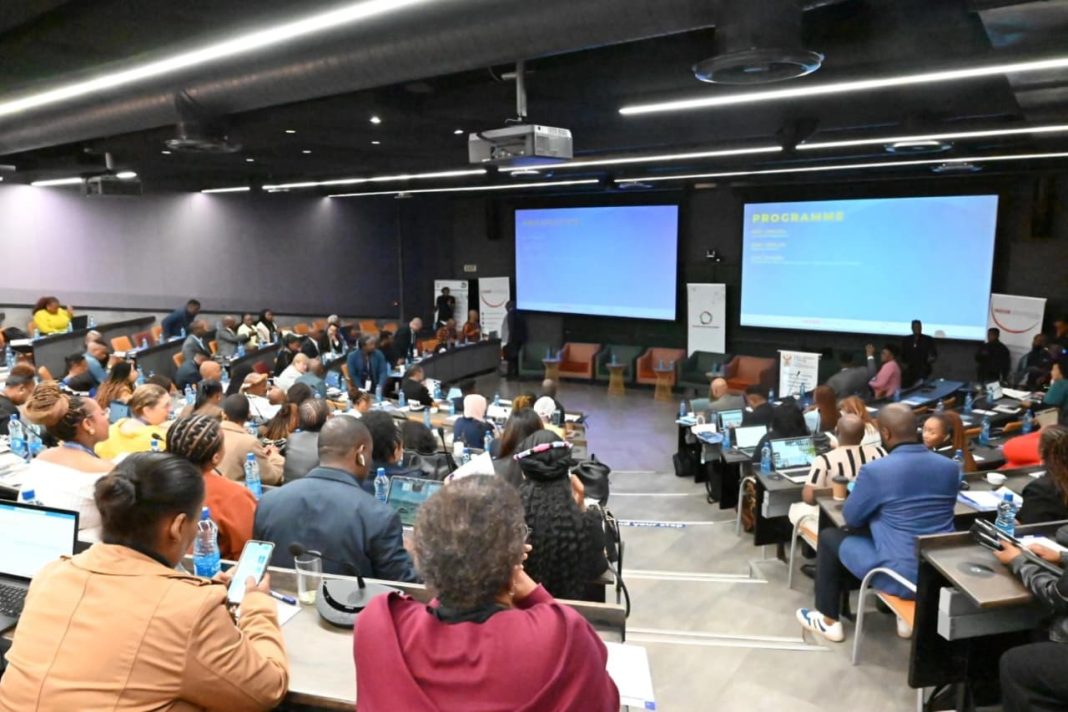
The summit was held at the Gordon Institute of Business Science (GIBS) and brought together government officials, civil society leaders, professors, lecturers, and ECD practitioners under the theme, “Fixing the Education Pipeline: From Early Childhood to Transformative Livelihoods”.
The panel also included Department of Basic Education Director for Reading Dr Nompumelelo Nyathi-Mohohlwane, ICAN4IR founder, Dr David Molapo, and Cotlands CEO Dr Monica Stach.
Molapo, an apartheid struggle stalwart who was exiled as a teenager, said the ECD sector had not adapted to changing societal needs, drawing parallels between how it operated in the early years of democracy and how it continues to function more than 30 years later.
He also said the sector’s lack of funding remained a major obstacle to efforts to strengthen it, pointing to years of government neglect.
ALSO READ: Maritzburg College crush Pretoria Boys High 61-5 in 1st XV clash
“Things do not end wrong, they start wrong. ECD is very, very important…my assessment is that we are too late, but there is still an opportunity to stop talking [and implement solutions to counter it],” said Molapo.
The panellists also advocated for the integration of technology, experience and literacy normally associated with youthful practitioners who have undergone formal education in the field.
As opposed to out-phasing seasoned ECD practitioners with no formal education that have been practising in the field for many years – some from their back-rooms and garages with little to no infrastructure – the panellists said that the collaboration of formal education and love for children needed to be embraced.
“A quick fix is that you get these sharp young men and women who love children, [combine this with] technology and then suddenly you would be surprised at the creativity that is in these children,” Ngobeni said.
In his keynote address, Higher Education and Training Minister Buti Manamela highlighted the significance of ECD, saying that it exposes children to effective learning systems critical for their development, which sets them apart for a lifetime.
“Only 42% of South African children are developmentally on track by age five, which means inequality is not simply reproduced later in life, it is reproduced early; it is produced in access to nutrition, stimulation, language development and quality early learning,” Manamela said.
He expressed concern about the lack of access to and low enrolment in ECD programmes, saying that this hindered the overall development of the child.
He said that government had established interventions to enhance ECD through intentional investments such as the R18.4 billion allocated to it in 2026. This had heightened access to early learning for over 300 000 children, he said.
ALSO READ: SA’s skills pipeline fails youth and economy, summit finds
The summit resolved to adopt ECD declarations that include increased investment in parents.
It also declared that parents should receive compulsory ECD education during a child’s first 1,000 days, so parents can in turn support their children’s development from the earliest stage.
The summit further declared that principals should be capacitated through leadership development, and that mentorship and support for practitioners should be strengthened.