
By Staff Reporter
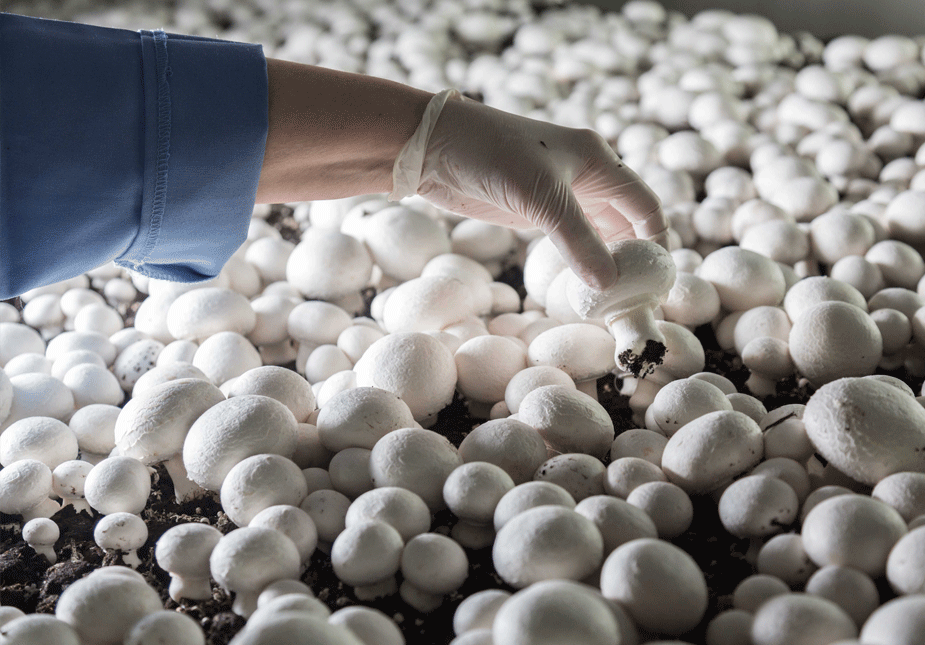
The University of Pretoria (UP) is researching ways to help producers find new ways to grow white button mushrooms sustainably.
One of the projects includes growing the mushrooms in repurposed shipping containers.
“Many people think of mushrooms as a luxury item, without realising that they are a superfood packed with nutrients and represent a good alternative to meat products,” said Prof. Lise Korsten, who leads mushroom studies in the Plant Pathology Research Group of the Faculty of Natural and Agricultural Sciences (NAS).
She is also co-director of the Department of Science, Technology and Innovation’s National Research Foundation Centre of Excellence in Food Security.
“Biting into a freshly picked mushroom has the same crunchiness, earthy volatiles and unique taste as biting into a freshly harvested apple. Eating fresh mushrooms is healthy, fun and good for you,” Korsten said a statement.
A private investment company is funding a new cycle of mushroom-related research, with a focus being on developing innovative technologies to replace the use of peat and to find new solutions for developing, testing and commercialising transportable, small-scale mushroom farming units.
She said this concept could offer future small business operators the opportunity to produce mushrooms for their community and sell locally, thereby supporting the national mushroom industry to expand production volumes and provide people with an important food source.
Current projects build on expertise previously developed through funding in previous years from the SA Mushroom Farmers’ Association (SAMFA).
It was during this period, that the concept of a small-scale production unit was patented and a disease diagnostic service for the industry was developed. The disease diagnostic programme, MushDrops, was extended to include the monitoring of bacterial and fungal diseases on farms and provide farmers with advice on how to continually improve their production systems.
The current cycle has seen the team partner with a composting company and growers to upscale the programme. They aim to prove that white button mushrooms can be grown productively under controlled conditions in repurposed shipping containers.
Tapping into existing research, Dr Nazareth Siyoum of UP’s Department of Plant and Soil Sciences who is co-principal investigator of the Mushroom Research Project, said existing infrastructure was also being reused, such as a container production unit conceptualised around 2010 but never commercialised because of a lack of funds.
Looking beyond peat, Siyoum said that different agricultural waste products were again being tested in search of homegrown, sustainable and commercially viable casing mediums as alternatives to peat.
The university said that peat was a scarce natural resource, and its mining was stopped in 2007. That led to South African producers starting to import peat, which has driven up the costs of mushrooms.
Also, Europe plans on phasing out mining and exporting peat by the end of 2030.
As an added bonus, fresh mushrooms being produced in a shipping container are being donated to UP’s Student Nutrition and Progress Programme (SNAPP), which supports students in need.
INSIDE EDUCATION