
By Thapelo Molefe
Build One South Africa (BOSA) has sounded the alarm ahead of next week’s matric exams, warning that thousands of learners will be “robbed of opportunity” as nearly 500 public schools across the country still do not offer mathematics, a subject the party calls essential for South Africa’s future workforce and innovation prospects.
The warning comes just days before the Class of 2025 begins writing their National Senior Certificate (NSC) exams on Monday.
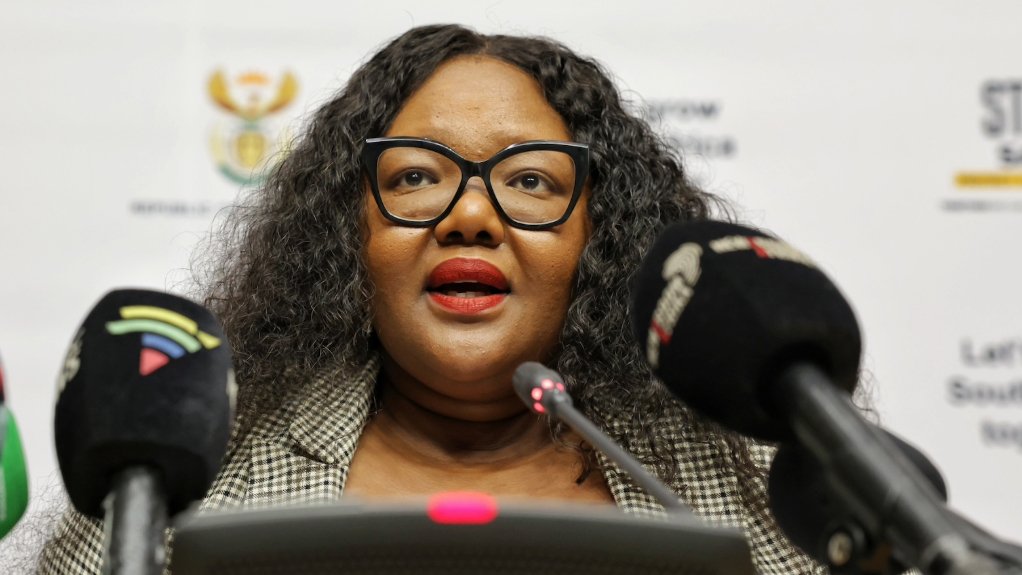
In a statement on Thursday, BOSA spokesperson Roger Solomons said the latest data, disclosed by Basic Education Minister Siviwe Gwarube, confirms that 476 public schools do not offer mathematics, effectively locking thousands of pupils out of career pathways in science, technology, engineering and commerce.
The minister’s written reply to parliament further revealed that 873 schools do not offer physical science, 1 534 do not offer accounting, 1 503 do not offer business studies, and 1 925 do not offer economics.
“This is a national crisis that exposes the deep inequities in our education system,” Solomons said.
“Without access to these subjects, learners are being set up to fail before they even begin. It’s a form of academic exclusion that limits their future and undermines the country’s potential to compete in the modern economy.”
The figures mirror concerns raised earlier this year in parliament, when MPs reacted with outrage to a departmental report showing that 462 public high schools had no mathematics classes.
As reported in May by Inside Education, the basic education department told the portfolio committee that most of these schools were small, under-resourced, or located in rural areas where low enrolment made it “impossible to offer both mathematics and mathematical literacy”.
KwaZulu-Natal, the Eastern Cape and Limpopo were identified as the most affected provinces.
At the time, the department’s director-general, Mathanzima Mweli, acknowledged that the problem was structural, citing “migration patterns and low enrolment” that led to teacher shortages and limited subject offerings.
Gwarube described the situation as “deeply concerning,” promising parliament that her department would deliver a full list of affected schools and accelerate interventions such as scholar transport and school mergers.
Despite these assurances, BOSA said that the issue remains unresolved, and has in fact worsened.
“This crisis has persisted for years, and learners in rural and township schools continue to be denied the same educational choices as their peers in better-resourced areas,” Solomons said.
“We cannot talk about equality or transformation when half the country’s children don’t even have the option to study mathematics.”
Education experts and government officials have repeatedly stressed the central role of mathematics in South Africa’s development.
At the Mega Maths Festival held at the University of the Western Cape earlier this year, Higher Education Minister Nobuhle Nkabane described mathematics as “the invisible engine powering visible progress,” calling for renewed investment in maths education and teacher training.
“Mathematics is a gateway to many professions, from artificial intelligence to energy, finance, and data science,” Nkabane said at the conference.
“We must reverse the upsurge in mathematical literacy, which we know does not assist in tertiary education enrolments in STEM fields.”
In its statement, BOSA said the shortage of qualified teachers, outdated infrastructure, and poor accountability systems have compounded the crisis.
The party announced that it will table detailed proposals before the newly established National Education and Training Council (NTEC) aimed at transforming the education system and addressing long-standing inequalities.
Among its key recommendations, BOSA is calling for the scrapping of the 30% matric pass mark, which it argues “entrenches mediocrity” and lowers academic standards. The party also wants the establishment of an independent education ombudsman to ensure accountability where schools and officials fail learners.
In addition, BOSA is pushing for improved teacher salaries and recruitment efforts to attract and retain qualified professionals, the introduction of a school voucher system to give parents the freedom to choose better-performing schools, and a nationwide teacher skills audit to ensure educators are properly aligned with the subjects they teach.
“For South Africa to thrive in the 21st century, every child — regardless of their postal code — must have access to the subjects that underpin innovation, entrepreneurship and economic growth,” Solomons said.
“We owe it to our children to fix this broken system.”
INSIDE EDUCATION