
By Charmaine Ndlela
The Western Cape Education Department (WCED) has rejected allegations of racial profiling in learner admissions, describing claims raised during a parliamentary committee meeting as “false and misleading”.
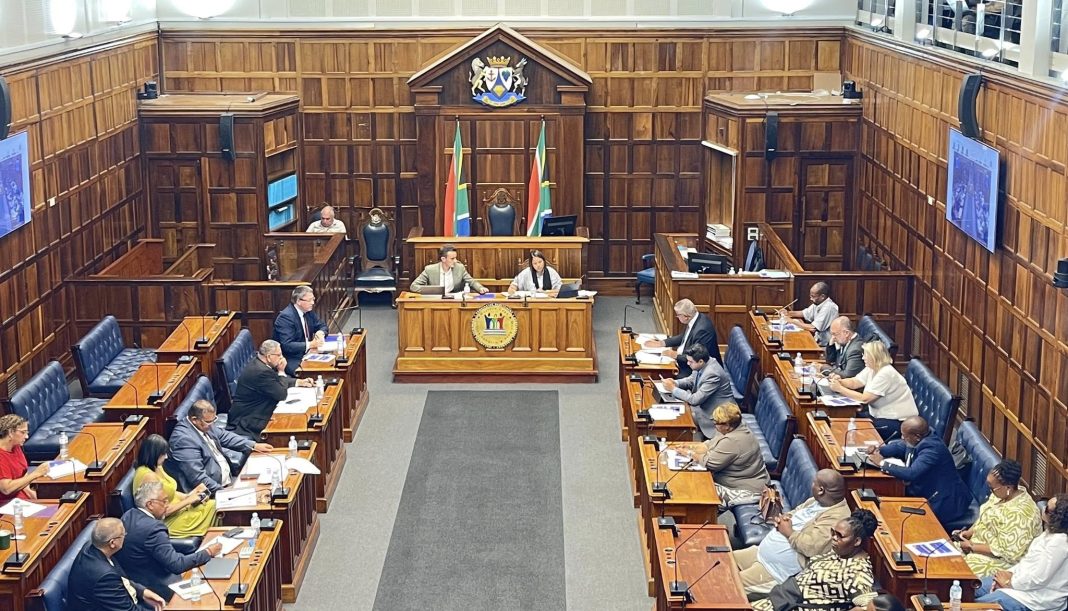
The response follows a meeting of Parliament’s Portfolio Committee on Basic Education, which raised concerns over the WCED’s failure to provide requested information on learner admissions and placement practices in the province.
The committee met national and provincial education officials on Wednesday as part of a follow-up engagement on allegations of racial profiling in school admissions, particularly in the Western Cape.
Members also referred to a Western Cape High Court ruling that found aspects of the province’s admissions policies discriminatory toward historically disadvantaged communities.
In a statement issued to Inside Education, the WCED disputed the committee’s characterisation of the matter and defended its handling of learner placements.
The committee said concerns about admissions and placement practices had been raised by parents and civil society organisations. It further noted that the High Court, in a judgment delivered last year, found that the province’s late-application admissions policy indirectly discriminated against Black, poor and rural learners.
Committee chairperson Joy Maimela said members had expected a comprehensive report detailing progress made in addressing concerns identified by the court.
“What we expected was a presentation that comprehensively covers what we have requested the department to do. What we have before us does not appear to do that,” Maimela said.
The committee also criticised Western Cape Education MEC David Maynier for submitting correspondence only a day before the meeting, saying it undermined Parliament’s ability to prepare adequately.
“Somehow we are made to beg for information as Parliament, and that we will never accept,” Maimela said.
The committee has given the WCED seven days to submit the requested information and has referred the matter to Parliament’s House Chairperson for Committees and the Office of the Speaker.
Maynier, however, described the meeting as “a complete shambles” and accused the committee of creating a false impression that an investigation into racial profiling had taken place.
“The committee deliberately misled the public by creating the impression that there was an investigation into racial profiling. There was no such investigation, and the Department of Basic Education has clarified that it was in fact a monitoring and evaluation exercise,” he said.
Maynier said the exercise had been conducted in all nine provinces, but that the committee had focused only on findings relating to the Western Cape.
“We have not received a report with supporting evidence on the alleged findings. The findings are therefore untested and unverified,” he said.
He also argued that the High Court matter was separate from the committee’s discussions and remained suspended pending further legal processes.
“The court judgment was an entirely separate matter before the committee, which is suspended and sub judice. The committee conflated and confused the two matters. We did not indicate that the DBE presentation was sub judice,” Maynier said.
The WCED said the Department of Basic Education had been expected to present findings from an oversight and monitoring exercise, rather than an investigation conducted by the committee.
According to the department, the DBE was not allowed to deliver its presentation and the WCED was not given an opportunity to respond to the findings.
INSIDE EDUCATION