
Staff Reporter
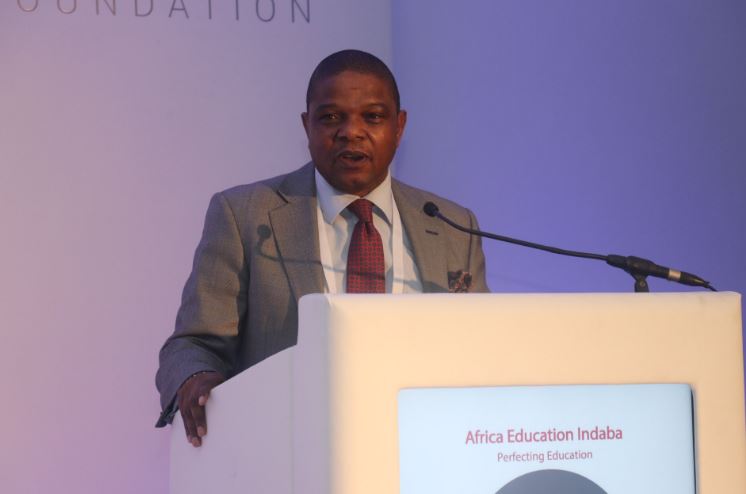
The Africa Education Indaba was launched on Thursday at the Ranch Hotel in Limpopo. The reason for the launch was to discuss the problems that continue to characterise South Africa’s education system.
These issues were identified as:
- the home environment which has a direct impact on learner educatiom
- inequalities from the past
- shortage of school infrastructure
- shortage of critical skills
- sanitation and
- urban migration
- the need to learn and have a strong foundation in mother-tongue
- the mistreatment of educators
The Statistician General SA Risenga Maluleke attended the inaugural launch of the Africa Education Indaba. He spoke of the drivers of poverty which included unemployment, years of schooling, water and sanitation. Maluleke said it was necessary to address the education system for the better.
According to Statistician General SA says drivers of poverty include unemployment, years of schooling, water and sanitation, inter alia. Therefore, it’s totally necessary to address the education system for the better. pic.twitter.com/rgsg0icaOB
— Dr Tim Tebeila (@TimTebeila) September 13, 2018
Maluleke said education and unemployment contributed 63% to poverty in our country.
But this did not go unchallenged. The spokesperson for the Department of Basic Education Elijah Mhlanga wrote:
So education contributes to poverty. How so? Please help.
— Elijah Mhlanga (@ElijahMhlanga) September 13, 2018
So if you go to university, get a degree and struggle to get a job because employers require experience, how is “poor education” a factor? How do we explain the plight of the thousands of unemployed graduates; lawyers, accountants, engineers, teachers, etc?
— Elijah Mhlanga (@ElijahMhlanga) September 13, 2018
Head of Educational Leadership and Management at the University of South Africa (Unisa), Professor Pertunia Machaisa who gave the keynote address, spoke of factors that contribute negatively to the performance in schools. She says these include delinquency, family background, school violence and depression
Factors that contribute negatively to the performance in schools include delinquency, family background, school violence, depression, inter alia, as highlighted by Prof. Pertunia Machaisa at the #AfricaEducationIndaba pic.twitter.com/dQcSpBhb7I
— Dr Tim Tebeila (@TimTebeila) September 13, 2018
The first panel discussion was facilitated by Thobela FM’s Lerato Moseogane under the theme: “The challenges and factors impacting on educational performance in Limpopo Province”. The panelists included South African Democratic Teachers Union (Sadtu), Professional Educators Union (PEU), Student Governing Bodies(SGB), Congress of South African Students (Cosas) and the Thuma Mina Movement all from Limpopo Province.
Panelist: Department of Education in Limpopo has failed. Can’t manage teacher absenteeism; under qualified teachers; only 3 teachers responsible for 8 classes from Grade R to 7 #AfricaEducationIndaba
— thuletho zwane (@thulethozwane) September 13, 2018
Another big issue was the treatment of educators.
Sadtu Limpopo Provincial Sowell Tjebane says teachers are depressed. They are expected to be educators, doctors, administrators. As such 7/10 are ready to quit teaching #AfricaEducationIndaba cc @Inside_Edu
— thuletho zwane (@thulethozwane) September 13, 2018
The issue of power relations between the unions and the department of basic education came up. These were highlighted as an impediment to teaching.
Power relations between @DBE_SA and Unions (teachers) are at the centre of poor quality education in Limpopo, says #ThumaMina ‘s Sello Lediga #AfricaEducationIndaba pic.twitter.com/CKcYDs7ad9
— Inside Education (@Inside_Edu) September 13, 2018
The Provincial Secretary for Limpopo Cosas speaks of issues affecting learners. He told delegates that most of his female counterparts are forced to miss school during their monthly menstrual cycle because the province does not provide free sanitary pads, yet condoms are free and easily accessible.
He also adds that the department should consider introducing agriculture in schools and should remove Life Orientation and replace it with the real history of Africa.
Limpopo Cosas Provincial Secretary calls for free sanitary pads for the girl child; increasing the number of agricultural high schools and agricultural TVETs. He says #Land is central to this #AfricaEducationIndaba https://t.co/MS69M1UDXq
— Inside Education (@Inside_Edu) September 13, 2018
But there were challenges raised. One of the delegates asks why it is that the Limpopo department of education failed to attend the Africa Education Indaba.
A question from the floor: “How is it that an initiative as big as this can come to Limpopo but the provincial party in charge of #education in Limpopo is not here?” The Limpopo department of education has not attended the #AfricaEducationIndaba cc @DBE_SA pic.twitter.com/OPBr3orI7o
— thuletho zwane (@thulethozwane) September 13, 2018
Other challenges are old challenges:
Black people don’t want their black children to be taught by their black teachers, says #ThumaMina Lediga who says the governing party has failed the people
Black people don’t want their black children to be taught by their black teachers, says #ThumaMina Lediga who says the governing party has failed the people#AfricaEducationIndaba pic.twitter.com/rWevGD3N3D
— Inside Education (@Inside_Edu) September 13, 2018
Minister of Basic Education Angie Motshekga and the MEC for Education in the Free State, Dr Tate Makgwe, also attended the inaugural Africa Education Indaba.
Minister @AngieMotshekga, Free State MEC for Education Tate Makgwe and @TimTebeila Foundation founder to speak on the state of education in South Africa pic.twitter.com/IWSWZ2oQ6i
— Inside Education (@Inside_Edu) September 14, 2018
Makgwe spoke of old and embarrassing failures South Africa’s education system has gone through.
He took jabs at Outcome Based Education (OBE): “there was a time when we thought children came to class with prior knowledge and teachers were just facilitators”Makgwe added that the Africa Education Indaba provides African solutions for African problems.
Makgwe takes jabs at OBE: there was a time when we thought children came to class with prior knowledge and teachers were just facilitators #AfricaEducationIndaba pic.twitter.com/SaWgePP104
— Inside Education (@Inside_Edu) September 14, 2018
Africa solutions for Africans, says MEC Free State #AfricaEducationIndaba pic.twitter.com/3BVrHTN4iO
— Inside Education (@Inside_Edu) September 14, 2018
Minister Motshekga joined the conversation.
She welcomed the Africa Education Indaba and said: “As a Department we welcome the partnership with the foundation and looking forward to get resolutions”.
Motshekga spoke of the importance of partnerships in education and on how and why some of these relationships in the sector have failed in the past.
Minister Motshekga talking about importance of partnerships in education and on how and why some of these relationships in the sector have failed in the past. #AfricaEducationIndaba @DBE_SA @KagisoShandukaT @edu_limp @SAgovnews @ElijahMhlanga @Troy_Martens pic.twitter.com/WoO49VmDsC
— Balosang (@BalosangSanki) September 14, 2018
But after all was said and discussed, it was Mr Diphete Bopape, editor of a Northern-Sesotho newspaper, who said one of the major reasons our children fail is because they are not taught in their mother-tongue.
The importance of learning in mother-tongue #AfricaEducationIndaba pic.twitter.com/7kP0WYJEt7
— Inside Education (@Inside_Edu) September 13, 2018