
By Charmaine Ndlela
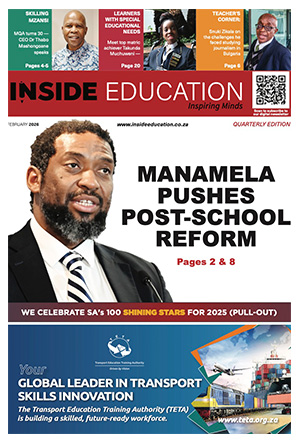
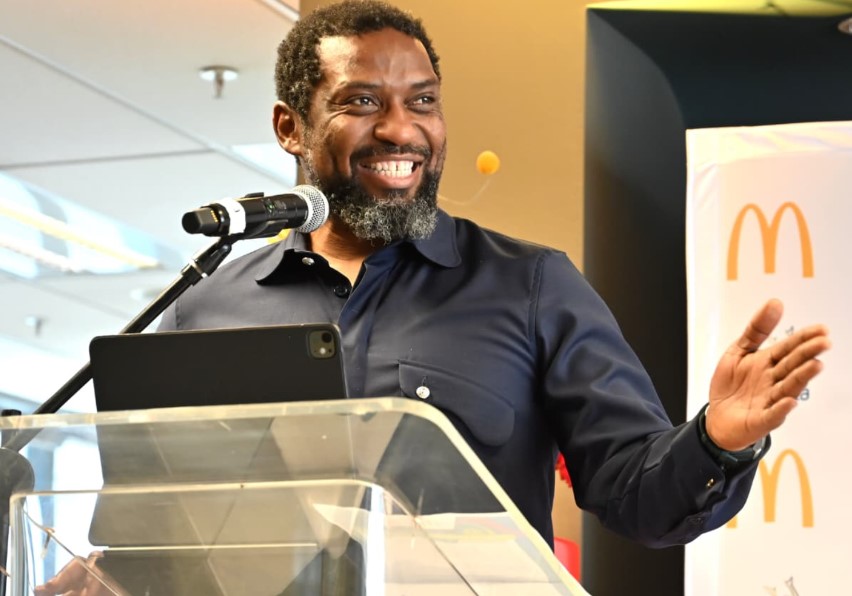
Higher Education and Training Minister Buti Manamela has called on universities to renew their public purpose, saying that financial pressures, artificial intelligence and the unfinished transformation of higher education demand a fundamental rethink of their role in society.
Speaking at a national webinar titled The Intellectual Directions of Higher Education in South Africa: Reimagining the Futures of the University on Monday, Manamela said universities needed to examine whether their teaching, research and institutional priorities were making meaningful contributions to society.
He said an excessive focus on immediate challenges, including student debt, accommodation shortages, governance disputes and institutional instability, risked overshadowing their fundamental purpose.
“If every conversation begins with and ends with the crisis of the moment, we may as well keep institutions functioning, but we are not asking what they are functioning for,” Manamela said.
“What is the South African university for in the world that is emerging and in the society that we’re still struggling to build?”
He said universities should not be reduced to factories producing certificates, consultancies for the state or recruitment agencies for employers, but should remain spaces for discovering knowledge, challenging established thinking and developing human capabilities.
“The unfinished democratic project is also an unfinished intellectual project,” he said.
Universities must serve society
Manamela challenged institutions to examine who produced knowledge, whose experiences were recognised in research, which languages carried academic authority and which communities benefited from their discoveries.
He outlined four priorities: renewing universities’ public purpose, confronting the political economy of higher education, responding to artificial intelligence and the changing world of work, and deepening intellectual transformation.
He said their public value depended on whom they admitted, how they taught, what they researched and whether their work benefited communities beyond campus boundaries.
Institutions located near communities experiencing water insecurity, unemployment, failing infrastructure and preventable diseases should not remain intellectually detached from those realities.
“Academic excellence is also not a licence for social indifference,” Manamela said.
Funding pressures threaten sustainability
Turning to funding, he said growing demand for higher education had intensified financial pressures on students, families and institutions.
Although the National Student Financial Aid Scheme (NSFAS) had expanded opportunities, administrative weaknesses and the widening gap between funding commitments and available resources threatened the sustainability of the post-school education system.
Manamela said South Africa did not need 26 universities attempting to replicate the same institutional model, but rather a connected system with distinct strengths and responsibilities.
He called for government, institutions, students, employers and other partners to develop a sustainable funding model that protected educational quality, reduced unnecessary duplication and strengthened cooperation.
AI forces a rethink of teaching
On artificial intelligence, Manamela said generative AI offered opportunities for research, translation, administration and teaching, but also posed risks, including bias, fabricated evidence and growing dependence on proprietary technology.
He warned that students could mistake fluent AI-generated responses for genuine understanding, requiring universities to reconsider assessment methods and emphasise critical thinking, ethical judgement and evaluating evidence.
Manamela also called for investment in African AI research infrastructure, open resources and technologies supporting African languages, warning against permanent dependence on systems developed elsewhere.
Decolonising knowledge and research
Addressing intellectual transformation, he said decolonisation should neither become an institutional slogan nor mean rejecting every idea originating outside Africa.
Instead, it required examining how power shaped knowledge production, whose ideas were regarded as universal and whose knowledge was marginalised.
He argued that African languages needed a stronger place in scholarship and that institutions should connect different forms of knowledge to address environmental and social challenges.
“The planetary crisis is not somewhere outside of our country. It is present in our municipalities, in our farms, mines. And so universities should connect scientific, technical, social, and indigenous knowledge to understand this challenge,” he said.
Manamela also warned against allowing science, technology, engineering and mathematics to dominate discussions at the expense of the arts and humanities.
“Our role is obviously not to prescribe one intellectual doctrine, tempting as that can be. Our role is to defend, as the government, as the ministry, academic freedom, to enable access and quality, but also to support research and innovation,” he said.
Students need more than admission
Nelson Mandela University vice-chancellor Professor Sibongile Muthwa welcomed Manamela’s call, saying the future of higher education could not be secured through technical adjustments, funding interventions and governance reforms alone.
She said universities needed renewed intellectual imagination and a deeper understanding of their responsibilities to society.
“Students do not merely seek admission, they seek to belong, they seek recognition, they seek opportunities to develop their capabilities, their confidence,” Muthwa said.
She urged institutions to approach AI critically, preparing graduates to question its outputs, recognise biases, understand its limitations and exercise accountability rather than embracing or rejecting the technology uncritically.
“The challenge before us is profoundly educational before it is technological,” she said.
Muthwa said graduates needed to interpret information, navigate uncertainty and exercise sound judgement.
Expanding access to higher education
Professor Linda Meyer, President of Rosebank International, said expanding access required cooperation between government, public and private institutions and other social partners.
She said limited university capacity made expanding opportunities an urgent concern for youth development and economic growth.
“We cannot have a system that erodes our universities’ budgets and creates fiscal instabilities in our higher education institutions,” she said.
Meyer also called for greater recognition of technical and vocational education and questioned the dominance of English in academic instruction, urging institutions to normalise postgraduate research in indigenous languages.
“The proof is in the output and the proof is in access,” Meyer said.
Beyond rankings and performance targets
University of the Free State vice-chancellor and principal Professor Hester Klopper said universities needed to consider not only what they were good at, but what they were ultimately good for.
She warned that financial pressures, graduate outcomes and performance indicators could distract institutions from broader intellectual responsibilities.
“If we simply do more of what we already do, and if we think we do it more efficiently, and if we are still making a choice in terms of what drives it, it speaks ultimately to the question that the honourable minister has put on the table,” she said.
Klopper supported institutions developing distinct strengths rather than following identical models.
She also defended the humanities, saying history, philosophy and literature helped students interpret evidence, understand ambiguity and develop ethical judgement, particularly as AI became more prominent.
INSIDE EDUCATION