

By Lebone Rodah Mosima
The Eastern Cape government has handed over the newly built Bethelsdorp High School in Salt Lake, a R112.75 million infrastructure investment aimed at easing pressure on schools in Nelson Mandela Bay’s Northern Areas.
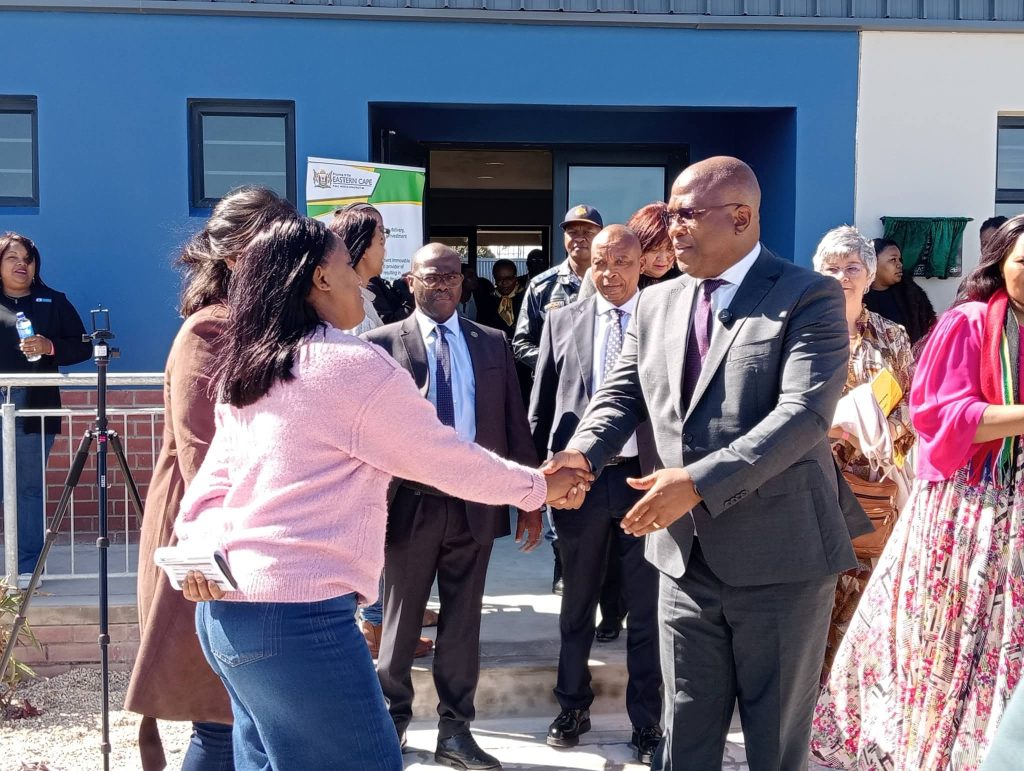
The area has faced growing enrolment and a need for additional classrooms, repairs and other infrastructure.
ALSO READ: OPINION: Designing our roads for how children actually behave
Speaking at the official opening and handover, Eastern Cape Premier Oscar Mabuyane said Bethelsdorp High School had served the community since 1972, with its history linked to families displaced from areas including South End and Newtown under apartheid.
“For generations, parents have sent their children here believing that education could give them opportunities that were denied to previous generations,” Mabuyane said.
“Today, we honour that history by handing over a modern school that gives our young people the facilities they deserve.”
The new school has 31 classrooms, two science laboratories, a technical workshop, an ICT centre, a library and media centre, a nutrition kitchen, playing fields and improved safety and security infrastructure.
Mabuyane said the facilities should allow learners to read, experiment, develop practical skills and explore different career pathways.
He said the Three Stream Model was important because learners would not all follow the same path, with some pursuing university studies, technical and vocational education, business or other professions.
“Our responsibility is to make sure that every learner has a pathway to a meaningful future,” he said.
Mabuyane said the Eastern Cape was positioning itself for opportunities in renewable energy and other emerging sectors.
ALSO READ: BANKSETA funding clears R13.9m debt for 253 CUT graduates
He said the proposed nuclear power station at Thyspunt, if it proceeds, would create demand for engineers, artisans, technicians, environmental specialists and other skills.
“The education you receive here must prepare you not only for today’s economy, but for the economy of tomorrow,” he said.
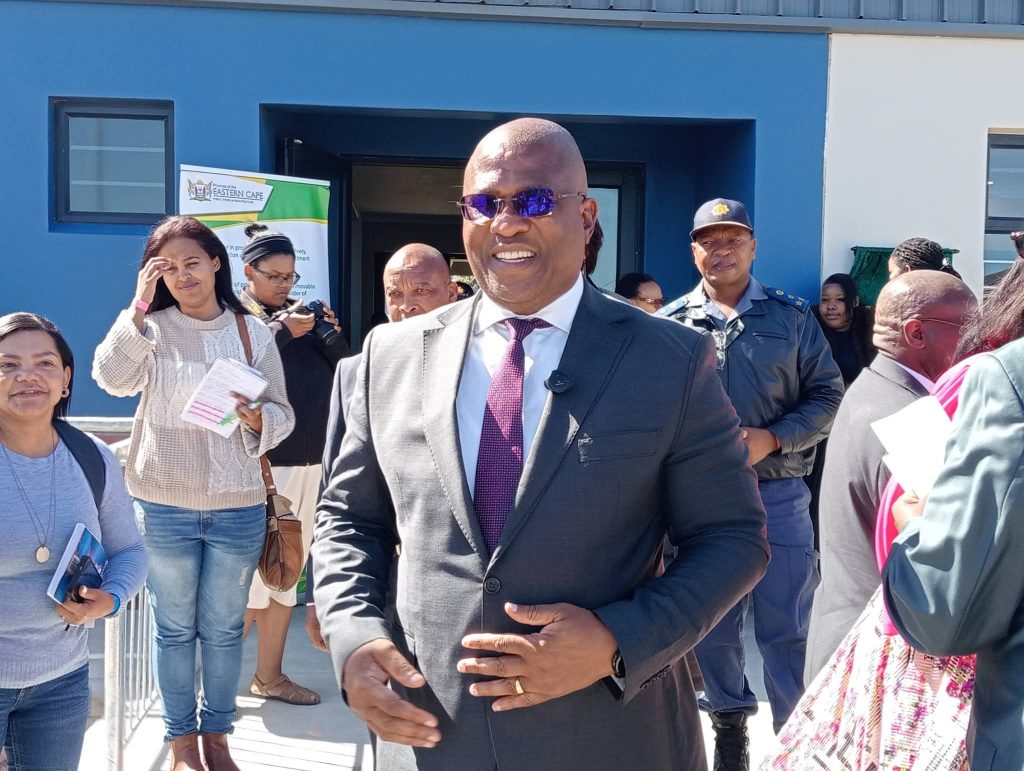
Mabuyane also highlighted the school’s improved matric performance, with the pass rate increasing from 43.3% in 2023 to 50.4% in 2024 and 78.9% in 2025.
He said the results demonstrated determination and talent among learners and staff, and expressed hope that the new facilities would help improve performance further.
With matric learners preparing for their final examinations, Mabuyane urged parents, educators and the wider community to support them by providing space to study, helping them reach examination centres safely and protecting them from distractions.
He also appealed to learners to celebrate responsibly after the examinations.
“Young people have every right to celebrate when examinations are over,” he said.
“But celebration must not turn into alcohol and substance abuse, violence, crime or other behaviour that can destroy lives. Let us celebrate achievement without putting our children at risk.”
He called on parents, schools, traditional leaders, churches, community organisations, law enforcement and learners to work together to ensure that celebrations remain safe.
Mabuyane said the Bethelsdorp project included R112.75 million in investment, with more than R94 million supporting local businesses, suppliers and construction-related activity.
He said 18 local small, medium and micro enterprises benefited from the project, while 10 community members received accredited training and graduates and trainees gained work experience.
“This is important because when government builds infrastructure, we want communities to benefit from that investment,” he said.
Mabuyane also provided an update on infrastructure projects across the Northern Areas.
He said Reubin Birin was under construction after the site was handed over on 2 October, with completion expected by October 2027.
Walmer and KK Ncwane were also under construction, with completion dates scheduled for December 2027 and February 2027 respectively.
Galvendale and Greenville had contractors on site for their first phases, while temporary accommodation and decanting were being used as part of the response to infrastructure pressures.
“Greenville’s first phase provides prefabricated structures, with practical completion scheduled for February 2027,” he said.
“Alfonso Aries includes repairs to existing prefabricated structures and the replacement of 11 structures. Sakhile is planned to use prefabricated structures relocated from David Livingstone.”
Some projects, however, face planning and capacity challenges.
Mabuyane said Booysen Park was originally designed for 1,275 learners, but enrolment had since increased to 1,676, requiring the project to be redesigned and cost estimates revised.
“The second phase of Alfonso Aries is delayed while the district confirms the site for a new school,” he said.
ALSO READ: Unisa to confer 16,900 qualifications during Spring graduation season
“There are also urgent needs that remain; Nxanelwimfundo’s fencing requests are awaiting the HOD’s signature.”
Northern Lights is in procurement for emergency roof repairs and two additional prefabricated structures, while an assessment at Sanctor identified the need for five additional prefabricated classrooms.
The infrastructure plan estimates that R93 million would be required to replace Sanctor, Mabuyane said.
He said the infrastructure programme needed to respond to immediate pressures while accounting for changing enrolment patterns across Nelson Mandela Bay.
“At Booysen Park, for example, enrolment has grown from 1,275 to 1,676 learners, requiring the project to be redesigned to match the school’s actual needs,” he said.
Across Nelson Mandela Bay, the programme includes repairs, temporary classrooms, urgent safety work and planning for replacement schools.
“We will continue to monitor progress against the milestones set for each project and address the delays that affect delivery,” Mabuyane said.
He urged Bethelsdorp High School learners to take care of the new facilities, respect their teachers, support one another and not allow their circumstances to determine their future.
“Work hard. Ask questions. Read. Make use of every opportunity available to you,” he said.
“A beautiful school creates better conditions, but it is your dedication that turns those conditions into real learning.”
The school’s motto, Laboremus Futura — “Let us labour for the future” — captured the message, Mabuyane said.
He said the future was built through hard work and expressed hope that the school would continue producing young people who would make a difference in their community, province and country.