
By Charmaine Ndlela
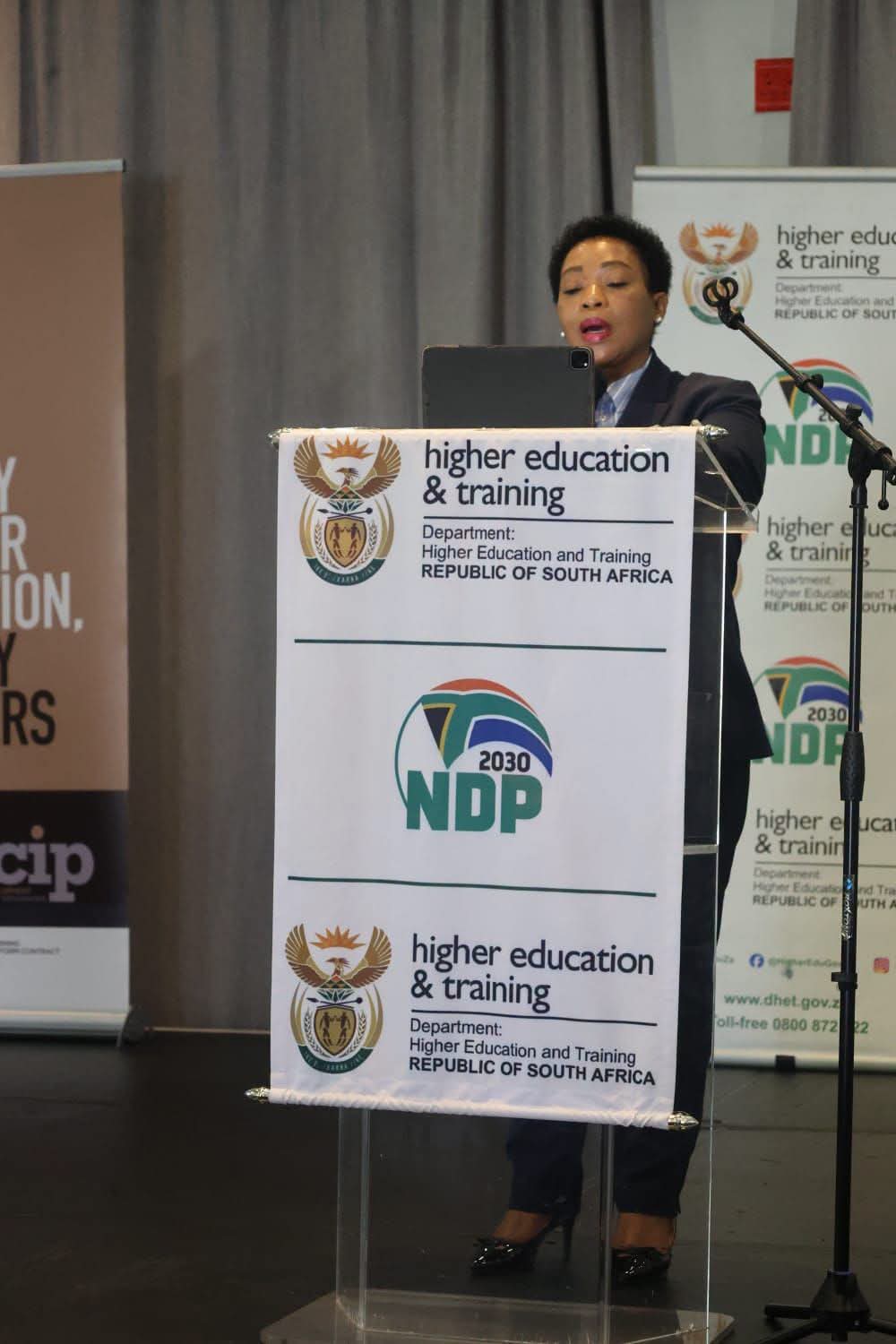
South Africa must stop treating inclusive education as the responsibility of specialist teachers and instead make it a core professional responsibility for every teacher, according to Higher Education Deputy Minister Nomusa Dube-Ncube.

“Inclusive education begins with inclusive teachers,” she said on Wednesday.
“No education system can be more inclusive than the teachers it prepares, develops and supports.”
Dube-Ncube was speaking at a Teacher Education for Inclusive Teaching (TEfIT) Close-Out Conference in Boksburg. It was convened by the department in partnership with the European Union in South Africa, the University of Johannesburg (UJ), the University of Pretoria (UP) and the Wits University.
ALSO READ: Beaufort West schools to reopen Thursday after water crisis closure
The two-day conference, which ends on Thursday, is being held under the theme: “Advancing inclusive teaching competence: consolidating TEfIT gains for a responsive and equitable teacher education system.”
At the centre of the deputy minister’s address was a challenge to the education sector to ensure that inclusion becomes embedded in teacher professionalism, rather than being treated as an additional or specialist function.
She said South Africa’s constitutional commitment to dignity, equality and quality education requires more than providing learners with access to schooling.
The education system must enable every learner, regardless of disability, language, socio-economic background, geographic location or learning need, to participate meaningfully and succeed.
Dube-Ncube said that 25 years since the adoption of Education White Paper 6, inclusive education remains an unfinished task.
Many learners continue to face barriers that affect their participation and achievement, while teachers require greater support, preparation and resources to respond to increasingly diverse classrooms.
Dube-Ncube said teachers need to be able to recognise learner diversity, remove barriers to learning, adapt their teaching approaches, support participation and create learning environments where every pupil can thrive.
TEfIT had made a significant contribution towards this goal by strengthening institutional capacity, developing professional expertise and creating foundations for continued innovation in inclusive teacher education, she said.
ALSO READ: UJ researchers honoured at 2026 NRF Awards
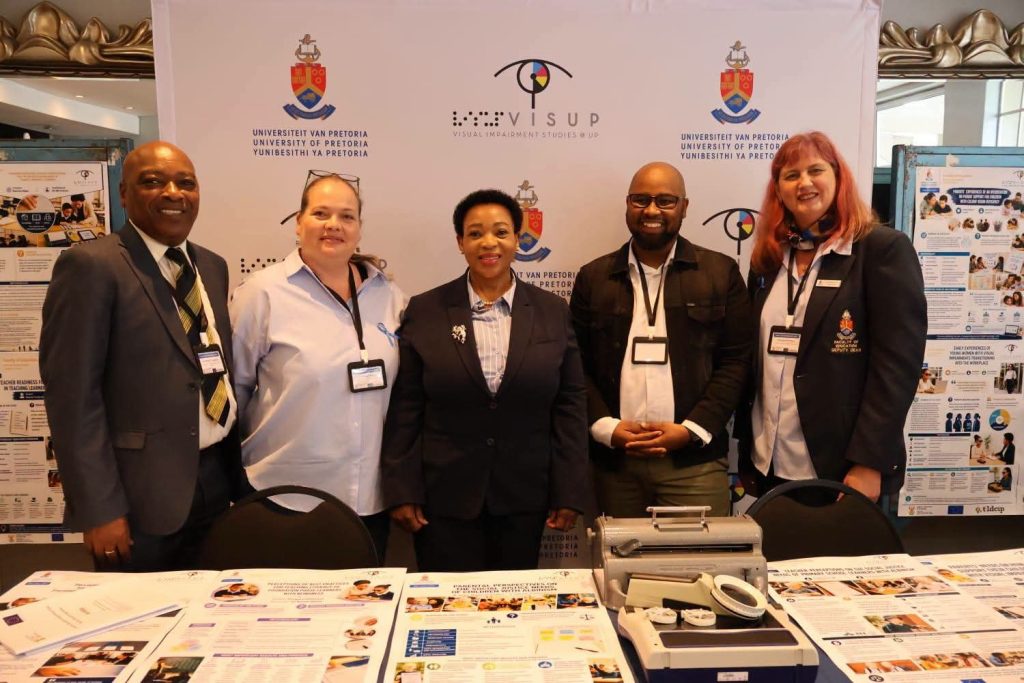
Among the project’s key achievements is the establishment of three specialised centres of excellence – the Centre for Neurodiversity at UJ, the Centre for Visual Impairment Studies at UP and the Centre for Deaf Studies at Wits University.
They will focus on research, innovation, teacher education, professional learning and knowledge production.
The project has also expanded teacher education capacity through the development of inclusive education qualifications, short learning programmes, specialised teaching resources and curriculum innovations.
It has contributed to the publication of 23 accredited journal articles and two scholarly book chapters, alongside specialised textbooks, learning resources and research platforms.
It has also supported the graduation of 19 PhD graduates and 38 Master’s graduates, contributing to the development of a stronger academic community capable of advancing inclusive education research.
One of the graduates mentioned by Dube-Ncube was Guy McIlroy. He is the second deaf academic to complete the programme and now serves as a full-time academic staff member.
She said his journey demonstrates that inclusion should not simply be about allowing people to participate, but about creating opportunities for empowerment, achievement and leadership.
The conference comes at a time when several policy and qualification frameworks are undergoing review or implementation
Dube-Ncube said the review of the Policy on the Minimum Requirements for Teacher Education Qualifications provides an opportunity to make inclusive teaching competencies core graduate attributes across initial teacher education programmes.
The review of Education White Paper 6 also provides an opportunity to assess more than two decades of implementation and determine how teacher education can better support an inclusive education system.
ALSO READ: Public school fees rise faster than inflation as families battle cost of living crisis
Despite the achievements of the project, the deputy minister stressed that its conclusion must not mean the end of the work.
Instead, it should mark the beginning of a new phase in which TEfIT research, resources, partnerships and lessons are embedded across the teacher education system.
“The true legacy of the TEfIT project will be measured not by the activities completed during the life of the project, but by the extent to which its lessons continue to influence policy, curriculum, professional learning, research, innovation and institutional transformation,” she said.
Dube-Ncube called on the sector to move beyond individual projects towards sustainable system-wide change, and from policy aspirations to practical action.
She said lessons emerging from TEfIT, together with the ongoing reviews of the various policies and frameworks, will give South Africa a “once-in-a-generation opportunity” to build a more coherent, responsive and inclusive teacher education system.