
By Charmaine Ndlela
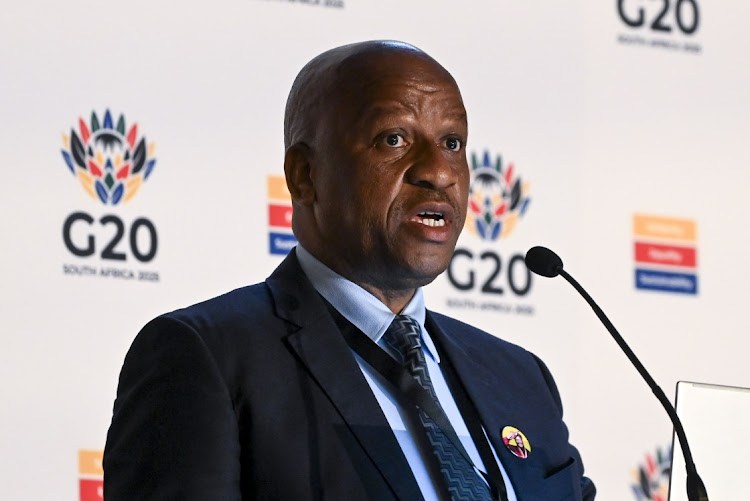
KwaZulu-Natal Premier Thamsanqa Ntuli has called on African scholars to move beyond academic debate and play a direct role in shaping public policy, saying the continent’s future will depend on how effectively research is translated into action in an increasingly multipolar world.
Speaking at the opening of the e 10th MBALI International Conference in Richards Bay on Tuesday, Ntuli urged academics from across Africa and beyond to move beyond producing research papers and help governments develop evidence-based policies.
ALSO READ: Learners receive trauma support after fatal shooting of Tsakane teacher
“I do not ask you to cheer for this government. I ask you to help us think,” Ntuli said.
“To stress-test our policies before the world does. To bring evidence where we bring instinct. To challenge us when we are wrong, and to build with us when we are right.”
Addressing delegates under the theme, African Awakens: Possibilities, Progress, Partnerships in a Multipolar World, Ntuli said Africa was entering a defining era as global power becomes increasingly dispersed, creating opportunities for the continent to shape its own future.
“It is a world where Africa can no longer be spoken about. Africa must speak for herself,” he said.
Ntuli argued that Africa’s greatest challenge is no longer generating ideas, but implementing them.
“Africa has never lacked ideas. Africa has too often lacked the bridge between the idea and the implementation. Scholars, you are that bridge,” he said.
He challenged universities to become centres of innovation that deliver practical solutions to unemployment, inequality, climate change and economic development.
“Progress is possibility with a deadline. It is the research that becomes policy. It is the paper that becomes a programme. It is the theory that walks off the page and into a community,” he said.
The premier said meaningful development depends on stronger partnerships between government, academia, business and communities, adding that collaboration, rather than competition, will determine whether Africa benefits from a changing global economy.
ALSO READ: Opinion| Using Recognition of Prior Learning to bridge South Africa’s skills gap
Ntuli also defended KwaZulu-Natal’s Government of Provincial Unity, describing coalition governance as a necessary response to the province’s democratic mandate rather than a political compromise.
“It means no single party governs alone. It means compromise is not weakness. It means consensus is not defeat,” he said.
He said the Government of Provincial Unity (GPU) reflects a world in which no single political ideology has all the answers.
“Our people, through their vote, did not choose this path because it was easy. They chose it because it was necessary,” Ntuli said.
Linking the conference to South Africa’s upcoming hosting of the 46th SADC Heads of State and Government Summit in Durban, Ntuli said both platforms are focused on how Africa can build sustainable economic power on its own terms.
He identified infrastructure development, agricultural growth and mineral beneficiation as key priorities, arguing that the continent must stop exporting raw materials while importing finished products.
“Why must Africa always export the raw, and import the refined?” he asked.
Reflecting on the conference’s 10-year milestone, Ntuli praised the University of Zululand for transforming itself from its apartheid-era legacy into an institution that now attracts leading scholars from across the continent.
“The university, once dismissed as a ‘bush university’, now hosts one of Africa’s leading intellectual gatherings,” he said.
Hosted by the University of Zululand in partnership with Absa at the Bon Hotel Waterfront in Richards Bay, the conference marks a decade since the inaugural MBALI International Conference was launched in 2016.
The conference, running from August 4 to 6, has brought together academics, policymakers and industry leaders to examine Africa’s role in an evolving global political and economic landscape.