Home Blog Page 255

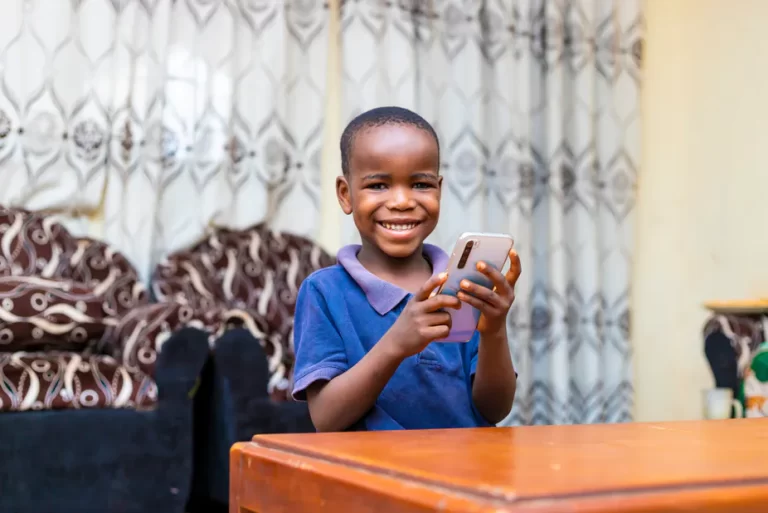
Mobile phones can enable learning during school disruptions. Here’s how

NOAM ANGRIST|

THE COVID-19 pandemic placed enormous pressure on education systems worldwide. At the peak of the crisis, school closures forced over 1.6 billion learners out of classrooms. This exacerbated a learning crisis that existed before the pandemic, with many children in school but learning very little.

Widespread school closures are not unique to COVID-19. Teacher strikes, natural disasters, other disease outbreaks and extreme weather conditions all result in lengthy school closures.

The cost of school closures has proved to be substantial, in particular for lower socioeconomic status households. When schools are closed, remote learning is rarely as effective as in-school instruction, and caregivers become the front-line educators.

In well-resourced households, learning material such as textbooks and online internet access might exist at home and caregivers are more likely to engage in their child’s education. But in lower income households, fewer resources exist to support educational instruction.

Reducing learning loss when schooling is disrupted requires outside-school interventions that can effectively deliver instruction to children at scale. But little evidence exists on cost-effective learning interventions during school disruptions.

It’s estimated that globally 70%–90% of households own at least one mobile phone. This suggests that the use of mobile phones has the potential to provide educational instruction in resource-constrained contexts and at scale. But this “low-tech” solution is less commonly used in education relative to “high-tech” approaches that rely on internet-based instruction. This is despite the fact that only 15%–60% of households in low- and middle-income countries have internet access.

To examine the potential of mobile phone-based instruction, we conducted a randomised controlled trial with 4,500 households across Botswana led by Youth Impact, one of the largest NGOs in the country. In Botswana, mobile phone access is high: nearly 1.5 mobile phone connections per person on average. Many individuals have multiple sim cards.

We tested two mobile phone-based methods as low-tech solutions to support parents and their children during the COVID-19 pandemic.

The households were divided into two types of intervention groups. One group received SMS messages with a few basic numeracy problems of the week. A second group received these same weekly SMS messages plus a 15–20-minute phone call from a teacher.

Phone calls improve learning

We found that SMS messages alone had little effect on learning outcomes. But a combination of phone calls and SMS interventions resulted in large learning gains.

Learning levels, as measured by a test focused on foundational numeracy skills such as addition, subtraction, multiplication, and division, increased by 0.12 standard deviations. This equates to more than a full year of high-quality instruction gained per $100 spent. This ranks among the most cost-effective learning interventions.

These results show that instruction through mobile phones calls can provide an effective, scalable method to provide education instruction when schooling is disrupted. The research also shows the importance of live, direct instruction to complement more automated SMS based approaches to provide effective remote education.

We further developed phone-based assessments, as a means to measure learning, and found that this enabled high-frequency data collection to target instruction to children’s learning levels in real-time. For example, children who did not know addition were taught addition; children who did not know subtraction were taught subtraction. The one-on-one phone calls enabled a cost-effective and scalable form of tutoring. They were also highly targeted to children’s learning levels. This approach to targeting instruction was inspired by a well-known model called Teaching at the Right Level.

We found improved parental engagement too. Parents became more confident and accurate in their beliefs about their child’s education as a result of the intervention. This shows they were engaged and involved in the instruction along with their child.

Our findings have immediate policy relevance as the COVID-19 pandemic continues to disrupt schooling. Many schools have reopened since the COVID-19 pandemic, but only partially. For example, in Botswana instruction time has often been reduced owing to social distancing measures such as double-shift systems where half of the students attend school in the morning and the other half attend in the afternoon. Many countries around the world have adopted similar double-shifting systems, necessitating urgent action to provide additional, high-quality educational instruction.

Low-tech education

Our findings also have broad implications for the role of simple, low-tech methods to support education beyond COVID-19. Schooling gets disrupted for many reasons such as public health crises, weather shocks, natural disasters, elections, summer holidays, and in refugee and conflict settings. During these moments, education systems need resilient approaches to continue to provide education.

It’s important to note that our study evaluated only a subset of potential interventions. Other popular low-tech methods of educational instruction, such as radio and TV, require further investigation.

Since the initial trial in Botswana, our research team has engaged in a series of follow-up studies in India, Kenya, Nepal, Uganda and the Philippines. Results will show how well this approach scales across diverse contexts.

(Noam Angrist, Executive Director, Youth Impact, Fellow, University of Oxford)

This is an edited version of an article that was originally published in Nature Human Behaviour.

SA Schools teams ‘amped’ for Cape Town faceoff

THE SA Schools teams return to action in Cape Town on Saturday having last played in 2019 and – judging by the excitement in the camps as they prepared at Hoër Landbouskool Boland near Paarl – the players and their management teams can’t wait for the opportunity to play again.

Two teams – SA Schools and SA Schools A – were named after the U18 Craven Week in Cape Town last week. At their blazer presentation ceremony on Tuesday night, Zachary Porthen (SA Schools) and Camden Schoeman (SA Schools A) were named as the respective captains.

Katleho Lynch, coach of the SA Schools side, says he was filled with gratitude at the opportunity to work with some of the best schoolboy players in the country.

“To witness the excitement among the players and how proud their parents are, is just wonderful,” said Lynch, who was appointed as SA Schools A team assistant coach in 2020, before the Covid-19 pandemic halted the local season.

“For two seasons, we hardly had any schoolboys rugby and now we’re slowly returning back to normal. The boys are really in their element and their eagerness to learn, to make new friends and just to soak up this experience, is palpable.

“I’m honoured to be working with them and all of us are very excited about Saturday’s game.”

The clash between the two SA Schools teams is scheduled to kick off at 12:30pm on Saturday at Hamilton Rugby Football Club in Cape Town, after which the players and management will attend the third Test in the Incoming Series between the Springboks and Wales at Cape Town Stadium.

Cobus van Dyk, who was supposed to assist Lynch last year with the SA U18 team on a tour to Georgia in August, which was cancelled shortly before departure also due to Covid, echoed his colleague’s sentiments.

“It’s a great initiative to get these two teams to face each other and spend time together, work hard and enjoy the week,” said Van Dyk, head coach of the SA Schools A side.

“The talent in this group is special and the players will be better for the experience, but they are also experiencing what true rugby camaraderie is all about – getting to know players who you usually play against and forming friendships that will last for life.”

Due to injury, there were two changes to the SA Schools A side announced last Friday. Hanro Venter of the Blue Bulls will now start on the bench as a replacement hooker in place of Jan Botes, while loose forward Michael Maseti was also ruled out and replaced by Dewald Gerber (SWD).

he teams are:

SA Schools – 15 Michail Damon (Blue Bulls), 14 Alfondso Isaacs (Free State), 13 Litelihle Bester (Sharks), 12 Joshua Boulle (Golden Lions), 11 Joel Leotlela (Golden Lions), 10 Thurlon Williams (DHL Western Province), 9 Steven Nel (Blue Bulls), 8 Sibabalwe Mahashe (Border), 7 Lukas Meyer (Free State), 6 Matthew Fick (DHL Western Province), 5 JF van Heerden (Free State), 4 Thabang Mpafi (Golden Lions), 3 Zachary Porthen (captain – DHL Western Province), 2 Luca Bakkes (DHL Western Province), 1 Sifiso Magwaza (Golden Lions). Replacements: 16 Ethan Bester (Sharks), 17 Ruan Swart (SWD), 18 Casper Badenhorst (Free State), 19 Jack Waterhouse (Sharks), 20 Thomas Dyer (Sharks), 21 Caleb Abrahams (Free State), 22 Stehan Heymans (Blue Bulls), 23 Sha Jehaan de Jongh (DHL Western Province).

SA Schools A – 15 JT Strydom (SWD), 14 Gino Cupido (DHL Western Province), 13 Antonio Bruiners (SWD), 12 Alec McIntyre (Free State), 11 Jameel de Jongh (DHL Western Province), 10 Bradley Giddy (Free State), 9 Emrique Liedeman (DHL Western Province), 8 Camden Schoeman (captain – SWD), 7 Wandile Mlaba (Sharks), 6 Max du Pisani (Eastern Province), 5 Keanu Coetzee (DHL Western Province), 4 Daniel Botha (DHL Western Province), 3 Nic Snyman (Sharks), 2 Christian Everitt (Sharks), 1 Liyema Ntshanga (Sharks). Replacements: 16 Hanro Venter (Blue Bulls), 17 Willem Loubser (DHL Western Province), 18 Bradley Stanfliet (DHL Western Province), 19 Ulrich van der Westhuizen (Golden Lions), 20 Dewald Gerber (SWD), 21 Onelisiwe Fani (Border), 22 Sesethu Mpaka (Border), 23 Jaden Bantom (Valke).

SA Rugby Magazine

Nzimande sends condolences on passing of SASCO Deputy President Buyile Matiwane

HIGHER Education, Science and Innovation Minister, Dr Blade Nzimande, has sent his heartfelt condolences to the family of South African Student Congress (SASCO) Deputy President, Buyile Matiwane.

Matiwane passed away on Monday after a short illness.

In a statement on Tuesday, Nzimande said Matiwane’s passing is not only a loss to SASCO but to the entire Post School Education and Training (PSET) sector, because SASCO, as a student movement plays a significant role in the sector.

He said that since the election of the current leadership of SASCO into office, Matiwane had a cordial and frank relationship with the leadership in advancing the interest of students throughout the post school education and training sector.

“Such relationship was demonstrated as we were collectively responding to COVID -19 and its aftermath. This includes our decision to provide laptops and data to the students. This process was coordinated seamlessly throughout our institutions,” Nzimande said.

In honour of Matiwane, the Department of Higher Education and Training will continue to offer financial support to the children of the working class and the poor, through the National Student Financial Aid Scheme (NSFAS).

“The Department of Higher Education and Training will continue to increase the total headcount enrolment in higher education, public and private institution to 1.62 million as envisaged by the National Development Plan (NDP).

“The department will also continue to ensure that it finds alternative funding models through the Comprehensive Student Funding Model which will be presented to Cabinet for consideration,” Nzimande said.

Nzimande highlighted that SASCO is an organisation that has given the country great patriots and competent cadres, many of whom carry enormous responsibilities in state institutions and in the business sector.

STAFF REPORTER

Opinion| DA MP says higher education minister is jumping the gun in pronouncing that NSFAS will fund all poor and working-class students

CHANTEL KING|

THE long-awaited ministerial task team report on student funding has not been released to the Cabinet and the portfolio committee for comments and inputs, yet Higher Education Minister Blade Nzimande on the eve of him stepping down as the leader of the SACP is jumping the gun to pronounce that the National Student Financial Aid Scheme (NSFAS) will fund all poor and working-class students ahead of the report being released.

We are reminded of a similar stunt pulled by former President Jacob Zuma in 2016 ahead of the Higher Education Commission report. It is time that this long-awaited report be presented for public comment as soon as possible to avoid a looming crisis.

The financial sustainability of fee-free higher education over the last three years has been a serious concern.

Contribution towards the NSFAS bursary in 2018 was R20.6 billion which grew to R49 billion (R10 billion additional funds added to cover the shortfall) for the 2022 academic year. In 2018, 522 176 applications were received and in 2022 more than 900 000 applications were received.

This is an indication that it will not be possible to bail out NSFAS in future and therefore it is urgent to look at a more sustainable funding framework which will incorporate all students (missing- middle and post-graduates).

Socialist grandstanding cannot erase the fact that a more sustainable student funding framework is needed which can only be achievable through the involvement of all government departments and the private sector.

A sustainable funding model can only be achieved as follows:

When the system is geared towards equity to offer students from low-income households comprehensive support and provide proportional assistance to those in the missing middle bracket;

Setting up a national fund for student framework which should encompass multiple funding sources offering students a variety of funding options through a single application process.

Streamlining funding towards degrees, diplomas and courses geared towards demands in the job market; and

Streamlining undergraduate funding more towards TVET colleges.

The ministerial task team report must be put to the test through public inputs, especially inputs from National Treasury on NSFAS bursary sustainability and whether funding should be geared towards Higher Education institutions for their growth and sustainability.

Chantel King is the DA Shadow Minister for Higher Education.

An independent panel report finds systematic, structural racism at Grosvenor Girls High School in KZN

KWAZULU-NATAL Education MEC Kwazi Mshengu has released damning findings from an investigation into claims of racism at Grosvenor Girls High School, south of Durban.

An independent panel was appointed to probe these allegations, and financial misconduct after protests broke out at the school in March.

The panel found that racism has been normalised at the school and is systematic and structural.

“The investigation has found that racism at Grosvenor Girls High School is systematic, structural and that white authority dominates all facets at the school. It also found that racism is normalised and that it is second nature at this school, that black people who are learners and employees at the school suffer in an atmosphere of being suppressed, oppressed and of being voiceless,” said Mshengu.

“The report lists a litany of instances where the principal has used derogatory, discriminatory, and dehumanizing language when dealing with race related issues.”

Earlier in February, angry learners took to the streets outside the Grosvenor Girls High School to protest against a school that allegedly treats black and coloured girls unfairly.

The learners alleged that racism was an ongoing issue at the school.

Parents shortly followed suit and joined their children who demanded change as well as the removal of the principal.

Mshengu said the report also mentions several instances where the principal has used derogatory and discriminatory language when dealing with students and employees.

“The principal has been at the cutting edge of entrenching racism in that school. Evidence was led where the principal constantly shouted at African learners, reminding them that Grosvenor Girl High is not a township school, and she must go back to these township schools,” said Mshengu.

“Educators are told and motivated to recruit more white learners because the school belongs to white learners according to the principal.”

Mshengu said the report has been forwarded to the Premier of the Province, Sihle Zikalala with a strong motivation that it should be used as a motivation for the appointment of a commission of inquiry into racism in schools within the province.
“Such a commission will assist us to uncover other racial sufferings and to develop norms and standards to prevent racial abuses in our schools,” he said.

INSIDE EDUCATION

Israeli university professor suspected of selling drugs to students

0

A senior professor at a well-known university in the center of Israel was arrested on Sunday on charges of selling drugs to his students, Israel Police said in a statement.

Police officers in the central Israel city of Yavne conducted a covert investigation for several weeks into the conduct of the professor, a laboratory head in his 60s, before raiding his home and detaining the suspect on Sunday.

The professor will be brought before a court in Rishon Lezion on Monday, with police set to request an extension of his remand while they investigate the matter further.

Police said they found a range of substances suspected to be dangerous drugs, in addition to various methods to create them.

Police allege that the man produced drugs in his home and then sold them to his students at the university that employs him.

In a statement, Tel Aviv University told Walla that it “hopes that the alleged suspicions will turn out to be untrue. We mention that every person is innocent until proven guilty.”

Speaking to Walla, one student called the allegations “completely absurd,” stating that “it does not match the culture in the [dental] school,” which he described as “more military than the military” and where “everything is according to the book.”

“Right now we’re laughing, but we’ll soon understand the magnitude of the incident. If it’s true it will shake the faculty,” another student told the news site. “It sucks that this exploded precisely where we are learning.”

Times of Israel

Department of Science and Innovation, CSIR launch Science Diplomacy Capital for Africa

THE Department of Science and Innovation (DSI) and the Council for Scientific and Industrial Research (CSIR) on July 8 officially launched the Science Diplomacy Capital for Africa (SDCfA) initiative, at an event attended by diplomats and stakeholders at the CSIR International Convention Centre, in Tshwane.

The wide array of speakers all welcomed the initiative, asserting that it aimed to use collaboration to further South African and African science, technology and innovation to tackle global challenges, capitalising on available opportunities.
The SDCfA aims to promote multilateral collaboration to address the challenges facing humanity.

It aims to promote science collaboration across Africa and beyond, leveraging and connecting technology innovation with humanity.

Moreover, it aims to embed a culture of learning, underscored by good governance.

It also seeks to put science diplomacy at the heart of Africa’s socioeconomic development and growth.

A joint initiative between the DSI and CSIR, it is also open to partnerships.

The SDCfA, will, from this year to 2023, be in the development phase, during which it will aim to position the initiative as a strategic enabler and support for global scientific initiatives.

It will also aim to add value through quality education, reduced inequalities and partnerships for goals.

From 2023 to 2025, the initiative will focus on value-add interventions aligned with the United Nations’ Sustainable Development Goals – in the context of the Societal Grand Challenges.

This includes the hosting of lectures, seminars, networking and visits to science and technology centres, besides others.

Planning beyond 2025 includes the establishment of a legal entity for the SDCfA.

Common themes the speakers addressed included that the SDCfA had the potential to transform Africa into a global leader in science, with the potential to create a new cohort of global companies concerned with human development.

Moreover, it was noted that it could be used to advance scientific excellence in Africa and at a global level, embrace collaboration and upskill the next generation of scientists.

It was also mentioned that the SDCfA would build on established and entrenched partnerships that were already running with different entities and the CSIR and the DSI, to bolster these.

The importance of civil society participation was also emphasised, with this noted as key to ensuring dialogue in the sector.

Several key stakeholders from forums, departments, initiatives, companies, universities and organisations, welcomed the initiative and expressed their support and willingness to partner.

In a speech delivered on his behalf – the Minister being absent owing to other commitments – Higher Education, Science and Innovation Minister Dr Blade Nzimande said the SDCfA would be a valuable instrument to enhance the country’s contribution to pan-Africanism.

He lauded the collaboration it would engender and said key contributions from the initiative would include that the very best of African and South African scientific input and advice would be used to tackle key challenges such as climate change, poverty, inequality, unemployment and the energy crisis.

This, he said, would be done through enhanced networking with the diplomatic community and African science expertise.

Nzimande added that SDCfA would also promote and assist in science diplomacy partnerships and provide a platform to leverage experts to make new programmes.

He emphasised that, for partnerships to be truly inclusive, they must include previously disadvantaged people.

While this initiative aimed to bolster international collaboration, it was important that there was a hub for it, it was noted, that aligned with other countries globally undertaking city-led scientific diplomacy.

Therefore, the City of Tshwane will serve as such, with the initiative to be run out of the CSIR.

Tshwane, as executive capital city of the country, was said to be ideal for this, with its hosting of considerable foreign embassies and international organisations, science councils, universities, and a thriving community of private sector entities involved in science, research, development and industrialisation.

Engineering News

No wonder no one wants to be a teacher: world-first study looks at 65,000 news articles about Australian teachers

Remember when former Morrison government minister Stuart Robert lashed out at “dud” teachers? In March, the then acting education minister said the “bottom 10%” of teachers “can’t read and write” and blamed them for declining academic results.

This is more than just a sensational headline or politician trying to get attention.
My research argues the way teachers are talked about in the media has a flow-on effect to how people feel about becoming a teacher, and how current teachers see their place in the community.

So, when we talk about the shortage of teachers in Australia, we also need to look at media coverage of teachers in Australia.

My new book examines how teachers have been represented in the print media for the past 25 years.
When you look at the harsh criticism and blame placed on teachers, it’s no wonder we are not attracting enough new people to the profession and struggling to retain the ones we have.

My research
In a world-first study, I explored how school teachers have been portrayed in Australian print media from 1996 to 2020. I looked at more than 65,000 media articles from all 12 national and capital city daily newspapers, including all articles that mentioned teacher and/or teachers three times or more.

With an average of 50 articles per week for 25 years, and a total word count of more than 43 million, my analysis is one of the largest of its kind.

While a lot has been written about teachers in the media over the years, this is the first study to systematically analyse such a large number of articles, representing such a complete collection of stories about teachers in newspapers, published over such a long time.

So what did I find? A lot. But here are three key findings that are critical when it comes to the way we think and talk about teachers and their work.

We are fixated on ‘teacher quality’
First, my research charts the rise and rise of attention to “teacher quality”, especially between 2006 and 2019. This period covers the start of the Rudd-Gillard “education revolution”, which reframed education in Australia as all about “quality”. It ends with the start of COVID, when reporting on teachers and education temporarily concentrated on home schooling.

My analysis found the focus on “quality” was far more on teachers than, say, teaching approaches, schools, schooling, education systems or anything else.

Made with Flourish
Why is this an issue? It puts the emphasis on the purported deficiencies of individual teachers rather than on collective capacity to improve teaching.

It detracts from system quality – the systemic problems within our education system. “Teacher quality” is a way for politicians to place the blame elsewhere when they should be committing to addressing the root cause of these problems: inadequate and inequitable funding, excessive teacher workload, unreasonable administrative loads, or teachers being required to work out of their field of expertise.

Teachers’ work is made out to be simple (it’s not)


The second key thing I found is media reporting on teachers consistently talks about their work as simple and commonsense, as though all decisions made by teachers are between two options: a right one and a wrong one.

The phrase “teachers should” appears about 2,300 times in my database. Examples include, “teachers should be paid according to how their students succeed”, “teachers should not adopt a cookie-cutter approach to learning”, “teachers should arrive in classes prepared” and “teachers should not be spending time organising sausage sizzles”.

Research conducted in the 1990s, and still widely referred to by scholars, found teachers make roughly 1,500 decisions in the course of every school day.

Recent research, including some I’m currently doing with colleagues, suggests teachers’ work has greatly intensified and accelerated over the past 30 years. So it’s likely 1,500 decisions per school day is now a very conservative estimate.

These decisions include everything from “what texts will we focus on in English next term?” to “should I ditch what I’d planned for this lesson so we can keep having this conversation because the students are absorbed by it?”.

It also includes social decisions, such as “do I intervene right now and potentially escalate what’s going on at the back of the classroom or just keep a close eye on it for now?”.

Every single one of those decisions is complex. And yet, in media coverage, claims of what “all teachers” or “every teacher” can, should or could do come thick and fast.

Teaching is relentlessly difficult, and while not everyone needs to understand that – in the same way not everyone needs to understand exactly how to conduct brain surgery – we do need to pay some respect to the 300,000 or so Australian teachers who navigate the profession every day. Just because the complexity may not have been evident to us in our 13 years as school students doesn’t mean it wasn’t there.

Teacher-bashing is the norm
Finally, I found stories about teachers were disproportionately negative in their representations. I did find “good news” stories in my research but they were outnumbered by articles that focused on how teachers, collectively and individually, don’t measure up.

This included the linking of “crises” to “poor quality” teachers. Take, for example, former education minister Christopher Pyne’s comment that:

[…] the number one issue, in terms of the outcomes for students, is teacher quality, in fact [the OECD] said eight out of ten reasons why a student does well in Australia or badly is the classroom to which they are allocated. In other words, the teacher to whom they are allocated.

In other words, “teacher-bashing” is the norm when it comes to stories about teachers in the Australian news media.

The PR around teaching needs to change
As we consider what to do to improve teacher numbers in Australia, we need to think about the way we talk about teaching and teachers in the media.

If all people hear is that teachers are to “blame” for poor standards and they should be finding their demanding, complex jobs easy, this is hardly likely to encourage people into the profession. Nor does it give those already there the support and respect they need to stay.

THE CONVERSATION

We have the knowledge of where and how our children learn – Motshekga

CLOSE to a quarter (22%) of the 165 059 teaching and managerial staff in the Early Childhood Development (ECD) sector do not have any formal training or qualification, underpinning the enormity of the sector’s challenges, the country’s first-ever census has shown.

It is not all doom and gloom, however, as the ECD 2021 Census conducted by the Department of Basic Education (DBE) in partnership with the LEGO Foundation reveals that more than a quarter (26%) took part in an accredited skills programme, about four out of six (42%) obtained an NQF Level 4 or 5 education, and 10% had an NQF Level 6 or higher.

But the sector is desperate for expansion of ECD programmes, training of practitioners, and the need for better allocation of funds. Interviewed recently after the launch, Minister of Basic Education Angie Motshekga reckons the findings will inform future crucial actions of ECD in the country, responsibility for which is now under her watch following the switch from the Department of Social Development on April 1.

The first ECD census aimed to gather reliable data and information to move towards a centralised management information system to improve ECD centres’ resource allocation and oversight management across the country. It was released in May.

“While significant progress has been made in terms of providing better ECD programmes since 1994, the sector still faces challenges, including those related to infrastructure, quality of the programmes offered, practitioners’ qualifications and training, and institutional capacity and funding,” said Motshekga.

Field workers for the project visited every ward in the country to get information on Early Learning Programmes (ELPs) and gather basic information on them. Multiple strategies were employed to locate ELPs, and a variety of stakeholders from the ECD sector were enlisted to support the process.

In total, 42 420 ELPs were counted during the census. Gauteng had the highest number of ELPs (25%), followed by KwaZulu-Natal (19%), the Eastern Cape and Limpopo (both 13%).

“It will inform a lot given the enormity of the programme,” said Motshekga. “But it also is a relief that as much as there are 46 000 centres, it’s not too many kids when compared to a (schools) sector where we have 26 000 schools. But we’re servicing 16 million children. So, it also gives a sense of the spread and the balance between learners and practitioners. So, it’s very helpful in terms of planning, and any information that you need also for resourcing to say, here are the main issues,” Motshekga said.

Regarding teacher development at ECD centres, the minister said she expected or had assumed that more practitioners were not qualified to teach than the 22% identified in the census.

“So, I’m not surprised, but I think I’m pleasantly relieved that we don’t have too many educators in that space who are not qualified. In terms of the size of the sector, I knew it was big,” she said.

But the minister said while there are encouraging signs where the realities are better than prior estimates, through the census they were able to identify focused areas of improvement to inform the better allocation of resources to ensure the next generation receives the foundation they need to build a brighter and better future.

Motshekga said the census provided a sense of the spread and the balance between learners and practitioners. It’s also helpful in terms of planning and any information needed for resourcing, etc.

She said it was pleasing to learn that almost 77% of children at the centres are fed, ensuring that their nutritional needs are met. In laying a solid foundation, Motshekga warned that if it doesn’t go well, that’s where the development stops.

“If you have not done a proper preparation, it’s not going to thrive. That is why it is key to build a solid foundation for our children because the shape of your house depends on education. I have no doubt in my mind that we’re on the right track to get our children on the right path towards development as they grow up.”

The minister said ensuring that the foundation for a better ECD sector was just one of the most important steps taken as a country.

“I am very appreciative of the support from the NGOs in the space, experts in that space, but also, business partners who are helping us. It’s a new space that we’ve not yet gathered enough information, resources and skills, and therefore need lots of support from outside government to solidify this foundation.”

Although the great majority (94%) of ECD programmes charge fees, most (62%) of them also allow at least some children to attend the ECD programme without having to pay a fee. The average monthly fee charged by ECD programmes was R509. However, significant differences exist between provinces, with monthly fees in the Western Cape and Gauteng more than three times higher than fees in the Eastern Cape.

Differences in fee amounts were also clearly discernible between socio-economic quintiles. Parents of children attending quintile 5 programmes were paying significantly higher fees compared to the other primary caregivers. The average quintile 1 and 2 caregiver paid about half of the value of the child support grant at the time of the census.

The census found that ECD programmes subsidised by the Department of Social Development charge much lower fees (average of R208) than ECD programmes that were not subsidised (average of R649). The primary funding source for ECD programmes were fees (69%), followed by government subsidies (27%). The remaining 4% depended on donations, fund-raising and other sources of income.

The highest poverty rates for young children are in Limpopo, KwaZulu-Natal and the Eastern Cape. The census shows that while a large proportion of centres in these provinces were receiving DSD subsidy support, a higher proportion of ECD centres in the Free State also received DSD subsidies.

Elaborating on the importance of the work of the private sector partner LEGO in compiling the groundbreaking census, Motshekga said she was grateful to the business sector for playing an active role with funding and support.

The minister said the department also hosted a continental programme on learning through play.

“This is not the first time they’ve (LEGO) donated items on many occasions, including the bricks that we use to train in schools and the bricks we use for the computing and robotics programme. And what is nice about the relationship is that it is project-based specific, it’s targeted, and we will agree on what needs to be done. We work in collaboration as we agree on what should be the priority areas,” she said.

Kasper Ottoson Kanstrup, Head of Programmes at the LEGO Foundation, said the foundation has been involved in South Africa for more than a decade. “A number of the challenges we see in the census have been of a narrative. What probably was most surprising about the ECD space was the little time children have for free play. To me, that is a bit worrisome because children develop a hunger through free play, where they get collaboration skills that are developed socially or emotionally.”

But in both instances, the study found that about half (54% and 45%, respectively) of the ECD programmes allow less than 30 minutes for free play per day.

Nicholas Dowdall, Programme Specialist at the LEGO Foundation, said: “Overall, the impression left by the findings is that we need to do more, both in terms of changing mindsets of practitioners, but also in terms of providing ELPs with suitable materials for play and learning.”

Evidence shows that playful learning approaches in the early years improve academic performance and holistic development by unlocking essential skills that children can apply to more complex tasks throughout their lives. Play-based learning is a fundamental principle for the DBE and is embedded in the National Curriculum Framework for children from birth to four years.

Edwin Naidu is with tech-education start-up Higher Education Media Services.

Higgs boson: ten years after its discovery, why this particle could unlock new physics beyond the standard model

TEN years ago, scientists announced the discovery of the Higgs boson, which helps explain why elementary particles (the smallest building blocks of nature) have mass. For particle physicists, this was the end of a decades-long and hugely difficult journey – and arguably the most important result in the history of the field. But this end also marked the beginning of a new era of experimental physics.

In the past decade, measurements of the properties of the Higgs boson have confirmed the predictions of the standard model of particle physics (our best theory for particles).

But it has also raised questions about the limitations of this model, such as whether there’s a more fundamental theory of nature.

Physicist Peter Higgs predicted the Higgs boson in a series of papers between 1964 and 1966, as an inevitable consequence of the mechanism responsible for giving elementary particles mass. This theory suggests particle masses are a consequence of elementary particles interacting with a field, dubbed the Higgs field.

And according to the same model, such a field should also give rise to a Higgs particle – meaning if the Higgs boson wasn’t there, this would ultimately falsify the entire theory.

But it soon became clear that discovering this particle would be challenging. When three theoretical physicists calculated the properties of a Higgs boson, they concluded with an apology. “We apologize to experimentalists for having no idea what is the mass of the Higgs boson … and for not being sure of its couplings to other particles … For these reasons, we do not want to encourage big experimental searches for the Higgs boson.”


It took until 1989 for the first experiment with a serious chance of discovering the Higgs boson to begin its search. The idea was to smash particles together with such high energy that a Higgs particle could be created in a 27km long tunnel at Cern in Geneva, Switzerland – the largest electron-positron (a positron is almost identical to an electron but has opposite charge) collider ever built. It ran for 11 years, but its maximum energy turned out to be just 5% too low to produce the Higgs boson.

Meanwhile, the most ambitious American collider in history, the Tevatron, had started taking data at Fermilab, close to Chicago.

The Tevatron collided protons (which, along with neutrons, make up the atomic nucleus) and antiprotons (nearly identical to protons but with opposite charge) with an energy five times higher than what was achieved in Geneva – surely, enough to make the Higgs. But proton-antiproton collisions produce a lot of debris, making it much harder to extract the signal from the data. In 2011, the Tevatron ceased operations – the Higgs boson escaped detection again.

In 2010, the Large Hadron Collider (LHC) began colliding protons with seven times more energy than the Tevatron. Finally, on July 4 2012, two independent experiments at Cern had each collected enough data to declare the discovery of the Higgs boson. In the following year, Higgs and his collaborator François Englert won the Nobel prize “for the theoretical discovery of a mechanism that contributes to our understanding of the origin of mass of subatomic particles”.

This almost sells it short. Without the Higgs boson, the whole theoretical framework describing particle physics at its smallest scales breaks apart. Elementary particles would be massless, there would be no atoms, no humans, no solar systems and no structure in the universe.

Trouble on the horizon
Yet the discovery has raised new, fundamental questions. Experiments at Cern have continued to probe the Higgs boson. Its properties not only determine the masses of elementary particles, but also how stable they are. As it stands, the results indicate that our universe isn’t in a perfectly stable state.

Instead, similar to ice at the melting point, the universe could suddenly undergo a rapid “phase transition”. But rather than going from a solid to a liquid, like ice transitioning to water, this would involve crucially changing the masses – and the laws of nature in the universe.

The fact that the universe nevertheless seems stable suggests something might be missing in the calculations – something we have not discovered yet.

After a three-year hiatus for maintenance and upgrades, collisions at the LHC are now about to resume at an unprecedented energy, nearly double that used to detect the Higgs boson. This could help find missing particles that move our universe away from the apparent knife-edge between being stable and rapidly undergoing a phase transition.

The experiment could help answer other questions, too. Could the unique properties of the Higgs boson make it a portal to discovering dark matter, the invisible substance making up most of the matter in the universe? Dark matter is not charged. And the Higgs boson has a unique way of interacting with uncharged matter.

The same unique properties have made physicists question whether the Higgs boson might not be a fundamental particle after all. Could there be a new, unknown force beyond the other forces of nature – gravity, electromagnetism and the weak and strong nuclear forces? Perhaps a force that binds so far unknown particles into a composite object we call the Higgs boson?

Such theories may help to address the controversial results of recent measurements which suggest some particles do not behave exactly the way the standard model suggests they should. So studying the Higgs boson is vital to working out whether there is physics to be discovered beyond the standard model.

Eventually, the LHC will run into the same problem as the Tevatron did. Proton collisions are messy and the energy of its collisions will only reach so far. Even though we have the full arsenal of modern particle physics – including sophisticated detectors, advanced detection methods and machine learning – at our disposal, there is a limit to what the LHC can achieve.

A future high-energy collider, specifically designed to produce Higgs bosons, would enable us to precisely measure its most important properties, including how the Higgs boson interacts with other Higgs bosons.

This in turn would determine how the Higgs boson interacts with its own field. Studying this interaction could therefore help us probe the underlying process which gives particles masses. Any disagreement between the theoretical prediction and a future measurement would be a crystal-clear sign that we need to invent brand new physics.

These measurements will have a profound impact that reaches far beyond collider physics, guiding or constraining our understanding of the origin of dark matter, the birth of our universe – and, perhaps, its ultimate fate.

THE CONVERSATION|