Home Blog Page 257

Growing concern over low number of students with disabilities getting NSFAS support in SA

THE National National Student Financial Aid Scheme (NSFAS) supports fewer than 1 800 students living with a disability.

Briefing the media last week, Higher Education, Science and Innovation Minister Blade Nzimande said the department and the NSFAS would continue to support 1 770 students with disabilities – who received a comprehensive set of allowances from the scheme – for the current academic year.

“We have committed that students with disabilities will qualify for NSFAS if they come from families who are not only earning up to R350 000 (a year), but who are earning up to R600 000 per annum because of this government’s commitment to assist those of our people and students with disabilities,” Nzimande said.

The NSFAS Disability Bursary Programme provides financial support to students with disabilities who require financial aid and possess the ability to pass their academic subjects.

It is intended to open opportunities in higher education, provide the necessary additional teaching and support for students to overcome learning barriers resulting from disabilities.

Assistance provided includes assistive devices, meals, tuition, transport, human support and accommodation.

At the beginning of this year, Nzimande said additional funding would be allocated to NSFAS, following a shortfall. An amount of R47.3 billion was subsequently allocated to cover both TVET colleges and public universities.

Nzimande said NSFAS had confirmed funding for 691 432 students for the current academic year.

Western Cape Network on Disability (WCND) deputy chairperson Dr Michelle Botha said: “This is a worryingly low number of students, but there are obviously major systemic issues that prevent people with disabilities from entering tertiary education in the first place, not just the availability of funds.”

WCND chairperson Anthony Ghillino said the low figure highlights challenges and barriers faced by people with disabilities when it comes to acquiring skills that will lead to employment.

“With such a low percentage of funding going to people with disabilities, we cannot be surprised that employment targets of 2% of the workforce being people with disabilities are being missed.

“People with disabilities must have the opportunity to access tertiary education facilities so that they too can reach their full potential, become economically active and contribute to the growth of our economy and society as a whole,” Ghillino said.

STAFF REPORTER

Limpopo TVET lecturer burnt to death following mob attack

WENDY MOTHATA

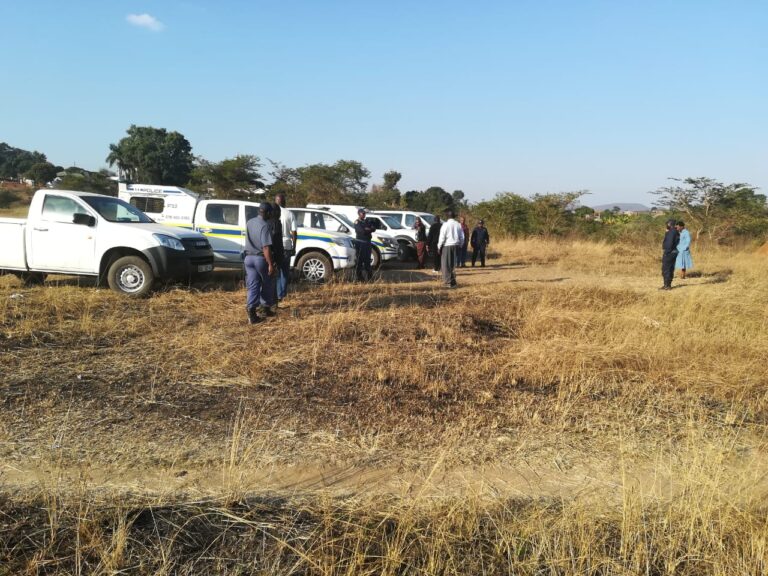
A TVET college lecturer in Lebowakgomo, Limpopo, was on Saturday attacked and burnt to death by unknown suspects while transporting goats.

The man was accused of stealing goats.

The 43-year-old college lecturer, Siphiwe Zondo, bought goats at Ga-Mphahlele village.

According to the police, Zondo was stopped and pulled outside of his vehicle by a rampaging mob, accusing him of stock theft.

The Limpopo police have since launched a manhunt for the suspects.

The police urged the public to come forward with any information relating to the murder of the TVET college lecturer.

Recently, four men were also burnt to death in Phalaborwa, Limpopo, after they were suspected of burglary.

Meanwhile, the Democratic Alliance (DA) in Limpopo has condemned the latest mob killing the college lecturer.

“The Democratic Alliance (DA) in Limpopo strongly condemns the latest mob killing in Lebowakgomo on Saturday. He was severely assaulted and burnt to death in his bakkie,” said DA Provincial Spokesperson on Transport and Community Safety, Katlego Suzan Phala.

Phala said that they are concerned about the sudden spike in mob justice killings in the province.

This year alone, 10 victims brutally fell to the hands of mob justice in the province.

“The DA has sympathy with frustrated communities who do not feel safe in their own homes and whose property are at risk, but we call on communities not to take the law into their hands. We do believe that lack of police visibility and the lack of police stations in rural villages contribute to incidents of mob justice in our province,” said Phala.

On 10 June 2022, the DA wrote to the Police Commissioner, Lt. Gen. Thembi Hadebe, to provide them with a report on mob justice acts in the province and the measures put in place to prevent such incidents, “we have yet to receive a response.”

“The DA hopes the newly appointed MEC for Community Safety and Transport, Polly Boshielo, will show
more interest, than her predecessor, in holding the police accountable to protect and serve the people
of Limpopo.”

INSIDE EDUCATION

Proposed changes to school infrastructure regulations

THE Department of Basic Education has extended the deadline for the submission of comments on the amendments to the regulations relating to the minimum norms and standards for public school infrastructure.

The deadline for the submission of written comments is 31 July 2022, the Department of Basic Education said in a statement on Friday.

The Minister of Basic Education on 10 June 2022 published a Government Gazette, with proposed amendments to the Regulations Relating to the Minimum Uniform Norms and Standards for Public School Infrastructure, issued in terms of Section 5A (1)(a) of the South African Schools Act, 1996.

The department said the purpose of releasing the Gazette is to give the public, including stakeholders, an opportunity to participate in the drafting of the regulations and to make substantive input that will be considered in drafting the final regulations.

In addition to the Government Gazette, the department uploaded, as per general practice, the document with the proposals on the website www.education.gov.za for public comment.

“The department is committed to a constructive public participation process. It is for this reason that the public should be accorded ample opportunity to engage with the document and submit comments,” the department said.

The proposed amendments have come about following consultation with the Minister of Finance and the Council of Education Ministers (CEM) earlier this year.

Improving schooling environment 

The department launched the Accelerated Schools Infrastructure Delivery Initiative (ASIDI) programme in 2011. It is aimed at improving learning outcomes and bringing better access to education.

There are currently 1 053 schools on this programme.

The department also launched the Sanitation Appropriate For Education (SAFE) programme in 2018, which is aimed at replacing basic pit toilets with appropriate sanitation, in accordance with the Norms and Standards for school infrastructure.

The department said provinces initially identified 3 898 schools dependent on basic pit toilets.

“There are currently 3 407 schools on this programme. Sanitation projects at 2 006 of these schools have progressed to practical completion…” the department said.

The department said that the implementation of major programmes is dependent on the availability of funding.

The ASIDI programme is funded through the School Infrastructure Backlog Grant, while the SAFE programme is also funded through the same grant, with co-funding from the Education Infrastructure Grant.

“In 2021/22, both these grants were fully utilised. It is important to note that infrastructure requirements due to unforeseen events, such as the recent flooding in KwaZulu-Natal and Eastern Cape, are also in general funded through the same Education Infrastructure Grant.

“This may impact on the rollout of the remaining SAFE projects. The department has since stepped up the monitoring of projects to ensure that they are completed on time, to specification and budget,” the department said.

Minister Angie Motshekga has since October 2021 conducted weekly accountability sessions with the Director-General and the Infrastructure Branch at the DBE, where progress reports are presented, the department said.

In addition, the DBE said the Director-General holds weekly update meetings with the CEOs of the implementing agents.

The Director-General also convenes monthly infrastructure meetings with heads of provincial Departments of Education to receive progress reports on delivery and expenditure.

“Mathanzima Mweli, the Director-General of the Department of Basic Education, has been visiting construction sites since March 2021 to accelerate the delivery of the much-needed infrastructure.

“The monitoring function has assisted the department to unblock challenges and resolve issues that delayed the building process,” the DBE said.

The department said it is confident that the annual performance plan targets will be met and the budget allocated will be used. It has also developed detailed tracking tools and monitoring is taking place daily to ensure that implementing agents deliver as expected.

SA NEWS

Science| South African Engineer Turns Protein-rich Caterpillars Into Savoury Biscuits and Chocolates

A start-up entrepreneur, hailing from South Africa, has changed the perception of considering caterpillars as a worm by turning them into a snack.

Though it sounds unbelievable, the African chemical engineer, Wendy Vesela, said she found the black caterpillar packed with protein and iron. While speaking to South Africa-based NTV, the engineer said she planned to turn the inchworm into flour that can be later utilised in preparing savoury biscuits, sweet chocolate protein bars, cereals or smoothies.

Not only this, but she claimed Caterpillars can also be used in pizzas as toppings after steaming them at high temperature.

While narrating the reason behind the “incredible” idea, Vesela said she found several domestic and international customers eagerly seeking to use caterpillars as a source of protein.

She also cited how edible insects and worms are gaining popularity in Western cultures.

Besides, the chemical engineer revealed she belongs to Limpopo Limpopo and added his community use mopane as a staple food, cooked in a sauce of onions and tomatoes. “Caterpillars are a healthier option of protein. And it’s not a worm. So people have just to get over that fear,” she told the local media outlet.

She said mopanes are environmentally friendly and require no extra space or water for their survival. He said it is generally found on mopane trees, which grow in hot and dry regions of southern Africa.

“It’s high in protein, in essential fats and minerals, especially iron. It has more iron than the most expensive piece of steak,” she said.

Further, Vesela said she had started a big venture nearly seven months ago and added the business is thriving well.

She said she would expand her business in the near future. The young South African chemical engineer said she is now hiring women from rural backgrounds in order to support them with money.

COPY SUPPLIED| Republicworld.com

Classroom Management| Dealing with unruly behaviour among schoolchildren in a tumultuous world

CONRAD HUGHES|

COVID has left a lasting impact on education in a number of ways. Deficits in learning may never be fully redressed; backlogs, delays and more complexity in university admission will continue to be felt down the line; anxiety and depression are more prevalent.

But the pandemic has also given educators a chance to think about doing things differently. With the experience of lockdowns and social distancing, but also the opportunities offered to use technology more creatively, schools and universities can view the pandemic as a chance to recalibrate systems, processes and the whole philosophy of education.

Often experiences tell you not only what is present, but what is not present, and why whatever is missing is indispensable.

One of the core takeaways from COVID has been the centrality of well-being and human relations in learning. Through confinement and distancing, it became clear to students, teachers, parents and administrators that rapport and emotional connection, community and presence were all fundamental.

Learning is not a dry, technical exercise. It is an emotional, social phenomenon. This is something that psychologists have known for a long time.

Discipline

A number of articles are pointing out that serious disciplinary issues are arising in schools post-COVID. In the US, schools are reporting an increase in fights, vandalism and unruliness, causing teachers to quit. In South Africa, severe discipline problems have spiked post-COVID with cases of harassment, verbal abuse, physical attacks, intimidation and even stabbings.

Specialists are saying that there are more cases post-COVID than there were in the past.

I’m the head of a large K-12 school (from kindergarten to 12th grade). We have soldiered through COVID and it feels like we are coming through to the other side.

I’ve seen student anxiety, learning gaps and disciplinary issues arising in the way that young people respond to what has been a worldwide trauma. But whenever we look at discipline, certain universal principles come to the fore and should be considered.

Educational psychologists know that discipline issues are linked to the family context. Positive parental behaviour, daily routines (like having dinner every night as a family) and social support (listening, conversing, spending time together) have an enormously positive effect on students.

But not every student has the family backing needed to offer full emotional and psychological support.

Mentoring and one-to-one discussions

As a head of school, I’m a strong believer in establishing rapport with students on a one-to-one basis. Most schools are big places and it is easy for individuals to fall through the cracks. Every student should know that there is one trusted adult in the building and every teacher should be the coach of a given number of students. The smaller the group of students followed by a teacher, the better.

If every child has a chance to sit down with a teacher and talk about how things are going, it helps consolidate rapport and express any tensions that might be welling up. Every year I meet with my students and ask a few core questions. Teachers can do the same, taking on a coach position in these discussions, asking powerful questions such as:

How are you?
Tell me your story.
What would you like to talk about?
How are things in your life?

These questions allow students a chance to open up and express themselves. They also improve relationships between faculty and students over time. This becomes important because people are less likely to fall into antisocial behaviour when they are in the company of those they know and trust, particularly if those people are figures of authority.

A mentor programme built on rapport and meaningful growth conversations is a sure way to reduce tensions and promote well-being. This might not be enough to eradicate discipline problems altogether, but it means that students can be called to reason more quickly. There is already some social capital to work with to restore calm when that is needed. And the open door of conversation – with a known adult – is there as a pressure release, replacing violence.

Societal renewal

A school is a microcosm of the society around it. This does not mean we cannot change society through schools.

Rather than merely expressing the hardships of the adult world, schools are also sanctuaries for young people to learn and flourish in peace.

The teachers who put themselves on the front line every day for this vital public good deserve recognition and thanks.
With even more care given to building one-to-one relations, schools can help create a more peaceful world based on listening and appreciation of others.

(Conrad Hughes Campus and Secondary Principal at the International School of Geneva’s La Grande Boissière, Research Associate at the University of Geneva’s department of Education and Psychology, Université de Genève, Université de Genève)

THE CONVERSATION

SASCO, EFFSC in the Free State plan to boycott exams after arrest of five CUT students

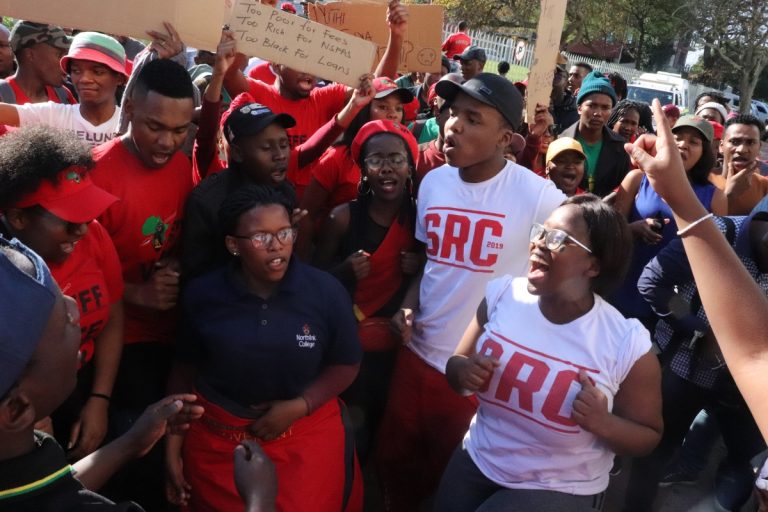
ANGRY Central University of Technology (CUT) students in the Free State are planning to boycott exams in solidarity with the arrest of five students from the Bloemfontein-based campus.

The five students were expected to appear in the Bloemfontein Magistrate’s Court on Monday.

CUT’s South African Students Congress (Sasco) pledged to stand in solidarity with the SRC president from the Welkom Campus, who they allege have been been bullied by management following his suspension from the institution.

According to a statement issued by Sasco secretary, Neo Ranyane, the SRC assisted the arrested students with food, clothing and other things they needed this past weekend – through student intervention.

CUT students had requested campus management to move their assessments online.

They also continued to raise issues of unpaid students allowances and accommodation, including allegations of corruption and maladministration against the institution.

Meanwhile, EFF Student Command (EFFSC) has also urged students not to succumb to alleged threats of management of the institution, and declared that provincial employees of the EFF will now join students on the ground as part of resolutions from a meeting the EFFSC had with its branch leadership at both Bloemfontein and Welkom campuses on Friday.

“We as the EFF Student Command Free State would like to let all students know, we are in solidarity with them and would do everything and use anything in our disposal to make it a point their cries are heard, issue attended to and needs catered for, since that’s the whole purpose of our existence as the Movement,” the EFF said in a statement.

INSIDE EDUCATION

There’s nothing like sport for developing focus and intensity, says retired cricket legend Vince van der Bijl

VINCE VAN DER BIJL

Sport is an enigma. It permeates all aspects of society. It is played in the streets and on the biggest stages of the world. It is often a hobby or merely viewed as entertainment on TV. It divides or unites nations. It can build or sever great friendships, or ignite tensions between countries.

As a top player, however, it is a way of life. It consumes you. Apart from your family, it takes centre stage as you go about your day. Sports scientist Tim Noakes once said: “To win an Olympic gold medal you must focus on that goal every second of every waking day. If you are not willing to do that, don’t bother. There are so many others who will.”

Experiences in sport remain etched deep inside you. They teach you life’s lessons of discipline, teamwork, respect, leadership and sacrifice, as well as  how to overcome despair and humiliation. It focuses your mind like no other activity. All sports people experience the full spectrum of emotions. One of the lessons it taught me was how to plan well in advance, thereby allowing me to frame my future.

When I taught and coached at Maritzburg College, I played Currie Cup cricket. Later, I realised that a week before a match, I would shut down as my subconscious worked on strategies, my opponents’ strengths and weaknesses, and technique. I operated on auto in other aspects of my life, such was my obsession to play great cricket.

Colleagues taught me many life lessons.

Bruce Fordyce was unique in that he trained ferociously for a single event that occurred only once a year — the Comrades Marathon. His self-motivation presentations revealed that early on he realised that to win, he needed to calm his mind during the race. To do that he would listen repeatedly to a particular U2 album until the songs were firmly embedded in his head. During the race he would “listen” to those U2 songs reverberating in his mind. This was long before the Walkman was invented!

When we invited him to dinner, say a month before Comrades, Bruce would ask me to phone each person who was joining us, to check that they did not have a cold or cough. If they did, he could not attend, as he needed to be in perfect health. He planned in minute detail.

At the end of a long training run, he would imagine he was running the last 5km in Comrades, tired, exhausted and having to shoulder on with determination. John Burgess, a training partner, said that Bruce, towards the end of such a run, would sometimes start to sprint, as subconsciously he was running the Comrades. As he broke away from the training group, John would have to clap his hands to bring Bruce back to reality. That commitment and planning was absolute.

I asked Jacques Kallis what was going through his mind when he walked out to bat in front of the baying 110,000 Indian spectators at Eden Park. He replied: “I never heard the crowd, I just repeated to myself, ‘Watch the ball’!” Such extraordinary clarity of purpose.

Once, when heavy rain cancelled a practice round for a Golf Academy USA event, the players were waiting on the bus for a young Tiger Woods. The academy director found him, in his rain gear, hitting balls on the practice range in pouring rain. “What on earth are you doing?” he asked, exasperated.

“Practising for the British Open,” was the reply. Tiger looked surprised at the question.

These stories all vary; yet focus and dedication are the binding principles.

Every sportsperson is talented to a degree. Only those who are truly committed nurture that talent to greatness. Legendary players value preparation and future-orientated thinking. It gives them the edge. They work harder and mentally prepare better than others. That gives them the ability to calm their minds to make the right choices, under pressure. They then develop the aura of BMT (big match temperament), which the opposition fear. BMT is not a God-given gift. It is a learnt art of future orientation and planning. There is no magic recipe to success.

Life’s lessons are acquired by experience. They cannot be taught in a classroom. Sport allows children to absorb life skills as they play.

SA needs to reach out to the 94% of schools without after-school sport and provide these opportunities — 94% is the damning statistic for the effectiveness of a holistic education in SA.

Sport will greatly assist the next generations to prepare for life. Education alone is not enough and never will be.

Vince van der Bijl is a retired South African cricketer.

Ndabeni-Abrahams officially opens the Centre for Entrepreneurship Rapid Incubator (CFERI) at Walter Sisulu University

SIPHOKAZI MAKHANDA

MINISTER of Small Business Development Stella Ndabeni-Abrahams officially launched the Centre for Entrepreneurship Rapid Incubator at Walter Sisulu University’s Zamukulungisa site in Mthatha on the 24th June 2022.

The Centre is a partnership between the Department of Small Business Development (DSBD) through Seda, and the Walter Sisulu University (WSU).

The centre exists to assist up-and-coming entrepreneurs to overcome barriers identified in their entrepreneurial journey as well as reduce youth unemployment.

The centre is furnished with state-of-the-art equipment, an ideas lab, and a makerspace, and is aimed at providing support to youth-owned enterprises, which often have little to no capital or funding.

Ndabeni-Abrahams said, “through this centre, young people will be assisted to deliver economic freedom through leveraging technology trends and doing things differently.”

Ndabeni-Abrahams further added that the launch is a significant milestone toward meeting the objective of pushing back the frontiers of poverty and unemployment in the country and creating a nation of entrepreneurs.

The WSU Deputy Vice-Chancellor Institutional Support, Dr Prince Jaca, said, “the university prides itself on creating work-ready graduates and those with skills to create jobs.

The mandate of SEDA and DSBD is in line with that of the university, to sustain business growth and ensure that they do not fail.”
He emphasised the fact that the CfERI is a source of hope for the young people, and a tool to fight unemployment, poverty and inequality, which is a serious problem in this country.

WSU built the Centre to the value of approximately R6 Million and the Department of Small Business Development collectively contributed R3 m.

SEDA, an agency of the Department of Small Business Development was responsible for the design and set-up of both the Innovation Space and Makerspace, which are situated in the facility.
Moreover, SEDA is responsible for continuous support in terms of monitoring and evaluation of the Centre.

The Department of Small Business Development covers the operational costs of the Centre, such as staff salaries, programme costs, and the development of entrepreneurs.

WSU students, promising entrepreneurs, and small business owners in Mthatha and surrounding towns were present to witness the launch of their business incubation.

Among the external stakeholders who were present during the launch was the Centre, Executive Mayor of OR Tambo District, CLLR Mesuli Ngqondwana and Executive Mayor of King Sabata Dalindyebo, CLLR Nyaniso Nelani.

Both Executive Mayors offered words of support and committed to ensuring partnership with the CfERI.

“The city will be looking at mechanisms in which they can interact and partner with the centre, so that the centre’s ideals may not perish,” said the executive mayor of King Sabata Ndalindyebo Municipality, Nyaniso Nelani.

The Centre Director Dr Thobekani Lose assured access of all stakeholders to the CfERI infrastructure, networking and mentoring in a form of support to the small development projects.

“While the CfERI will focus on the university, it will also service all sectors and small businesses in the Mthatha area to unearth new ideas and assist business ventures run and owned by the youth,” said Dr Lose.

Ndabeni-Abrahams was flanked by the King Sabata Ndalindyebo Municipality Mayor, Nyaniso Nelani; Small Enterprise Development Agency (Seda) Chairperson, Xoliswa Daku, the Walter Sisulu university Deputy Vice-Chancellor, Dr Prince Jaca and Walter Sisulu University Rectorate, Professor Nomabandla Cishe as she was cutting the ribbon and opened the doors to the centre for the first time.

SUPPLIED| WSU

NSFAS commended for providing funding for poor students – Manamela

WENDY MOTHATA|

DEPUTY MINISTER of Higher Education, Training, Science and Innovation, Buti Manamela, has commended the work of the National Financial Aid Scheme (NSFAS) despite certain challenges, including failure to pay students’ allowances on time.

Manamela was delivering a keynote address at the NSFAS Student Accommodation Summit held at the Central University of Technology in Bloemfontein, Free State.

The two-day summit kicked off on Monday and wraps up its business on Tuesday.

The summit is a platform for all role players to contribute to discussions related to standards, price and criteria of accommodation for NSFAS funded students to ensure future sustainable and safe accommodation.

“I don’t think we should underestimate the state impact the NSFAS has made to most households, to most families, to most individual students to ensure that they ultimately complete their academic programs on time,” said Manamela.

Manamela added: “NSFAS is central to the efforts of DHET, of making our institutions of higher learning accessible to young people from poor and disadvantaged backgrounds and enabling them to achieve the highest academic outcomes possible.”

The deputy minister reiterated that ‘a summit such as this was an appropriate platform to assess how far the institutions of learning have gone in implementing recommendations of the Ministerial Review Committee on Student Housing and the recent Framework as announced by the Minister’.

“Since the publishing of the report of the Ministerial Review Committee on Student Accommodation, our post school education and training sector has grown significantly,” he said.

Tabling down the objectives of the summit by NSFAS, CEO Andile Nongogo, said NSFAS business model was student-centered.

“Student-centered is not only about providing financing it is also about making sure that we provide value for our students. To ensure that they have all the resources to enable them to succeed. This initiative is not about going to school but ultimately contributing to the economy, their families and communities,” said Nongogo.

Nongogo said that students should stay in accommodations that is safe, sustainable and conducive.

“When we talk about suitable places that is conducive to studying, we are referring to student village concept. The student village concept is about making sure that all students needs to succeed are there,” he said.

He said one of the mistake made by his department was giving students cash.

“Sometimes as leaders we must admit when we have made mistakes. I do think that one of the mistakes we made was to give students cash. Yes, we understand that students are adults and they should make their own decisions and they should be able to learn how to use money but what we exist for as NSFAS is to provide an environment that is conducive for them to study and succeed. And of course there are certain instances where we are not going to be able to run away from providing cash. However, our focus today is that students should focus on the business of learning. We as officials should focus on creating that environment.”

One of the delegates attending the summit, Thuso Tshiloane, Group COO for ligcabho Le’Africa Properties and Stayhope Properties said that the purpose of attending the summit is to contribute in the discussions of providing safe, affordable and convenience student accommodation for South African students.

Tshiloane said that NSFAS must urgently deal with lease agreements on behalf of students.

“NSFAS should be involved in the Financial Literacy of the students because they spend more money on non-essential items than essential items that are important for their education. NSFAS should focus on working with us, the private business to create a relationship that will benefit the student livelihoods.”

Tshiloane added: “Being a young entrepreneur in this business of housing enabled me to understand the students better and be related hence so far leading a company of 450 students and over 30 employees. It has been smooth and a good working environment.”

INSIDE EDUCATION

University students protest against Ethiopians massacre in Oromia

0

THE students of Gondar University in Amhara region of Ethiopia today protested against the latest massacre of civilians in Oromia region Wellga area where similar massacres occurred.

During the demonstration the students urged the Government of Ethiopia to bring to justice the armed group and those associated with the group who were engaged in the armed attack that reportedly killed over 400 civilians including children and elders.

It is reported that the massacre that reportedly took place on Wednesday for four hours is executed by the armed Oromo group known as Oromo Liberation Front (OLF) Shene.

In addition to those killed some 2000 civilians are reportedly forced to leave their residents, while an unknown number of civilians are abducted by the group, which is labeled by the Ethiopian Parliament as a terrorist group along with the Tigray peoples Liberation Front (TPLF).

Reports show like the previous massacres in different parts of Oromia region, all those massacred on Wednesday are Amhara ethnic groups.

Some of those who demonstrated opposing the massacre today in Gondar are heard that the federal government of Ethiopia needs to cleanse itself (its system) especially from the corrupt officials who are allegedly associated with the OLF Shene.

They questioned why the Government of Prime Minister Abiy Ahmed has failed to stop the continued killings of Amhara ethnic civilians in Oromia and Benishangul Gumz.

Because serious action was not taken against those who committed the massacre by the federal government, now many Ethiopians especially those in the diaspora are accusing of the Government of Abiy Ahmed for conspiring with the attackers.

The demonstrators today urged the Government of Ethiopia to make accountable the local offcials where such massacres against Amharas takes place frequently such as, Wellega, and Benishangul Gumz, among others.

NEWSBUSINESS ETHIOPIA