Home Blog Page 258

Unisa opens registration for 2nd semester 2022

REGISTRATIONS for 2nd Semester at the University of South Africa (Unisa) is currently open and will now close on 18 July 2022.

The university has encouraged everyone to make use of the opportunity and register on time.

All registrations will take place online, with exception to certain students pursuing Master’s and Doctoral degrees.

In order for the registration to be complete, students are asked to keep track of the dates by which they must make the minimum and final payments.

Applicants (new applicants Unisa students who applied for admission to a new qualification) may only register if they have received an offer of placement from Unisa and have accepted the offer online.

“Unisa reserves the right to not process and / or to cancel your registration if it is found that you were incorrectly admitted to a qualification,” statement reads.

Re-registering students must register for the 2022 academic year during the relevant registration period.

The myLife e-mail account will be the only e-mail account recognised by Unisa for official correspondence to and from the university, and will remain the official primary e-mail address on record at Unisa.

“The university provides all registered students with a free myLife e-mail address. It is your responsibility to activate your myLife e-mail account as soon as your registration has been finalised.”

The Unisa Online registration will be as follows:
Undergraduate qualifications:
Open 20 June – 18 July 2022

Honours degrees & postgraduate diplomas:
Only Semester 2 Modules
Open 20 June – 18 July 2022
(Excluding CAS programmes)

Master’s and doctoral qualifications:
Only Semester 2 Modules
Open 20 June – 18 July 2022 (MBA and MBL only).

The registration portal for all qualifications can be found here where applicants can start the process which is made up of five steps:

  1. “Find your qualification and choose your modules 
  2. Calculate your study and other fees
  3. Complete and submit your registration 
  4. Pay your study fees 
  5. After registration [waiting for confirmation and enrolling].”

Those confused by the term “module” should know that this is simply the word Unisa uses in place of “subject” or “course”. These are the classes and programmes students need to finish to obtain their qualification.

Lastly it’s worth mentioning the Unisa Short Learning Programmes (SLPs).

At the time of writing the SLPs are not open for registration so applicants will need to wait a while should this be the type of qualification they are seeking.

The last registration period for SLPs was between 13th September 2021 and 28th February 2022, so it’s likely that the next intake will happen around a similar window.

“The SLPs focus on “just in time” and “just enough” learning to meet a specific learning needs identified by individuals or organisations. SLPs are offered by UNISA’s Centre for Lifelong Learning (UCL).

Programme content and contact details are contained in each programme.

All enquiries should be directed to ucl[AT]unisa[DOT]ac[DOT]za,” reads the description for SLPs.

INSIDE EDUCATION

Classroom Management| Africa’s schools evolve to next-generation learning with Google for Education

GOOGLE for Education, backed by Chromebooks, is emerging as the technology of choice among schools and universities across South Africa and the rest of Africa, as they move into a new era of teaching and learning. 

This is according to Digcloud Africa and Google for Education partner iTechSolutions, who say public and private schools are fast moving into an era of digitally enabled education.

Daryl Duncan, Founder and Partner at iTechSolutions, says the pandemic accelerated schools’ plans to deploy technology throughout their environments. “There has been a big push to drive one-on-one learning, improve learning management solutions and utilise devices in classrooms. This in order to access resources, collaborate, upload assignments and for peer review both in class and remotely,” he says.

“Connectivity was a hurdle, but more private and public sector organisations are making free or low-cost connectivity available to schools. This now enables them to embrace new ways of teaching and learning. Schools want to enable real-time access to collaboration tools, learning and resources wherever learners are, but they also need the environment to be secure and easy to manage. This is why adoption of Google for Education is picking up. It makes collaboration easy – anywhere, any time – and solves the security issue by following the learner wherever they go.”

Candice Erasmus, Training and Change Management Consultant at Digicloud Africa and end-user specialist for Google Workspace, says Google for Education ticks all the boxes for schools, parents and learners.

“Learning is at the heart of what Google does, and over 170 million students and teachers worldwide use Google Workspace for Education to power learning. Over 150 million students and educators use Google Classroom and over 50 million students and educators use Chromebooks,” Erasmus says.

“Because Google tools are familiar to everyone, the Education suite is easy to navigate and use. With Google, there is one version and full functionality across any device and users don’t have to download an app. Importantly for much of Africa, it’s as easy to use on mobile devices as it is on laptops. It’s uniform, it can do everything and schools love it. We’re seeing phenomenal uptake,” she says.

Digicloud Africa is Google’s chosen enablement partner in Africa for Google Cloud products, including Google Workspace, Google Cloud Platform, Chrome Enterprise and Google for Education solutions.

Erasmus says Google for Education is available in tiered and customisable editions, starting with Google Workspace for Education Fundamentals, with free and secure tools for communication and collaboration. Schools can opt to upgrade to Education Standard; Teaching and Learning Upgrade; or the premier Education Plus Edition – a transformative solution with advanced security and analytics and enhanced teaching and learning tools.

The enterprise-grade version enables meetings with up to 500 participants and streaming to up to 100 000 in-domain viewers with Google Meet. It also allows personalised cloud search within the customer’s domain. Every edition includes Gmail, Google Calendar, Meet, Docs, Sheets, Slides, Forms, Classroom, Sites, Assignments, Groups, Drive, Admin, Tasks and Jamboard. Google Classroom enables teachers to assess progress from anywhere and includes originality reporting to check for plagiarism and copying among learners.

Duncan notes that schools prefer using Google’s integrated ecosystem for security and management. “For young learners, teachers can lock down some of the features in line with policies and principles, so they enjoy ease of use and ease of management. When they standardise Google Chromebooks as part of this ecosystem, management becomes even easier,” he says.

Chromebook devices, typically priced lower than other devices, complete the Google learning environment.

Harnessing the Chrome OS, Chromebooks are easy for IT to administer, secure and simple to use. They are available in a range of shapes and sizes – including tablets, convertibles and laptops.

“Schools are starting to put Chromebooks on their stationery lists,” he says. “When all the devices are standardised, teachers find it easier to help students and talk them through which buttons to press, and the school can easily roll-out patches and updates.”

iTechSolutions works with a growing number of schools and tertiary institutions to help them optimise and manage their new environments.

“Schools are realising that it’s best to work hand in hand with a partner such as iTechSolutions for training, best practice system management and to help them get the best value and most effective use out of the solution,” says Duncan.

“We are technically skilled and certified to offer ongoing training and support to ensure schools get the best value out of their investment.”

DigiCloud

Updated Covid rules for schools in South Africa, including an option to wear face masks

THE Department of Basic Education has confirmed that it will adjust its existing regulations to align with South Africa’s new regulations around mask-wearing and gatherings.

In a statement on Thursday, Basic Education minister Angie Motshekga said she supported the repealing of the mask mandate for learners and that the department will make regulatory changes to align itself with the new changes.

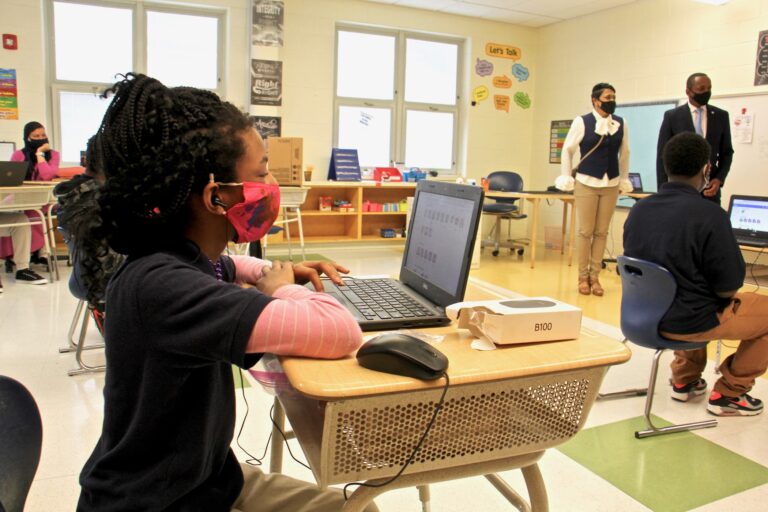
“In line with this decision to repeal the regulations, wearing of face masks by learners in classrooms, and indoor gatherings is no longer a requirement. Those learners and staff who wish to continue to wear a face mask in schools will be allowed to exercise this option,” said the minister.

She said the department will also continue to support the Covid-19 vaccination of all learners aged from 12 years, with parental consent.

The announcement comes after health minister Joe Phaahla repealed several Covid-19 regulations on Wednesday relating to the wearing of face masks, gatherings and persons entering the country.

The gazetting of the regulations means that the wearing of face masks in any public-use indoor space or when on public transport to contain the spread of Covid-19 has now fallen away.

People congregating in public spaces will no longer be limited to certain numbers. Requirements for entering and leaving the country have also been scrapped.

“We want to take this opportunity on behalf of all government to thank South Africans for their support and cooperation over the last two years and three months,” Phaahla said in a media briefing on Thursday.

“While there was a lot of common ground and agreement even across political lives early in the pandemic when we all thought it would be short and over within a few months, the longer it took more fatigue and disagreements on strategy started to surface. We appreciate the fact that notwithstanding the disagreements even leading to threats or even actual court actions the mainframe of our collective action remained until today.”

BUSINESS TECH

UCT vice-chancellor: An incomplete degree should not end dreams of a career

MAMOKGATHEI PHAKENG

A 2019 study revealed that 78% of university students could not complete their three-year degrees in the allotted time. In fact, over half had not completed their degrees even after six years.

Across South Africa, many university students are dropping out of their study programmes – and not necessarily for academic reasons.

A large number of capable students simply cannot afford to continue paying the high costs of tuition, books and fees. While they have the academic ability to complete a degree and enter the job market, they are unable to do so. As a result, university drop-out rates are 47%.

Among graduates who do complete a higher education programme, 85% are employed.

This is a clear indication of the value of tertiary education in South Africa – although some successful university graduates are battling to find an entry-level job that will help them climb up a career ladder. General unemployment statistics sit at 34%, while the percentage of youth who are not employed or participating in a programme of education or training is around 60%.

Meanwhile, corporate South Africa has vacancies in digital-based careers but not enough eligible people to apply for these positions.

The country is also at risk of its talented young people emigrating to other countries to seek employment.

There is an urgent need to fill the skills gap if the country is going to keep up with the fourth industrial revolution.

The University of Cape Town (UCT) has a relatively low drop-out rate compared to other South African institutions, at about 10%. But we are not happy with this statistic.

It means that every year, roughly 2 000 students experience the heartbreaking disruption in their education, largely due to circumstances outside of their control.

UCT, in partnership with digital education company Umuzi, is offering a way for these students to develop their skills, knowledge and networks to increase their likelihood of finding work or developing entrepreneur opportunities.

After the pilot programme, we intend to expand the digital bootcamp to accommodate as many UCT students as possible who experienced interrupted studies, and we hope to replicate this model in other universities across South Africa and the continent. Expanding this opportunity depends on the availability of sponsorship.

We are motivated by our awareness of the massive, untapped talent available in South Africa’s young people. If a simple lack of training is all that stands between these talented future leaders and a job, then we need to create a way to address that.

The pilot UCT Digital Bootcamp, which began on June 22, will offer sponsored training to eligible students whose studies were interrupted or our graduates who have been unable to find a job since graduating three or more years ago. No previous experience or skills are required to apply for this pilot programme.

An important part of UCT’s Vision 2030 is to help South Africans take their rightful place in the global digital economy, not just by filling digital jobs but also by bringing an African perspective to help steer the growth of the digital economy across our continent.

This is part of our institutional mission to unleash human potential to create a fair and just society.
We are seeing the growing need for digital skills in more and more professional fields, including law, social services, media communication and other “non-scientific” sectors.

At UCT, we encourage students to consider developing information technology skills while pursuing their chosen degrees because we want our graduates to be ready to work within the fourth industrial revolution and influence its impact in South Africa.
We have the same desire for students who experienced interrupted studies and graduates. The digital bootcamp pilot programme offers a way for 100 young people to move in a direction that may be different from their original career goals but will provide the skills for them to possibly reach those goals on a different path.

I have learnt from my own career that life brings many turns, bumps and changes along the way.

There is no single “correct” path and the opportunities to learn and grow from a different path are endless. The bootcamp is designed to provide such opportunity.

The UCT and Umuzi are not doing this alone. We have generous sponsorships from international corporates eager to employ South Africans in the offices they are launching in the country.

We also encourage participants to think beyond corporate employment to consider ways that they can shape new services and businesses around the skills they will learn.

We don’t want to duplicate what the rest of the world is doing in the fourth industrial revolution.
Instead, we want to give South Africans the skills to lead how the fourth industrial revolution will help Africa grow in economic strength and global influence.

The bootcamp offers a choice of courses that will require students’ full-time participation for up to three months or part-time for up to six months.

Training will be online, so participants can join from different locations.

The three main pathways are digital tech, comprising data analytics, IT support, user experience design and user interface design, and project management, media marketing pathways, comprising social media marketing and marketing analytics, and cloud pathways, which provide a cloud practitioner certificate.
Training is sponsored by international leaders in digital technology and information systems Amazon, Google and Meta (previously Facebook).

While the pilot programme is already under way, we are eager to hear from students who experienced interrupted studies and unemployed graduates across South Africa who would like to participate in future bootcamps.

We continue to seek sponsors to help expand the programme to all eligible potential digital professionals. Applicants can find out more by visiting https://www.africancoding.network/uct.

This is a great opportunity for young people who have demonstrated their academic talent and want to take it to their future workplace. At this point, it is only a seed, but seeds have tremendous potential to grow.

Phakeng is vice-chancellor and principal of the University of Cape Town.

North-West University announces new chairperson and deputy chairperson of its Council

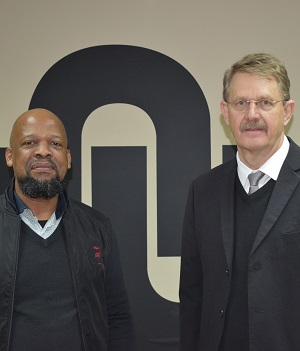
THE North-West University (NWU) Council has elected a new chairperson and deputy chairperson.

Bert Sorgdrager, a seasoned legal professional with more than 30 years’ experience in the private sector, was elected as the sixth chairperson of the NWU Council.

Obakeng Mongale, an experienced public servant and the current superintendent general for the North West Department of Health, will serve as deputy chairperson.

This follows the resignation of the previous chairperson, Dr Bismark Tyobeka, who has since been appointed principal and vice-chancellor of the NWU.

“I am proud to continue serving my alma mater and consider it a privilege to be looking after the interests of the NWU, both currently and in the future,” says Sorgdrager.

His association with the university goes back to his enrolment in 1977 for, and his completion of the BJuris (1979) and LLB (1981) degrees at the then Potchefstroom University for Christian Higher Education, now the NWU.

Sorgdrager, currently an attorney at Van Deventer Dlamini Inc, previously served the NWU Council as acting chairperson and deputy chairperson.

He has been a Council member since 2017 (elected from the ranks of the Convocation) and has been a member of the executive committee of the NWU Council since September 2018.

His association with the NWU includes serving on various committees and being an exco member since August 2014, and president of the NWU Convocation since April 2018. He has also been the chairperson of the NWU Alumni Association since August 2014 and the representative of the Potchefstroom Campus alumni since 2012.

Sorgdrager spent most of his career in banking, specifically at Nedbank, where he served as legal adviser and also held various management positions in risk management.

Mongale, on the other hand, is also a proud alumnus of the NWU, having obtained a Postgraduate Diploma (PGDip) in Management, and a master’s degree in Industrial Psychology.

He holds an honours degree in Industrial Psychology and a bachelor’s degree in Administration from the former University of Bophuthatswana, now the NWU.

He is an Oliver Tambo fellow (Postgraduate Diploma in Health Management) at the University of Cape Town (UCT).

Mongale is currently studying towards a master’s degree in Philosophy in Conflict Transformation at the Nelson Mandela University.

“I am honoured to serve as deputy chairperson and am committed to fulfilling this essential role in the Council,” says Mongale.

His previous experience includes serving on various Council committees such as the executive and tender committees, as well as on the medical school task team and the extended exco.

He became a Council member in 2017 after being appointed as ministerial representative and started serving his second term from September 2020.

Mongale is a former head of the Department of Public Works in North West, and of Public Works, Roads and Infrastructure in the Limpopo provincial government. During his tenure as the head of department at Public Works in North West, the department won several awards.

He previously served the North West Department of Health as director for Human Resources, then as chief director for Corporate Services and as head of department. From October 2010 to September 2013 Mr Mongale returned to the North West Department of Health, where he was responsible for health support and specialised hospital services.

Mongale served as board member at the Johannesburg Property Company (April 2019 to March 2020), which is a company of the City of Johannesburg. He was also a member of the board of trustees of the Health Systems Trust, where he served as chairperson of the board’s HR committee and as a member of the finance committee (2010 to 2013).

INSIDE EDUCATION

Science| South African robotic telescope to begin search for the afterglow of cosmic events

A NEW optical telescope in South Africa that will measure the brightness of transient sources will begin operation in mid-July.

Located at the Boyden Observatory in Bloemfontein, the telescope – a collaboration between South Africa’s University of the Free State, University College Dublin (UCD) and the Institute of Astrophysics of Andalusia in Spain – will be used to study the afterglow from extremely energetic astrophysical events.

Transient events often appear in the sky briefly before disappearing. The telescope – dubbed the Burst Observer and Optical Transient Exploring System (BOOTES 6) – is equipped with an extremely sensitive CCD camera to detect these faint events and it has an incredibly fast “slew rate”. This means that when an alert of a gamma-ray explosion is reported, the telescope can observe it within a few seconds, which is crucial when monitoring transient events.

Astronomer Pieter Meintjes, who is head of astrophysics at the University of the Free State, says the group is “ecstatic” about the fast slew rate as it will allow quick data collection and give the team an edge over rival groups. 

Studying extreme events

One of the main aims of the telescope will be following up on the afterglow that is produced during gamma-ray bursts that are created when very massive stars form black holes or when neutron stars collide.

“By observing the afterglow and monitoring how it fades away over time allows astronomers to pin-point the location of the explosion and also establish what kind of explosion it was,” says Meintjes, who adds that the researchers are planning to put a spectrograph on the telescope, which will allow them to determine what elements are forged in these extreme events.

Work began on the telescope two years ago, but efforts were hampered by the COVID-19 pandemic with engineers only being able to assemble the telescope in April. The telescope’s hardware was funded by the Institute of Astrophysics of Andalusia while the University of the Free State built the observing dome.

The Boyden telescope joins other BOOTES telescopes that are located in China, New Zealand, Mexico and Spain – in the search for transient events. 

The new telescope is the second observatory to be hosted by the University of the Free State after the 0.41 m Watcher telescope, which has been managed by UCD since 2001. 

Physicsworld.com

22 teenagers, most of them learners from various local schools, found dead in East London tavern

TWENTY-TWO teenagers were found dead early Sunday morning in a tavern in the coastal city of East London, South Africa, the police said, in a tragedy that remains something of a mystery and that has left much of the country, including top officials, reeling emotionally.

Initial reports were that the teenagers, who the police say ranged in age from 13 to 17, died from a stampede.

But Bheki Cele, the national police minister, said investigators had not confirmed that theory.

He was overcome with tears as he spoke about the victims, nine girls and 12 boys.
“It’s a scary thing,” Mr. Cele said outside of the mortuary where the victims were being examined.

“I got inside but could not go any further to where they were opening up the bodies,” he added, his voice trailing off as he buried his face in his left hand and began to cry, turning away from the crowd.

President Cyril Ramaphosa expressed his sympathy in a statement.

And senior officials from across Eastern Cape Province and the rest of the country descended upon the Scenery Park neighborhood, northwest of East London’s city center, to help attend to the fallout from the tragedy.

Television news footage showed local residents, many of them seeking information about loved ones, gathered on a dirt road outside the modest building housing the bar, Enyobeni Tavern, which is tucked in a residential community.

“We really cannot understand what has happened here,” the Eastern Cape premier, Oscar Mabuyane, told reporters.
“It just can’t be. It should not happen like this.”

Brig. Tembinkosi Kinana, a police spokesman, said the police had received a call about 4 a.m. reporting deaths at the tavern.
Unathi Binqose, the spokesman for the Department of Community Safety in the Eastern Cape, said the tavern had hosted a large party on Saturday night, featuring two DJs who were celebrating their birthdays.

The party was also billed as a celebration of South Africa’s dropping its mask mandate for public places, which had been in effect since the start of the coronavirus pandemic, Mr. Binqose said.

“It attracted huge numbers, more than the tavern can accommodate,” he said of the party.

Bouncers told investigators that in an effort to control the crowd, they closed the doors to the venue, Mr. Binqose said.

People outside were said to have tried to push their way in, setting off a panic and a stampede, which may have been exacerbated by someone releasing pepper spray, he said.

But the theory of a stampede seemed inconsistent with what forensic experts had found so far in terms of injuries to the victims, Mr. Binqose said.

Victims were found sprawled on the gray tile floor, but also on a sofa and a coffee table.

“In terms of physical evidence, nothing points to a stampede,” he said.

He said the police had seized surveillance footage taken at the bar.

Speaking to eNCA, a South African television news network, the bar’s owner, Siyakhangela Ngevu, said he was not there when the deaths occurred.

He rushed there after his security guards called him, he said, and found chaos, with children everywhere.
Some had forced their way into the tavern, he said.

He said he could not dispute that pepper spray might have been used and contributed to the deaths.

In South Africa, the minimum age for patronizing a bar is 18. Mr. Ngevu told the station that his establishment did not allow minors in, but that they sometimes hung out outside.

Mr. Cele and other public officials admonished the parents of those who had been at the bar.
“As parents, we all have to be responsible for our children,” he said. “How can you go to bed knowing that your child is not in the house?”

NEW YORK TIMES

Motshekga welcomes scrapping of face masks for pupils, teachers and staff

WENDY MOTHATA

THE Department of Basic Education has announced that the wearing of face masks by learners, staff and teachers at school or in the classroom is no longer required.

This comes after Health Minister, Joe Phaahla, published the amendments of regulations in the Government Gazette on Wednesday.
As of Wednesday, South Africans are no longer required to wear masks indoors and in public areas.

“The Department of Health published Regulations on 22 June 2022 repealing amongst others, the wearing of face masks when entering and when being inside an indoor public place,” said Elijah Mhlanga, spokesperson for the Department of Basic Education.

Mhlanga said that the wearing of face masks in schools is currently optional for both learners and educators.

“The Department of Basic Education aligns itself and welcomes this new development. The wearing of face masks in schools is optional for learners and educators,” said Mhlanga.

Angie Motshekga, the Minister of Basic Education, said she supports the repealing of mask mandate for learners.

Motshekga said that learners and staff who wish to continue to wear a face mask in schools will be allowed to exercise this option.

“In line with this decision to repeal the regulations, wearing of face masks by learners in classrooms, and indoor gatherings is no longer a requirement. Those learners and staff who wish to continue to wear face a mask in schools will be allowed to exercise this option,” said Motshekga.

In March 2020, South Africa’s government ordered a hard lockdown to limit the transmission of COVID.

Schools and universities were closed. As elsewhere in the world, schools had to shift rapidly to replace in-person teaching with various forms of technology based, remote and distance education.

That shift exacerbated existing inequalities: poorer communities often struggle to access fast, reliable and affordable internet.

INSIDE EDUCATION

Germiston athlete, Divine Mavungu, reaches for the stars

DIVINE Mavungu (14) of Hoërskool Alberton has huge sports ambitions and the future is bright for this young athlete.

This Grade Nine learner was awarded a gold and silver medal at the South Africa Schools Athletics earlier this year, which was an incredible honour for him.

“It was an amazing dream come true and I couldn’t believe my eyes,” Divine remarked.

Divine represented his school this year at the SA Schools Athletics where he came sixth in the 200m, sixth in the 100m and received a gold and a silver medal for his relay performance.

He recorded his personal best time, which was 10.91, at the provincials this year. He was also awarded his SA colours.

“Clocking my personal goals and representing my school at such a massive event is a most pleasurable feeling.”

Divine started athletics in Grade Three at Colin Mann Primary School.

“I made it to the provincials where I claimed fourth place. I qualified for the SAs, but I could not compete that year as I was too young.” His highlights include competing at the district and provincials every year since Grade Three. He qualified for SAs four times in his athletic career.

Covid-19 made it hard for him as there were no school athletics events.

He is also a member of the Boksburg Athletics Club and he competed at a provincial competition this year where he received first place and qualified to go through to the SAs but due to unforeseen circumstances, he could not compete.

It is one of his goals to compete in the Junior Olympics one day.

“I train six days a week for the whole year,” said Divine. He said he feels like he does not have enough hours in a day to do what he wants to do.

“I take my school work very seriously and that is why I always make sure that there is a balance between my academics and my athletics.”

When he gets the chance, he will focus on his school work to make sure that he knows what is going on and that he doesn’t fall behind.
Athletics is part of Divine Mavungu’s life.

“Running and exercising is what I do best. It is my happy place and where I can escape reality,” he said.
Divine said being an athlete is hard work as you don’t just train for the athletic season, but you train throughout the year to stay fit.
“I train a lot and I do need to watch what I eat and drink,” he said.

Short distances and relay are what Divine is passionate about.

Older athletes inspire him because he finds it fascinating to see how they train and compete.

“Athletes are fueled by non-believers. They possess the ability to overcome adversity like no other. Where others see fear, they see the symbolism of what they want and go for it.”

Divine was born in Germiston and grew up in Elsburg with his two brothers. He is the middle child.

In 2011 he moved with his family to Lambton where they are currently staying. When he is not busy training or catching up on school work he enjoys making gifts.

“I like being creative and making stuff. I also like inventing new things.”

He also enjoys watching TV and listening to music. When he grows up, he wants a career in the sports industry.

Something people don’t know about him is that he is frightened of birds, cockroaches and dogs.

“I also want to take this opportunity to say thank you God for blessing me with this talent. Thank you to my parents, my friends, my school and my coach, Lindie du Plessis for supporting and believing in me,” he concluded.

SUPPLIED|

Stadio Holdings, the private company taking on South Africa’s biggest universities

STADIO, the JSE-listed investment holdings company with investments in three private higher education institutions, has set its sights on creating an alternative to the University of South Africa, the largest university system in the country, with in excess of 400,000 students.

Larger universities including the likes of Stellenbosch University, UCT, Wits, and North-West University range between 30,000 and 70,000 students.

Stadio started as a subsidiary of Curro Holdings, but was unbundled in 2017, and listed separately on the Johannesburg exchange.

In 2013, Curro acquired Embury, a registered private higher education institution, which offers accredited teacher education qualifications. This was Curro’s first acquisition in the post-school education environment.

It has since acquired further prestigious registered higher education institutions, namely AFDA, Milpark Education, LISOF, Prestige Academy and Southern Business School, as well as the business of CA Connect. AFDA and Milpark Education operate independently, and the other institutions were consolidated with Stadio to form one Stadio Higher Education institution.

In a note on Wednesday (22 June), Stadio chief executive officer, Chris Vorster said the group is set to enter a growth phase with its eye firmly on widening access to quality education. It currently boasts 9 schools, over 50 accredited programmes and both on and off-campus options.

Stadio, with its current three investments in Stadio Higher Education, Milpark Education, and AFDA, has, from 2016 to 2020, focused on establishing and positioning the business.

Vorster said that in 2022, the group is still focused on the consolidation phase of the business and is positioning to implement its growth strategy, aiming for sustainable growth in profit of more than 20% in the long-term, with minimal capital requirements, whilst investigating the possibility of new markets, and further refining its systems and processes to enable continued innovation and efficiencies.

Addressing shareholders in a virtual AGM, Vorster, said that the foundation for this growth phase has been laid and is visible in the first semester with student numbers up by 11% to 38,414  at the end of May 2022 in comparison to 30 June 2021, with distance learning numbers increasing by 15%.

These figures exclude students enrolled in short-learning programmes, Stadio said.

“Of particular significance, is that new students increased by 16% relative to June 2021 with contact learning students growing by 2% to 2,355 and distance learning by 19% to 11,137 students.

“This is a good illustration of our strategy for growth, by taking new programmes to new sites. In general, new student growth provides Stadio with a good pipeline of roll-over students for the next few years,” Vorster said.

Stadio is on track to achieve its target of 56,000 students by 2026, with an 8% annual growth rate required to achieve this. “The ultimate goal is to provide top-class education to 100,000 plus students over time with a minimum of 80% distance learning students and a maximum of 20% contact learning students,” Vorster said.

“Stadio is well-positioned to achieve these goals with its overall strategy underpinned further by its purpose of widening access to education, taking cognizance of the world of work and student centredness,” he said.

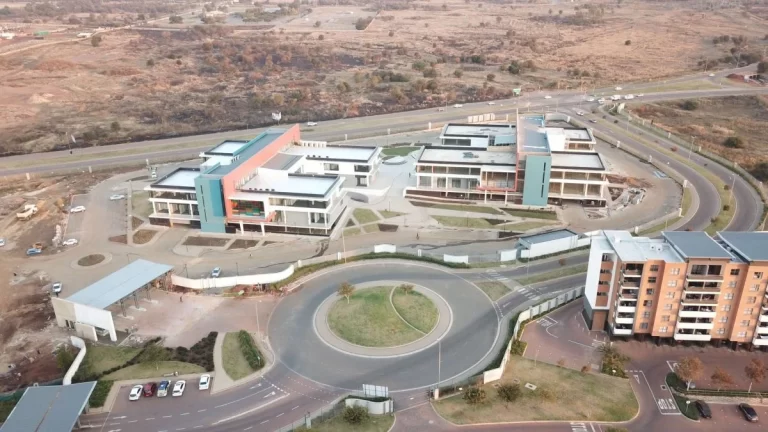
The group’s latest campus in Centurion opened its first phase in 2022 at a build cost of R200 million.

Fees vary greatly, depending on the course, type of learning, location, advancement, and year of study.