Home Blog Page 264

School Sports| South Africans splash into mermaiding as a sport

A DOZEN South Africans dressed as mermaids and mermen frolic in a Johannesburg pool, mimicking the movement of the mystical sea creatures.

Mermaiding is a fast-growing sport worldwide, and now South Africa has its own school to teach it — the “Merschool”.

Before diving in, students each slip on a brightly coloured fabric tail ending in a monofin.

The swimmers are black and white, from 13 years old to in their forties. They include a schoolteacher, a yoga instructor and even an accountant.

“It’s lots of fun,” says mermaiding instructor Izelle Nair.

“It’s for fitness, it’s for fun, it’s for fantasy, it’s therapy — but most of all, mermaiding is a sport.”

In the water, students undulate up and down the pool perfecting their dolphin kicks, or practise sculling — hand movements to propel the body also used in synchronised swimming.

“We swim with a dolphin technique and we use sculling, and then we put it all together and we work out a little sequence,” Nair says.
To be a mermaid — or merman — all that is required is a little technique, some breath-holding skills and a love of costumes.

Underwater, students attempt to perform a graceful aquatic backflip.

Nadia Walker, another mermaid coach from the world of synchronised swimming, says both sports have much in common.

“The back rolls, some of the warm-ups and activities that we do, come from swimming,” she says.

The school hopes to send at least one contender to next year’s World Mermaid Championships in China — and that one day the discipline will become an Olympic sport.
— AFP

How to enhance Africa’s university-business ecosystems

0

As African universities pursue enhanced graduate employability, job creation and knowledge transfer for sustainable development, they must be entrepreneurial in teaching, increase entrepreneurial orientation within study programmes and support start-up companies – along with innovative initiatives to promote cooperation with business.

This emerged from interviews with speakers at a workshop on 19 May titled, ‘From employability to job creation. How to create effective university-business ecosystems in Africa’. It formed part of the UNESCO World Higher Education Conference (WHEC2022) themed ‘Reinventing Higher Education for a Sustainable Future’.

Status and significance

Professor Patrick Shamba Bakengela, the director of the Congolese German Centre for Microfinance at the Protestant University in the Democratic Republic of Congo, told University Word News that there is limited cooperation between universities in Africa and the business sector.

“Sometimes, business is invited to participate in conferences, but it is not sufficient,” Bakengela added.

Improved cooperation, he said, “will help to improve the situation in Africa through enhancing graduate employability and job creation”.

Mark Vlek de Coningh, the team leader of partnerships and programmes at the Netherlands Universities Foundation for International Cooperation, or NUFFIC, the Dutch organisation for internationalisation in education, and Christoph Hansert, the head of the Development Co-operation and Transnational Programmes at the German Academic Exchange Service (DAAD), in a message to University World News said university-business cooperation fosters opportunities and creates livelihoods for young Africans.

“African universities must not be isolated from the needs of African society … [they] have an important role to play in supporting the development of countries and communities,” De Coningh and Hansert said.

Expanding further, consultant Alvira Fisher, the former director of Stellenbosch University LaunchLab in South Africa, which functions as a business accelerator and boosts entrepreneurship on campus, told University World News: “Collaboration between African universities and the business sector offers a great opportunity to make a difference.

“It seems relative to other entrepreneurial thriving economies that Africa still has material strides to take to reach an effective ecosystem between higher education institutions and the private sector.

“University-business cooperation can be a game changer as graduates hold a unique combination of theory and next-generation reality when leaving university and the business sector, [in turn], has the know-how and skills to harness these new and young skills to find innovative ways to bring enhanced change into the industry,” Fisher said.

Challenges

Bakengela said the main challenge facing university-business cooperation in Africa is a misunderstanding on the areas of cooperation in a win-win situation because, sometimes, universities are seen as producing theoretical knowledge, whereas businesses are seen as focusing on the practical aspect and ignoring theoretical aspects.

“In Africa, we must improve our understanding between theory and practice … a good theory is the understanding of [the] causality of things – it is practical, not theoretical,” Bakengela explained.

“The curriculum is sometimes not adapted to challenges seen on the ground [within the business sector] in Africa,” he added.

Fisher added that “finding time to communicate and create a flowing dialogue is another challenge facing university-business cooperation in Africa”.

“Little insight is gained when information is implied,” Fisher pointed out.

To be business-ready, Fisher said, African university graduates needed a lot of support when completing the academic process as there are often workplace, marketplace and consumer skills deficits that will form the bases of the next steps a graduate has to undergo.

“Supporting entrepreneurship and job creation provides the private sector with the workforce needed along with helping in kick-starting the career of the future professional significantly, allowing them to flourish with confidence rather than taking time to learn from failures,” Fisher added.

An integrated approach

De Coningh and Hansert also emphasised the need to consider learning pathways more holistically.

“An integrated approach, which also brings in business, venture capital and mentorship by businesswomen and men, both nationally and internationally, is needed.

“A good example could be to incorporate fully accredited quality internships as part of university study programmes to link business fundamentals with education fundamentals.

“Setting up business incubators and units for promoting industry-university relations at all levels will also support knowledge exchange between the different parties,” they said.

An interesting example could be the Higher Education Institutions and Business Partners in Germany and in Developing Countries programme that was organised by DAAD, and funded by the German Ministry for Economic Cooperation and Development, according to De Coningh and Hansert.

The programme is intended to promote the transfer of knowledge between higher education institutions and industry in order to contribute to the interlinking of institutions of higher education and industry and to expand the dialogue.

It includes several African countries, namely, Egypt, Ethiopia, Ivory Coast, Ghana, Morocco, Rwanda, Senegal and Tunisia.

Towards effective university-business ecosystems

To tackle challenges facing university-business cooperation in Africa, Bakengela said new solutions were needed to help poor people to access the economy through cooperation between African universities and national, regional and international businesses.

“We should encourage formal cooperation between university and business, mainly, to create a disruptive innovation that we enable people that are excluded to have access to new products and markets,” Bakengela indicated.

He also suggested that universities in Africa have to be entrepreneurial in teaching and must give students the opportunities to experiment ideas in the market and if possible to sell their ideas to businesses.

Fisher added that “sponsored engagement connecting stakeholders must be established, shared agendas and strategies across sectors must be formulated and establishing new initiatives to create training grounds for new innovations from within the academic sector to find a way to test theory in the reality of business” [was necessary].

“Other approaches include establishing online tools designed for collaboration and making connections across geographies possible along with organising programmes that not only bring stakeholders together, but create a strategic connection point to tackle sector problems collaboratively,” Fisher suggested.

To set up effective university-business ecosystems, Fisher stated that “African universities must also increase entrepreneurial orientation within study programmes and support start-up companies through the early introduction into practical entrepreneurial steps to undertake as entrepreneurship is more than just a brilliant idea and what we see online on social media”.

“Work towards value creation takes a lot of work behind the scenes if this can be added to academic learning. We might get a head start with our programme graduates on the continent,” Fisher emphasised.

“University-business ecosystems exist in Africa but, as entrepreneurial practitioners, we should challenge ourselves on whether they are accessible enough and if entrepreneurial ideation is given enough social capital to survive the journey,” she concluded.

UNIVERSITY WORLD NEWS

UWC academic warns about dismal situation of the SA labour market, two years after lockdowns

IT is a dismal situation for the South African labour market, warns University of the Western Cape (UWC) economist, Professor Derek Yu, as the Statistics South Africa’s 2022 Quarter Labour Force Survey first quarter data has been released on 31 May.

Yu noted that South Africa will have a very tough time ahead, just to revert to the pre-COVID labour market level, not to mention to promote youth employment and entrepreneurship more rapidly in the years ahead.

He said the current overall trends show, upon examining people aged 15-65 years at the time of the survey, that the number of employed decreased by close to 1.5 million between 2020 in the first quarter – just before lockdown started in the last week of March 2020 – and 2022 in the first quarter.

In addition, the first quarter of 2022 was a time when half of the SA adult population was either partially or fully vaccinated, while unemployment increased by 0.79 million. Furthermore, the labour force participation rate (LFPR) dropped by 3.5 percentage points, most likely because some people felt discouraged from seeking work anymore due to the disruptive lockdown restrictions.

This happened while the unemployment rate went up by more than 4 percentage points to 34.5%, from 30.1% in the first quarter of 2020.

“We can be almost 100% certain that the National Development Plan (NDP) labour market goal of dropping the country’s unemployment rate to 6% by the end of 2030 will not be achieved unless a miracle happens and the unemployment rate speedily drops by 3.5 percentage points per annum in the next 8 years,” said Yu.

“Already experiencing a stagnant real GDP annual growth rate of about 1% per annum in 2014-2019, South Africa suffered an abrupt 6.4% decline in real GDP growth in 2020, before enjoying a growth of “only” 4.9% in 2021. At the time of writing, the International Monetary Fund predicted that South Africa’s real GDP would only increase by a moderate 1.9% in 2022 and 1.4% in 2023. Hence, to expect the country’s unemployment rate to go down to 6% by 2030 is an almost impossible ask.”

Suffering the greatest decline in employment between 2020Q1 and 2022Q1 were:

Africans (accounting for 75% of decline of employment during the 2-year period.
The three youngest age cohorts (accounting for nearly 80% of job losses) – further worsening youth unemployment in the country.

Those without Matric (representing 80% of employment decrease during the two years). This finding is not surprising, given the structural change in the economy, as the less educated and skilled ones are relatively more likely to lose their jobs during the economic lockdown.

Service workers as well as craft and related trades occupation categories – these two categories involve close face-to-face contact with customers, and hence were most likely worst affected by the lockdown restrictions. They represented 22% and 21% of employment decline, respectively.

Yu explains, “When only considering the employees, employment loss was the greatest (accounting for a huge 47% share of total job loss) amongst employees who reported working for a large enterprise with at least 50 employees. This result is not surprising, as it is understandable that the owners of these large enterprises need to cut labour input cost by retrenching some of the employees,“ he noted.
“It is also concerning that 28.4% of job losses happened to employees who reported working in small enterprises with only one to four staff. This result implies some micro-enterprises failed to survive under the difficult circumstances during the lockdowns of the past two years.”

SUPPLIED| Professor Derek Yu is a Full Professor and Chair: Economics in the Department of Economics at UWC. For more information about studying economics at UWC.

Fire damages eight classrooms at Drommedaris Primary School in Boksburg, Gauteng

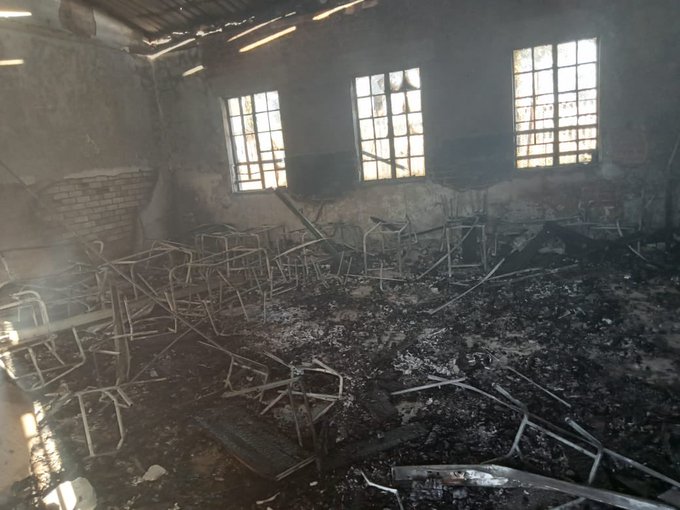
THE fire that broke out on Sunday at Drommendaris Primary School in Boksburg, Gauteng, has damaged eight classrooms.

The Gauteng Department of Education confirmed the incident on Monday.

“The Gauteng Department of Education (GDE) wishes to confirm an incident that occurred on Sunday, 5 June 2022; where a fire broke out at Drommedaris Primary School in Reiger Park, Boksburg, damaging eight (8) classrooms,” the Department said in a statement.

According to information received by the Department, the School Governing Body (SGB) was alerted of the fire at approximately 13h00.

One of the school’s general assistants reported the incident and the local fire brigade managed to douse the fire.

“Unfortunately, eight (8) Foundation Phase (Grade R – 3) classrooms and the school’s storeroom were damaged as a result of the fire,” said the department’s spokesperson Steve Mabona.

The police are currently investigating the circumstances that caused the fire.

Mabona said that the GDE is working to ensure that learning and safety of the learners is not compromised.

“The GDE is working tirelessly to ensure that learning at the school, as well as the health and safety of learners, is not compromised due to this incident, Mabona said.

INSIDE EDUCATION

North West renames provincial bursary scheme to Victor Thebe Sifora

NORTH West Province has renamed the provincial bursary scheme, which is aimed at benefitting thousands of students from poor backgrounds, to the late ANC Youth League (ANCYL) stalwart, Victor Thebe Sifora.

The bursary scheme is aimed at preserving the legacy of Sifora as an activist, scholar and struggle veteran.

It will also provide financial support to students with poor backgrounds, granting them opportunity to further their studies in different institutions of higher learning.

North West Premier, Bushy Maape, said over R4 million has already been set aside for the bursary scheme in the current financial year. Since 2016 the bursary has benefited over 800 students.

In his address during the launch at the Mahikeng campus at the North West University., Maape appealed to business and other social partners to help the Bursary Scheme raise funds to enable government to increase its intake of beneficiaries.

The launch was attended by Local Mayors, Councilorsy, MEC for the Department of Education, Wendy Matsemela and the Sifora family members.

Also present at the launch was a delegation from North West University led by Potchefstroom Campus Deputy Vice Chancellor, Daryl Baila.

“Our plan is to see more learners particularly from rural areas and disadvantaged backgrounds benefiting from this scheme. It is through education that we can change the lives of our people for the better. But education helps us to develop a new set of skills that can assist in addressing a number of challenges confronting our province,” Maape said.

Maape maintained the North West is beaming with men and women of high ethical standards and astuteness whose names must be celebrated in preserving their legacy and the heritage of the province.

“Sifora was a remarkable person and part of preserving his legacy is to make sure that we create socio-economic opportunities for the youth. This will ultimately alleviate challenges of poverty, unemployment, substance abuse and other social ills bedeviling our communities,” said Maape.

“It is my firm believe that the renaming of this scheme will re-ignite interest among the youth to study further but critically emulate Sifora’s principles which were confined within the realm of servitude and selflessness.”

Sifora – who was born in Mopyane Village in the then-Madikwe district in North West in 1914 – was one of the founding members of the ANCYL along with Oliver Thambo, Nelson Mandela, Anton Lembede and Walter Sisulu.

He was also a member of Seoposengwe, an official opposition party in then Bophuthatswana. He had an illustrious career as an academic, principal and teacher.

INSIDE EDUCATION

Labour Court dismisses court case against Unisa brought by its five former employees

THE Labour Court has dismissed an application brought against the University of South Africa (Unisa) by five former employees who were NEHAWU shop stewards at the time of the termination of their employment contracts.

The Labour Court found that the applicants failed to establish the court’s jurisdiction.

Unisa terminated the employment contracts of five employees, including shop stewards of Nehawu on Friday 6 May 2022, for serious misconduct in terms of the university employee disciplinary code and university ethical code.

The university attempted to contact the trade union several times prior to terminating the employees’ employment contracts in an attempt to find a solution to the employees’ illegal behaviour.

They were accused of disrupting graduations and illegally discharging pepper spray, among other things.

As a result, on Tuesday 19 April 2022, the university imposed a precautionary suspension on the staff until the completion of disciplinary proceedings.

“Whilst noting and respecting this outcome, Unisa Management wishes to reaffirm its stance that it is not against NEHAWU or any labour union operating within the university. The Management is on record as having protected the rights of labour to organise, protest and agitate for the rights and issues affecting workers,” the university said in a statement.

“NEHAWU in particular, has been peacefully picketing since 3 November 2021 and the university has not even once interfered with the pickets. However, when the industrial action took a violent turn and violated laws and applicable policies, the university Management took steps to protect life and property in line with legal obligations.”

Unisa said its management also wished to reiterate that it has met the salary adjustment demand by NEHAWU on 19 April 2022 as officially approved by the governance structures of the university.

“As far as the Management is concerned, there is no salary increase dispute yet. To this end, the university is returning to the CCMA to clarify and set the record straight. The new round of negotiations has not yet reached a deadlock stage. The non-existent dispute must not be used to perpetuate violence and instability in the university,” said Unisa.

“Unisa is an important public institution in the imagination and lives of the people of Africa. The Management hopes that NEHAWU will reconsider its violent and disruptive stance. Meanwhile, the university has put measures in place to ensure business continuity and the protection of the academic programme. All workers are encouraged to continue with their important work of serving the public.”

INSIDE EDUCATION

ECD migration from DSD to DBE going according to plan in Gauteng, laying the firm foundations of learning, says Lesufi

WENDY MOTHATA|

GAUENG MEC for Education Panyaza Lesufi says that the migration of Early Childhood Development (ECD) from Department of Social Development (DSD) to the Department of Basic Education (DBE) was one of the major achievements of the past financial year.

He was tabling the Gauteng Department of Education’s (GDE) 2022/23 budget during a house sitting at the Gauteng Provincial Legislature in Marshalltown, Johannesburg.

“This is a major achievement that will allow our children to grow in an education environment and cease with the old approach of considering ECD centres as existing to only provide child care,” said Lesufi.

Lesufi believes early ECD plays a vital role in laying a strong foundation for children.

He said learners will be exposed to Mathematics, Physical Science and Life Sciences subjects from an early age, adding that this move will assist in the elimination of learners dropping out of school at an early age.

The department will now be responsible to support, subsidise and regulate the programmes across Gauteng in line with Chapter 5 and 6 of the Children’s Act.

The existing governance structures between GDE and GDSD will continue to operate to manage the transitional period and to ensure that all levels of service are maintained.

“Science and research confirm that the first 6 years of learning are more crucial to children, that if we provide the necessary support to our children, they will grow to become better citizens. From now on, children will no longer come to ECD centres to pray, sing, eat and sleep. They will now be given an opportunity to learn so that they can grow and become better citizens,” Lesufi said.

“The NDP clearly lays out a vision that can only be reached if we are working together; a vision in which we live together in peace and security in a land that we nurture. A vision in which we realise opportunities for all. This is the grand vision that we want to lay a firm foundation for our children as they start their ECD journey to be better citizens.”

Universalisation of Grade R

To date, the Department has offered ECD to over 164 000 learners in schools and community-based sites.

“We will be expanding Grade R to all public primary schools regardless of their socio-economic status. Private Grade R sites will be registered through the introduction of provincial regulations, to ensure that there is an adequate mix of public, private and community-based Grade R sites. We will use the ECD programmes registered with the Department to determine the number of Grade R learners in private ECD centres. This data has not been previously available. We will improve on our EMIS systems to collect data from private ECD centres,” said Lesufi.

Lesifi said that the department will put in place a research process to determine the criteria for the funding of targeted Community Based Sites (CBS) offering Grade R.

“The department will also work with the GDSD and municipalities to identify targeted private Grade R centres registered with GDSD and local government and provide them with curriculum support and training,” Lesufi said.

“To further improve the quality of Grade R teaching, all Grade R practitioners are required to acquire a minimum qualification and skills to teach Grade R. The Department envisages to register practitioners annually for full time programmes. In 2022/23, the Department aims to register 400 Grade R practitioners for a Bachelor of Education Degree and 500 Pre-grade R practitioners for upskill in qualification on ECD NQF Level 4.”

“This is to ensure that we don’t have ECD outside the public education space, but we have ECD that is within the education space and provides the relevant transition from Grade R to Grade 1 immediately within our education environment. We also want to urge all those that still run their ECD centres within the private education sector to continue provide this kind of support. They must continue enrolling our children and the GDE will co-operate with them at an appropriate stage to provide all the relevant support immediately in terms of learning, learning material and the quality of educators that will provide support to these children. This is crucial to ensure that our children get the best education on their first day in our schools.”

INSIDE EDUCATION

Gauteng education outlines R59bn budget to bolster ICT, paperless classroom programme at schools

GAUTENG MEC for Education Panyaza Lesufi has revealed that his department will continue to champion ICT and implement its paperless classroom programme.

Over the years, the GDE has championed skills development and ICT adoption in schools across the province via the paperless classroom programme.

The initiative aims to address educational needs in the 21st century by supplying electronic devices to learners and teachers, as well as enabling access to e-learning programmes, to digitally upskill and prepare the future workforce.

At the same time, classrooms are equipped with smart boards, computers, printers and other ICT equipment that is used in teaching and learning.

The GDE’s efforts, however, have been hindered by a series of robberies of computing equipment. Shortly after the programme was introduced in 2015, schools became prime targets, and criminals started setting up syndicates in communities to steal smart boards and other ICT devices.

He said thus far the programme continues to be relevant to addressing the educational needs in the 21st Century, including challenges brought by the Covid-19 Pandemic since the academic year 2020.

Lesufi was outlining his department’s budget vote speech for the 2022/23 financial year at the Gauteng Provincial Legislature in Johannesburg.

The ICT and paperless programme rollout is in line with the GDE Education Roadmap 2019-2024 and acknowledges the potential that the ICTs has in enhancing daily teaching in the classroom.

According to Lesufi, the ICT implementation will target two categories of schools: full ICT schools and no-fee-paying township secondary schools.

Provincial guidance will be provided in several key areas to assist districts, circuits, schools, managers and teachers in the strengthened delivery of the curriculum during 2022.

Lesufi explained: “Besides subject-specific support, priority attention is to be paid to learning recovery processes, assessment practices and subjects with a practical component, including technical subjects.

“The utilisation of ICT and remote learning opportunities will be further improved by monitoring utilisation and participation, identifying user challenges and providing support to ensure optimal utilisation. In particular, teacher capacity to integrate ICT with teaching and learning practice will be prioritised.”

During 2022/23, the GDE also plans to intensify monitoring and evaluation of curriculum delivery, he stated.

“The framework focuses on accounting for, and the proactive auctioning of curriculum delivery support in key areas central to achieving improved learner outcomes – whole school improvement, curriculum coverage, completion of school-based assessment tasks and utilisation of resources. The findings of the monitoring and evaluation process will be directed to the relevant support function of the department for priority attention.”

“School and teachers’ accountability will be prioritised and strengthened across all levels of delivery to ensure what we are reporting on is actually implemented. This is to be actioned via cyclical accountability sessions which rely on evidence-based reporting across the system.”

INSIDE EDUCATION

DHET to host the much-anticipated Worldskills SA Biennial National Competition, and the National Artisan Career Festival in KZN next month

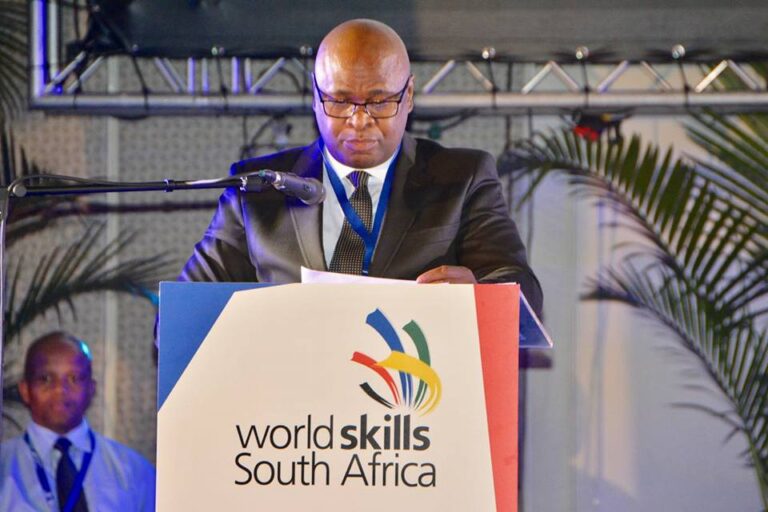
THE Department of Higher Education and Training (DHET) will host the much-anticipated 4th WorldSkills South Africa (WSZA) Biennial National Competition at the Inkosi Albert Luthuli International Convention Centre in KwaZulu-Natal.

The WSZA National Competition, which kicks off on 7 – 10 June 2022, takes place three years after the 45th WorldSkills International Competition in Russia, Kazan, in September 2019.

The department of higher education hosts the biennial WSZA National Competitions as an important mechanism to promote artisan skills as a viable career choice as well as to open up potential partnerships with industry.

The national competition supported by regional competitions provide a critical platform from which the country is able to assess the levels of apprenticeship and artisan training in addition to advocating for the uptake of artisan careers as careers of first choice.

The WSZA programme also plays a critical role in building bridges between all stakeholders within the apprenticeship and artisan development arena.

Hosted under the theme “It’s Cool to be a 21st Century Artisan, the 2022 WSZA National Competition will incorporate a two day WSZA Conference at the Inkosi Albert Luthuli International Convention Centre parallel to the National Competition.

“The DHET is in the final stages of promulgating the National Apprenticeship and Artisan Development Strategy 2030.
The conference will be used as a launching pad for the promulgated strategy,” said DHET in a statement.

“The department said the aim of the career festival is to reduce, among others, the stigma related to artisan careers, provide information on artisan careers and possible career projections.”

The winners at the National Competition will get an opportunity to represent the country at the WorldSkills International Competition in Shanghai, China, to compete in different skills areas covering different disciplines. i.e Construction and Building Technology; Manufacturing and Engineering Technology; Information and Communications; Social and Personal Services; Creative Arts and Fashion; and Transportation and Logistics, among others.

The 46th WorldSkills International Competition hosted in Shanghai, China later this year will feature over 1600 competitors from more than 60 countries and regions, competing in over 63 skills.

WorldSkills competitions create a global platform to develop and help young people who want to change the lives and the fortunes of their communities and societies, said DHET in a statement.

INSIDE EDUCATION

Youth Month| Engen hosts career guidance workshops to boost tomorrow’s business leaders

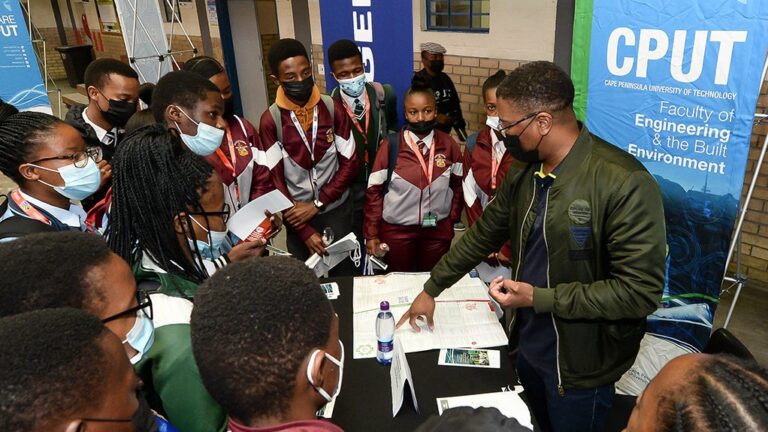
ENGEN, in association with the Cape Pensinsula University, recently hosted career guidance workshops to help learners explore exciting career options open to matriculants who excel in STEM subjects.

The workshop sessions were held at Manzomthombo Secondary School on 21 May and Belgravia Secondary School on 28 May and were open to all Grade 10-12 leaners enrolled on the Engen Maths and Science School (EMSS) programme.

Engen Maths and Science Schools have run for over 30 years and offer grade 10-12 learners from underprivileged backgrounds free supplementary Maths, Science, Technology and English tuition on Saturdays at ten locations across South Africa.

The EMSS programme focuses specifically on providing extra tuition in ‘gateway’ subjects such as mathematics and science; subjects which are considered critical in addressing the country’s technical and engineering skills shortage as well as spurring economic growth and development.

In 2021, Engen invested R11.9 million in Learnerships and Bursaries.

Dr James Nyawera,Engen’s Manager: Transformation and Stakeholder Engagement said: “EMSS seeks to harness the potential of talented young people in difficult circumstances and to also contribute to the pool of scarce skills in the country.”

“Kicking off 34 years ago, EMSS remains central to Engen’s efforts to contribute to the growth and transformation of South Africa, with the programme working tirelessly to help transform young underprivileged people’s lives, with a focus of creating a diverse and vibrant workforce.”

Supplementary tuition is provided to approximately 1 800 under-privileged Grade 10-12 learners across South Africa through the EMSS programme every year.

To continue attracting and growing talented young minds, Engen also offers a bursary programme, which aims to develop our countries future experts and leaders.

Ivershini Reddy, Engen’s General Manager: Human Resources, explains: “It is Engen’s ultimate reward to help set talented people up to pursue stimulating careers that won’t only benefit them personally, but also their families and the broader economy of South Africa.

“Engen remains committed to building tomorrow’s leaders and if we want to ensure that the youth of tomorrow are prepared for a rapidly changing world, we need to ensure that they have the right mix of skills for them to reach their full potential,” adds Reddy.

Engen Maths and Science Schools are based in Cape Town (with classes held at Belgravia and Manzombotho High), and in Port Elizabeth, East London, Cala and Johannesburg. In KwaZulu-Natal classes sit at four locations, namely: Fairvale High School, Ganges High School, Howard College, and Mangosuthu University of Technology.

INSIDE EDUCATION