Home Blog Page 265

Disaster and risk management students continue to offer a helping hand to communities that were affected by the KZN floods

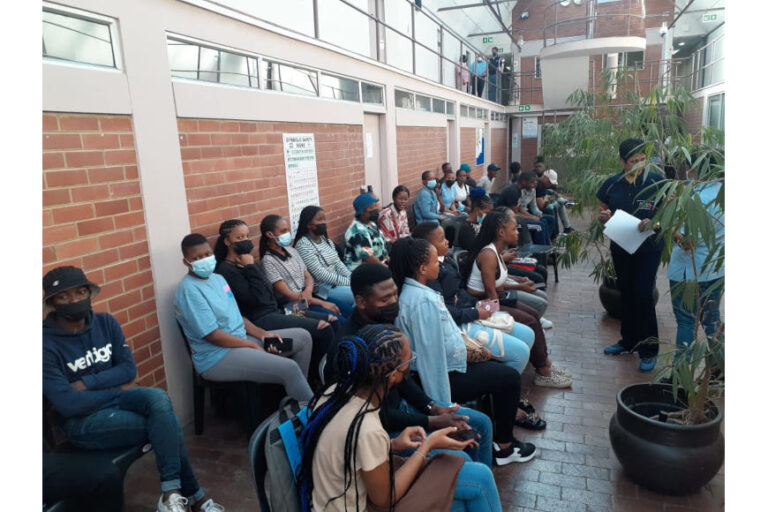
SECOND and third-year Disaster and Risk Management students under the Faculty of Management Sciences at the Durban University of Technology (DUT) are serving as Flood Disaster Volunteers within the eThekwini Municipality.

In response to the nature and magnitude of the disaster, DUT’s Dr Mal Reddy, a member of the KwaZulu-Natal (KZN) Provincial and eThekwini Municipal Disaster Management Advisory Forum, as well as the Academic Coordinator saw the need for the DUT students to contribute and uphold the societal responsibilities. Students working in close collaboration with practitioners in the field, gain a first-hand practical experience, demonstrating the clear blend of theory and practice.

These students are working under the leadership of Mr Vincent Ngubane, the Head of the Disaster Management Centre, and his team. The critical responsibilities of volunteers in the project includes profiling of displaced persons at the various mass care centres, verification of the disaster beneficiaries, general disaster assessment and other related disaster response activities as deemed necessary to support the multi-agency eThekwini Municipality Disaster Team.

The students are gaining an in-depth exposure of the practice in Disaster and Risk Management as they are involved in diverse activities relating to disaster response, recovery, and disaster risk reduction. These opportunities assist in building adaptive graduates with the confidence of taking on real world challenges.

Ayanda Khoza, Disaster and Risk Management student volunteer and a Project Coordinator, gave a brief insight on what inspired her to join the project.

“The most valid reason that inspired me to join the project is that I am very keen in helping others in times of need, therefore as a disaster student I had to avail myself in these tough times that we faced as the KwaZulu-Natal (KZN) community and put on a helping hand. Besides helping around, this gave me and other students a great exposure towards the roles that are played by disaster practitioners on the field,” she added.

The project has now collaborated with the Public Employment Programme (PEP) aimed at speeding the recovery stage and building resilience amongst all affected wards by raising awareness and educating community members. The project has already produced over 1300 job opportunities, and these jobs are led by unemployed graduates. The disaster and risk management students of DUT formed part of the two-day induction delegation for the general workers at the Durban Exhibition Centre. They formed part of the training delegates for the supervisor training, the training focused on disasters, disaster risks, vulnerabilities, building resilience and coping measures, the supervisors were also trained to lead and train the general workers.

As of 13 May 2022, approximately 30 DUT Disaster volunteers have been retained to continue with disaster response and recovery activities as planned and coordinated be the eThekwini Municipality.

“Based on the importance and the positive impact in the efficiency of disaster risk management. Mitigating disaster risks and impacts through education, building resilience, awareness’s and building back better is expected upon completion of the project, I see the project expanding from just KZN to other disaster-prone provinces and countries. This project is also likely to be adopted by other educational institutions, countries and maybe form part of the curriculums in intermediate phase learning programmes,” said Samkelisiwe Fortunate Zulu, a Risk and Disaster student volunteer and a project coordinator.
4 new language options coming to schools in South Africa, says Motshekga

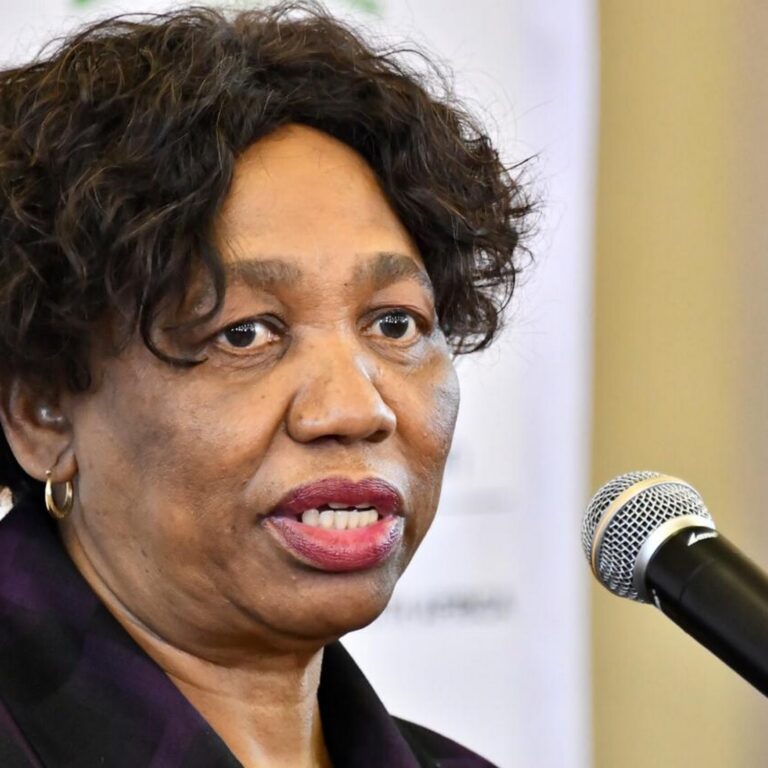
South Africa must begin a serious debate on mother-tongue teaching and learning, says basic education minister Angie Motshekga.

Presenting her departmental budget speech this past week, Motshekga said that given the demographics of the country, more than 80% of learners, continue to learn in a language other than their mother tongue.

“We must begin a serious debate on mother-tongue teaching and learning. Currently, learners learn in their mother tongue until Grade 3, then switch to English or Afrikaans as the language of learning and teaching.  Not doing so, will continue to contribute greatly to under-achievement.  We must have a policy shift in this area.”

“We must acknowledge the interesting work currently underway in the Eastern Cape on teaching some gateway subjects across the curriculum in isiXhosa and SeSotho with positive results. The North West has realised the importance of delivering the CAPS in Setswana across all Phases and Grades.”

This follows comments made by Motshekga in March 2022, in which she noted that one of the biggest reasons why South African children have such poor reading comprehension skills is that they are essentially learning in a ‘foreign language’ by being taught in English.

However, the minister acknowledged that there were issues with moving to a purely mother-tongue-based system, noting that it was likely impossible to have a pure class in Sotho or Xhosa in Gauteng the way similar classes have been held in the Eastern Cape.

She added that in classes teachers use multiple different languages to help children learn and get their point across. However, when it comes to assessments – which are typically done in English – they are once again forced to grapple with a language they did not understand while learning.

“They are no longer being tested on their cognitive development or understanding (0f the work). You are now testing their language abilities, which is a problem.

“Government has begun the process of changing this and the next step is to assess them in the language they are taught – so that we are able to assess performance and not language proficiency.”

New languages

Motshekga also confirmed that her department is working to introduce several second additional languages in the country’s school curriculum.

“We strategically decided to expand the list of South African languages offered as second additional languages in the curriculum, she said.

The additional languages include:

  • Khoi
  • Nama
  • San
  • South African Sign Language (SASL)

“We have also signed an agreement with Kenya, and we are in the process of signing another with Tanzania on the development of curriculum and the South African teachers in Kiswahili. Had it not been for the Covid-19 pandemic, we would have been far in piloting Kiswahili in Grades 4-6 in 2021-2023,” she said.

BUSINESS TECH

President Biden urges Delaware graduates to fight against the ‘oldest and darkest forces in America’

0

IN the wake of two national mass shooting tragedies, President Joe Biden urged University of Delaware graduates on Saturday to fight against the “oldest and darkest forces in America” and work toward progress to protect democracy.

“The next 10 years of your life are going to determine what the next 50 years of this nation will look like,” Biden said in an optimistic commencement address to a sea of graduates donned in blue robes at Delaware Stadium in Newark. “We’re at one of those inflection points in history where things are changing so fundamentally, that we have to act.”

Biden acknowledged that the 6,411 University of Delaware students are graduating during a tumultuous era in U.S. history: In May alone, COVID-19 deaths reached 1 million, 10 Black Americans were murdered in a Buffalo grocery store, and 19 children were killed after a gunman opened fire inside a classroom at Robb Elementary School in Uvalde, Texas.

“Too much violence. Too much fear. Too much grief,” said Biden, whose stop in Delaware came between his visits with mourning families in both cities.

He talked about the fight for civil rights in the ‘60s and the forces that pushed against those progressive steps.

Those forces have always existed, Biden added, and the country “should not be surprised” that they are alive in 2022, ripe with new energy, “preying on hopelessness, demonizing people who don’t look like them.”

But Biden said that this generation of young people is what makes him the most optimistic about the future of the country.

“I’ve never been so optimistic in my life… because of you, this generation… Your generation is the most generous, the most tolerant, the least prejudiced, the best educated generation this nation has ever known. And that’s a simple fact,” he said.

Biden graduated from the University of Delaware in 1965 with a double major in history and political science. With the 2022 graduates, he shared advice he received from his political philosophy professor, David Ingersoll, who referenced a Plato quote.

“[Ingersoll] said, ‘The penalty good people pay for not being involved in politics is being governed by people worse than themselves,’” Biden said. “This is no time to be on the sidelines. I mean it from the bottom of my heart. We need all of you to get engaged in public life and the life of this nation.”

On Saturday, Biden was awarded the medal of distinction from the University of Delaware, having already received an honorary degree from the university in 2004.

Biden was expected to announce a $10,000 student loan forgiveness plan during Saturday’s commencement speech, according to the Washington Post, but that announcement was postponed after the Texas school shooting.

Biden closed his remarks by telling graduates that the fight against the “oldest and darkest forces in America” won’t be easy, but that he believes in the younger generation and urged them to act.

“The oldest and darkest forces of the past may believe they’ll determine America’s future. They are wrong… wrong, wrong, wrong. We will. You will.”

WHYY.org

Closing the gender gap in African STEM education

ANDREW ZERZAN|

Ensuring that girls receive a quality education is the most powerful investment we can make in our collective future. Educated women are more likely to marry at a later age, have fewer children, earn higher incomes and build better lives for themselves and their families. The World Bank has even said that without improvements in gender equality, we will not reduce poverty in Africa.

Addressing the under-representation of women in science, technology, engineering, and mathematics (STEM) courses is a central part of improving girls’ education in Africa. The choice could not be more clear: if Africa does not make significant progress in getting more girls in the sciences, its progress towards sustainable development will be compromised.

However, in many countries across the continent, social norms and traditions prevent girls from pursuing educational opportunities. In Sudan, for instance, many families with children see girls’ priority as domestic chores over schoolwork. Evidence shows that African girls who spend 28 hours per week on household duties and caregiving attend school 25% less than those with just 10 hours of weekly domestic chores. In a continent where girls are far more often pressured to work in the home than boys are, it results in major gender disparities in learning.

Some will argue that technology could be the solution, providing digital access to learning that girls might not otherwise have. However, gender norms already limit girls’ access to technology, and have had a disproportionate impact on their learning opportunities during the Covid-19 lockdowns.

In Ethiopia, parents are more likely to deny girls access to mobile phones as they want to protect them from exposure to unsafe content. One study found that for boys, cost is the biggest barrier to mobile phone access, while for girls, social norms are the main constraint; a large majority of boys do not have to seek permission to use technology while nearly half of girls do.

Globally, the disparity between boys and girls is so great that boys are 50% more likely to own a mobile phone than girls and more than half of girls have to borrow a mobile phone if they want access, compared with only 28% of boys.

There is also significant disparity in how girls and boys are treated in the classroom itself, especially in STEM subjects. Teachers often demonstrate the same gender biases as parents, sub-consciously encouraging boys ahead of girls by calling on them first or more often to answer science-related questions. Teaching materials and textbook examples further deepen the divide with more references to boys and male success than that of women and girls.

Data from the OECD reveals a strong correlation between 15-year-old boys’ self-confidence in STEM subjects and their higher performance versus girls’. Yet boys’ brains are no more effective at STEM problem-solving than girls’, and there are negligible gender differences in children’s maths skills. What evidence does show, however, is that girls’ self-perception, due to community pressures and biases, are the primary reason for girls succeeding less in many countries in STEM studies and careers.

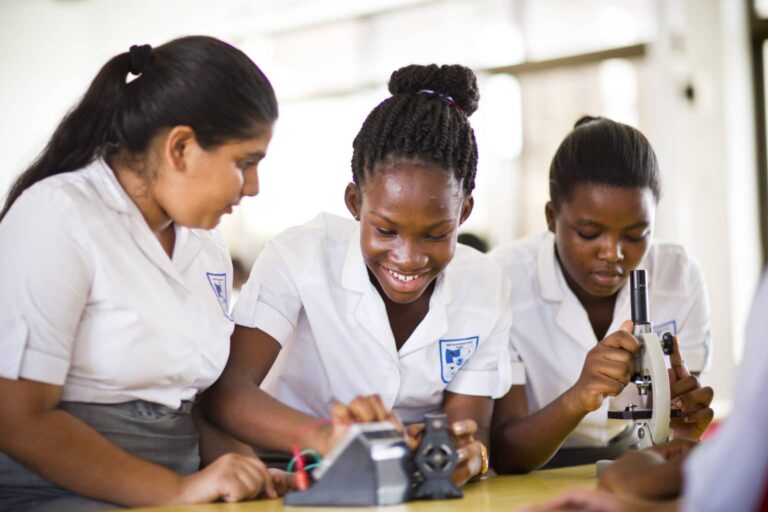
The most immediate way to nurture their confidence in the sciences is to increase girls’ exposure to high-quality, inclusive science instruction in schools. Girls’ familiarity with STEM is a key part of building their self-confidence in it.

That’s why the British Council is tackling some of these issues in a drive to increase and sustain access, interest, participation and performance of girls in these subjects at all levels:

  • Making Coding Fun for Girls
    After-school coding clubs #LearningToCode are being piloted in Kenya and South Africa to give girls exposure and access to technology and build their confidence through fun activities in a creative and safe environment.
  • Training Teachers on Gender Inclusion
    Through teacher training across many African countries, in conjunction with ministries of education and teacher training colleges, we are skilling-up teachers to be more gender inclusive in the classroom and making them aware of biases and how they can affect girls.
  • Digital Skills in the Classroom
    We work with the Wikimedia Foundation in Ghana on our Skills for Success programme which is focused on building teacher training colleges capacity to skill-up teachers in digital technology so they can bring that to the kids in their classrooms. This is particularly important for girls who are less likely to get exposure to technology at home.
  • School Leadership Training
    We work with school leaders across Africa to teach more inclusive styles of school management, promoting reflective learning.

These are just some examples of the systems changes that can be achieved. We encourage aid agencies, ministries of education and other partners to consider the wide-reaching benefits of creating societies in which girls can achieve their potential in STEM.

The British Council welcomes the opportunity to co-create impactful, needs based education programmes in partnership with like-minded organisations.

Andrew Zerzan is the Deputy Regional Director and Director of Education, Arts & Civil Society for British Council in Sub Saharan Africa.

Rising star athlete Nkosikhona Mhlakwana gets Comrades-ready in Glenwood

AFTER two years, the much-loved Comrades Marathon returns on August 28. Among those preparing for the iconic race is athlete Nkosikhona Mhlakwana who recently crossed the Two Oceans Marathon finish line in second place.

In 2019, Mhlakwana made headlines when he stumbled near the finish line and lost his ninth place position and completed his first Comrades Marathon in 11th place – just shy of a gold medal finish. Despite his struggle in the last leg, Mhlakwana completed the 87km up-run in an impressive time of 05:53:00. The following year, he returned to the Comrades Marathon, completing the virtual down-run (90km) in the same time.

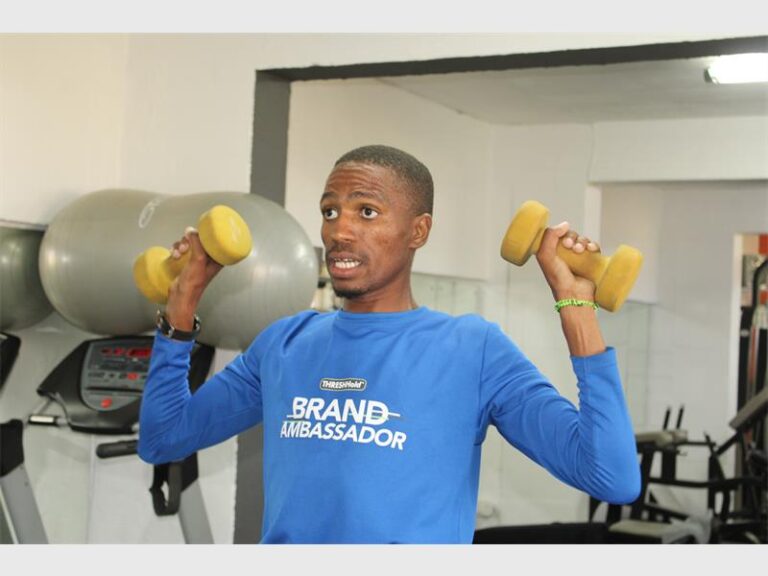
Berea Mail caught up with the runner at Stella Athletics Club in Glenwood last week where Mhlakwana was putting time in at the gym with personal trainer Craig George.

Reflecting on his recent success, Mhlakwana said he completed the 56km Two Oceans Marathon in 03:09:00, running at an average speed of 03:23 per km. This adds to his impressive track record – this year, he also won KZN Best of the Best and PDAC 25km. Last year, he achieved one of his personal best times when he completed the 42.2km Cape Town Marathon in 02:16:33. “This was about 03:13 per km,” he said.

Mhlakwana hails from Howick where he grew up in Sphumelele township and completed his schooling before moving to central Durban to study at the University of KwaZulu Natal. He completed a Bachelor’s degree in Education in 2020.

When the pandemic broke out, he returned to Howick, continuing his studies virtually, before graduating with his honours degree this year.

With his studies completed, Mhlakwana is dedicating his time to his running career. He recently joined Hollywoodbets Athletics Club.

“This is a great opportunity for me. With the support of my team, Hollywoodbets Athletics Club, I am headed in the right direction to do well in my running career,” he said.

Training, diet and nicknames

Mhlakwana trains for three hours a day with a 1.5 hour session in the morning and evening on Monday, Tuesday, Thursday, Friday and Saturday. On Wednesday’s, he tackles longer runs.

The athlete measures 1.67cm, weighing in at 57kgs. His diet consists of the same type of food he ate growing up – mielie meal, rice, potatoes, meat and vegetables including beans, spinach and cabbage.

His determination on the track earned Mhlakwana the nickname Caster, after Olympic gold medalist, Caster Semenya. He was also dubbed ‘pit bull’ after his 2019 Comrades Marathon finish.
“I fell down with about 500m to go until the finish line. I was in ninth position, and two runners passed me, but I didn’t give up. I had to crawl and get up. These characteristics are associated with a pit bull – the way it grabs on to something and never lets go,” he said.

How it all began

The athlete was inspired to take up a running career by Prodigal Khumalo who spotted Mhlakwana’s talent at Moses Mabida Stadium when he took to the track as a school learner. His professional running career began in 2012.

“Because of the background I come from, we have to find ways to survive. Not everyone can survive through education, and jobs are scare in the country, so why not use your God-given talent to make a living and support your family? Instead of struggling to find a job, I decided to use what I have,” he said.

Now he is a bona fide runner with plenty of sponsors including: Hollywoodbets, 32Gi (sports nutrition), Threshhold Real MSM, Adidas, Bio77 and Orange Grove Diary. He works with several specialists, including: personal trainer Craig George, coach Prodigal Khumalo, physiotherapist Shamim Khan, and a manager. As a successful athlete, Mhlakwana is now the breadwinner in his family, supporting his two siblings, mother, partner and five-year-old son. His father passed away when he was growing up.

Future plans
Mhlakwana is passionate about South Africa’s youth.
“My dream for the future is to motivate the youth – to see them doing more than me. I am always going to think of my background and those who are still there,” he said.
The athlete hopes to encourage future generations to value the importance of education and recognising their talents.

Follow the athlete on Facebook, Twitter or Instagram @Nkosikhona Mhlakwana.

BEREA MAIL| SUPPLIED

Classroom| Here’s What to Know About Moving Classroom Management Online

Back-to-school planning has never been more different than it is now. School districts nationwide are preparing for multiple reopening scenarios — from full-on remote learning to a hybrid approach — amid health and safety concerns connected to the coronavirus pandemic.

But teaching online is hard, especially if educators don’t have the training and support to do it.

Many teachers can attest to that, after schools unexpectedly closed and transitioned to remote learning as a stopgap measure last spring. Some struggled to keep students engaged with online activities, while others had students who were unable to participate because they lacked access to devices or an internet connection.

Teachers are also worried about managing a classroom virtually for a longer period of time. While the idea of classroom management, which encompasses the techniques teachers use to ensure lessons run smoothly and encourage student independence, hasn’t changed, facilitating it online is still a huge shift for many people, says Emily Kirsch, an instructional technology coach at Educate, which works with New York City metro-area schools to create equitable learning environments.

“I noticed that a lot of teachers have a hard time realizing that those structures they set up in the classroom to promote student independence can actually be transferred into the virtual world,” Kirsch says.

The Challenges That Come with Virtual Classroom Management

Kirsch says that classroom management can be a difficult topic because the name implies teachers must take on an authoritative role as a manager. While this may seem effective, teachers should actually work to find a balance between setting up structures for the classroom while remaining flexible and acting as a facilitator, which supports the idea of increasing student independence and ownership of learning, she says. It’s crucial for teachers to create boundaries and schedules during remote or blended learning, but they’ll also need to set adjustable expectations centered on students’ academic and social-emotional needs.

Additionally, teachers have become increasingly dependent on the support of families as students learn from home, which means school districts will also need to prioritize fostering parent-teacher collaboration. “The phrase ‘It takes a village to raise a child’ really rings true today,” Kirsch says. “For example, teachers need parents to learn how to establish good workspaces for children at home, which a lot of parents may not know how to do if they’re not around when their children are doing homework.”

And then there’s the technical side of things, which many teachers are still trying to get a handle on. Moving instruction online is a massive undertaking and involves the use of many digital tools, such as videoconferencing platforms and learning management systems. Yet 67 percent of educators said their teacher preparation programs have not adequately equipped them to facilitate online learning, according to a recent survey of 600 teachers conducted by Educators for Excellence.

To create and foster productive classrooms virtually while also encouraging student ownership of learning, take note of these best practices.

  1. Establish Structure and Expectations Early On

  2. The reality is that schools are planning for an unpredictable fall, which means education will be in constant flux for many students. One way to help them adjust to that new normal is by helping them build routines and setting clear goals. Doing so can give students a sense of safety and familiarity, Kirsch says.

Some teachers have used platforms such as Google Classroom to display daily agendas and class rules, check in with students to see how they are feeling and keep parents updated with any announcements. Teachers can also post information about how they are grading work or providing feedback on these platforms so that students are aware of what’s expected of them.

Kirsch also recommends incorporating visual cues into online materials to better communicate directions to students. For example, a notebook icon on a presentation slide can indicate that it’s time to work on an assignment, and takes the place of a teacher directing students to take out their notebooks in an in-person classroom.

  1. Follow the Same Format for Your Lessons
  2. Another way to promote structure is by having lessons that have a similar format, Kirsch explains. “No matter what tool you’re using, whether it’s Zoom or Google Meet, start with setting your goal at the beginning of the lesson, then follow it up with a check-in with everybody,” Kirsch says. “It might feel like it gets boring or dry, but students can actually thrive with that predictability.”
  3. Consider a Flipped Instructional Model
  4. Adopting a hybrid or blended learning environment also offers teachers an opportunity to try a flipped classroom approach, Kirsch says. This approach essentially involves students going over school lessons in the form of assigned readings, videos or screencasts at home and then doing a follow-up assignment, practice problems or a project at school.

“Doing homework is really when students get their hands dirty, so it’s nice when the teacher is able to be there and really figure out where the misunderstandings and misconceptions are and how they can address those at that moment,” Kirsch says.

  1. Make Online Instruction Accessible for All
  2. In addition to ensuring students are connected and have proper devices, Kirsch says it’s important to consider students’ unique instructional needs and home environments to promote equity while teaching online. “For example, is it fair to expect assignments at a certain time of day? What if students only have access to computers at 8 p.m.?” Kirsch says. Some educators have considered assigning weeklong projects rather than daily assignments to account for those gaps.

Another key consideration — particularly for educators teaching in a hybrid environment — is whether students will be able to access the same content and tools they use at school when they’re learning from home. “Are they going to be able to engage in those activities, or will there be a deficit there as well?” Kirsch says.

  1. Have Strong Communication Channels
  2. Compared with an in-person classroom setting, teachers may not have the same level of interaction with students in a remote or blended learning environment. Therefore, finding ways to maintain connections and establishing proper communication etiquette will be crucial to building relationships with students and making sure their voices are heard — even if teachers don’t see them face to face on a regular basis.

For example, educators have held office hours through videoconferencing platforms to check in with students and answer any questions they may have. Kirsch says having teachers or support staff call home and engage with parents can also help support those connections. “Even just calling parents to let them know, ‘Don’t forget that your child has a live lesson at 1 p.m. every day this week,’ will be appreciated,” she says.

EDTECH MAGAZINE|

UCT to introduce Swahili from 2023, says Professor Mamokgethi Phakeng

HELEN SWINGLER

Swahili will be taught as an elective language course at the University of Cape Town (UCT) from 2023, with the aim of launching it as a major subject in 2028. Vice-Chancellor Professor Mamokgethi Phakeng made the announcement in her opening address at UCT’s Africa Month panel discussion on 26 May, discussing the role of language and music in liberating and integrating Africa.

Professor Phakeng was speaking from the United Kingdom, where she spent time at the University of Bristol (she became the first Bristol Illustrious Visiting Professor in October 2021), the University of Cambridge and the UCT UK Trust. She also met with UCT alumni.

Swahili will be offered through the School of Languages and Literatures in the Faculty of Humanities, in partnership with the Institute for KiSwahili Studies at the University of Dar es Salaam. Professor Aldin Mutembei, the Julius Nyerere Chair of KiSwahili Studies at the University of Dar es Salaam, was also among the panellists.

Adding to the announcement, Dean of Humanities Professor Shose Kessi said there are also plans to introduce a Swahili studies research programme at postgraduate level.

“However, we are still in the process of finalising our plans and agreement with the Institute of KiSwahili Studies at the University of Dar es Salaam.”

Working language in Africa

The announcement is significant, as Africa Day on 25 May 2022 also celebrated the 20th anniversary of the African Union (AU). Earlier this year, at its heads of state meeting, the AU adopted Swahili as an official working language for the continent.

In her address, Phakeng said, “For centuries, South Africa has welcomed different European languages. It is about time that we do the same for the languages of our continent. Becoming fluent in Swahili is one way to reclaim our identity as Africans.”

This year’s Africa Day celebration programme at UCT was led by the Faculty of Humanities, the South African College of Music, and International Jazz Day South Africa. Phakeng said she hoped that different faculties would host the event each year, presenting multi-disciplinary and multi-faceted aspects of the continent’s heritage.

“Please enjoy Africa Day or Africa Month to its fullest,” said Phakeng. “This is not the only time we celebrate being African. We celebrate it each day. But during this month, we make it even more pronounced. We cast the spotlight on different aspects of strength that come from the African continent that we can contribute to the world.”

UCT NEWS| SUPPLIED

Three Heidelberg brothers die after allegedly consuming energy drinks given by their father

WENDY MOTHATA

THREE Heidelberg learners have died after allegedly being poisoned by their father.

Preliminary reports by the Education Department allege that the father of the three deceased gave all his five children energy drinks laced with poison, resulting in three of their deaths.

The man also allegedly poisoned the family dog. 

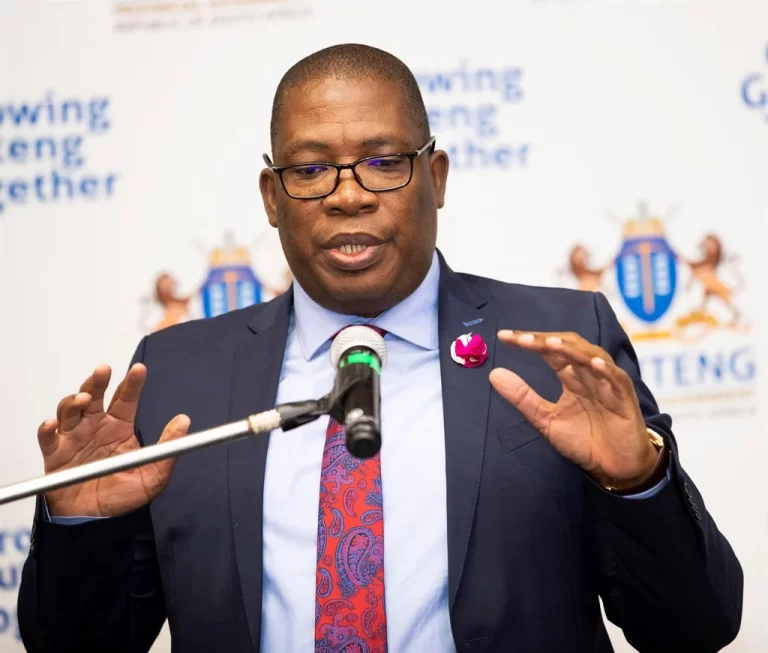
Gauteng’s Education MEC, Panyaza Lesufi, has expressed his devastation at the news of the tragic
deaths of three (3) boy learners – all siblings who passed away on the morning of Thursday 26 May 2022.

The boys are aged 6, 13, and 16 and were learners at Ratanda Primary and Khanya Lesedi
Secondary Schools in Ratanda, respectively.

“Preliminary reports allege that the father of the three deceased gave all his five children energy drinks
in the morning while they were preparing for school. Four of the said learners consumed the energy
drink after arriving at school,” the statement said.

“On Thursday, 26 May 2022. Sadly, two of the said learners died shortly at the school after complaining
of stomach pains while one was rushed to the nearest hospital but died on the way. The fourth sibling is
in a critical condition at the hospital while the fifth, fortunately, did not consume the energy drink.”

“Firstly, I wish to convey my sincerest condolences to the family, particularly the mother, of the
deceased learners. I further extend my condolences to friends, fellow learners and teachers of the
learners, especially those who had witnessed these tragic incidents,” MEC Lesufi said.

At this stage it is not known what led to the deaths and law enforcement agencies are investigating
circumstances surrounding the deaths.

The Gauteng Department of Education has dispatched its Psycho-Social Support Unit to the affected
schools to offer counselling to the school community at large. The services have also been offered to the
bereaved family.

“I am saddened to learn about a father, who this morning allegedly poisoned his 4 children. 2 children
died in our school premises while the 3rd died on his way to hospital. The 4th child is in a critical
condition at the local hospital. My sincerest condolences,” Lesufi said.

“I will visit the affected two schools and the family of the deceased tomorrow morning. Our psycho-
social team was at the school today to offer counseling and support to our school community. The
affected schools are in Ratanda, Heidelberg, Sedibeng Region.”

INSIDE EDUCATION

OPINION| ‘Universities must be key drivers of change on our continent’ – Vice-Chancellor Prof Tawana Kupe on Africa Day

PROFESSOR TAWANA KUPE| UP

Africa Day, commemorated annually on 25 May, this year marks 59 years since the Organisation of African Unity (OAU) was born. This day celebrates Africa’s strong cultural identity and common heritage – and this year the University of Pretoria (UP) community also celebrates the African Genius Awards (AGA). 

These awards, now in their second year, seek to identify and – through a rigorous nomination and research process – honour outstanding individuals who contribute to Africa’s growth. The awards are not about positions in society or professions, but rather about possessing a unique skill that affects society positively – the Genius should have a proven constructive and encouraging impact. The AGA serves as an inspiration to young people on the continent to be innovative and resilient, despite the continent’s challenges.

Today, as we know, South Africa and Africa urgently need good leaders in every sector; leaders who have foresight and wisdom and who are well-educated, well-skilled, rounded citizens. We also need strong institutions that can anchor sustainable democratic futures, inclusive economic development, and social progress. Among the institutions Africa needs are high-quality universities that are locally responsive, that demonstrate contextual relevance, and that are comparable to the best globally. Universities thus have a critical role to play in achieving sustained, sustainable and inclusive development.

Universities must embrace this role without hesitation. Africa is rich in natural resources and has a growing and youthful population, but has yet to achieve inclusive and sustainable development. To address this paradoxical situation requires scale and critical mass in its knowledge institutions. To be able to play their role effectively in Africa’s futures, universities must enjoy academic freedom and institutional autonomy. Equally as important, universities must be well-governed, effectively and efficiently managed, and be well-resourced to deliver on their mandates. They must also embrace sustainability in everything they do.

I am proud to say that the University of Pretoria is making strides in finding solutions for not only South African challenges, but for the continent as a whole. As a testament to this, we recently launched two strategic centres, the first being the Centre for the Future of Work. The establishment of this epicentre for the study of the future of work in Africa further cements UP’s vision of being a leading research-intensive university in Africa, recognised internationally for its quality, relevance, and impact, and also for developing people, creating knowledge, and making a difference locally and globally. We are excited by how this Centre will advance the knowledge field around the future of work to the benefit of South Africa, Africa, and the rest of the international community. We also look forward to reaping tangible results through a generation of employees and entrepreneurs who are equipped and motivated to take on the complexities of what the workplace will look like in years to come.

We also recently launched the African Centre for the Study of the United States (ACSUS-UP). ACSUS-UP is aligned to the University’s strategic plan and key transdisciplinary platforms such as the Future Africa Institute and Campus, the Javett-UP Art Centre, Engineering 4.0, Innovation Africa @UP, and the Centre for the Future of Work, all of which foster a collaborative research culture across the university community worldwide and help create a critical mass of researchers for new-knowledge generation. We are grateful that we already have strong partnerships with several universities and institutions in the US, and we look forward to extending these as ACSUS-UP promotes scholarly research and interfaculty exchanges for staff and students. The Centre will also foster policy engagement, business interactions and cultural contact between African and American universities and epistemic communities in areas of mutual interest and benefit.

ACSUS-UP is the second such centre in South Africa, after the African Centre for the Study of the United States at the University of Witwatersrand, and the third in Africa, alongside the American Language Centre (ALC) in Morocco. ACSUS-UP’s core activities will include research in a variety of cross-cutting disciplinary areas: geopolitics and geostrategy; food security; water and energy; One Health programmes; inequalities; and social justice and human rights. Other areas include history and heritage studies; economic development and sustainable futures; smart infrastructure and innovation; international trade; climate change; and human and animal interactions with the environment and natural resources. Its mandate will include the publication of both academic and non-academic outputs; the development of short training courses aimed specifically at the diplomatic community; the training of postgraduate students in fields related to the study of the United States; and community engagement in the form of relationships and purposeful interactions with governments, industries, business and civil society organisations on the continent and in the US, bringing universities closer to them and them closer to universities. This will foster intercontinental South–North conversations about mutual challenges and innovations in response to the complex wicked problems that Africa, the US and the world are facing, as expressed by the global Sustainable Development Goals.

It is no longer just a bold statement that the future of the world hinges on the future of Africa. This is because Africa’s population of more than 1.3 billion will double by the middle of this century, potentially rising to four billion people by 2100 – or around one third of the world’s population. It is also the youngest population, and so there is a unique opportunity to educate and upskill a generation who are well versed in African-generated knowledge and will have a nuanced understanding of other nations, which informs their thinking, actions and interactions – whether these be political, economic or trade relations, or cultural intersections and exchanges.

At the University of Pretoria we are passionate about our continent’s potential to thrive as a knowledge economy that relies on itself for solutions to its own challenges. I strongly believe that universities need to be at the forefront of devising these solutions, and need to be strongly and visibly experienced as key drivers and collaborative agents of change on our continent.

Texas school shooting live updates: Biden calls for ‘action’ on gun laws after 19 children, 2 teachers killed

0

PRESIDENT Joe Biden has called on Americans to turn their “pain into action” after a mass shooting at an elementary school in Uvalde, Texas, left at least 19 students and two teachers dead.

In an emotional speech from the White House Tuesday, Biden said it was time for “every parent, every citizen of this country” to push for “common sense gun laws.”

The shooter in the deadly attack was fatally shot by law enforcement officers responding to the shooting at the Robb Elementary School in Uvalde, about 80 miles west of San Antonio.

Tributes and messages of support have poured in from around the world in the wake of the school shooting, including from Ukrainian President Volodymyr Zelenskyy, who said “the people of Ukraine share the pain” of those impacted by the shooting.

Actor Matthew McConaughey called on Americans to “re-evaluate” after a mass shooting at an elementary school in his hometown, Uvalde, killed at least 19 children and two teachers.

In a statement published to Twitter Tuesday night, McConaughey wrote: “This is an epidemic we can control, and whichever side of the aisle we may stand on, we all know we can do better.”

The “Dallas Buyers Club” star urged all Americans to “re-evaluate and re-negotiate our wants from our needs” as Texas witnessed its deadliest school shooting since 2012.

“Once again, we have tragically proven that we are failing to be responsible for the rights our freedom grant us,” he said.

Amerie Jo Garza, a fourth grader at Robb Elementary School, “died a Hero trying to get help for her and her fellow classmates,” her grandmother Berlinda Irene Arreola told The Daily Beast.

Arreola said authorities and survivors told her that the gunman told the students, “you’re going to die.” Amerie Jo grabbed her phone to call police. “And instead of grabbing it and breaking it or taking it from her, he shot her. She was sitting right next to her best friend. Her best friend was covered in her blood,” Arreola said.

Amerie Jo had, earlier in the day, received a certificate for making the honor roll, according to The Daily Beast. Hours later, her stepfather pleaded on social media for help from anyone who might be able to help him find Amerie Jo. Not too long later, he returned to post another update.

“She’s been found. My little love is now flying high with the angels above. Please don’t take a second for granted. Hug your family. Tell them you love them. I love you Amerie jo. Watch over your baby brother for me,” he wrote.

Texas Sen. Ted Cruz is facing backlash over his response to the elementary school shooting that killed at least 19 students and two teachers in Uvalde, Texas Tueday.

The Republican senator, who said in a tweet he is praying for the victims and afflicted families, faced swift backlash on Twitter over his support for gun rights and for blocking measures on gun reform.

New York Rep. Alexandria Ocasio-Cortez criticized Cruz, a Republican, over plans to speak at the National Rifle Association’s annual meeting set to take place three days after the deadly mass shooting.

“Aren’t you slated to headline a speaking gig for the NRA in three days — in Houston, no less?,” Ocasio-Cortez said. “You can do more than pray. Faith without works is dead.”

NBC NEWS