Home Blog Page 3

Undercover cops to be deployed along Comrades route

0

Staff Reporter

KZN police have identified crime hotspots and will deploy uniformed and undercover officers along the Comrades Marathon route after vehicle-related thefts were reported during last year’s race.

The KwaZulu-Natal Provincial Joint Operational and Intelligence Structure (PROVJOINTS) said it had “put the necessary safety and security measures in place” to ensure the province delivers an incident-free ultra-marathon.

More than 21,000 runners are expected to take part in the 2026 up-run, which starts in Durban and finishes in Pietermaritzburg on Sunday.

ALSO READ: Eskom launches green power as carbon rules squeeze SA exporters

“Various departments and entities that form part of the PROVJOINTS have been participating in plenary meetings for months and have developed a comprehensive operational plan that ensures safety and security for runners, officials, and spectators,” PROVJOINTS said.

Spectators were urged “to be vigilant at all times and be mindful of their surroundings”.

PROVJOINTS said the Comrades Marathon Association, working with eThekwini Metro and uMgungundlovu traffic officials, had communicated road closures, and road users were urged to cooperate with law enforcement officers during the marathon weekend.

It said the entire route had been declared a no-fly zone, with only authorised operational aircraft and drones permitted to fly.

“Any unauthorised drone will be taken down operationally in accordance with the law,” PROVJOINTS said.

They also warned against the display of offensive or political material along the route.

“The displaying of banners depicting unsavoury and/or politically aligned messages on bridges, road signs, and buildings will be dealt with in compliance with municipal by-laws and other statutes.”

INSIDE EDUCATION

Gauteng learners at risk of renewed placement crisis

0

By Palesa Nguqu

Thousands of Gauteng learners could again face school placement challenges in 2027 as the Gauteng Department of Education (GDE) has yet to announce when Grade 1 and Grade 8 admissions will open, despite the academic year already being well underway.

DA shadow MEC for Education Sergio Isa Dos Santos on Tuesday urged the department to urgently release the admissions timetable, warning that continued delays could leave learners unplaced when schools reopen next year.

ALSO READ: OUTA calls for forensic probe after Inseta suspends CEO Gugu Mkhize

“The delay in opening the admissions process reduces the time available to properly process applications, verify information, and finalise placements before the start of the academic year,” Dos Santos said.

He said past delays had already had serious consequences for learners and parents.

“During the 2026 admissions cycle, thousands of learners remained unplaced as schools prepared to reopen, with some only receiving placements in March when the first term was almost over,” he said.

Popular schools in Gauteng continue to reach capacity quickly, while infrastructure expansion has struggled to keep pace with rising learner numbers.

At the same time, administrative backlogs in the admissions system have added to delays in finalising placements, leaving many parents uncertain about where their children will be placed.

In this environment, perceptions of unfairness often arise, particularly when communication from education authorities is limited and clear timelines are not provided.

In previous years, some parents only received placements weeks into the academic year, heightening frustration over the system’s efficiency.

ALSO READ: DA takes child pregnancy crisis to SAHRC over failures to prosecute statutory rape

The issue of school non-placement is not framed around citizens versus non-citizens, but rather as a system under strain that is struggling to meet demand.

While the Constitution guarantees every child the right to basic education, stakeholders argue that this right is undermined when learners are not placed timeously and consistently.

The Democratic Alliance (DA) has called for the immediate opening of the 2027 admissions process, alongside improved planning measures such as decentralised walk-in centres and stronger communication with parents.

The party argues that earlier application windows would give the department more time to process placements, reduce administrative pressure, and allow families to plan for school-related costs such as uniforms, transport and stationery.

“The department must learn from its past mistakes. We cannot continue to repeat a cycle where learners are left unplaced or placed too late into the school year,” Dos Santos said.

The DA further maintains that improved and earlier admissions management would help reduce administrative errors and ensure learners are placed before the start of the academic year, limiting disruption to schooling.

INSIDE EDUCATION

OUTA calls for forensic probe after Inseta suspends CEO Gugu Mkhize

Staff Reporter

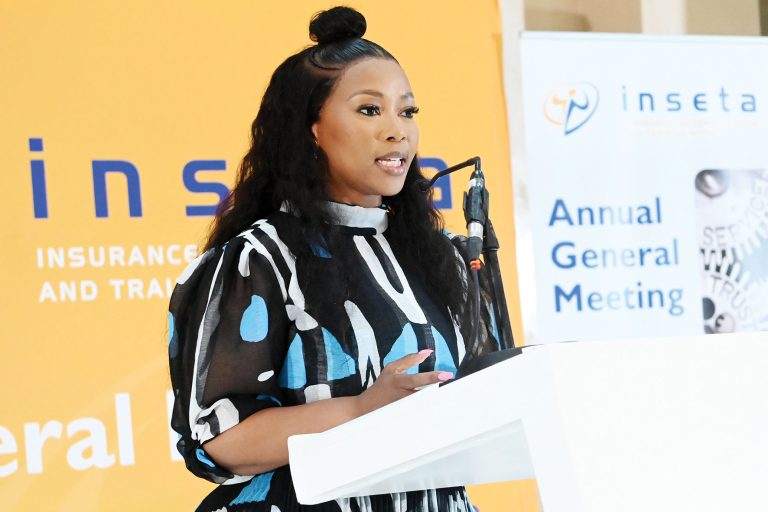
The Organisation Undoing Tax Abuse (OUTA) said on Tuesday that the suspension of Insurance Sector Training Authority (Inseta) CEO Gugu Mkhize should trigger a forensic investigation into governance, procurement and financial management concerns at the public entity.

OUTA has for several years raised concerns about governance, procurement, transparency and accountability at Inseta.

The organisation said the suspension should mark the beginning, rather than the end, of efforts to establish the full extent of any maladministration or wrongdoing at the SETA.

The Sunday Times reported that Mkhize had been placed on precautionary suspension over failures regarding a multimillion-rand tertiary education bursary funding scheme, which had left hundreds of students unpaid for the first five months of the year.

According to the report, 879 vulnerable beneficiaries faced threats of eviction, food insecurity and possible academic exclusion after Inseta paid Mabophe Business Solutions almost R70 million in March, but the funds did not reach students, universities or accommodation providers.

The Sunday Times said that Inseta later made a direct emergency payment of R4.6 million during the week of 21 May, while Inseta said the suspension was a procedural step and “not a finding of wrongdoing”.

Inseta manages billions of rands collected through skills development levies and is responsible for advancing skills development within South Africa’s insurance sector. OUTA said those public funds must be managed with the highest levels of integrity, transparency and accountability.

“For years, serious questions have been raised about governance, procurement, and transparency at Inseta,” said Wayne Duvenage, OUTA CEO.

“A suspension is not accountability. It is the start of a process. South Africans now need assurance that these concerns will be investigated thoroughly, independently, and without fear or favour.”

OUTA is currently challenging Higher Education and Training Minister Buti Manamela’s decision to reappoint Mkhize for a further five-year term from 2025 to 2030.

It has instituted legal proceedings to review and set aside the decision to reappoint Mkhize to the Inseta Board, contending that the appointment process was procedurally flawed and failed to consider concerns relating to governance and accountability adequately.

During Mkhize’s tenure as the accounting authority, Inseta received qualified audit outcomes for five consecutive years.

OUTA said it had submitted numerous requests for information to Inseta over several years in terms of the Promotion of Access to Information Act, seeking records related to governance and procurement matters. Despite following the prescribed processes, it said the requested information was not provided.

After escalating the matter to the Information Regulator, OUTA said it continued to pursue all available avenues to obtain access to the information and remained committed to ensuring transparency and accountability at Inseta.

“Transparency is not optional in publicly funded institutions,” said Duvenage.

“When access to information is repeatedly denied, and concerns remain unanswered, public confidence is undermined. Accountability requires openness, particularly where public funds are involved.”

OUTA said any investigation should go beyond the immediate circumstances of Mkhize’s suspension and examine governance, procurement, and financial management concerns within Inseta.

“A credible investigation must follow the evidence wherever it leads,” said Duvenage.

“It should establish whether there was irregular or wasteful expenditure, whether procurement processes complied with the law, whether conflicts of interest existed, and whether any provisions of the Public Finance Management Act were breached.”

OUTA said the suspension represented an important development, but that accountability would ultimately be measured by the quality of the investigation and the consequences that followed if wrongdoing was uncovered.

“If misconduct is identified, appropriate disciplinary, civil, and criminal action must follow. South Africans deserve confidence that public institutions are governed in the public interest and not for the benefit of a few.”

INSIDE EDUCATION

KZN Education, Health face budget deductions over historic overspending

By Sihle Mavuso

KwaZulu-Natal’s departments of education and health face deductions from future budget allocations after the provincial Treasury tabled a bill to recover more than R1 billion in historic unauthorised expenditure.

The recovery forms part of the KwaZulu-Natal Second Unauthorised Expenditure Authorisation Bill, 2026, tabled by Finance MEC Francois Rodgers in the provincial legislature on Thursday.

The Department of Education faces the largest repayment, of about R955 million, while the Department of Health, faces a repayment of about R91 million.

The deductions are expected to be made over seven financial years.

ALSO READ: Vodacom invests R4m in ICT hub for Mpumalanga special needs school

“Where departments have overspent their budgets, they should rightfully pay those amounts back to the Revenue Fund, as they spent money they did not have and were effectively operating in overdraft,” Rodgers told the legislature.

“The money must be repaid and, more importantly, controls should be implemented to prevent the same situation from recurring.

“Consequence management should be considered where there has been blatant financial misconduct by government officials,” he said.

Rodgers said the unauthorised expenditure that was not condoned would be recovered through future budget allocations.

“This, in effect, is a reduction in the budget of these departments and will be implemented over a period of seven years, given the fiscal constraints and the need to limit the impact on service delivery.”

The bill follows recommendations by the Standing Committee on Public Accounts (SCOPA), which considered unauthorised expenditure incurred by provincial departments over several financial years.

Under the Public Finance Management Act (PFMA), unauthorised expenditure includes spending more than the amount appropriated for a vote or programme, or spending funds for purposes not approved by the legislature.

The move comes as the Department of Education is already under a Provincial Treasury intervention in terms of section 18 of the PFMA, after sustained cash-flow and financial governance problems.

ALSO READ: WCED rejects racial profiling claims, clashes with Parliament over admissions inquiry

Under that intervention, the department’s spending is subject to tighter Treasury oversight. The department has faced pressure from unpaid commitments, compensation costs and operational demands, raising concerns about its ability to fund core services while settling old obligations.

The Auditor-General previously flagged KZN education as one of the departments that had incurred unauthorised expenditure for several consecutive years.

The bill records that part of the education department’s overspending related to infrastructure repairs after storm damage in 2019.

“Infrastructure Development reflects over-expenditure against goods and services due to higher property maintenance costs relating to the repair of schools damaged by storms in 2019 as the magnitude of damage was worse than anticipated,” the bill says.

The department also recorded over-expenditure in programmes including Administration, Public Ordinary School Education, Public Special School Education, Early Childhood Development and Infrastructure Development.

The bill says over-expenditure in Early Childhood Development was linked to pressure on compensation of employees following substantial budget reductions.

The Department of Health’s unauthorised expenditure dates back to the 2019/20 financial year and was linked to increased costs for the provision of HIV/Aids medication.

The bill will still have to proceed through the legislature’s law-making process.

INSIDE EDUCATION

Junior Boks expanded squad named ahead of rugby champs

By Johnathan Paoli

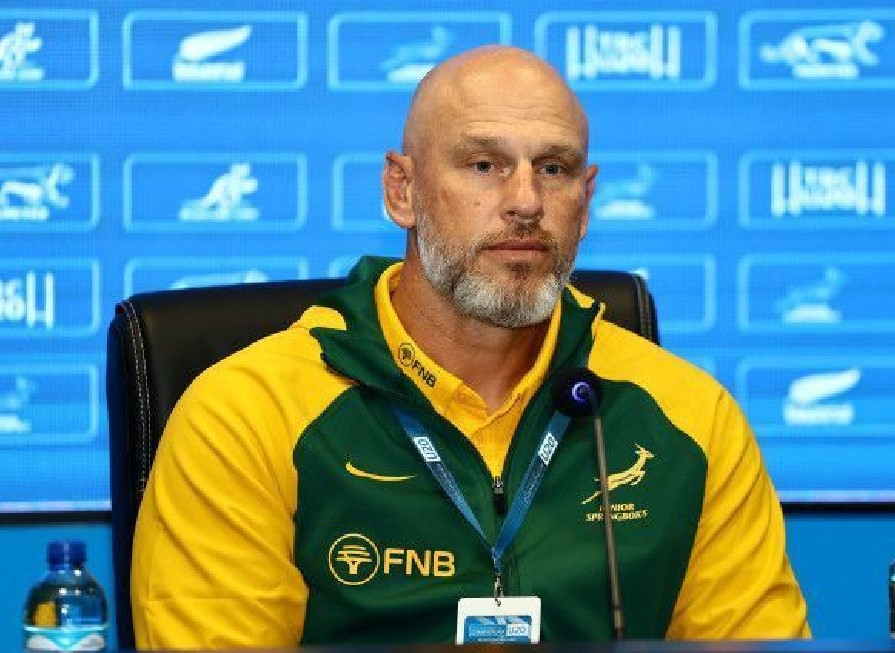
Junior Springboks head coach Kevin Foote has named an extended 38-man training squad as South Africa intensifies preparations for the World Rugby Junior World Championship in Georgia later this month.

The majority of the players will assemble in Stellenbosch from Monday for the final phase of preparations, although 10 members of the squad are in the wider Springbok group for the Springboks-Barbarians clash and SA ‘A’ fixture against Zimbabwe in Gqeberha on 20 June, while Cheswill Jooste remains on Vodacom Bulls duty.

“We are very excited for the players who have been called up to the senior Springbok group, and we have our contingencies in place as we continue with our final block of preparations. Given the number of players called up to the Springboks, we have selected a wider training group for this [training] camp in Stellenbosch,” Foote said.

Coach Kevin Foote. (Photo supplied)

The Junior Boks head into the global tournament in confident mood after winning both the recent U20 International Series and the SANZAAR U20 Rugby Championship, with Foote opting to retain a group made up entirely of players who have featured in previous training camps and international competitions.

A significant boost for South African rugby development came with 10 members of the Junior Bok setup earning call-ups to the senior Springbok training group ahead of the Barbarians clash and SA ‘A’ fixture against Zimbabwe in Gqeberha on 20 June.

Junior Boks captain Riley Norton is among those selected for senior duty, alongside props Oliver Reid and Danie Kruger, hookers Siphosethu Mnebelele and Liam van Wyk, backs Vusi Moyo, Yaqeen Ahmed, Luan Giliomee, Markus Muller and Zekhethelo Siyaya.

Wing Cheswill Jooste remains with the Vodacom Bulls as they prepare for the United Rugby Championship Grand Final, while prop Kai Pratt was unavailable for selection due to injury.

The remaining 27 players will begin training in Stellenbosch immediately, while those involved with senior teams are expected to re-join the Junior Boks before the squad departs for Georgia on 22 June.

“We are also pleased that we were able to give members of our extended training group game time during the recent U20 International Series and the U20 Rugby Championship. That gave us an excellent opportunity to continue building squad depth and cohesion, while also broadening our international experience,” Foote said.

The expanded squad has players drawn from the Vodacom Bulls, DHL Stormers, Hollywoodbets Sharks and Fidelity Securedrive Lions structures.

Junior Boks training squad assembling in Stellenbosch:

Props: Rambo Kubheka, Jordan Jooste, Luan van der Berg, Bongani Dlamini.

Hookers: Altus Rabe, Mahle Sithole.

Locks: Heinrich Theron, JD Hattingh, Jaythen Orange.

Loose Forwards: Kebotile Maake, Risima Khosa, Luke Cannon, Wasi Vyambwera, Quintin Potgieter, Vuyo Gwiji, Gert Kemp, Thomas Beling.

Scrumhalves: Hendré Schoeman, Jayden Brits.

Centres: Ethan Adams, Samuel Badenhorst, Pieter van der Merwe.

Outside Backs: Khuthadzo Rasivhaga, Jordan Steenkamp, Jack Benade, Alzeadon Felix, Akahluwa Boqwana.

Players to join after Springbok and URC duties include Oliver Reid, Danie Kruger, Siphosethu Mnebelele, Liam van Wyk, Riley Norton, Yaqeen Ahmed, Vusi Moyo, Luan Giliomee, Markus Muller, Cheswill Jooste and Zekhethelo Siyaya.

INSIDE EDUCATION

Gondwe courts private institutions to expand tertiary access

Lebone Rodah Mosima

Deputy higher education minister Mimmy Gondwe has called for private higher education institutions to help expand access for school-leavers, as demand for post-school education and training continues to grow.

Gondwe made the call on Monday during the first of three engagements with private institutions at Emeris, Sandton.

The meetings are aimed at strengthening relations with private providers and promoting collaboration to address urgent challenges in the Post-School Education and Training sector.

These include expanding access for all students, creating a business-friendly environment for private investment in education, and fostering innovation and responsiveness to labour market needs.

Gondwe said access within private higher institutions remained a growing challenge and should be expanded through partnerships with private higher education providers for students graduating from high school.

She said demand for higher education and training was increasing rapidly, and that engagement with private institutions could help improve tangible access.

“[T]oday’s discussion is trying to get a sense from our private higher in relation to the role that they can play, in helping us, encounter some of the challenges that we’re experiencing in the sector,” Gondwe said.

“I don’t want us to be in a situation where we have this conversation around the need to expand access every year without coming up with tangibles in relation to how to expand access.”

Gondwe said expanded access could also allow private higher education institutions to assist with funding to develop specialised universities.

She said this would require a long-term commitment from government.

“There is definitely an appetite for us to partner around building universities, which will ensure that we can expand access. We’ve got to make sure that there’s funding for those students to come into the higher education space,” she said.

Gondwe also raised concerns about the difficulties students face in securing placement in the labour market after graduation.

She said the department was working to ensure students were placed after completing their studies.

”We have left it to TVET students who are doing hospitality to find work-based learning placements, and I think that’s very unfair. So I spoke to them about how we can partner to better ensure that our students are placed.”

The engagements will conclude on Wednesday.

They form part of efforts to ensure private colleges are registered with the Department of Higher Education and Training and offer programmes accredited by recognised quality assurance bodies, including the South African Qualifications Authority, the Quality Council for Trades & Occupations, and the Council on Higher Education. INSIDE EDUCATION

INSIDE EDUCATION

New Ga-Maloka school cuts long walk to class for rural learners

By Levy Masiteng 

Learners in Ga-Maloka Village near Lichtenburg will no longer have to travel long distances to access primary education after the North West Department of Education opened a newly built, fully equipped school in the rural community.

Thalefang Primary School was officially opened by Provincial Education MEC Viola Motsumi. The handover ceremony was accompanied by the donation of 100 pairs of school shoes to learners.

MEC Motsumi opens Thalefang Primary School in Ga-Maloka Village

The school includes 14 fully furnished classrooms, two Grade R classrooms, a science laboratory, multimedia centre comprising a computer room and library, an administration block, nutrition kitchen and dining hall, as well as separate ablution facilities for boys, girls, educators and learners with disabilities.

According to the department, learners will also benefit from recreational and sporting facilities, including a multi-purpose combi court that caters for volleyball, netball, basketball and tennis, as well as a playground designed for younger children.

The school is equipped with water tanks and secure fencing around the premises.

MEC Motsumi opens Thalefang Primary School in Ga-Maloka Village

Residents have welcomed the new school, saying it will spare children from travelling long distances to access education and provide a safer and more conducive learning environment closer to home.

“This school belongs to the community. We expect learners to take good care of the infrastructure because future generations of children from Ga-Maloka will depend on these facilities for quality education and a safe learning environment,” said Motsumi.

“Every child deserves the opportunity to learn in a dignified and well-resourced environment. Through investments such as Thalefang Primary School, we are building a stronger foundation for the future of our children and the development of our province,” she said.

INSIDE EDUCATION

Youth apathy casts shadow over November polls

By Lebone Rodah Mosima

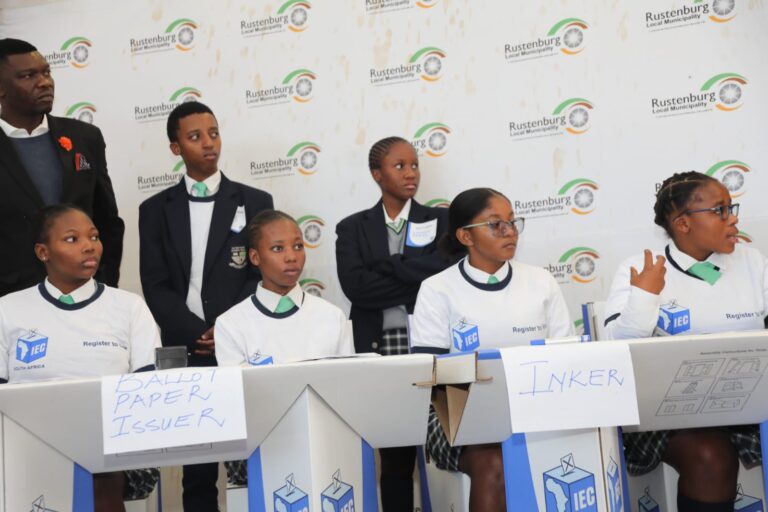
The 4 November local government elections are facing an early test of public confidence, with most unregistered young voters showing little intention of joining the voters’ roll ahead of the first national registration weekend later this month.

The South African Local Government Association (SALGA), through its Youth Commission, said it was mobilising young people to participate in the local elections amid growing concern over a widening voter participation gap and a trust deficit that has seen fewer people going to the polls in successive elections.

SALGA has encouraged young South Africans to use Youth Month as an opportunity to take action by registering to vote and preparing to shape the future of their municipalities.

ALSO READ: Eskom load-reduction relief reaches 700,000 homes, but Gauteng and KZN lag

The national voter registration weekend will take place on 20 and 21 June 2026.

 “According to recent Public Opinion Research by the GCIS (government communications), South Africa approaches the 2026 local government elections amid ‘entrenched public pessimism and active democratic disengagement,’ as the public lose motivation for participating in voting,” SALGA said.

It said the study found that 62% of unregistered voters had no intention of registering, while only 38% of unregistered respondents said they were open to registration.

SALGA Youth Commission chairperson Lucky Sele said it was troubling that more than 60% of non-registered youth aged 18-34 did not plan to register, describing them as “millions of potential first-time or second-time voters absent from the rolls”.

The Electoral Commission of South Africa (IEC) has identified young people as a key audience in efforts to strengthen democratic participation.

It has said that more than 70% of young South Africans have not registered to vote, the result of growing distrust in democratic institutions and elections.

ALSO READ: Government rebukes Dr Charles Sinkala over claim that S89 of the Constitution ‘killed’ SOEs

However, the commission has said it aims to combat increasing political disengagement among young voters by integrating democratic education into the digital and cultural spaces in which they engage.

“The SALGA believes that local democracy will only be strengthened when young people choose to participate actively in shaping the councils, priorities, and decisions that affect their daily lives,” the association said.

Sele said that “young people cannot afford to be absent from decisions that affect jobs, service delivery, accountability, and the future of their communities”.

The SALGA Youth Commission said it would use June 2026 to launch a targeted youth mobilisation programme that includes public messaging, media engagement and youth dialogues on the role of young people in strengthening local democracy.

“Young people are urged to take advantage of the voter registration weekend on 20-21 June 2026, register where they live, verify their details, and prepare to use their democratic voice responsibly on 4 November 2026,” it said.

INSIDE EDUCATION

OPINION| Why play matters in early childhood education 

Lynda Eagle

Play should sit naturally in early childhood education, as it reflects how young children come to know themselves, others and the world. 

Yet too often, play is the very space that requires the most protection. 

This tension usually arises from a culture that prioritises early academic achievement and holds the belief that accelerating formal learning guarantees future success.

When children are rushed or pressured into formalised academic outcomes too early, short-term gains may be visible for some, but the long-term cost can be significant, an education expert says.

Play is not separate from learning; it is the medium through which learning becomes possible.  

Early learning that prioritises performance over understanding risks weakening curiosity, motivation and wellbeing. 

ALSO READ: DA takes child pregnancy crisis to SAHRC over failures to prosecute statutory rape

Strong foundations are built not through acceleration, but through experiences that nurture thinking, communication, collaboration, and joy – conditions that sustain lifelong learning.

Children engage with play in ways that reflect their own pace, interests, and needs.

It provides space for difference and diversity while offering opportunities for connection and shared experience. Importantly, play supports emotional regulation and prepares children for future learning by strengthening the foundations required for inquiry, reflection, and participation in real-world contexts.

Play and responsiveness are often described as abstract concepts, yet they require intentional commitment from both educators and families. 

Responsiveness asks adults to understand the value of play and to reflect on their role within it: how they observe, when they intervene, how they extend thinking, and how they remain present without directing or interfering. 

By engaging in careful observation and thoughtful support, adults come to know children more deeply, including learning about their interests, strengths, and emerging identities.

It also plays a big role in building key life skills – things like thinking deeply or critically, solving problems, working with others, communicating effectively, and self-management. When children play, they’re constantly exploring new ideas, testing their theories, inventing solutions, and figuring out how the world works. Along the way, they learn to take manageable risks and handle challenges. And, very importantly, to stick with things even when they’re difficult, which gradually builds their confidence and a real mindset for growth.

Partnerships between families and educators are central to this work. 

Together, they can create learning experiences that balance freedom and structure, offering both flexibility and clear boundaries. This balance provides children with emotional safety while teaching respect for themselves, for others, and for the environment. Such stability supports the development of empathy, resilience, and perseverance.

ALSO READ: More than 1.1 million learners report school violence, Stats SA says

Within these conditions, children form relationships, make connections, and gradually become independent learners. They develop conceptual understanding and learn to reason, transfer knowledge, and apply ideas in new contexts, moving from concrete experience toward more abstract thinking.

Any tension between our aspirations for children and our understanding of play and responsiveness deserves careful reflection. 

When adults deepen their understanding of why play matters and how responsiveness supports learning, they are better positioned to guide children with intention and trust. 

Ultimately, early learning is not only about what children know, but about how they think, how they relate to others, and how they come to see themselves in the world, a world full of possibility.

Lynda Eagle is  Advtech Schools Specialist: Early Years Phase.

INSIDE EDUCATION

DA takes child pregnancy crisis to SAHRC over failures to prosecute statutory rape

By Johnathan Paoli

The Democratic Alliance (DA) has lodged a complaint with the South African Human Rights Commission (SAHRC), accusing multiple government departments of failing to protect children from sexual abuse and statutory rape, after evidence presented to Parliament revealed significant gaps in reporting, investigation, and prosecution.

DA spokesperson on Women, Youth and Persons with Disabilities, Angel Khanyile in a statement on Sunday, said the party’s submission to the commission would include findings from a nationwide investigation conducted by the DA’s internal task team on gender-based violence, which examined how government departments respond to child pregnancies and suspected sexual abuse cases.

“The numbers simply do not add up, and Departments are working in silos, failing to comply with statutory reporting requirements, indicating a catastrophic failure in data management and sharing. Our children deserve to be protected, and at the very least, the systems in place to protect children should work,” Khanyile said.

The complaint follows recent presentations to Parliament’s Portfolio Committee on Police, where police and government officials disclosed that thousands of statutory rape cases have either been withdrawn or failed to result in prosecutions, despite high numbers of child pregnancies and births recorded across the country.

According to the DA, information obtained from various departments revealed major discrepancies between the number of child pregnancies and births recorded by health authorities and the number of cases reported to law enforcement agencies.

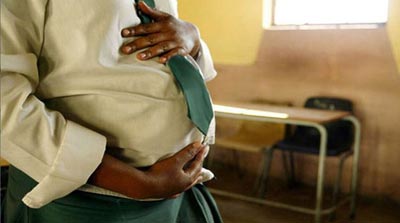
The party highlighted data from the Department of Health showing that 122,302 adolescents gave birth during the 2023/24 financial year, including 2,716 girls aged between 10 and 14 years old.

By contrast, SAPS reported only 610 statutory rape cases during the same period.

Police statistics showed that nearly 40% of victims were 15 years old, while almost a third were 14 years old and more than 20% were 13 years old.

The DA further pointed to police data indicating that only 129 child births, 138 child pregnancies and 27 miscarriages or terminations involving children were reported for criminal investigation during 2023/24.

“What the DA uncovered should shock every South African. We believe that the fundamental constitutional rights of a child to dignity and to be protected from abuse are being violated by flawed systems that are working in silos,” Khanyile said.

The issue came under intense scrutiny during the meeting of Parliament’s Portfolio Committee on Police last week, where members expressed alarm at the number of statutory rape cases that have been withdrawn over the past five years.

Police told MPs that 1,853 of the 3,232 statutory rape cases opened between the 2020/21 and 2024/25 financial years were withdrawn.

Portfolio Committee chairperson Ian Cameron described the figures as deeply concerning and called for stronger interventions to ensure offenders are prosecuted.

“SAPS must strengthen measures against adults who fail to report incidents of statutory rape and provide statistics on actions taken against those who neglect this legal obligation,” Cameron said.

Police officials attributed the withdrawal of cases to a range of social, economic and cultural factors, including financial dependence on perpetrators, fear of stigma, intimidation of victims and families, and the use of alternative dispute resolution mechanisms within communities.

Acting Deputy National Commissioner for Crime Detection Lieutenant-General Hilda Senthumule stressed that rape cases cannot legally be withdrawn by complainants because such offences are crimes against the state.

Committee members were particularly critical of failures by government institutions to report suspected statutory rape cases.

The DA’s complaint also cites provincial examples.

In KwaZulu-Natal, the Department of Social Development reportedly recorded no statutory rape reports to SAPS in 2024 despite receiving more than 2,000 related complaints.

In Mpumalanga, over 65,000 children aged between 10 and 19 gave birth in health facilities between 2020 and 2025, yet only a handful of cases were referred to social development authorities.

Khanyile said the party would ask the SAHRC to urgently investigate what it described as systemic failures across government departments, identify accountability measures and recommend reforms to better protect children.

INSIDE EDUCATION