Home Blog Page 34

DBE urges matric candidates who failed to use free Second Chance programme

0

By Levy Masiteng 

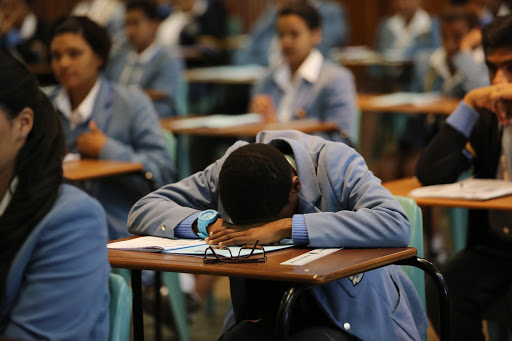
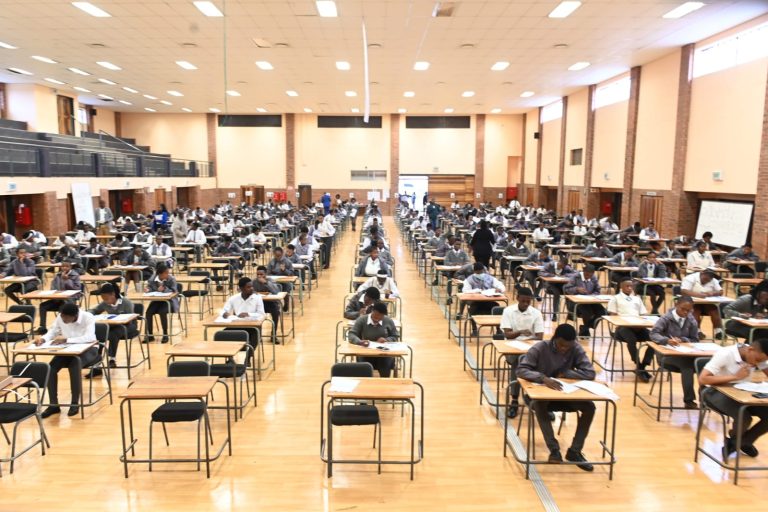
The Department of Basic Education (DBE) has encouraged National Senior Certificate (NSC) candidates who did not pass their matric exams to take advantage of the Second Chance Matric Programme. 

“The Second Chance Matric Programme is a key intervention by the DBE aimed at supporting learners who were unable to obtain their National Senior Certificate (NSC) or the extended Senior Certificate (SC),” the department said. 

The programme is open to Senior Certificate examination candidates who are registered to write the Senior Certificate examinations in June and NSC part-time candidates who attempted the NSC examinations after 2008 and will be writing in the May/June or November examination sessions.

The department said that the initiative is offered free of charge to qualifying learners.

Candidates and parents were warned to be cautious of private or commercial entities claiming to offer the Second Chance Programme for a fee. 

“We do not endorse any paid services linked to the programme,” the DBE said. 

For accurate and verified information, candidates are advised to contact the DBE directly or visit its official website.

According to the department, the programme forms part of its commitment to the goals of the National Development Plan (NDP) and the basic education sector, with a strong focus on increasing learner retention and educational outcomes.

Through the programme, candidates receive academic support to help them meet the requirements for a Grade 12 certificate, while also being exposed to career guidance and bursary opportunities for further studies.

Academic support under the Second Chance Matric Programme is provided in the following subjects: Accounting, Agricultural Sciences, Business Studies, Economics, English First Additional Language (FAL), Geography, History, Mathematics, Mathematical Literacy, Physical Sciences, and Life Sciences. 

Registration for the 2026 May/June SC and NSC examinations will close on 6 February 2026.

INSIDE EDUCATION

NSFAS sets four to eight hour accommodation target for qualifying students

0

By Thapelo Molefe

The National Student Financial Aid Scheme (NSFAS) has said that no qualifying student should sleep in a library or be left homeless during the 2026 academic year.

“One of the things we’ve set out as a key performance indicator for ourselves is that within four to eight hours of a student arriving on campus, if they qualify for accommodation, they should be placed,” Acting NSFAS CEO Waseem Carrim said at a media briefing on Tuesday.

“That will ensure that we don’t see instances of students sleeping in libraries or being homeless as a result of NSFAS’s operational failures.”

The briefing comes as NSFAS prepares for a “stable start” to the 2026 academic year, following years of operational crises that have repeatedly disrupted university registrations and student housing.

According to NSFAS, the scheme received 893,847 applications for 2026 funding. Of these, 609,653 were approved, while 49,538 were rejected, primarily because household income exceeded the R350,000 eligibility threshold.

Carrim said that the rejected applicants were largely first-time students who did not meet the financial criteria.

All 2026 funding decisions were finalised by 31 December to prevent registration delays.

Universities were required to submit 2025 academic results by 15 December, allowing eligibility for continuing students to be confirmed before registration opened. Institutions were warned that students enrolled in expired or unapproved qualification codes would not be funded.

To support the registration period, NSFAS will deploy servicing administrators and graduate interns to all 26 universities and 50 TVET colleges from 13 January to 31 March.

An upfront payment will be made on 1 February covering book allowances and one month of meal, accommodation, travel and personal care allowances, while TVET colleges will receive advance tuition payments at the end of January. Appeals must be lodged within 30 days of rejection, with outcomes expected by 16 February.

The scale of the demand, Carrim said, highlighted the central role NSFAS continues to play in South Africa’s higher education system. He said that more than 5.5 million beneficiaries have passed through the scheme over the years and that 70% of NSFAS beneficiaries come from households previously dependent on social grants.

“Being a graduate in South Africa is critical to achieving social mobility,” Carrim said, adding that 60% of government chief directors, deputy directors-general and directors-general were previously funded by NSFAS.

Carrim also pushed back against calls for universities to take over the administration of student funding, saying that such past arrangements were far from flawless. 

“There was no perfection when the funds were managed directly by universities,” he said.

“In fact, universities would not have had to have returned billions of rands in funds back to NSFAS if they were managing the funds appropriately.” 

He said NSFAS believes a centralised system remains critical not only for funding access, but for monitoring student performance and graduation outcomes, even as the scheme works to address its own administrative shortcomings.

However, questions from journalists at the briefing highlighted persistent concerns about NSFAS’s instability, with all senior executives currently serving in acting positions.

The Acting board chairperson, Dr Mugwena Maluleke, acknowledged the challenges, but said governance structures were being rebuilt, including the establishment of a functional Audit and Risk Committee to address legacy issues flagged by the Auditor-General and under investigation by the Special Investigating Unit.

Addressing the so-called “missing middle” students, Carrim said that NSFAS received about 12,000 loan applications, compared with nearly 900,000 bursary applications, indicating low uptake.

He said rejected bursary applicants are offered the option to apply for loans and that the future of the loan model will form part of broader consultations on a revised higher education funding framework in 2026.

“We’ve put short-term measures in place to ensure a stable 2026,” Carrim said. “But the long-term sustainability of NSFAS and the higher education sector is a question the country must answer collectively.”

INSIDE EDUCATION

Gauteng still has 4,858 learners awaiting placement ahead of 2026 school year

0

By Akani Nkuna

The Gauteng Department of Education said more than 4,500 Grade 1 and Grade 8 learners in the province were still awaiting placement ahead of the 2026 academic year, but added that the figure was relatively low, representing 1.5% of total applications received.

In a statement on Tuesday, Gauteng Education MEC Matome Chiloane said most unplaced learners were concentrated in areas experiencing rapid population growth in urban and metropolitan districts. He said the department was moving to resolve the outstanding placements urgently to avoid disruptions to the school calendar.

“The Department continues to release placement and transfer offers daily, supported by targeted interventions in high-pressure districts, to ensure that all remaining learners are placed as efficiently and fairly as possible, in line with regulated admissions criteria and available school capacity,” he said.

The department received a total of 358 574 applications for Grade 1 and Grade 8 for the 2026 academic year. Grade 1 accounted for 175 792 applications, while Grade 8 accounted for 182 782.

Of these, 1381 Grade 1 learners were still awaiting placement, while 3477 Grade 8 learners had not yet been placed.

Ekurhuleni districts accounted for the largest share of unplaced learners, with a combined total of 3169 learners, many of them Grade 8 pupils in Ekurhuleni North.

The Johannesburg district recorded the second-highest number of unplaced Grade 8 learners, which the department attributed to increased demand for secondary schools in the area. It said strategic plans were being developed to address the backlog.

“The Department has prioritised Ekurhuleni and Johannesburg as high-pressure districts, with intensified district-based placement, continued release of placement and transfer offers, and strategic utilisation of available capacity across neighbouring schools,” said Chiloane.

Tshwane, Sedibeng and West Rand districts recorded the lowest number of unplaced learners, with a combined total of 84 across Grade 1 and Grade 8.

The late application period, which started on 17 December and runs until the end of January 2026, recorded 11 183 applications for Grade 1 and Grade 8. The department said these applications were subject to available capacity at selected schools.

Chiloane urged parents to submit outstanding documentation by 14 January to speed up processing.

“We are encouraged by the steady progress made in placing learners across Gauteng. We once again urge parents and guardians to remain patient and cooperative as the Department continues to work tirelessly to ensure that every Grade 1 and Grade 8 learner is placed for the 2026 academic year,” Chiloane said.

The department also confirmed that 6736 appeals had been lodged across the province as part of the 2026 Online Admission process, with 637 objections still awaiting adjudication. It said outcomes would be communicated once the process had been finalised.

INSIDE EDUCATION

‘We respect the interdict,’ says Operation Dudula as it invites parents to ‘raise concerns’ about unplaced learners

By Lebone Rodah Mosima

Members of Operation Dudula on Monday welcomed several frustrated parents to their offices in Diepkloof, Soweto, to ‘raise concerns’ about South African children who have not secured school placements.

The anti-illegal immigrant group has positioned itself as an advocate for stricter enforcement of immigration laws and greater accountability by authorities.

The group is running a campaign that it says addresses “key issues” in South African schools, such as overcrowding, unemployed local teachers, and school placements.

National organiser Freeman Bhengu told Inside Education that one of the “biggest problems” parents had approached Operation Dudula about on Monday was applying online for school placements.

”I’ve spoken to five parents [already today] who’ve got a problem with their children not being placed,” Bhengu said.

In November, the Gauteng High Court said that only immigration officers or police have the authority to demand passports or identity documents to verify a person’s right to be in South Africa, and interdicted Operation Dudula and its leaders from making such demands of any private individuals.

The case arose from Dudula’s actions at public sites like clinics and schools, where they had been demanding documents to ascertain nationality and block access of non-citizens.

“We are adhering to that, and we respect that interdict,” said Bhengu.

Nevertheless, he said, Dudula had decided to “engage” with the public, “who are suffering under the system”.

Any placement issues that were brought by parents to Operation Dudula would be raised by the group with the Department of Basic Education (DBE), he said.

“Our main mission is to place each and every child in every school, and we know this online system application is cumbersome to most of them,” he said.

Gauteng’s placement disputes are driven by rapid in-migration into metros, overcrowding, late applications and shortages of teachers and infrastructure — pressures the DBE has previously linked to thousands of learners still unplaced even after the school year begins.

The department has also warned parents against scammers offering “paid” placements.

Continued Bhengu: “It’s not going to be a one-week campaign, it’s a whole year event. So, people who are not placed this January, in February, we are still going to be on this campaign up until every South African child is placed, and we are taking it further with unemployed teachers in South Africa.”

One parent said that she tried to apply online for her child at a nearby public school in July last year, but was told her child had been placed at a school farther from where they live.

“I can’t afford transport for my child to go to that school, and I cannot afford their school fees as well, as I need to take care of us all,” she said.

“I went to the district to appeal. They promised that they would respond to my appeal via email, but until today, they haven’t responded. They have gone quiet on me.”

The parent said she then went to the nearest school last year to apply, but found the school had placed many “foreign nationals”. She said a school clerk told her she could try again next year, once space had opened up.

“I’m worried now. Schools are opening next week, and I don’t know which uniform I should buy,” she said.

“What I see here is that our government doesn’t care about us; they care for foreign nationals. I don’t know if we should also pay for space in schools, because the government is failing us, and this online application is nonsense.”

Sharing similar frustration, another parent said she had been struggling to secure a suitable school placement for her child since Grade 8.

Her child, now going into Grade 10, travels a long distance from Diepkloof to Turffontein (Johannesburg East), which has forced her to spend hundreds — sometimes thousands — of rands on transport, while also paying school fees.

“When I applied for my child to go to Grade 8, I applied online on time, but they gave her a placement in Turffontein,” she said.

“I went to the district and told them I couldn’t afford to transport my child to Turffontein. On top of that, I told them I was not working, and they never helped me in this regard.”

She said she and her child continued to struggle as she repeatedly applied for a school closer to home, but her child was still not placed nearer.

Now 58, she said she has a part-time job, but transport remains a major burden, as she must pay to get to work and ensure her child gets to school.

She added that her employers had helped her find accommodation closer to her workplace to reduce transport costs, while she continues to apply for a school within walking distance of where they are currently staying.

INSIDE EDUCATION

Applications open for Durban Natural Science Museum volunteer training programme

By Charmaine Ndlela

The Durban Natural Science Museum has opened applications for its volunteer training programme, a one-year initiative set to begin in February 2026.

The programme is aimed at unemployed residents living in eThekwini Municipality.

Successful applicants will have an opportunity to gain practical workplace experience while contributing to a range of museum projects.

Volunteers will be placed across different departments, assist visitors with information, and help make museum visits more engaging, educational, and enjoyable.

To qualify, applicants must be 18 years or older and have a matric certificate that includes Life Sciences or Biology. Preference will be given to candidates with qualifications or experience in conservation, travel and tourism, marketing and/or education.

Speaking to Inside Education, Nokwanda Cele, a communicator at the museum, emphasised the importance of youth participation in the programme.

“[There will be benefit in] gaining experience in areas they may not have been exposed to before. Volunteers are placed in departments according to their qualifications,” said Cele.

She added that most participants are recent school leavers or graduates from tertiary institutions. “We give them the opportunity to gain workplace exposure and understand how professional environments operate.”

Cele said the experience can be especially valuable for first-time job seekers. “Many of the volunteers have never worked before, so this experience helps prepare them for future employment.”

Applications close on 19 January 2026.

INSIDE EDUCATION

India U19 defeat SA to take early lead in 3-day youth ODI series

By Johnathan Paoli

India Under-19 began their three-match Youth One-Day International series against South Africa with a composed 25-run Duckworth–Lewis–Stern (DLS) victory at Willowmoore Park in Benoni on Saturday, taking a 1–0 lead in the contest.

In a match shaped by overcast conditions and intermittent rain, a decisive middle-order performance from India proved the difference, with Harvansh Pangalia and Rohan Ambrish combining for a match-defining partnership that steered the visitors to a defendable total and ultimately set up the win.

Winning the toss under threatening skies, South Africa opted to bowl first, a decision that appeared vindicated inside the opening powerplay.

The new-ball pairing of Jacques Basson and Bayanda Majola made excellent use of movement and bounce, striking twice to leave India reeling at 34/2 in the sixth over.

However, Pangalia and Ambrish responded by arresting the collapse and rebuilding with patience and discipline.

Pangalia played the more assertive role, driving confidently through the covers and pulling with authority as the innings progressed.

He fell short of a century, dismissed for a finely crafted 93 off 95 balls that included seven fours and two sixes.

Ambrish, meanwhile, provided stability and control, rotating the strike effectively and punishing loose deliveries.

His 65 from 79 balls ensured momentum was maintained through the middle overs, blunting South Africa’s attack and forcing the hosts onto the defensive.

After the partnership was eventually broken, useful contributions from Kanishk Chouhan (32), Khilan Patel (26), Vedant Trivedi (21) and Abhigyan Kundu (21) lifted India to a competitive total of 301 all out.

For South Africa, Basson was outstanding, claiming 4/54 in his 10 overs, including three wickets in his second spell.

Two sharp run-outs in the final over, one initiated by SA captain Muhammed Bulbulia, prevented India from pushing even higher.

Chasing a DLS-adjusted target, South Africa made a shaky start.

Early wickets fell inside the first 10 overs, leaving the hosts under pressure despite favourable conditions.

Indian seamer Deepesh Devendran was the chief threat with the new ball, finishing with figures of 2/33.

Opening batter Jorich van Schalkwyk, however, once again underlined his growing reputation as one of South Africa’s most promising youth prospects.

The record-holder for the highest individual score in Youth ODIs, his 215 against Zimbabwe earlier last year, looked fluent and assured, timing the ball sweetly and negotiating India’s spin attack with confidence.

Van Schalkwyk found valuable support from Armaan Manack, and the pair appeared to be steering South Africa back into contention.

Manack’s run-a-ball 46 was particularly important in keeping the required rate in check, but his run-out shortly before the rain interruption proved a turning point.

When play was eventually halted due to worsening weather, South Africa were 148/4, with Van Schalkwyk unbeaten on 60.

Under the DLS calculations, the hosts were 25 runs short of their revised target, handing India a rain-assisted but well-earned victory.

The result highlighted India’s depth and resilience, particularly in the middle order, an encouraging sign as they build towards the upcoming ICC Men’s Under-19 World Cup, scheduled to take place in Zimbabwe and Namibia from 15 January to 6 February.

India will begin their World Cup campaign against the USA in Bulawayo, followed by group matches against Bangladesh and New Zealand.

India entered the South Africa series on the back of a runners-up finish at the Under-19 Asia Cup and are using the tour as a crucial final examination ahead of the global tournament.

The DLS method is a scoring system used in limited-overs cricket to produce a fair result when a match is interrupted by rain or other delays.

It works by recalculating targets based on the two key resources a batting team has available, overs remaining and wickets in hand, recognising that a team with more wickets can score faster than one with fewer.

When overs are lost, the chasing team’s target is adjusted to reflect the reduced opportunity to score, rather than simply scaling down the runs.

All three matches will be played at the same venue, with the series concluding on Wednesday.

INSIDE EDUCATION

OPINION |Goal-setting is the missing link in learner success

By Ntsako Mhlanga

The start of the year is an ideal time for setting goals, and it is particularly important for parents and children preparing for the 2026 academic year.

Goal-setting helps families monitor progress, track key performance indicators, and identify when intervention may be needed.

Throughout the year, learners find themselves under pressure to perform, but without the tools necessary to achieve the desired results.

The issue is not a lack of intelligence or effort, but a lack of structured academic goal-setting.

Learners are often told to ‘do better’ without being shown how. Most academic struggles stem from unclear goals, poor routines, and limited accountability — not ability.

Many learners set vague intentions, such as wanting better marks, without breaking these down into subject-specific targets, study habits, or realistic timelines. At the same time, parents often struggle to support their children without applying pressure, especially within an overstretched education system.

Academic success is built through structure, consistency, and support. When learners understand what is expected of them and have a clear plan, confidence improves, and performance follows.

Parents and guardians should:
• Help learners set clear, subject-based academic goals
• Focus on routine and consistency rather than punishment
• Schedule regular academic check-ins
• Seek additional academic support early, rather than waiting for crises

Normalising academic support and goal-setting conversations at home and in communities can significantly improve learner outcomes.

Academic success is not accidental; it is structured with each day fully accounted for. It requires deliberate planning and preparation, which are building blocks that are needed, even later in life.

The early adoption of positive thinking and planning strategies will help children to develop their self-confidence and self-awareness as they progress in their academic journey.

Ntsako Mhlanga is the founder of Learnergy, an education support centre based at Eastgate Shopping Centre, dedicated to empowering learners with the academic skills, confidence, and structure they need to thrive.

INSIDE EDUCATION

DBE defends integrity of matric exams as Freedom Front Plus again calls for exam board choice

Staff Reporter

The Department of Basic Education (DBE) has defended the integrity of the National Senior Certificate (NSC) exams after the Freedom Front Plus (VF Plus) said that public schools should be able to choose alternative examination authorities, following a limited breach in the 2025 exam cycle.

The breach was detected during marking, through internal controls, and prompted a national investigation, including suspensions and criminal and disciplinary processes.

In a briefing in December, Basic Education Minister Siviwe Gwarube said the anomaly was first flagged on 2 December in Gauteng, and the subsequent probe found that three subjects — English Home Language, Mathematics and Physical Sciences — had been accessed before the exams and shared via a USB storage device, affecting a small number of learners in seven schools in Pretoria.

But the VF Plus said the incident strengthened its long-running criticism of the department’s “monopoly” over public school exams.

“[P]ublic schools should be afforded the opportunity to choose which examination board they wish to use. If the Department refuses to relinquish its monopoly on managing schools’ final exclamations, though, parents will increasingly start looking into independent education,” the party said on 31 December.

In a statement issued on Sunday, the DBE rejected the suggestion that the NSC system was fundamentally compromised, saying robust systems are measured by detection and response rather than the absence of attempted breaches.

Umalusi, the statutory quality-assurance body, oversees the readiness of both public and private assessment bodies and must approve the release of national examination results. In October, it said it had audited the state’s readiness for the 2025 end-of-year exams across the DBE, IEB and SACAI systems.

In its readiness briefing, Umalusi reported 766,543 full-time candidates registered to write the NSC under the DBE system (excluding part-time candidates), compared with 17,427 under the IEB and 6,174 under SACAI. The DBE has separately said total NSC candidate numbers for 2025 were above 900,000 when including part-time candidates.

In its statement, DBE Director-General Mathanzima Mweli said: “The Department of Basic Education rejects the insinuation that the integrity of the National Senior Certificate is in terminal decline or that public schooling is structurally incapable of safeguarding assessment standards.”

“Public confidence in the education system is best sustained through evidence-based discourse, institutional accountability, and continued systemic strengthening, not conjecture or sensationalism,” said Mweli.

INSIDE EDUCATION

KZN budget squeeze delays pharmacist intern placements

Staff Reporter

KwaZulu-Natal’s health department has said it can only place medical interns and community-service health workers this financial year because of budget constraints, leaving pharmacist interns and other categories without immediate placements.

“The current reality is one of severe financial limitation,” the department said in a statement this weekend, in response to queries from interns.

“As a result, we have only been able to secure placements for medical interns and community service personnel at this time.”

Newly qualified doctors have to complete a two-year internship before they can do compulsory community service, a statutory requirement administered through the National Department of Health’s Internship and Community Service Placement (ICSP) system.

Pharmacists must complete a 12-month internship and then pharmaceutical community service before they can practice without restrictions.

The province has faced continued pressure on its personnel budget. In its December 2025 adjustments budget, the provincial treasury said the health department would receive an additional R1.4 billion to address “urgent pressures”, including the continued employment of community service doctors and interns.

In its statement, the department said it was not questioning the importance of the affected interns to the health system. “We hear your anxiety. We recognise your eagerness to contribute to our healthcare system and the critical role you are trained to play,” it said.

“This difficult decision stems from a simple, unavoidable principle: we cannot spend what we do not have.”

The department said it was seeking additional funding and that pharmacist interns and others would be prioritised if the fiscal situation improved.

“We will provide updates through our official communication channels as the situation evolves,” it said.

INSIDE EDUCATION

NSFAS says it has finalised 2026 funding decisions

Staff Reporter

The National Student Financial Aid Scheme (NSFAS) has completed all 2026 funding decisions ahead of the academic year and has started mop-up payments for 2025.

“All students can view their funding statuses via the NSFAS Portal,” NSFAS said in a statement.

It said it had assessed 893,847 applications from first-time entering students, with 609,403 qualifying for financial aid.

It said 49,538 first-time applications were rejected, 16,863 were withdrawn or cancelled, while 218,043 were incomplete and still awaiting supporting documents.

NSFAS said incomplete applications were tied to missing documentation and would be reconsidered once applicants submit the required information.

“Applications classified as ‘in process’ and reflected as ‘incomplete’ relate to cases where additional documentation is outstanding.”

It warned applicants with outstanding documents that time limits apply.

“As previously communicated, applicants with outstanding documentation are reminded that they have 30 days from the date of notification to submit the required information. Applications that remain incomplete after 30 days will not be processed further and will be deemed unsuccessful.”

For continuing students, NSFAS said it had assessed 545,952 previously funded university students against academic progression criteria. Of those, 416,688 had met the requirements to continue receiving funding, while 129,264 had not. TVET results will be released on 13 January.

NSFAS also said rejected students can challenge outcomes through an appeals process.

“Rejected students, whether first-time entrants or continuing, have the right to appeal the NSFAS decision.”

“The appeals window is open, and NSFAS will notify students of the outcome of their appeals on an ongoing basis.”

On 2025 payments, NSFAS said it had cleared many outstanding claims from higher education institutions and accommodation providers, while acknowledging some short payments remain.

“Where short payments remain, NSFAS is committed to working with accommodation providers in resolving these claims timeously and requests accommodation providers to lodge claims through the relevant NSFAS channels.”

INSIDE EDUCATION