Home Blog Page 35

Three youths dead, three missing in ‘mass drowning’ at KZN’s Pennington beach

Staff Reporter

Three people have been confirmed dead and three young men remain missing after a mass drowning incident in rip currents at Pennington Beach on the KwaZulu-Natal south coast.

Rescuers resumed the search at dawn on Friday, after the incident on New Year’s Day, when several swimmers were reported in distress near the tidal pool.

The distress calls were answered by the National Sea Rescue Institute (NSRI), Rocky Bay rescue swimmers, police and lifeguards, the NSRI said on Friday.

“At first light on Friday, 2 January 2026, NSRI Rocky Bay, Police Search and Rescue, the SA Police Services and Umdoni lifeguards resumed extensive search efforts for what was believed to be two males that remained missing following the mass drowning incident in the early evening on New Year’s Day,” the NSRI said.

It said lifeguards managed to pull three people from the water on Thursday evening.

“One male (21) was sadly declared deceased by paramedics. The remaining two casualties, believed to be a young adult male and an 18-year-old female, were not injured.”

Police later recovered a second man, also aged 21, dead on the beach near Pennington at about 9.30pm on Thursday.

On Friday morning, an 18-year-old woman was found dead on Bazley Beach and was linked by police to the Pennington incident, bringing the confirmed death toll from the case to three, with three men still unaccounted for, according to the NSRI.

Police opened inquest dockets into the deaths, while search and rescue teams continued to comb the coastline and waters offshore for the missing men.

Rip currents can form quickly and are among the leading hazards for swimmers along the country’s coastline.

The NSRI and municipal officials urged beachgoers to only swim at beaches with lifeguards and to heed their warnings.

INSIDE EDUCATION

How Nomalungelo Gina is ensuring more girls and women enter STEM leadership

By Lebone Rodah Mosima 

Deputy Minister of Science, Technology and Innovation, Nomalungelo Gina, says government wants more girls and women to enter and lead in science, technology, engineering and mathematics (STEM), particularly in rural and township communities where resources and career guidance are scarce.

“Our goal as the department is an inclusive, equitable, and globally competitive innovation system where women stand as equals,” she told Inside Education during an interview.

Gina said that women remain underrepresented in senior STEM jobs and decision-making roles, with progress slowed by structural inequities in career pathways, limited mentorship, work–life balance pressures, and entrenched institutional cultures and stereotypes.

“My experience as a teacher has profoundly shaped my approach to gender transformation in science. In the classroom, I witnessed both the immense potential of young women in STEM and the subtle barriers that discourage their participation”, she said.

Gina was appointed Deputy Minister of Science and Technology in June 2024, after serving as Deputy Minister of Trade, Industry and Competition from 2019.

Before entering national executive leadership, she worked as an educator for more than 15 years in KwaZulu-Natal’s uThungulu District and held leadership roles in the South African Democratic Teachers Union (SADTU).

She completed a PhD in Leadership and Management in December, awarded by the University of Gideon Robert in Zambia, focused on challenges faced by local authorities implementing information and communication technology.

“The thesis developed a strategic ICT planning and implementation framework that aims to equip local authorities with the necessary tools and strategies to overcome challenges and enhance service delivery, citizen engagement, as well as governance,” Gina said.

“This journey has reinforced that evidence-based leadership matters, and that science, technology and innovation must be deliberately positioned to strengthen the state and improve the lived experience of our people.”

The DSTI programmes target the full talent pipeline — from school learners and postgraduate students to early-career researchers and senior scientists — and are increasingly focused on whether women move into leadership.

“Success in increasing women’s participation in STEM is measured not only by rising enrolment and employment numbers, but by the extent to which women advance into leadership, research management, and decision-making roles,” Gina said.

“We track indicators such as equitable representation in postgraduate studies, research grant awards, senior appointments, and national recognition platforms such as SAWISA and National Science and Technology Forum (NSTF).”

Gina said monitoring bodies also mattered in determining whether transformation was real. She said that the National Advisory Council on Innovation (NACI) plays a crucial role in tracking whether transformation is real or merely rhetorical.

The department has consolidated programmes that include postgraduate funding policies aimed at ensuring women receive 55% of bursaries, including the South African Women in Science Awards (SAWISA), National Research Foundation (NRF) instruments to advance black and women academics, and international exposure initiatives such as the Lindau Nobel Laureate Meetings and the L’Oréal-UNESCO For Women in Science awards.

More recently, it introduced the Women in Technology and Innovation Programme (WTIP), providing gender-responsive funding, incubation and mentorship for women innovators and entrepreneurs.

“Achieving this transformation requires the active involvement of industry, civil society organisations, and academia, working in partnership with government to expand opportunities, break systemic barriers, and embed gender equity across the entire innovation ecosystem,” Gina said.

“Women in South Africa have significantly improved access to research grants, postgraduate funding, and innovation incentives, but equity is not yet fully achieved.”

At school level, Gina said preparing girls for STEM careers remained a national priority, with outreach targeted at rural and township schools.

“The department remains committed to ensuring that every girl receives the skills and confidence to thrive in science and innovation, in line with our mantra of placing science, technology and innovation at the centre of government, education, industry and society,” she said.

“I want to instil a sense of desire in rural and township girls and boys, where there are not enough science and computer laboratories, that they too can become our future nuclear scientists, space science professionals, computer engineers, chemical and mechanical engineers.

“I will want to see more rural girls getting into these STEM-related professions. With our NRF bursary and scholarship programme, I am delighted at the number of women growing through leaps and bounds in pursuing these studies.

“For science month, we mobilise school learners to expose them to opportunities. I am steadfast on the emphasis to target rural and township schools where career guidance is non-existent,” she said.

INSIDE EDUCATION

KZN health MEC welcomes New Year babies, but is ‘alarmed’ at number of teen mothers

Staff Reporter

The department of health in KwaZulu-Natal recorded 144 births by midday on New Year’s Day, including 21 teenage mothers, prompting renewed concern from provincial Health MEC Nomagugu Simelane over child and teen pregnancies in South Africa’s second-most populous province.

Simelane said the New Year’s Day total had climbed from 63 babies by 7 am to 90 by 10 am, before reaching 144 by 12 pm, with 73 boys and 71 girls recorded by midday.

She said the teen-mother figure was preliminary and still subject to verification as facilities continued reporting.

“While we welcome these New Year babies, we must also register our concern, particularly over our very young mothers,” Simelane said.

Referring to the births recorded on Christmas Day in the province, she said there had been 302 deliveries, but that “alarmingly, 70 mothers were teenagers, with the youngest being three 15-year-old girls”.

“Among these young mothers was a 16-year-old girl, who was impregnated by a 32-year-old man,” she said.

“What is also concerning is the fact that these girls were just 15 years old when they fell pregnant, which is absolutely shocking and concerning, because at that age, they are nowhere near ready to be mothers.”

She said facilities had recorded nine teenage mothers in the early New Year’s Day data, including one 17-year-old, four 18-year-olds and two 19-year-olds, while the midday update put the preliminary total at 21 teenage mothers as reporting widened across the province.

Teen pregnancy remains a persistent challenge in South Africa, where official statistics show more than 106,000 registered live births occurred among adolescents aged 10–19 in 2019, with KwaZulu-Natal accounting for the highest provincial share, according to Statistics South Africa.

The UN Population Fund (UNFPA) has reported a decline in the adolescent fertility rate for 15–19-year-olds in recent years, but has warned that prevention and support require coordinated, multi-sector interventions.

“These statistics are cause for deep concern, and highlight the ongoing need for education, guidance, and access to reproductive healthcare for teenagers,” Simelane said.

INSIDE EDUCATION

Bloemfontein jeweller creates QR-code pendants to help identify people with dementia

By Sihle Manda

From a small studio in Bloemfontein, Kabelo Makhetha is reshaping the way society sees jewellery. 

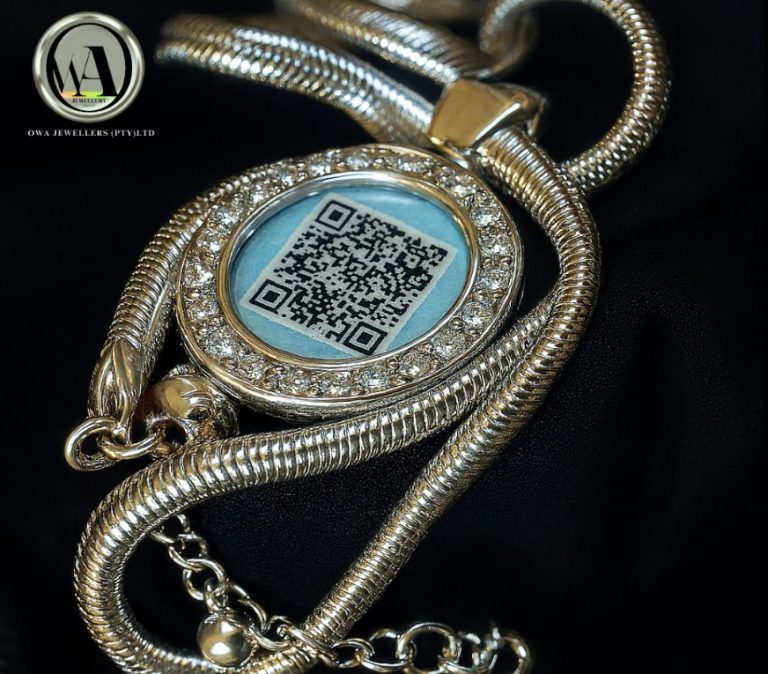
Through his start-up, Owa Jewellery, he creates pendants that are not only eye-catching but potentially lifesaving. Each piece carries a QR code that helps identify people living with dementia and other cognitive impairments if they go missing.

A QR code (Quick Response code) is a type of two-dimensional barcode that stores information and can be quickly scanned and read by a smartphone or scanner.

“The main goal of Owa Jewellery is to assist people living with cognitive impairments, which includes dementia and other conditions that affect the mind… Our primary target is people living with dementia due to the severity of the illness.”

Dementia is a condition that causes a decline in memory, thinking, and behaviour, affecting daily functioning.

The concept merges jewellery design with safety in a simple but effective way. “What we do is integrate QR coding with jewellery so that when a person goes missing, the person who finds them can identify them. It is basically an identity document on the go,” he explains.

Makhetha started developing the idea shortly after completing his studies in jewellery design at the Central University of Technology (CUT).

“I started the business in 2021. When I completed my degree, I went into research and development, and in 2024, I started to sell the jewellery.”

The seed for Owa Jewellery was planted years earlier through a painful personal experience.

“What inspired the enterprise was that in 2019 I lost my grandmother to dementia. She was 78. Before she died, there was a time she got lost and we couldn’t find her for about eight hours. The dementia became worse after that. I was doing matric. I lost another elderly relative to the illness in 2022.”

Determined to find a solution, he immersed himself in entrepreneurship opportunities while at university.

“In 2020, I got involved with different organisations within CUT that advocate for entrepreneurship. One of those was the Entrepreneurship Development in Higher Education (EDHE).”

Getting the business off the ground required both personal sacrifice and external support. “I received R10 000 seed funding from my father,” he explains.

His operation now includes “a team of five students” who assist him with production and outreach.

Institutional support has also been crucial. “The business has also received support from the National Youth Development Agency (NYDA) in the form of equipment – a jeweller’s bench, a polishing machine, a microscope, pliers and a laptop.”

For Makhetha, Owa Jewellery is about far more than ornaments. It is about creating peace of mind for families, and honouring the memory of his grandmother and others who lived with dementia.

“Having gone through what I went through with my grandmother, I don’t want other people to experience the same pain. If one pendant can help bring someone safely home, then it means the idea has served its purpose.”

This article first appeared in Vuk’uzenzele.

Gugu Motlanthe on a lesson that stayed with her for life

By Simon Nare

Gugu Motlanthe, executive director of the Kgalema Motlanthe Foundation, has dedicated her career to supporting young learners and addressing the gaps left by South Africa’s public education system.

Through the foundation, she has developed what she describes as a unique window into the lives of children — an insight into their struggles, aspirations, and the support they need to thrive.

“At the Kgalema Motlanthe Foundation, we are acutely aware of the gaps many learners in public schools must navigate — gaps shaped by access, resources and socioeconomic realities,” she told Inside Education.

“This awareness guides our commitment to step into the lived experience of our learners, to understand what their minds hunger for and what their hearts respond to.”

Motlanthe cherishes her own early school memories — the classroom, teachers and shared curiosity — because they help her interpret the minds of today’s young people. She values the imaginative world children inhabit, believing that adults can rediscover solutions by observing how children think and interact.

“One of the ways we do this is through intergenerational dialogue,” she said. Before and after extracurricular sessions, the team spends time speaking with learners, sharing meals and, crucially, listening.

“Listening is a muscle that must be exercised intentionally.”

In a world dominated by social media noise and shrinking attention spans, she believes active listening has become rare. Yet it is precisely what children want. “Listening helps us reconnect with our intuition — a voice many adults have long ignored. Children are masters of instinct. They remind us what it feels like to trust our gut, follow our emotions, and explore the world with openness.”

Motlanthe views education as the most powerful tool for transformation, offering skills, confidence, networks and opportunity. Her work is anchored in the recognition that circumstances differ widely. While some high-profile figures built careers without completing degrees, she warns that such examples are the exception and not a model for young people.

“We must encourage learners to pursue education — not to follow a single path, but to expand their choices and tools for life,” she said.

Motlanthe also reflected on the mounting burdens teachers face: poverty, trauma, inequality, and shifting societal expectations. “They are idols, mentors, counsellors, disciplinarians, coaches and caregivers — all in a single day,” she said.

Despite the challenges, many continue to show up with dedication and compassion. Society, she argued, must offer them resources, professional development, emotional care and meaningful recognition.

Motlanthe’s own educational journey was profoundly shaped by her Standard 8 mathematics teacher, Mr Noor, at her Sydenham high school in Durban. He was not loud or forceful; rather, his quiet confidence made her feel capable. He often recognised her potential before she did.

Though she was placed in the top academic classes, she did not take Physical Science — a limitation that sometimes affected class placement. Mr Noor looked past this, recognising her ability to excel in mathematics and challenging her to rise to it.

One lesson from him stayed with her for life: “In mathematics, the answer is always hidden in the question.”

Through his teaching, mathematics became more than numbers; it became a way of thinking — about logic, patterns, planning and problem-solving. It even helped her absorb content-heavy subjects. His belief built her confidence and strengthened the resilience and independence she carries today. “If a supportive teacher can change a learner’s trajectory, then he surely changed mine,” she said.

English and history classes fuelled her imagination, but mathematics taught her that every problem contains the seed of its own solution — a message she believes remains essential for today’s learners.

Motlanthe worries about the growing narrative that formal education is unnecessary for success. Public figures often cite their unconventional paths — Kanye West’s The College Dropout, Oprah Winfrey leaving university early, or Bonang Matheba’s insistence on hard work. These stories are inspiring, she acknowledged, but they are outliers.

“Success without education is not a formula learners can rely on,” she emphasised. A more constructive message would be: ‘If I had been able to complete my studies, I might have been even more empowered and successful.’ Education strengthens confidence, discipline, critical thinking, creativity and resilience. It creates networks and opportunities many young people do not even know exist.

Reflecting further on her journey, Motlanthe noted that teachers often underestimate their influence. Learners spend more waking hours with teachers than with their own parents, and educators shape intellectual, emotional and social development. Today’s teachers face unprecedented pressures, yet many continue to serve with heart.

Her reflections pay tribute not only to her favourite teacher but to educators everywhere. “Teachers need empathy, encouragement and respect,” she said. “Society must equip them with resources, professional development and emotional care.”

INSIDE EDUCATION

Choosing a career? In a fast-changing job market, listen to your inner self

By Kobus Maree

The world of work today, in the 21st century, is far more unpredictable than it was in the 20th century. Jobs come and go, roles change constantly, and automation and digital disruption are the only constants.

Many young people will one day do jobs that don’t yet exist or did not exist a few years ago. Change is the new normal.

In this world, career counselling focuses on navigating repeated transitions and developing resilience. It is about employability and designing meaningful work-lives – not about finding a single “job for life”.

It recognises that economic activity is part of wider social realities.

At its heart is the search for a sense of purpose.

As a career counsellor and academic, I’ve been through decades of innovation, research, and practice in South Africa and beyond. I have found that the work of US counselling psychologist Mark Savickas offers a useful way to understand how people build successful and purpose-filled careers in changing times.

His career construction theory says that rather than trying to “match” people to the “right” environment, counsellors should see their clients as authors of their own careers, constantly trying to create meaning, clarify their career-life themes, and adapt to an unpredictable world.

In simple terms, this means in practice that career decisions are not just about skills or interests, but about how we make sense of our lives. They are about our values and how we adapt when the world shifts.

In my own work I emphasise that career counselling should draw on people’s “stories” (how they understand themselves) as well as their “scores” (information about them). This is why I developed instruments that blend qualitative and quantitative approaches to exploring a person’s interests.

I also think career counselling should be grounded in context – the world each person lives in. For example, in South Africa, young people face multiple career-life transitions, limited opportunities and systemic constraints, such as uneven and restricted access to quality education and schooling, lack of employment opportunities, and insufficient career counselling support. My work in this South African context emphasises (personal) agency, (career) adaptability, purpose, and hope.

This goes beyond “what job suits you best”, into a richer, narrative-based process. Clients recount their career-life story, identify “crossroads”, reflect on their values and purpose, and design their next career-life chapters.

Essentially, this approach helps them listen to themselves – to their memories, dreams, prospects, values, and emerging self- and career identities – and construct a story that really matters to the self and others.

I also believe that career counsellors should try to help people deal with their disappointments, sadness and pain, and empower them to heal others and themselves.

Tips for career builders

Adaptability is a central theme in current career theory. It has four dimensions:

  • concern (about the future)
  • control (over your destiny)
  • curiosity (exploring possibilities)
  • confidence (in your capacity to act).

When you develop these capacities, you are better equipped to manage career-life transitions, redesign your career appropriately and promptly, and achieve a meaningful work-life balance.

I have found that in practice it’s helpful to:

  • reflect on key “turning points” in your career-life and earliest memories
  • integrate self-understanding with awareness of what’s happening in an industry, technology and the economy
  • draw on “stories” (subjective information about yourself) and “scores” (objective data)
  • develop a sense of mission (what the job means for you personally) and vision (your contribution to society, not just your job title).

I invite you to reflect deeply on your story, identify the key moments that shaped you, clarify your values, and decide what contribution you want to make. Then (re-)design your way forward, step by step, one transition at a time.

If it’s possible, a gap year can be a good time to do this reflection, learn new skills and develop qualities in yourself, like adaptability.

One of the best pieces of advice for school leavers I’ve ever seen was this: “Get yourself a passport and travel the world.”

How a counsellor can help

One of the key tenets of my work is the belief that career counselling should be beneficial not only to individuals but also to groups of people. It should promote the ideals of social justice, decent work, and the meaningful contribution of all people to society.

For me, the role of practitioners is not to advise others but to enable them to listen to their inner selves.

To put it another way: in a world of uncertainty, purpose becomes a compass; a North Star. It gives direction. By helping you find the threads that hold your life together and your unique career story, a counsellor helps you take control of your career-life in changing contexts.

There’s also a shift of emphasis in career counselling towards promoting the sustainability of societies and environments on which all livelihoods are dependent.

Career counselling is more vital than ever – not a luxury. It’s not about providing answers but about helping people become adaptive, reflective, resilient and hopeful.

Kobus Maree is Professor of Educational Psychology, University of Pretoria. This article was first published by The Conversation.

INSIDE EDUCATION

Call for students to apply for scholarship to study in Germany

Staff Reporter

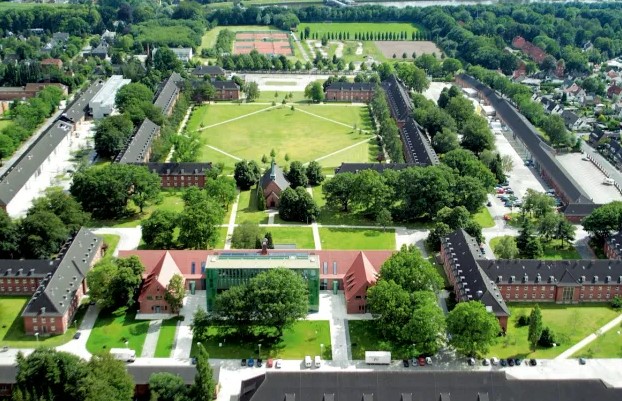
The Department of Higher Education and Training (DHET) has officially opened a call for applications to eligible South African students for a fully funded scholarship to study in Germany at Constructor University. 

 The scholarship is for fully funded Bachelor’s, Master’s, and PhD studies, under the Funda Germany Scholarship Programme, commencing in September 2026.

“Constructor University is an English-medium, campus university in Bremen, ranked among the top 30% globally. With students from around 120 different nations, it is among the world’s most international universities, offering Bachelor’s, Master’s and Doctoral degrees in a wide variety of fields,” the department said.

Who can apply for the scholarship?

  • South African citizens in good health.
  • Students with a strong academic record.
  • Bachelor applicants require a minimum average of 65% or above in their NSC (including Life Orientation as well as Mathematics and 1 other STEM subject).
  • Postgraduate applicants should have performed well in their previous studies, with a minimum of 60% average mark or above achieved in their previous studies.
  • Must have an interest to study in Germany and demonstrate commitment to the development of South Africa.
  • Available and eligible to study full-time in Germany from September 2026.
  • Meet the entry criteria for the selected study programme at Constructor University.

Fields of Study

  • A wide range of study fields is available for Bachelor’s and Master’s degrees and PhD projects, including various engineering fields, robotics, management, mathematics, fuel cell development, artificial intelligence, neuroscience, computational systems biology, nano electronics, specialist areas in physics, chemistry, applied mathematics and geosciences, social data sciences, cognitive psychology, computer science, biotechnology, accounting and auditing, political sciences, international logistics, computational drug discovery, communication science, history, economics, sociology and many more.

Deadline for receipt of applications

  • 15 February 2026

A comprehensive list of fields of study for the Bachelor’s degree is available at https://constructor.university/programs/undergraduate-education and for Master’s programmes at https://constructor.university/programs/graduate-education.

A comprehensive list of fields of study for the PhD can be accessed via https://constructor.university/phd-degrees-constructor-university

What the scholarship offers

The scholarship will cover the following:

  • Return airfare to Germany.
  • Tuition fees.
  • Monthly stipend for living expenses.
  • Accommodation.
  • A once-off settlement allowance.
  • Annual flights at the end of the academic year for Bachelor’s students. Master’s students may qualify for annual flights if accommodated on campus.
  • Mid-term flights after 18 months (PhD students).
  • Medical insurance allowance.
  • An annual allowance at the beginning of each academic year.
  • Academic support for qualifying postgraduate students.
  • Psychosocial support.
  • Pre-departure orientation.
  • SAQA verification of qualification and one professional board examination (if applicable).

Application process

Application for the scholarships is strictly online via the application portal.

Applicants at the Bachelor’s and Master’s level are required to complete the online application on the Constructor University application portal, accessible on the website by the deadline indicated and fulfil all requirements as stipulated.

Successful awardees who withdraw from the programme after signing the Constructor University contract will be liable for the full costs as stipulated in the Constructor University student contract. 

More information about the scholarship is available at: https://www.internationalscholarships.dhet.gov.za/index.php/scholarships/undergraduate-scholarships/496-germany-dhet-funda-germany-scholarship-programme-2026-2027.

– SAnews.gov.za

Weather conditions from December 2025 to April 2026

0

By Akani Nkuna

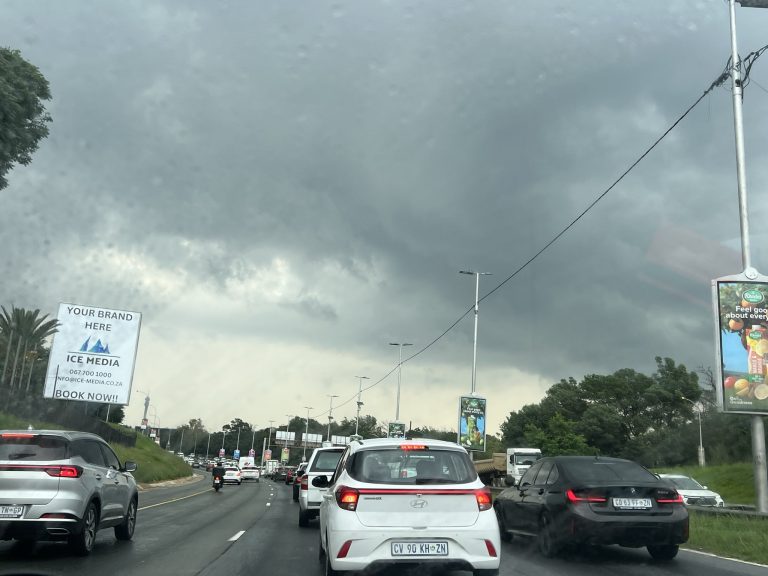
The South African Weather Service (SAWS) is forecasting partly cloudy conditions over the festive season, with rainfall expected mostly in the afternoons and an increased likelihood of thunderstorm activity.

SAWS senior forecaster Jaqueline Modika addressed the media at a briefing hosted by the National Press Club at the Court Classique Hotel in Pretoria, about the expected weather conditions for the summer period from December 2025 to April 2026 — a time marked by heightened outdoor activity.

“Looking ahead to the festive season, including Christmas and the New Year period, the South African Weather Service expects partly cloudy and warm-to-cool conditions across much of the country. Isolated to scattered showers and thundershowers are anticipated mainly over the central and eastern parts of South Africa,” she said.

“Thunderstorm activity is expected to occur primarily in the afternoons, although periods of increased moisture may result in morning showers in some areas. Much of the rainfall during this period will be associated with afternoon and evening thundershowers, which may at times be accompanied by heavy downpours, lightning and gusty winds.”

Modika said it was important that communities, government and decision-makers were properly informed, to ensure coordinated measures to contain and minimise potential risks during the period.

She added that SAWS remains ready to support disaster risk reduction efforts, particularly following the Early Warnings for All (EW4All) roadmap, which was launched in October as part of a G20 Summit side event. The initiative highlights the drive to protect people from adverse weather through inclusive, life-saving early warning systems by the end of 2027.

Modika said SAWS’ commitment goes beyond issuing scientifically informed warnings, and includes implementing “timely, accessible, understandable and actionable” measures, with an emphasis on vulnerable communities to reduce disruption from severe weather.

“The public is strongly urged to take weather warnings seriously, as they play a critical role in reducing the risk of injury, loss of life or property damage. It is of utmost importance for the public, particularly vulnerable communities, to regularly consult credible weather forecast and warnings sources for developments and take appropriate action as part of their daily routine,” Modika said.

She also encouraged practical safety steps during thunderstorms and heavy rain, including seeking shelter, securing property, avoiding travel through flooded roads, and reporting fallen trees and damage to municipal authorities as part of broader efforts to prevent injuries and save lives.

“Avoid crossing flooded bridges, stay informed by following official SAWS weather updates, take necessary precautions during thunderstorm activity, ensure festive travel plans consider changing weather conditions,” she said.

INSIDE EDUCATION
eThekwini New Year’s Eve fireworks restricted to 30-minute window

Staff Reporter

Fireworks in Durban may only be set off for 30 minutes around midnight on New Year’s Eve under eThekwini Municipality by-laws, a ward councillor said this week, as authorities urged residents to celebrate safely and avoid distressing animals.

Councillor Fran Kristopher said fireworks may only be discharged from 23:45 to 00:15 on New Year’s Eve, warning that breaching city by-laws could lead to prosecution and fines of up to R2,500.

Kristopher said the city’s rules ban certain high-noise fireworks, including air bombs, supersonic bangs, sound shells, fountain whistles and screeches, while allowing lower-risk items such as fountains, sparklers and lawn lights.

Children under 16 should only use fireworks under adult supervision, and fireworks must not be discharged near hospitals, clinics, old-age homes, petrol stations, or in areas where animals are kept.

Kristopher said residents should never point fireworks at people, animals, buildings or vehicles, and should obtain the owner or occupier’s consent before using fireworks on private property or on public roads.

She urged residents to consider animal welfare, warning against using fireworks in ways that terrify or endanger pets and other animals, and advising owners to ensure pets have identification tags with contact details.

Kristopher said violations should be reported to eThekwini Metro Police on 031 361 0000.

Fireworks in South Africa are regulated nationally under the Explosives Act and related controls, alongside municipal by-laws, requiring businesses to comply with licencing, storage, and sales rules, and prohibiting sales to children under 16.

Kristopher warned businesses against illegal advertising and roadside sales, including selling fireworks at intersections or on pavements, saying offenders could be prosecuted for doing so.

INSIDE EDUCATION

Information Regulator refuses to back down over publishing of matric results

0

By Thapelo Molefe

The Information Regulator (IR) is pursuing a legal appeal after the Pretoria High Court dismissed its bid to block the publication of 2025 matric results in newspapers using examination numbers.

Speaking to Inside Education, the Regulator said it has approached the Pretoria High Court for leave to appeal the judgment and is awaiting the court’s acceptance before potentially taking the matter to the Supreme Court of Appeal (SCA).

“We have to await their acceptance or agreement to the appeal before it goes to the SCA,” said IR spokesperson Nomzamo Zondi.

The court’s ruling on 12 December cleared the way for the Department of Basic Education to publish the National Senior Certificate (NSC) results as planned on 13 January 2026. 

Judge Mark Morgan ruled that results published with only examination numbers do not infringe learners’ privacy, dismissing the Regulator’s arguments under the Protection of Personal Information Act (POPIA).

The Regulator had argued that even examination numbers constitute personal information requiring consent, while the department and civil society groups maintained that newspaper publication remains a crucial avenue for learners, particularly in rural and low-income communities, to access results.

INSIDE EDUCATION