Home Blog Page 487

Rhodes University appoints first ever harassment and discrimination officer

Canny Maphanga

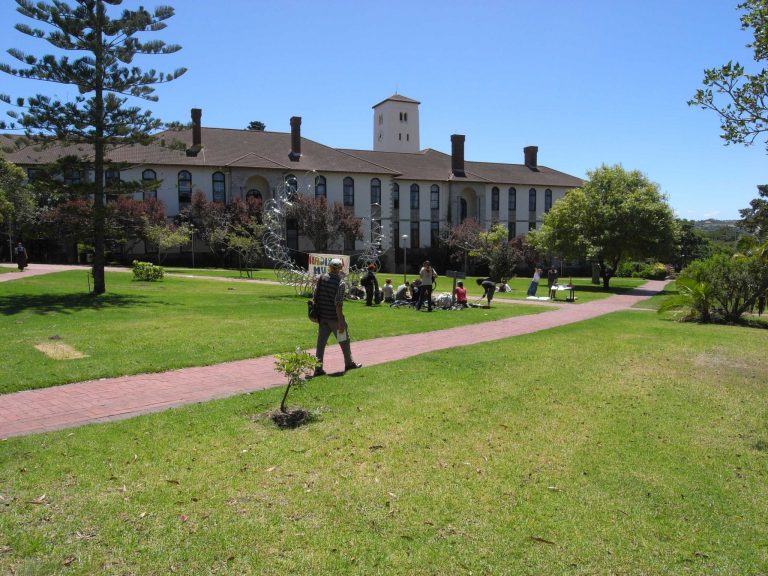
Rhodes University has appointed Dr Zethu Mkhize as its harassment and discrimination officer as of September 10, 2018.

This follows recommendations made by the sexual violence task team at the institution.

“My role is to provide a safe haven to those who have been wronged and to advise them about options going forward. In such situations, I assess not only what might have happened, but how the person feels and thinks about the situation,” Mkhize said in a statement on Wednesday.

The institution came under the spotlight in August when one of its students, 23-year-old Khensani Maseko, committed suicide after she was allegedly raped in May by her then boyfriend. Her death sent shock waves throughout the nation.

The student accused of allegedly raping Maseko was issued a notice of suspension by the institution.

This, however, does not equate to a suspension yet as he will be afforded the right to make representations on why he should continue his studies, once an inquest into the circumstances of Maseko’s death is finalised.

Immediate intervention ‘critical’

“A notice of suspension involves a student being invited to make representations, in terms of the principle of audi alteram partem (let the other side be heard as well) as to why he should not be suspended pending the finalisation of the inquest and the actions that may flow from the report of the inquest. The representations will be considered and an appropriate decision will be taken,” the institution’s spokesperson Veliswa Mhlope said.

This is not the first time the issue of sexual violence has rocked the institution. Scores of students in Makhanda (formerly Grahamstown) gathered in protest two years ago against the “war on women’s bodies” being ignored. This collective action sparked an international debate about rape culture in society.

Mkhize, who holds a PhD from the University of South Africa, will oversee transformation, advocacy and awareness-raising in respect of harassment, discrimination, sexual assault and violence.

“My expertise relates to being responsive to the psychosocial needs of individuals and any challenge that might interfere with their social functioning. Harassment and discrimination are two phenomena that upset a person’s rhythm of life within their living spaces. It is therefore critical that intervention be offered immediately,” Mkhize said.

The institution has welcomed Mkhize’s new role and hopes that it will help curb the scourge of gender-based violence.

“We are looking forward to Dr Mkhize’s positive contribution to the university in strengthening our ongoing programme against sexual and gender-based violence,” Rhodes University vice-chancellor Sizwe Mabizela concluded.

News 24

Minister wants police involvement in education

Staff Reporter

The department of basic education is calling for a symposium with police and other government departments to discuss how to tackle challenges at schools.

This was announced by minister Angie Motshekga in Pretoria on Monday.

The announcement follows a meeting the minister held with the Council of Education Ministers.

“We are deeply concerned by the incidents taking place at our schools. We need to continue to work with communties and law-enforcement organisations to ensure that we arrest this type of behaviour.

An Eastern Cape pupil was stabbed to death over a cellphone last week.

A 17-year old pupil allegedly stabbed his teacher to death at a school in Zeerust in full view of learners who were writing an exam.

It is alleged that the teacher had reprimanded the pupil the day before the fatal attack.

In Gauteng, a 15-year-old boy from an Eldorado Park secondary school appeared in court on Friday after he pointed a gun at his teacher.

This is why Motshekga has called for a symposium with police and other government departments.

About 18 000 schools have been paired with police stations as part of a protocol between the SAPS and education,” Motshekga said.

She also briefed the meeting that the department was ready for senior certificate exams, noting that the department is expecting a cohort of 787 281 pupils to sit for this year’s exams at 8 000 examination centres.

Motshekga said some of the faced by pupils problems were more social and this is why she wants different stakeholders and teacher unions to meet for a colloquium and discuss how to deal with the spate of violence.

“In terms of readiness, we have been closely tracking each of the nine provinces so that we can pick up challenges in areas such as curriculum coverage in time to intervene,” said Motshekga.


University of Zimbabwe forced to postpone graduation as cholera outbreak wreaks havoc

Staff Reporter

THE University of Zimbabwe (UZ) Thursday abruptly suspended its graduation ceremony which was set for this Friday citing the deadly cholera outbreak that has claimed 25 lives and affected nearly 4 000 locals.

This was announced in a statement by the top learning institution’s acting vice chancellor Professor Paul Mapfumo.

“The University of Zimbabwe Acting Vice Chancellor Professor Paul Mapfumo regrets to inform graduands, their families and the nation at large that the 2018 University of Zimbabwe Graduation Ceremony planned for tomorrow, Friday 14 September 2018 has been deferred to a date to be advised,” he said.

Since the outbreak was declared recently, the crisis remains largely concentrated in Harare’s Glen View and Budiriro suburbs although there are strong fears the epidemic was spreading to other parts of the country.

In his announcement, Mapfumo was quick to give assurances the UZ campus remains free of the dreaded disease.

“While the deferment is purely on health grounds beyond the control of the University, the institution however has had no reported case of cholera and is currently deemed safe,” he said.

President Emmerson Mnangagwa was set to preside over his first graduation ceremony across the country’s institutions of higher learning since he was re-elected the country’s leader July 30.

The indefinite suspension on graduation comes after the government this week declared the outbreak a state of emergency and further announced a ban on all forms of public gatherings citing the need to control the highly contagious disease.

The decision has however been slammed by the main opposition MDC which feels this was ill-advised as the same government still allowed citizens to interact freely on public transport and other public places.

Calls have been made for the closure of schools in some affected areas amid reports two school pupils and a head in Harare are among those who have succumbed to the disease.

Clashes continue between FF Plus and Lesufi over Afrikaans in schools

Jenni Evans

Gauteng Education MEC Panyaza Lesufi faces more than 200 charges at the Integrity Commission of the Gauteng legislature after the Freedom Front Plus accused him of flouting school language policies and destroying Afrikaans.

“I am facing 272 charges for calling for a non-racial education system for all. I am not intimidated,” Lesufi tweeted.

“I am honestly NOT intimidated by those who think a non-racial education system is a breach of the Constitution. Today I received 272 charges from the Freedom Front Plus claiming I am targeting Afrikaners! Non-racialism is the future, no one can stop! I am ready to face these frivolous and time-wasting charges.”

Lesufi was not immediately available to elaborate on the case against him, and FF Plus Member of the Provincial Legislature (MPL) Philip van Staden said he was in a meeting.

 Van Staden referred to a statement he issued in August.

In that statement, he said the action was sparked by Lesufi’s comments in April that schools’ language policies would not play a role in admission applications in 2019.

‘In contempt of’ the Constitution

Concerned that it flouted school governing bodies’ own decisions and policies and threatened Afrikaans at schools, Van Staden lodged a 389-page complaint against Lesufi.

He claims that Lesufi was in alleged contempt of and violated Section 29 of the Constitution between 2014 and 2018. This section of the Constitution sets out education requirements.

It includes the right “to receive an education in the official language, or languages of their choice in public educational institutions where that education is reasonably practicable”.

It is also alleged that Lesufi violated Section 135 of the Constitution, read with Schedule 2, Section 5.

Section 135 is the requirement that a provincial premier and an MEC swear or affirm faithfulness to the Republic of SA and obedience to the Constitution.

“The FF Plus asserts that Lesufi violated this section of the Constitution by being in contempt of Section 29 of the Constitution 272 times.”

Lesufi ‘must bear the consequences’

“Lesufi’s latest attempt to destroy Afrikaans as a language and Afrikaans schools has already been published in the Government Gazette, where the MEC is proposing new regulations and the FF Plus is of the opinion that the MEC’s attempts can no longer be tolerated and that he must bear the consequences of his actions.”

The FF+ ultimately wants Lesufi to resign if the Integrity Commission finds him guilty.

It is not their first clash over Afrikaans.

In January, the North Gauteng High Court in Pretoria set aside a department decision to admit 55 pupils to be taught in English at Hoërskool Overvaal, an Afrikaans-medium school.

The court found that the school didn’t have the capacity to admit additional pupils.

In July, the Constitutional Court dismissed an appeal against the Hoërskool Overvaal decision, which the Gauteng education department lodged.

Pandor moves to confront violent campus incidents

Yoliswa Sobuwa

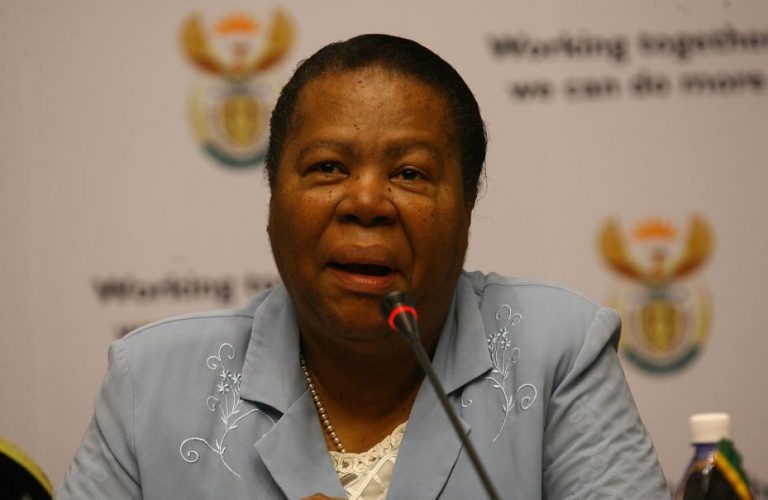
Higher Education and Training Minister Naledi Pandor plans to urgently meet with Council on Higher Education and Universities South Africa to confront the scourge of violence at higher institutions of learning and training.

The move by Pandor follows reports of violent incidents that include the deaths of students at University of Zululand and University of KwaZulu-Natal at the weekend.

Pandor said the role of alcohol and other substances in such events should be investigated, urging for the peaceful resolution of conflicts and improved security at campus functions and university residences.

“I call on vice-chancellors to prioritise their institutional protocols on student safety and I intend to meet with them as soon as possible to develop a sector approach to confront this scourge,” Pandor said.

The minister further directed her department to expedite the finalisation of the draft policy and strategy on gender-based violence in the post-school education and training sector, noting that this will assist institutions of higher education and training to be proactive in dealing with campus and residence violence.

Africa: Should schools in Africa teach more local languages?

0

Mohammed Khelef

Imagine starting school and not being able to understand your teacher. That’s a reality for many African first-graders who speak their mother-tongues at home and are taught in English, French or Portuguese at school.

Africa south of the Sahara is home to around 2,000 different languages. They’re spoken at home, on the street and perhaps on the local radio and TV stations, but very few have made it into the classroom.

The languages taught and spoken at school are relics of the colonial era and many children, especially those in rural settings, enter the all-English, French or Portuguese language schools with little prior knowledge.

It’s counterproductive to say, educational experts. “If you want to find a measure to prevent children from learning, you have already found that by teaching in a language that they don’t hear around them,” says Birgit Brock-Utne, a Norwegian education expert. She is currently based at Witwatersrand University in South Africa as a visiting professor. “Our research shows very clearly that it is better to start with the mother tongue or another language the children are familiar with.”

Raising more lively and critical thinkers

In some African countries, this change is already happening in the classroom. Primary schools integrate local languages into the lessons and some are even teaching exclusively in the local language.

According to UNESCO’s “Global Education Monitoring Report 2016,” teaching in the mother tongue is vital, especially at a primary school level. It recommends that children should be taught in their mother tongue for at least six years, to avoid knowledge gaps and increase the speed at which children learn and understand the taught material.

Children are more active, think more critically and create an entirely different classroom atmosphere when taught in their mother tongue, says Brock-Utne. She experienced this during her school visits in Tanzania and South Africa.

Haussa and Yoruba instead of English

So how do the different countries deal with language diversity at school – that what DW wanted to find out. In Nigeria, there are over 500 local languages, but teaching mainly takes place in English. A pilot project is currently introducing the most widely spoken languages Haussa, Yoruba and Igbo into the curriculum in primary schools.

In Senegal, French is the module of instruction – a language in which only one-third of the population speaks fluently. Schools have now started introducing bilingual classes in French one other local language. In Mozambique, a similar approach is planning to open up the schools to 23 different languages.

Although it was never colonized, Ethiopia also has problems integrating local languages. The use of only one language, Amharic has led to quite a bit of resistance, explains Axel Fleisch a professor of African Studies at the University of Frankfurt. “In such a case, an international language like English is seen as a more neutral option,” he adds.

High costs involved

 “It would, of course, be better for the children to learn in a language they already know. But the question is, which language is that?” asks Rose Marie Beck, a professor of African Studies at the University of Leipzig. Many of the children grow up in a multilingual environment. Few areas in Africa have just one dominant language.
Teachers, she says, must consequently be more flexible and use a mixture of languages to teach the children.

Implementing such changes, however, costs money. Organizations like USAID or the International Organization of La Francophonie have programs which support the development of teaching material and teacher training. But that’s not enough for continent-wide change.

Parents and elites not convinced

A further challenge to the new approach: not everyone supports it. Africa’s middle-classes and elites support the use of European languages, says Fleisch. And these are the decision-makers.

“For them, using the former colonial languages is not a problem. They can send their children to private schools and their children are probably fluent in these languages prior to starting school,” Fleisch says.

Additionally, the European languages are still very important for higher education. Only a fraction of the students will, however, end up working in white-collar jobs, says Brock-Utne. She believes that the international languages could be taught as subjects instead of being used as the main teaching language.

“Another reason which is more difficult to tackle is that many parents, even if they don’t speak the colonial languages themselves, think that the best way to learn a foreign language is to have it as a language of instruction,” says Brock-Utne. But that isn’t correct, she says, especially if the teachers themselves are not fluent in the language.

A solution: African multilingualism

While English, Portuguese and French have their colonial origins, even some of the African languages have negative connotations, says Fleisch. In South Africa, for instance, students took to the streets to call for the use of English at universities and against the use of the colonial Afrikaans and local languages like Zulu. The language, many argued is too closely associated with ethnicity and the separation of the different groups during Apartheid.

In many cases, the languages are very close and are dialects of the same language, explains Brock-Utne. It was often missionaries who wrote down the languages and to teach them, you would first have to agree on a common way of writing them.

The Kenyan author and Ngugi wa Thiong’o has his own vision of how languages should be taught in school. “My policy which I am advocating is simple: Start with your mother tongue. Then, know whichever is the lingua franca or the language which can enable people from different linguistic communities to speak to each other and then add English, French, and any other language,” wa Thiong’o told DW. If only English and French are taught, he says, it creates the impression that knowledge only comes from abroad.

Mohammed Khelef contributed to this report.

Podcast: Why the Limpopo department of education fails while others succeed

Staff Reporter

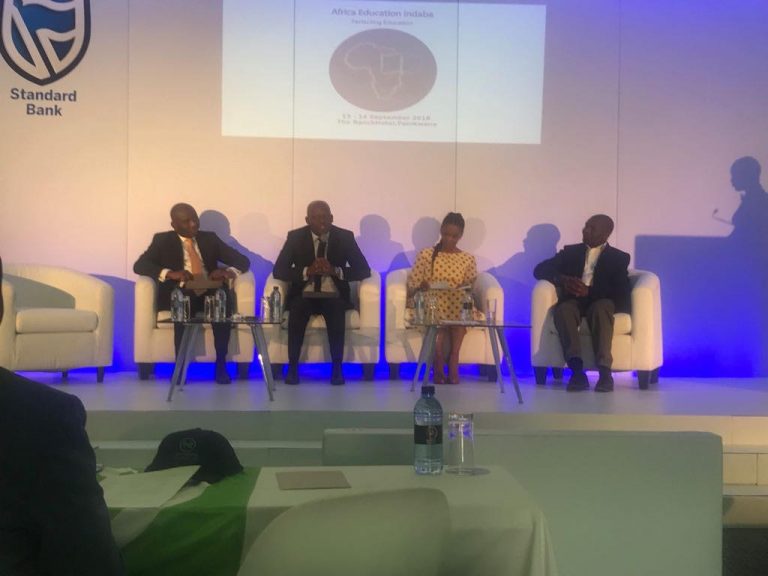
Inside Education partnered with the Tim Tebeila Foundation to launch Africa Education Indaba in Limpopo on Thursday. The main reason behind the launch was to look at the significant drop in the performance of matric students in Limpopo and the Eastern Cape and see what provinces that get it right (Gauteng and the Free State) have done.

Industry stakeholders including teachers, unions (Sadtu), university professors and the minister of education met to discuss challenges facing South Africa’s education system. Some educationalist said the reason behind the bad performance was that learners did not have a strong foundation in their mother tongue. Others said teachers did not have the necessary resources required for good performance.

Questions also arose regarding the digitisation of classrooms and teachers not having the necessary skills to use digital and media skills in their classrooms.

What happened at the Africa Education Indaba

Staff Reporter

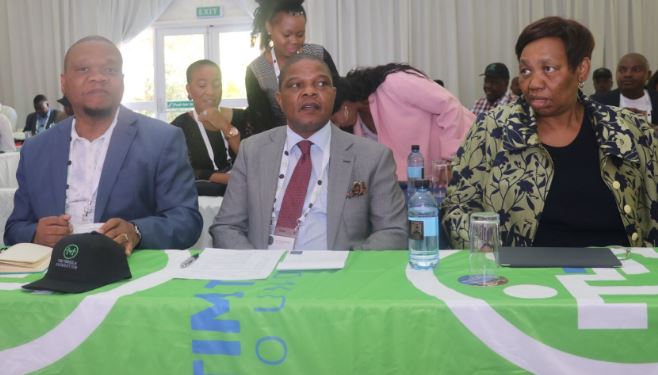
The Africa Education Indaba was launched on Thursday at the Ranch Hotel in Limpopo. The reason for the launch was to discuss  the problems that continue to characterise South Africa’s education system.

These issues were identified as:

  • the home environment which has a direct impact on learner educatiom
  • inequalities from the past
  • shortage of school infrastructure
  • shortage of critical skills
  • sanitation and
  • urban migration
  • the need to learn and have a strong foundation in mother-tongue
  • the mistreatment of educators

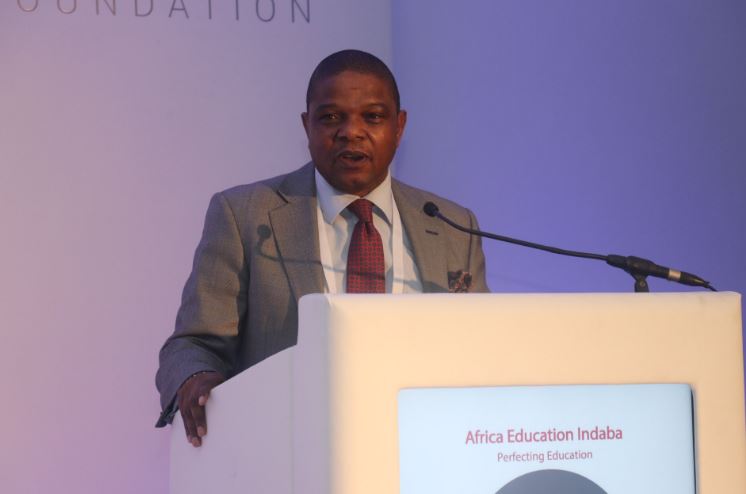
The Statistician General SA Risenga Maluleke attended the inaugural launch of the Africa Education Indaba. He spoke of the drivers of poverty which included unemployment, years of schooling, water and sanitation.  Maluleke said it was necessary to address the education system for the better.

Maluleke said education and unemployment contributed 63% to poverty in our country.

But this did not go unchallenged. The spokesperson for the Department of Basic Education Elijah Mhlanga wrote:


Head of Educational Leadership and Management at the University of South Africa (Unisa), Professor Pertunia Machaisa who gave the keynote address, spoke of factors that contribute negatively to the performance in schools. She says these include delinquency, family background, school violence and depression

The first panel discussion was facilitated by  Thobela FM’s Lerato Moseogane under the theme: “The challenges and factors impacting on educational performance in Limpopo Province”. The panelists included  South African Democratic Teachers Union (Sadtu), Professional Educators Union (PEU), Student Governing Bodies(SGB), Congress of South African Students (Cosas) and the Thuma Mina Movement all from Limpopo Province.


Another big issue was the treatment of educators.

The issue of power relations between the unions and the department of basic education came up. These were highlighted as an impediment to teaching.


The Provincial Secretary for Limpopo Cosas speaks of issues affecting learners. He told delegates that most of his female counterparts are forced to miss school during their monthly menstrual cycle because the province does not provide free sanitary pads, yet condoms are free and easily accessible.

He also adds that the department should consider introducing agriculture in schools and should remove Life Orientation and replace it with the real history of Africa.

But there were challenges raised. One of the delegates asks why it is that the Limpopo department of education failed to attend the Africa Education Indaba.

Other challenges are old challenges:

Black people don’t want their black children to be taught by their black teachers, says #ThumaMina Lediga who says the governing party has failed the people


Minister of Basic Education Angie Motshekga and the MEC for Education in the Free State, Dr Tate Makgwe, also attended the inaugural Africa Education Indaba.

Makgwe spoke of old and embarrassing failures South Africa’s education system has gone through.

He took jabs at Outcome Based Education (OBE): “there was a time when we thought children came to class with prior knowledge and teachers were just facilitators”Makgwe added that the Africa Education Indaba provides African solutions for African problems.

Minister Motshekga joined the conversation.

She welcomed the Africa Education Indaba and said: “As a Department we welcome the partnership with the foundation and looking forward to get resolutions”.

Motshekga spoke of the importance of partnerships in education and on how and why some of these relationships in the sector have failed in the past.

But after all was said and discussed, it was Mr Diphete Bopape, editor of a Northern-Sesotho newspaper, who said one of the major reasons our children fail is because they are not taught in their mother-tongue.

Challenges facing Limpopo Province education system

Thuletho Zwane

South Africa’s education system is laden with problems.These problems include lack of resources, inequalities of the past, bad infrastructure and a shortage of critical skills.

These problems are even more significant in the Limpopo and Eastern Cape provinces of South Africa. These two provinces have seen a significant drop in the performance of matric students.

According to the Department of Basic Education (DBE), the 2017 matric exams in Limpopo obtained a pass rate of 65.6%, while Eastern Cape managed only a 65% pass rate falling to the bottom of all nine provinces in the country.

It must be noted that these figures are  against the national pass average of 75.1%.

This is the reason the Tim Tebeila Foundation (TTF), in partnership with Inside Education, launched the Africa Education Indaba last week.

The Indaba, which took place over two days, Thursday and Friday, was used to mobilise a cross section of stakeholders in the education sector in Limpopo.

The idea was for these stakeholders to work and discuss a way forward towards improving the matric results in the province.

The Indaba provided stakeholders an opportunity to share perspectives on challenges, best practices, management and supervisory experiences, lessons learnt and other dimensions pertaining to the performance of matric learners.

The conference was attended by policy makers, education experts, academics, community leaders, educator representatives and the NGO sector.

In an interview with Inside Education, TTF founder Dr. Tim Tebeila explained the reason behind this Indaba.

“Ultimately, the poor performance of matriculants hampers the vision of making South Africa a winning nation, as our youth fall behind their international counterparts. We can’t afford for our children to fall behind,” said Tebeila.

Tebeila explained that even though the launch took place in Limpopo, the vision of the Africa Education Indaba is to subsequently use the lessons learnt in Limpopo to extend the interventions to the Eastern Cape province.

“Our long‐term vision is to have a national and even continental footprint,” said Tebeilla.

He added that even though much has been written and argued about the myriad complexities and problems that continue to characterise our education system in South Africa, there has been no solutions.

The broader mission of the Tim Tebeila Foundation is to contribute to the building of sustainable communities, and ultimately to be part of transformation processes that will lead to a prosperous South Africa and a resilient Africa in general.

The Indaba was attended by South Africa’s minister of basic education Angie Motshekga and the MEC for Education in the Free State Dr. Tate Makgwe.


Age No Deterrent, As 79-Year-Old KZN Man Celebrates Getting His PhD

0

Sesona Ngqakamba

While retirement is normally associated with taking a step back and relaxing at home after years of hard labour, that is not the case for one 79-year-old man from KwaZulu-Natal.

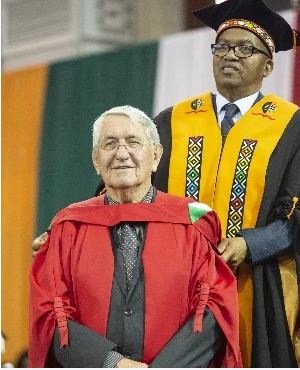
Ossie Kretzmann received his PhD in Religion and Theology from the Chancellor of the University of KwaZulu-Natal, Chief Justice Mogoeng Mogoeng, on Wednesday during the university’s Spring Graduation Ceremonies.

Kretzmann said a theological issue within the Methodist Church, which was a concern for him, had led him to sacrifice most of his retired time to pursue the research.

He added that he also wanted to use his retirement “productively”, and did not want his age to deter him from studying further.

“An old dog may not be able to learn new tricks, but with their assistance I have come to see that all things are possible at any stage of life,” said Kretzmann.

Kretzmann was born in 1939. He obtained a BA degree in 1968, a BA Honours in 1982, a Master’s degree in 2012, and now a doctorate in 2018.

Kretzmann also holds the bragging rights to being UKZN’s oldest graduate from the college of humanities.

He explained that his study looked at “baptismal convergence” in relation to sacramental baptism and rebaptism.

“There’s always been controversy around people who have been baptised as infants, wanting to go into what is called a believer’s baptism after their conversion experience,” Kretzmann said.

‘It could be of use to the church’

He added that he had decided to research why the Methodist Church of Southern Africa (MCSA) did not allow that to happen.

“I just wanted to research and find out if there was a way of reconciling the two baptisms theologically,” Kretzmann said.

He said the findings were tested according to the MCSA sacramental and evangelical hermeneutical requirements.

“These principles of testing form the basis of what it ultimately means for the Bible to be the highest authority and thus should serve as an objective arbiter for all matters of dispute within MCSA doctrine and theology,” he said.

Kretzmann added that it had been a long, hard and tiring journey for him, but that he had persevered because he was passionate about the subject.

“I had to go far and wide for the research. I had to go overseas and that was probably one of my challenges,” he said.

Kretzmann added he was now relieved that he had finally completed the research and felt that “it could be of use to the church, if taken seriously”.

“I am also very happy that a vision, or a concern rather, that I had for a very long time has now been met or fulfilled,” Kretzmann said. News24