Home Blog Page 531

Panyaza Lesufi dares schools insisting on Afrikaans to take the GDE to court

0

Bonile Khanyi

The Gauteng Department of Education (GDE) has issued a stern warning against schools that use Afrikaans as the only medium of learning, saying that anyone who wants to take them to court over the matter should bring it on.

This comes after Hoërskool Overvaal served the department with an urgent court interdict last month to try and overturn a decision forcing the school to accept an additional 55 pupils.

“There’s a school that preferers Afrikaans speaking learners over other languages. On the waiting list, what they’ve done is, if you speak English, isiXhosa or isiZulu, they skip you and they look for somebody who speaks Afrikaans and pulls that person up, undermining people that have applied on time,” Lesufi said on Sunday.

“We told that school to stop and they’ve taken us to court. So, we’re saying bring it on, we’re not afraid of courts.”

The school maintains that it has reached its capacity while the department said the pupils were denied places based on their language preference.

In its affidavit, the department said the school’s capacity had nothing to do with the number of learners the school could occupy, and everything to do with language.

“It is unbelievable and/or unfortunate that even until today, in this constitutional democracy, we still have a society that sees nothing wrong with a language that was used as a tool of segregation and discrimination during apartheid which 90% of South Africans bemoan,” the affidavit read. 

The department also said that it had every right to place the pupils at the school as the school governing body plays no part in the process of admission of learners and does not declare a school full as that it the duty of the department.

The school has 21 classrooms, and the capacity to accommodate 840 learners, but currently only accepts 621.

The department said that additional furniture and textbooks were already procured and an English teacher would be provided to the school by the department.

The matter will be heard in the Pretoria High Court on Tuesday morning.


USAf commits to ensuring free higher education works

Thabo Mohlala

Universities South Africa (USAf) has taken a pragmatic view on the unfolding potential crisis that may threaten the start of the 2018 academic year across the country’s 26 universities.

The universities raised concerns about the short timeline for implementing President Jacob Zuma’s announcement of free higher education.

Economic Freedom Fighters (EFF) caused anxiety when it encouraged new students to report physically at the gates of the institutions of their choice despite university managements’ calls for online registration.

But USAf said in a statement after it met with Department of Higher Education and Training (DHET) and Students Financial Aid Scheme (NSFAS), that it decided to work towards a smooth start of the 2018 academic year.

It also welcomed President Zuma’s announcement of the new student funding model because of its “potential to address the question of affordability of higher education and post-school education and training more generally”.

USAf said it recommended to the Heher Commission that the NSFAS loan system should be converted into a grant (or bursary) system.

“The fact that young graduates from poor and working-class families won’t have to worry about student debt as they start their careers is very important,” it said in its statement.

The body said it would pull out all the stops to ensure the new system works as “it has enormously powerful positive ramifications for young South Africans, for the university system and for South Africa as a whole”.

It said one of the primary objectives of a university is to be a key social institution that must strive to work towards building equitable, just and democratic societies. Therefore, “any higher education system in the world that is unaffordable to the majority of people in that society is, by definition, in a state of continuous crisis.”

USAf said its member universities fully subscribed to the constitutional directive that “education be made progressively available to all South Africans. As such, any barrier to the realisation of this objective must be addressed”.

It hailed the role played by NSFAS for disbursing funds to deserving students but also said “it was deeply concerned by the spectre of runaway debt and the fact that the NSFAS loan system did not quite reach all students that were in need of financial support including some who qualified through the means test but who remain unfunded”.

It further undertook to “address the challenge of ensuring that no young South African who has been offered a place at one of our universities is prevented from taking up that opportunity for reasons of unaffordability”.

USAf said the meeting with NSFAS and DHET also resolved to take specific measures to “mitigate against any risks that may arise because of the short timescales involved”.

They prioritised three categories of students:

  • The first category — students who have applied to universities and to NSFAS, need not do anything further; their applications will be processed automatically.
  • The second category — students who have applied to universities but have not applied for financial aid because their family earnings extended beyond the old NSFAS threshold of R122,000. The new NSFAS threshold is R350,000 and the only step that these students need to take is to visit the Financial Aid Office at their university and ask to be considered for a NSFAS bursary. Appropriate application procedures will be explained to them.
  • And the third category — students who have not applied for entry to a university. They will have to apply directly to the DHET’s Central Application Clearing House (CACH) system which would allow DHET, universities and TVET colleges to work jointly to place them across the system.

The organisation said the enrolment plans for 2018 indicate an intake of about 208,000 new students by the 26 public universities, while the TVET colleges sector will open up the way for about 350 000 new students. It said its urgent challenge is to make sure that “every single place that is available is effectively taken up by students”.

Panyaza Lesufi urges learners to use Second Chance Matric Programme

0

Bonile Khanyi

Grade 12 learners who are not satisfied with the outcome of their 2017 National Senior Certificate exams (NSC) have less than two weeks to apply for re-marking, re-checking scripts, and to write their supplementary exams.

Gauteng Department of Education MEC Panyaza Lesufi, on Sunday, said learners should take note that the deadline for all of the above is 19 January 2018.

“The department will continue to provide support to learners that opted to write exams in December and June or modularised. In addition, the Second Chance Matric Programme is in place to afford those that seek to rewrite their matric another opportunity,” said Lesufi.

The programme aims to provide support to pupils who have not been able to meet the requirements of the 2017 NSC exams.

He also urged learners to submit any exam queries for investigation within 30 days after the release of the results.

Candidates should also report any inaccuracies on their statements of result before 30 June 2018.

In conclusion, the MEC reminded those who failed their matric exams that it is not the end of the world.

“The Gauteng City Region Academy and the Tshepo 1 million programme will automatically enrol 14 458 learners that did not pass the National Senior Certificate on their database. They will be assisted to find jobs, learnership and entrepreneur opportunities,” said Lesufi.

For more information, visit their website on www.tshepo.mobi.

Matric results: Is our education system delivering? No, say experts.

Thabo Mohlala

ANALYSIS

The 2017 matric results have elicited animated debates and a wide range of views from various political parties, teacher unions and some education experts. This is inevitable because education is highly contested terrain.

This is even more contentious given the country’s sad historical past where the apartheid state used education to racially polarise and deepen social inequality. The introduction of a new education system after 1994, anchored on democratic human rights values and ethos, has not been an easy enterprise.

The curriculum has been tweaked several times and teachers have been taken through the paces to ensure the system delivers quality academic outcomes. But the delivery of quality and credible education seems to be an elusive dream.

Last week the minister of basic education, (DBE), Angie Motshekga, announced a 75.1% overall pass rate for the 2017 grade 12 class including progressed learners. Naturally, a system that consistently attains or sustains 70% pass rate threshold is a cause for celebration. Motshekga is upbeat the system is delivering the desired outcomes and that her department is on course to realise its 2030 NDP goals.

But education experts hold a different view and argue that it is wrong to use the grade 12 pass rate to measure the health of the current education system. They say the only credible tool to ascertain if the system is stabilising is the calibre of the learners it produces. Those learners who have completed their 12-year academic journey should be numerate and literate so they can cope well at tertiary institutions.

It is common cause that most grade 12s are found wanting in their first years at colleges or universities leading to them dropping out prematurely.

The recent Progress in International Reading and Literacy Study (Pirls) and Trends in International Mathematics and Science Study (Timms) tests also buttress this point. Successive results have shown that South African learners lagged behind their counterparts from countries with smaller economies.

The other serious concern experts highlighted is the apparent inability of the system to retain and account for learners who started school at the lower grades. They argue that the system has been bleeding learners and the DBE does not seem to have mechanisms in place to account for them.

This is clearly demonstrated by the number of learners who register for the examinations and those who actually sit for finals. Although the department has implemented some laudable interventions such as the progress learner policy, the problems seem to persist.

Nic Spaull, a renowned education expert based at Stellenbosch University, reacted to the matric results by tweeting a question: “If there were about 1,000,000 kids in Gr1 in 2006 and 530,000 full-time matrics in 2017…where did the other 400,000 odd kids go? Not to FET & into jobs unlikely”.

South African Democratic Teachers’ Union (Sadtu) also shared its statistics saying a total of 1,182,011 learners entered grade 1 in 2006, but only just about 543,000 of those had written matric examinations.

Professor Jonathan Jansen, also raised deeper questions about the system’s reliance on the exit class. He asked whether the education system should be judged by the minority who reached and passed Grade 12, or by the majority that dropped out, failed, or simply disappeared from the record since they enrolled in Grade 1.

“Given the race and class identities of those who pass well enough, does the school system reduce or reinforce inequality in South Africa?” asked Jansen.

He further asked what the performance of the school system would look like if the more respectable passing standard of 50% was set for all school subjects.

Professor Sarah Gravett, dean of education at the University of Johannesburg, said the country is too pre-occupied with the matric results at the expense of the lower grades. She said although the schooling system shows some signs of progress, more could be achieved if early childhood development phase gets support.

“My sense is many teachers at the Foundation Phase don’t have the right qualifications to teach the little ones. Foundation Phase is a way to go, however, it is not a quick-fix solution but certainly a sustainable way of improving the system,” said Gravett.

She hastened to add, however, that she does not intend to impugn the significance of the grade 12 results within the education system.

But “It makes no sense to look at the overall performance of individual provinces. Instead, the most reliable and quality tools to use is to look at how many bachelor passes the provinces achieved,” said Gravett.

She also stressed the importance of fortifying district offices, saying the provinces that do well have functioning and effective district offices. While district offices are key delivery vehicles because of their proximity to schools, said Gravett, most of them particularly those serving deep rural areas, are hamstrung by lack of both human and materials resources to carry out their functions effectively.

Gravett said in the past, provinces such as Limpopo, KwaZulu-Natal and the Eastern Cape produced poor results mainly because they serve vast and under-developed rural communities with huge socio-economic challenges.

Panyaza Lesufi: 31 000 unplaced learners will find a school by the start of the academic year

0

Bonile Khanyi

More than 31,000 grade 1 and grade 8 learners are waiting to be placed in schools but Gauteng education MEC Panyaza Lesufi is confident they will be placed come January 17, in time for the start of the academic year. 

“To date, about 17,000 learners whose parents applied on time have not yet been placed. Unfortunately, they have applied in high pressure areas where there is shortage of space. It should also be noted that many of these parents declined alternative offers of placement,” said Lesufi.

“In addition, 22,921 late applications were received towards the end of the year. To date, 8,865 learners from this group have been placed leaving a balance of 14,056.”

Lesufi said parents who still have admission challenges should visit the department’s district offices on 13 and 14 January to help allocate their children to a school.

“The centres will operate from 08:00 to 17:00. Officials from the department will assist to place the unplaced learners and attend to all parents applying for the first time,” said Lesufi.

State of Readiness for the 2018 Academic Year

Despite several schools being damaged by the recent storm and schools that were vandalised during the holidays, the Gauteng Education Department said it was confident that the first day of school would commence without any disruption.

“We have conducted an audit of these schools and they will be repaired in due course,” said Lesufi.

Lesufi said the estimated cost of repairing the schools was R140 million, and that their readiness would depend on the available funds.

He also outlined his plans to ensure that the first day of school runs smoothly.

“We have built and opened about 48 schools since 2014 and will provide extra classes using Alternative Construction Technology (ACT) and mobile classrooms. Learning and Teaching Support Materials (LTSM) have been delivered to schools,” he said.

“Furniture has also been delivered to 436 schools since April 2016 and we plan to provide daily meals to 1,4 million learners and transport 104,000 learners per day.”

Lesufi said all schools would have adequate educators too.

These are the admission centres parents can go to on 13 and 14 January 2018.

DECENTRALISED ADMISSIONS CENTRES
DISTRICT Name of Venue Area Address Admissions Coordinator Contact Number
EKURHULENI
Ekurhuleni North Ekurhuleni North District Office Benoni Ekurhuleni North District Office Munpen Building                                  78 Howard Ave Trevor Kalidheen 082 744 0537
Ekurhuleni South Ekurhuleni South District Office Alberton 2 Robun Close, Meyersdal, Alberton Ntsikilelo Mphela 082 466 5724
Gauteng East Gauteng East District Office Springs Corner 7th Street and 5th Avenue, Telkom Towers Springs Ncediwe Soga 082 333 9348
JOHANNESBURG
Johannesburg Central Johannesburg Central District Office Soweto Cnr. Modjadji and Old Potch Road, Pimville Fabian Kelly               Johan van Greune 084 550 8394           060 324 2734                            
Johannesburg East Johannesburg East District Office Parkmore Elizabeth Avenue, Parkmore, Sandton Dr Linda Khanye            Innocemnt Ngwenya 082 939 4922
Johannesburg North Bordeaux Primary School Bordeaux 4 Main Street, Bordeaux Peter Swart 082 520 2281
Johannesburg South Johannesburg South District Office Ormonde 100 Northern Parkway Street, Crownwood Building, Ormonde Mashudu Malingvha 073 199 6791
Johannesburg West Johannesburg West District Office Florida/Roodepoort ABSA Building, 20 Goldman Street Sekgora Mafora 071 873 9644
Meszodo Technical Centre Dobsonville Corner van Onselen & Elias Motsoaledi Roads, Zone 9 Meadowlands Aaron Modise 072-4798708
Thakhisa Teachers Centre Meadowlands Zone 9 2031 Zone 9 Meadowlands Victor Maseko 082-9977253
White House Tshepisong Corner Ruth First Phase 7 Tshepisong Joy Legodi-Zimba 082-4840986
SEDI-WES
Gauteng West Gauteng West District Office Randfontein 108 Maugham Road, West porges, Randfontein, 1759 Ms Nonhlanhla Ntshangase       071 573 5330
Fochville Secondary School Fochville 105 Kraalkop Street, Kokosi, Fochville, 2515 Mr. Edwin Ditsi 082 562 5943
H/S Wonderfontein Obelhozer, Carletonville C/O Vegkop & Bloukrans Street, Oberholzer Mr. Edwin Ditsi 082 562 5943
Hlangabeza Primary School Khutsong South, Carletonville 614 Nxumalo Road, Khutsong Mr. Edwin Ditsi 082 562 5943
Hoërskool Westonaria Westonaria 1 Van der Stel Street, Westonaria Ms Nomveliso Mpongo                 084 680 6423
Carleton Jones Westonaria Anna Road, Carletonville Ms Nomveliso Mpongo                 084 680 6423
Mohlakano Primary School Mohlakeng 274 Nqonyela Street, Mohlakeng, Randfontein 1756 Mr. Edwin Ditsi 082 562 5943
Khaselihle Primary School Kagiso 6447 Hadebe Street Ms Nonhlanhla Ntshangase       082 562 6066
Krugersdorp District Office Krugersdorp Cnr. Boschoff & Human Street, Krugersdorp Mr. Vusumzi Rajuile               082 562 6066
Sedibeng East Sedibeng East District Office 14 Joubert Streets,                S, L & M  Building Vereniging Moya Botha 083 961 7845
Sedibeng West Sedibeng West District Office 06 Samuel Street                   Zone 18                          Sebokeng Sebokeng Peter Rampa 011 387 8431
TSHWANE
Gauteng North Gauteng North District Office Pretoria toriaYorkcor Park Building, 86 Watermeyer street, Val de Grace, Pre Gladys Mphai 082 562 7489
Tshwane North Tshwane North District Wonderboom Junction Corner Lavender and Braam Pretorius Streets, Wonderboom Junction Mall, 1st Floor Onkarabetse Mankuroane 082 744 0537
Tshwane South Vodacom ICT Centre Sunnyside Lenahof Building Prudence Oliphant 012-8011651
Lemoshanang Teachers Centre Atteridgeville 189 Gerard Moerdyk 012-3734232
Mamelodi Teachers Centre: Mamelodi Cnr. Gerard Moerdyk & Justice Mohammed (Walker) Streets 012-3410091
Tshwane West Tshwane West District Mapopane/ Winterveldt Sunnyside Yvonne Mooke 082 415 7284


Dear Students: Be on high alert for fake private colleges!

Thabo Mohlala

With matrics results just released, most learners will be heading to various tertiary institutions to further their studies. Some will go to universities, others will go to TVETs and some will apply for spaces at private colleges. At this time of the year, there is a sudden mushrooming of private institutions claiming to offer quality academic programmes.

However, most of these institutions cut corners and do not follow the correct legal procedures, chief of which is to get a valid accreditation from specialised bodies such as the Council on Higher Education (CHE), registration with the South African Qualification Authority (SAQA) and registration with the Department.

The Department of Higher Education and Training (DHET) has consistently issued regular warnings to prospective students, urging them to be vigilant and ensure they ascertain the status of institutions before they can register with them. In some instances the department has even carried out physical visits to institutions that operated illegally.

Countless unsuspecting young people have had their academic futures derailed after being duped by unscrupulous owners of illegal institutions clearly set up to fleece them of their parents’ hard-earned cash.

Towards the end of 2017, the DHET published the names of four institutions that operated fraudulently. These are a Durban-based Oval International Computer Education (Pty) Ltd, Illovo Private College and Johannesburg City College, both operating from Johannesburg and Kingdom Fire Christian College based in Stellenbosch.

The DHET also highlighted an emerging trend of fake online universities where bogus institutions operate under the names of legitimate ones. According to the DHET’s own investigations, they discovered that there was a fraudulent University of the People using the acronym UoP, planning to market itself is South Africa. They cloned the real University of the People which uses the acronym UoPeople and does not operate in South Africa. UoPeople is a “duly registered and accredited institution by the relevant US authorities”. 

If the name of the institution that you would like to register with does not appear on the list below, then you know there is a problem.

Here is a list of accredited colleges. DHET also has this register of accredited private colleges 

This article has been amended to provide clarity on the fraudulent institution posing as the real and reputable University of the People based in the U.S. 

Granny praised as girl, 17, gets seven distinctions

0

Benson Ntlemo

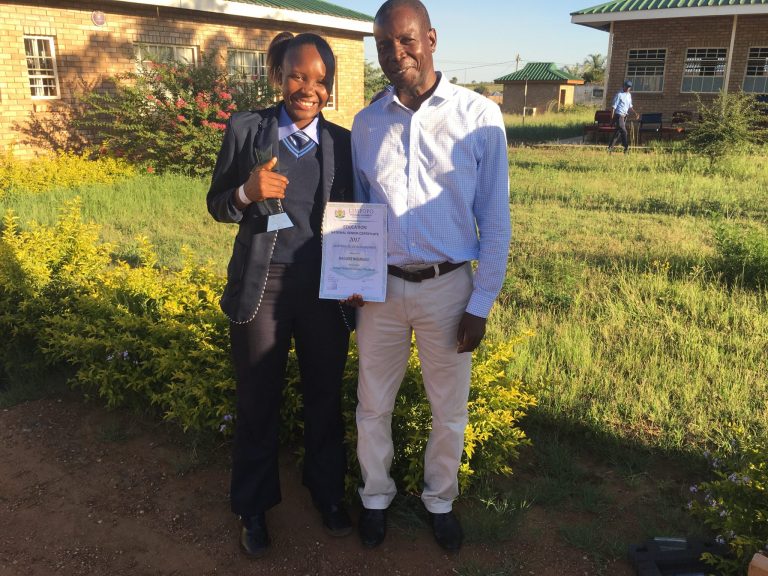
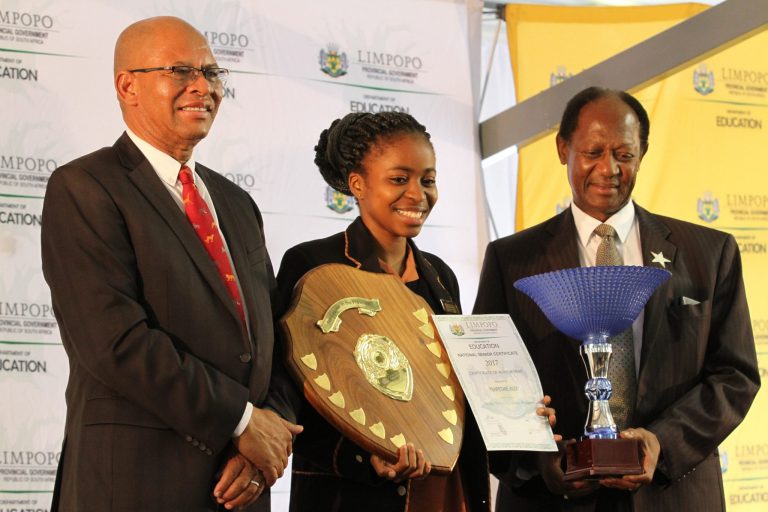
Sixty-seven-year-old granny Noria Sombhane was heavily praised after her granddaughter Masungulo Maluleke became the first learner at Ximunwani High school at Phaphazela village to attain seven distinctions and to be invited to the provincial awards ceremony.

Maluleke, whose school is in Malamulele in Limpopo province was in the provincial Top 30 highest achieving learners.

The 17-year-old girl has sent the school and the rural community into a frenzy after she attained distinctions in Physical Science, Mathematics, Geography, Life Orientation, Xitsonga, English and Life Science.

The school threw a party for her late on Friday afternoon after she came back from Polokwane where she was presented with a laptop, certificate and trophy by Limpopo premier Stanley Mathabatha for coming 25th in the province.

Maluleke, whose name Masungulo means the first, was praised for being the first in the community and the school for achieving such a feat. The school principal, Eric Baloyi, said she put the school on the map and they were considering starting a school’s hall of fame where they would inscribe her name in either gold or silver so as to inspire other learners to see their names up there too. 

“We also thank her granny Noria Sombhane who despite not having gone to school herself was the tower of strength behind her granddaughter and she used to come to school to collect the awards for the girl,” said Baloyi.

Baloyi described Maluleke as “disciplined, reserved, respectful and a hard worker.”

“There was no doubt she would make it because she combined her high IQ with hard work,” he said.

The school’s deputy principal Noel Manganyi who teaches Physical Science in which Maluleke notched 98% said if she failed to get distinction in any of the subjects, the blame would be laid at the door of the school.

Granny Sombhane was happy that Maluleke was not distracted by the poor background at home.

Her unemployed parents do not live together.

Selina Sithagu, who is the school governing body chairperson, and Phanuel Maluleke, who is the local ward 18 councillor at the local Collins Chabane municipality said Maluleke’s success would inspire others.

Maluleke who is heading to the University of Cape Town to do Chemical Engineering said everybody knew how she did it.

“All my friends knew that it was not easy to be my friend because it meant studying hard. I wanted to be invited to the national prize giving ceremony and although I did not succeed, I have tried because I have received provincial honours,” she said.

She said she knew that after her achievement at the high school she was starting a new life at university level.

“A new ball game has started and we will also need your support as we go to university to work for our future,” she told teachers and parents.

She said she knew it would not be easy and was ready for the task.

Ximunwana high achieved 67,2% pass in the exams after 122 sat for the exam, 30 received bachelor passes, 28 received diplomas, 82 received certificate pass and 4 failed.

Matric Results: Top Limpopo learner Anza Tshipetane says group study helped her succeed

0

Chester Makana

Anza Tshipetane, an 18-year-old a learner from Mbilwi High School in Vhembe district, scooped the top position when provincial matric results were announced on Friday.

The Limpopo learner says group study helped her succeed in subjects she was struggling with.

Until the end of the trial examinations, Tshipetane was studying in a group with fellow learners at school and at home.

However, three weeks towards the final examination she decided to go at it alone.

Limpopo MEC Ishmael Kgetjepe announced a 65.6 per cent pass results for 83 227 class of 2017.

The results showed an increase of 3.2 compared to 2016.

Tshipetane says although she wanted to be among the top learners she did not expect to be number one.

She believes that the support she received from other learners and educators boosted her confidence towards examination.

“I used to study in group with others, but towards the end of the especially trial I started to study on my own.”

“Towards the exams I was studying on my own because I wanted to practice the content, because it does not really help to absorb all the knowledge like a sponge, while you won’t be able to interpret it in the exam setting.”

She also thanked her friends who helped her understand and pass some subjects.

Tshipetane also urged the 2018 class to be determined so they could be counted among the best of the best.

Tshipetane beat the second best learner Daniel Swarts with three marks as she scored 1718, and third place Boitumelo Ngoepe obtain total marks of 1710.

Swarts from Hoerskool Pietersburg echoed Tshipetane’s view that team work and dedication helped reap positive rewards.

The 17-year-old Ngoepe from Dendron High School said he used past exam papers to test his ability to pass.

“I wanted to get exposed to how question I asked, and understand what I read.”

He said helping underperforming learners at his school was good for him too.

Kgetjepe thanked educators and learners for helping the province improve its results.

However, premier Stan Mathabatha said although they welcomed the improvement, it was not what they aspired to.

He appealed to stakeholders to help education back to its glory days.

Mbilwi, Dendron, Tshivhase, and Thengwe high schools remained the most celebrated schools in the province.

The schools managed to secure pass rates in mathematics and science inspiring the top fifty school’s club.

The club acknowledged schools that produced learners who passed with distinctions in Mathematics and Science.

This year results saw a change with Waterberg district overtaking Capricorn to be counted among top three districts.

Thulani Shikwambana an inspiration for special needs children

0

Chester Makana

Thulani Shikwambana from Rivoni School for the Blind outclassed dozens of learners in Xitsonga Home Language.

Limpopo MEC for Education Ishmael Kgetjepe says it is inspiring to see top achievers emerging from special schools.

The results announcement centre stood and applauded as Shikwambana walked in the company of his school official to collect a trophy.

Kgetjepe said Shikwambana put up a fight against a lack of resources as in many schools in the province.

He said Shikwamabana’s performance resembled a change and inspiration that against all odds it is possible to shine.

Kgetjepe and premier Stan Mathabatha committed to supporting learners who have a hunger and thirst to study like Shikwambana.

Mathabatha said he would procure braille featured computers for Shikwambane to make his learning experience easier.

He also honoured Shikwambana, who is planning to study Business Management at the University of Limpopo with a special trophy.

Speaking after his awards, Shikwambana said it was not easy but he was pushed by his school management to believe in himself.

“I was scared, doubting myself, but my teachers kept on telling me go on, don’t be afraid you will make it, they believe in me and I then believe in myself,” said joyful Shikwambana.

He said although he made it, his desire was to see other visual challenged learners empowered with learning tools.

“Our school does not have more resources, we shares materials and it was the effort of our teachers to ensure that we are counted,” he said.

Matric Results: Panyaza Lesufi says improved learning and teaching is reaping rewards in GDE

0

Bonile Khanyi

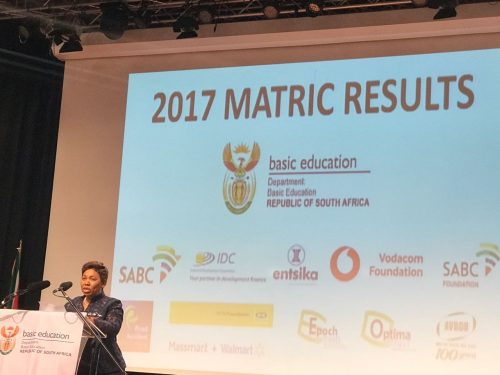
Gauteng Education MEC Panyaza Lesufi has hailed the class of 2017 for its hard work and obtaining a 85.15 percent pass rate across the province.

Speaking at an event at the Nokuthula Centre and Special School in Lyndhurst on Friday morning, Lesufi said Gauteng was the second largest provincial education system after KwaZulu-Natal, with 97,284 matriculants who wrote the National Senior Certificate examinations.

“The results of the National Senior Certificate of the Class of 2017 demonstrate that we are a maturing, stable and improving the provincial education system. This improvement in performance must be celebrated in the context of the large, unique and complex provincial education system that Gauteng has become over the last 23 years,” Lesufi said.

Lesufi said the provinces learners, parents and teachers had much to celebrate.

“What is more important, perhaps, than our 85,15% pass rate for 2017, are the detailed indicators showing the increasing quality of the teaching and learning in our schools in the province. It is the details of the 2017 results which show that the upward trajectory of the last seven years continues.”

Lesufi said the pass rate improved with 0.02% from 2016 but said he believed the province could do much better in the future.

He also said the province contributed the second highest number of candidates who qualified with university passes, after KwaZulu-Natal.

Referring to the number of progressed learners who passed Grade 12 last year, Lesufi said Gauteng has increased compared to the previous year in 2016.

“I am happy to announce that 68.7% of the progressed learners that wrote have passed‚ compared to 61% in 2016. These are learners who would have had to repeat Grade 11 in 2017. This is an amazing feat‚” Lesufi.

“What is even more amazing is the almost 7.3% of these learners who passed achieved a bachelor pass and more than 35.6% achieved a diploma pass.”

He also applauded the improvement in the province’s poorer township schools, saying that they’ve “turned the corner”.

We have increased the number of schools, including township schools that have achieved 90% and above pass rate.

“I want to congratulate the principals of the 25 township schools that achieved above 95%,” said Lesufi.

The MEC credited the work of educators toward the last year’s matric results and emphasized the support and guidance of teachers, script markers, the examination team and others.

“We could not have done it, and we cannot do it without our educators and principals. Thousands of you have again in the past year shown your dedication to your profession and to our children, attending courses, participating in our in-service development offerings, upgrading your management skills, and – most importantly – putting our learners at the centre of your efforts every day,” said Lesufi.

Here are Gauteng’s top achievers:

Top 3 overall performing learners

  1. Jacqueline Janse van Rensburg Hoërskool Oos-Moot
  2. Stefan Nel Hoërskool Florida
  3. Nelize van Schalkwyk Hoërskool Alberton

Top 3 performing township learners

  1. Sehlabelo Mapule Jessica Innqayizivele Secondary School
  2. Tshepo Motsoeneng Esokwazi Secondary School
  3. Nkosinathi Lucky Nkabinde Unity Secondary School

Top 3 LSEN Learners

  1. Jestus Fouche Destinata Skool
  2. Yandisiwe Yabona Zamakwayi Qubekile Hoërskool Suiderlig
  3. Ayodele Joy Morobi – Hoërskool Suiderlig