Home Blog Page 6

Chikunga tells young women to take precautions when using e-hailing services

By Lebone Rodah Mosima

Minister in the Presidency for Women, Youth and Persons with Disabilities Sindisiwe Chikunga has urged young women and girls to be cautious when using e-hailing services.

Chikunga said e-hailing services had become a convenient and accessible form of transport, but users should take steps to reduce potential safety risks.

“The safety of women and girls remains a priority. As we continue to advocate for safer communities, it is important that young women remain alert and take necessary precautions when using e-hailing services,” Chikunga said.

The department said users should verify a driver’s identity, vehicle registration number and trip details before entering a vehicle.

It also urged passengers to share trip information with trusted family members or friends, avoid travelling alone late at night where possible, sit in the back seat, and remain aware of the route being taken.

Users should also report suspicious behaviour or safety concerns through e-hailing platforms and to law-enforcement authorities, the department said.

Chikunga said responsibility for commuter safety, particularly the safety of women and girls, did not rest only with passengers.

She said transport operators, technology platforms, law-enforcement agencies and communities all had a role to play in creating safer environments for women and girls, including persons with disabilities.

The department said government remained committed to strengthening interventions aimed at preventing gender-based violence and femicide and protecting the rights and dignity of women and girls.

It said it would continue working with stakeholders across government, civil society and the private sector to promote women’s safety and advance the objectives of the National Strategic Plan on Gender-Based Violence and Femicide.

INSIDE EDUCATION

Here are the major reforms Gwarube announced during DBE budget vote

Staff Reporter

Basic Education Minister Siviwe Gwarube this week announced a package of education reforms while tabling the Department of Basic Education’s 2026/27 budget.

Among the announcements was confirmation that ECD centre registrations had grown by 200% since 2021, expanding access to 1.2 million children across South Africa.

Gwarube also announced an ECD Nutrition Pilot in the Eastern Cape, aimed at tackling child hunger, malnutrition and stunting during the early years of development.

The department will also develop national screen-time guidelines for children aged two to six, amid concerns about the effect of excessive exposure to phones and tablets on language, memory, attention span and social development.

In a major legislative development, Gwarube said the Children’s Amendment Bill had been approved by Cabinet and would now go to Parliament.

“The Bill is critical to unlocking a more efficient, child-centred ECD system so that vulnerable children are not excluded from support because of unnecessary red tape,” Gwarube said.

She also announced the establishment of a Multi-Disciplinary Technical Support Team to help provincial education departments facing severe financial pressure return to sustainable financial paths.

The team will support provinces with budget planning, financial analysis, school resourcing and financial stabilisation to protect classroom delivery and improve governance.

On foundational learning, Gwarube said 10,000 Foundation Phase teachers would receive targeted literacy and numeracy training in 2026/27. The department will also refresh the implementation of the National Reading Literacy Strategy.

Gwarube said the department would issue directives to schools to cut the number of reporting tools teachers were required to complete.

“We are reducing the administrative burden on teachers, educators must spend more time teaching children and less time filling in unnecessary paperwork” she said.

In one of the most significant changes, Gwarube said the department would begin ranking provincial matric performance using an inclusive basket of quality indicators, rather than allowing a single matric pass-rate percentage to dominate the national conversation.

The new approach will consider learner retention, bachelor passes, literacy and numeracy progression, mathematics participation and overall learning improvement.

The minister also announced that the department would launch an independent external forensic investigation into the Foundation Phase National Catalogue process.

On funding, Gwarube said the department had been allocated R38.2 billion for the 2026/27 financial year, despite fiscal constraints. This includes R32.7 billion in conditional grants, R11 billion for the National School Nutrition Programme, R16 billion for the Education Infrastructure Grant, and R4.6 billion for the Early Childhood Development Grant.

“We must build strong foundations for strong futures. The future of South Africa depends on the quality of education we provide to every child today,” Gwarube said.

INSIDE EDUCATION

Wits research sheds light on language learning and AI

Staff Reporter

New research by the University of the Witwatersrand (Wits) suggests that the way children learn language may help explain how human language becomes more structured over generations — and may also offer insights into the behaviour of large-scale artificial intelligence language models.

The study, recently published in the Proceedings of the National Academy of Sciences under the title Compositionality and Systematicity Emerge from Iterated Learning in Deep Linear Networks, examined how language-like data changes as it is passed between generations of learners.

The research focused on “iterated learning”, a theory which holds that language evolves over generations as each new learner absorbs, adapts and transmits it. The process can make language more structured because easier patterns are retained while less organised parts are lost.

“We built a computer brain with similar characteristics to a child’s, and compared it to behaviours we see in children’s brains. We then fed it data with similar properties found in human language and watched how the generations (versions) of the computer brain learn.”

“It turns out, computer brains find the structure in the data in the same way that children favour certain properties of language in learning. It also showed that the dataset (language) becomes more structured over generations because it makes learning easier,” says lead author Dr Devon Jarvis, Lecturer in the School of Computer Science and Applied Mathematics (CSAM), and Fellow in the Wits Machine Intelligence and Neural Discovery (MIND) Institute.

Jarvis said children learn language and the world around them in stages, moving from basic categories to more complex distinctions. They may first learn that plants and animals are different, then that there are different types of animals, before later refining that understanding.

“First, they learn that plants and animals are different things. Then they learn that there are different types of animals. But at some point, there is a depth of understanding of the world that they just have not reached yet,” says Jarvis.

The university said this kind of learning can be seen when children over-generalise. A child may learn that birds have wings and can fly, but later discover that penguins cannot fly and can swim. Such errors help children refine their understanding.

“While this progressive acquisition of knowledge has its benefits, the work focused on the implications for generations of learners. A child learns some language from their parents, and they will eventually pass it on to their own children. Due to the complexity of language, this transmission introduces mistakes.”

“Just like the penguin example, these mistakes are not arbitrary and result from the over-generalisation of knowledge. The net result is that easy portions of language to learn are remembered and reused, while the more unstructured portions are forgotten. Essentially, individuals are good at learning but only with the pressure of communication do we really see the depth of their intelligence,” explains Jarvis.

The researchers used deep linear neural networks, mathematical models that mimic aspects of how the brain processes information, to investigate the neural basis of this process.

They found that iterated learning worked best when the network had sufficient depth, multiple layers of processing, and a sufficiently complex language. Shallow networks, with fewer layers, were unable to capture the structured regularities that make language easier to learn.

The findings suggest that the design of a learning system, whether biological or artificial, and the richness of the environment in which it learns, are important in determining how language structure is absorbed and passed on.

The research also has implications for understanding generative AI systems, which depend heavily on scale and layered processing for their emerging capabilities.

Jarvis continues: “The pieces of this work have been around in the various literatures for a while now. Deep linear networks are established models of child development and iterated learning has been known to linguists for many years.”

“But it is the combination of these two perspectives that seems to make a useful point: that language evolves to become learnable based on the very specific nature of how children learn in stages and favour reusing information over learning new things.”

“The fact that this was shown in a very simple version of the technology underpinning the modern boom in AI tools is also encouraging and suggests that in the intersection of multiple fields lies the fundamental principles of cognition.”

The paper was co-authored by Professor Richard Klein, Head of the School of CSAM and Fellow in the Wits MIND Institute; Professor Benjamin Rosman, Director of the Wits MIND Institute and researcher in CSAM; and Professor Andrew Saxe of the Gatsby Unit and Sainsbury Wellcome Centre at University College London.

INSIDE EDUCATION

OPINION| Five ways SA universities can expand access and help students succeed 

By Pieter Kriel 

Access to higher education remains one of South Africa’s most powerful tools for social mobility, economic growth, and national development. 

For many young people – especially first-generation students – it represents the chance to break cycles of poverty and build better futures for themselves and their families. 

While it is estimated that between 30-40% of qualifying students can’t access higher education for various reasons annually, simply opening the doors of higher learning to more young people is not enough. 

True access means creating opportunities for students to enter higher education, thrive within it, and graduate with the skills and confidence needed to build meaningful careers.

There are five practical ways for South African higher education institutions to expand access while supporting student success:

Develop multiple entry pathways

Traditional admission routes exclude many talented students whose school backgrounds may not fully reflect their potential. Institutions can widen participation by offering foundation programmes including higher certificates, extended curriculum streams, bridging courses, and alternative admission pathways.

These flexible entry points acknowledge that academic readiness is not equally available across all communities. By providing targeted academic preparation, institutions can identify and nurture talent that might otherwise be left behind, without lowering standards.

Widening participation is not about lowering academic standards, but rather about creating appropriate pathways that enable students to reach those standards. 

Strengthen transition support programmes

The jump from school to higher education is often daunting. Students face new academic demands, greater independence, and the need for advanced analytical skills. 

Strong orientation programmes, first-year experience initiatives, and structured academic skills workshops help ease this transition.

Proactive support in the critical first year significantly improves retention and builds the foundation for long-term success. 

Invest in academic development initiatives

Ongoing support is essential. Tutoring services, writing centres, peer-assisted learning programmes, and dedicated academic development resources help students bridge knowledge gaps and build confidence. 

These initiatives are particularly valuable for students navigating higher education for the first time in their families, turning potential struggles into opportunities for growth.

Use data to identify at-risk students early

Institutions should harness student success analytics to spot challenges before they become crises. Early warning systems allow for timely interventions – whether through additional tutoring, counselling, or personalised support.

Proactive data-driven approaches dramatically improve completion rates and ensure that expanded access translates into actual graduate outcomes. 

Create inclusive and adaptive learning environments

Students succeed best when they feel they belong. Inclusive campuses that respect diversity, foster connection, and value different backgrounds help students engage fully with their studies. 

AI and adaptive technologies further enhance this by enabling personalised learning pathways – adjusting content, pace, and support in real time to match each student’s unique needs, learning style and progress

Feeling respected and supported by lecturers and peers, ensures increased persistence and chances for success.

Broader impact and shared responsibility

When students complete their qualifications, the benefits multiply. 

Graduates access better employment, develop critical thinking and professional skills, and often become role models who inspire the next generation. This creates a powerful ripple effect: stronger families, more skilled communities, and broader economic growth.

Students also have a key role to play.

Actively using available support services, building good study habits, managing time effectively, engaging with lecturers, and staying curious can make a significant difference. 

At the same time, institutions must recognise that many students enter higher education while dealing with financial pressure, family responsibilities, or personal challenges. 

Support systems therefore need to be visible, accessible, and proactive – reaching students before they have to ask for help.

Expanding access to quality higher education is one of South Africa’s greatest opportunities for meaningful change. This means not simply increasing enrolment numbers, but an active strategy to unlock human potential, enabling individuals to contribute meaningfully to their communities and the broader economy.

Peter Kriel is Executive: Operations at Advtech and The IIE’s Academic Centre of Excellence.  

INSIDE EDUCATION

‘Not a political brawl,’ Manamela says of NSFAS intervention

Staff Reporter

“This was not a political brawl; it was a legal, governance and student-protection response,” Higher Education Minister Buti Manamela told Parliament on Friday as he defended his decision to place the National Student Financial Aid Scheme (NSFAS) under administration.

The Portfolio Committee on Higher Education and Training held a full-day meeting with Manamela about how he reached the decision to appoint an administrator — Professor Hlengani Mathebula — and dissolve the NSFAS board.

Manamela placed NSFAS under administration on 4 May. In his presentation flighted at the meeting, he gave the reasons for the administration — the third in the last five years — as operational failures, an Auditor-General disclaimer, challenged data analytics, payments to 822 deceased students, funding for students whose family income was above the qualifying threshold, unresolved appeals, and numerous board resignations, including those of the chairperson and deputy chairperson.

The presentation said NSFAS had recorded nine material irregularities, including four newly notified irregularities, and had a closing balance of R85.356 billion in irregular and fruitless expenditure.

It also said Auditor-General data analytics had identified 14,169 students above the income threshold, 35,192 students funded despite rule failures, and 7,805 unresolved appeals.

Manamela said that no instruction had been given to the board regarding the appointment of a chief executive officer.

He said that while the former Board argued that the entity’s disclaimer audit related to a period before it fully took office, this did not absolve it of responsibility to act.

“The former NSFAS board had indicated to me that this didn’t happen in their period in a period wherein they served….but they also had a responsibility to act on those material irregularities,” he told the committee.

“This was not a political fight with the Board, but it was a legal governance intervention which was intended to protect the NSFAS and students,” he said.

He said an Auditor‑General report identifying material irregularities, coupled with governance instability and resignations, showed the board had not done enough by March 2026.

“[T]here’s an AGS report… with materiality, and which the board had the responsibility to act on… which they haven’t by March this year, 2026,”

“Even if I considered that report, which they gave me on the 30th of April, together with their quarterly report and their business plan as a board, you know, I do not think that it [was] satisfactory enough in order not to proceed with administration.”

“The very same report had indicated, for instance, that supply chain management had not been working… that Xcode had not been functional, that financial committees had not been functional,” he said, adding that by the time he acted, “the expertise that the board itself required had already been depleted”.

Pressed about why another administrator would stabilise NSFAS, he said administration remains a statutory mechanism any time a board cannot ensure stability.

“Administration comes in when whoever is the executive authority believes that there is a need for such an intervention, meaning that the board that exists at the time…is unable to oversee a stabilised institution.”

Manamela said that NSFAS was institutionally fragile. He said there were fragmented manual processes, high vacancy rates, poor systems integration, and the decommissioning of the Phoenix system. There were also problems with the Orion system and a R46 billion historical loan book that was 98% impaired.

The minister said administration was necessary to protect more than 800,000 students who depend on NSFAS for tuition, accommodation, food, books and other study-related costs.

The presentation said disbursements would continue, NSFAS staff would remain in place, accommodation measures would be protected and the administration would be temporary.

The minister also said that the dissolution of the Board was not a separate discretionary decision, but followed automatically from the appointment of the administrator under section 17D of the NSFAS Act.

He said the legality of the Board’s appointment was already the subject of a self-review application before the Pretoria High Court.

Committee chairperson Tebogo Letsie said in a statement following Manamela’s briefing: “Our interest is a stable NSFAS that works to benefit poor South African students who, without NSFAS support, will not come close to accessing post-school education opportunities. NSFAS must work for South Africans, and this committee will ensure that commitment becomes our reality.”

Letsie said the committee noted Manamela’s explanation that an informal meeting he had with the board was an information session on continuing work, but that the formalities of board meetings had not been complied with.

“Minister Manamela acknowledged and apologised for the error where one board member did not receive an invitation to the meeting. The committee notes his explanation that this was not a deliberate action on the Minister’s part and that no malice was intended,” Letsie said.

The committee said it would be patient with matters pending before the courts, including disputes arising from the decision.

“The committee notes the decision and the consequent challenges, and it trusts that the courts will resolve the matters under dispute. The reasons advanced appear genuine, and former board members have also raised concerns. It is expected that they would be dissatisfied, and the committee believes all issues will be adjudicated,” Letsie said.

The stabilisation plan outlined by Manamela includes maintaining operational continuity, fixing audit findings, strengthening consequence management, resolving data irregularities, clearing the appeals backlog, accelerating ICT digitalisation and completing a TVET college close-out project.

The administrator is expected to submit an initial stabilisation plan within three months and report quarterly to the minister.

Letsie called on Manamela to convene meetings more effectively in future to avoid procedural uncertainty and “grey areas in the work of government”, and not to act in a way that creates room for speculation.

INSIDE EDUCATION

Gwarube says early learning must anchor SA’s skills pipeline

By Lebone Rodah Mosima

Basic Education Minister Siviwe Gwarube has said that South Africa’s ability to prepare young people for work, citizenship and innovation depends on whether children learn to read, count and reason in their earliest years of schooling.

Speaking at the launch of the South African Education Accelerator, in partnership with the World Economic Forum, in the Western Cape on Thursday, Gwarube said the country had to build a stronger coalition between business, government and society to prepare young people for the future economy.

The launch was co-chaired by Gwarube and Phuthi Mahanyele-Dabengwa, Group Executive Director of Naspers and Prosus.

“The future does not begin when a young person enters the labour market. The future begins when a child learns to read, count, reason and dream,” Gwarube said.

She said Africa was standing on the edge of a profound demographic transition, with one in every four people on Earth expected to be African by 2050 and the continent set to have the largest working-age population in human history by the end of the century.

“A youthful population can become a dividend or a disaster. The difference is education,” she said.

Gwarube told the story of two ten-year-olds, Lindiwe and Nelson, who were equally bright, curious and deserving, but whose early learning experiences were sharply different.

“Lindiwe attended a quality Early Childhood Development Centre. She was read to from the age of two, exposed to books at home, and supported by trained ECD practitioners who could identify learning gaps early,” she said.

“By age ten, she reads fluently with understanding. She solves mathematics problems confidently. She asks questions. She experiments. She dreams boldly about becoming an engineer one day.”

Nelson, she said, did not have access to quality ECD.

“When he is supposed to start his first formal lesson, his teacher first has to teach him how to hold a pencil,” Gwarube said.

“He encounters structured literacy for the first time when he enters our school gates. He struggles to read for meaning in the Foundation Phase.”

“By age ten, he cannot yet fully engage with mathematics concepts because the language of learning itself remains a barrier. Slowly, confidence gives way to frustration.”

Gwarube said the curriculum moved ahead while Nelson fell behind, even though he would later still be expected to take on gateway subjects such as Mathematics, Science, Accounting, Engineering, AI and green economy skills.

“These two children will experience Africa’s demographic transition very differently,” she said.

“Lindiwe will experience opportunity and participate in the modern economy. Nelson risks exclusion and disconnection from it entirely.”

Gwarube said foundational learning was not one priority among many, but the priority that made all other priorities possible.

“AI, coding, advanced manufacturing, green energy, entrepreneurship, technical education and vocational training all rest on one foundation: a child who can read, reason, calculate, communicate and keep learning,” she said.

She said a child who reads with understanding can teach herself new knowledge, while a child who understands numbers begins to understand patterns and problems.

“Foundational numeracy is not simply about numbers in the early grades. It is the beginning of South Africa’s Mathematics and STEM pipeline, and of the technical, digital and scientific pathways our young people must enter,” Gwarube said.

“A child who loses confidence in numbers at seven may never choose Mathematics at fifteen.”

She said early numeracy opened the first gate to the future economy, which was why the administration had placed foundational literacy and numeracy at the centre of reform.

“That is why this administration has placed foundational literacy and numeracy at the centre of reform: reading benchmarks in all official languages through the Funda Uphumelele National Survey; stronger teacher coaching, structured pedagogy, and Early Childhood Development, so that every child can thrive by five,” she said.

Gwarube said the Accelerator would bring partners together around two connected streams of work.

The first would focus on foundational numeracy research, because early mathematics begins South Africa’s Mathematics, STEM and technical skills pipeline.

The second would focus on multiple learning pathways through Focus Schools, because strong foundations must lead into credible technical, vocational, digital, entrepreneurial and workplace-linked opportunities.

“Government cannot do this alone,” Gwarube said.

“The future is shaped by industry, labour markets, communities and families. Schools cannot prepare children for a world they are disconnected from.”

She said business could not wait at the end of the pipeline and complain about skills that had not been built, while philanthropy had to strengthen the system rather than create parallel projects.

“The future demands co-creation: evidence, alignment, investment behind what works, and priorities pursued with urgency and accountability,” she said.

“We need employers, universities, TVET colleges, innovators and schools to design the capabilities our economy needs, informed by real labour market realities.”

Gwarube said the second stream of the Accelerator would strengthen Focus Schools as credible routes into technical, vocational, digital, agricultural, arts, engineering, entrepreneurship and workplace-linked opportunities.

Through the Accelerator, she said, the department would work with industry partners to match expertise to relevant subjects, connect Focus Schools to workplace exposure, and support teachers and learners with the tools, equipment and practical experience these pathways require.

“We want these schools to become living bridges between the classroom and the economy – places where talent is not only discovered, but developed, directed and dignified,” she said.

“These cannot be second-class routes. They must be rigorous, respected, connected to real opportunity, and built on strong foundations.”

Gwarube called on partners to support both arms of the initiative: building the evidence base for stronger foundational numeracy and strengthening Focus Schools as credible pathways into opportunity.

“No company can flourish sustainably where children cannot read, young people cannot access opportunity, and education is disconnected from the economy it serves,” she said.

“Education is not charity. It is economic strategy, nation-building and an investment in the future workforce, future innovator and future citizen.”

She said South Africa had to become far more intentional about building an education-to-employment ecosystem.

“We need artisans, technicians, software developers, healthcare workers, renewable energy specialists, and young people with the skills to build industries still emerging,” she said.

But Gwarube said multiple pathways did not mean lower expectations.

“They mean more doors,” she said.

“What matters is that every pathway is credible, dignified, rigorous and connected to real opportunity.”

She said a strong society could not succeed by producing only one kind of graduate, but had to help every young person discover a pathway that matched their talent, effort and purpose.

“The artisan still needs mathematics. The coder still needs reading comprehension. The entrepreneur still needs problem-solving, communication and confidence,” she said.

“Foundations are not the opposite of future skills. They make future skills possible.”

Gwarube said children in Grade 1 today would inherit either an Africa of prosperity or an Africa of missed opportunity.

“So we must move beyond pilots that never scale, beyond fragmented interventions, and beyond working in silos,” she said.

“The clock is ticking. The child cannot wait.”

She announced that the Department of Basic Education, with its partners, would undertake research on Foundation Phase mathematics performance, including the relationship between mother-tongue instruction and mathematical understanding.

“We need to understand how children acquire mathematical reasoning, how language shapes conceptual learning, and how to help more learners build confidence with numbers early,” Gwarube said.

“Because if we are serious about the future economy, we must become serious about mathematics achievement at scale.”

She thanked the World Economic Forum team, the Department of Basic Education team and the Gates Foundation for making the launch possible.

“Today, through the South African Education Accelerator, we are not simply launching a programme. We are making a promise,” Gwarube said.

“That foundational learning will sit at the centre of reform. That multiple pathways will be credible, dignified and connected to opportunity. That government, business and society will act with shared purpose.”

INSIDE EDUCATION

UCT professor wins global science award for children’s heart disease research

By Charmaine Ndlela

The University of Cape Town (UCT) has been placed on the global scientific stage after Professor Liesl Zühlke was named the 2026 laureate for Africa and the Arab States in the prestigious UNESCO-Foundation L’Oréal For Women in Science International Awards.

Zühlke was recognised for her ground-breaking research aimed at improving care for children living with cardiovascular disease, particularly rheumatic heart disease (RHD), a preventable illness that continues to disproportionately affect poor and vulnerable communities.

She is one of only five global laureates selected from a record 504 nominations across 89 countries and will receive the award at UNESCO headquarters in Paris on 11 June.

For Zühlke, who is a clinician-scientist and vice-president of the South African Medical Research Council, the recognition is both personal and symbolic for African science.

“I am deeply humbled by this award,” she said.

“To me, personally, it is an affirmation that our work – to conduct, support, advance and empower children’s heart disease research in Africa – has been recognised and has made a meaningful impact.”

She said she hoped the award would place greater focus on African women in science and inspire young researchers across the continent.

“I hope this recognition will draw greater attention to the contributions of African women scientists and underscore the importance of women in science. Above all, I hope it inspires those embarking on a career in science to see that it is possible to pursue this path in a way that is authentic, compassionate and deeply fulfilling.”

For decades, Zühlke’s work has challenged the global understanding of rheumatic heart disease, arguing that it is not merely a medical condition but one deeply tied to poverty and inequality.

“Rheumatic heart disease is, at its core, a disease of poverty, inequity and injustice,” she said.

“It has been eradicated in high-income countries, yet it remains 100% preventable.”

She highlighted the harsh realities faced by many African patients, including painful long-term injections and limited access to life-saving surgery.

Despite her international acclaim, Zühlke said it is the stories of patients she has treated over the years that continue to drive her work.

“So many of my patients stay with me – their faces, their stories and the lessons I have learnt along the way,” she said.

The award also recognised Zühlke’s commitment to mentorship, leadership and scientific capacity-building across Africa.

She described UCT as both her academic home and a place closely connected to her personal journey.

“I completed my undergraduate degree in medicine, my MPH and my PhD here,” she said.

“As a child walking in Mowbray, I would look up to the university and dream of the opportunity to study there, so it holds deep personal meaning for me.”

Part of her doctoral research was conducted in Langa and Bonteheuwel, communities close to where she grew up, helping ground her work in the lived realities of families most affected by cardiovascular disease.

Zühlke credited UCT and its network of researchers and clinicians for supporting the globally recognised work that ultimately led to the award.

“The support and academic home that UCT has provided has been invaluable,” she said.

“The Children’s Heart Disease Research Unit members, past and present, as well as colleagues in the Departments of Paediatrics, Paediatric Cardiology, Cardiology and Medicine, have my particular thanks and appreciation.”

INSIDE EDUCATION

Sinkhole threat forces assessment at Laerskool Stilfontein

Staff Reporter

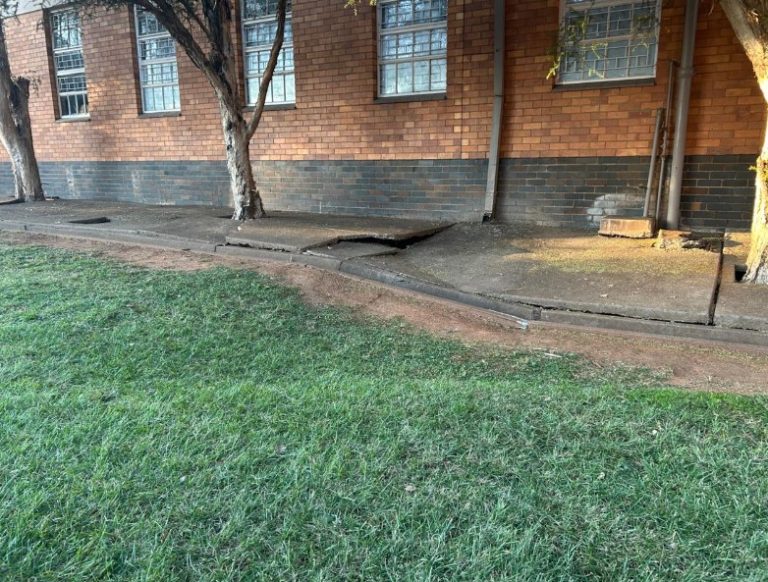
The North West Department of Education and Matlosana Local Municipality have sent engineering teams to Laerskool Stilfontein, near Klerksdorp, after a suspected sinkhole was detected on the school grounds.

The department said on Thursday that the possible sinkhole was first observed on Monday, after the school groundsman noticed unusual ground subsidence near a classroom block in the early hours of the morning.

He immediately alerted school management, and learners were moved to a safe place as a precaution.

ALSO READ: Student debt at SA universities hits R59bn despite NSFAS funding

The department and municipality then held urgent meetings to find a solution to the problem, according to a press statement. Both institutions brought in independent engineers to assess the problem.

North West Education MEC Viola Motsumi said the safety of learners and staff remained the department’s top priority.

“As a department, we are aware of the sinkhole threat experienced at the school and our priority is to ensure the safety of learners and staff. We want to applaud the school management for ensuring that everyone was safe after the threat was identified. We have kept the learners at home until we know exactly what problem we are facing.

“We also want to commend our teachers who are ensuring that learners do not fall behind in their studies. Teachers are continuing to run lessons via WhatsApp and other platforms. This situation is particularly concerning because learners are due to start their mid-year examinations next week,” said Motsumi.

ALSO READ: Judgment reserved in Mabuyane-Malema defamation case over Fort Hare claims

The department said it was still waiting for the engineers’ report, which would determine the seriousness of the situation.

Motsumi said alternative space at nearby schools and churches was being considered.

INSIDE EDUCATION

Student debt at SA universities hits R59bn despite NSFAS funding

By Thapelo Molefe

Student debt at South African universities has climbed to R59bn despite billions of rand spent annually through the National Student Financial Aid Scheme (NSFAS), Parliament heard on Wednesday during a briefing on the worsening financial pressures facing the higher education sector.

The debt crisis emerged during presentations by the Department of Higher Education and Training (DHET) and Universities South Africa (USAf) to Parliament’s portfolio committee on higher education.

USAf chief executive Phethiwe Matutu said nearly half the debt was linked to NSFAS-funded students.

“The major contributor to that debt are the NSFAS-funded students, contributing R29 billion,” Matutu told MPs.

She said self-funded students accounted for 44% of outstanding debt, while irrecoverable debt stood at about R12 billion.

The briefing raised questions over how universities had accumulated such high debt levels despite substantial state investment in student financial aid.

Portfolio committee chairperson Tebogo Letsie described the figures as alarming.

“Very worrying there,” Letsie said after the presentation.

“We’ll need to know how we got to that point when we discuss how NSFAS-funded students owe our institutions almost half of total debt.”

DHET officials said one of the main drivers of the crisis was the unresolved NSFAS reconciliation and close-out process between universities and the scheme, with some disputes dating back to 2017.

Universities warned that unresolved NSFAS balances were placing some institutions under pressure from auditors.

Matutu said the NSFAS accommodation cap had further deepened the crisis by leaving students liable for accommodation costs above the scheme’s limits.

Universities also cited unemployment, household financial distress, historic debt accumulation and academic exclusions as factors worsening debt levels.

Officials warned that universities had become increasingly dependent on tuition fees as government subsidies accounted for a shrinking share of institutional income.

DHET said subsidies and grants made up 43.7% of university income in 2020, falling to 36.4% by 2024, while tuition and accommodation fees increased as a proportion of university revenue.

The department said gross student debt had risen from R16.5 billion in 2020 to R24 billion in 2024 in audited figures, while impaired debt had increased to more than R15 billion.

Officials warned that nearly two-thirds of university debt was now impaired, meaning institutions believed a large portion would never be fully recovered.

Universities also told MPs that growing debt was affecting student success and graduation rates, as many students were blocked from registering for new academic years because of unpaid fees.

The sector warned that the crisis threatened the long-term sustainability of universities and was forcing some institutions to rely heavily on debt collection measures and alternative income streams.

INSIDE EDUCATION

Judgment reserved in Mabuyane-Malema defamation case over Fort Hare claims

By Thapelo Molefe

The Eastern Cape High Court has reserved judgment in an urgent defamation case brought by Eastern Cape premier Oscar Mabuyane against Economic Freedom Fighters (EFF) leader Julius Malema over remarks relating to Mabuyane’s academic record.

The dispute centres on comments Malema made outside a magistrate’s court in KuGompo City in April, where he alleged Mabuyane had “stolen” a master’s degree from the University of Fort Hare.

Mabuyane approached the court on an urgent basis after demanding that Malema retract the remarks and apologise. He is seeking an order declaring the statements defamatory and unlawful, and to bar Malema from repeating them.

Arguing for Mabuyane before Judge Johannes Willem Eksteen on Tuesday, advocate Mfundo Salukazana said Malema’s remarks carried the implication that the premier had committed fraud.

“The sting lies in the criminal offence of fraudulently obtaining the degree,” Salukazana argued.

He said Mabuyane had never obtained or claimed to hold a master’s degree and therefore could not have “stolen” one.

“It hasn’t been demonstrated where he’s ever claimed to have a master’s degree, and therefore one cannot steal that which he’s never possessed or claimed to possess,” he told the court.

Salukazana also argued that Malema had misrepresented findings contained in a 2021 forensic investigation into Mabuyane’s registration and subsequent deregistration from the university’s master’s programme.

Court arguments indicated that Malema’s defence rests partly on a forensic report compiled after questions were raised about Mabuyane’s registration, including allegations that aspects of his thesis work may have involved ghostwriting.

Salukazana maintained that the report did not conclude that Mabuyane had fraudulently obtained a degree.

“What we’ve come to court about is whether or not the statement that he stole a master’s degree and therefore defrauded the university in how he obtained the master’s degree is false, and we submit that it is,” he said.

For Malema, advocate Mfesane Ka-Siboto argued that the EFF leader’s comments were based on existing findings and media reports and therefore constituted fair comment.

“This report came out in 2021. At no point does he seek to bring that report under review,” Ka-Siboto told the court.

He said Mabuyane could not now rely on urgency when the forensic findings had been in the public domain for years.

“If he was genuinely concerned about his name being impugned in relation to the master’s degree, then certainly he should have thought to have that report reviewed and set aside,” Ka-Siboto said.

The court also heard that Mabuyane has filed a separate application to review and set aside the university’s decision to deregister him from the programme. That matter is due to be heard on 18 June.

INSIDE EDUCATION