Home Blog Page 65

Kubayi calls for purposeful steps to empower women

0

By Johnathan Paoli

Justice and Constitutional Development Minister Mmamoloko Kubayi has called for deliberate, collective action to dismantle systemic barriers holding women back, while recognising the progress achieved over three decades of democracy.

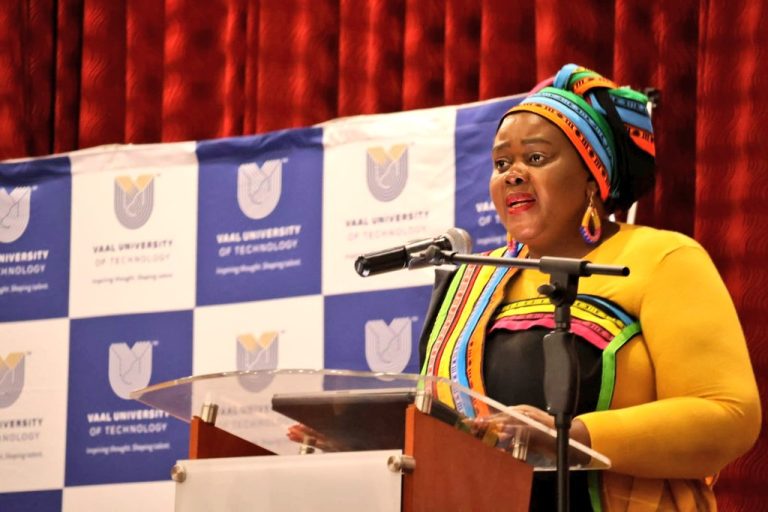
Delivering the keynote address at the Vaal University of Technology (VUT) Women’s Dialogue, Kubayi emphasised that the responsibility for achieving gender equality could not rest solely on women.

“Women emancipation cannot only be left to women; it is everyone’s business. We must deliberately design gender-conscious programmes to empower women, otherwise they will always fall behind,” she said.

The dialogue, which was held under the theme “Empowering Women and Being the Voices of Change: What Are We Doing as Women in Leadership to Empower Other Women?”, forms part of Women’s Month commemorations.

It brought together academics, municipal leaders, business executives, union representatives and students.

VUT Vice-Chancellor Khehla Ndlovu opened proceedings by urging participants to “reimagine responsibility” in leadership and to amplify diverse women’s voices in building a more inclusive society.

Kubayi acknowledged the resilience of women who had broken barriers across society, despite immense challenges.

However, she warned that many obstacles remain entrenched.

“As we celebrate women who, against all odds, have managed to climb the social ladder, we must more vigorously fight to break the unnecessary barriers they have had to overcome,” she said.

Citing Statistics South Africa figures, she noted that women continued to face higher unemployment rates than men, with Black African women being the most vulnerable.

In the first quarter of 2025, their unemployment rate stood at 40.2%.

Women were also more likely to be employed in the informal sector, seasonal work, or jobs with unsocial hours, often making it difficult to balance family and professional responsibilities.

The minister highlighted further structural barriers, including limited access to transport, male-dominated workplace cultures and the persistence of discriminatory practices that prevented women from advancing to higher levels of responsibility.

“Women are frequently passed over for promotions, and certain work areas remain traditional male preserves. These are not natural laws, they are rules we must change,” she stated.

Despite these challenges, Kubayi stressed that measurable gains have been made where conscious interventions have been applied.

In the judiciary, she noted, representation has shifted dramatically since 1994.

Then, of 165 judges, 160 were white men, three were black men, and two were white women, with no black women represented.

Today, of the 252 judges in superior courts, 121 are women.

Six of the country’s 15 superior courts, including the Constitutional Court and the Supreme Court of Appeal, are led by women.

The magistracy has shown even greater transformation: of 1724 magistrates, 934 are women, representing 54% of the total.

“This progress shows what can be achieved when deliberate and conscious effort is made to promote women,” Kubayi explained.

By contrast, she observed that private legal practice remained slow to transform.

Many black and female legal practitioners were confined to areas such as labour or family law, with limited opportunities to develop expertise in lucrative, complex fields like commercial or maritime law.

“As a result, many women, especially black women, struggle to build sustainable practices and are more likely to leave the profession,” she said.

The minister argued that transformation required going beyond individual advancement to systemic change.

“Our efforts as individuals can move the needle only so far. The work needed to achieve gender equality requires that we challenge frameworks of power and change the rules to ensure that women benefit,” she said.

She endorsed recommendations from the United Nations on advancing gender equality in South Africa, including targeted recruitment and training for women in underrepresented sectors, stronger legislation ensuring equal pay for equal work, workplace policies that promote work–life balance, such as flexible hours and parental leave for both men and women, and affordable, quality care for children, the elderly, and persons with disabilities.

“These are concrete steps that can make workplaces safer and more inclusive for women, particularly in traditionally male-dominated sectors,” she said.

Kubayi concluded with a call for collective responsibility in accelerating women’s emancipation.

INSIDE EDUCATION
DA calls for the complete eradication of pit latrines in KZN

By Johnathan Paoli

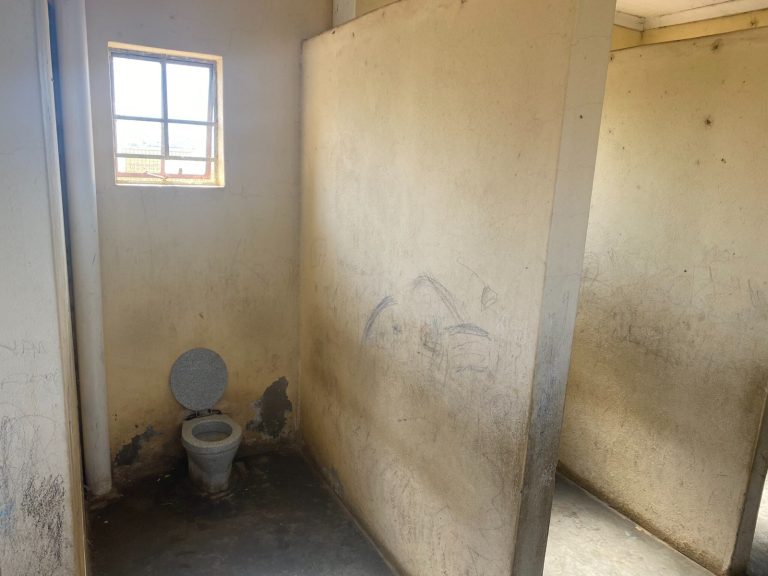
The Democratic Alliance (DA) in KwaZulu-Natal has renewed calls for the urgent eradication of pit latrines across the province following a six-year-old boy dying after falling into an unsecured septic tank at Umzila Primary School in Dannhauser.

DA KZN education spokesperson Sakhile Mngadi conducted an oversight inspection at the school, alongside local councilors on Monday. He met with the school principal and the School Governing Body (SGB) chairperson to assess the situation.

“From what we’ve seen, Umzila Primary is a neat, well-managed school. The principal and the School Governing Body chairperson explained what transpired, and it appears to have been a tragic accident rather than direct negligence by staff. However, the broader issue lies in systemic infrastructure failures that place children at risk,” he said in a statement on Wednesday.

The child reportedly slipped away from the Grade R dismissal line on 6 August and was playing near the school toilets when the accident occurred. The underground septic tank, which had not been properly cordoned off, gave way.

In the aftermath, the school moved quickly to cover the area with metal sheets and rocks as an immediate safety measure.

The oversight visit formed part of the party’s wider campaign to monitor school sanitation across the province.

Speaking after the visit, Mngadi said the tragedy was a stark reminder of the dangers posed by inadequate sanitation infrastructure.

He stressed that the incident underlined the importance of national efforts to eliminate unsafe toilets in schools.

“Minister Siviwe Gwarube has launched a nationwide campaign to eradicate pit latrines. Nationally, we have reached 97% eradication, but KwaZulu-Natal is lagging behind. There are still 254 schools in this province, about 4% of all schools, that rely on pit toilets. Every one of those schools represents children at risk, and every delay is a risk too great,” he added.

The DA has formally written to acting chairperson of the KZN legislature’s education portfolio committee, Hlengiwe Mavimbela, requesting that a full report on the Umzila incident be tabled at the committee’s September meeting.

“It is vital that we get a comprehensive account of what happened and what measures will be taken to prevent a recurrence. The Kunene family deserves closure, and learners across the province deserve safe, dignified facilities,” Mngadi said.

The DA commended private sector stakeholders who have offered assistance to Umzila Primary and other schools in Dannhauser following the incident.

In his on-site remarks, Mngadi reiterated that the visit was not about blame, but about accountability and urgent action.

“We can’t say this was a matter of negligence by school management. But we can say this was preventable if basic sanitation infrastructure had been prioritised. When we don’t get the basics right, we risk tragic instances like this one,” he said.

Mngadi confirmed that the DA would extend its oversight programme to other schools in the province to establish the extent of unsafe sanitation infrastructure and report back to the public.

INSIDE EDUCATION

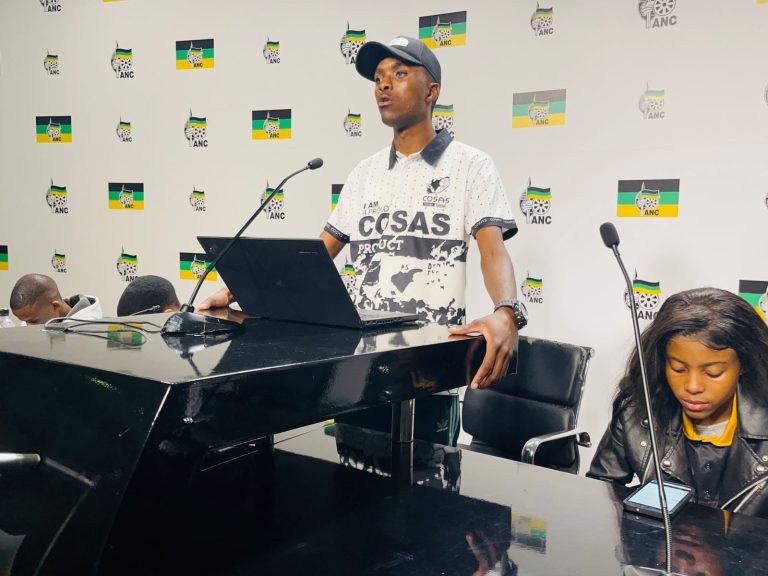
Cosas threatens march over Bela implememtation

By Thapelo Molefe

The Congress of SA Students (Cosas) has called for the urgent removal of Basic Education Minister Siviwe Gwarube, accusing her of stalling the implementation of the Basic Education Laws Amendment (Bela) Act.

Cosas president Kamogelo Nkosi told reporters on Monday that the “protracted delay” in finalising and gazetting key regulations, particularly on language and admission policies, was harming the education system and denying children their constitutional right to education.

“The Bela Act was signed by President Cyril Ramaphosa in September 2024, yet its provisions, including compulsory Grade R admission, remain unimplemented.

“Many children are still at home without access to schooling, a direct result of the Department of Basic Education’s failures,” Nkosi said.

He claimed Gwarube had issued non-binding draft guidelines instead of formal regulations, describing them as “a pure representation of rebellion by the department against lawful provisions of the country”. 

“These failures affect not only admissions but also language policies, leaving the education of black and underprivileged children at ransom to political manoeuvres,” he said.

The student body also accused the Democratic Alliance, under whose banner Gwarube serves, of pursuing “anti-progress and neo-liberal” agendas that fragment the development and growth of the black child.

“The Portfolio Committee on Basic Education has warned against deliberate stalling tactics and emphasised the urgent need for clarity. The delay not only hampers the transformation goals of the Bela Act but also risks deepening inequalities in access to quality education,” Nkosi said.

Beyond the law, Cosas also raised alarm about bullying and safety in schools, warning that incidents of violence continued to rise without decisive intervention from the Department.

Gwarube’s office rejected Cosas’s claims. 

Her media liaison officer, Lukhanyo Vangqa, said the statement was “self-evidently untrue,” noting that the minister had already released the first set of BELA regulations for public comment. 

“She has taken a modularised release approach to ensure that as soon as a regulation is approved by the office of the Chief State Law Advisor, it is immediately released to the public,” Vangqa said.

Despite this, Cosas leaders warned that unless their demands are met, they would mobilise students and march to the department’s headquarters in Pretoria.

INSIDE EDUCATION

DA demands audit of school kitchens after Gobizizwe food poisoning outbreak

By Johnathan Paoli

The Democratic Alliance has called for an urgent, province-wide audit of school kitchens in the Eastern Cape following 160 learners falling ill after eating a meal provided under the National School Nutrition Programme (NSNP) at Gobizizwe Agricultural High School in Mthatha.

DA education spokesperson Horatio Hendriks led an oversight inspection at the school on Monday. He was accompanied by DA agriculture spokesperson Heinrich Muller, OR Tambo constituency leader Mlindi Nhanha and Phesheya Kwenciba constituency leader Fezeka Mbiko.

They met parents, teachers and officials during a school briefing session.

“The fear and frustration expressed at the venue were palpable. Families want simple answers to urgent questions. They want to know that tomorrow’s meal will be safe, that their children will be protected, and that the system will not fail them again,” Hendriks said in a statement.

The DA will table a motion in the provincial legislature on Thursday, demanding a comprehensive audit of all school kitchen infrastructure and facilities.

It said the review must include compliance with municipal health and safety by-laws, clear timelines for completion, public reporting of findings and a detailed action plan to fix non-compliant facilities.

The call comes amid growing alarm among parents after the outbreak, which saw children rushed to hospitals. They had diarrhoea, abdominal pain, dizziness and seizures, and many were vomiting.

According to the provincial health department, 169 cases were recorded between 12 and 15 August.

Most learners became ill on Wednesday, 13 August, shortly after eating a meal of rice and tinned fish, although a separate internal health department report noted that another school meal during the same week containing samp, chicken, carrots, beetroot and gravy was also consumed by affected pupils.

Emergency medical services, the SA Police Services, OR Tambo Disaster Management and environmental health practitioners responded to the incident, transporting learners to Nelson Mandela Academic Hospital, Mthatha General Hospital and the Ngangelizwe Community Health Centre.

Of the 131 initially hospitalised, 128 were discharged within 24 hours, while three remained under observation.

Although environmental health inspectors found the school kitchen and serving areas in “acceptable condition” at the time of inspection, samples of the food and environmental surfaces were collected for laboratory analysis. Results are still pending.

Hendriks said the lack of immediate, transparent communication left families anxious and forced to speculate.

“These facts underscore the need for rapid, transparent testing and public reporting so that parents are not left in the dark,” he said.

The DA criticised the education department for what it described as “shifting the burden” onto under-resourced schools to upgrade kitchens using limited NSNP funds.

“The department must accept responsibility for providing safe, compliant and fit-for-purpose kitchen infrastructure at all qualifying schools. Where infrastructure is lacking, the department must budget, build and certify,” Hendriks said.

He added that if the outbreak was linked to food handling rather than external contamination, all school kitchen workers should immediately receive basic health and safety training as well as appropriate personal protective equipment.

Supplier and storage compliance also needed to be verified across the district, with any non-compliant providers suspended.

The DA called for improved protocols in the aftermath of such incidents to ensure adequate specimen collection.

During the oversight visit, the party donated stationery to support the academic needs of Gobizizwe learners.

Meanwhile, the provincial health department has urged patience as investigations continue.

INSIDE EDUCATION

Indaba highlights real solutions to real problems for education challenges

By Johnathan Paoli

Basic Education Minister Siviwe Gwarube has reaffirmed her department’s commitment to focusing on measurable change for education outcomes and shaping realistic solutions to the country’s Cape’s most pressing education challenges.

Speaking at the Western Cape Education Indaba under the theme “Putting Children First – Building a Future-Fit, Inclusive Education System” as part of South Africa’s G20 Presidency, Gwarube said the country’s role was to go beyond rhetoric and ensure that global commitments translated into tangible action and local realities.

“It is about ensuring that global debates on education are not abstract, but connected to the classrooms in Khayelitsha, the early childhood centres in George, the high schools of Cape Town, and the rural schools stretching across the Karoo and the West Coast,” she said.

The minister highlighted two of the G20’s central education priorities – quality foundational learning and professional development for teachers in a changing world. She said they were directly relevant to South Africa’s context.

“The transition from graduate to classroom must be smooth. We should align provincial induction programmes with university training so that learning continues throughout a teacher’s career,” she noted.

Drawing inspiration from international models such as Finland and Singapore, Gwarube argued that South Africa must craft a uniquely local approach.

“We must design a South African, and indeed a Western Cape model, rooted in our realities, enriched by global best practice and driven by our vision for injecting excellence into our education system,” she said.

She outlined six key areas for partnership-driven reform: aligning policy with teacher education, creating professional learning communities, planning teacher supply and demand, strengthening work-integrated learning, building seamless induction and continuous professional development systems, and advancing joint monitoring, evaluation and research.

“This indaba must not be remembered for speeches alone, but for the partnerships it builds and the commitments it inspires. If we meet this moment with rigour, creativity and a refusal to accept mediocrity, the ripple effects of our work here will be felt in every classroom across South Africa and beyond,” Gwarube said.

Western Cape education HOD Brent Walters set the tone for the meeting by reminding delegates that quality foundational learning, early childhood development (ECD) and professional teacher development remained the bedrock of an inclusive education system.

“Investing in teachers and the foundations of learning is not only an investment in education, but in the future of our society, economy, and nation,” Walters said.

Western Cape education MEC David Maynier echoed the call for practical solutions, warning that systemic reform required focus.

“We need to get early learning right, so that children have a solid foundation upon which they can build their school career. And we need to get teacher development right, so that our teachers are able to adapt to the changing context of our education system,” he said.

He highlighted the Western Cape’s progress in school infrastructure, innovation and learning recovery since the Covid-19 pandemic, while acknowledging the twin constraints of budget limitations and growing learner numbers.

The second session of the indaba zeroed in on ECD, with a series of presentations underscoring the sector’s importance.

Social worker and ECD activist Riedewhaan Allie stressed the urgency of reaching unserved communities, particularly where poverty and violence undermined children’s potential. He called for non-centre-based approaches that supporedt both children and caregivers.

The Learning Initiative director Ingrid Ahlert showcased the success in screening over 14,900 children for developmental delays, demonstrating how early intervention improved outcomes.

University of the Western Cape lecturer Kaylianne Aploon-Zokufa argued for greater investment in the ECD workforce, many of whom entered the sector as volunteers.

“Practitioners are at the frontline of shaping children’s futures. They need training, resources and recognition because their work changes communities as well as classrooms,” she said.

Throughout the day, speakers returned to the indaba’s guiding principles of solidarity, equality and sustainability.

The ministry as well as speakers maintained that putting children first was both the moral responsibility and the strategic imperative of all stakeholders, as this would secure growth, equality and opportunity for generations to come.

INSIDE EDUCATION

Africa backs SA’s historic bid for 2030 World Chess Olympiad

0

By Johnathan Paoli

The African Chess Confederation (ACC) has thrown full weight behind South Africa’s intention to bid for the 2030 World Chess Olympiad, hailing the move as a historic step to bring the world’s most prestigious chess event to African soil for the first time.

The ACC said in a statement the decision marked “a bold and historic step towards bringing the world’s most prestigious chess event to African soil” and called on the entire continent to unite behind the campaign.

Since the first Olympiad in Paris in 1924, the event has been staged on every continent except Africa.

“We are proud to announce that Chess SA will prepare a bid to host the 2030 World Chess Olympiad, making history by bringing the world’s greatest chess event to African soil for the first time ever,” the federation said.

The announcement followed a recent meeting when Chess South Africa’s (Chess SA) executive board met a high-level delegation of sports and chess leaders.

The gathering included International Chess Federation deputy chairperson Dana Reizniece, South African Sports Confederation and Olympic Committee first vice president Lwandile Semilane, and Western Cape cultural affairs and sport acting deputy director-general Lyndon Bouah.

According to Chess SA, all parties at the meeting aligned on a single ambition to secure the 2030 Olympiad for South Africa.

The ACC said South Africa’s intention to bid for 2030 was not only about hosting a major tournament, but about completing the Olympiad’s global journey and affirming Africa’s readiness to welcome the international chess family.

“With the strong backing of SASCOC and the Department of Sport, Arts and Culture, this prospective bid is more than a dream, but a continental statement of unity, excellence and determination. We call on all African federations, chess enthusiasts and international partners to rally behind South Africa’s campaign,” the ACC said.

If successful, the bid would give South African chess fans a rare opportunity to watch the game’s elite players live, while showcasing the country’s ability to host world-class events.

It would also expose thousands of young players to the sport at the highest level, potentially inspiring the next generation of champions.

The bid comes at a time of renewed energy in international chess.

Later this year, FIDE’s calendar includes the World Youth U16 Chess Olympiad in Barranquilla, Colombia (16–23 August 2025), and the 2nd FIDE Chess Olympiad for People with Disabilities in Astana, Kazakhstan (19–26 October 2025).

These events, while smaller in scale, reflect the global growth and inclusivity of chess, qualities South Africa hopes to highlight in its 2030 campaign.

INSIDE EDUCATION

Nzimande urges stronger African role in global science

By Johnathan Paoli

Science, Technology and Innovation Minister Blade Nzimande has called for African universities, particularly historically disadvantaged institutions, to take a leading role in global knowledge production as the world confronts mounting climate and environmental crises.

Delivering the keynote address at the 3rd International Conference on Earth and Environmental Sciences at the Durban International Convention Centre on Monday, Nzimande said the imbalance in the global system of knowledge production had long marginalised African perspectives and expertise.

“While we value collaboration, we do not want our historically disadvantaged universities to be comfortable with simply being consumers of the knowledge that others produce. Universities on the African continent must make their own distinct contribution to the global knowledge project,” he told delegates.

The conference, jointly organised by the University of Zululand and Chang’an University of China, has attracted scientists, policymakers, industry leaders, civil society actors and students from over 70 countries across six continents.

It aims to foster interdisciplinary dialogue, explore innovative ideas and strengthen partnerships on earth and environmental sciences.

Nzimande commended the partnership between the University of Zululand and Chang’an University, noting that it had grown from bilateral academic cooperation into a respected international platform.

He said the collaboration underscored both the importance of cross-border higher education partnerships and South Africa’s long-standing diplomatic ties with China.

Framing his remarks within the “triple planetary crisis” of climate change, pollution and biodiversity loss, the minister warned of the escalating global threats to ecosystems, human health and economic stability.

“We are increasingly witnessing life-threatening heatwaves, floods, disappearing species and severe pressures on water and ecosystems. Without prompt, well thought-out and coordinated action, the outcomes for future generations will be devastating,” he said.

Nzimande drew on the World Meteorological Organisation’s 2023 State of the Climate in Africa Report, which found the continent faces “exceptionally heavy burdens” from climate change, with adaptation costs projected at up to $50 billion annually over the next decade.

“African countries are already losing 2–5% of GDP and in some cases diverting nearly 9% of their national budgets to respond to climate extremes.

“By 2030, up to 118 million extremely poor people will be exposed to drought, floods and extreme heat in Africa if adequate response measures are not put in place,” he said.

The minister said South Africa was already experiencing rising temperatures, drought, water scarcity and more frequent and intense storms, with severe consequences for agriculture, biodiversity and rural livelihoods.

“Farmers are struggling to cope with shifting weather patterns, extreme heat and irregular rainfall. This directly threatens food sovereignty and the survival of communities who depend on biodiversity for everyday life,” he said.

Nzimande outlined a range of government-led interventions through the department, including the Science Mission on Global Change and Biodiversity Science, which builds on two decades of investment and hosts programmes such as the South African Environmental Observation Network and the South African Risk and Vulnerability Atlas.

The department facilitated a newer inter-departmental Science Mission on Climate Change and Environmental Sustainability, prioritising: climate adaptation strategies; the South African Research Infrastructure Roadmap; and a high-level programme focused on pollution, oceans, natural resource management and science-based policy.

He added that South Africa actively engaged in global platforms such as the UN Framework Convention on Climate Change, the Convention on Biological Diversity and the Convention to Combat Desertification.

Nzimande also announced that preparations were underway for the 6th Global Change National Conference, to be hosted by his department, the National Research Foundation and the University of Mpumalanga from 1–4 December this year.

The conference will serve to advance implementation of the Climate Change and Environmental Sustainability Societal Grand Challenge framework.

The minister welcomed the involvement of students and young researchers at the Durban gathering, stressing the need to increase the number of black and women scientists in senior positions across South Africa’s research institutions.

“This aligns with our strategic objective of transforming the scientific community so that it reflects the demographics and potential of our society,” he said.

Nzimande, who urged African government to embrace evidence-based policymaking, said the Durban conference represented a valuable opportunity to generate new research, and data and climate-resilient technologies.

INSIDE EDUCATION

W.Cape teachers celebrated as “first responders” for child development

By Johnathan Paoli

The Western Cape education department has praised teachers as pivotal in shaping the lives of learners and positioning the province as a leader in education outcomes.

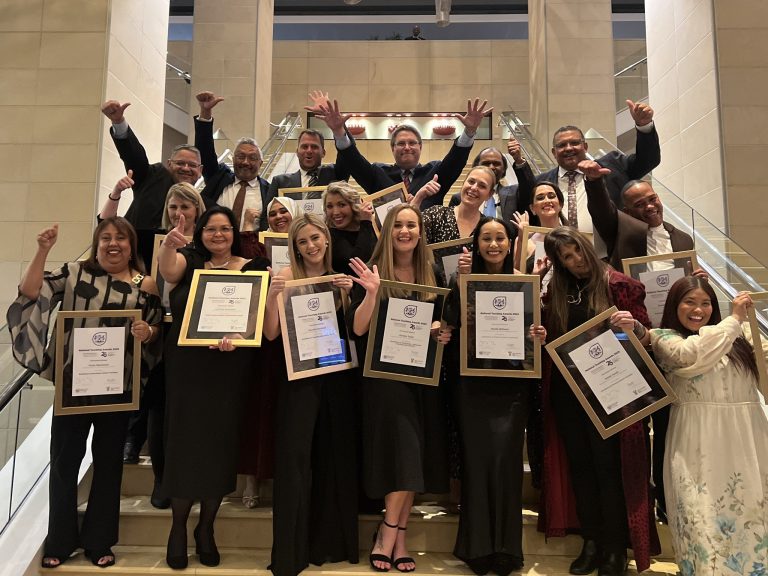
Speaking during the 25th Annual Provincial Teaching Awards in Cape Town, education MEC David Maynier praised teachers, calling them the province’s “greatest asset”.

He said they were vital to ensure that learners have a brighter future.

“Teachers have become our children’s first responders. We need to ensure that our teachers in turn have the emotional support and tools they need to cope with difficult circumstances. A better teacher translates directly into better learning outcomes, and I have never met a teacher who did not want to be a better teacher,” Maynier said.

Head of Education Brent Walters formally welcomed the winners, describing them as “wonderful educators who embody the best of what our schools have to offer”.

The awards celebrated winners across 15 categories, including Grade R teaching, school leadership, special needs education and lifetime achievement.

This year’s ceremony also highlighted the powerful role women play in shaping education in the Western Cape.

Of the 15 awards presented, 13 went to female educators.

Maynier welcomed the timing during Women’s Month.

He said the awards reinforced the contribution women made not only as classroom teachers but also as leaders, mentors and innovators in education.

Educators from the Eden and Central Karoo Education District stood, securing the most awards of any district.

Their success is seen as a sign of the quality and commitment present across even the province’s rural schools.

The Democratic Alliance congratulated all the nominees and winners.

DA provincial education spokesperson Leon van Wyk said the awards underscored the value of educators who often served as “mentor, counsellor and motivator” in their schools.

“Teachers are the backbone of our education system, and their dedication ensures that every child has the opportunity to thrive.

“The department’s investment in teacher development is therefore an investment in the future of our province, and the DA wholeheartedly welcomes it,” Van Wyk said in a statement.

He further emphasised that recognising teachers’ achievements must go hand-in-hand with continued support.

The following educators were recognised as the province’s best in their respective categories:

Excellence in Grade R Teaching: Charles Mokoena, Dirk Boshoff Primary School, Uniondale (Eden and Central Karoo)

Excellence in Teaching Life Skills (Grades 1–6): Ammarah Ford-Pieters, Cedar Primary School, Bonteheuwel (Metro Central)

Excellence in Primary School Teaching (Grades 1–7): Dome Swart, Kasselsvlei Primary School, Bellville South (Metro North)

Excellence in Primary School Leadership: Roche Witbooi, Concordia Primary School, Knysna (Eden and Central Karoo)

Excellence in Secondary School Teaching (Grades 8–12): Fiona Blanchard, Crystal Secondary School, Hanover Park (Metro Central)

Excellence in Secondary School Leadership: Hendrik Smith, Hoërskool Langenhoven, Riversdale (Eden and Central Karoo)

Excellence in Special Needs Teaching: Chantelle Carstens, Paarl School, Brackenfell (Metro East)

Excellence in Special Needs School Leadership: Alsje Schoeman, Oudtshoorn School of Skills, Oudtshoorn (Eden and Central Karoo)

Excellence in Teaching Mathematics (GET): Mariska Niemand, Altena Primary School, Strand (Metro East)

Excellence in Teaching Mathematics (FET): Charissa Shay-Sithole, Apex High School, Eerste River (Metro East)

Excellence in Teaching Natural Sciences: Demi Michelle Potts, Kretzenshoop Primary School, George (Eden and Central Karoo)

Excellence in Teaching Physical Sciences: Lana Schreuder, Rhenish Girls’ High School, Stellenbosch (Cape Winelands)

Excellence in Technology-Enhanced Teaching and Learning: Kirsten Tome, Fraaisig Primary School, Knysna (Eden and Central Karoo)

National Best Teacher Award: Wedaad Esau, Bridgeville Primary School, Bridgetown (Metro Central)

Kader Asmal Lifetime Achievement Award: Lorinda Rinkwest, Kasselsvlei Primary School, Bellville South (Metro North)

All 15 winners will go on to represent the Western Cape at the National Teaching Awards on 9 October.

Maynier expressed confidence that the province’s teachers would shine on the national stage.

INSIDE EDUCATION

Government to appoint independent law firm to probe Grade 3 learner death

By Johnathan Paoli

The Gauteng education department is finalising the appointment of an independent investigative law firm to probe the death of a Grade 3 learner from Alberview Primary School in Alberton, Ekurhuleni.

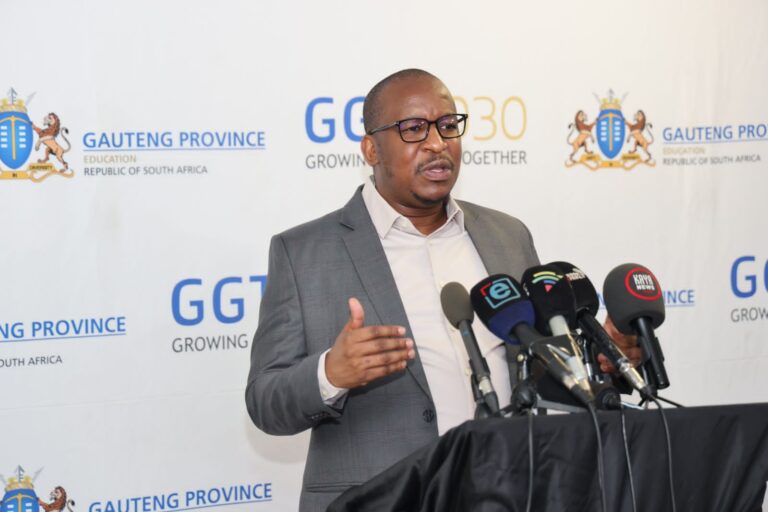
Gauteng education MEC Matome Chiloane has expressed his condolences to the boy’s family, the Alberview school community and all who knew him, emphasising the need for an independent probe to uncover the truth.

“In our pursuit of ensuring the safety and well-being of our learners across all schools, we expect this investigation to provide detailed facts around this incident. We are hopeful that it will uncover the facts behind the learner’s passing, ensuring accountability,” Chiloane said.

The MEC stressed that the safety of children in schools was non-negotiable and that any negligence, if found, would be dealt with decisively.

According to preliminary reports, the learner was allegedly injured while playing with friends on the school field during break.

Despite being rushed to a nearby hospital by paramedics, he was declared dead.

Department spokesperson Steve Mabona confirmed that an independent law firm would be mandated to investigate all circumstances surrounding the incident.

He explained that the investigation would go beyond internal departmental processes to ensure transparency and accountability.

“Once the law firm is onboard, the family and other stakeholders will be formally engaged for introductions and to outline the terms of reference,” he added.

The department’s psycho-social support unit has been deployed to the school to provide counselling and trauma support for learners, staff and affected families.

While no exact deadline has been announced, the department has indicated that findings will be shared with the family first before being made public.

It called for patience as the investigation process unfolds.

INSIDE POLITICS

Kids need soft skills in the age of AI, but what does this mean for schools?

0

By Jennifer L. Steele

For the past half-century, the jobs that have commanded the greatest earnings have increasingly concentrated on knowledge work, especially in science and technology.

Now with the spread of generative artificial intelligence, that may no longer be true. Employers are beginning to report their intent to replace certain white-collar jobs with AI. This raises questions over whether the economy will need as many creative and analytic workers, such as computer programmers, or support as many entry-level knowledge economy jobs.

This shift matters not just for workers but for K-12 teachers, who are accustomed to preparing students for white-collar work. Families, too, are concerned about the skills their children will need in an economy infused with generative AI.

As a professor of education policy who has studied AI’s effect on jobs and a former K-12 teacher, I think the answer for teachers and families lies in understanding what AI cannot – and perhaps will not – be able to do.

Prior waves of automation replaced routine and manual jobs, boosting the earnings advantage of cognitively demanding work. But generative AI is different. It excels at pattern-matching in ways that allow it to simulate human coding, writing, drawing and data analysis, leaving the lower rungs of these occupations vulnerable to automation.

On the other hand, because its output mimics patterns in existing data, generative AI has a harder time handling complicated reasoning tasks, much less complex problems whose answers depend on many unknowns. Moreover, it has no understanding of how humans think and feel.

This means that the “soft skills” – attributes that allow people to interact well with others and to be attuned their own emotional states – are likely to be ascendant. That’s because they are integral to solving complex problems and working with people. Though soft skills such as conscientiousness and agreeableness are considered to be personality traits, research suggests these are emotional tools that can be taught.

Teaching emotional awareness

The good news is that soft skills can be taught in tandem with traditional subjects such as math and reading – those areas for which teachers are held accountable – using techniques teachers already know.

For example, teachers often ask students to submit “exit tickets” as they depart the classroom at the end of a lesson. These are brief, written reflections or questions about the concepts students just learned.

Exit tickets can also be used to help students burnish their emotional and social skills along with their academic learning. In practice, teachers can give prompts that focus on moments of intellectual bravery, emotional regulation or interpersonal understanding, such as:

  • Write about a time when you helped someone today.
  • Tell me about someone who was kind to you today. How were they kind?
  • Describe a time this week when you learned something that seemed very hard. How did you do it?

The point of the task is not just to boost students’ mood or engagement, though these are great byproducts. The goal is to help students realize that their emotional responses to external circumstances fall within their control. Enhanced awareness of their own emotions predicts children’s ability to manage frustration, to perceive and anticipate the emotions of others and to work smoothly with other people. All of these are vital workplace skills that will likely become more valuable with the rise of generative AI.

Teaching problem-solving

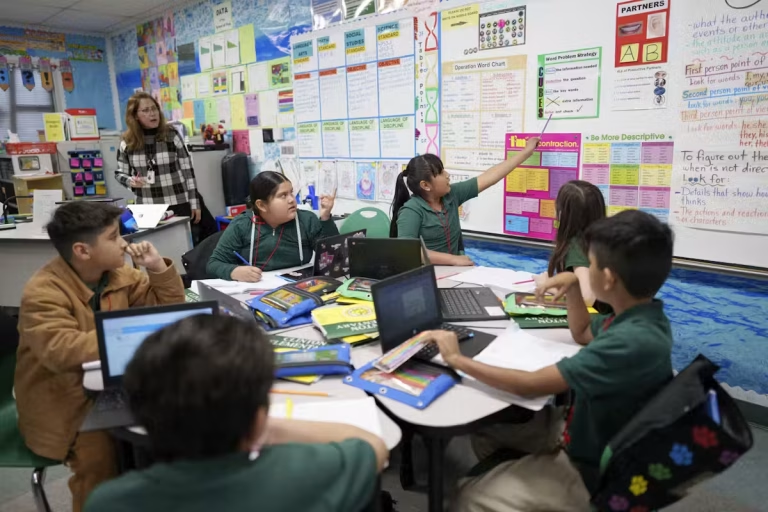
Teachers can also have students practice solving messy problems whose answers are not known. For example, as elementary students learn to calculate perimeters, areas or volumes, they can work in groups to find the measurements of objects around the school, including large or oddly shaped items. Teachers can prompt students to reflect not just on the correctness of their answers but on how they framed and approached each problem.

Real-world problem-solving, also known as authentic assessment, can be taught in any discipline, with examples that include:

  • Testing the soil slopes and moisture levels on school grounds and proposing landscaping solutions.
  • Creating and pilot-testing video campaigns for social causes.
  • Reimagining how history might have played out if leaders had made different choices, and considering policy implications for today.

Teaching children to unpack complexity helps them understand the difference between seeking textbook answers versus testing possibilities when the best option is unknown. Solving novel, complex problems will continue to befuddle AI, not only because there are many steps and unknowns, but also because AI lacks our spatial and emotional understanding of the world. Even in the long term, countless variables that humans instinctively grasp will be difficult for computers to intuit.

Protecting slow learning

The technology complaint I hear most often from teachers is that students are having generative AI do their work for them. This happens not because students are deceptive or evil but because humans are self-regulating creatures. We take shortcuts on tasks that seem dull or too daunting in order to prioritize tasks that feel more rewarding.

But when students are building new skills, delegating work to AI is a huge mistake. By making slow things fast, AI undermines learning, because effort is needed to learn hard things.

For this reason, I think teachers must protect the classroom as a place where basic skills are learned slowly, alongside other students. For many lessons, this will mean harking back to the days before computers, in which students wrote assignments by hand or presented their work orally, learning to anticipate and respond to different viewpoints. If students are permitted to use digital automation tools, they should be prompted to reflect on how they used them, what they learned from them and which skills they weren’t able to practice – such as spelling, long division or bibliography formatting – when they delegated work to the tool.

The soft skill to rule them all

The truth is no one knows exactly what will happen to workers in an AI-enabled economy. People disagree about the skills AI will complement or replace. But the skills that underpin modern technology, such as math and reading, will likely continue to matter, as will the intra- and interpersonal skills that make us distinctly human.

Perhaps the most important skill schools can teach children today is the self-awareness to prioritize learning over shortcuts, and to refrain from delegating work to machines until they know how to do it themselves. It will also become even more important to be able to work with others in order to unpack hard problems.

An AI-enabled society will not be a society in which complex problems simply disappear. Even as the labor market reorders itself, I believe opportunities will abound for those who can work well with others to tackle the great challenges that lie ahead.

Jennifer L. Steele is a Professor of Education at American University.

The Conversation