By Lebone Rodah Mosima
Africa must play a central role in shaping the international rules governing armed conflict and emerging technologies, Deputy Minister of International Relations and Cooperation Alvin Botes said.
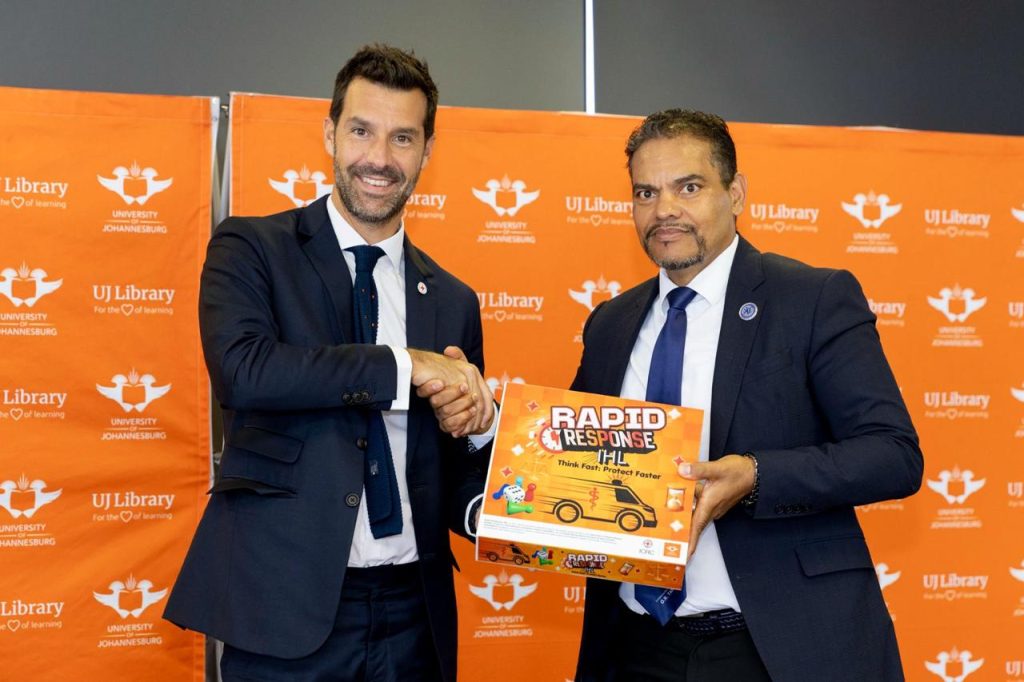
Speaking at the launch of Rapid Response: IHL, a board game teaching “the rules of war”, at the University of Johannesburg on Thursday, Botes said technological advances and AI were raising serious legal, ethical and humanitarian questions.

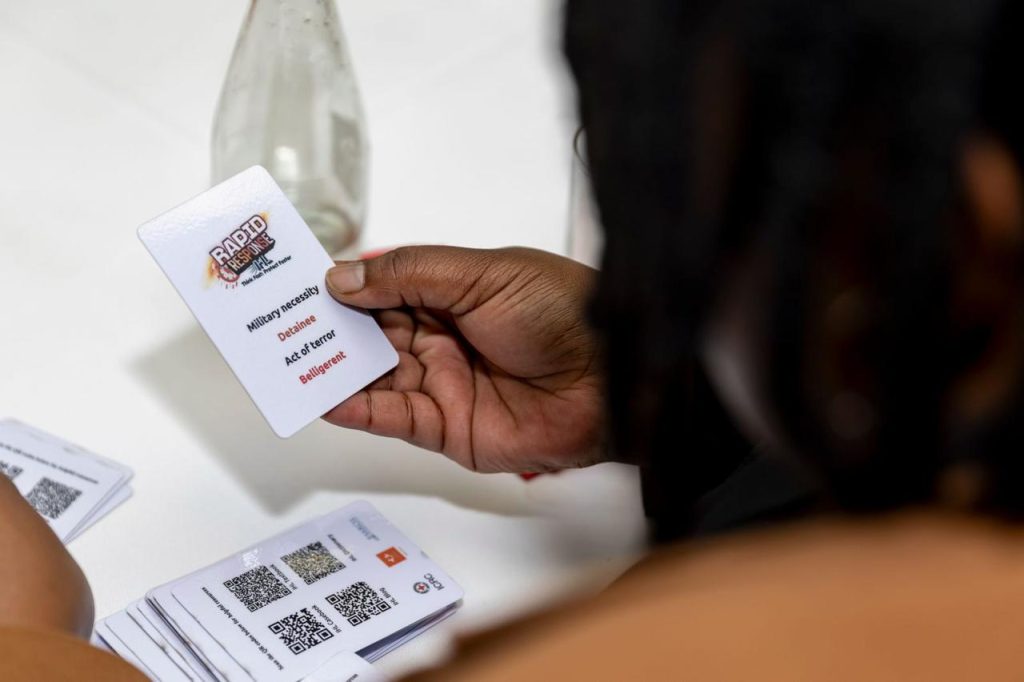
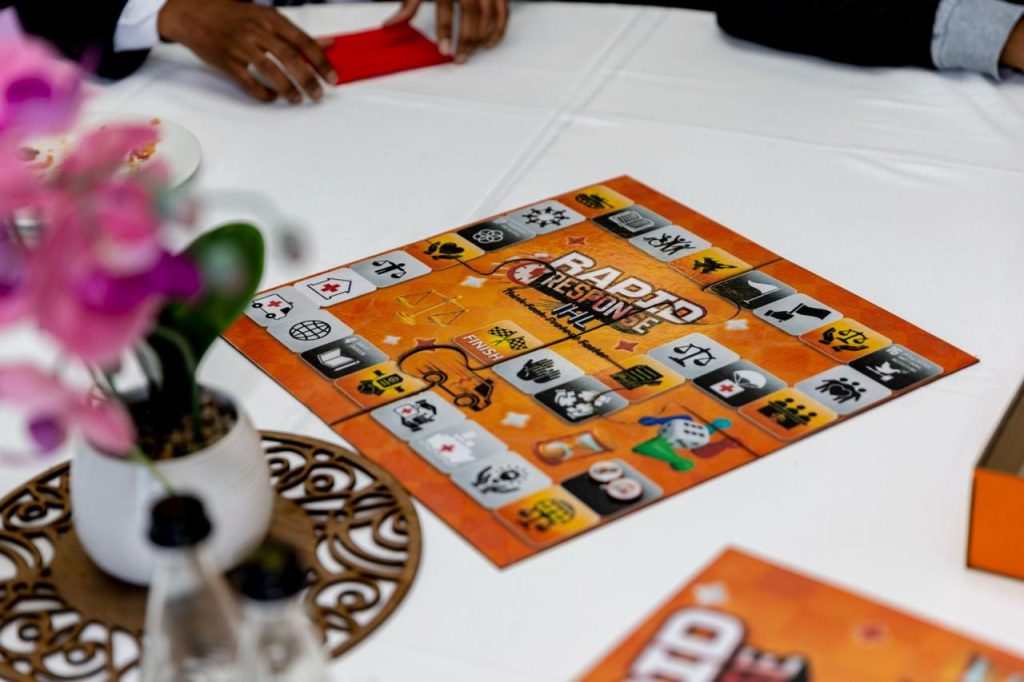
Developed jointly by UJ and the International Committee of the Red Cross (ICRC), Rapid Response: IHL uses humanitarian scenarios and decision-making exercises to challenge players to apply the laws of armed conflict to complex situations.
The game is intended to take International Humanitarian Law (IHL) teaching beyond memorising legal principles by developing critical thinking and practical decision-making. It had already been showcased during an IHL masterclass at UJ before its formal launch on Thursday.
“Africa must remain a central voice in shaping the future of international law, including the legal response to armed conflict and technological transformation,” Botes said at the launch.
“South Africa supports a continent that is peaceful, stable, integrated, and not marginalised in global affairs, including strengthening Africa’s intellectual and policy leadership on humanitarian law.”
He said the rapid growth of digital tools, machine learning and automated decision-making was changing the character of warfare.
South Africa, he said, had consistently called for international law to remain central in addressing emerging global challenges, while young people should have a role in shaping the policies and norms governing new technologies.
“In that regard, the voice of youth must be heard not only in awareness-raising, but also in policy and norm development.”
“Their insight is indispensable if future systems are to be shaped within clear legal limits and in a manner consistent with the protection of civilians.”
Botes said IHL was not an abstract body of rules, but a practical and moral framework protecting human dignity during war.
“That responsibility is especially important today, when armed conflict, political instability, displacement, and technological change are combining to create new humanitarian risks,” he said.
He said that South Africa’s commitment to IHL was reflected in its public positions on current conflicts, including calls for the protection of civilians, humanitarian access and accountability for serious violations.
“These are not only legal principles; they are moral obligations that must guide conduct in all armed conflicts,” Botes said.
Turning to young people, he quoted Frantz Fanon, who wrote that “each generation must, out of relative obscurity, discover its mission, fulfil it, or betray it”.
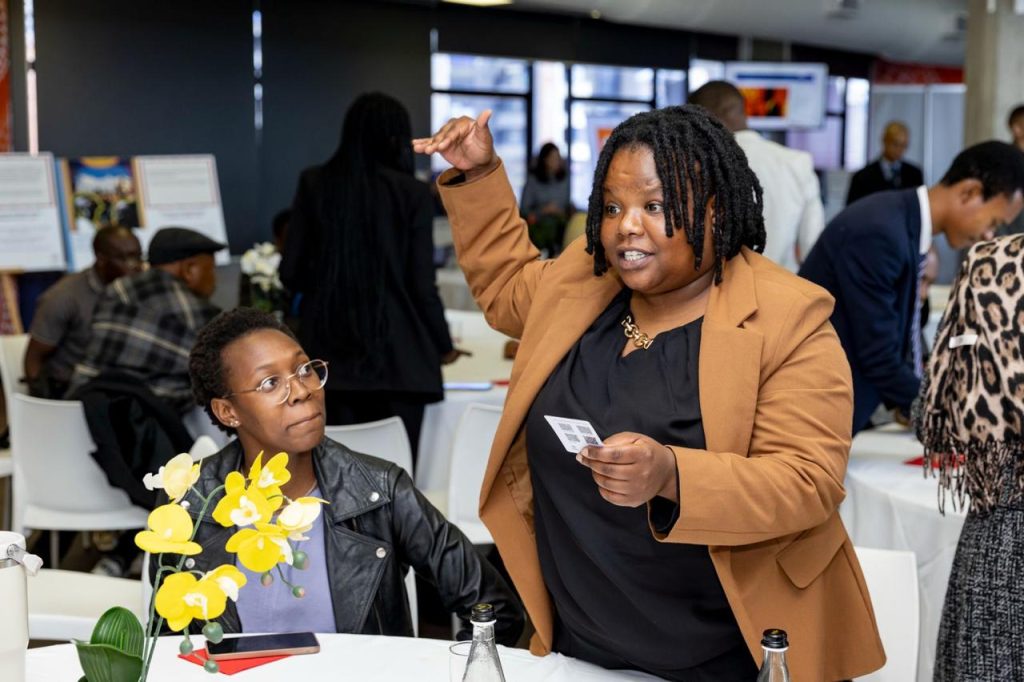
He urged them to become “the torch-bearers of that prosperous future, where International Humanitarian Law are respected, even in instances of conflict”.
Acting Vice-Dean: Research and Internationalisation in the Faculty of Law at UJ, Cayle Lupton, said universities had an important role in ensuring future decision-makers understood and could apply humanitarian law.
He cited the ICRC’s 2024 Challenges Report, which noted that “the unwavering commitment to IHL education is another key to fostering a culture of compliance”.
“That statement speaks directly to the role that universities such as UJ can and must play,” Lupton said.
He said the partnership between the ICRC, UJ Faculty of Law and the NRF South African Research Chair in International Law had produced several initiatives, including the annual All Africa Course on International Humanitarian Law and the Separated, Missing and Dead: From Law to Practice Masterclass.
Rapid Response: IHL was the latest addition.
“It challenges participants not simply to know the law, but to recall it, discuss it, interpret it and apply it,” Lupton said.
“In doing so, it makes a complex field of law more accessible while retaining the substance and seriousness that the subject demands.”
Lupton said the game’s first roll-out had already reached participants representing 58 countries.
“That is an achievement worth celebrating — but it is also an exciting indication of just how far this initiative can go.”
Head of the ICRC Pretoria Regional Delegation Jean-Nicolas Paquet-Rouleau said warfare itself was changing, with technologies once associated with science fiction increasingly confronting military planners, lawyers and humanitarian organisations.
“From Ukraine to Lebanon, from Iran to the DRC, from Sudan to Myanmar, the list is far too long,” he said.
“And one conflict is already one too many.”
Paquet-Rouleau said Africa’s young population meant the continent would play an increasingly significant role in shaping the international order.
Africa, already the youngest continent in the world, is projected to have nearly one-third of the global youth population aged 15 to 24 by 2050.
“These are not just ‘interesting demographic statistics.’ They reveal where much of the world’s intellectual, economic, diplomatic, and political energy will reside,” he said.
“This means that Africa will not only inherit a significant share of the world’s future—it will also help define its character and shoulder its responsibilities.”
He said that young people should not merely be present in discussions about the future but should have a meaningful role in shaping decisions.
“Because visibility is not participation. A young person sitting in the room is not necessarily a young person whose voice has entered the discussion,” he said.
Young people, he said, should participate in research, policy discussions, military education and debates about emerging technologies affecting armed conflict.
“Artificial intelligence, autonomous systems, cyber operations and technologies we have not yet imagined — the next barrier of the cognitive domain! These are not distant questions, they are here,” he said.
“And it would be a strange thing for us to discuss the future of warfare while excluding those who will spend the greater part of their lives with it.”
Paquet-Rouleau said IHL was ultimately tested not only in courtrooms and diplomatic conferences, but in decisions made under fear, uncertainty and extreme pressure.
“Today’s recruits are tomorrow’s commanders. Today’s junior officer may one day be responsible for decisions affecting civilians, detainees, wounded persons and combatants,” he said.
“If indeed, we wish the law to shape conduct, then those expected to apply it must understand not only what the law requires, but why those limits exist.”
He said initiatives such as Rapid Response: IHL were one way of reaching a younger generation through new forms of teaching.
“Our methods of dissemination cannot remain static while the world around us changes,” he said.
“We must make complexity understandable without making it simplistic.”