
Staff Reporter
The proportion of underweight children at poorly resourced Gauteng schools doubled between 2020 and 2022, the University of Johannesburg said in a statement this week.
The findings come from a study published in The Open Public Health Journal in April.
The study found that the proportion of underweight children in the communities examined increased from 6% in 2020 to 12% in 2022, equivalent to a rise from about one in 16 children to one in eight.
Researchers examined data from 129 learners aged between five and 10 at schools with poor resources in Gauteng between 2020 and 2022.
“The doubling of underweight children is a warning sign. It suggests that many families are struggling to provide enough nutritious food in the short term, likely because of rising food prices, unemployment and the economic pressures that intensified during and after the COVID-19 pandemic,” said Dr Matshidiso Sello, the study’s lead author.
The research found that boys were five times more likely to be underweight than girls and more than three times as likely to be stunted.
The study was not designed to determine the exact reasons for the difference between boys and girls, but Sello said the pattern was recognised in other research.
“Our findings are consistent with international research showing that boys may be more biologically vulnerable to nutritional and environmental stress during childhood,” she said.
Sello, a senior researcher at UJ’s Centre for Social Development in Africa in the Faculty of Humanities, said stunting and being underweight reflected different forms of nutritional vulnerability.
“Stunting indicates chronic undernutrition that develops over time,” Sello said. “Stunting is caused specifically in the first 1000 days of a child’s life, including during pregnancy.”
“On the other hand, underweight indicates that the child is not getting enough food or has recently experienced illness, which is affecting their weight,” she said.
While the number of underweight children doubled, the study found that stunting declined between 2020 and 2022.
Sello said the decline suggested that long-term investments in child health and nutrition, social protection and school nutrition programmes might have had a positive effect. However, she said the rise in underweight children pointed to a gap in the support available to low-income families.
“For families and health workers, underweight can be an early warning signal that households are under severe economic stress. Detecting it early allows for early interventions before children experience more serious health and developmental consequences.”
Sello said inadequate nutrition could also affect children’s classroom participation and academic performance.
“Nutrition is one of the foundations of early childhood development,” she said.
“A child who receives adequate nutrition is more likely to be healthy, attentive in class and able to learn effectively. Poor nutrition can reduce concentration, memory and energy levels, making it more difficult for children to participate in classroom activities, keep up with lessons and perform academically. Over time, this can increase the risk of absenteeism and grade repetition.”
The consequences could extend beyond a child’s school years, Sello said.
“Children who are healthier and better educated are more likely to complete school, access employment opportunities and become economically productive adults.”
The study also found high unemployment and high levels of depressive symptoms among caregivers.
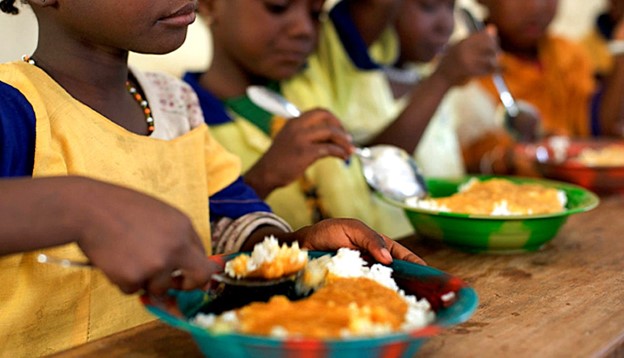
“For many children, the school becomes the only place where they receive a nutritious meal,” Sello said.
She said schools could also be used to monitor children’s growth and identify those who were underweight.
“School is also the best place to do regular growth monitoring and identify underweight children early. For this, a stronger collaboration between local clinics and schools is needed,” she said.
Sello said the Child Support Grant of R580 was below the food poverty line of R855 and called for child nutrition to be treated as an investment.
“I hope policymakers will view child nutrition as a long-term investment rather than simply a social expenditure,” she said. “This means continuing to strengthen social protection, and reviewing the adequacy of the Child Support Grant in relation to the cost of a basic nutritious diet. We need to be protecting and expanding school nutrition programmes, and improving coordination between the health, education and social development sectors.”
“Too often, nutrition surveillance focuses on younger children, yet our findings show that early grade learners remain vulnerable,” Sello said.
“Ensuring that every child has access to adequate nutrition reduces hunger. It also gives every child the opportunity to reach their full potential.”
INSIDE EDUCATION