
By Charmaine Ndlela
The Soshanguve Engineering School of Specialisation has partnered with the Shoprite Foundation to launch a practical agriculture project aimed at equipping students with essential farming and sustainability skills.
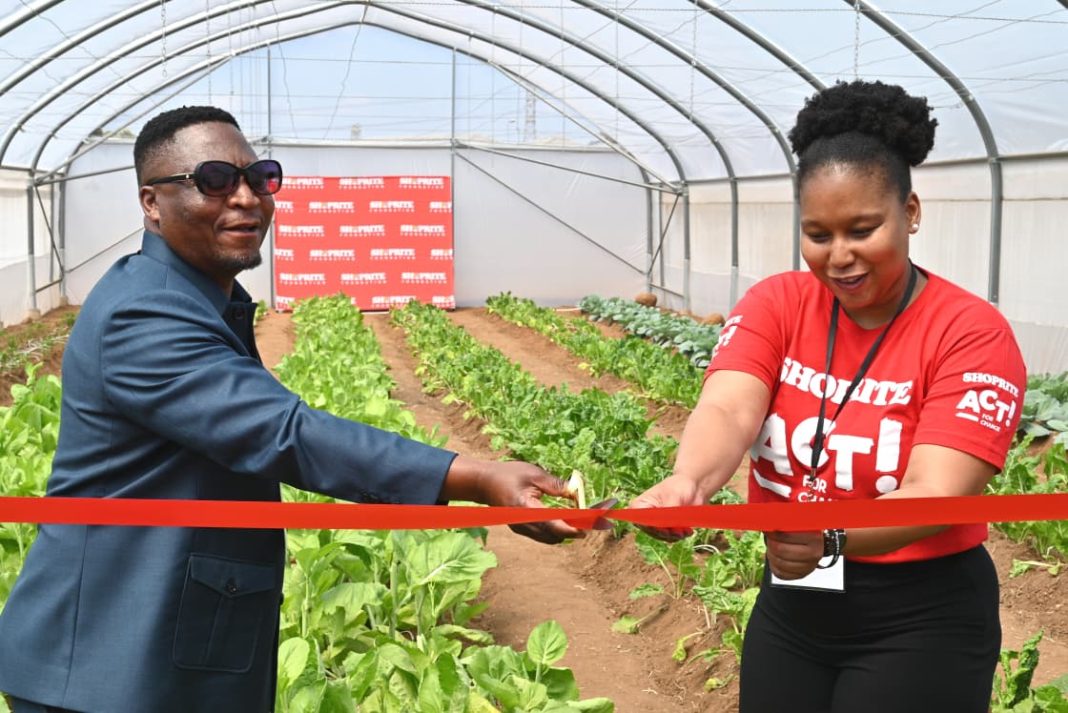
The new school vegetable garden features two horticultural tunnels and a sustainable borehole, offering Grade 9 students a hands-on learning environment for agricultural science and sustainable farming.
The facilities were officially launched at the school on Tuesday.
ALSO READ: NYDA, NEF commit R100m to fund youth-owned businesses
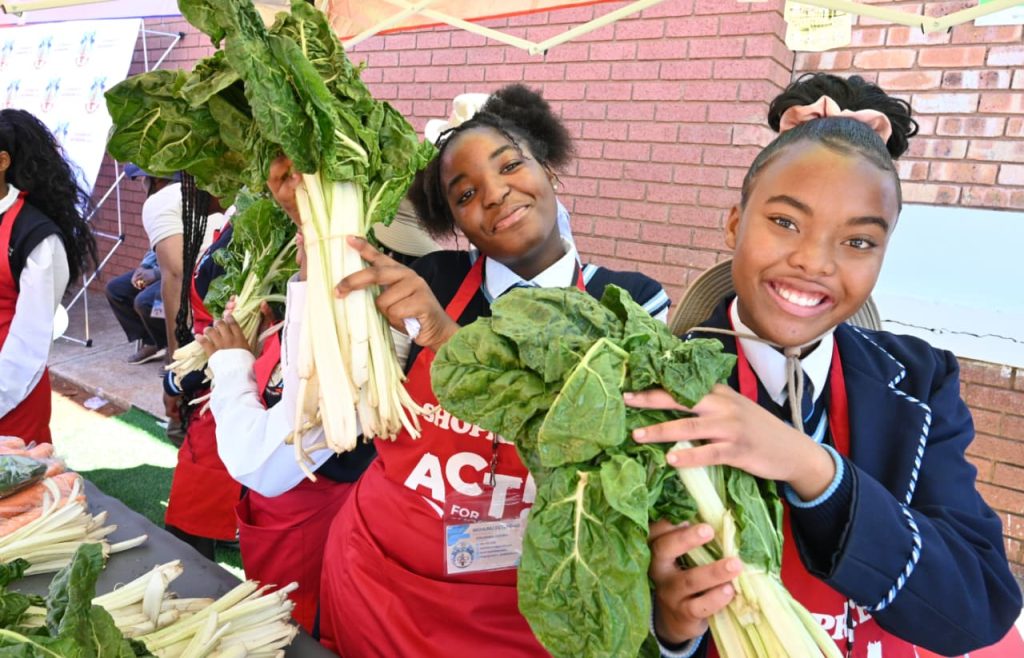
Forty Grade 9 learners will use the tunnels for training in soil science, crop rotation, compost production, irrigation, and pest and weed control.
The Soshanguve expansion follows Shoprite Foundation’s first horticultural tunnel project at Oosrand Commerce and Entrepreneurship School of Specialisation, where about 5 000 units of produce have been harvested over the past two years for the school’s feeding scheme and sale to the surrounding community. More than 1 700 learners have received agricultural training.
MarketPlace Academy, the Foundation’s implementation partner, also trains educators as facilitators and supports the addition of an accredited plant production part-qualification to the Curriculum and Assessment Policy Statement (CAPS), giving learners the opportunity to leave school with practical skills in addition to their matric qualification
“Learners already study agriculture at school, but an accredited plant production part-qualification also requires practical work,” CEO of MarketPlace Academy Chantyl Mulder said.
“The tunnels give them a place to do that work. That means they can leave school with matric and a recognised qualification that gives them a first step into the industry.”
School principal Mashiane Tladi said the project represents a new chapter for a school that has built its reputation around engineering, automotive studies and innovation.
Speaking at the launch, Tladi highlighted the transformation of the school over the years, saying it had gone from recording a 35% matric pass rate in 2017 to achieving a 100% pass rate in 2025.
He said the school had also improved its bachelor pass rate from 47% to 67%.
“[S]teadily, together, we are going to make sure that we lift the flag,” Tladi said.
He said learners were also participating in engineering, STEM, coding and robotics projects.
ALSO READ: Denel apprentices demand unpaid stipends as NSF weighs alternative payment process
The school has also produced projects that have competed internationally, including a solar-powered train and an electric vehicle.
He said learners had travelled to China and other countries for competitions and partnerships, while others were preparing for upcoming STEM competitions.
“We are a willing team. Excellence is our motto,” he said.
Tladi said the horticultural tunnels could help change how learners and the community view agriculture.
He said the school wanted the project to grow beyond simply producing vegetables for its own use.
“We are aiming big. We are looking forward to growing this vegetable garden to an extent that it also benefits not only the school but also the community.”
He said the school hoped learners would eventually see agriculture as an entrepreneurial opportunity.
“We are looking forward to expanding to other vegetable gardens so that our learners can also use this as an opportunity for entrepreneurship and take it as a business,” he said.
He said agriculture could also become a career option for learners who had previously not considered entering the sector.
The school hopes to share the skills and technology developed through the project with neighbouring schools.
Shoprite Foundation director Maude Modise said the initiative was designed to give learners practical skills that could help them beyond school.
She said young people needed exposure to skills that could give them greater opportunities in the job market, while also opening doors to entrepreneurship.
“Gone are the days where we only knew that we wanted to go into higher education. These days one needs to hone in on practical skills that actually give you more leverage in terms of applying for the job market,” Modise said.
Modise said the project could serve three purposes: skills development, supporting school feeding and creating fundraising opportunities.
“You cannot always rely on donors to come and give you money. This is a way for the school to actually generate its own funds,” she said.
The vegetables grown by learners could also supplement the school feeding programme.
Modise said the practical experience was important because learners could see the entire process of food production rather than only learning about it in a classroom.
“You learn in class that this is how you grow a crop. You plant it, you water it, and then you harvest. But the practical implication of it is actually a totally different way,” she said.
A Grade 10 learner, Puleng Mchunu, said that the project has already changed the way she thinks about food production and waste.
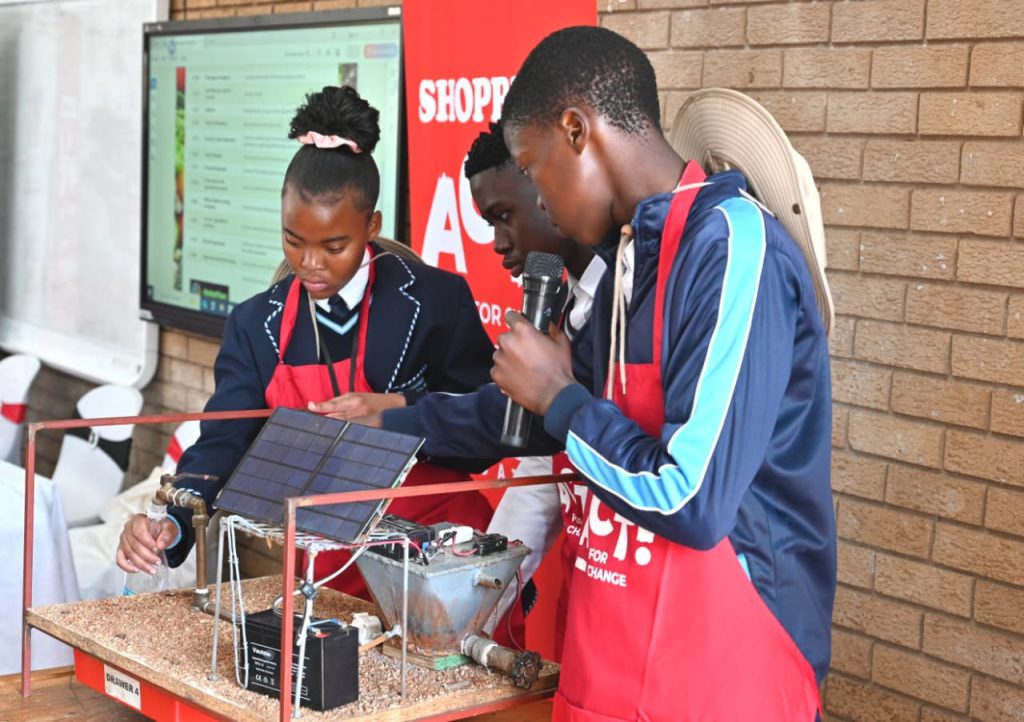
Mchunu said learners had been exploring ways of collecting vegetables and bottled water while reducing waste.
She said the garden could also help the school reduce its reliance on buying vegetables for its cafeteria.
“What I’ve learned is that there are many ways we can take care of our vegetables. Growing our vegetables can help us decrease waste from school,” Mchunu said.
ALSO READ: Gwarube: education reform must outlast political battles
She said the project showed learners that agriculture could be used to solve practical problems within the school and community.
“At the engineering school, what we need is a manual to solve problems. So we are finding this as a way to solve food problems and stop wasting most of the income from our food,” she said.
While Mchunu was still unsure whether she would pursue agriculture as a career after matric, she said the experience had made her more open to the possibility.
“When I went to the greenhouse, I saw food. It was amazing. You just feel calm and relaxed, so I might consider it,” she said.