Home Blog

Higher Education Portfolio Committee Halts CETA board’s R4 Million planned field trip on its tracks

Johnathan Paoli

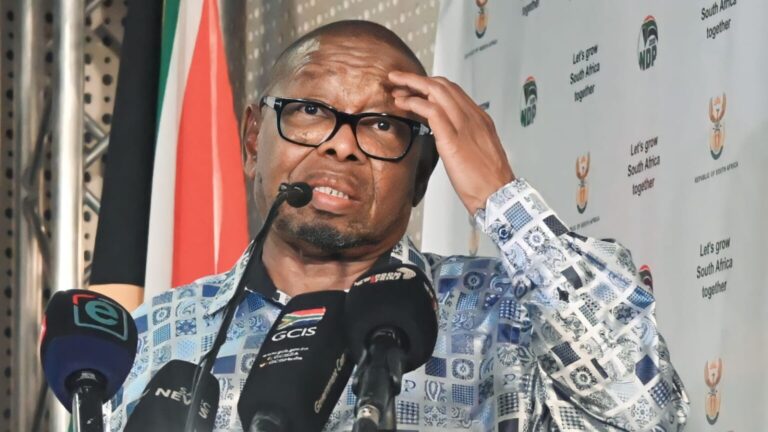
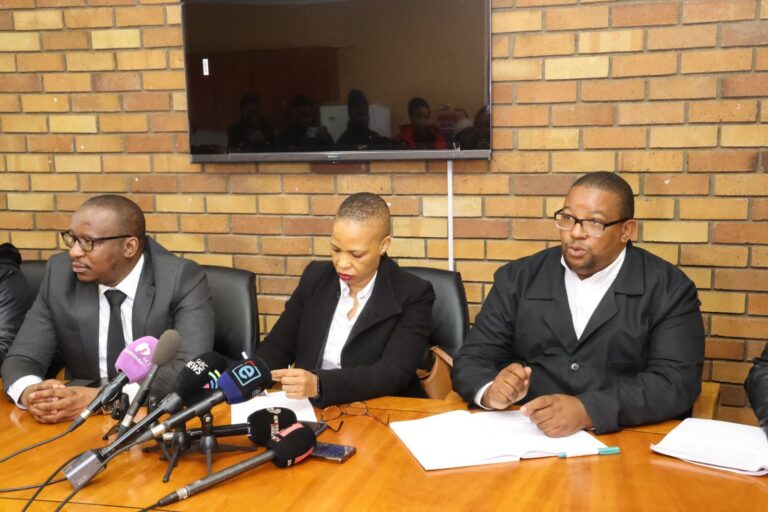
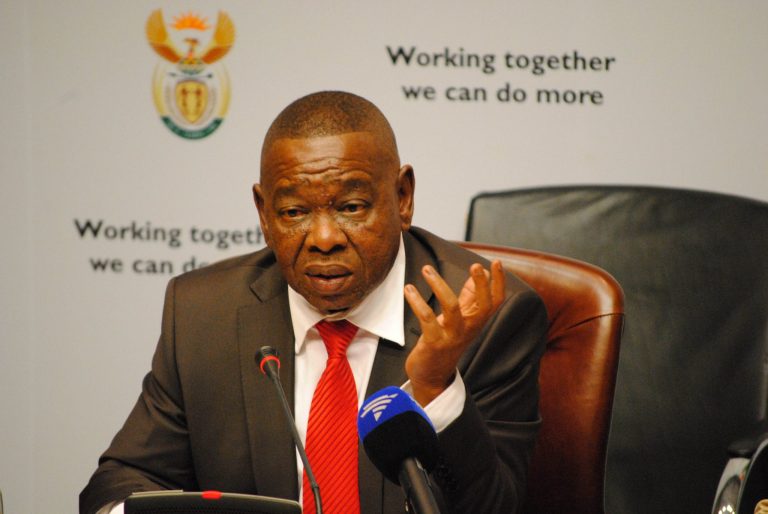
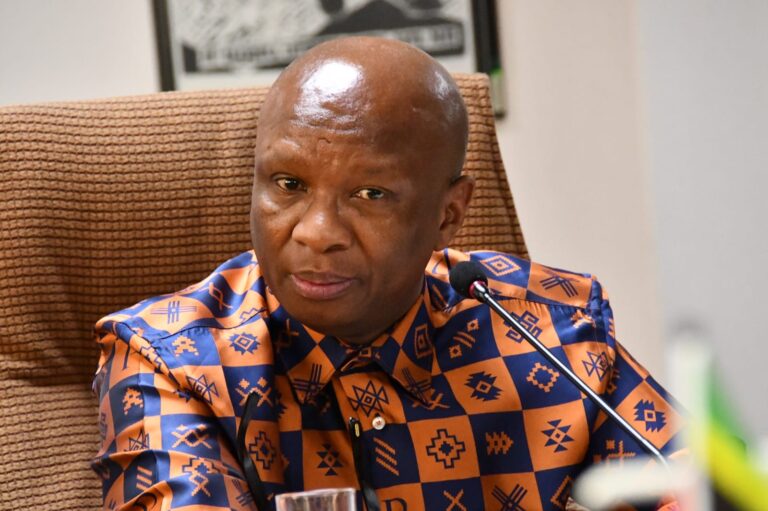
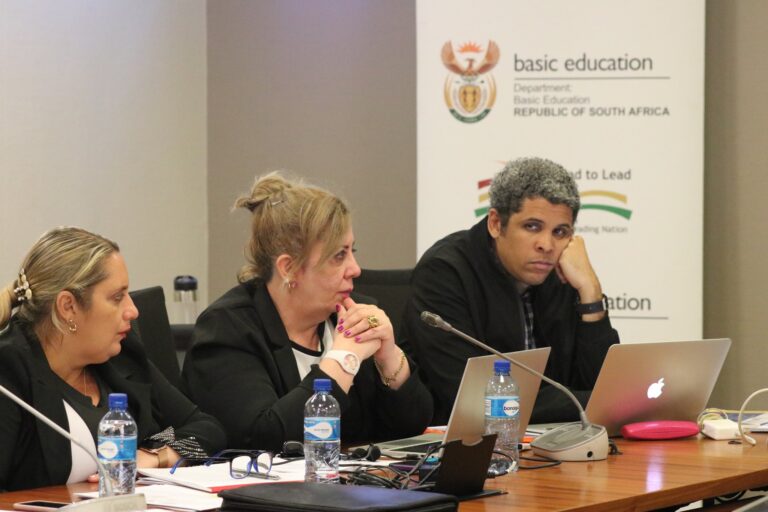
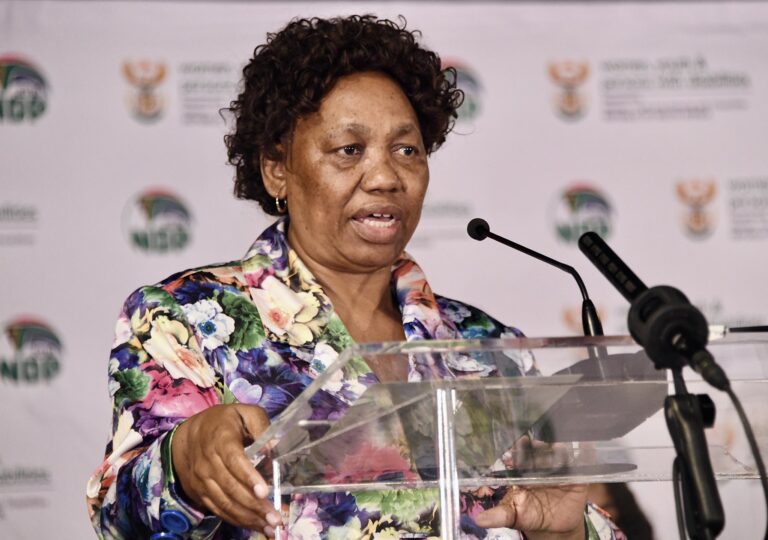
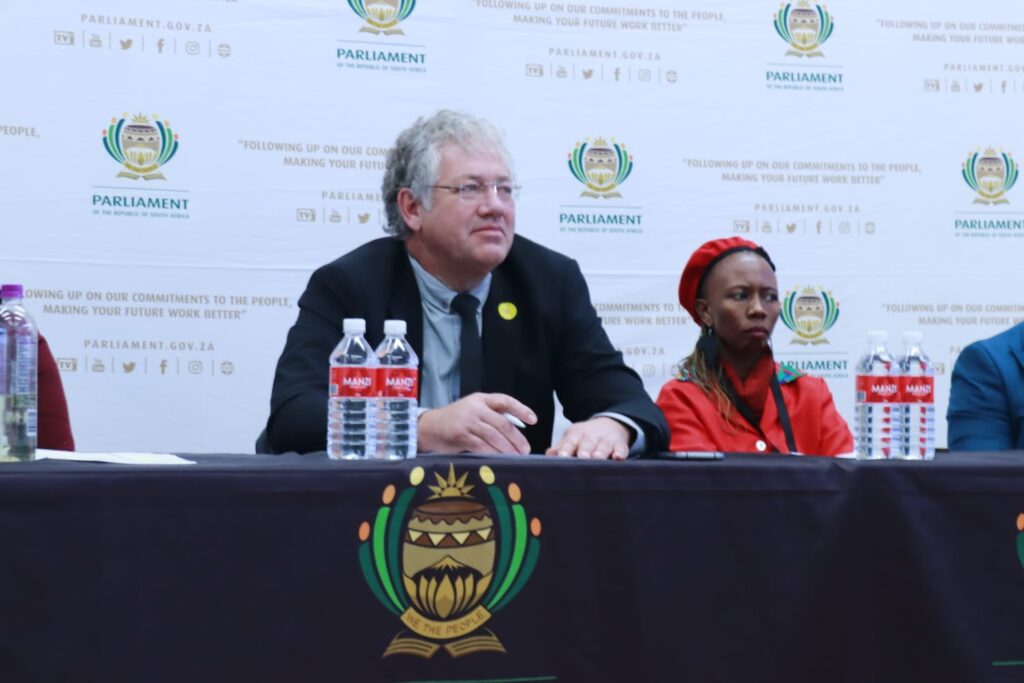
THE Portfolio Committee on Higher Education and Training said it is outraged at the persistent denial of governance irregularities and attempted justification for controversial “bench-marking” trip by the Construction, Education and Training Authority (CETA)’s Chief Executive Officer, Malusi Shezi, who also claims their appearance before the committee was based on unfounded rumours.

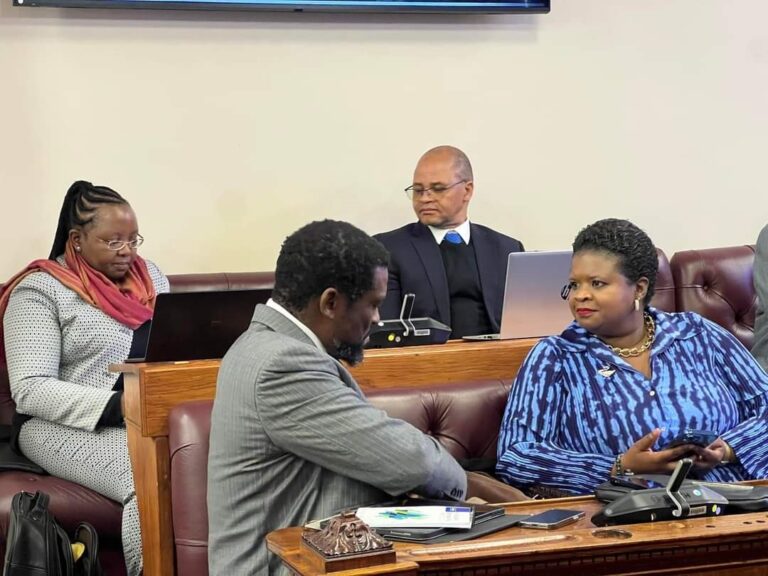
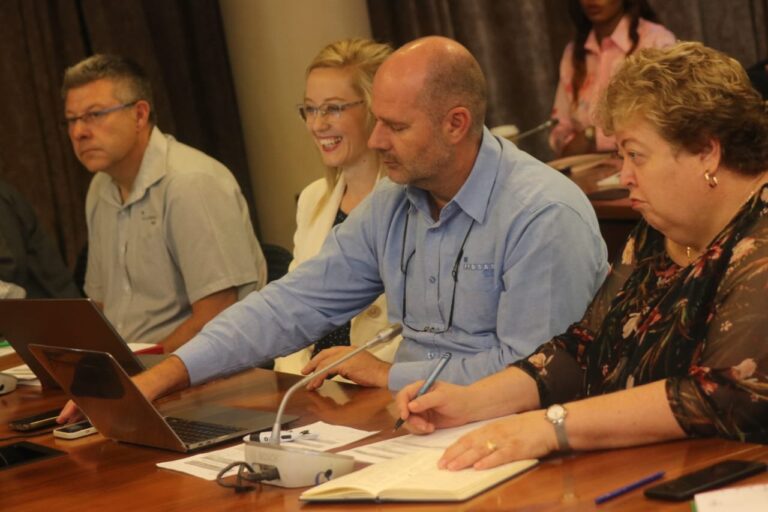
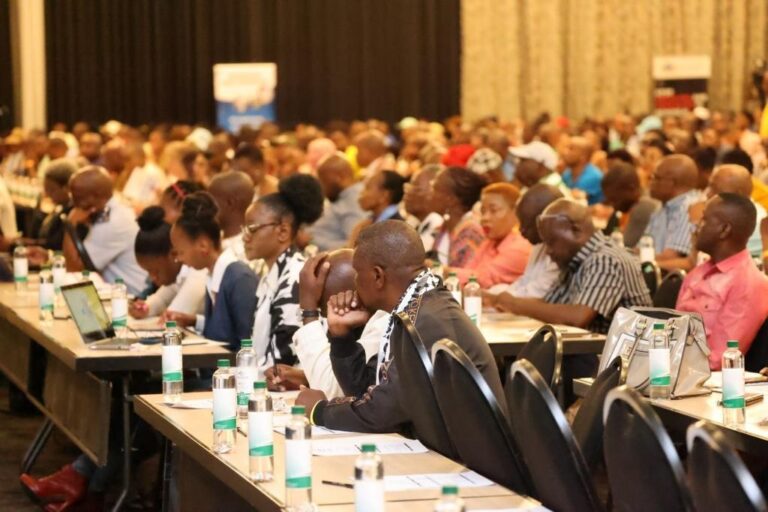
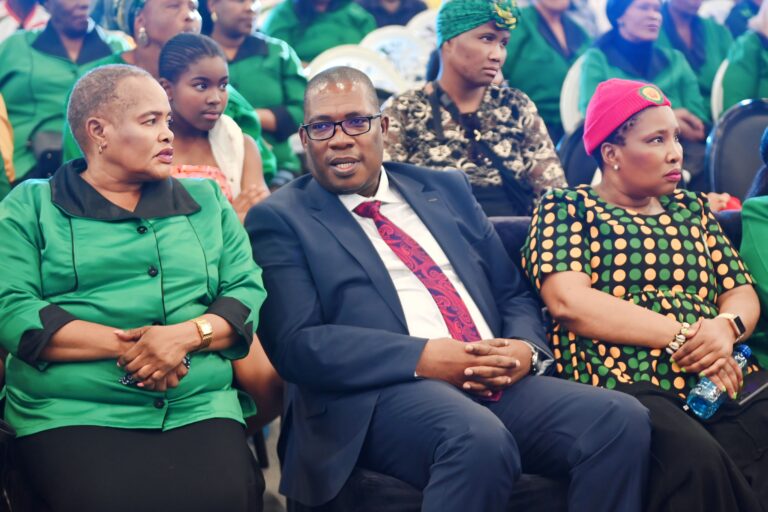
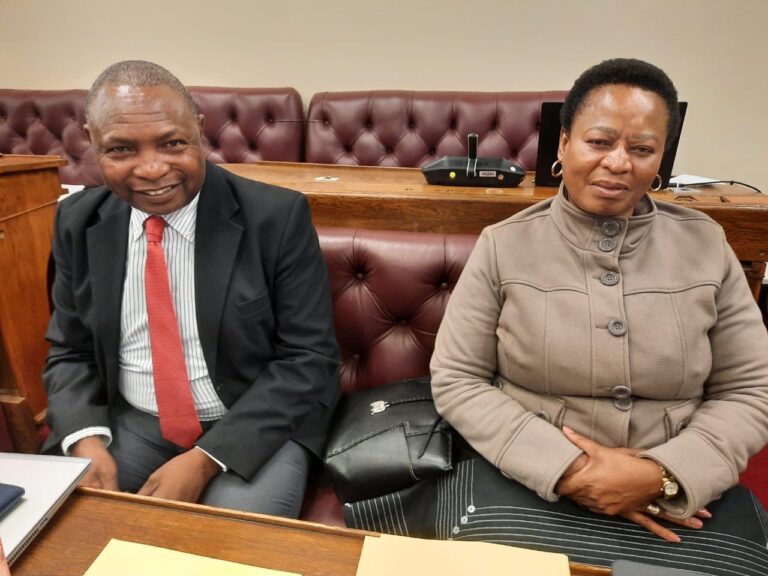
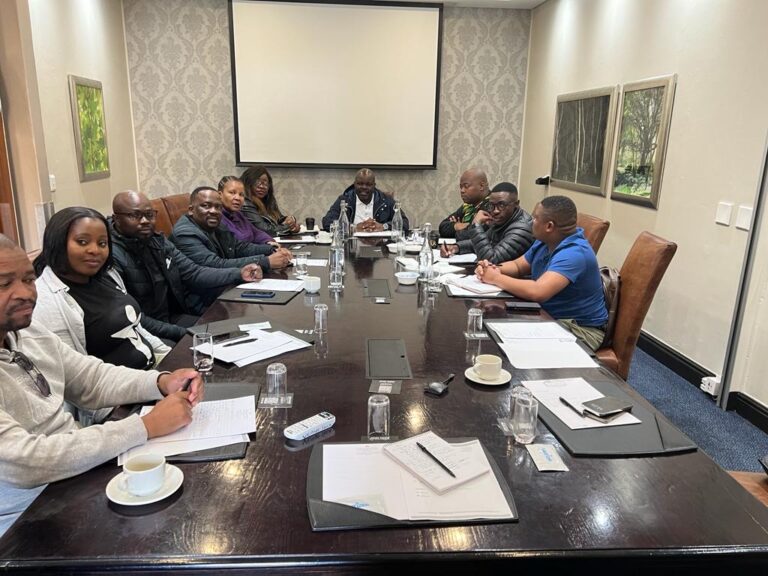
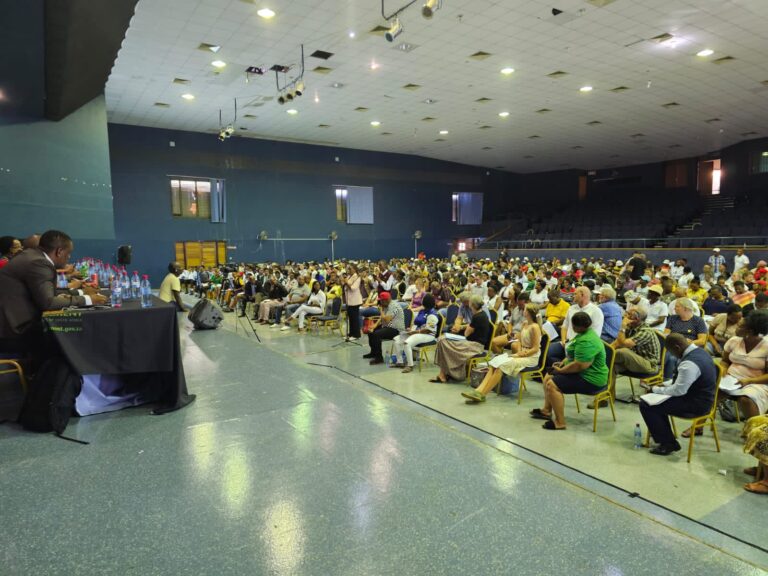
Officials from CETA, the Services Sector, Education and Training Authority (SSETA) and the National Education, Health and Allied Workers Union (NEHAWU) appeared before the committee on Friday, to account for issues including audit action plans to rectify the findings of the 2022/23 audit, employee wellness and allegations of corruption and governance irregularities.

Shezi was joined by Acting Chief Financial Office (CFO) Sanele Radebe, Accounting member of the AA Roy Mnisi and Executive Officer for Strategic Support, Mabo Thobela.

The CETA representatives delivered a report to the committee, justifying the “bench-marking” trip as crucially part of its Research and Innovation focus area and denied the allegations of corruption saying there is no substance to them.

The trip, punted as a study of best practices by board members in order to improve operations and sustainability at the institution, was reportedly expected to last 24 days at a cost of R4 million, with an additional subsistence and travel allowance of approximately R250 000.

The report indicated that the trip was postponed and not cancelled, as CETA was still planning to share strategic intent with the Executive Authority.

Shezi, said the allegations of corruption and governance irregularities, were the product of a media strategy to tarnish the reputation of the institution’s Accounting Authority (AA) and his own office.

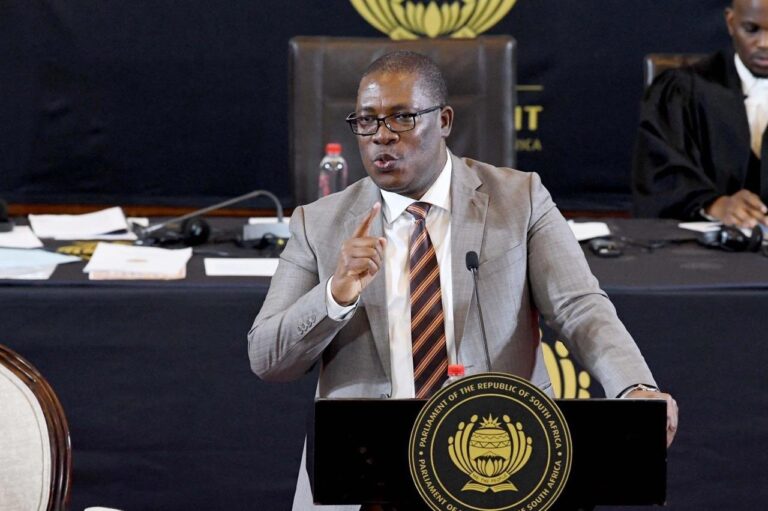
However, Committee Chair Tebogo Letsie said he found the comments from the CETA executive distasteful and disrespectful, considering it was the committee’s mandate to hold those who use public funds accountable.

Letsie criticised the planned trip, and said the committee found it constitutes wasteful expenditure, in light of the fact that the present board’s time of office comes to an end on 31 March next year, asking who their newly-acquired skills would serve.

“It looks more like a holiday, that must not happen,” he said.

The chair said the countries targeted for bench-marking were not known for best practices in the construction sector, and those include Kenya, Egypt, the UK, Dubai and Saudi Arabia.

“We are going to write officially to the Minister of Higher Education and Training and the Director-General that the CETA bench-marking trip must be cancelled as the terms of the board are coming to an end,” he said.

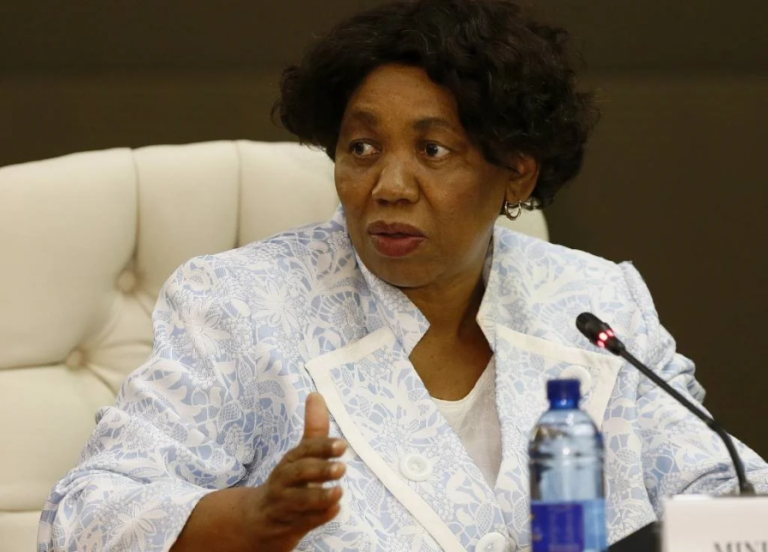
Deputy Minister of Higher Education Mimmy Gondwe commended the Portfolio Committee for cancelling the trip.

“We are not in a favourable economic climate as a country, and what kind of message are our entities saying by taking such a trip?,” asked Gondwe.

Further, Letsie said the committee remained concerned that the SSETA had received a qualified audit opinion for four consecutive years since the 2018/19 financial year, while governance challenges had resulted in CETA being placed under administration in 2011 and 2020, with subsequent dissolution of the relevant boards.

The committee recommended that the DG responsible for CETAs should face the consequences if they were unable to deal with the problems under their portfolio.

Meanwhile, NEHAWU representative and Secretary for the union’s CETA branch, Olebogeng Tsitsi, told the committee of widespread bullying and victimisation saying she even felt scared for criticising the CEO.

“I would like it put on record, us being here as shop stewards, we might find our suspension letters on Monday,” she said.

Tsitsi said at CETA, the relationship between the board, NEHAWU and management is non-existent and that a recognition agreement which was signed in 2019, the CEO did not follow.

She said Shezi was running an “apartheid-like” institution involving intimidation, bullying of staff, harassment and changing policies as he saw fit.

Earlier in the month, the union welcomed the suspension of Shezi, following allegations of interference and misconduct by the board relating to procurement processes at the institution.

In closing, Letsie called for an instant pause in the issuing of adverts calling for nominations for new board members until the current board provides the committee with reports on current governance challenges.

The chair demanded a list of all senior executives including their professional history dating back ten years.

INSIDE EDUCATION

Joburg MMC for Public Safety leads initiative to address menstrual health issues in schools 

By Johannah Malogadihlare

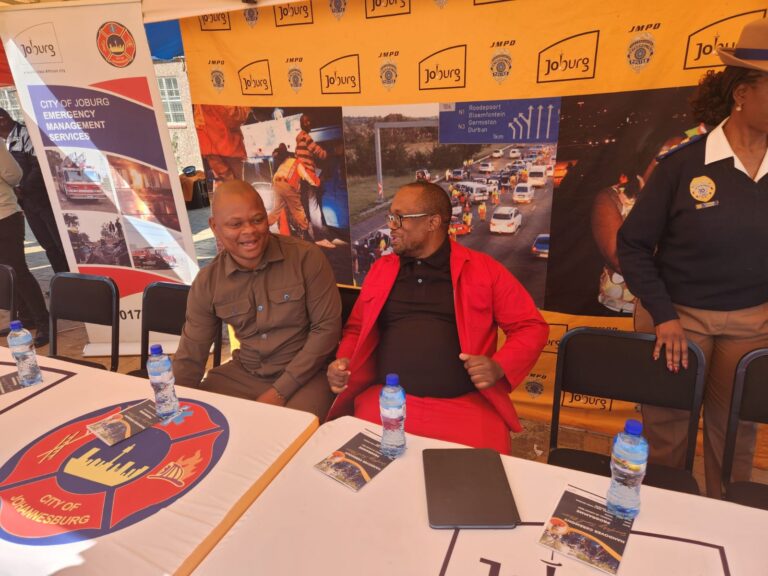
Member of the Mayoral Committee (MMC) for Public Safety in the City of Joburg, Mgcini Tshwaku led an outreach programme on Tuesday where he celebrated Women’s Month by joining hands with various departments to distribute sanitary towels to Aurora Girls High School learners in Soweto.

The pupils received education on matters affecting their lifestyle such as the dangers of drug abuse, menstrual health and how to get full support and access to  affordable sanitary towels.

Stakeholders also mentioned that girls need to be educated about menstrual health and to get full support on their menstrual health.

Tshwaku encouraged girls to raise their voices and to gain interest in politics, drawing inspiration from prominent female figures in the struggle, such as Mama Winnie Madikizela-Mandela.

The MMC urged pupils to speak out against any kind of abuse they may experience either at home or at school, and that the Public Safety Department is always reading to tackle such matters.

“I urge girls to unite and advocate for their rights, as they are most aware of the issues that affect them”, said Tshwaku.

Addressing the importance of education in young girls, the MMC mentioned that every girl who finds it difficult to access sanity towels should be assisted to prevent women from losing their economic independence and being stuck in  abusive relationships.

INSIDE EDUCATION

Progress on Student Accommodation, But More Needs To Be Done – NSFAS administrator

Johnathan Paoli

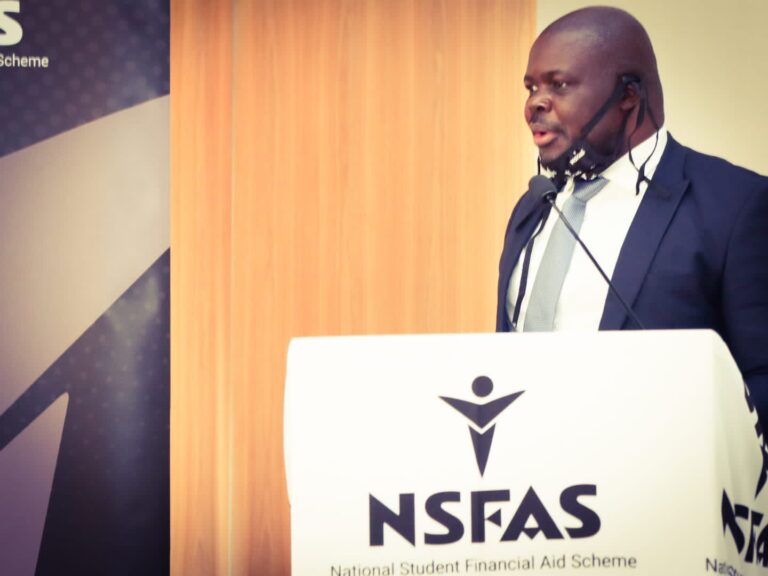
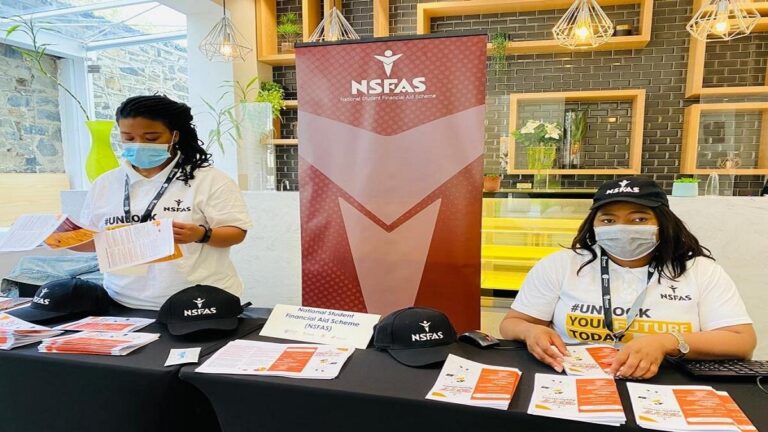
THE National Student Financial Aid Scheme (NSFAS) has announced that progress has been made in dealing with the challenges surrounding private student accommodation in the post-school education sector, but that “unavoidable risks” remained which required further work.

Administrator for the scheme, Sithembiso Nomvalo, presented a report to the Portfolio Committee on Higher Education and Training on Tuesday on the progress made in resolving payments to private accommodation and resolving outstanding student appeals.

Nomvalo said that thus far, NSFAS has made payments totaling R1.6 billion in private accommodation at the pilot institutions, with R311 million to TVET Colleges and R1.297 billion to university accommodation providers.

He said that some of the private accommodations are not offering suitable housing, especially in rural areas and some students enter unfavourable contracts with landlords.

Nomvalo confirmed that the scheme had received 94 469 appeals and that 63% have been resolved, while 35 226 remain unresolved, but are expected to be finalised by the first week of September.

He said that he was in the process of initiating a review of the NSFAS organogram to ensure roles and responsibilities are aligned with organisational and strategic objectives.

In addition, he said NSFAS was finalising filling critical positions within the scheme, such as Chief Financial Officer and Chief Internal Auditor.

The committee welcomed the report on the progress, including the setting up of task teams for engagements around student accommodation with landlords being part of the process across the country in order to mitigate against possible risk of instability.

However, Committee chair Tebogo Letsie, while welcoming the report, criticised the failures of the scheme in dealing with the challenges.

Letsie said there was a need for a skills audit at the scheme that will assist in dealing with identifying unsuitable employees that contribute to creating a chain reaction that ultimately inconveniences students.

He said the scheme needs to ensure that it strengthens its ICT systems as a matter of urgency to curb student data falling into the wrong hands.

Letsie welcomed the admission by Nomvalo that NSFAS does not possess credible student data and that it was vulnerable to cyber-attacks.

More importantly, the chair called for a forensic investigation on the National Treasury funds that were given to the scheme to improve its ICT systems that were never improved, with criminal charges being brought against any implicated in the embezzlement of funds.

He said it was apparent the scheme is plagued by the inappropriate use of funds, which required investigating and correcting.

“NSFAS cannot claim not having enough money on its administrative budget to hire staff to solve problems of students while at the same time renting a building at a cost of around R2 million a month,” Letsie said.

He called for an intensification of oversight, and keeping the scheme accountable during its path to recovery.

“We are going to conduct oversight over NSFAS until things turn around and going forward, the committee will need to be provided with a monthly report on what the scheme is doing with appeals, payment of student accommodation and allowances,” the chair said.

Earlier in the year, Finance minister Enoch Godongwana disclosed the 2024 budget allocation for education, with R53.6 billion being earmarked for NSFAS alone, a portion of which was specifically set aside to assist in the development of ICT systems.

INSIDE EDUCATION  

Parents demand expulsion of learner captured beating another on video

By Alicia Mmashakana

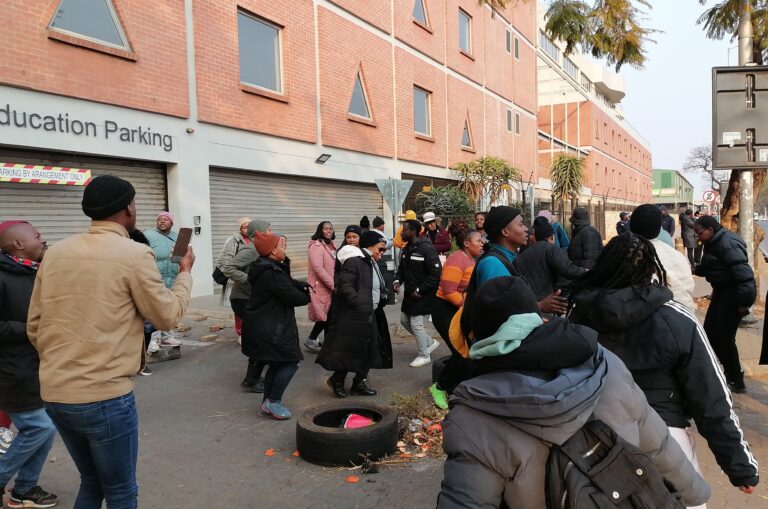
Chaos ensued as parents embarked on protest action at the Verulam Secondary in Durban after videos surfaced on social media showing a girl learner assaulting another at the school.

The angry parents are calling for the expulsion of the learner who was shown beating up the hapless girl on the video.

Provincial Education Department spokesperson Muzi Mahlambi said authorities were deeply disturbed by the video and urged learners, parents and educators to report any incidents of bullying or violence to school authorities without delay.

“We are deeply disturbed by the video that is circulating on social media depicting a learner from Verulam Secondary School bullying and assaulting another girl learner. We are investigating the matter through the circuit manager, we are definitely going to take disciplinary actions,” Mahlambi said.

The head of the department Nkosinathi Ngcobo called on all stakeholders to work together to create a safe and nurturing environment where all learners can thrive.

Reports show that every year, more than 3.2 million students in South Africa are bullied, leaving parents distraught.

Educators, principals, and members of the governing body are aware of the issues in their schools, but they are puzzled on how to address them, the report said.

According to statistics, students are responsible for 90% of all bullying in schools.

An important study found that the school environment, or at least students’ feelings about it, was linked to bullying behaviour.

INSIDE EDUCATION

Basic Education Minister calls for closer scrutiny in the development of schooling

Johnathan Paoli

Basic Education Minister Siviwe Gwarube has announced her vision of transforming foundational education and concentrating on quality and proficiency when it comes to early, mid and secondary learners.

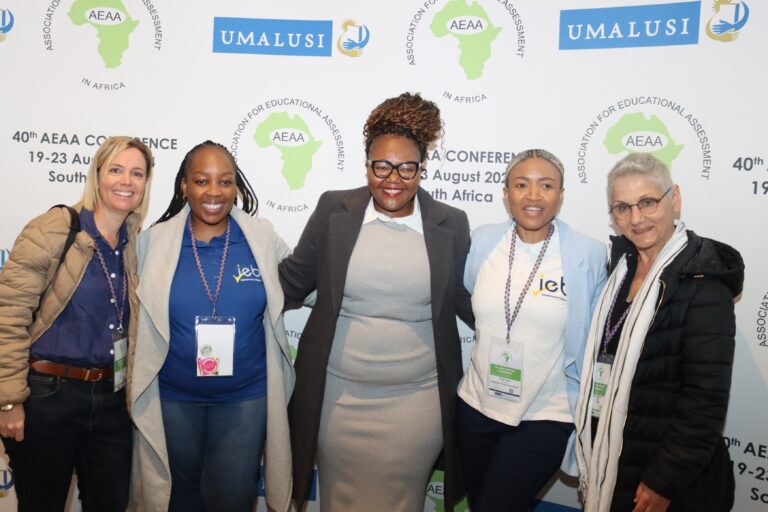
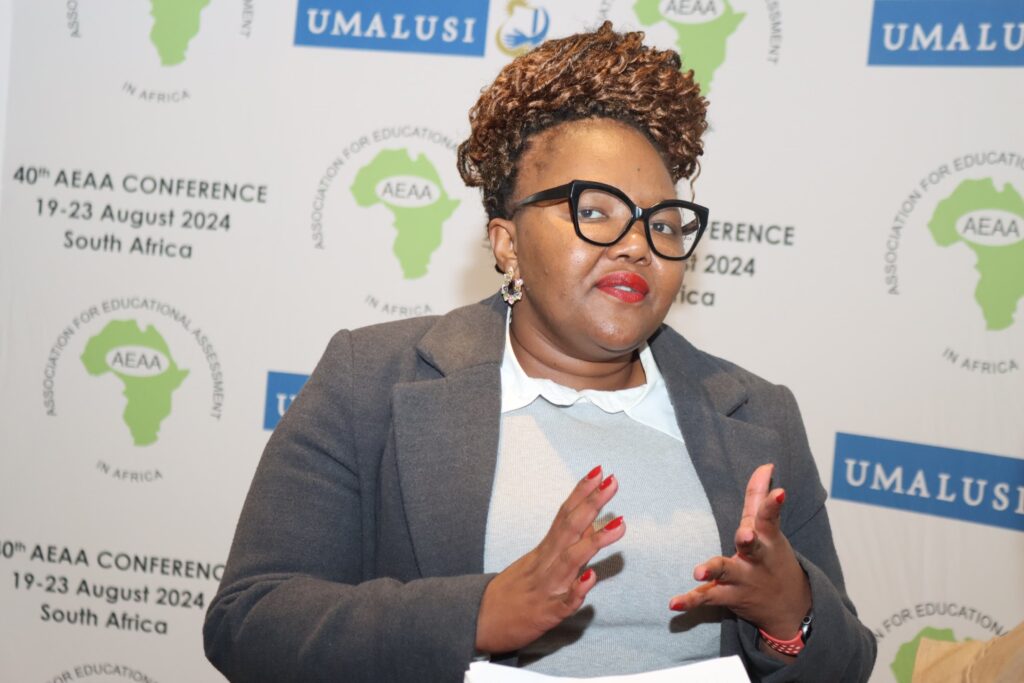
Gwarube delivered an address at the 40th Association for Educational Assessment in Africa (AEAA) conference at the Century City Conference Centre and Hotel in Cape Town, which aimed to bring together examination councils, assessment bodies, researchers, policymakers, educators, research institutions and government officials, among others, to engage, exchange and share their experiences, research Endings; and discuss topical issues germane to access to, and success in, postgraduate studies.

She said the South African schooling system is extremely diverse and complex; with 13.4 million learners, 460 000 teachers, over 24 000 schools and 12 official languages.

“With so many learners in our system, making sure and looking at the standards is very important,” Gwarube said, pointing out that the greater concern is ensuring the quality of outcomes throughout the schooling system.

Gwarube confirmed the implementation of an evaluation of learners in Grade 3, 6 and 9; coupled with a similar appraisal of school functionality and provincial support.

She said there was a fundamental need to obsess over outcomes and the impact of that educational product on the success of learners completing 13 years of schooling

“Make sure learners can take pride not only in what they have attained, but also in order to facilitate the opening of global opportunities,” she said.

Gwarube said the ‘educational’ product is indicative of Basic Education requiring a shift of thought, from being a social department to being considered part of the economic cluster.

“That shift in thinking is important, because we need to start thinking about how we maximise the product in order for learners to unlock economic opportunities, particularly for countries like SA with its legacies of inequality with 7 out of ten young people being unemployed,” she said.

The South African educational system was being evaluated in terms of 6 social justice indicators: access, equity, quality, proficiency, redress and ‘improsivity”.

Gwarube called for more to be done, particularly in terms of quality and proficiency, and not just access, in light of the achievements since the dawn of the democratic dispensation.

“How do we re-imagine educational assessment? Curriculum strengthening processes involve the content of what gets taught, the teaching and learning, and the assessment and professional support schools receive,” she said.

She said that very little focus was placed on skills, competencies, attitudes, values and character development of learners, and that this needed to change.

The minister called for the strengthening of the curriculum and said it was needed in order to shift the priority to focusing on a holistic development of the learner, to better equip the youth with the skills to face tomorrow.

INSIDE EDUCATION

A high-level insider’s view on the performance or lack of it among South African leaders since the dawn of a newera in 1994

0

Malegapuru Makgoba

I have known and worked with Dr Sibongiseni Maxwell Dhlomo, the former Deputy Minister of Health, since 1985, when he was a final-year medical student at the Nelson Rolihlahla School of Medicine, UKZN.

We became friends because he often drove me to my residence after school. He was part of a group of young students
including Drs Steve Komati, now a physician and Victor Ramathesela, a sports medicine specialist who is also a DJ and a
television commentator.

Also deserving of mention are Aquina Thulare, a senior official responsible for the management of the NHI, Prof Maphoshane Nchabeleng who is head and professor of Microbiology at Sefako Makgatho Health Sciences University and the late Tshimbiluni Mathivha who was a professor of Cardiology at the University of Pretoria.

Bongani Mawethu Mayosi was a Professor of Medicine at UCT and I often tutored them and gave them extra clinical tuition over weekends at the King Edward VIII Hospital. My goal was to encourage these medical graduates to take postgraduate research studies after qualifying rather than taking the option of private practice, which was very popular at the time.

Bongani was much younger and was behind the Sibongiseni Group at medical school. Happily, they all took my advice and are playing important roles within the health system.

Dr Dhlomo was arrested and detained over Christmas in 1985 and his father often visited my office to share his pain and to search for his whereabouts.

During these visits he was often accompanied by Nozizwe Charlotte Madlala-Routledge, the chairperson of the Natal
Organisation of Women (NOW).

He was sentenced to imprisonment on Robben Island but we maintained contact. He continued studying psychology and
sociology while on the island, completing a BA degree through UNISA and I provided him support.

I then received a large case document from Gay Johnson MacDougall, a well-known Human Rights lawyer at the US
Congress, and was requested to provide a character reference for him, which I gladly did.

After his release, Sibongiseni Dhlomo served as special advisor to the vice-chancellor and as a member of the Interim
Executive Committee at the establishment of UKZN in 2004, and we continued our working relationship when he joined the KZN Department of Health, later becoming an MEC for Health and chaired the Health Portfolio Committee in Parliament.

I worked with him as Health Ombud when he was Deputy Minister of Health. Dr Dhlomo is a coordinator, he is gentle, caring and passionate about South Africa’s success but in particular is dedicated to South Africa’s national health system and its quality.

He is an ardent advocate for the National Health Insurance Bill. Dr Dhlomo understood the political dynamics and culture of KZN better than I ever could.

I also served with Minister Pravin Jamnadas Gordhan, a shaper in Belbin’s team role categorisation. Gordhan is a Minister with a penchant for interference and at times undermines the people he appoints, so much so that at times he is referred to as minister of ‘Command and Control’ (notably by Ghaleb Cachalia of the Democratic Alliance (DA).

Gordhan was the Minister of Public Enterprises. I initially chaired the Social, Ethics and Sustainability Committee of the
Eskom Board chaired by Dr Jabu Mabuza. I was subsequently appointed as interim chairperson of the Eskom Board when Jabu Mabuza resigned, and he later passed away.

Our mandate was to stop the widespread looting of state capture and set up principles of good corporate governance at
Eskom. I served a full term on the Board and the Minister requested me to continue serving while he reviewed – rather than replaced – the Board.

For 18 months this review continued, but it was never finalised despite several reminders, requests and empty promises that he would address the matter urgently.

However, the Minister kept ducking and diving; he was as slippery as an eel. However, much later he did confirm that he had ‘done what he could’ in complementing the board.

He then claimed that the matter was now ‘out of his hands’. Was it stuck at the ANC Cadre Deployment Committee, asked Radio 702’s Clement Manyathela.

But Gordhan would not be drawn in and would not say. We respected each other but for some unexplained reason, there
seemed to be a trust deficit between us.

I served in the Eskom Board that prepared Eskom’s presentation to the Zondo Commission on state capture; a board selection committee that interviewed and recommended Andre de Ruyter’s appointment as GCE; and a Board that initiated the implementation of the unbundling (‘divisionalisation’) of Eskom into three divisions, namely Transmission, Distribution and Generation as required by government.

But the process was delayed by the Department of Public Enterprises and the Minister, who dragged their heels in appointing the independent board of the Transmission Company.

As Anton Eberhard explains in his article headed ‘Ministers have let Ramaphosa down on the unbundling of Eskom’ in
BusinessDay of 16 January 2023, the Board that under Ms Mandy Rambaros led the Eskom Transition Programme, which is now entrenched.

And when the ambassadors of the UK, USA and the EU, visited South Africa to consider and finalise the USD8.5 billion
financing for approval at COP26, they needed to know and confirm that the Eskom Board supported this venture.
The Board did indeed support this programme fully. The same Board had reported several high-level state capture-related cases of corruption and looting to the SAPS and courts without much progress.

The same Board had recovered some looted monies from a few companies such as ASEA Brown Boveri (ABB). This was the same Board that worked jointly with the NPA and SIU; a Board that initiated the Eskom Skills Audit and Organisational Culture Change with Ms. Elsie Pule, executive HR; a Board that together with Phillip Dukashe, executive generation; Jan Oberholzer, chief operating officer; and Calib Cassim, chief financial officer, identified the three troublesome power stations, namely Duvha, Majuba and Thuthuka, for focused external supervision and support.

The same Board also reversed a major decision on the Econ oil tender, saving Eskom approximately R10b. I served on a Board that provided the Minister and the President with a comprehensive response to the Zondo Commission’s report.
The Board I served refused to approve the Karpowership tender for its 20-year term and lack of indemnity; I served on a Board that jointly, with the executive, prepared the basis for the so-called Presidential Energy Crisis Action Plan to ‘fix Eskom’.

The plan was prepared in conjunction with a small team of experts in the electricity field. The team of experts was chaired by Dr Bonang Mohale, President of BUSA, and Prof Anton Eberhard and Chris Yellen were members of the team.
This plan had been in the making since Andre de Ruyter was appointed GCE of Eskom on 6 January 2020 and was now well defined. The plan was initially shelved and disregarded by the Minister of Public Enterprises over time, only to be resuscitated when the disquiet, pressure and crisis of load shedding was mounting.

The plan had been modified and refined over this period but essentially it retained the basic elements of ‘additional megawatt capacity and fixing the Eskom plant’.

The load shedding crisis has gone on for too long. It not only impacts on the wellbeing and lives of South Africans but also on the economy and development of the country. It is a crippling crisis.

It is common cause that the Eskom coal fleet was poorly maintained for a long time. Equally, we know that there was a period when Eskom Executives were instructed to keep the lights on at all costs i.e., running the units hard beyond their capacities.

The units are completely run down, becoming unpredictable and unreliable with multiple repeated breakdowns. That is the reality staring at Eskom’s executive management.

No amount of political shouting, screaming or intimidation can correct this. These machines are simply following the laws of physics, mechanics and not politics.

Politics and ideology will never resolve the electricity crisis. The ANC-led government has over 15 years failed abysmally to resolve the Eskom crisis using politics and ideology.

How many times or how long must/should you fail before you recognise that the method or approach does not work. Some of the ANC politicians have very little understanding of the complexity of the electricity problem and its solution.
The level of understanding is underscored by timeframes for stopping load shedding. Some government ministers claim to be able to stop load shedding in six months; others at the end of the year; yet others in two years and others have no clue.

For a long time, the Board of Eskom advised the Minister that it was impossible to expect the current Eskom fleet to attain a 75% energy availability factor (EAF). However, the Minister would not budge, and despite this advice, he insisted that the 75% EAF must be achieved.

We were later promised an EAF of 60% by 31 March 2023, however the measured EAF on that date was recorded as 52%. A real mismatch between politics and science and technology.

Electricity generation is a complex scientific and technological process. The generation of electrons does not understand,
listen to, or read Das Kapital.

To resolve this ongoing crisis, the following should happen:

  1. Read and internalise the recommendations on Eskom contained in the NDP, dated August 2012.
  2. Resolve and re-align policy and governance uncertainty at Eskom.
  3. Politics, ideology, politicians and politically-aligned senior staff, cadre deployed or not, should be recused or removed from Eskom.
  4. Experts in the field of electricity should be brought in to resolve the crisis.
  5. The experts must be given a specific mandate and be left to resolve the crisis without political meddling or interference.
  6. The experts must be given autonomy to practise their trade.
  7. The approach used for COVID-19, of appointing an independent ministerial advisory committee of health scientists with
    modifications should be adopted i.e., appoint top-class experts in electricity.
  8. Politicians cannot suddenly become electricity scientists or experts through briefings or surfing the internet. It’s admirable that they
    are briefed, but this does not convert them to experts, so they should remain humble.
  9. The re-purposing programme of the current Eskom coal fleet must be accelerated to avoid a total grid collapse.
  10. Koeberg needs an extension for another 20 years. After 20 years Koeberg will be shut down.
  11. So, to plan for the future, and for the development of South Africa, a needed mix of energy is required. We should therefore
    start building a new Koeberg now and possibly double the capacity of the current grid. These actions must commence now.
  12. Importantly, we must suspend ad nauseum dead-end debates … and implement.

President Ramaphosa has been let down by his own ministers. DA leader John Steenhuisen pointed this out to the president’s Security cluster ministers during the 2021 July riots.

The probe on the Digital Vibes scandal and the then Health Minister is ‘ongoing’ two years later; and Prof Anton Eberhard called a spade a spade when he pointed out how Minister Gordhan has let down the President on the Eskom electricity crisis.

However, the President retained these Ministers who failed him and the country, but critically he gave them the authority to resolve the crisis. Surely this was ill-advised, if not foolish.

As Albert Einstein once said, ‘We cannot solve our problems with the same thinking we used when we created them’. The definition of a fool is someone who does the same thing repeatedly, expecting different results.

This is what the ANC government has done for the past 15 years. The president’s cabinet by all assessments was the weakest to lead the country, deliver services and understand planning and strategy.

This was a cabinet very allergic to implementation. However, it was his cabinet. If birds of a feather do flock together, then the President and Minister Gordhan were amongst these ‘flocking birds’.

Finally, a private security company was hired to investigate the threat of sabotage and corruption. During this period the budget deficit was gradually reduced and corporate governance was improved.

I am a firm believer that the face of an organisation is its Chief Executive Officer rather than its board chairman; that the role of the board is oversight and strategic and not operational, meddlesome or ‘activist’ as former Minister Gordhan seemed to believe.

There is no clause for activism in the Company Act or the King Code of Corporate Governance; I also believe it is not the business nor the competence of the board chairperson to conduct annual assessments of the board members.

Members of the board are senior and experienced individuals who do not need this type of ‘kindergarten control’ or assessment. I also believe that the role of the board is not only to hold the executive accountable but also to ‘support’ and ‘guide’ them to succeed in their operational task.

That Eskom is in a mess and continues to be messy is a tendency that began in the late 1990s because of ANC policy ‘missteps and a failure to take advice from experts’.

This current mess has been two decades in the making. This is common cause, as both President Mbeki and President Ramaphosa have acknowledged.

The ruling party must take full responsibility as the two Presidents have done. However, the relevant Ministers did not accept the blame. They continued to speak with forked tongues and at times they contradicted one another to create policy uncertainty.

It is indeed ironic that the very ministers who were part of the chain of command that led to the mess at Eskom were given the authority to get rid of people who were trying their best to solve the Eskom problem.

They should have been removed and would have been removed in a normal democracy, but ours is not normal; it’s a ‘miracle’ democracy.

When Ms Busi Mavuso, a member of the Eskom Board, had the so-called ‘robust’ exchanges with Scopa and its chairperson, Honourable Hlengwa, the Department of Public Enterprises criticised her conduct publicly.

All Busi had said was that the ANC government must take accountability and responsibility for the mess Eskom is in, something which is common cause.

She was not given credit but was instead criticised harshly. I then received a strange phone call from the Department of Public Enterprises instructing me ‘to do something about this board member’.

The tone and subtext I understood to mean that I should reprimand or ask her to step down from the board. Instead, I called a board meeting to discuss the matter and her stance was unanimously supported.

Judging by the degree of load shedding, Busi must be having the last laugh. In a Mail & Guardian article dated 20 to 26 January 2023 and titled ‘The Eskom Killers’, of the 24 ‘killers’ listed 13 (54.2%) were politicians and seven were politically-Gupta related appointees, the three Gupta brothers and Tshediso Matona, who was unceremoniously removed as GCE, allegedly on the instructions of former president Zuma and the Gupta-appointed Board of Mr Tsotsi and Dr Ben Ngubane.

Importantly, Minister Gordhan features amongst this illustrious group. Politicians, politics and ANC ideology ‘killed’ Eskom in a period of just over 25 years through cadre deployment, looting and confusing good corporate governance with stealing.

Minister Pravin Gordhan is a struggle veteran, the former Commissioner of SARS who set the foundations of the revenue service on its way of excellence, world-class performance and success, the Minister of Finance and a qualified pharmacist.

He is a graduate of UDW and a role model for many students and political activists of the time. A man of principle and integrity who understands business and finance.

He is committed to excellence and the success of our young democracy. He eschews corruption and worse with the grand-scale looting that took place within the SOEs.

However, leading a revenue collecting service such as SARS does not equate or come anywhere near/close to leading a complex science, engineering and technology organisation that Eskom is.

Collecting revenue is totally different from generating electricity, a very complex scientific and technological project that should be devoid of politics but understood scientifically and technologically.

I repeat: Electrons do not read nor understand Das Kapital: Kritik der politischen Oekonomie, Karl Marx’s philosophy. An industrial action at SARS has virtually no impact on the wellbeing of South Africans, unlike an industrial action often accompanied by sabotage and property destruction at Eskom.

The Minister appreciated very little of the pervasive toxic, racially charged environment of Eskom between workers and the management.

This toxic environment affected the strategies and pace at which one could undertake transformation. There was little understanding of this critical factor.

His greatest weakness as is popularly experienced and reported widely is a passion for interference, intervention, micromanagement, meddlesome behaviour and undermining the board and executive.

He has a misguided belief that his way is the only way to solve complex problems. Contrary to reports of alleged racism by Themba Godi and Adv Dali Mpofu SC, I never observed or experienced racism from Pravin Gordhan. He is not a racist.

Some journalists often inquired how I ‘got on’ with Minister Gordhan because of the way he treated them with disrespect and at times arrogance. He remains in total denial of the many cumulative failures of the government and his department in the electricity crisis and the policy contradictions that continue to confuse the operations and governance of Eskom under his former political leadership.

On this aspect he simply refused to take accountability and responsibility. He appeared to be a very square peg in a round hole.

Prof Anton Eberhard, a world-renowned energy expert, former NPC Commissioner and a member of President Ramaphosa’s ‘war room on Eskom’ puts it this way: ‘I’ll be surprised if CEO de Ruyter does not depart @ Eskom_SA soon. An impossible job, misaligned board, and a suspicious minister who contacts his management directly, spied on by the state, inadequate police action vs corruption. He’s helped deliver the JETP@COP27. Good time to leave?’ As we now know, De Ruyter has left.

In his hard-hitting article ‘The problem(s) with South Africa’ in City Press of 2 October 2022, Peter Vundla describes Minister Gordhan thus: ‘Much can also be said of Pravin Gordhan, whose effortless superiority, interference in all things and rule by sleight of hand earned him the much-deserved sobriquet of prime minister’.

Even before Peter Vundla’s characterisation of Pravin Gordhan, the prescient Bathabile Dlamini of the ‘smallanyana skeletons’ had said this of Pravin Gordhan in an article in the Mail & Guardian of 16 April 2017 titled ‘Gordhan only deals with people who say ‘Yes Baas’ to him. “He enjoys harassing other people; he enjoys chastising other people; he enjoys bullying other people;.

It’s his hobby. He wants to be followed by everyone. He has feelings of grandeur. He thinks he is bigger than everyone in the world’. He tends to butt heads with independent, thinking people.

Nothing comes this close to describing a Messiah!

I do relate to these descriptions. His legacy is in setting up a world-class South African Revenue Service (SARS) and fighting state capture corruption, but, he is the Minister who failed to defend Eskom and Mr Andre de Ruyter while Andre was under attack from his cabinet colleagues, and failed the country at Eskom and other SOEs such as SAA, despite his long illustrious struggle career.

Perhaps South Africa is not only a ‘miracle democracy’ but also a country blessed with emerging Messiahs. With so much discord within Eskom, so much policy and governance confusion, so much racial tensions, low trust deficit and poor political leadership, transformation at Eskom was impossible to undertake.

In total I served with seven cabinet ministers and one deputy minister in the 5th and 6th Administrations.

It is now apparent that ministers Sibusiso Bhengu, Nkosazana Dlamini Zuma, Ben Ngubane, Kader Asmal, Naledi Pandor, Trevor

Manuel, and Aaron Motsoaledi distinguished themselves in advancing transformation in their respective portfolios.

They all had deep knowledge and understanding of their portfolios. Their legacies are a testimony to their works. In contrast,
Ministers Manto Msimang-Tshabalala, Essop Pahad, and Pravin Gordhan have let the transformation project down.
President Mandela was royalty and unquestionably belonged to a different generation and type of leadership (being traditional,
sophisticated and championing a modern democracy); President Mbeki was like a business company CEO.

This is an edited excerpt from Malegapuru Makgoba’s Leadership for Transformation since the Dawn of South Africa’s Democracy, which is available at local bookstores for R360.

Online teaching can boost TVET student numbers, says Deputy Minister Manamela at Huawei summit

Edwin Naidu

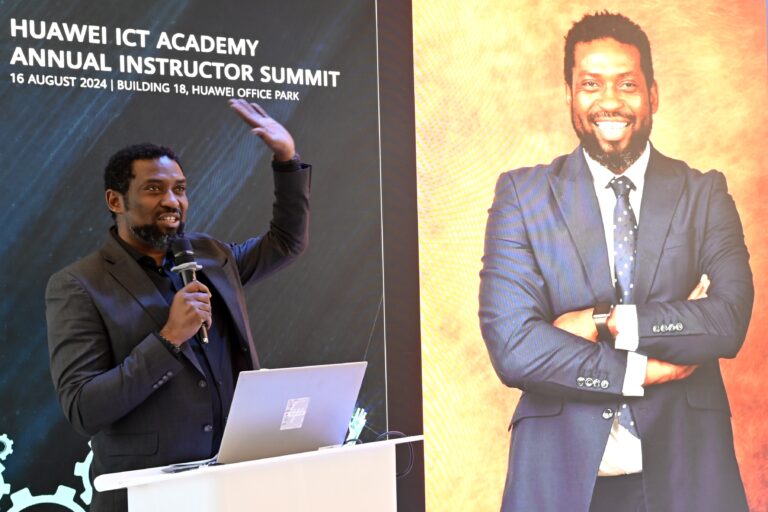
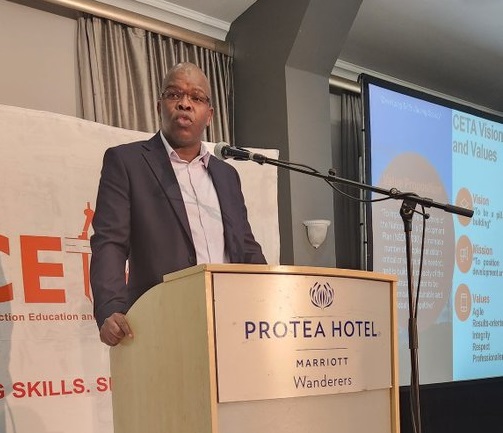
Buti Manamela, Deputy Minister of Higher Education and Training, said South Africa will likely fall behind on its goal of 2.6 million students in Technical Vocational Education and Training (TVET) colleges by 2030. 
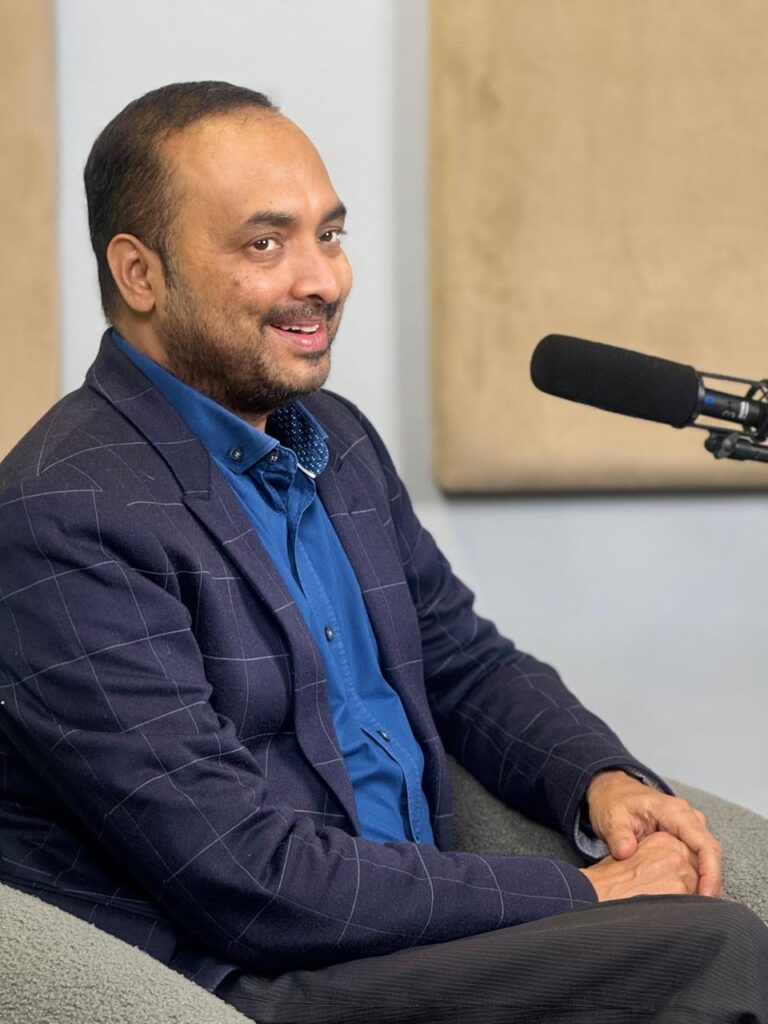
In his address at the Huawei ICT Academy Annual Instructor Summit in Woodmead on Friday, Manamela said the TVET sector sought to attract 600,000 students in 2024 but only managed to attract 500,000, highlighting the importance of swift interventions to urgently boost student numbers. 
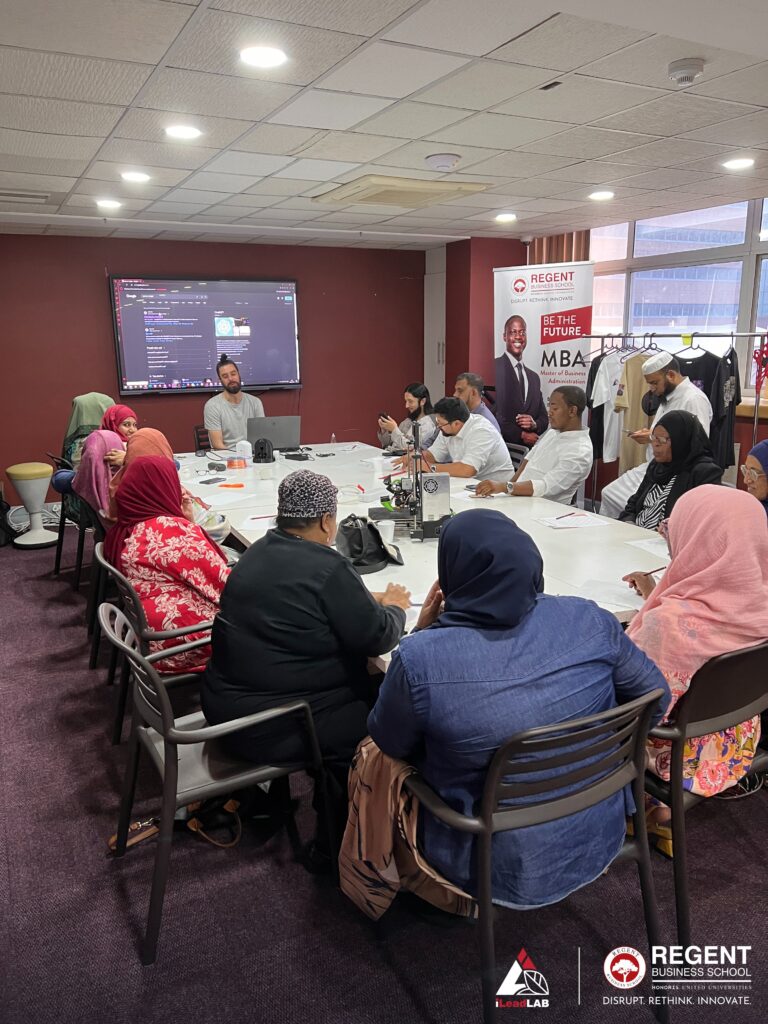
“We need alternative, cheaper, impactful forms of delivering TVET-related programmes. The same applies to our community colleges. Education delivered using ICT tools and solutions will make a dent for the nearly four million young people not in an education institution and getting the necessary skills,” said the Deputy Minister. 

Looking towards addressing the challenge, Manamela said partnerships with Information and Communications Technology companies could create the potential for learning platforms since content and online instructors are already available. 

“We need to collaborate to ensure we deliver education to the gadget,” said Manamela, adding that far too many students attending TVET colleges go to classrooms when the teaching medium could be delivered online. 

Manamela said this was based on the need to impact unemployment and boost the SMME sector. In August, Statistics South Africa, reported that the country’s official unemployment rate increased from 32.9% in the first quarter of this year to 33.5% in the second quarter, the highest since 2022. 

The concern is the fact that 3.6 million (35.2%) out of 10.3 million young people aged 15 to 24 years were not in employment, education or training.

Manamela praised the Huawei ICT Academy programme which collaborates with universities and TVET colleges to train, develop, and certify some of the best ICT talents across South Africa.

This summit is part of an ongoing commitment to building ICT skills among youth. Deputy Vice-Chancellors, Heads of Departments, and instructors from various universities in South Africa will attend it. Notably, Deputy Vice-Chancellors from the University of Johannesburg and the University of Cape Town took part in the summit.

Huawei Chief Executive Will Meng said the ICT sector has been among the fastest growing in the country, and it will continue to be so for years to come. 

“The 4IR conversation has been occurring for years in South Africa, from years as early as 2018 whereby the DHET Minister of that time, Minister Pandor, recognised that we’re in the age of the pervasive influence of emerging technologies and artificial intelligence and need responsive skills and development research focus and investment to benefit fully.  

“All these changes will require more qualified personnel to meet the growing demands of the ICT industry. In this regard, we must be ready for this growth by creating the workforce necessary to meet future needs as well as current needs. 

“By bridging the gap between demand of enterprises and the supply from higher education institutes, Huawei hopes to provide more technical and skillful talent, more advanced technologies, and more support to innovation and entrepreneurship to facilitate a virtuous cycle and support the sustainable development of the ICT industry,” he said. 

Meng said when talking about the role of tertiary education in the 4th Industrial Revolution, Huawei believes that investing in education is most important to support the future trends. 

To bridge the gap in ICT talent, the firm established the Huawei ICT academy program aiming to bring the solution of industry-academy collaboration for talent development.

In the collaboration model under Huawei ICT Academy Program, Huawei provides Courses Authorization, Instructor Enablement and Learning Resources. Universities prepare for the Teaching Plans, Lab Environments and Certified Instructors, all these resources are then channeled to students allowing them to gain ICT competency, practical experience, career certifications, and job opportunities. 

Globally, up to now, over 2600+ Huawei ICT Academies have been developed, over 11000+ instructors have been certified and over 200,000+ students have been cultivated yearly. The Huawei ICT Academy endeavor takes place in over 110+ Countries worldwide. 

The Huawei ICT Academy program has partnered with 76 institutes in the higher education sector, whereby we identify them as academies in this program, within South Africa until now. 

By 2024 July, more than 300 instructors had participated in the Instructor Training program – they were trained, and prepared for student class opening. In 2024, over 270+ students have participated in online and offline Huawei training programs. 

The 2024 Huawei ICT Academy objective has been focusing on improving the quality of student and instructor training in South Africa. 

Huawei will hold a Job fair in 2024, with the aim to connect Huawei ICT graduates with Huawei partners for job placement opportunities.

“In South Africa, Huawei has positive relationships with various institutions. We aim to maintain positive relationships with the various institutions we have partnered with and have an even higher-quality skills transfer process for lecturers and students; our learning environments will become more and more immersive in every institute.”

Finally, to finish, the revolution of improving education curriculum is, in our presence, a big challenge to tackle; thus, how can we each play our part in keeping the South Africa Education Curriculum ahead of the 4IR curve.”

Charles Cheng, Deputy CEO of Huawei South Africa, also reflected on the critical impact of the Huawei ICT Academy, saying, “More important than the public praise are the jobs we have helped create and the entrepreneurial growth we have been able to support through our programmes, which span from primary school goers to SMME owners.”

INSIDE EDUCATION

Reading Panel 2030 in line with Minister Gwarube’s goals to get children to read

Edwin Naidu

In six years, South Africa hopes to have all its children reading. Driven by a new politician with renewed energy, the country has a new heavyweight leadership supporting the drive to have all our children reading by 2030.
If the government gets its ducks in a row, with help from civil society, one is optimistic that the 2030 Reading Panel could have a meaningful impact.
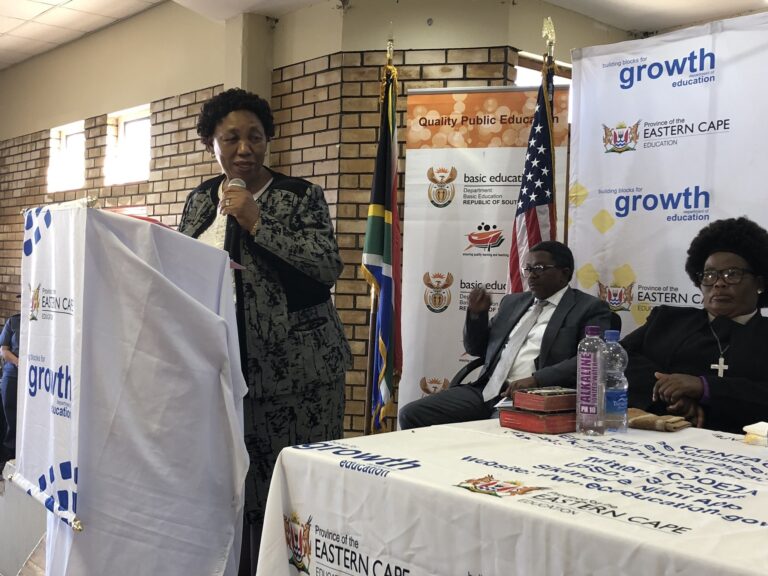
One felt positive after the weekend Reading Panel Education Conference in Pretoria.

The dialogue was hosted by the Umlambo Foundation, founded by the former Deputy President of South Africa, Dr Phumzile Mlambo-Ngcuka. The 2030 Reading Panel brings together prominent and respected South African leaders on a mission. This gathering holds the potential to bring about the necessary changes to ensure that all children learn to read in six years.

The dialogue happens in the light of the dismal findings of a Progress in International Reading Literacy Study (PIRLS), which last year revealed that 81% of grade 4 students in South Africa could not read for meaning.

This was up from 78% in 2016, a stark increase underscoring the urgent need for meaningful interventions. South Africa’s last place in a study of 57 countries further emphasises the gravity of the situation.

The solution to this crisis seems simple: empower our children with the necessary reading tools. This approach can significantly improve the literacy rates in South Africa.

In one of her first interviews after her appointment, the Minister of Basic Education, Siviwe Gwarube, pledged that getting children to read would be among her top priorities.

This strong commitment is a reassuring departure from her predecessor’s denial and blasé attitude. Failure to read hinders a child’s prospects of a better future as envisaged in the Bill of Rights. For almost a decade, children have been failed in this regard.

In 2000, the late former Minister of Education, Professor Kader Asmal, launched the Masifunde Sonke, a year-long campaign to help illiterate adults read. Unfortunately, the lack of continuity with such initiatives raises questions about the sincerity and whether they were more about public relations than genuine change.

Asmal’s legacy on human rights and the provision of water to the poorest citizens is well-documented. However, he was also credited with closing down 105 teaching colleges, which resulted in declining teacher numbers. To his credit, he put the spotlight on reading for a short period, albeit for our parents.

Gwarube says literacy is a fundamental human right and a gateway to economic emancipation. The DBE has acknowledged the need to improve the quality of early-grade reading.

The Minister says the DBE must ensure that all children can access engaging reading materials in schools, homes and communities, particularly in their home languages.

“At the heart of our efforts must be the goal of ensuring that all young learners have access to stimulating environments to support their literacy and numeracy endeavours,” Minister Gwarube, who spoke the day before at a DBE and PrimeStars event to promote Science, Technology, Engineering and Mathematics in lower quintile public schools.

More action, less talk. Gwarube is on the right track. In its quest to promote Science, Technology, Engineering and Mathematics (STEM) subjects in rural communities, PrimeStars, in partnership with the DBE, has launched the eduCate Programme designed to facilitate comprehensive revision sessions for 300,000 learners in 1,000 lower quintile public schools across all nine provinces.

Gwarube said math and science were a bedrock upon which we build future professionals, innovators, and leaders. “There is no doubt in our minds that our country has indeed ushered in a new period characterised by working together irrespective of our political views and beliefs,” she said.

Reading, however, is at the heart of success. Kudos to the Minister for keeping her promise to improve our children’s lives in many ways, including reading. The challenge is delivery.

Gwarube will have help in this regard.

Mlambo-Ngcuka, the former Executive Director of UN Women, is the Chair of the 2030 Reading Panel, whose members include Prof Sizwe Mabizela, the vice-chancellor of Rhodes University, the affable former academic Prof Njabulo Ndebele, the Chairman of the Nelson Mandela Foundation, Prof Vuyokazi Nomlomo, deputy vice-chancellor for teaching and learning at the University of Zululand, retired businessman Bobby Godsell, and the revered Archbishop Thabo Makgoba, the South African Anglican Archbishop of Cape Town.

Suppose the Minister thinks there is an easy ride. In that case, the 2030 Reading Pane line-up also includes probably one of our most outstanding educators: the internationally respected Prof Jonathan Jansen, a former vice-chancellor and Professor at Stellenbosch; Prof Catherine Snow, an educational psychologist and applied linguist at Harvard University; and Commissioner Andre Gaum of the South African Human Rights Commission.

It does not get any easier. Banker and academic Colin Coleman, seasoned broadcaster and reading advocate Hulisani Ravele, and the founding General Secretary of COSATU, Jay Naidoo, a South African politician and businessman, who has just written D’Amour et de Revolution, a book with his wife Lucie Paige about their wonderful 34-year union across borders and boundaries.

Former civil servant Prof Michael Sachs, currently an Adjunct Professor at the University of the Witwatersrand, the General Secretary of Equal Education Noncedo Madubedube, the CEO of The Mandela Rhodes Foundation Judy Sikuza, and probably one of the best-known reading champions in our land, Elinor Sisulu, the founder and executive director of Puku Children’s Literature Foundation, complete the panel.

Halala 2030 Read Panel! Halala!

Edwin Naidu is the editor of Inside Education

DHET collaborates with Huawei ICT Academy to transform curriculum through digital education

By Johannah Malogadihlare

Huawei hosted its 2025 ICT Academy Annual Instructor Summit in Woodmead, Joburg to strengthen relationships with the Department of Higher Education and Training (DHET) as well as with the Shenzhen Institute of Information Technology to help equip “the next generation of tech-savvy individuals”.

DHET Deputy Minister Buti Manamela and Deputy director For Technical Vocational Education and Training (TVET) San Zungu signed a contract with Huawei CEO Will Meng on Friday and they both said they support the aim of the partnership which is to maintain relationships with stakeholders in and around ICT sectors.

Zungu said TVET colleges and ICT sector partnerships were necessary for the generation of technological excellence.

While Manamela said technologies need to be identified in order to see how they will impact people in the next 5 years.

“It is important that we focus on the bilateral partnerships and yield practical accomplishments which are skilling the nation”, said Manamela adding that the partnership between the department and Huawei ICT Academy, have trained talent in the IT sector at 17 universities, 47 TVET colleges and more than 2 400 students.

Meng assured the stakeholders that their aim is to keep the relationship and that DHET and Huawei ICT Academy is based on practiced programmes.

Despite the impact of reaching ICT education to a wider student population, Huawei wants to inspire students through innovation, and students will develop their entrepreneurial skills to become drivers of technological advancement, Meng said.

The summit has facilitated meaningful partnerships between academia and industry, leading to the development of industry-relevant curriculum and internships.

INSIDE EDUCATION

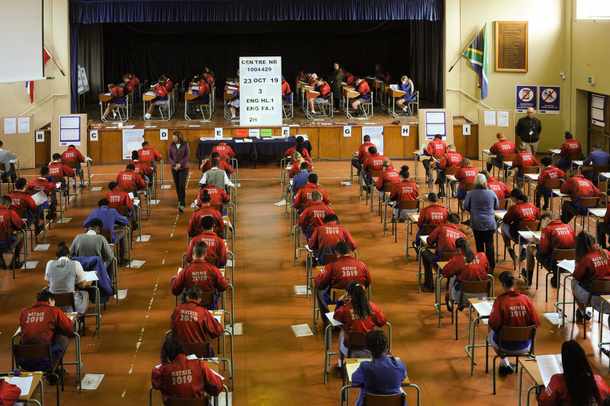
Matric preliminary exams kicks-off

By Levy Sara Masiteng

The class of 2024 started their preliminary examinations on Monday, and are expected to finish writing on 18 September.

The prelims are regarded as just as essential as the end of the year exams, which are written under similar conditions. They are designed to assist Grade 12 learners to assess their strengths and weaknesses before writing the finals.

The aim of these exams are to make the students aware of and know which subjects and areas to improve, including seeing which methods are effective to them, the Department of Basic Education said in its website.

The learners not only gauge the extent of their subject knowledge but they also get to experience the conditions including time constraints under which they write the final year examination.

They gain skills such as following instructions, using time properly and answering all questions adequately.

The exams form part of the School Based Assessments (SBA), which carries 25% of the final promotion mark, with the November examination fulfilling the remaining 75%, in addition to the marks achieved in the preliminary exams for each subject included in the SBA mark for that subject.

Former Minister of Basic Education Angie Motshekga at the beginning of the year mentioned the importance of using relevant coursework to fully achieve the objective of getting great marks during the statement address of the NSC examination results being released.

Motshekga said it was important to rely not only on international assessments, but to also reflect on equally valid results from national assessments that are more closely aligned to the curriculum.

The DBE provides Tips on preparing for an exam:

  • Use past question papers, that way you know which section you struggle with.
  • Reverse as a group to correct each other and someone might explain it more.
  • Look at YouTube for videos of certain topics if you are more of a visual person.
  • Consider studying in a place where you feel most comfortable and motivated.

INSIDE EDUCATION

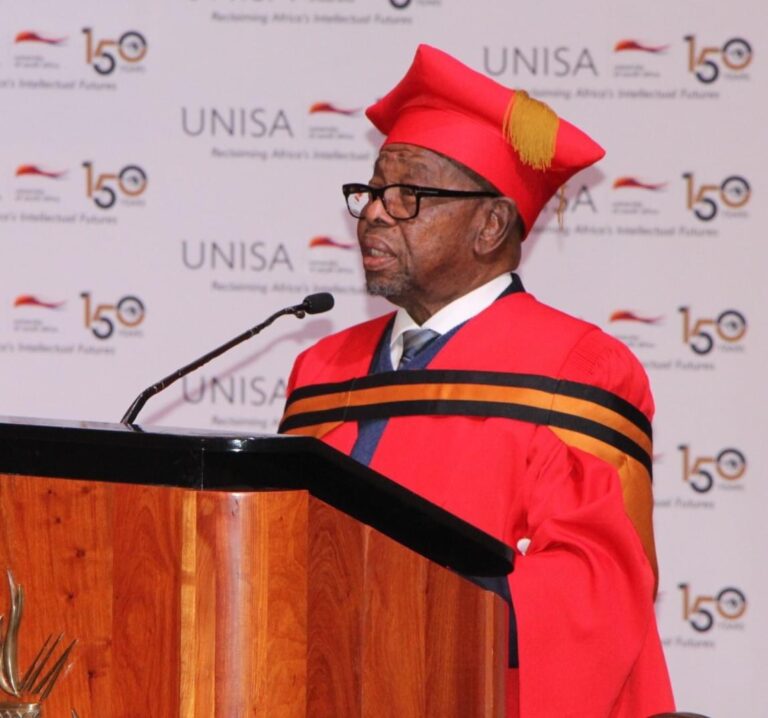
Ramaphosa saddened by death of Professor Muxe Nkondo, 83

Nkhensani Chauke

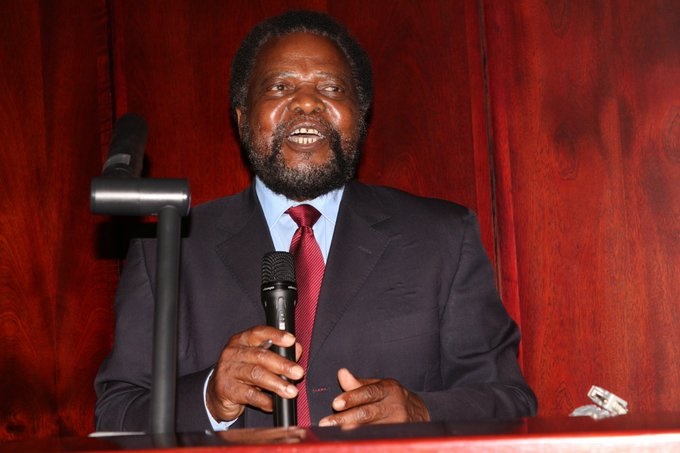
President Cyril Ramaphosa said he was saddened at the loss of eminent scholar, academic and heritage expert Muxe Nkondo, who died during the early hours of Sunday at the age of 83.

The news of Nkondo’s passing was confirmed by his family in a statement on Sunday confirming the passing away of one of the country’s most famous cultural academics.

“The Nkondo family is sad to announce the death of Prof Muxe Nkondo, academic, public-policy practitioner and cultural leader, who made a profound difference to many areas of South African life. He was committed to helping communities, the environment, education and above all, the arts,” the statement read.

President Ramaphosa said Nkondo left a life distinguished by his relentless pursuit and generation of knowledge that has made his country, continent and world richer and in the betterment of humanity.

“His ideas and their applications have impacted on lives and institutions across the globe. They are also a diaspora of academics, leaders and administrators who have benefited from Prof Nkondo’s inexhaustible intellect and interest in the betterment of humanity,” Ramaphosa said.

The president offered his deep condolences to the family, friends, national and international associates of the late professor.

Former Gauteng premier David Makhura extended his condolences to the family, and bemoaned the loss of Nkondo and his contributions to the political and intellectual landscape.

“The news about the passing of Prof Gessler Muxe Nkondo is a profound loss to our nation. What a brilliant mind… a Marxist intellectual and activist to the end. My generation owes a great debt of gratitude to you Prof! Condolences to the family,” Makhura said.

University of Venda (UNIVEN) Vice-Chancellor and Principal, Bernard Nthambeleni extended his deepest condolences to the Nkondo family, friends, and colleagues of the professor.

“Prof Nkondo’s vision and leadership have inspired generations of students and staff, and his legacy will continue to guide us in our pursuit of excellence and service to the community,” Nthambeleni said.

University of Venda spokesperson Takalani Dzaga said Nkondo served the university with dedication and passion, and left a lasting impact on the institution and the lives of many within our community.

“During his tenure, Prof Nkondo championed academic excellence, innovation, and inclusivity, shaping our university into what it is today. Through his unwavering commitment, during the higher education transformation which led to mergers of institutions of higher education in South Africa, UNIVEN was retained as an independent, comprehensive university,” Dzaga said.

Dzaga said details regarding the memorial service and funeral of the professor will be announced soon.

Nkondo was a former vice-chancellor of the University of Venda, deputy vice-chancellor of the University of the North and Harvard Andrew Mellon Fellow in English.

He lectured extensively at universities in the US and served as a curriculum development and governance adviser to the University of SA, the University of KwaZulu-Natal, Tshwane University of Technology, Central University of Technology and Walter Sisulu University.

He is survived by his wife Prof Olga Nkondo, his children, Ntsako, Muxe, Mikateko, Zava, Mbonya and Nkenyezi, grandchildren and great-grandchild.

INSIDE EDUCATION

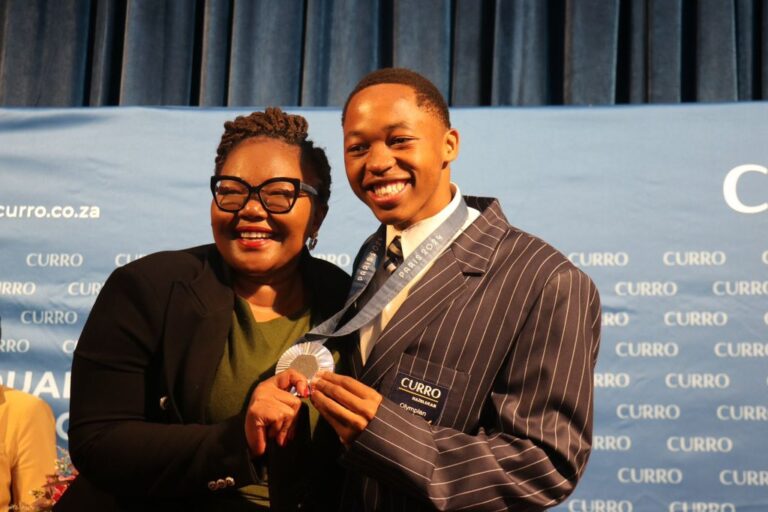
Olympic Silver Medalist Bayanda Walaza gets a hero’s welcome at school

Thapelo Molefe

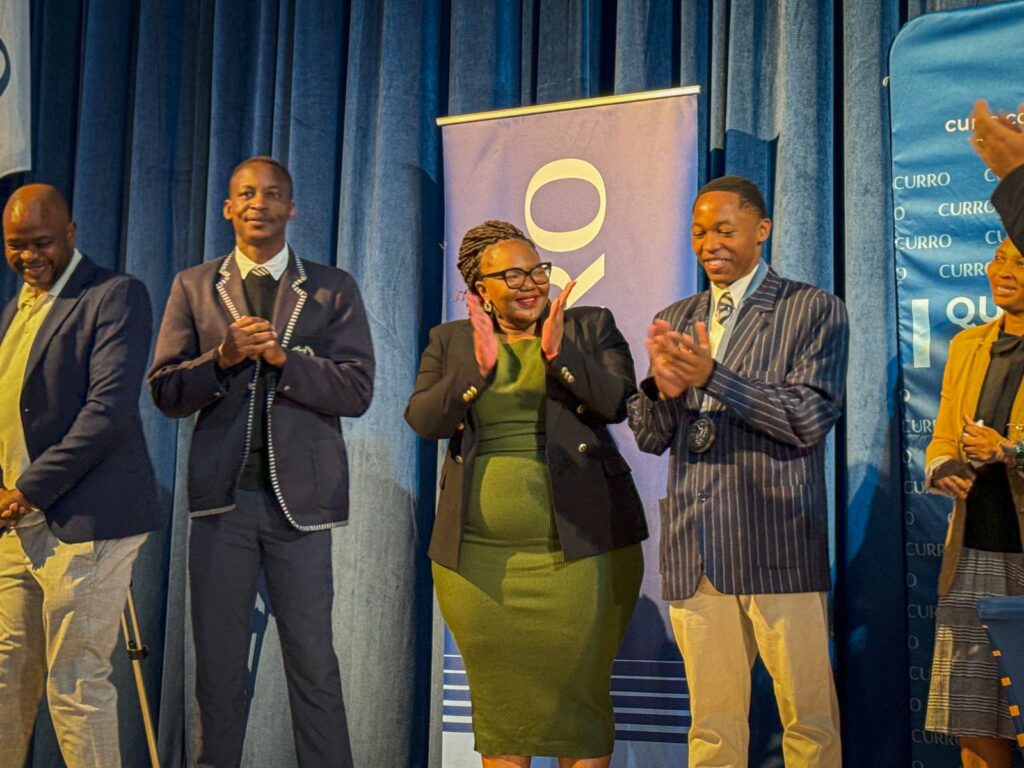
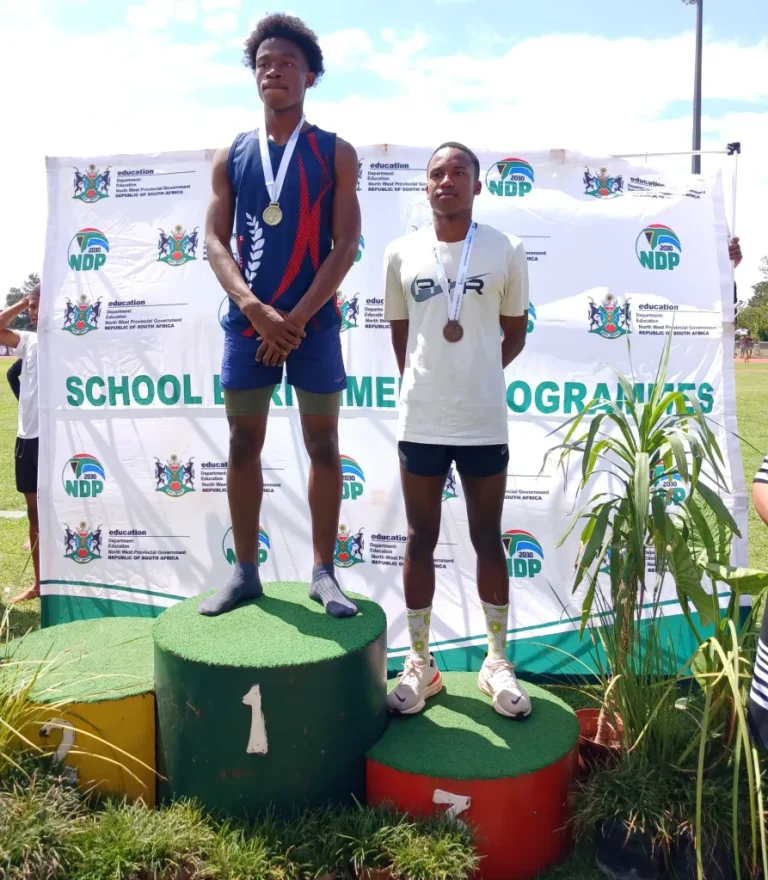
Olympic silver medalist Bayanda Walaza received a hero’s welcome at Curro Hazeldean High School on Thursday, following his impressive performance at the Paris Olympics. 

The 18-year-old was welcomed with a guard of honour, and drapings of the South African flags, as he entered the school hall during assembly.

Minister of Education Siviwe Gwarube and Walaza’s mother, Tholiwe Walaza, attended the emotional ceremony, where Walaza was presented with his silver medal. The school sang the national anthem to cap off the celebration.

Gwarube said it was a privilege to hand over the medal to Walaza’s mother, “the wind beneath Walaza’s wings”.

Walaza’s mother said that her son had to overcome the tragic death of his father, who was shot when he was just 10-years-old. 

“He experienced all that. After that, it was tough, but God, counselling, and our family’s strong support system helped him recover,” she said.

Walaza was part of the men’s 4x100m relay team that finished second behind Canada at the Paris Olympics. 

His mother described watching the final as an “emotional moment” and expressed pride in her son’s achievement.

Walaza’s return to South Africa on Tuesday was met with an incredible reception at OR Tambo Airport, where he was greeted by Minister of Sport Gayton McKenzie and a cheering crowd. 

His mother described the moment as “unbelievable” and expressed pride in her son’s success.

“The moment the Minister of Sport McKenzie stood there – when I saw him chanting ‘Walaza! Walaza!’, I didn’t believe it. This is my son; I raised such a wonderful young star. I was so happy. Somebody called me and said, ‘Wake up!’. I was numb,” she said.

Bayanda Walaza’s story is an inspiration to many, that with determination and support, anything is possible, even in the face of adversity.

INSIDE EDUCATION

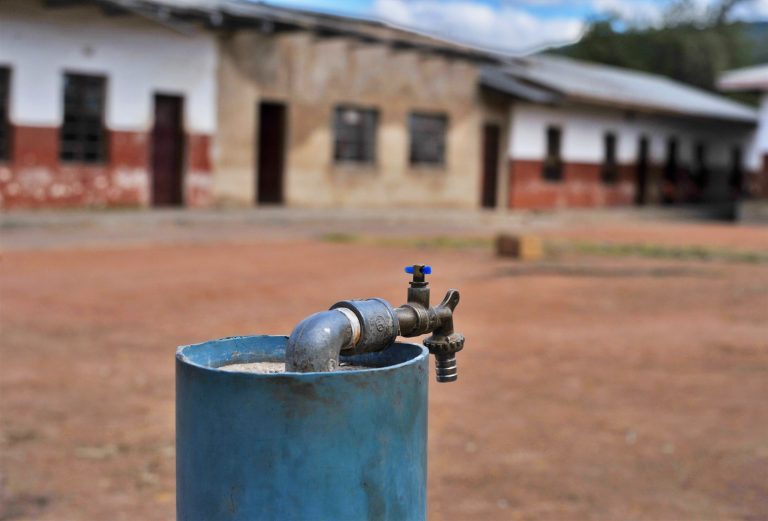
23 schools without water, as KZN Education Department fails to settle R32M municipal debt

By Alicia Mmashakana

Water supply to 23 Pietermaritzburg schools has been disconnected because of the failure of the KwaZulu-Natal Education Department to pay its debt of more than R32 million for water and electricity.

According to Acting Municipal Manager Sabelo Hlela, schools affected include Sukuma Comprehensive School in Imbali township (owing R3.2 million), Georgetown High School in Edendale (owing R1.3 million), Edendale HP School (owing R300,000), and Siqongweni Secondary School in Imbali township (owing R500,000).

The cut in the water supply to schools comes two weeks before the Grade 12 trial examinations and Sadtu provincial secretary Nomarashiya Caluza this was jeopardising the students’ ability to prepare for their trial examinations.

In a statement, the Msunduzi Municipality said it seeks to inform the public that it has begun the disconnection of schools with outstanding debts for municipal services and rates.

“This decision was made after the Department of Education was given several opportunities to address the overdue payments,” read the statement.

The municipality has enlisted 14 contractors to complete disconnections in both residential and school zones, it said.

The municipal spokesperson, Ntobeko Mkhize said: “We can confirm that notices were issued to the Department of Education.The municipality values the role of education institutions in our community and we understand the impact the decision may have on the learners.

“However, it is imperative to implement and enforce the bylaws and the policies of the municipality. We are required to implement the credit control and debt collection policy.”

Muzi Mahlambi, spokesperson for the Education Department, confirmed that they are working with the municipality to resolve the issue.

INSIDE EDUCATION

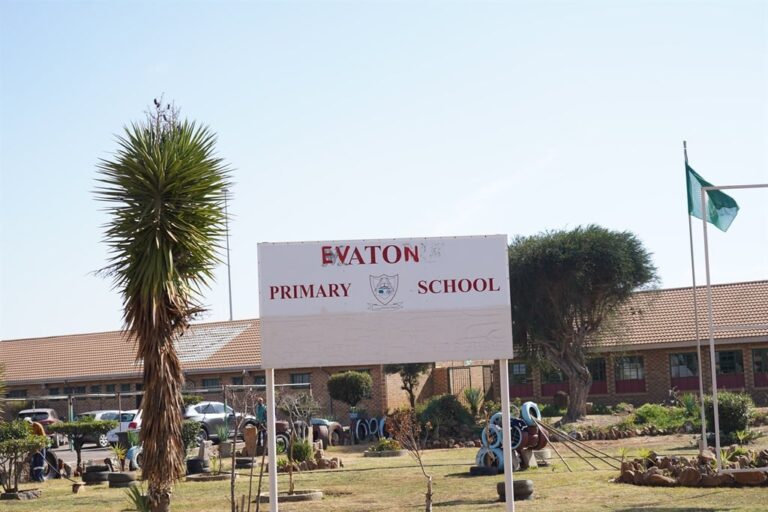
Deaths of four Ekurhuleni Pupils including 3 Siblings, shocks MEC

By Johannah Malogadihlare

Three siblings from Evaton Primary School in Sebokeng and a pupil from Tsakane Secondary school in Ekurhuleni have died following an unconfirmed medical condition and a possible suicide.

Gauteng Education spokesperson Steve Mabona confirmed on Monday, the incident unfolded at around 08:00 in the morning when a Grade 4 class teacher took an ill boy learner to the sick bay.

Mabona said despite immediate assistance, the learner was unresponsive and emergency services and the learner’s mother was called.

The second sibling, a Grade 3 girl learner who was also rushed to the sick bay, mentioned that she ate pap, milk and biscuits at home, and soon became sick and unresponsive.

A third sibling, a Grade 5 girl learner was similarly found unresponsive.

All three learners were taken to a nearby clinic where they were declared dead.

Gauteng police are investigating the circumstances surrounding their deaths.

Education MEC Matome Chiloane on Monday expressed his shock and grief at the sudden death of the Grade 8 learner from Tsakane Secondary School.

Reports indicate that the incident took place during school hours when two Grade 8 learners allegedly ingested rat poison on the school premises.

“Emergency Services and the learner’s parents were immediately contacted. Sadly, one of the learners was declared dead on the school premises, while the other was rushed to a local medical facility for urgent care,” Mabona said.

Chiloane strongly encouraged learners to seek help from the South African Depression and Anxiety Group (SADAG) through their 24-hour helpline 0800 6888 88.

“Our thoughts and prayers are with the families, friends and school communities affected by these devastating incidents,” Chiloane said.

In addition, SADAG also supports learners who are in Grade 12 to prepare for their Preliminary Examination, and might be suffering from stress and anxiety.

Mabona confirmed that a psycho-social support team has been dispatched to provide the necessary support to everyone involved in the tragic turn of events.

INSIDE EDUCATION

Money literacy should be introduced as a priority in early education

Edwin Naidu

It’s never too early for one to start saving.

Money literacy should be introduced in Grade R at schools so that a savings culture and the value of compound interest are instilled in children early in the schooling life. Savings clubs should also be formed early at schools to encourage this habit.

Experts are unanimous in their concern about South Africa’s distressing saving rates, which are among the lowest globally. The statistics paint a bleak picture. The situation is worsened when some of our leaders and celebrities, upon sudden wealth, squander their earnings on fleeting luxuries. This is where schools can play a crucial role in promoting financial literacy.

There is nothing wrong with having wonderful material things. But, taking a tip from one of the world’s wealthiest individuals, Warren Buffett when he says: “Do not save what is left after spending; instead, spend what is left after saving.”

By saving and spending what is saved, one can break free from the cycle of debt that keeps us trapped. However, there is a compelling argument for financial institutions to do better than the miserly incentives currently on offer. No wonder some well-off folks think they can earn more by keeping their money under the mattress.

As a young child growing up in a home with a single income and six mouths to feed, my dad survived every week on his modest clerk’s salary. The quantity surveying firm he worked for used to pay him weekly. There was no chance to save on school fees for five children. My late mom juggled the home fires well and ensured we had the tastiest food. But there were no savings, though they encouraged us to keep piggy banks to try and save, which we did.

This personal experience underscores the importance of early financial education. I am still recovering from the lack of education in this regard.

In the words of Warren Buffett, the key to financial stability is to prioritise savings. If we make saving a priority, we can eliminate the problem of not having enough funds to save at the end of the month. It’s a simple yet powerful shift in mindset that can make a world of difference.

For many of us, including myself, growing up meant living ‘hand-to-mouth’. In such circumstances, saving becomes a daunting challenge when you’re struggling just to get by.

Centennial Schools Deputy Principal Joseina Ramgareeb underscores the importance of saving taught at the school level by highlighting the current national savings rate of 16.3%, corresponding with an investment rate of about 18%, which will only fund economic growth of two percent.

Ramgareeb says Centennial Schools aim to produce work-ready matriculants for the economy. “We teach entrepreneurship, cryptocurrencies and blockchain, coding, and other real-world skills incorporating financial education into our curriculum. This is crucial for preparing our students for the challenges of adulthood and the responsibilities of contributing to the economy.”

Ramgareeb notes that starting an entrepreneurial venture – a lifeline for many young South Africans in the context of the prevailing unemployment – requires capital.

Without savings, one may struggle to achieve one’s goals. Of course, this can happen through taking loans from family or financial institutions. For the latter, one would need a good credit history.

Other options are available through organisations, such as the National Youth Development Agency, which funds entrepreneurs under 35.

According to Ramgareeb, a good credit history is imperative. She says one can build a credit score by having a cellphone contract, store card, or student loan in one’s name and

Returning to my wonderful parents, the rising cost of education is a testament to how people like them managed to put their children through school and make sacrifices to ensure our success. I recall school fees costing as much as R5. When my own children went through school I longed for my parent’s days.

According to research from the Old Mutual Group, putting a child through the public primary and high school system will cost parents an average of R651 313. Putting a child through private schooling would cost parents an average of R1 901 549.

Children feel empowered and learn more about financial independence when they understand basic concepts. Prostock-studio/Shutterstock

Public primary school fees are currently about R24 408 a year, while private primary schools cost about R71 496 on average per year. Sending your child to a government high school will cost around R36 072 per year, while a private high school is likely to cost between R105 084 per year.

“Parents need to understand that education will get increasingly expensive over time, outstripping salary inflation,” says Marius Pretorius, the Head of Marketing Retail Savings and Income at Old Mutual.

“In real terms, education inflation outpaces the Consumer Price Index [CPIX] by 2.5% and 3%, making it unlikely that you will be able to save the full cost of your child’s university fees.”

But, says Pretorius, that’s not necessarily the goal of a workable educational savings plan.

“Rather than getting discouraged by an impossible figure, it’s important to understand the principles of an attainable savings plan and to focus squarely on the underlying aim – that is, to support your child to become a balanced, functional, and independent member of society in whichever ways best suit their unique passions and abilities.”

“This may or may not include a university degree. Your child may require financial support to learn an in-demand trade such as plumbing or start a business. Stay open to a wide range of options and remember that by the time your child finishes school, there will be jobs that don’t currently exist,” advises Pretorius. “This will help you to navigate the decades-long journey of educating a child.”

It’s clear, though, that saving is imperative for a sustainable future. Such lessons should be instilled from an early age.

Among the long list of priorities for Basic Education Minister Siviwe Gwarube, one hopes for the introduction of a savings habit among learners at schools.

Edwin Naidu is Inside Education Editor.

18-year-old Pretoria matric learner clinches a silver medal at the Paris Olympics

Thapelo Molefe

FOR South Africa’s youngest Olympian Bayanda Walaza, winning a silver medal as part of the 4x100m relay team was beyond a dream but coming back home to face fellow matriculants is a bit scary for the youngster.

“For me it’s kind of scary I don’t want to lie. I know when I go back to school everyone will be like, Hey! ,” the 18-year-old Walaza said from Paris after the SA relay team powered to a second spot in the 4x100m.

Walaza was part of the quartet relay team that included Shaum Maswanganyi, Bradley Nkoana and the veteran Akani Simbine who at last got an Olympic medal after years of missing out marginally.

The SA team was beaten to gold by Canada in a photo finish while the United Kingdom came third to claim bronze.

But for Walaza, a matriculant at Curro in Hazeldean, Pretoria, after winning the silver at the world stage, he is worried and concerned that it might be a little overwhelming when he returns to school.

He admitted that being on the track running against some of the world beaters was intimidating but he had to get the job done and was thankful for the opportunity.

“So, I just did it and I am truly happy to just be part of this team. I truly appreciate being here and I am truly thankful for what’s going on and what is happening.

That is all I can say,” he said.

Walaza had to sacrifice preparing for the preliminary examinations but this was no brainer for him because he took pride in representing his country at the Olympics.

“Winning an Olympic medal means a lot to me. I had to sacrifice my preliminary exams preparations to fight for the country. I put my country first,” he said.

Walaza joined the SA Team as a replacement after Benjamin Richardson, who ran a superb personal best of 9.86 in July, had to be withdrawn from the relay team after he picked up a hamstring injury in the 200m heats during the qualifying rounds.

His school had to fund his coach Thato Matebe to fly to the Olympic in the French capital so he can support the young sprinter.

The youngster is set to be rewarded handsomely with prize money set to flow for athletes that will be bringing medals home with the South African Sports Confederation and Olympic Committee (SASCOC) president Barry Hendricks confirming that financial incentives have been authorized for medal winners.

For each athlete bringing a silver medal it is estimated that the financial reward is about R75 000. And generous Sport, Arts and Culture Minister Gayton McKenzie said there could be surprises when the team. An excited McKenzie was thrilled by the youngster’s achievement.

“Our next Olympians are still at school. Our job is to go find them. Look at this matriculant getting a silver medal,” McKenzie posted on social media platform X.

INSIDE EDUCATION

Skilling Mzansi: Solar-powered boat makes Mzansi proud

Staff Reporter

THE Energy and Water Sector Education Training Authority (EWSETA) and Durban University of Technology (DUT) have launched an innovative solar-powered boat, built and designed by students, at the Point Yacht Club in Durban.

The boat competed in the Monaco Energy Boat Challenge from 1 to 6 July. The Siyahamba Solar Boat team was the first African team to participate in the event. Out of the 120 entries for this prestigious competition, DUT was selected as one of 15 finalists.

EWSETA has financially supported the project, which aims to boost renewable energy innovation and facilitate skills transfer.

“Beyond the competition in Monaco, the significance of this solar boat project lies in its potential to transform lives and communities here at home,” explains Candice Moodley, EWSETA Corporate Services Executive.

“The technology powering this boat is not just about racing on the open seas. It is the key to unlocking renewable energy solutions that address local challenges.”

Professor Ian Lazarus, the project leader and Manager of DUT’s KZN Industrial Energy Efficient Training and Resource Centre, has mentored several engineering students over the past few years in constructing the Siyahamba Solar Boat. The industry has also provided skills transference through collaboration and partnership.

Lazarus says the students have benefitted from hands-on learning: “To see this technology in action is brilliant for the students. We face several energy challenges in South Africa, and we need to look at alternative energy sources, especially for our seas.”

The boat was designed with the help of an industry expert. When conceptualising the boat, the designer, Daanish Meeran, was an Honours student doing mechanical engineering at DUT.

“I’m proud to have been involved in this project, especially because we can help more students like me get into industry,” Meeran says. “There’s a gap in that university students don’t always have the training and the know-how to get into the workplace, and projects like this are important to help students bridge that gap.”

Moodley says it is imperative to start driving local research and innovation capacity and that EWSETA can help fund tertiary institutions and other entities to nurture entrepreneurs and incubate those ideas.

“The Siyahamba Solar Boat exemplifies this, where visionary thinking meets collaborative action,” she adds.

INSIDE EDUCATION

GDE extends closing dates for Grade 1 and Grade 8 online applications

By Johannah Malogadihlare

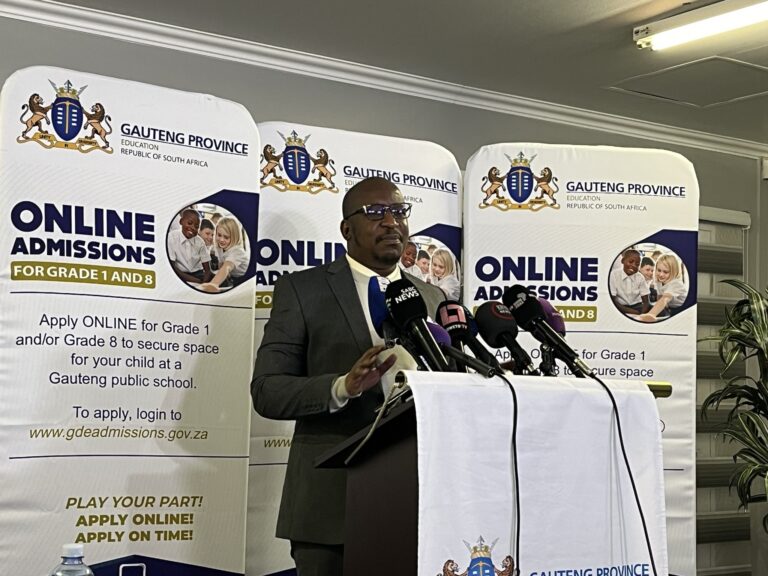
THE Gauteng Department of Education has extended the 2025 online application for Grade 1 and Grade 8 in light of system delays and parental complaints.

Member of the Executive Council (MEC) for Education Matome Chiloane made the announcement at Noordwyk High in Midrand on Sunday and said the application process has been extended for 7 days starting from 14 to 21 August.

Chiloane said that he was aware of the complaints about the system being down on 9 and 10 August, therefore, he urged parents to take the opportunity and apply to avoid disappointments.

“A number of parents who struggled to upload and complete applications were concerned about the hiccup, the system issue was resolved by the 10th but parents already lost two days,” he said.

The MEC said over 700 000 applications for placement had been received at this stage and that parents should start getting replies from the department from mid-September.

“We appreciate the confidence the parents continue to show in public education,” said Chiloane.

He urged parents to be patient with the placement issue and said in order to assist high-pressure schools accommodate more learners, mobile units will be provided.

Although the department may not be able to place all applicants in their preferred schools, Chiloane assured that applicants will be placed at a school with available space.

The MEC said that the documents required for the application process include proof of address, children’s immunisation card and previous reports, among others.

INSIDE EDUCATION

Global trailblazer Fathima Beckmann on the teacher who most inspired her

Edwin Naidu

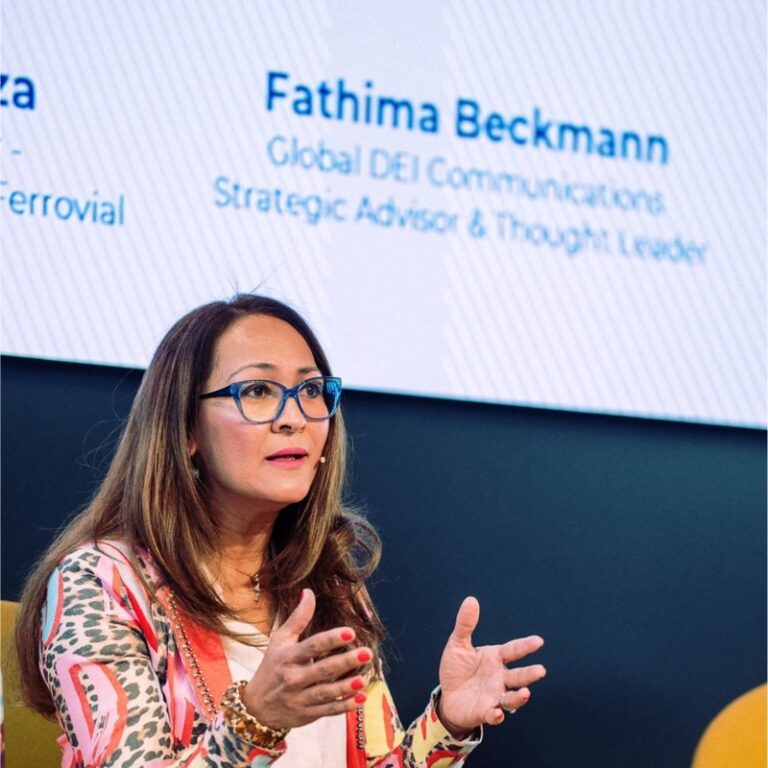
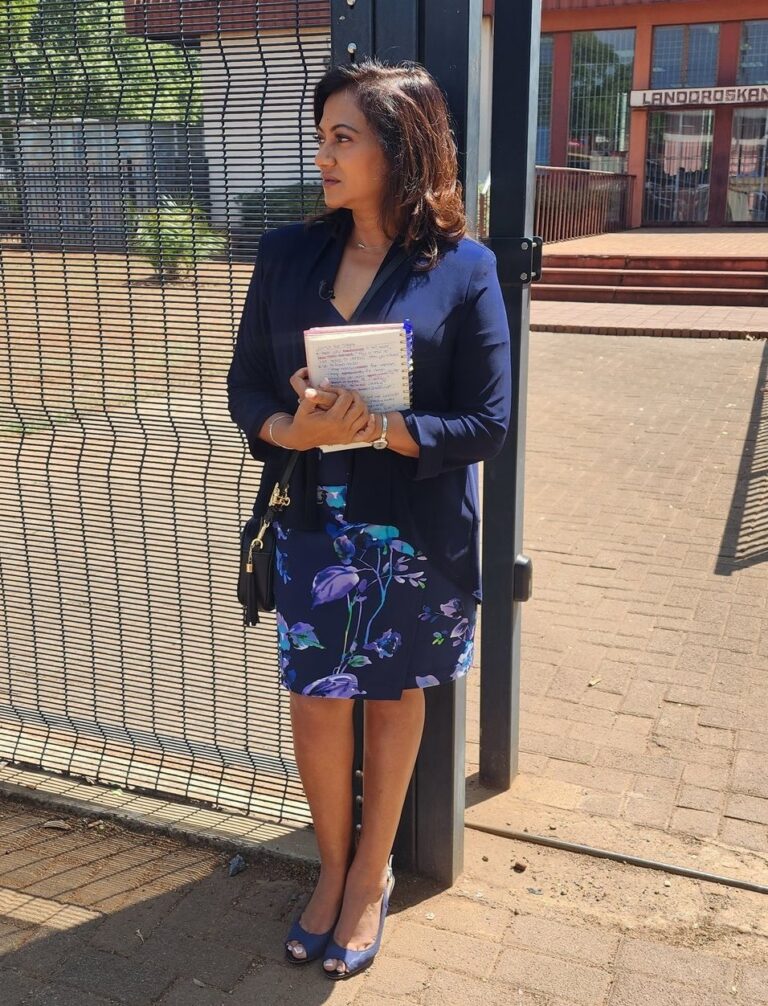
Fathima Beckmann, a former student at the Drakensberg Secondary School in Estcourt, is blazing a trail worldwide. She handles many roles with aplomb as a global intercultural, diversity, equity, and inclusion, communications strategic adviser, thought leader, and non-executive director.

Beckmann partners with private, public and community sectors to drive societal and industrial transformation worldwide.

But it all began at a rural school 80 kilometres from the famous Drakensberg Mountains. Beckmann was an intelligent, enquiring learner.

Today, she is an internationally experienced executive leader with global experience in governance and strategy, diversity, equity, inclusion, communications and thought leadership in the tech, telco and media industries.

Beckmann has held regional leadership roles with technology giants from Intel Corp, Microsoft, Huawei and Multichoice in Johannesburg and Dubai in the UAE.

Most recently, as senior vice-president at Paramount Global, Beckmann led diversity, equity and inclusion, and communication efforts across different global markets, advocating for a culture of integration, gender equity, and inclusive leadership.

Beckmann´s expertise lies in mobilising multicultural teams, fostering impactful partnerships, and driving strategic alliances.

She has been a non-executive director/advisory member for 15 years on NGOs focused on empowering youth and communities on boards from the Eskom Science Expo, Mindset Education, the Maths Centre, Cotlands, The Delta Environmental Centre and UNICEF.

Her qualifications include fostering and advancing diversity and inclusion from the INSEAD Business School in Fontainebleau, France, and Yale University in the US. She is a Women in Cable Telecommunications Global Rising Women Leaders Program graduate with a BA in Communications from the University of South Africa.

Received this treasured recipe book alongside Sports Girl trophy. An important initiative by the Women’s Culural group to keep cultural recipes continuing with the youth.

Fathima Beckmann’s Favourite Teacher

What was their name?
Mr Omar Essack.

What high school did you attend, and when?
Drakensberg Secondary School, Escourt, Kwazulu-Natal, 1987 to 1991.

How did your favourite teacher endear themself to you?
As young students, Omar reminded us there was a big world to explore, discover, and create. His teaching style, fuelled by creativity, began to shape my creative journey through communication. He always ensured we had fun and laughed.

This was a big part of his approach and inspired a natural learning style. His classes sparked curiosity and critical thinking, encouraging us to question and challenge our social environment and experiences through education and learning.

This unequivocally contributed to my long-term consideration of social impact, influence, life achievement, and perspectives. This was a crucial inspiration for students during the apartheid era.

What subject did he teach you?
English.

Did you look forward to the subject?
Absolutely, because we would always go beyond our textbook content through debate, discussion, and creative thinking. I also valued that he was aware of the class’s energy and dynamics and adapted his teaching style to the student’s needs, which was very progressive for that time.

What did you like about your teacher?
Omar’s style was approachable, accessible, and kind. He was comfortable discussing difficult and uncomfortable topics and encouraged diversity of thought and debate. Through laughter and creativity, he helped us see the lighter side of life. Always respectful, he was original and authentic in his approach, encouraging youthful expression. Art and creativity are essential to human expression, self-discovery, and confidence. Omar always supported our artistic and creative endeavours through theatre, dance, writing, comedy sketches, or debate.

What was your favourite subject at school?

I loved school and our community of phenomenal teachers and students. I had many favourite subjects, mainly English, sports, and computer science. I received the Sports Girl of the Year and Victrix Ludorum awards, which was a massive achievement. I remember getting an Indian Delights cookbook and my primary school trophy for my Sports Girl Award. I still have the cookbook, which is well-worn from the many delicious meals I’ve prepared for my family and friends.

Has this influenced your career choice, mindful of how your amazing journey has evolved globally?
Yes, this phase in high school was instrumental in shaping my long-term career in global communication, diversity, equity, and inclusion in the tech and media industries. I was on the debating and speech team and represented our school in competitions.

Omar became a trailblazer in the media and broadcasting industry, from English teacher to DJ, ENCA news anchor, CEO of Kagiso Broadcasting and Primedia and is currently part of a global broadcasting leadership team.

His passion for media and creativity ignited my academic and professional career pursuits in the arts, media, and
communication. Growing up during apartheid in a racially segregated society inspired my purpose and passion in advocating for, advancing and co-creating global inclusion and impact at scale.

What was the one phrase from any teacher that stuck with you or inspired you?
My lecturer and incredible mentor in college and PRISA Chair, Don Macey, consistently encouraged me with ‘Sky’s the Limit!’, reminding me of our unlimited potential to achieve what we are inspired to create.

Have you kept in touch with your favourite teacher?
Yes, we have regularly met throughout the years and continue our connection. Omar lives in Portugal, and I am in Madrid, Spain, which makes us neighbours in Europe.

If so, what was the first meeting like after being a learner in the classroom?
Throughout the years, Omar has shared industry learnings and guidance with me. He remains a champion and cheerleader for my achievements. As a mentor now, I aim to continue this circle of student-teacher inspiration. His humility has greatly inspired me in my leadership journey.

Why are teachers so important to society?
From my experience, a teacher’s most important role in a student’s life is inspiring a love for the journey and the gift of lifelong learning filled with curiosity and a desire to evolve and grow into our full potential consistently.
Finally, what advice do you have for learners, especially girls?

First, be you! Listen, absorb, observe, and learn from those who have walked before us. Honour and give gratitude to your ancestors. Be curious and courageous; know that you deserve to create the life and world you envision. Raise your socioeconomic and political consciousness. Surround yourself with an authentic tribe of mentors, enablers, and champions.

June was Youth Month. What would be your message for the youth of South Africa?
To every young citizen in our country and across the African continent: your dreams are valid, you are deserving of global recognition, your skills, leadership, and innovation are essential, your voices matter, and your creativity is the future currency for generational change and sustainability.

Insights from a much-loved teacher-turned-broadcaster

Inside Education tracked down Omar Essack in Portugal and asked him to reflect on Fathima Beckmann and share some
classroom memories. This was his response:
“Fathima stood out because she asked questions and always volunteered an opinion.
“As you will know, this is rare among students, despite the environment a teacher may create to encourage a dialogue. She was never afraid to offer a contrarian viewpoint, making lessons much more enjoyable.

“Sometimes, when teaching, I could sense that Fathima would challenge the prevailing consensus or offer an alternative
viewpoint – her expression changed, and I could feel a hint of scepticism in her facial expression. A quality that was all too rare and certainly welcomed in my classroom.

“Watching Fathima excel fills everyone who knows her with great pride at her achievements. It means she’s fulfilled the
potential she’s always had.

“She deserves an enormous amount of respect and admiration because she’s proven that coming from a small town in rural KZN, from a school that would rarely have had experienced teachers (many of us were fresh graduates, deployed to Drakensberg Secondary as our first posting and would be gone in 12 to 24 months) is not an obstacle for an extraordinary career with global reach and impact.

“I remember reading in one of my education course journals that ‘surprising the brain’ with something unexpected has a lasting impact on students – surprise results in greater attention and better retention, which are crucial to learning.
“This insight has meaningfully impacted my career as a teacher, a radio and TV presenter, and an executive running radio stations and media companies.

“It influenced my approach to lessons and the classroom. Later, the film ‘Dead Poets Society’ inspired a greater belief in doing different things differently and doing things differently.

“I’m a fan of the Monty Python TV series and the late actor Robin Williams. Perhaps their energy and style rubbed off on my classroom practice. I didn’t copy my own teachers in the classroom, although many of them were excellent practitioners.

“The Monty Python fandom resulted in the community of Estcourt watching an adaptation of Monty Python’s ‘Four Yorkshireman’ at the local community hall for the annual Drakensberg Secondary Festival without the unintelligible Yorkshire accents. Did it land? The students playing the roles certainly ‘ad a reet good time’.”

INSIDE EDUCATION

Ventersdorp Principal and circuit managed busted for selling teachers posts

By Alicia Mmashakana

A Ventersdorp principal and a circuit manager in the North West this week appeared in the Ventersdorp Magistrate facing charges of corruption after they were nabbed for selling teachers posts.

Principal Lydia Masiu and co-accused circuit manager Petrus Mokobe were arrested by the Hawsk serious corruption investigating unit in Klerksdorp and Ventersdorp following allegations that they were selling teachers posts for R15 000 each.

The two were granted bail of R8 000 each and their case postponed to September 6 2024 for further investigation. They were facing five accounts of corruption.

Hawks spokesperson in the North West, Lieutenant Colonel Tinyiko Mathebula said the pair were arrested on Monday following an investigation into the allegations.

According to Paul Esterhuizen, CEO of education rewards company School-Days, teachers were in the firing line of budget cuts in basic education.

“Given the large class sizes in most public schools, we cannot afford to expand these classes further because we do not have the funds to hire more teachers.

“The unfortunate reality is the problems in our education system are not due to a lack of resources but rather the mismanagement of those resources that means we are not getting bang for our educational budget,” Esterhuizen said.

Three months ago, then minister of basic education, Angie Motshekga, confirmed that teacher vacancies in South Africa have skyrocketed to 31,000, triggering a huge problem.

INSIDE EDUCATION

Unemployed angry teachers demand jobs

Johannah Malogadihlare

Angry qualified unemployed KZN teachers this week embarked on sit-ins in some parts of the province demanding employment from the provincial department citing financial hardships and frustrations in the current hard economic times.

One group of 70 teachers staged a sit-in outside the education department offices in Pietermaritzburg since Monday and vowed to remain on the site until their demands were met.

In their confrontation with officials of the department, the group emphasized that they had been applying for posts for years and have even tried in other provinces with no success.

They went on to claim that instead unqualified teachers were being preferred over them.

The group pointed out to the officials that it felt like an insult to have spent many years studying and yet the department was unable to secure them employment so they could take care of their families.

Another group picketed in Port Shepstone at the district education office with the intention to handover a memorandum to the director.

However, the group was unable to handover the memorandum as the director was said to be in a meeting.

One of the teachers, Mdu Nyuswa, who spoke on behalf of the group, said out of desperation the teachers are forced to hustle to make ends meet and support their families.

KwaZulu-Natal Department of Education spokesperson Muzi Mahlambi said the department has consistently been engaging teachers on the process of hiring in the database and all posts are advertised publicly.

Mahlambi said the department will find out how many unemployed educators were in the area as well as their area of specialization as some of the subjects were not in demand.

“The matter of unemployment is not yet to be resolved anytime soon because currently there are no post 1 level opportunities,” Mahlambi said.

Teachers union SADTU has also engaged new MEC Sipho Hlamuka on some of the issues raised including the requirement for transparency in appointing post level one educators. The union said it was encouraged by the attitude of the MEC.

“We were happy to learn that the MEC was also of the same idea of transparent processes.  To see the statement of the Department on this matter just less than ten days after our meeting is an indication that the MEC is a man of action who walks the talk.” said SADTU in a statement.

The union said it was delighted that the MEC was speaking the same language with them in terms of introducing more transparent and inclusive processes when appointing teachers and ensure that vacant posts are advertised publicly.

In his statement, the MEC seeks to introduce more transparent and inclusive processes when appointing teachers and ensuring that vacant posts are advertised publicly.

“There has been great confusion and discontent especially on the side of unemployed graduates who do not know how the department is appointing teachers. In as much as they know that people are identified from the App or data base, it remains a mystery

how some have never had an opportunity though being registered in the App for years,” said the union’s statement.

It added that while the App was useful in keeping the data on unemployed graduates in most cases it caused delays in filling vacancies.

INSIDE EDUCATION

Let’s strike at the heart of racism – the brain

Edwin Naidu

Another year, another racism probe involving students at a school in South Africa. The furore over the incident at Pretoria High School for Girls is understandable.

Indeed, three decades after democracy, the stories unfolding at the school have more to do with the failings of our education system than the racist hearts which engulf our society.

Gauteng MEC for Education and Sports, Arts, Culture and Recreation Matome Chiloane has launched another probe after the 12 learners accused of racism were cleared of misconduct. 

The evidence to convict the pupils was not strong enough. 

Chiloane is empowered to probe further, but this is a waste of resources. The South African Human Rights Commission says many complaints it received relate to racism. South Africa is a nation divided. 

Many believe that the so-called “Rainbow Nation”, a term coined by the late Archbishop Desmond Tutu around the time of democracy, has been a false dawn. Incidents like the one at the Pretoria school and many similar unsavoury incidents throughout the country show how democracy has not grown. 

Thirty years after our first democratic elections, this appalling racism continues to manifest itself in varying ways. 

The question is whether another investigation by the MEC into the same incident will yield a different result. After all, this school has a history of racist incidents. 

One does not need another investigation to find out whether the girls are guilty of racism. Their conduct is despicably racist even if they were cleared of wrongdoing because of a lack of evidence. 

This shows that perpetrators can be protected through whatever means, highlighting a more significant societal problem. The racists do not know they’re racist. Or they pretend that they’re part of the so-called new South Africa. 

As the man in charge of education in Gauteng’s economic capital, Chiloane should petition the Minister of Basic Education, Siviwe Gwarube, to introduce anti-racism teaching from preschool to Grade 1 and throughout the schooling curriculum. 

This should ensure that racism is nipped in the bud at schooling, avoiding instances like the ugly behaviour of expelled Stellenbosch University student Theuns du Toit, who urinated on the property of fellow student Babalo Ndwayana. 

South Africa has laws to deal with racism. But is it enough? The racist girls of Pretoria could very well be punished, but will they learn unless the system addresses their deficiency in respecting all human beings?

In March 2021, former MEC for Education Panyaza Lesufi wrote that basic rights are based on shared values like dignity, freedom of expression, justice, non-discrimination, human dignity, fairness, equality, respect, and independence. These values are defined and protected by law to emphasise that everyone counts.

As a leader in education, he suggested that human rights education be incorporated in the school curriculum to promote peace, democracy and social order. 

This call was fueled by the World Conference on Human Rights Declaration of Human Rights Education (HRE) as key to promoting and achieving stable and harmonious relations among communities and fostering mutual understanding, tolerance, and peace. 

The UN has urged all member countries to promote and include HRE in their school systems.

Article 26(2) of the Universal Declaration of Human Rights states, “Education shall be directed to the full development of the human personality and to the strengthening of respect for human rights and fundamental freedoms.”

That’s why Chiloane should focus on the bigger picture rather than setting another example to the young racists. 

As the country with one of the best laws in the world, what good is it when citizens are none the wiser about democracy, freedom of speech, justice, equality, human dignity, solidarity, and peace?

It’s time for the Bill of Rights to become part of the curriculum – a suitable punishment for the racist learners – and their parents at Pretoria High are compelling them to memorise the Bill of Rights. 

Edwin Naidu is Inside Education Editor. 

GDE launches an independent investigation into culture of racism at Pretoria Girls High

Nkhensani Chauke

The Gauteng Education MEC Matome Chiloane will be launching an independent investigation into Pretoria High School for Girls (PHSG) to determine whether a culture of racism exists at the school.

The probe follows the lifting of the suspension of twelve Grade 12 learners who were charged with acts of racism and subsequently found not guilty by the School Governing Body (SGB) and returned to school.

According to the report outlining the charges and ruling, the SGB found the implicated learners not guilty of the charges of violence and bullying, disruptive behaviour and violation of school rules due to insufficient evidence.

However, the GDE wasn’t satisfied with the outcome of the hearing and spokesperson Steve Mabona said the MEC has launched the investigation to determine if the culture of racism exists at the school. The investigation will focus on the suspensions of allegations of racism which were not included in the initial disciplinary process by the school, he said.

The MEC will institute the investigations looking at the allegations of racism in the entire school community, said Mabona. “This probe that the MEC has decided to pursue will not investigate the 12 learners but rather the allegations that racism exists at the school”.

The spokesperson said the department received the report on Friday and took legal advice to check the elements of the allegations.

The department said it respects the outcome of the SGB ruling since it is empowered by law to initiate and facilitate disciplinary hearings against learners.

“We did receive that report and took legal advice on it to check on what are its elements. They investigated allegations of violence and bullying. We are aware that there are allegations of racism at school. We need to independently investigate these allegations,” he said.  

Mabona said 12 pupils were suspended for statements made in a white only WhatsApp group that had racial connotations and displayed microaggressions.

The school principal Phillipa Erasmus remains suspended for not acting against racism at the school.

The department says it will unveil a diversity program at the school focusing on the parents body, learners and employees.

INSIDE EDUCATION

Chiloane to meet Youth Brigade Candidates over expired contracts

Johannah Malogadihlare

THE Gauteng Education (GDE) MEC Matome Chiloane is expected to meet Gauteng Youth Brigade (GYB) candidates after their protest last week over the renewal of their contracts.

GYB beneficiaries at the Sol Plaatjie House in Tshwane staged a protest, in an attempt to lock down the building and demand permanent employment.

Speaking on behalf of the protesters, Sihle Mzizi said they demanded answers from both the Premier as well as Basic Education Minister Siviwe Gwarube.

“We have locked down the place, nobody is going inside, nobody is coming outside,” Mzizi said.

In a written communication seen by Inside Education, Chiloane’s office said the meeting will take place in Johannesburg on Wednesday after the contracts for 32,000 teaching assistants ended on 31 July prompting a protest by the beneficiaries who said Premier Panyaza Lesufi had promised to extend it to 2025.

Speaking at Dobsonville Stadium earlier this year, Lesufi had initially promised an extension of the programme until 2025. However candidates were informed of the summary termination at the end of July.

GDE spokesperson Steve Mabona said the sudden cut was due to a lack of funding, despite the provincial government carrying the cost of the programme for six months following a drop in funding from the national education department.

“It is important to note that we no longer receive any funding from the National Department of Basic Education, consequently we have no option but to terminate the program,” he said.

Mabona said GYB were part of the Presidential Youth Employment Initiative (PYEI), started by the presidency as part of the Covid-19 relief programs to schools, funded by the National Treasury and managed by the Department of Basic Education (DBE) provincially.

However, Mabona said the department has repeatedly insisted and informed the candidates that the initiative was never intended to be a permanent employment opportunity.

“The intention of this programme was to afford the youth, on a rotational basis, an opportunity to earn an income while benefiting from training and gaining experience,” he said.

He said the PYEI was managed in phases based on the availability of funds, with each phase duly advertised and the duration of which clearly communicated to all stakeholders.

Mabona confirmed that the conclusion of the initiative at the end of September last year was scheduled in all provinces, and said the Gauteng department subsequently decided to enter into new contracts with GYB candidates for a six month period which ended in July.

“The GDE fulfilled this mandate using its own resources and wishes to clarify that there was no promise to extend these contracts beyond July 2024,” he said.

INSIDE EDUCATION

Taking Smart Skills to people where it is most needed

Yershen Pillay, CEO of the Chemical Industries Education and Training Authority (CHIETA), says every community should have a Smart Skills Centre to bridge the digital divide between rural and urban groups.

Pillay told Inside Education that since the first centre opened in Saldanha Bay in October 2022, more than 10,000 youth in rural parts of the country have visited these centres to access free data services or print their CVs to apply for jobs.
“We want 20,000 youth to access the Smart Skills Centres that we have opened throughout the country by the end of the year,” Pillay adds.

As an “innovating” CHIETA, Pillay says the goal is to take the Fourth Industrial Revolution (4IR) to rural communities to ensure no one is left behind.

Smart Skills Centres have opened in the Western Cape, Kwazulu-Natal, and the Eastern Cape. The latest is the R5 million Brits Smart Skills Centre in North West, which promises to catalyse innovation and opportunity.

Spearheaded by CHIETA in collaboration with Orbit TVET College, this groundbreaking initiative aims to accelerate the development of basic digital skills for a future-fit workplace.

Next up is the launch of the Emalahleni Smart Skills Centre at the Highveld Industrial Park, Elandsfontein in Emalahleni,
Mpumalanga, which has three virtual reality pods, 12 workstations, and a smart boardroom and meeting rooms.

On 19 July, CHIETA will launch the Modjadjiskloof Smart Skills Centre at the Letaba TVET College’s Modjadji Campus in Ga-Kgapane, Modjadjiskloof. The centre will focus on enterprises, individuals, and schools, and specifically on rural youth.

The opening of the centres is part of their plan to ensure that rural communities throughout South Africa can engage with the latest on the 4IR and robotics, mainly to ensure their inclusion in the digital age.

Since October 2022, CHIETA has established a chain of Smart Skills Centres (SSCs) in four South African provinces,
including the one in the North West. The other SSCs are in Saldanha Bay in the Western Cape, at the Mthashana Skills Centre in Babanango, a small rural town in Melmoth, KwaZulu-Natal, and at the Iqhayiya Campus of Port TVET College in Gqeberha, Eastern Cape.

Thousands of learners have already engaged with the technology at Melmoth and Saldanha Bay centres as part of CHIETA’s plans to build an “intelligent centre” in every province in the country.

This will ensure that people in rural areas can access free services, training courses, and data access for job seekers, small and medium enterprises, and business start-ups.

The SSCs are fully automated and have equipment that meets the requirements of 4IR training – AI and robotics. With a particular focus on rural learners, the centres aim to bridge the digital divide by offering access to data and a wide range of training courses.

“Whether you’re a job seeker, a budding entrepreneur, or a small business owner looking to expand, our services are designed to empower you on your journey to success,” says Pillay.

“The Smart Skills Centres usher in a new era of skills development and training that would be located within rural communities and able to offer digitised training programmes for rural masses.”

Innovating for Impact
Calling the idea of starting Smart Skills Centres “Innovating for Impact,” Pillay said every community should have an SSC in every corner of the country working with big business, where the “focus is on execution”, while lobbying the government and big business to join in.

CHIETA Chairperson Wezi Khoza highlights the importance of reaching all age groups.

She says CHIETA’s Smart Skills Centres provide training and support services to the youth and older people, who must learn digital language to keep up with technological advancements.

“We have many grandmothers on TikTok. So they, too, can learn digital skills like holding Skype meetings online,” says Khoza.

Zukile Nomvalo, the Deputy Director-General of Higher Education and Training, hailed the opening of the SSC as a significant milestone in ushering in a new era of skills development and training aimed explicitly at rural communities.

“It paves the way for digitised training programmes for rural masses, ensuring they are not left behind and are equipped for the future,” says Nomvalo.

“CHIETA’s groundbreaking initiative to develop digital skills in Brits and its surrounding regions has been spearheaded by CHIETA in collaboration with Orbit TVET College; this centre promises to catalyse innovation and opportunity in the community.

Nomvalo says the opening of Smart Skills Centres countrywide follows a call from the former Minister of Higher Education and Training, Dr Blade Nzimande, who wanted them established in all parts of the country.

“Indeed, this is a critical step in the context of the demand and opportunities presented by the 4IR. Launching the CHIETA Brits Smart Skills Centre in the North West is particularly important in our quest to ensure nobody gets left behind in this revolution,” he adds.

“In the future, when we talk about digital transformation, the Fourth Industrial Revolution, and workers of the future, thanks to this initiative, Brits is a part of the exciting journey ahead.

“Brits is the type of place at risk of falling further behind the digital skills divide, with its youth at risk of being excluded from meaningfully participating in the new digital era that is upon us. In this context, I cannot overstate the importance of this Smart Skills Centre being located there.

“As a Department, I must say that this is part of our ongoing efforts to bridge the digital skills divide and accelerate the
development of basic digital skills among rural communities across the country.”

Nomvalo says the department noted that CHIETA has recognised the need to prepare youth and small business sectors by developing digital readiness through tech-enabled learning programmes, such as virtual and augmented reality, robotics, and the Internet of Things.

He stresses that the Smart Skills Centres do not exclude those over 35, although the emphasis is on the 15 to 24 cohorts, more than three million of whom are unemployed, and whose unemployment rate is close to 60%.

“There is an unemployment crisis in our country. We are multiplying skills centres so young people can venture into these terrains to learn about mobile repairs, data capture and data analysis skills.

“We talk about all gadgets, and millions of people use them. If we train our young, we can exploit these areas,” Nomvalo says.

INSIDE EDUCATION

Minister McKenzie must make school sports a priority

Edwin Naidu

Gayton McKenzie, the new Minister of Sports, Arts and Culture, has an excel lent opportunity to significantly improve the state of sports in our schools during his tenure.

He will undoubtedly have to pay attention to Bafana Bafana, Banyana Banyana, the Springboks, and the country’s athletes’ participation in the Olympic and Paralympic Games.

But he must also make school sports a critical priority. The future sports heroes and heroines in our villages, townships, and suburbs must have the means to develop their skills from the school level to the tertiary system and into our provincial and national teams.

Learners must have a precise direction for achieving their sports goals, and hopefully, they will find a champion in McKenzie.

The Minister had only been in office for only few weeks and still need to outline his priorities for school sports. We are sure he will do so soon.

McKenzie will get assistance from the leadership team elected by the SA Sports Confederation and Olympic Committee – the Eminent Persons Group on Sport Transformation announced by former minister Zizi Kodwa last year – which will present him with its latest report from the country’s 19 sports federations.

But let’s not expect McKenzie to be the only one responsible for improving the state of sports in our schools. Minister of Basic Education Siviwe Gwarube also has a crucial role in ensuring that sports get the attention they deserve.
As the country’s custodian of sports, McKenzie will have to prioritise a budget to develop sports in schools.

A Memorandum of Understanding with the Department of Basic Education that expired last year outlined that the DBE is responsible for ensuring physical education (PE) and intra- and inter-school sports occur and that district and provincial school sports championships exist.

The MoU must be urgently updated to ensure learners are not neglected.

At a provincial level, the DBE’s sports departments will fund district and provincial activities, provide equipment and sports attire to schools, and train teachers as coaches and administrators, while the national department will fund
and host the National School Sport Championships.

On a positive note, former minister Kodwa hosted a school sports indaba last year, and these outcomes have been expressed in a new MOU with the DBE and the latest annual performance plans.

For McKenzie, school sports must be recognised as the bedrock for national sports development and talent identification. So, his department’s funding allocation must be part of an active national budget.

McKenzie shared his priorities during his first budget vote in Parliament recently, outlining the department’s strategic plans.

Minister McKenzie must make school sports a priority School sports are crucial in laying a foundation for our children and youth to take their place in national and international competitions. A robust school sports system supported and driven by McKenzie can help lay a stronger foundation for social cohesion and nation-building.

Let’s give the Minister time to get to grips with his challenging portfolio. We hope he will recognise the importance of developing a strong sports culture in our schools.

Learners and the country’s future sports stars will thank him for it.

INSIDE EDUCATION

Sadtu and GDE question decision to clear 12 Pretoria High School for Girls pupils of racism charges

Nkhensani Chauke

The 12 learners from Pretoria High School for Girls, suspended on racism allegations, have been found not guilty at a disciplinary hearing held earlier this week.

Acting principal Danica Stoffberg confirmed in a statement released on Friday that the disciplinary committee of the School Governing Body (SGB), concluded its inquiry and that it cleared the learners of all charges.

“We believe that this process has been conducted in fairness and transparency. Coming out of this process, there are lessons for all of us. Let us work together to create an environment where teaching and learning can continue, and every learner feels valued and empowered to succeed,” she said.

However, Gauteng Department of Education (GDE) spokesperson Steve Mabona has said his department was disappointed with the outcome and how the school handled the issue.

“As the department we are disappointed about the outcome and not being provided with a report as you will understand that this is a serious matter which we’ve been working on throughout the entire week and have to wait for the official correspondence to be sent to us and we will be in a position to comment further on the way forward,” Mabona said.

South African Democratic Trade Union (SADTU) spokesperson Nomusa Cembi said that the union is in shock that the SGB reached a conclusion without informing the Department of Basic Education about the disciplinary hearing outcome and the time it took the school to conclude the hearing.

Cembi said it was concerning that it took so long for the matter to be concluded, considering issues related to racism should be treated with urgency and be consistently transparent.

“In the letter written to parents, the letter has got no details, it doesn’t say what the charges were, and it doesn’t say who came to testify, it’s just like treating this like it was a matter of manners,” Cembi said.

This issue needs to be dealt with in depth and Sadtu is concerned about learners who were victims of the increasing racial tension, Cembi said adding that the department did not believe that the school reached a proper conclusion since no provision of factual information was provided.

INSIDE EDUCATION

‘Schools should not be graveyards’

Edwin Naidu

Mindful that her hands are full, given the enormity of the challenges, the new Democratic Alliance Minister of Basic Education, Siviwe Gwarube, has pledged to eliminate pit toilets in rural schools because, thirty years into democracy, “schools should not be graveyards”.

“It is a crime. It’s letting down the most vulnerable because everybody else can unionise and organise, right? But learners and children can’t, so it’s incumbent on leaders in society to say, this is a crime; we cannot have this in our schools,” Gwarube, the former DA Chip Whip in the National Assembly, told Inside Education.

“I will certainly be working day and night to make sure that that is no longer a reality for many learners who essentially are poor, black pupils, subjected to these conditions because of the inequality that we experience in South Africa.”

In her first media interview 24 hours after being sworn in as Minister of Basic Education, replacing the long-serving Angie Motshekga, Gwarube said she was concerned about low literacy and numeracy levels as South Africa has fallen behind its peers globally and on the continent.

She said it was alarming that Grade 4 learners could not read for meaning since it was an advanced level of the foundation phase.

“That worries me because we are in trouble if we don’t correct the foundation. The second one is children are dying prematurely and unnecessarily because of unsafe infrastructure. Schools should not be graveyards. They should be places of opportunity and learning. And these two priorities are incredibly close to my heart,” she said.

“When one looks at the existence of pit latrines in South Africa, that there are still children in our democracy who die in these toilets, that is something that I am dedicating myself to working with other Cabinet colleagues, to say we want to eradicate the pit toilets as soon as possible. And we want to ensure that there are enough students and learners in our system who can read and read for meaning and are ready for an economy of the future.”

Regarding the controversial Basic Education Laws Amendment (BELA) Bill, Gwarube said it was essential to separate the politics of the Government of National Unity from her work.

“We will have robust political engagement in the Government of National Unity. There will be policy discussions and disagreements. But when it comes to my work in the department, I do not want politics playing itself out.

“I want to assure anybody in the department or a stakeholder that the department’s work must be completely apolitical. We must ensure that we implement what is best for the system, not necessarily the interests of a political party.

“Regarding the opposition to the Bela Bill by the Democratic Alliance that is now in my current capacity, I’d have to look at this in its entirety. It’s important not to throw out the entire bill with the bathwater. The objectives of the Bela Bill are important and commendable – however, some sections concern stakeholders regarding the erosion of the powers of School Governing Bodies.

“I want to have an honest conversation with the President and use my Cabinet seat to say, look, Mr President, there’s an opportunity here. We can send this bill back to the National Assembly, but some of these things we can resolve and not tie this up in legal warfare for years. That will be my approach to say to the president, here’s the bill, and petition him to say, as my colleague, can we send this bill back to the National Assembly to discuss the contentious parts.”

Furthermore, Gwarube wants a curriculum review to understand how to adequately equip learners going through the system to start in grade R or the early child development centres and ensure they remain in the system until they leave grade 12.

“This is important because how do we ensure that the product they leave with – that matric certificate – is of quality and equips them for an economy of the future? That is the question that we must be asking.

“And we also must be asking ourselves, are we retaining enough learners across the system? It’s one thing to look at just the matric results and be content with that, but we’ve got to look at those results in context. Are those same people who started grade R the same number of students who finish?”

Of course, she said, while some learners branched off to TVET and Community Colleges, there must be a mechanism for tracking whether they are staying in school, getting a good quality education, and whether the educators are supportive, capacitated, and resourced enough to deliver a good quality product.

Turning to the importance of technology, she said it’s important to consider the department from a social level and one that had significant economic value.

“For me, that is the value of technology because you are equipping learners to vote for the economy of the future. Otherwise, I mean we are getting left behind around the globe. Countries like India have used technology to develop an entire industry of call centres and services for the rest of the world.

During her tenure, the Minister said she wants to explore public-private partnerships, especially in technological advancements, since it was in the interest of any significant economic player in South Africa to invest in the country’s future.

Citing the example of collaboration between the Chemical Industries Education & Training Authority (CHIETA) and private sector firm Highveld Industrial Park to launch the CHIETA SMART Skills Centre in rural Mpumalanga, she said society must step in, “because we can’t allow learners in South Africa to be left behind, while the rest of the world is doing incredible things in the world of technology”.

Since opening the first centre in Saldanha Bay in October 2022, more than 10,000 youth in rural areas have visited these centres to access free data services or print their CVs to apply for jobs. Smart Skills Centres have also opened in the Western Cape, Kwazulu-Natal, the Eastern Cape, and the Brits Smart Skills Centre in the North West and Modjadjiskloof Smart Skills Centre in Limpopo.

“I think for the private sector, it’s not just as an act of kindness, there’s an economic incentive for them to invest in the technology of learners in South Africa.”

She would also like to see civic education fused into the curriculum to deepen democracy.

“The Independent Electoral Commission also has to come on board in terms of really activating that kind of work in schools in a nonpartisan way because what you want is to make sure that learners are civic-minded because we can’t have a situation where essentially half of the country’s population is checking out of the political system,” she said.

Concluding the interview with a question on the South African Democratic Teacher’s Union’s criticism of the DA getting the DBE portfolio, the Minister said she has no doubt she would work well with all stakeholders.

“I will orient myself, getting briefings from the department and our entities, like Umalusi and SACE, and meeting stakeholders, including unions and SGB bodies.

“My one message is, if your priority is to place the learner’s future at the centre of all we do, we will find each other. I cannot think of anything that will make us not get along.

“My understanding is that the union exists for its members, but its members are people who have dedicated themselves to educate learners, and if we can remember why they are there, why I am here, then we already have found common ground. I’m convinced that because our common interest is the learner’s future, we will certainly find each other,” she said.

INSIDE EDUCATION

Creating a single identity as South African citizens must be a priority for schools

Edwin Naidu

South Africa is at a critical juncture, urgently needing to recalibrate its moral compass. The pressing question that demands immediate attention is whether the absence of a common identity is tied to a failure to establish a shared purpose as a united nation.

Thirty years after democracy, the question of what makes a South African remains valid. It is a matter of simplicity and pride to consider oneself solely as a South African rather than being categorised as Indian, white, Black, or coloured. I am a South African. It’s that simple.

Failure to accept this allows us to thrive along racial lines.

Yet strange enough, the one thing that unites the nation is corruption.

However, for the fight against corruption to become real, the cudgels against this disease must be taken up collectively as South Africans.

The apartheid racial tags put blinkers on us as citizens. It also confuses people and their allegiances. If one has any allegiance other than to the South African flag one should be on the first flight out of this country for good.

The Government of National Unity has a chance to complete the task the ANC under Presidents Nelson Mandela, Thabo Mbeki, Jacob Zuma, and now Cyril Ramaphosa failed to address – genuinely building a democratic South Africa for all, starting with eradicating the apartheid depictions of citizens.

It is time to scrap the apartheid tags en route to creating a national identity.

Whether one is white, Indian, Black, or coloured, the Bill of Rights and the laws of the land apply to all citizens equally. Children should be taught this from a young age, if not in their homes, certainly in school.

Proudly, South African should not be in slogans or advertisements. It must be ingrained in one’s being as a citizen. Increasingly, people realise that the foundation of a better society is laid in homes and reinforced in classrooms.

Teaching children the difference between right and wrong is at the core of building the society we aspire to. This includes teaching children the importance of accepting each other as human beings, thus ensuring we avoid the ugly racism that continues to manifest itself at schools three decades after democracy.

Unlike her arrogant and blustering predecessor, the Higher Education and Training Minister, Dr Nobuhle Nkabane has shown corruption a red card as early as in her first Budget Vote speech in Parliament.

Her counterpart, the Minister of Basic Education Siviwe Gwarube, should adopt this approach in the schooling system. Tackling racism and anti-corruption lessons should be introduced in the classrooms before artificial intelligence and robotics.

What good is AI when one does not know the difference between right and wrong or how to treat fellow human beings?

Teaching boys to respect girls from a young age would change the patterns of abuse that have made Gender-Based Violence the scourge of society.

Equal Education has noted that corruption is the abuse of resources or power, which occurs when one uses it for personal gain. Corruption occurs at all system levels – school, district, provincial, and national.

Universities are a hotbed of corruption, as evidenced by Professor Jonathan Jansen in his book on the subject. We have seen the goings-on at Fort Hare with alarm, too.

One hopes that Dr Nkabane will take the fight to the National Student Financial Aid Scheme (NSFAS) which has benefited millions but remains tainted by the corrupt actions of a few.

The corruption escalated under the watch of former Higher Education Minister Dr Blade Nzimande and was exposed by the civil society body Organisation Against Tax Abuse (OUTA).

They claim that the corruption goes all the way up – a claim denied by Nzimande with the empty threat of court action. His demotion as the Minister of Science, Technology, and Innovation should give him ample time to make good on his empty threats to take OUTA to court over its claims.

It’s time to say no to corruption by putting those who steal from taxpayers behind bars. But it’s time to take on this fight as one united South Africa that demands and expects good governance and law and order for all, regardless of the apartheid tags that continue to bind.

Edwin Naidu is Inside Education Editor.

Pinelands High School suspends learners, following racial incidents of ‘slave auction’ at the school

Johnathan Paoli

In yet another racist incident that is rocking the country, the Pinelands High School in the Western Cape Town, has had to suspend several pupils for racism and bullying after the emergence of a video depicting Coloured learners auctioning off caged Black learners.

In the video which went viral on social media, the learners can be seen joking about selling off their classmates to the highest bidder, with prices starting from R10 000.

The video was entitled “Slavery at schools is crazy”, and illustrated a learner pretending to be an auctioneer and conducting an attempted bidding process, selling the caged pupils.

Western Cape Education Department Communication Director Bronagh Hammond said the department was aware of the video and found it disturbing.

Hammond said the school has subsequently launched an investigation into the matter, and the department was taking the allegations seriously.

She said the learners have been interviewed, and counselling provided to those affected by the incident.

Hammond said a disciplinary meeting has been scheduled for later next month.

Earlier this month Pretoria High School for Girls suspended 12 learners after a racist incident  was exposed, where on their whites-only WhatsApp group  they demeaned fellow Black learners at the school.

INSIDE EDUCATION

Education meets innovation at Regent Business School iLeadLAB

Staff Reporter

The iLeadLABS is an innovative educational hub designed to meet the challenges of the Fourth Industrial Revolution (4IR). Its dedication to nurturing future leaders and driving innovation is reinforced by its cutting-edge Academic Makerspace, iLeadLABs.

The iLeadLAB initiatives, based on academic maker spaces focusing on technology and innovation, are operational across five learning centres in Southern Africa. These labs catalyze students to adapt, innovate, and harness technology to create new knowledge.

“At Regent Business School, we believe in the transformative power of education and are proud to sponsor initiatives like the iLeadLAB, which empower students to become future leaders and innovators,” said Hoosen Essof, Head of Innovation and Student Experience at Regent Business School.

The iLeadLABs serve as training facilities and entrepreneurial centres, nurturing independent thinkers and future entrepreneurs.

A makerspace is a collaborative and creative workspace that provides individuals with the tools, resources, and environment to design, prototype, and create various projects. It encourages hands-on learning, experimentation, and innovation and is typically equipped with 3D printers, laser cutters, CNC machines, robotics and coding, VR, and drones.

The iLeadLAB is a pioneering initiative and a beacon for cultivating dynamic skills, nurturing leadership qualities, and fostering innovative thinking among students. It is a transformative platform where theoretical knowledge meets real-world application, preparing students to thrive in an increasingly competitive and rapidly changing global landscape.

Through a blend of cutting-edge technology, hands-on experiential learning and mentorship opportunities, the iLeadLAB equips students with the practical skills, adaptability and forward-thinking mindset required to succeed in diverse professional environments.

The innovative iLeadLAB is a prime example of how students learn the skills and etiquette needed to succeed in the 21st century and be at the head of the Fourth Industrial Revolution. This is the educational solution to being an agile business leader equipped with relevant skills for this ever-changing world.

iLeadLABs are located in Durban, Johannesburg, Cape Town, Pretoria, and Eswatini.

INSIDE EDUCATION

Not all children read at the same pace – Namibia study shows how teachers can help those falling behind

Tsitsi Mavambe and Nhlanhla Mpofu

Reading is a powerful tool. It introduces children to new ideas. It shapes their academic journey and progress. It also equips them with skills to navigate the world, both at school and beyond.

Sadly, it’s estimated that more than 202 million children and young people in sub-Saharan Africa do not have age-appropriate reading, writing and numeracy skills. The region’s youth literacy rate (for people aged between 15 and 24) stands at about 77%. The global rate is 95%.

Namibia performs above the regional average, with a youth literacy rate of 91.5%. But challenges persist. Many children with language barriers and other reading-related issues are enrolled in mainstream classrooms alongside learners who are performing at the expected age level. Their issues are not necessarily severe enough to require enrolment in special schools, but they do need some extra guidance and support from teachers. However, not all teachers in mainstream schools have the necessary specialised training and support to effectively help non-readers in their classes.

Existing research indicates that even with limited formal training, experienced teachers can support non-readers by drawing upon their knowledge of learners and learning contexts.

To learn more about how teachers do this, we did a study of primary school teachers in Namibia. We wanted to understand what worked, and what didn’t, when they instructed non-reading students.

We found that teachers were using the right strategies, but they were not giving targeted attention to the non-readers in their classes. Rather, they were teaching the whole class in the same way. This left the non-readers struggling.

The study
The study focused on primary school teachers in the Ompundja circuit in Namibia’s Oshana region. They taught Grade 5s, aged on average between 10 and 11.

Oshikwanyama and English were the languages studied at the five public schools where we conducted our research, though most learners spoke Oshindonga as their home language. The schools were moderately resourced and the teachers who participated all held tertiary qualifications, ranging from diplomas to Masters degrees.

First we asked teachers to describe the methods they used to support students who struggled to read. Here’s what they told us.

Reinforcement was key. Teachers said they sought to consolidate non-readers’ prior knowledge and reinforce their existing skills and understanding. To do so, they used vocabulary board charts, pictures and word visuals that related to the comprehension passage that was studied. These approaches motivated the non-readers and helped them to concentrate better.

The teachers said they avoided diving straight into having students read the assigned texts. Instead, they read aloud to the class first. This allowed them to model fluent reading, introduce new vocabulary, and generate discussion about the content before the students attempted to read it themselves. They also used other traditional strategies for teaching reading comprehension, like asking questions and linking what they read to the students’ own experiences.

Strategies like this prepared the students in advance, making them more receptive and engaged when they did begin reading the material independently.

Research has shown that the integration of these two sets of strategies – reinforcement and anticipation – is crucial for teaching reading to non-readers.

During our interviews, the teachers said these strategies were being used specifically for non-readers in their classes. But the second part of our study, when we sat in and observed classes, showed that this was not the case.

Shortcomings
The teachers identified their non-reading students for us before our observations began. In fact, these students were seated together. They were in the minority in all five classrooms we observed. Despite their seating arrangements, we did not see any evident, distinct interactions or differentiated instruction aimed at non-readers during lessons.

The lessons simply progressed without any clear indication that the teachers were intentionally implementing the specialised strategies they described during interviews for the students who struggled with reading.

What they’d said in interviews was true: they did use well-established instructional reinforcement and anticipatory strategies – vocabulary board charts, visual aids, read-alouds and other techniques. But these were aimed at the entire class, no matter their reading abilities or individual struggles.

This raises concerns about whether the struggling students are truly receiving the tailored instruction and scaffolding they need to develop their reading skills and comprehension. During the classroom observations, we observed an overuse of chorus responses and learners who could not respond to questions posed to them. This suggested that not only the non-readers, but also some of the readers were struggling to engage with the material.

Potential interventions
Based on our findings, we recommend that teachers whose classes contain a mix or fluent and non-reading students implement differentiated approaches to instruction.

This involves assessing students’ reading levels and dividing the class into small groups based on their proficiency. Teachers can then provide targeted instruction and activities at the appropriate level for each group, focusing on foundational reading skills for non-readers and more advanced reading comprehension exercises for fluent readers.

This flexible grouping structure allows for students to move between groups as their skills improve. This fosters a collaborative, inclusive and dynamic learning environment. It allows non-readers to benefit from the modelling and support of their more proficient peers, while also challenging the fluent readers to develop their teaching and leadership skills.

The story was first published in The Conversation.

Skilling Mzansi: Trolley libraries make reading accessible and popular across SA

Staff Reporter

THE AVBOB Road To Literacy campaign, in partnership with Oxford University Press Southern Africa (OUPSA), aims to transform the lives of primary school children across South Africa by making reading and numeracy books accessible, especially to underserved schools. This public-nomination initiative provides children with books in their mother tongue.

At an event held on 13 June 2024 at the AVBOB Head Office in Irene Link, Centurion, Carl van der Riet, CEO of AVBOB, and Karen Simpson, Managing Director of OUPSA, announced the beneficiaries of the 500 trolley libraries (a substantial increase from the 260 trolley libraries donated in 2023 and the 180 trolleys donated in 2022).

Each trolley library holds 500 books tailored to the CAPS curriculum and is estimated to be worth R65,000. The total
investment value for the 2024 campaign came to R32,5 million. The trolley libraries were donated to deserving primary schools and educational Non-Profit Organisations (NPOs) through public nominations.

According to Van der Riet, more than 7,000 nominations were received this year, posong a challenge for the AVBOB
adjudicators as choosing the “best” motivations was not an easy task.

The 2024 national AVBOB Road To Literacy campaign had a mother-tongue focus, as children who learn to read in their
mother tongue are more likely to stay and succeed in school (Kosonen, 2005).

This collaborative effort between AVBOB and OUPSA underscores their support of the Department of Education by providing CAPS-aligned resources to assist learners in improving reading proficiency and understanding. Since South Africa was ranked last out of the 57 countries in the Progress in International Reading Literacy Study in 2021, it is such partnerships that make a difference in society. The study tested the reading ability of 400,000 students globally and showed that 81% of South African children could not read for comprehension in any of the country’s 11 official written languages. The aim of the AVBOB and OUPSA initiative is to positively impact children by making reading accessible and popular.

In his address, Van der Riet said, “The skills of literacy and numeracy are not only fundamental human rights but also serve as the means for the pursuit and attainment of other human rights. They are the foundation for achieving education and the broader goal of improving livelihoods and reducing poverty.”

He explained that AVBOB was established to help people through challenging times and has never veered from that original purpose. “We still exist for the people, and our mutual status is a cornerstone of who we are,” he added. Van der Riet further stated that AVBOB is owned by its members as it is a mutual society, and it exists solely to serve its members’ interests and that of the wider community.

“Our Environmental, Social, and Governance strategy underscores this commitment, guiding us to make decisions that are not only profitable but also sustainable and socially responsible,” he said.

Guest speaker Gugulethu Ndebele, Executive Director of the Oprah Winfrey Academy for Girls, provided valuable insight into the importance of mother-tongue reading. She praised AVBOB’s long-standing and unwavering commitment to education. She emphasised that trolley libraries are only effective if integrated into other teaching activities and strategies to achieve a holistic education outcome.

Simpson from OUPSA said, “Our mission at Oxford University Press is to transform lives through learning. We believe that partnerships with like-minded organisations, such as AVBOB, are essential in realising our vision to positively impact the lives of millions of learners anytime, anywhere. Our collaboration with AVBOB has strengthened over the last three years, and we are exceptionally proud of our involvement in the 2024 Road To Literacy campaign, which supports so many deserving schools where access to the right literacy resources can make the biggest difference to learning outcomes.”

INSIDE EDUCATION

PhDs are important for South Africa’s growth: more support for doctoral candidates who work full-time is key

Zama Mthombeni

South Africa’s government and higher education sector have invested a lot of time and money over the past two decades to enhance the country’s research output and cultivate the next generation of researchers.

Though there has been some progress, South Africa still isn’t close to its National Development Plan target of reaching 100 PhDs per one million people by 2030. By 2021 the rate stood at 59 PhDs per million people.

A doctoral degree is the highest academic qualification awarded by universities. Obtaining a PhD means a researcher has advanced knowledge in their field and credibility in academia. These qualities can pave the way for opportunities to make groundbreaking scientific contributions. So, efforts continue to grow South Africa’s PhD cohort. These largely take the form of funding initiatives driven by, among others, the National Research Foundation (NRF).

But these initiatives often overlook doctoral students who work full-time while pursuing their PhDs – of whom there are a significant number. For instance in a 2020 study, Stellenbosch University’s Centre for Research on Evaluation, Science and Technology tracked the demographics, work experience and career paths of more than 32,000 doctorate holders who graduated from South African universities between 2000 and 2018. The researchers found that

just over 60% of South African doctoral graduates over the past 19 years were employed full time during their doctoral studies. This means that the majority of doctoral students in this country study part time.

PhD programmes are intense and demanding. This cohort of students must manage this reality while also juggling an extra load, balancing full-time employment with family and other personal responsibilities.

The problem is that the kinds of initiatives I’ve described simply aren’t catering to this large and important group. Nor are most universities’ doctoral programmes. Research indicates that there is simply not enough money in the system to allow PhD students already working at universities to be paid a salary to study full time. This approach is common in some Scandinavian countries and allows candidates to finish their PhDs far more quickly than their South African counterparts.

I am a scholar who focuses on how public policy and developmental frameworks influence equity, access and effectiveness in higher education. In a recent study I set out to better understand the experiences of non-traditional doctoral students. I identified several key factors that influenced how their PhD journeys unfolded, what held them back in certain areas and what helped them to succeed.

My study found that none of the non-traditional doctoral students completed their PhDs in the standard three-year period. Most took five or six years instead. Various factors contributed to this delay, including personal responsibilities such as marriage and childcare. Some students also cited institutional factors from their universities, such as a lack of support, poor and slow administration, and insufficient financial support during their studies.

Understanding and addressing the unique needs of this cohort is essential for several reasons. By supporting these students, South Africa can increase its research output and meet its national research and development goals more effectively. It can also lead to higher retention and completion rates, benefiting both students and institutions.

An overlooked cohort
I interviewed 15 people who worked in the same research institution (not a university) while pursuing their doctoral degrees. Some had already graduated and others were still studying. They represented a range of fields, like politics, sociology, economics and agriculture.

My findings fell under three key themes.

The first was that the participants struggled to balance academic demands with their professional and personal responsibilities. Most were mid-career professionals or parents when they undertook their PhDs. This added a layer of complexity to their doctoral journey. One of the participants told me that they would have been able to finish their doctorate a year earlier had they not been working full time.

The second theme related to support systems. Participants told me that their employers and work mentors provided more support than their doctoral supervisors. Some said this was because their PhD projects were highly specialised and had originated from experiences and learnings in their workplaces. Others said it was simply easier to access their work mentors, since they were in the same place; still others found that their doctoral supervisors weren’t always available or responsive.

My supervisor at the university tries their level best but I feel my research organisation does a better job in terms of giving me the expertise I need. Especially with publications. I am doing my PhD through publication, and I get more insight from my mentor (at work).

The third theme was institutional flexibility. For instance, there was little room within doctoral programmes for flexible scheduling. This inflexibility extended to financial considerations. Several participants told me they registered as full-time students because part-time students didn’t qualify for fee remission or other financial assistance. One reflected:

Funding is very important because when people pursue their doctoral degrees they’re mostly in their adulthood and funding is not about your studies only, but (is) used as a means for your livelihood given our unemployment rate in South Africa. I was helping at home financially and I believe that your economic situation plays a crucial role in your success.

Recommendations
These concerns can be addressed in several ways.

Universities should establish comprehensive support systems tailored to the needs of this cohort. That includes flexible scheduling, part-time study options, and dedicated mentorship programmes that address both academic and professional challenges.

Policy reform is important, too. At a national level, policymakers should design funding programmes and scholarships that specifically target this cohort. Some bursaries only fund students registered as full time. Institutions should ensure that students who are both working and studying towards PhDs full-time can access financial benefits even if they are registered part-time. This can include fee remission and scholarships.

Finally, given that most of my participants – and those profiled in the Stellenbosch study – already work in higher education institutions (universities, research councils), there should be partnerships between the universities these students attend and their workplaces. Such collaborations can provide additional support, align academic and professional goals, and create synergies that benefit both the students and their employers.

Zama Mthombeni is a Researcher at the Human Sciences Research Council.

The story was first published in The Conversation.

A bold vision for higher education

Edwin Naidu

Dr Nobuhle Pamela Nkabane, the new Minister of Higher Education in the Government of National Unity, is not under any illusion of the enormous task facing her.

“My vision for the higher education and training sector empowers graduates to contribute to the body of knowledge, enabling the government to make informed decisions to tackle our country’s socioeconomic challenges,” she told Inside Education.

Nkabane takes over from Dr Blade Nzimande, who was appointed Minister of Science, Technology and Innovation, with a list of priorities to fix the funding problem and tackle gender inequality, among other issues.

The lifelong learner from Mfundweni Village, a small rural town in Umzimkhulu in the Harry Gwala Region of KwaZulu-Natal, said she wants to see more women with PhDs and with extensive experience in the sector challenge the heavily male-dominated status quo by becoming vice-chancellors at institutions of higher learning.

Nkabane brings to her role a wealth of academic qualifications from various institutions of higher learning, including a PhD in Administration from the University of KwaZulu-Natal.

Her vision for the higher education sector is one of inclusivity.

She aims to make it accessible to all qualifying students, produce quality education, and effectively manage student funding and disbursements through the National Student Financial Aid Scheme (NSFAS).

As we embark on the 7th Administration, Nkabane’s immediate priorities for the Ministry of Higher Education are clear. They will be guided by ANC Manifesto priority 4, “improving education and skills”, and the Constitution’s affirmation that “Everyone has the right to further education”.

Elaborating, she added that the state, through reasonable measures, must make education “progressively available and accessible” through:

  • Remodelling student funding and the management of disbursement of funds (NSFAS);
  • Infrastructure development;
  • Ensuring quality education;
  • Transformation of the sector;
  • Positioning Technical Vocational Education and Training (TVET) colleges as the centre for technical skills acquisition; and
  • Ensuring that SETAs are practical and efficient.

“As the government, we are noting a mismatch between skills and labour market demands in the country, which requires an aggressive approach for urgent and strategic action. With effective and efficient TVET Colleges and CET Colleges that respond to the country’s skills needs and high levels of unemployment, I see the sector reshaping shortly to ensure alignment between curricula and industry needs.

“The current curriculum limits graduates’ employability and entrepreneurial potential, which then translates to a high unemployment rate and hinders the sector’s contribution to economic development in South Africa.

“Upskilling and reskilling should be another area of focus through SETA’s,” the Minister said.

Nkabane firmly believes that the tertiary sector has the research capacity to address the current challenges. She is committed to supporting and enhancing this capacity, instilling a sense of confidence and security.

The Minister said that the sector is in the first phase of implementing a comprehensive student funding model to address some of the challenges in the current funding system and that this will help reshape South Africa regarding skills output and job creation.

If all systems were adequate and efficient in the higher education and training sector, government investment in education could increase productivity and creativity and stimulate entrepreneurship.

She believes this would address the country’s triple challenges of inequality, poverty, and unemployment, resulting in economic growth and development.

“We reaffirm our commitment to access to quality education as per the Freedom Charter, which states that ‘the doors of learning and culture shall be open to all.’ We are saying the doors of learning are indeed open,” she added.

Nkabane’s commitment to learning is an inspiration.

“I attended Ibisi Primary School in a small village in Umzimkhulu; attended Ibisi High but completed in Task Force High School. My post-matric qualifications were at different institutions: Durban University of Technology, UNISA, University of Kwazulu Natal, University of Stellenbosch, and short programmes at the University of Cape Town and the University of Western Cape. I am studying towards an MSc and Masters with SOAS University of London and Wits Business School.”

The Minister cut her political teeth at a young age by joining the ANC and serving in various leadership positions within the organisation and leagues at branch, regional, and provincial levels.

Nkabane was among the leaders of the ANCYL in the then Sisonke Region, which motivated the renaming of Sisonke District Municipality to Harry Gwala District Municipality in honour of struggle stalwart Harry Gwala.

She served on the Provincial Executive Committee of the ANC, ANCWL, and ANCYL in Kwa Zulu-Natal. She also served as a Shop Steward of the South African Municipal Workers Union and was elected to the National Executive Committee at its 55th National Conference.

Asked what went through her mind when the president called to inform her about her appointment, Nkabane said: “To be honest … I had mixed feelings: both excitement and anxiety due to the magnitude of the responsibility that I have been entrusted with to execute ‘improving education and skills’.”

She says the inspirational words of President Nelson Mandela, who said, “Education is the only weapon we can use to change the world”, along with her positive thinking attitude, helped her.

“My realistic optimism helped me think and feel differently …I believe I am equal to the task.

The movement has sharpened my skills and competencies to execute the responsibility with distinction.

Obviously, by working together with both internal and external stakeholders, I believe I will lead this country to a brighter future,” she said.

INSIDE EDUCATION

DBE poised to equip South African learners with 21st Century skills, says Deputy Minister Mhaule

Phuti Mosomane

Basic Education Deputy Minister Dr Reginah Mhaule said the department remains set on equipping South African learners with the skills and competencies required for the modern ever-changing workplace.

Mhaule was speaking during the Basic Education Budget Vote Debate in Parliament.

“To this end, the DBE has enhanced its curriculum with introducing Coding and Robotics; 11 new technical subjects; and intends to introduce Aviation and Aerospace, Mining Studies and Aquaponics into the curriculum,” she said.

Mhaule said the Entrepreneurship Framework is also being implemented in many schools to prepare the youth for employability to curb unemployment.

“One of the main achievements of the 6th Administration was the transfer of ECD to the DBE, as early childhood development and foundational learning is central to building basic human capabilities to ensure opportunities for all children,” Mhaule said.

The percentage of 5-year-olds attending educational institutions has increased from 40% in 2002 to almost 90%, and she added that the DBE is intending to increase participation through its mass registration drive.

According to the department, not only have more learners completed Grade 12 to obtain the National Senior Certificate (NSC), but the pass rate has also steadily increased over this period.

In addition, the number of Bachelor level passes have tripled since 2008, whilst the share from no fee schools has increased to two thirds of all Bachelor passes.

The number of NSC candidates scoring more than 60% in Mathematics and Science was achieved in 2023. The gender gap in high level Mathematics and Science achievement has been closed, with more female learners achieving, she said.

The Deputy Minister invited members to join the DBE at the Rhema Bible Church in Randburg, Gauteng Province, for the 2024 ABC Motsepe South Africa School Choir Eisteddfod (ABC Motsepe SASCE) National Championships taking place from 7 to 10 August 2024.

“The ABC Motsepe SASCE is one of the most prestigious events in the annual school calendar. It is part of our broader strategy for building social cohesion and promoting unity in diversity as envisaged in the Constitution of democratic South Africa.

“The Eisteddfod is a lever for delivering key messages to young people on current challenges and threats facing the country, Africa and the world, like the scourge of drug and alcohol abuse, teen pregnancy, bullying and other social ills,” she said.

The ABC Motsepe SASCE offers a new addition to the Folklore Category in 2024; all primary schools are required to perform Sepedi as a prescribed compulsory culture for 3 minutes and any African folklore from the diverse cultures of the province (maximum 3 minutes).

Secondary schools are required to perform isiNdebele as a prescribed compulsory culture for 3 minutes and any African folklore from the diverse cultures of the province (maximum 3 minutes).

For the first time in the history of SASCE, the Secondary School Western piece will, this year, be accompanied by an orchestra.

INSIDE EDUCATION

Gondwe welcomes recovery of R112M from NSFAS irregular payments

Johnathan Paoli

Higher Education and Training deputy minister Mimmy Gondwe has praised the latest recovery of irregular payments to the value of R112 million from the National Student Financial Aid Scheme (NSFAS) by the Special Investigation Unit (SIU). 

Gondwe said on Friday that the recovery of the money followed a commitment made by the Department of Higher Education and Training (DHET) last week that it would take a firm stance in addressing the systemic governance issues plaguing the scheme. 

“We commend the SIU for taking active steps to claw back irregular payments and send a clear message that abuse of the student funding system will not be tolerated,” she said. 

A total of 421 students from across five universities and four Technical Vocational Education and Training (TVET) colleges, who did not qualify for funding, have signed acknowledgment of debt agreements to pay back the irregularly awarded money. 

SIU spokesperson Kaizer Kganyago said the total value of the debt acknowledged amounted to R112 174 825. 

“In addition to the AoDs, the SIU has made progress in recovering unallocated funds with the University of Fort Hare being the latest university to pay back unallocated funds of R277 666 450,” Kganyago said. 

Kganyago said the SIU was grateful for the cooperative attitude of parents and unqualified NSFAS beneficiaries who agreed to repay the money over time, and urged other unqualified NSFAS beneficiaries who have not been in contact with the unit to come forward and arrange repayment. 

An investigation by the unit revealed that the student funding scheme had failed to design and implement controls to ensure that there is an annual reconciliation between the funds disbursed to institutions of higher learning and the allocation of those funds to the students. 

NSFAS has appointed a service provider to assist in performing the reconciliation via a “close-out reporting” process which is currently ongoing. 

“The SIU is empowered to institute a civil action in the High Court or a Special Tribunal in its name, to correct any wrongdoing uncovered during both investigations caused by acts of corruption, fraud or maladministration,” Kganyago said. 

Minister Gondwe said the R112 million paid out, potentially robbed 1 700 deserving students who could have been funded for at least one academic year. 

“In a sense, there are many victims who may have dropped out or deferred their studies because they could not afford to pay the requisite academic fees. Every rand that is spent on an undeserving beneficiary robs a deserving one,” she said. 

Gondwe said the department will accelerate its efforts to fix NSFAS and take the institutions out of administration and ensure that only deserving students are provided with the financial support that they require.

INSIDE EDUCATION

Lesufi urges Ramaphosa to sign Bela Bill, while Gwarube has reservations

Johnathan Paoli

Gauteng Premier Panyaza Lesufi has called upon President Cyril Ramaphosa to sign into law, the contentious Basic Education Laws Amendment bill.

Lesufi spoke during the parliamentary debate on President Ramaphosa’s Opening of Parliament Address (OPA) at the Cape Town City Hall on Friday and reminded the President of the urgent need to finalise the passing of the legislation.

However, Lesufi’s view of the bill is in stark contrast to newly-elected Basic Education Minister Siviwe Gwarube who said on Tuesday that she intends requesting Ramaphosa to halt the signing of the bill and send it part to Parliament for re-evaluation.

Gwarube said some of the beneficial aspects of the bill should be retained, while simultaneously addressing concerns about local authority empowerment.

“I do not think it is wise to throw the entire bill out with the bath water. I think there are commendable aspects within the bill which we can keep but there are certain aspects which do disempower local authorities on certain aspects,” Gwarube said.

The bill proposes changes to the South African Schools Act and seeks to vest authority in the Education Department instead of school governing bodies (SGBs) when it comes to determining a school’s language policy and curriculum, compulsory schooling from Grade R, and the prohibition of corporal punishment, initiation practices and the expulsion of pregnant learners.

The bill was passed in the National Assembly in May this year, before the end of the 6th administration.

Lesufi called upon both the president as well as the 7th administration to adhere to the drive towards transformation, and not exacerbate the challenging situation schools across the province have been experiencing since the dawn of the democratic dispensation.

“All our children must be in the same classroom and taught by the same teacher. What is wrong with that particular proposal? And that the language of teaching must incorporate all twelve languages, there must be no language that is excluded. What’s wrong with that particular proposal?” he said.

However, Gwarube is not alone in her reservations about the passing of the bill. ActionSA also welcomed her intention to stop the finalisation of the bill saying it was necessary to reconsider it as it was fundamentally flawed on certain considerations.

ActionSA Chief Whip Lerato Ngobeni said her party would fight to ensure that the bill, if referred back to parliament, reflected the substantive contribution and necessary amendments to address the real deficiencies that led to the decline of the country’s educational system.

“The Minister’s communicated intention comes as a relief following the stubborn posture taken by the ANC in the 6th administration, who were hell-bent on pushing through the legislation which undoubtedly would only serve to compound the challenges by introducing a series of proposals that lack coherence and fail to align with the actual needs and realities of our educational landscape,” Ngobeni said.

Some of her concerns could be found in the “ill-thought-out” introduction of compulsory Grade R, and the outdated use of the Socio-Economic Impact Assessment which did not adequately estimate fiscal and economic impact of the bill, she said.

INSIDE EDUCATION

Higher education faces many challenges in South Africa: 3 priorities for the new minister

By Thandi Lewin

When South African president Cyril Ramaphosa named Nobuhle Nkabane as the minister of higher education on 3 July 2024, many people I know in the sector had to Google her name. Dr Nkabane had been deputy minister of mineral resources and energy since August 2021.

Nkabane enters an arena that’s ready for new political leadership and has senior figures who are ready, willing and able to work with her. Universities South Africa, which represents the country’s 26 public universities and has a clear-eyed view of the sector’s priorities, has welcomed Nkabane’s appointment.

She will need this kind of support: in her new position, Nkabane inherits a portfolio rife with challenges. Despite positive changes over the past 30 years, higher education and labour market outcomes are still skewed by race. Demographic changes have been slow in academic careers. The history of institutional inequity persists.

The minister and her team oversee a sector that, according to government statistics, includes about 1.3 million students in public and private higher education institutions (more than 80% in public universities); close to 600,000 students in public Technical Vocational Education and Training (TVET) colleges and 86,000 in private colleges; and about 143,000 students in community colleges.

I saw some of the issues within the sector first-hand during several years as a government education official, with roles related to governance and management support in university education. I left the department of higher education and training in 2023 to join academia as a higher education policy scholar.

I suggest there are three big priority areas the minister must urgently address. One, she must rebuild trust in and across the higher education system. Second, she needs to push for sustainable and stable funding of the higher education and training system. And, third, she must oversee the development of meaningful capacity across the post-school education and training system.

She and her team won’t have to reinvent the wheel. The policies that can shape the kind of higher education and training system South Africa needs already exist; they were developed by experts both within and outside the government.

What’s required now is some tough decision-making. Rather than establishing new planning task teams, the minister should give existing policy goals time and meaningful support to mature.

Creating new wish lists without providing the funding and capacity necessary to make them work will further weaken the sector.

Rebuilding trust
Globally, trust in universities has fallen. The same is true in South Africa and is perhaps inevitable in a society with high levels of unemployment and inequality – especially when the higher education system itself remains inequitable.

A 2022 scholarly review of 25 years of policy changes described the period since 2016 as being about “calling the system to account”. They argued that equity was a key dimension of quality in higher education, and one in which the country was under-performing.

Other events that have harmed trust in the system include the student-led #feesmustfall and related protests; the COVID pandemic, which laid bare the continued inequities in higher education; and the rocky introduction of a new student funding policy in 2018.The serious administrative failures of the National Student Financial Aid Scheme (NSFAS) have also been a key breach of trust in the system.

The minister must ensure that the scheme is meeting its principal commitments and collaborating with institutions. It must work together with and within the higher education and training ecosystem where shared accountability is possible. An effective, efficient and trusted financial aid scheme would be a powerful glue for systemic trust in higher education.

Sustainable, stable funding
Post-school institutions, like so much else in South Africa, are under severe financial pressure. Even though the Department of Higher Education and Training’s budget grew at a rate faster than most government departments’ between 2019 and 2023, the core funding to institutions grew at a rate well below inflation because the bulk of the budget went to supporting NSFAS’s budget.

Only about 50% of the scheme’s funding comes back to universities in the form of tuition fees. It does not resolve the overall problems of student debt. Instead, universities are forced to write off the majority of student debt, which is attributed primarily to students who are not able to pay fees and do not qualify for financial aid or other bursaries.

South Africa lacks a comprehensive student financial aid model which could improve access to different levels of higher education and include support for different levels of financial need. In January 2024, former minister Blade Nzimande announced a new loan scheme to support the so-called “missing middle” students who don’t qualify for aid but can’t afford to pay. But allocations have not yet been made and the sustainability of the new scheme is uncertain.

Student financial aid is not the only issue straining the system. There’s also been a massive reduction in infrastructure and earmarked funding which supports systemic transformation goals (such as student success initiatives, staff transformation and new infrastructure development). Difficult political choices must be made about where funding should be directed.

More than just universities
One of the minister’s most important mandates is to oversee what the National Plan for Post-School Education and Training describes as “an integrated, coordinated and articulated post-school system”.

This is a reminder that not all further education happens at universities. There must be a range of good quality opportunities for those who complete school (and those who leave school before completion).

Following the plan means funding capacity development in the country’s 50 TVET and nine community colleges.

There have been near-constant changes in the TVET space over the last few decades. No real time and funding is provided to allow these developments to mature, which is damaging for the colleges.

The minister will face tough decisions during her term. But if she can build collaboration and improve policy implementation based on mutual trust between herself, the Department of Higher Education and Training and post-school institutions, there is hope.

Lewin is Associate Professor: Ali Mazrui Centre for Higher Education Studies, University of Johannesburg.

The story was first published in The Conversation.

K and K Media celebrates Mandela Day

Johnathan Paoli

In celebration of the late President Nelson Mandela’s birthday, organisations and South Africans took 67 minutes to give back to communities and the vulnerable of society by supporting those in need.

For this year’s Mandela Day celebrations, K and K Media and its staff members visited the Ubuhle Bezwe Child Care Centre in Thembisa where they donated clothing, spent the day cooking and dishing up food for the children and people living in the area around the centre.

The Ubuhle Bezwe Children’s Home was established in 2002 by Barbara Mthimkhulu, a professional nurse providing voluntary services to help disadvantaged children and day-care services to senior citizens.

“When we started we discovered that most children were coming from child-headed households, some orphaned and others were taking care of their grandparents and could not attend school regularly,” Mthimkhulu said.

The centre also takes in victims of crime, including abandonment, gender-based violence, abuse and sexual crimes, she said.

The home currently houses 53 people whose ages range from 16-months to 21 years.

Social workers visit the home monthly to check on the residents, and the police come weekly in an effort to monitor security concerns.

Some of the key elements of the organisation’s mission include: to provide basic life skills, develop self-confidence and boost self-esteem; to provide shelter and support to vulnerable children; to promote youth awareness programs in and around the Thembisa community; emphasise the importance of education and develop learning skills.

While grateful for the support, Mthimkhulu outlined some of the challenges involved in her project.

Lack of funding to improve the facilities remains one of the biggest challenges because she had to prioritise securing food and other groceries for the children over and above upgrades to the building and infrastructure, she said.

On the bright side, however, Mthimkhulu proudly said that none of her children have failed in school, and that the home encouraged a rigorous education regime, ensuring the children remained focused on their school work and motivated to make something of their lives.

Success stories from the centre include that of Ayanda Maghagha – a qualified doctor; Simphiwe Maghagha – an engineer; Portia Tsotetsi – a teacher; and Mbali Dubuzana – a social worker.

In addition, Mthimkhulu proudly confirmed that Miss Thembisa 2010 was another resident of the home.

“Children are the future and when they contribute to society in a positive way we feel proud that we have achieved our mission,” she said.

INSIDE EDUCATION

Phenomenal’ response to the 2025 online admissions applications, a vote of confidence in GDE – MEC Chiloane

Johnathan Paoli

Gauteng Member of the Executive (MEC) for Education, Sport, Arts, Culture and Recreation Matome Chiloane has praised the response to the 2025 online application system for the 2025 academic year calling it a vote of confidence in the education administration.

MEC Chiloane said this week, that in just 6 days since the system’s launch on 11 July, the department has received over half a million applications for Grade 1 and Grade 8 positions.

“The phenomenal number of applications we’ve received demonstrates the trust parents place in our education system. The department remains committed to providing quality education for all and ensuring a fair and transparent admissions process,” Chiloane said.

The system recorded a total of 512 237 applications, translating to 214 843 grade 1 applications, and 297 394 grade 8 applications.

The MEC said the application window for admissions would remain open until 12 August, and strongly encouraged all parents to complete the full 5 step application process.

Chiloane said incomplete applications would not be processed for placement and that currently over 12 000 parents who have not completed the full process have been identified.

He said to ensure a smooth application process, parents should either upload certified copies of required documents online or submit them to all selected schools within 7 days of the application.

The MEC urged all parents to ensure their contact details are accurate, as ongoing communication regarding their application will be sent via sms notifications.

Applicants who have submitted complete applications can expect to receive offers of placement from 16 September.

He said the department remained committed to assisting parents who may not have the means to apply online, and that all schools in the province, as well as the 80 decentralised walk-in centres, are available to provide support throughout the application process.

Chiloane said the department looked forward to accommodating everyone in their schools.

“We extend our heartfelt thanks to all parents for their cooperation and understanding during this important period,” he said.

Chiloane led the official launch of the 2025 Online Admissions system at the Diepsloot Youth Centre, assisting parents and guardians with the application process for their children entering Grade 1 and Grade 8 in Gauteng public schools for the 2025 academic year.

INSIDE EDUCATION

Higher Education Minister seeks to push skills for growth in her maiden Budget

Edwin Naidu

THE New Minister of Higher Education and Training, Dr Nobuhle Pamela Nkabane, in her maiden R137.5 billion budget for the 2024/25 financial year in the National Assembly, pledged to develop a skilled and capable workforce while broadening the country’s skills base to support an inclusive growth path.

In this regard, Nkabane said it was important to share the Ministry’s vision of the future and set priorities to guide the direction of the national higher education and training portfolio, guided by evidence-based research.

Flanked by the Chairperson of the Portfolio Committee, Tebogo Letsie, Deputy Ministers Buti Manamela, and Dr. Mimmy Gondwe, the Minister said the 2024/25 financial year budget of R137.5 billion increased on average by 4.8% from R130.5 billion in 2023/24 and will rise to R150.2 billion in 2026/27.

For this financial year, the budget breakdown is as follows:

  • Administration – R565 million
  • Planning, Policy and strategy – R4.2 billion
  • University Education – R91.7 billion
  • Technical and Vocational Education and Training – R13.2 billion
  • Skills Development – R333 million
  • Community Education and Training – R2.9 billion
  • Skills Levy – R24.5 billion.

Nkabane said her mandate is to ensure that the Department’s vision of leading post-school education and training is more integrated, coordinated, and articulated for improved economic participation and social development of youth and adults.

She added that it was their mission to provide national strategic leadership in support of the post-school education and training system for improved quality of life of South Africans.

“As part of implementing this mandate, we oversee universities, TVET colleges, CET colleges, SETAs, quality councils and private education providers. Our goal remains to expand access to higher education and training opportunities and improve the quality of the provisioning, responsiveness and efficiency of the post-school education and training system. Improved skills development will maintain our national competitiveness in addressing societal challenges,” she said.

Delivering the budget vote, she dedicated it with a “heavy heart” to the memory of fallen heroes, particularly Mamotena Selena Mula, a lecturer at Modile Tlale Satellite Learning Centre in Parys under the Free State CET College, who was allegedly a victim of Gender-Based Violence (GBV).

She said GBV is a pandemic that the government has committed to fight relentlessly.

“We have managed to reprioritise within our budget at least R10.8 million to support the implementation of Gender-Based Violence Programmes, health and wellness services in the Community Education and Training Colleges,” she said.

The primary objective for the 7th Administration is to develop a skilled and capable workforce while broadening the country’s skills base to support an inclusive growth path.

This growth path will not be possible until the National Student Financial Aid Scheme is implemented.

“We have listened attentively to the voices agitating for transformation – regarding challenges of inefficiencies emanating from the National Student Financial Aid Scheme. We have also listened to the silent prayers of parents for the Department of Higher Education and Training to resolve current student funding and payment challenges. We have also listened to the voices of landlords providing accommodation to students and those providing transportation to students,” she said.

The Minister said her team was inspired by these voices to acknowledge the common ground regarding students’ and learners’ hopes and aspirations.

“We are taking proactive steps to alleviate these problems. Our moral responsibility is to resolve these and other matters in the shortest period possible. All these problems will be fixed in the shortest period possible, or those harmed by the continued fractures will turn on the very system itself,” she warned.

“Institutional inefficiencies directly impact our solemn commitment inscribed in the Freedom Charter – that “The Doors of Learning and Culture Shall be Opened,” she added.

Nkabane reminded her colleagues in Parliament that the National Student Financial Aid Scheme (NSFAS) has grown from disbursing R21.4 million in 1991 to almost R54 billion in the current financial year, supporting 800,000 students.

The fund is for children of the working class and the poorest of the poor seeking to further their studies in public universities and TVET colleges.

She reminded colleagues that NSFAS represents the government’s deliberate intervention to broaden access to post-school education and training for those in communities without access to it.

She said NSFAS discharging its statutory responsibilities remains the department’s constant concern.

“We acknowledge our strengths and weaknesses in equal measure. NSFAS shouldn’t be undergoing a second administrative intervention five years after the conclusion of the previous intervention. However, despite all these systemic challenges, we are turning the tide. Our commitment is to root out corruption and maladministration in the NSFAS grant payment system.

“We have committed funds to improve NSFAS Information Communication Technologies, including loan system management. We acknowledge that some challenges have delayed finalising and tabling NSFAS annual reports in parliament,” Nkabane added.

Earlier this year, she said the Ministry developed the Comprehensive Student Funding Model, committing R3.8 billion in initial capitalisation funds to support “missing middle” students effective this financial year.

This is the category of students from families with total incomes of more than R350 000 but not more than R600 000 per annum. The fund covers prospective students for both Technical Vocational Education and Training (TVET) and public university students.

This initial commitment comprises R1.5 billion from the National Skills Fund (NSF) and R2.3 billion from Sector Education Training Authorities.

At least 31 884 prospective learners stand to benefit from this investment.

The National Skills Fund has also contributed R1 billion to establish a Presidential seed fund to support R&D and innovation in high-end skills involving doctoral and post-doctoral research.

Since its inception, she said NSFAS has supported more than five million beneficiaries, producing hundreds of thousands of skilled professionals and the middle class, especially from within the poor and working-class sections of society.

“Certainly, this is one of the most important achievements of this government over the past 30 years of our democracy,” she added.

In April this year, her predecessor, Dr Blade Nzimande, appointed Sithembiso Freeman Nomvalo as NSFAS Administrator and simultaneously dissolved the Board.

Nomvalo has taken over the governance, management, and administration of NSFAS for 12 months ending March 2025; his task also involves resolving the misalignment of data between NSFAS and institutions, which results in the unreliability of data provided to finalise funding decisions and overseeing the opening of the 2025 online applications process.

“We are working overtime to ensure that NSFAS systems are ready for the commencement of the 2025 application season, which will start in September this year. This is critically important because NSFAS received approximately two million applications for bursaries in this financial year,” the Minister said.

Of this volume, 419 447 were returning students, while 297 809 were First-Time Entry students. Given these volumes, everything possible is being done to ensure NSFAS systems are ready.

She said the country was advancing in the skills revolution, and Artisans’ development remains a priority towards the 2030 target of producing 30,000 artisans per annum.

In 2021/22, the system produced 15,107 artisans, and in 2022/23 – 19, 461 artisans. Of these, 13,796 (or 70%) were young people under 35. The target for 2024/25 is to produce 26,500 artisans.

For the workplace-based learning programs, in 2020/21, the system placed 78 137 learners – a decrease from 158 651 in 2020 due to the COVID-19 pandemic, and by 2022/23 – 99 778 learners were placed. The target for 2024/25 is to produce 190,000 work-based learning programmes.

A further R300 million has been earmarked to support 4 200 beneficiaries in the Presidential Youth Employment Initiative.

Nkabane said she was committed to providing strategic solutions to create an equitable, effective, and sustainable Post-School Education and Training System.

INSIDE EDUCATION

Minister Gwarube visits Carletonville school community to console families of deceased and injured learners

Inside Education Reporter

Basic Education Minister Siviwe Gwarube visited Rocklands Primary School and Laerskool Blyvooruitsig in Carletonville, Gauteng Province, yesterday accompanied by Gauteng MEC for Education, Sport, Arts, Culture and Recreation, Matome Chiloane.

The two schools have been in the news lately after a private scholar transport minibus was involved in a tragic accident in the Kokosi-Wedela area in Merafong on 10 July 2024, claiming the lives of the 12 learners and the driver of the vehicle from the schools. Seven other learners were also rushed to a medical facility for urgent medical attention.

“The loss of loved ones is never easy; the loss is markedly acute when it is our children that we have to bury. We offer our heartfelt sympathies to the parents of the children; we will keep you in our thoughts and prayers, hoping that healing and grace locate you. We also wish the learners who were hurt in the accident a full and speedy recovery,” said Minister Gwarube.

The accident occurred when their scholar transport was reportedly rear-ended by a bakkie, causing it to overturn and catch fire. Police are currently investigating the details surrounding the accident.

Today, Chiloane will attend a memorial service for the learners at Grace Bible Church, 128 Kaolin Street, Carletonville.

Last week in Parliament, Khomotjo Maimela, the Chairperson of the Portfolio Committee on Education, led colleagues in observing a moment of silence for the learners who passed away due to a scholar transport accident in Carletonville.

INSIDE EDUCATION

Celebrating South Africa’s scientific and research excellence

Staff Reporter

THE Minister of Science and Innovation, Prof. Blade Nzimande, commended all the winners at the 26th annual National Science and Technology Forum (NSTF)-South32 Awards, last week in Johannesburg and Cape Town.

Along with scientists and researchers, the awards celebrated 20 students who are participating in the NSTF Brilliants Programme. The programme, supported by the Department of Science and Innovation (DSI), recognises students who performed with distinction in science and mathematics during the previous year’s matric examination, and who are enrolled in science, engineering and technology (SET)-related courses at universities across the country.

A record number of 17 awards in 15 categories were made at this year’s event.

“I wish to congratulate the winners and nominees who have been role models and, through their work, have made a significant contribution towards using science, technology and innovation to drive transformative change in our country,” said the Minister.

The Minister highlighted the important role of young scientists in South Africa, saying, “An investment in our young people who are doing science is an investment in our country’s future.”

Minister Nzimande said the country is facing a number of development complexities, and it is important to sustain the production of new cohorts of young scientists and researchers (in particular, black and women scientists and researchers) who will help generate innovative ideas on how best to solve some of those complexities.

Outstanding achievement awards were made in 15 categories, including scientific research, innovation and development, management and related activities, capacity development in engineering research, environmental sustainability and biodiversity conservation, science diplomacy, medical research, water research and innovation, data for research, and science communication.

The theme for this year’s awards was “The Fourth Industrial Revolution (4IR) in South Africa.” The Minister said the theme was very relevant to the general trajectory of technological innovation today and in the past 10 years.

“There is no doubt that digital solutions have become a major part of everyday life and present us with enormous opportunities for our country to chart a new digital-driven development path,” said Minister Nzimande.

He added that the NTSF’s focus on 4IR also aligns with one of the key focus areas of the Decadal Plan for Science, Technology and Innovation.

“Our Decadal Plan emphasises the alignment of science, technology and innovation to key sectors of the economy such as agriculture, manufacturing, mining, health, energy and the digital and circular economies.”

With some of the country’s key role players and stakeholders in the national system of innovation present at the awards, the Minister concluded his address by encouraging them to support the implementation of the Decadal Plan.

The Department’s former Director-General, Dr Phil Mjwara, was also honoured for his contribution to developing the science, technology and innovation landscape.

INSIDE EDUCATION

UWC Poised for Glory in Varsity Football 2024

Staff Reporter

As the countdown to the 2024 Varsity Football tournaments begins, all eyes are set on the University of the Western Cape (UWC) teams.

With the kick-off just two weeks away, anticipation has been building for what promises to be a showcase of top-tier university football in the country.

Both the UWC men’s and women’s football teams have been a force to be reckoned with, having won three titles between them and finishing as runners-up at least five times.

The UWC women’s football team will be under the spotlight as the reigning champions of Varsity Women Football and a strong contender for the HollywoodBets Super League – the top women’s football league in the country.

They are currently second on the log standings of the Super League.

Coach Thinasonke Mbuli said that close to two thirds of her squad are new players, and it would be unfair to put pressure on them.

“We are going to the tournament with 60% of new players, so it will be unjust from our side to expect them to win,” she said.

“Yes, we want to win the title back-to-back, but at the same time, we mustn’t put unnecessary pressure on the new, young players. We have played in the finals many times and would love to win it again. It will be tough because we have a new team, but that’s the dream.”

The Varsity Football Women’s tournament, which UWC also won in 2021 and finished as runners-up in three times, will be hosted at the Tshwane University of Technology — the same venue where UWC triumphed last year — from 26 to 29 July. The final will take place on 9 August at a venue to be confirmed.

The UWC men’s football team will kick off their varsity football campaign on 25 July, aiming to improve on their semi-final loss last year.

Unlike the women’s category, where round-robin matches occur in one venue, the men will play home and away fixtures, with UWC hosting five of the seven clashes in the mini-league.

Coach Dr Lwando Mdleleni said the mood is settled in the camp, and his boys are focused as they complete the finishing touches to their preparations.

He said the aim is to improve their results by using the experience of losing in the penalty shootouts of their semi-finals.

“I think last year we were very naïve in some instances, both in terms of coaching and players’ perspectives. We have gathered the much-needed experience and depth in knowledge to propel us. Moreover, this year we have five home games – giving us a competitive edge,” he said.

Dr Mdleleni revealed that UWC has some exciting players they had brought in to bolster the squad, such as top talents Siyanda Mabhadi and Vuyani Ncontsa, to mention just a few.

“One thing we are looking forward to is to make our fans proud. We owe them a moment to rejoice. A lot is happening in our institution, and we have a role in bringing enthusiasm and excitement to the UWC faithful,” he said.

INSIDE EDUCATION

GDE processes a record 229 000 Grade 1, 8 Online Applications

Inside Education Reporter

Gauteng’s MEC for Education Matome Chiloane said he is pleased that more than 229 000 Grade 1 and Grade 8 applications were processed on the first day of the 2025 Online Admissions application period.

The 2025 Online Admissions application period for Grade 1 and Grade 8 admissions in Gauteng commenced on Thursday.

“We are proud of this monumental achievement, processing such a high number of applications on the first day. This success reflects the improvements made to the system, which operated smoothly, and the demand for the quality education provided at Gauteng public schools. 

“We are delighted by the positive feedback from parents who completed their applications without issues and reassure others not to panic as the system will be open until 12 August,” said Chiloane.

According to the department, within the first hour alone, the system had recorded a total of 79 073 applications. By 4:00 PM, this number skyrocketed to a total of 229 885 successfully processed applications, comprising 100 291 Grade 1 applications and 129 564 Grade 8 applications.

MEC Chiloane led the official launch of the 2025 Online Admissions system at the Diepsloot Youth Centre, assisting parents and guardians with the application process for their children entering Grade 1 and Grade 8 in Gauteng public schools for the 2025 academic year.

The 2025 Online Admissions application period will remain open until 12 August 2024.

Parents and guardians can apply by visiting www.gdeadmissions.gov.za.

Applicants are encouraged to either upload certified copies of the required documents onto the system or submit them at the schools they applied to within seven (7) school days.

Additionally, parents are urged to visit District Offices or one of the 80 Decentralised Walk-in Centres for assistance with their applications.

INSIDE EDUCATION 

Gauteng 2025 Online Admissions for Grade 1, 8 opens on Thursday

Phuti Mosomane

THE Gauteng Education MEC Matome Chiloane has declared Thursday as the opening for online application for the 2025 Online Admissions for Grade 1 and 8.

The period for online application will be opened from this Thursday till 12 August 2024 and Chiloane urges parents to use this period to make sure their children’s applications are in to stand a chance to be admitted in the 2025 Academic Year.

The online application was introduced in the province by current premier Panyaza Lesufi after chaotic queues in schools across the province in last ditch efforts to ensure their children were admitted in schools.

This was done to centralize all applications and do away with the Walk-In centers that were deemed chaotic.

All applications for Grade 1 and Grade 8 learners will be processed through the GDE Online Admissions System. This allows only parents and guardians applying for Grade 1 and Grade 8 to apply.

Further, parents of children that are currently in Grade R should also use this opportunity to also apply online for their children to be admitted to Grade 1.

Since its introduction in 2015, the Gauteng Online Admissions Application System has proven a success and assisting many parents and guardians of Grade 1 and 8 learners with securing a space for their children in schools.

The department said the current system has proven to be much more advanced than the previous manual approach, which led to thousands of parents and guardians camping outside of certain schools especially in high pressure areas for days when seeking placement.

Addressing the media in Midrand on Tuesday, Chiloane said the online system helps the department with immediate access to data and statistics to facilitate a transparent admissions process. It will also assist eliminate long queues at schools during application periods.

“Accordingly, the system has a 100% placement rate of all complete applications submitted online; which recently successfully processed the placement of approximately 400 000 learners ahead of the 2024 Academic Year,” Chiloane said.

To apply, parents and guardians must first register on: www.gdeadmissions.gov.za which will go live on Thursday, 11 July 2024 at 08:00 am for applications.

The department said parents will not be able to access the system before it goes live on 11 July 2024. Chiloane encouraged all parents to register, previous login details will not work.

“Only parents with children going to Grade 1 and/or Grade 8 seeking space at a public school in Gauteng for the 2025 Academic Year will be able to register and apply online. Applications will then close on Monday, 12 August 2024 at 00:00 AM (midnight). No new applications will be accepted once the application period has closed,” he said.  

After registering, the system will prompt parents to create login credentials (username and password) which they will use to access the Online Admissions System to view and manage their application details.

Once applicants have gained access to the system, they must begin with the application process and ensure that they complete the five (5) step process. When applying for Grade 1 and/or Grade 8 during the 2025 GDE Online Admissions application process, parents must complete the following 5 Step application process to submit a complete application:

  • STEP 1 Register Parent/Guardian Details
  • STEP 2 Register Home Address Details
  • STEP 3 Register Learner Details
  • STEP 4 Apply to a Maximum of Five (5) Schools
  • STEP 5 Uploading Documents to System or Submitting Documents at Schools (Within 7 school Days of Applying)

Applicants must ensure that they complete the full 5 step application process, and register one reliable and active cellphone number to receive SMS notifications.

Chiloane said the department will not be responsible for information shared with private entities such as Internet cafés that can be potentially misused.

The MEC rather urged parents and guardians to visit any of the 80 Walk-In Centres set up by the Department for assistance.

Parents are further encouraged to use the home address within school feeder zone application option to see schools with feeder zones that cover their home address

To increase the chances of placement closer to the parent’s home address, parents should select schools with feeder zones that cover the parent’s home address selecting a minimum of three schools and a maximum of 5 schools.

However, parents who select 1 or 2 schools when applying, limit the chances of their children being placed in the instance of those selected schools reaching full capacity.

Selecting more schools increases the chances of being placed and parents cannot make more than one application for one learner to the same school.

Gauteng Education launches 2025 Online Admissions for Grades 1, 8

INSIDE EDUCATION 

Chiloane to implement PP recommendations on Mayibuye School Construction Saga

Phuti Mosomane

THE Gauteng MEC of Education, Matome Chiloane, wholeheartedly welcomed the Mayibuye Formal Report of the Public Protector on Monday. He assured the public of his unwavering commitment to implementing the recommended remedial actions, reassuring the public and stakeholders.

The Public Protector’s report, a crucial document released two weeks ago, has brought to light serious allegations of improper conduct by functionaries of the Gauteng Department of Infrastructure Development (GDID) and the Gauteng Department of Education (GDE) in the construction of Mayibuye Primary School.

The report, issued under Section 182(1)(b) of the Constitution and Section 8(1) of the Public Protector Act, scrutinises whether the GDID and GDE adhered to legal prescripts and procedures during the construction of Mayibuye Primary School and whether their actions constituted maladministration and undue delay.

Mayibuye Primary School was officially opened on 7 February 2024.

The investigation found a lack of procedural integrity in the procurement and supply chain management procedures used in building the school. Additionally, the report alleges that a critical wetland study was not conducted before construction began, suggesting further improper conduct and maladministration.

The Public Protector’s investigation revealed that the Department of Education and the Department of Infrastructure Development’s poor project management led to a significant delay in handing over the site to the contractors. This delay, which lasted nearly two years, resulted in taxpayers forfeiting R10m.

The PP has also instructed the Gauteng Department of Infrastructure Development (GDID) to provide her office with a project plan within 60 days of receiving the report indicating how and when the completion of the remaining external civil works will be finalized.

Chiloane, speaking on Monday, reiterated his department’s commitment to implementing the recommended remedial actions and ensuring strict monitoring mechanisms are in place.

“The GDE acknowledges the findings of this report and is committed to implementing the recommended remedial actions.

“Such implementation includes ensuring continuous compliance and strict monitoring mechanisms of the Project Plan, which was already provided to the Public Protector on 14 June 2024, to ensure that the school is fully operational in line with the efficient and economical management of the working capital in terms of S 38(1)(c)(iii) of the PFMA,” Chiloane said.

INSIDE EDUCATION

Basic Education Minister Gwarube’s clarion call for effective teaching and learning

Johnathan Paoli

BASIC Education minister Siviwe Gwarube has called on all stakeholders to intensify efforts aimed at creating a conducive environment for teaching and learning.

Gwarube said over the weekend that the Department of Basic Education (DBE) welcomed all teachers, non-teaching staff and learners back to school following a three-week long break.

“We urge school communities to mobilise the rest of the society to ensure that effective teaching and learning takes place so that our learners can achieve their full potential,” she said.

The Minister said schools should ensure the completion of the set work for the year and should adequately ensure that revision is done in a timely and proper fashion.

In addition, Gwarube appealed to communities to support schools and refrain from causing disruptions to the school schedule in light of the devastating impact it had on learning outcomes.

She condemned the recent burglaries at four schools in Limpopo, including the Blinkwater Gidela Secondary school, where valuable items were stolen and one school set alight.

“We call upon members of the community to work with the police in order to bring the criminals to face the full might of the law. We cannot afford a situation where the future of our children is jeopardised,” the minister said.

Gwarube said the department could only achieve its goals with the assistance of stakeholders, school governing bodies and parents in ensuring that learners are in classrooms with teachers and receiving the quality education they require.

While teachers and non-teaching staff returned on Monday, learners are expected back in school on Tuesday.

The department confirmed that the new semester consisted of 11 weeks, with 53 actual school days.

INSIDE EDUCATION

Ghost of Mayibuye Primary School construction scandal, back to haunt Gauteng Government

Johnathan Paoli

ActionSA has welcomed the Public Protector Kholeka Gcaleka’s recent report into the mismanaged construction of the Mayibuye Primary school.

Gauteng Provincial Caucus leader Funzi Ngobeni said on Thursday this case not only had taxpayer funds wasted, but also persistent delays caused by the negligence of the provincial government denied the Tembisa community access to the sorely-needed school for years.

Ngobeni said the poor project management by both the Department of Education and the Department of Infrastructure Development caused taxpayers to forfeit R10 million due to a nearly two-year delay in handing the site to the contractors.

He said the school serves as an example of the widespread mismanagement and incompetence across provincial government departments and agencies in Gauteng, which either fail to deliver projects or poorly manage them.

“This is exactly why ActionSA believes in stricter performance and consequence management practices in supply chain and procurement processes that hold under-performing and non-performing service providers accountable, and as made evident in this matter, that expectation must also extend to government departments and their officials involved in procurement and project management,” Ngobeni said.

The caucus leader said his party would closely monitor both departments’ compliance with the remedial actions suggested by the PP’s reports.

The Economic Freedom Fighters (EFF) Gauteng similarly welcomed the public protector report, but said the remedies suggested were too light for the seriousness of the crimes.

Provincial Chair Nkululeko Dunga said harsher accountability was required in order to deter criminality and misconduct in public office.

“The EFF Gauteng asserts that true accountability for this incident, which directly impacted human rights of the people of Mayibuye informal settlement and Gauteng at large, requires those responsible for maladministration to face the consequences,” Dunga said.

Democratic Alliance (DA) in Gauteng, however, has rejected the report and called for an official inquiry into the case.

DA Shadow MEC for Infrastructure Development Alan Fuchs said the ANC-led provincial government has backtracked on its decision to hold a formal inquiry and was protecting officials implicated.

Fuchs said the provincial legislature speaker approved an official inquiry into the matter, however, after the delay, no official inquiry was to take place, with the PP report only calling for preventative measures going forward.

“This is a clear indication that the government is undermining the institution that has a mandate to protect the interests of Gauteng residents,” Fuchs said.

The project was approved in August 2015 but spanned over eight years due to numerous administrative and technical incompetencies by the GDID and GDE under former MECs Nandi Mayathula-Khoza and Panyaza Lesufi, respectively.

According to a report released by the Public Protector of South Africa, procurement and supply chain procedures were violated during the contract awarded to Basic Blue/NEBAVEST for school construction.

Her report mandated that both departments adhere to and report on compliance, as well as implement strict monitoring mechanisms and cost control measures for all future projects to ensure that this negligent conduct is not repeated.

Additionally, the school was built atop an old sewer line without a wetland study, resulting in significant delays and additional costs.

After the contract was awarded, it took the contractor over a year to obtain site permission, resulting in R10 million in compensation.

Although construction was completed in 2017, the school remained unusable due to the hazardous wetlands.

The project was intended to accommodate over 2,000 learners from the Mayibuye Informal Settlement, Thembisa.

INSIDE EDUCATION

SADTU urges newly-appointed Higher Education minister to drive transformation, root out corruption

Johnathan Paoli

THE South African Democratic Teachers Union (SADTU) has noted the appointment of Nobuhle Nkabane as the Minister of Higher Education and said it hoped her appointment would usher in a new drive for transformation and the rooting out of corruption.

“We would like to see her challenging the stubbornness of higher education institutions to decolonise the curriculum and being resolute in rooting out corruption in institutions of higher learning and SETAs,” the union said.

The union further called on the Minister to focus on rooting out corruption in NSFAS and in TVET colleges, with immediate effect, “where colleges are managed Hollywood-style where everyone is acting”.

Sadtu said there was an urgent need for collective bargaining and there was clearly an obligation by the government to meet the needs of the country as it related to higher education.

President Cyril Ramaphosa appointed Nkabane as Minister of Higher Education last week, taking over from former higher education minister Blade Nzimande, who was moved to Science, Innovation and Technology.

She previously served as the Deputy Minister of Mineral Resources and Energy from 2021 until this year.

Nkabane holds a BA (Honours) in Administration, an MBA, and a PhD in Administration, and is currently studying towards further qualifications at Wits and the University of London.

She has over 9 post-matric qualifications and impeccable public service experience.

Nkabane has experience as a tutor at the University of South Africa, which should stand her in good stead in dealing with student challenges ranging from financial to academic stress.

Throughout the previous administration, issues relating to increased tuition fees, outstanding student debt, and disruptions in the distribution of financial assistance have affected students.

Academics, institutions and students have expressed high anticipation of Nkabane’s contribution to possible reforms that will tackle long-standing challenges and create a fair and encouraging higher education environment in the country.

INSIDE EDUCATION

Mixed feelings, but the new education chiefs promise fresh thinking

Edwin Naidu

The South African education sector is on the brink of a new era, with the unexpected and intriguing appointments of Siviwe Gwarube and Nobuhle Nkabane as Minister of Basic Education and Higher Education, respectively.

Their fresh perspectives and innovative approaches promise significant change, but they were among the pleasant surprises when President Cyril Ramaphosa announced his new Government of National Unity Cabinet on Sunday.

The Democratic Alliance’s Gwarube is described as a “rising star” in political circles, though commentators say she is less experienced in terms of the portfolio’s demands.

Gwarube was elected the Chief Whip of the Opposition in the National Assembly in 2022. She began her career in politics as a professional staff member working in communications in 2012.

She then worked for the Western Cape government as a spokesperson and the Head of the Ministry for the Department of Health in the province.

Before being sworn into the National Assembly, she was the executive director of communications for the DA in the lead-up to and during the 2019 elections.

Nkabane has mainly been anonymous as deputy minister of mineral resources and energy since 2021. But her new role thrusts her into the public eye to fill the enormous shoes of Dr Blade Nzimande.

Nkabane is a National Assembly of South Africa member of the African National Congress. She was first elected an MP in the 2019 general election. Nkabane previously worked as a tutor at the University of South Africa while serving as an MP before being appointed Deputy Minister.

The two young women are being given the keys to the expanded education portfolio in the Seventh Administration which includes a standalone Science and Innovation Ministry and Sport arts and Culture under Gayton McKenzie of the Patriotic Alliance.

The long-serving former Minister of Basic Education Angie Motshekga and Nzimande have moved to Defence and the re-established Science and Innovation Ministry, respectively.

Motshekga and Nzimande have made way in education for individuals who are expected to bring a ‘winning mentality’ into the stale ways of doing things. Our country’s education system is in dire need of this kind of inspiration and motivation.

Arguably, Motshekga and Nzimande have transformed the basic education and tertiary landscape. But neither has shot out the lights.

In Basic Education, Gwarube inherits a dysfunctional system known annually for putting a positive spin on the matric examinations, even though 300,000 school leavers join the unemployment lines.

According to the Minister’s Report on Progress in International Reading Literacy Study (PIRLS), more than 80% of South Africa’s grade 4 pupils –on average nine or ten years old – cannot read for meaning. They can’t answer basic questions or draw inferences from a text they’re reading.

Turning to the tertiary sector, only a few make it to universities, while many scrap for free government training programmes via the Sector Education Training Authorities, some of which are effective, most not. The high failure rate of first-year students – and university throughput generally indicates a system churning out more failures than success stories. Yet, there is excellence.

Motshekga leaves behind a legacy of a transformer. But hers is a work in progress. Ditto: Nzimande.

Siviwe Gwarube

Gwarube, the new appointment, however, starts on the back foot. A day before the long-awaited announcement from the dithering President, Sadtu complained about the expected Democratic Alliance appointment to the post, claiming the DA wants to destroy the union.

Let’s give Gwarube – and Nkabane a chance to lay a solid foundation for education in the 21st century.

Nzimande’s standalone Science and Innovation Ministry keeps the Minister in the power seat, but it is a demotion. The Department of Science and Innovation (DSI) has an R10,9 billion budget for the 2023/24 financial year. According to the National Treasury, the Department of Higher Education’s (DHET) expenditure will top R135,6 billion in the 2023/24 financial year.

Science is a soft portfolio for a minister who is seemingly always at war, but he is a science champion.

Let’s hope the singular focus helps South Africa step up a gear. The country needs to discuss what must be done in education to ensure the future we want and deserve. Education has a fresh start.

Minister of Sport, Arts and Culture Gayton McKenzie has his critics too. But if he succeeds in building sport at the grassroots level, getting our children healthy, and making arts and culture fashionable, it may be needed.

INSIDE EDUCATION

‘Acquiring skills is pivotal to professional growth’

Staff Reporter

Melato Moremi, a dynamic 30-year-old science communicator, is committed to making science accessible and engaging for all. With a Bachelor of Science degree with honours in Physical Sciences and Chemistry from Sefako Makgatho Health Sciences University (SMU), Moremi’s academic journey has been characterised by a passion for the sciences.

He now channels this passion into his role at the Sci-Enza Science Centre at the University of Pretoria (UP), where he works to inspire and educate the next generation of scientists.

Before joining the Sci-Enza team, Moremi honed his skills as a science tutor and lab assistant at SMU. These roles allowed him to develop a solid foundation in teaching and hands-on scientific work, preparing him for his current position.

As a science communicator, Moremi bridges the gap between complex scientific concepts and the public, fostering a greater appreciation for science in everyday life.

Through his work, Moremi aims to inspire curiosity and understanding among his audiences, making science fun and informative.

He is committed to empowering young people with the knowledge and skills they need to succeed. He believes science education is crucial in this empowerment, fostering critical thinking and innovation.

He has a unique perspective on the significance of Youth Month and the potential of young people.

“Youth Month is a powerful reminder of the resilience, creativity and potential of young people,” Moremi reflects. “It commemorates the bravery of the youth in 1976 who stood up for their rights, and it inspires today’s generation to continue striving for positive change.”

For Moremin, Youth Month is an opportunity to highlight the importance of education, empowerment and unity among young people.

“Today’s youth are incredibly dynamic and tech-savvy,” he says. “They have the tools and the platforms to make a significant impact. However, we must provide them with the right opportunities and support them to harness their potential effectively.”

Youth Month fosters a sense of unity by bringing young people together to celebrate their shared history and aspirations, he adds.

“It is a time for young people to connect, share ideas and work towards common goals. When we celebrate Youth Month, we celebrate diversity and inclusivity, reinforcing the idea that our differences are our strengths.”

He says Youth Month is not just a commemoration but a call to action.

“It encourages us to invest in youth development and to create an environment where young people can thrive. By working together, we can build a brighter future for all.”

In an ever-evolving job market, young people’s employability hinges on a combination of technical and soft skills.

“Acquiring skills at an early stage and seizing opportunities for skills development are pivotal to professional growth,” he says. “These skills prepare individuals for unforeseen opportunities, both within and outside their current fields of interest. When a position requires skills beyond their current expertise, these additional skills can make them exemplary candidates.”

According to Moremi, these essential skills make young people more marketable:

Digital literacy: Proficiency with digital tools and technologies is essential. This includes understanding social media, coding, data analysis, and other tech-related skills crucial in a digital-first world.

Communication skills: Effective communication, both written and verbal, is critical. Young people who can clearly articulate ideas, collaborate, and actively listen are highly valued.

Problem-solving abilities: The ability to analyse problems, think critically and develop creative solutions are significant assets. Employers seek individuals who can navigate challenges and drive innovation.

Adaptability and flexibility: The capacity to adapt to new situations and pivot when necessary is vital in a fast-paced work environment. Youth who demonstrate flexibility and a willingness to learn are better equipped to handle the demands of various roles.

Teamwork and collaboration: It is crucial to work well with others and contribute effectively to a team. Employers seek individuals who can collaborate, share ideas, and support their colleagues.

Leadership skills: Leadership is not just about managing others; it’s about taking initiative, being responsible and motivating peers. Youth who exhibit these traits stand out as potential future leaders.

Emotional intelligence: Understanding and managing one’s emotions and empathising with others enhances workplace relationships and contributes to a positive work environment.

Time management: The ability to prioritise tasks, manage time efficiently and meet deadlines is essential for productivity and success in any role.

Networking abilities: Building and maintaining professional relationships can open doors to opportunities and provide valuable industry insights.

Continuous learning: A commitment to lifelong learning and self-improvement ensures youth remain competitive and current with industry trends and developments.

INSIDE EDUCATION

Blues head to USSAs with Varsity Cup dream very much in mind

Staff Reporter

Blues head coach Chase Morison says this year’s USSAs will give his charges a taste of the intensity required to play Varsity Cup rugby.

The Blues view this week’s USSA rugby championships in Makhanda as a significant stepping stone in their quest to play elite-level FNB Varsity Cup rugby in the next few years.

The Blues’ never-say-die attitude saw them blitzing the opposition in the last few matches of this year’s Varsity Shield campaign to book their spot for the 2025 season.

They eventually ended fifth in the competition they famously won in 2022. Now, they are on a mission to become the first tertiary institution east of the Fish to play in the prestigious Cup competition.

“The boys have spoken. If we do well in the Shield next year, we could be the first university out of Walter Sisulu and Fort Hare to play in the Cup the following year,” UFH head coach Chase Morison said.

“That is the goal, the massive dream, and I think the USSAs will be an eye-opening experience for the boys to see the level of intensity the Cup teams will bring.”

At the USSAs, hosted at Rhodes University from July 1 to 5, they will dine at the table of several opponents from Varsity Cup fame, hoping to pick up more than just scraps.

Among these is CUT, who, despite not having had the best seasons this year, is still a formidable force given their status as a Cup mainstay.

Fort Hare has had mixed fortunes in the Border Super League competition, winning three and narrowly losing four out of their five other games.

Regularly having five or six players called up to the Border senior provincial side was a challenge regarding consistency, but Morison remained positive.

“The two months since the Shield ended have been about blooding new players, and I’m happy with the progress. Fifty per cent of our Border players will also be available for the USSAs.”

It was widely known that Fort Hare was always up for the big occasions, and he felt it would be no different at the University Sports South Africa event.

Morison participated in three USSA tournaments as a player, but the outing in Makhanda will be his first as a coach.

While he acknowledged that Fort Hare was not a “finished product,” he believed it was a fantastic base from which to work.

As much as 80 per cent of next year’s Shield team will be the same as it was this season, and this experience will prove invaluable.

Morison said he considered the first six months of 2024 a “trial run” and that the next six would be about “upping the ante.”

With inspirational skipper Kamvelihle Fatyela no longer at the institution after graduating earlier this year, the armband has been handed to Cinga Nqotyana, among those who had tasted championship success two seasons ago.

“Cinga has been in the setup for three or four years. He is a fantastic guy and understands better than anyone that filling the shoes of KV (Fatyela) is massive.”

Morison was convinced that Fort Hare could become a “very, very good team” if they focused on the positives.

INSIDE EDUCATION

Meet New Basic Education Minister: Siviwe Gwarube

Johnathan Paoli

President Cyril Ramaphosa on Sunday night announced former DA Chief Whip Siviwe Gwarube as the new Minister of Basic Education, replacing ANC veteran Angie Motshekga who is now the Minister of Defence and Military Veterans.

Gwarube, one of the youngest appointees, was born in KwaMdingi, King William’s Town on 14 July 1989 and raised by her grandmother. She began her political career in 2012, working in communications while she was employed in the office of former DA leader Lindiwe Mazibuko.

She attended Kingsridge High School for Girls, obtained a Bachelor of Arts degree in Law, Politics and Philosophy from Rhodes University, and an Honours degree in Political Science from the University of the Western Cape.

After her spell in communications, she later became the head of ministry at the Western Cape department of health under provincial minister Nomafrench Mbombo as well as being the head of the DA’s communications department prior to her election to Parliament.

Recognised for her leadership within the DA caucus, Siviwe Gwarube was elected as the Deputy Chief Whip of the Official Opposition in December 2021, following a competitive caucus election.

In this role, she managed parliamentary affairs and caucus discipline, further solidifying her influence within the party.

In August 2022, Gwarube was appointed as the Chief Whip of the DA caucus in the National Assembly, subsequently becoming the Chief Whip of the Official Opposition.

In this capacity, she effectively coordinated the opposition’s legislative strategies and oversight functions, succeeding Natasha Mazzone, with the party saying that her tenure as Chief Whip prepared her for broader responsibilities within the government.

Federal leader John Steenhuisen has previously expressed his support for Gwarube and said he held full confidence in her abilities to fulfil important roles.

“She brings a wealth of political experience as well as a level-headed maturity. Siviwe is no stranger to important responsibilities,” Steenhuisen said.

In her new position as Basic Education Minister, she is tasked with overseeing the country’s educational policies and initiatives, ensuring quality education and equitable access for all learners across the country.

Gwarube has claimed that she maintains a commitment to community service and advocacy, and said her upbringing and educational background continue to shape her dedication to improving education and governance in South Africa.

She previously called for legislation extending the deadline for a government to be formed, from 14 days to 30 days across local, provincial and national governments.

She said the country was clearly in a coalition government, with the national and provincial elections indicating that no single party was given a majority.

“We must adapt. Be agile. Be reasonable and level headed. Be mature. And frankly be worthy of the trust millions put in us by electing us to office. Now the rubber hits the road,” Gwarube said.

She takes the position from the longest serving education minister Motshekga, who was appointed minister under the administration of former President Jacob Zuma in April 2009, and retained the position after the 2014 general elections.

Ramaphosa kept her in that position

INSIDE EDUCATION

Digital Childhood and the role of schools to ensure a safer and healthy online experience

Staff Reporter

Over the past decade, technology has significantly transformed how we live, work and communicate. For parents, its impact has been especially profound. The mental health crisis among young people is alarming, with social media emerging as one of the significant contributing factors.

“Social media amplifies free will to an unprecedented degree, allowing our thoughts and actions to follow any path we choose, often driven by our desires. During the critical developmental stages of children, namely the adolescent phase, teenagers’ minds are still maturing.

“Given their heightened need for social acceptance, it is concerning to permit such unrestricted autonomy as is increasingly the norm,” says Nasrin Kirsten, Group Psychologist at The Independent Institute of Education, who oversees Student Wellbeing at ADvTECH Schools, SA’s leading private education provider.

Kirsten points out that despite the age limit of 13 on platforms such as TikTok, Facebook, and Snapchat, many younger children still manage to access these apps. She questions the adequacy of this age limit given the nature of the online content, suggesting it should be raised to better protect young users, as there is no assurance that these platforms are safe.

Furthermore, she believes that allowing children to bypass these restrictions is deceitful and emphasises the importance of parents engaging in conversations with their children about their social media use.

“Adolescents spending over six hours daily on social media are twice as likely to experience anxiety and depression, with half reporting negative body image impacts. High phone usage also exacerbates cyberbullying, child predation, and self-regulation issues. Social media can harm teenagers’ self-worth through upward social comparison, leading to decreased well-being and mental health problems” (DeAngelis, 2024).

Sir Ken Robinson’s statement, “There is nothing inherently social about social media,” highlights how it connects Generation Z globally while disconnecting them physically, affecting their well-being.

“Therefore, social media apps might benefit from warning labels, like those for tobacco and alcohol. Legislative measures and comprehensive social media education are crucial to protecting, guiding, and shielding children.

“Guiding students to become responsible digital citizens requires a multifaceted approach. They need education on navigating the digital world and dealing with online interactions, like learning to ride a bike or drive a car. Without adequate guidance, smartphones can be as dangerous as roads filled with obstacles. The harms of this digital road are due to unleashing powerful technology without adequate safety measures, transparency, or accountability.

“Teaching children how to use cell phones involves creating rules for online behaviour and empowering them to communicate responsibly through innovation and creative collaboration.”

 Kirsten says social media education must be deliberate, prioritising the safety of learners both in the classroom and at home.

Kirsten points out that schools should foster environments promoting mental and physical well-being. This includes challenging the status quo of today’s mobile generation by ensuring that classroom learning and social time are phone-free experiences.

Stricter regulations may face resistance, but children can learn to appreciate these environments while enjoying technology’s positive aspects. Schools should continue developing frameworks to empower learners as positive digital citizens, promoting ethical online behaviour and healthy boundaries.

“Schools and parents must work together to foster respect, kindness, and responsibility online and offline. Parental guidance includes open conversations about responsible social media use and the importance of reporting cyberbullying.

“Parents should monitor online activity, block harmful content, and create phone-free zones at home to promote better sleep and real-life connections. As the debate on banning mobile phones in schools continues, parents must set positive examples by reducing phone usage and engaging in meaningful dialogues about digital habits.

“By fostering offline activities and teaching productive mobile technology use, we can empower our youth to navigate the digital landscape safely and responsibly,” Kirsten says.

INSIDE EDUCATION

Historical Memoir of 1976 Student Protests Launched at UWC

Staff Reporter

It was a well-attended and celebratory unofficial class reunion at the University of the Western Cape (UWC) at the book launch of the late Dr Enrico G Pedro’s now-completed memoir of the pivotal 1976 uprising.

The book Act and Advance! An Unfinished Memoir of the 1976 Student Protests at the University of the Western Cape, hosted by the UWC Afrikaans Department, brought together alumni from around the province. Some haven’t seen one another in over 45 years.

The book launch was an opportunity to inspire and reflect on a period of youth activism which ignited memories of youth mobilisation and, in some cases, distrust among students.

“Who was your impimpi?” was a common question when students started suspecting one another during tense moments. Informants inevitably led to many student activists being incarcerated.

The memoirs were edited by Emeritus Professor Hein Willemse, an alumnus from the same period, a former UWC lecturer, and now affiliated with the University of Pretoria. He said the book captures the spirit of change that shaped an entire generation.

Dr Pedro, a well-known UWC alumnus, passed away in George on 28 January 2021 at the age of 63 due to COVID-19 complications. Before he retired to the Garden Route town of Wilderness, the former regional manager of the Department of Higher Education and Training was stationed in Mahikeng in the Northwest Province, where he was responsible for technical and vocational education and training colleges (TVET colleges).

Described as a friendly, exceptional educationist, and effective leader, Dr Pedro majored in history and philosophy at UWC and later earned a Master’s degree in history there.

In 1993, he received a scholarship from the Education Opportunities Council to pursue studies in the USA. He completed his doctorate at the University of Virginia at Charlottesville and received the Faculty of Education’s award as the best doctoral student in 1997.

Following his university studies, Dr Pedro taught for four years at Pacaltsdorp High School. Later, he took up teaching positions at Excelsior High School in Belhar and at Bellville College of Education.

At the recent book launch, Dr Alice Pedro, the author’s widow and a former chief education specialist in the Northwest Department of Education, said that before his death he undertook several projects, including research for this envisioned book.

He spent hours analysing and transcribing many interviews on the Western Cape’s anti-apartheid resistance history in the 1970s and 1980s.

She officially donated a copy of the book, for the University’s library, to UWC Vice-Chancellor, Prof Tyrone Pretorius.

In his keynote address, Prof Pretorius said the 1976 protests at UWC directly resulted from the Soweto uprising on June 16.

“In his book, Pedro tells us how unaware many students were initially of the dire situation in South Africa as a whole,” said Prof Pretorius.

“Today, we know that the protests against Afrikaans as the compulsory language of instruction was but one of the many factors that led to further uprising. Pedro writes that the dynamics at UWC differed from those in other parts of the country. He also points out that ‘Afrikaans was the mother tongue of most students at [UWC]’.

He says further that: ‘Many may have been proud, emotional, and sentimental about their mother tongue; many were not sensitised to the politics of resistance, and therefore fickle, influenceable, and naïve’.”

When the 1976 cohort arrived at UWC, the institution had only existed for 16 years. From the outset, the establishment of the University was met with alarm in the community because it was regarded as a project that facilitated the National Party’s apartheid vision.

“It is, therefore, no surprise that in those early years, protests and political tensions were associated with the University. For these reasons, the generation of the mid-1970s arrived on the back of a history of heightened tension,” said Prof Pretorius.

Prof Willemse said the 1976 protests fundamentally shaped his generation’s political and social orientation. “It changed those of us who were part of that cohort,” Prof Willemse explained.

“I edited the book for publication and tried to preserve it in its original form. There were parts of the book that Pedro never got around to finishing. It meant that I had to reach conclusions on some aspects, and, having shared his lived experience, I did my best to think about the conclusions he would have come up with.”

The launch was a panel discussion led by Gasant Abarder, UWC Media and Marketing Manager. Panellists included Reverend Leonardo Appies, who was the SRC chairman in 1976, Dr Reverend Llewellyn MacMaster, the SRC chairman from 1984 to 1986, and Ms Olwyn Wessels, a student who witnessed a fire in the Women’s residence in 1976 and had to testify in court.

Well-known alumni and director of the Artscape Theatre, Ms Marlene le Roux, said: “Brown-skinned people also fought for this country, and this needs to be acknowledged. This event highlights the importance of our story. Our story is not done. UWC has such an important role in history in South Africa, and the University should claim its space, and histories should be told.”

Other attendees shared their views on language, emphasising that Afrikaans is “our” language and that these histories should be told while the University takes its rightful place.

The book is published by Abrile Doman Publishers and is available via email order at abrile.doman@gmail.com

Minister Nzimande warns that discrimination has no place at any tertiary institution

Staff Reporter

THE Minister of Higher Education, Science and Innovation, Professor Blade Nzimande, has not merely voiced his disapproval of racially biased or discriminatory practices or cultures at any of the country’s universities or TVET colleges, he has vehemently denounced them, underscoring that such practices are utterly unacceptable in our society. 

“Such racist and discriminatory practices or cultures have no place in a free and democratic South Africa, and I wish to urge all stakeholders within our Universities and TVET colleges to work together with the government to eradicate such abhorrent practices or cultures, both in our academic institutions and in society,” he said. 

Minister Nzimande made the remarks last week after welcoming the final report into the Stellenbosch University Panel’s controversial residence.  

Furthermore, he said that the Department of Higher Education and Training would continue to work with the management of universities and TVET Colleges to ensure that they have effective policies, protocols, and structures in place to prevent or deal with any form of racist, discriminatory, or abusive practices within our universities or TVET colleges.

The Minister said DHET welcomes the report by the panel appointed by Stellenbosch University to investigate the discovery of disturbing contents in two rooms of the Welgenhof residence. 

The Minister not only supports the Rectorate’s endorsement of the panel’s principal recommendation to close the Welgenhof residence for the 2024 academic year and consider it for alternative use, but he also acknowledges the Vice Chancellor’s intention to table this recommendation for endorsement by the Council at its meeting of 24 June 2024. This shows his commitment to upholding the panel’s findings and recommendations. 

Earlier this year, when the Minister first became aware of the report on the disturbing items discovered at the Welgenhof residence, he immediately instructed the Department to contact Stellenbosch University’s management for an update on how the university was dealing with this disturbing report. 

The Minister further requested Stellenbosch University furnish him with a report on the outcome of the university’s panel investigation. 

Now that the panel has concluded its investigation and prepared a report, the Minister must study it, particularly its recommendations. Afterwards, he will share his views on the steps taken by the University. 

INSIDE EDUCATION

Government and private sector on the adoption of MTbBE in South African schools

Staff Reporter

During the second day of the recent Department of Basic Education Language and Literacy Workshop, key education stakeholders consisting of researchers, literacy and numeracy experts, national and provincial education officials and government entities applauded the DBE for considering MTbBE as a platform to strengthen social cohesion in the schooling system. 

The participants engaged in a robust discussion during five workstreams as part of the Workshop. According to the participants, the Basic Education Sector is on the right track to strengthen learning and teaching in General Education and Training and Further Education and Training. Some participants urged the sector to ensure proper teacher development and learning materials were in place for the full-scale implementation of the MTbBE. 

The workstreams recorded the following inputs shared by participants during the workshop:

Workstream 1: 

The best way to teach literacy in African Languages is to focus on African logic, which includes African knowledge systems such as stories, rhymes, games, songs and riddles. 

The sector should consider a multi-stakeholder transformation task team to drive activities intended to strengthen MTbBE.  There must be a special allocation of funds and other resources to enable the teaching of African languages, especially African story books instead of translated stories. 

The methodology of teaching reading should be debated to identify the right methodology. The sector should ensure that the implementation of MTbBE is aligned with the existing School Based Assessment.

Workstream 2: 

MTbBE and Mother Tongue Education should be interpreted differently. MTbBE uses more than one language for teaching, learning, and assessment. It is the intentional and deliberate use of multiple languages for teaching, learning, writing and assessment. 

This allows learners to trans-language for meaning. Mother Tongue Education is associated with using the child’s mother tongue as a Language of Learning, Teaching and Assessment. 

The implementation of bi/multilingualism is informed by legislation, including the demographics and to meet the needs of the diverse society. (Sign and braille languages). The Sector must allow natural progression from ECD to grade R-7 whilst creating opportunities for learners to access education in their mother tongue starting from ECD onwards. 

As a sector, we must strengthen teacher development programmes to enhance the teaching of African Languages. We must enforce teacher collaboration to implement appropriate concepts throughout the phases. It is also critical to consider engaging various stakeholders, especially parents, to support the implementation of MTbBE. Another critical aspect that should be taken into consideration is the strengthening of collaboration with HEI through the establishment of work streams. HEIs must take responsibility for producing competent teachers.

Workstream 3: 

One of the principles of bilingual assessment is to weigh the two languages, commencing with a greater weighting of the mother tongue and gradually phasing in the second language so that a 50:50 split is reached in Grade 7. 

Translanguaging should be considered as the pedagogical approach to learning. Assessments should be linked to teaching, and learners should be allowed to respond to assessment questions in any of the two languages. 

There should be a policy amendment to accommodate translanguaged responses in assessment. The sector will have to profile learners and teachers to be able to apply for MTbBE. 

The distinction between mother tongue, LOLT and language of assessment is critical. A task team might be required to look at policy implications and policy review.

Workstream 4: 

The sector should consider a Framework for national teacher development on implementing MTbBE, which can be contextualised provincially. The workstream looks forward to auditing current practices in schools regarding Translanguaging. 

An audit of language offerings in HEIs (fully developed language units with lecturers or communicative language) will be critical in this undertaking. 

The DBE should develop MTbBE resources collaboratively through the involvement of Higher Education and PANSALB. A survey should also be conducted to obtain teachers’ perspectives on MTbBE.

Workstream 5: 

The critical overarching principle for private funding is that the Government must take the lead regarding planning and funding. The extent to which funds can be raised depends on the extent to which a clear and robust plan exists. This is particularly true for civil society. 

There is a need to go out and look for materials and reach out to these parties. Model 2 is a public/private partnership in which materials are developed together with a state development process in which the Government is responsible for the end-to-end development of materials. 

A collaborative approach between the Government and the Private Sector will be essential in making Mother Bilingual Education successful.

A complete, consolidated report will be available in the next few weeks. The inputs shared by various participants during the Workshop are envisaged to play a crucial role in transforming South Africa’s education landscape.

INSIDE EDUCATION

Youth must reclaim their voice in our democracy – CHIETA CEO

Staff Reporter

THIS year marks the 48th anniversary of the 16 June 1976 student uprising in Soweto, when young people protested against the Bantu Education Act, which enforced Afrikaans as a medium of instruction in schools, and apartheid laws that oppressed black South Africans.

Yershen Pillay, the Chief Executive Officer of the Chemicals Industries Seta (CHIETA), says the time is ripe for critical reflection 30 years after democracy on what has happened since. “Why have youth who have been so committed to a just cause given way to those with a different outlook on life?”

Therefore, 30 years after democracy, he asks why youth apathy was evident in the 2024 elections, according to the Independent Electoral Commission. Election 2024 was characterised by poor voter turnout, especially among youth. Although 11 million registered, fewer took part in the polls.

Overall, only 58% of registered voters took part in the poll. Why, in the digitally driven 21st century, are youth not exercising their democratic rights as championed and won by the youth of 76?

“Today, one should not ignore the sacrifices of the 1976 youth. But how did their example manifest itself 30 years after the birth of democracy? Instead of action, we have seen youth disengaged from democracy, as shown by the low voter turnout. For instance, according to the IEC, despite the high registration of youth, between five percent and nine percent of registered youth actually voted in many areas,” Pillay said.

He said such inertia must be stopped if we truly wish to honour the memory of the Class of 76.

Admittedly, the youth have raised pressing issues such as unemployment and lack of opportunities, but their voice has been muted. Simply put, we are not making an impact. According to Stats SA, the number of youths not in education, employment, or training (NEET) is approximately 3.4 million, which has remained roughly the same for the last decade.

Pillay said the absence of youth voices in this election raises the question of what can be done to spark a youth renaissance in democratic South Africa.

It is necessary to celebrate the Class of 76 but learn from and emulate them to create the future type of South Africa we want – and deserve.

June 16 taught us that young people have the power and potential to create lasting change. However, the election results remind us of the need to do more to harness the tools of the 21st century for the better.

The iconic image of Hector Petersen looms large over the 16 June celebrations. However, heroes of 76 beyond Petersen, for example, Kagiso Moloi at Krugersdorp, are among many unheralded activists who will have a plaque in his honour at schools as part of an initiative to acknowledge those who stood up to the state for better education.

Why this matters 30 years later is critical to changing how we look back on the past to help shape a better future. June 16 this year must be a time of renewal to leverage and articulate the need for more robust, newer youth voices.

“We cannot be hostage to the alarming unemployment statistics; the time is now for action. What must be done to empower youth? Investment in skills and training is taking place across many levels. Artificial intelligence is used throughout the country to open the learning gates.

“Every youth must have a skill—our commitment to youth development as a training authority on skills development and training. What youth do with the skills they receive is up to them. Ultimately, the youth should lead, and we will support them,” he said.

To date, 9501 youth have benefited from CHIETA’s four SMART Skills Centres in the last six months, with many more SMART Skills Centres still to come. The unemployment crisis makes it imperative to provide access to data resources, tailored training courses, support for Job Seekers, assistance for business start-ups, and growth opportunities for SMMEs.

“Our challenge is for South African institutions to do more to ensure we tackle the growing unemployment headache through tangible solutions in communities where it is most needed. We need to collaborate with urgency and creative solutions,” Pillay said.

INSIDE EDUCATION

Deputy Minister of Sport Mafu challenges youth to get creative

Staff Reporter

Deputy Minister of Sport, Nocawe Mafu, paid tribute to former alumni of freedom fighters while opening a Youth Careers Expo at the University of Limpopo last Saturday.

“During Youth Month and Youth Day, we recognise a period in this country’s history where young people came together to protest the evil and unjust system of apartheid. What started in Soweto, spiralled to many other townships schools, communities and black universities in South Africa.

“It is fitting that we commemorate this day today at the University of Limpopo, which boasts alumni of freedom fighters such as Dipuo Peters, Tito Mboweni, Cassel Mathale, Reverend Frank Chikane and Mathews Phosa, to mention a few.,” she said.

“We are thankful to vice-chancellor Professor Mahlo Makgalong for partnering with our department on this day and we hope that more is to come. Another notable University of Limpopo alumni whose spirit lives forever is Ongopotse Tiro, who was an activist student on this campus, a founder member of the South African Students Organisation (SASO) and a leader of the Black Consciousness Movement (BCM).

The DM said one of the moments in which Tiro displayed his fearlessness was when he delivered a speech at the University’s graduation ceremony in 1972, which sharply criticised the Bantu Education Act of 1953. The speech is known as the “Turfloop Testimony,” Mafu said.

“As we commemorate this day, we should remember him in this space fittingly named after him. We commemorate the June 16 Uprisings, which took place 48 years ago. We remember the leadership shown by the youth of 1976. We remember the lives lost in the struggle for education and a period in our history that we should dare not repeat.”

“We are also celebrating the 30 Years Freedom in South Africa, which we attribute to the youth of 1976. What can you, as the youth, do with this history, given the many issues and challenges you face, such as Unemployment and Poverty? Inequality, Crime and GBV,” added Mafu.

“Government also has interventions dedicated to upskilling young people through various government initiatives, from bursaries to learnerships, to job-opportunity programmes such the Expanded Public Works Programme (EPWP) and the Presidential Employment Stimulus Programme (PESP).

“Yet, youth in remote areas still find it difficult, if not impossible, to access these services. Similarly, gender equity will have to be considered when literacy skills programmes are being implemented, as the current studies show that a lower percentage of young women aged 15-24 are given equal opportunities compared to young men of the same age bracket.”

The DM said Programmes such as the Cultural and Creative Industries Youth Careers Expo or CCI Youth Careers Expo, which we are running for the second year, is the Department’s intervention to empower the youth in the Creative Sector.

“I challenge you after the workshop session hereafter that you create new work inspired by these national days and the leaders whose names I mentioned earlier. We have bursaries and funding available through the department and our funding agencies. This way, these National days and these heroes of our liberation do not lose their significance; they should live in our memories, and their heroic deeds should not fade away.

The Expo intends to create a platform that engages learners and creatives as job creators rather than as job seekers. The Fourth Industrial Revolution (4IR) presents several implications for skills development and education.

“In the seventh administration, the Government will explore policy development that is linked to the NDP’s focus on integrated development, the government’s district-based coordinated approach and implementing programmes that follow the prescripts of the National Youth Policy 2020-2030,” concluded Mafu.

INSIDE EDUCATION

Repositioning of Mathematics in the Macro-Development Agenda

Edwin Naidu

A Math Summit on the Repositioning of Mathematics in the Macro-Development Agenda occurred at the Birchwood Hotel, Boksburg, on 7 June 2024. The Summit, hosted in partnership with the National Education Collaboration Trust (NECT), was chaired by NECT Chairperson Sizwe Nxasana.

In pursuit of the National Development Plan (NDP) Goals, the Department of Basic Education (DBE) has developed a ten-year strategy for improving Mathematics, the National Mathematics Improvement Plan (NMIP), which will be implemented in 2025. 

The overarching strategic intent of the NMIP is to comprehensively and systematically address the persistently poor performance and low participation rates amongst learners across all levels of schooling. To expedite the implementation of the NMIP, a collaboration of the NECT, the DBE, and several actor groups proposes a macro-level support initiative to enhance Mathematics teaching and learning.

The NECT, playing a crucial role in supporting the Ministry of Education and partners, is driving the Summit as a platform to bolster Mathematics education. The focus is on key aspects such as Mathematics participation, performance, and quality passes. The Summit is a collective endeavour to reposition Mathematics in the Macro-development agenda and gather inputs for a national Mathematics support initiative.

Basic Education Minister Angie Motshekga, in a powerful statement, reiterated the Government’s unwavering commitment to enhancing Mathematics education. She underscored the significance of instilling a love for Math from an early age, making it accessible and enjoyable for all children regardless of their background, and dismantling the barriers that hinder many from pursuing STEM careers.

The main objectives of the Summit were, therefore, to bring key stakeholders up to speed on the developments and the state of Mathematics in South Africa; to identify multi-level and multi-dimensional strategic opportunities for improving Mathematics participation and outcomes; to strengthen the NMIP conceptions, including exploring a framework for its comprehensive implementation; and to agree on a joint approach to leverage emerging opportunities for enhancing Mathematics participation and outcomes.

INSIDE EDUCATION

DBE and GDE implement School Safety District Support Intervention in Sedibeng East and West Districts

Staff Reporter

THE DBE collaborated with the Gauteng Education Department (GED) and rolled out a School Safety District Support Intervention after identifying challenges in the Sedibeng East and West Districts under the theme: “Capacitate schools in Sedibeng Region to be able to prevent and manage violence in schools”. On the first day, a Local Stakeholder Engagement Meeting was held at the Sedibeng West District Office in the Gauteng Province. 

This meeting included partner departments, local municipalities and relevant civil society organisations to support school violence prevention programmes. The second day featured a school-based workshop at Quest Conference Estate in Vanderbijlpark. The purpose of the meeting, which took place from 3 – 5 June 2024, was to ensure a safe school environment for learners and teachers.

Sammy Maraba, Assistant Director from the School Safety Directorate, delivered a presentation on the National School Safety Framework (NSSF) approved by the Minister of Basic Education in 2015. He stated that the NSSF should be used as a tool to curb violence in schools. 

“The goal of the Framework is to create a safe, threat-free, supportive learning environment for learners, parents, educators, principals, School Governing Bodies (SGBs) and administration, and in so doing, retain learners in schools.” 

He also highlighted some of the NSSF’s objectives, which assist schools in understanding and identifying all security issues and threats, creating reporting systems, managing reported incidents appropriately, and helping schools monitor their progress over time.

Sifiso Ngobese, Director of School Safety at the DBE, said, “there are various challenges facing South African schools, including bullying, learner-teacher encounters, corporal punishment, drug and substance abuse, and dangerous weapons. These challenges have been linked to absenteeism, dropout and expulsions, thus negatively impacting the attainment of quality basic education”.

Speaking on the Protocol for the Management and Reporting of Sexual Abuse and Harassment in Schools, Deputy Director for Social Cohesion, Dululu Hlatshaneni, explained, “This Protocol provides schools, districts and provinces with standard operating procedures and guidelines for addressing allegations of sexual abuse and harassment. 

“It details how schools must respond to reports of sexual abuse and harassment perpetrated against learners and school staff; and outlines an approach that enables educators and DBE employees to identify, intervene, report, and provide support to all learners who are sexually abused or harassed in school; and provides an appropriate response to perpetrators of all forms of sexual abuse and harassment. It is important to note that the legal age of consent to sexual activities in South Africa is 16 years”.

Presenting on learner misconduct and disciplinary procedures, a representative from GDE stated that all schools must have a Code of Conduct that complies with both provincial and national legislation, including public schools with hostels: “When conducting disciplinary proceedings, it is important to ensure compliance with substantive and procedural requirements of fairness in both the suspension and expulsion of a learner. It is crucial to follow guidance on conducting disciplinary hearings and due process to safeguard the interests of the learner and any other party involved in the disciplinary process”.

Over 200 attendees from 50 schools and stakeholders attended the event, which was supported by Social Cohesion, Psychosocial Support, Education Management and Governance Development (EMGD), Health Promotion, and the Quality Learning and Teaching Campaign (QLTC). 

Participants shared their knowledge and experiences about the challenges in school safety and discussed implementing the strategies covered during the workshop. Additionally, some expressed concerns about young people’s rising internet usage rate, highlighting the need to educate learners on online safety to encourage responsible digital behaviour.

INSIDE EDUCATION

Building skills to deal with SA’s youth mental health crisis

Staff Reporter

According to UNICEF’s 2023 U-Report poll, around 60% of South Africa’s children and youth felt in need of mental health support last year.

The findings per age group showed this figure increased to 70% among those between 15 and 24 years. Mental health conditions affecting South African youth include anxiety and depression as well as substance abuse, suicide and self-harm.

The stigma around mental health conditions in their families, school environments and communities causes fear of the reactions of parents, educators and peers, possibly inhibiting teens from revealing their mental health struggles.

SADAG (South African Depression and Anxiety Group) reports that researchers estimate that only one in eight adolescents engaging in self-harming behaviours comes to the attention of clinical services. Behaviours around substance abuse, suicide and self-harming often engender shame and secrecy, fostering isolation, which enables conditions to worsen.

Inge Nieuwoudt, Educational Psychologist and mental health practitioner, says, there is significant evidence that adult mental health issues, including depression and anxiety, can be traced to symptoms that appeared in adolescence or even childhood.

“As we deal with an escalating youth mental health crisis, we need better ways to recognise and address challenges early in life to prevent these becoming lifelong struggles and to improve overall well-being.

“The concept of Youth Mental Health First Aid has emerged to help build the skills of parents, teachers, community mental health and youth workers to become more adept at identifying early signs, providing stabilising comfort and helping young people access the professional support they need.”

Inge will be presenting the SACAP Global Youth Mental Health First Aid CPD Workshop taking place on Tuesday, 25 June 2024, from 18:00 to 19:30. The certified online training is primarily aimed at psychologists, registered counsellors and other mental health practitioners; however, it will also be widely of interest to educators and youth care workers.

Mental Health First Aid gives you skills and an action plan, known as ALGEE, so that you can support a person in emotional distress, just as you would if you were administering first aid in the event of a physical injury.

Worldwide, millions of people have been trained to use the ALGEE action plan, which includes five steps that can be used in any order:

A – Approach, assess for risk of suicide or harm – this involves starting a private and confidential conversation. If the person is reluctant to confide in you, you can encourage them to talk to someone they trust.

L—Listen nonjudgmentally—This is important for everyone, but particularly teens who may distrust being vulnerable with adults. It involves listening without interrupting, authentically feeling empathy for their situation, and being accepting of their reality even if you don’t agree with what they are saying.

G – Give reassurance and information – Once a person has shared their experiences and emotions with you, you must be equipped to share useful facts to inspire hope.

E – Encourage appropriate professional help – Like traditional first aiders, you provide frontline support to assess the situation and provide stabilisation.

Afterwards, you must hand over and encouragingly point them toward mental healthcare providers trained to provide acute and long-term interventions. The earlier someone gets help, the better their chances of recovery; therefore, you must help them learn more about the options available.

E – Encourage self-help and other support strategies -. This includes helping the person develop a personalised emotional and physical self-care plan and identifying their supporters in life.

At the SACAP Global Youth Mental Health First Aid CPD Workshop, attendees will gain an overview of the ALGEE Model, specifically emphasising the first step of A, approaching a conversation and assessing risk. To deepen their assessment capabilities, they will be exposed to specific knowledge about what suicide and self-harm entail, including the myths and realities associated with these behaviours and insights into Crisis First Aid for suicide and self-harm.

South Africa has a significant shortage of mental health skills. Through the Youth Mental Health First Aid CPD Workshop, SACAP Global aims to build the urgently needed capacity in schools and communities.

Karolyne Williams, Head of Strategic Innovation at SACAP Global, concludes, “We have well over half of the South African children and youth reporting that they need mental health care, and this highlights how critical it is for a deeper and wider understanding of the challenges they are facing. It’s also essential to build skills in those interacting with the youth.

“With Mental Health First Aid training, they will know how to effectively and confidently provide immediate care and how to guide teens to further support without delay. Adding this CPD workshop to our SACAP Global offering aims to help add a layer of robustness at the frontlines of the South African mental healthcare system.”

INSIDE EDUCATION

Future Africa celebrates five years as ‘neutral space for big ideas’

Staff Reporter

THE gold-and-silver-coloured world globes at the five-year celebrations of the University of Pretoria’s (UP’s) Future Africa Campus were not just pretty table decorations.

Featuring a golden Africa against silver seas, they symbolised what Future Africa stands for: a collaborative Pan-African research platform with the African continent at its centre and connections that stretch across the globe.

“Future Africa is successful because of your contribution and that of people from different parts of the world,” said Professor Themba Mosia, Interim Vice-Chancellor and Principal of UP, at a celebratory event held on 24 May 2024.

The occasion marked Future Africa’s first five years, looked ahead to its next five years, and paid tribute to a higher education leader described as a “continental patriot and global citizen” – Professor Ernest Aryeetey, who is retiring as Secretary-General of the African Research Universities Alliance (ARUA).

ARUA is a network of 23 research-intensive universities from across the continent, committed to enhancing and expanding African researchers’ research quality in Africa.

The alliance has a close connection with Future Africa and UP. Prof Aryeetey recalled his first visit five years ago, coinciding with the opening of Future Africa. At the time, he had been struck by the campus’s eco-friendly character – the first time he had seen this at a higher education institution.

“Thank you to the University of Pretoria for making it possible for ARUA to be part of [Future Africa’s] story,” he said.

Since its story began in 2019, Future Africa has hosted close to 3,000 events and welcomed an estimated 66 000 delegates and speakers from all over the world, among them international figures such as Angela Merkel, former Chancellor of Germany, and Antony Blinken, current Secretary of State of the United States.

But, as Future Africa Director Heide Hackmann reiterated, Future Africa is much, much more than a conference centre.

This was clear from the fact that the university executive had decided “to call us a collaborative platform – not an institute, not a centre, but a platform,” Dr Hackmann emphasised, explaining that Future Africa had both campus and research functions.

As a platform for collaboration, Future Africa provides a “neutral space to convene, catalyse and coordinate big ideas, big initiatives – ideas that are too big for one department or faculty”, she said during a Reflection and Engagement session with UP Deans and Directors, held before the main celebration.

“The notion of neutrality means we do not seek to compete with faculties, but collaborate based on common purpose and shared ideas,” said Dr Hackmann.

Another concept deeply embedded in Future Africa is that of transformation. “The notion of transformation begins to define a unique identity for Future Africa,” Dr Hackmann said. “It’s beyond transdisciplinarity. We are experimenting with a research approach that would unleash and inform processes of deep systems change.”

Future Africa’s research is focused on “challenge domains,” which are very big ideas explored through its five research chairs: African Science and Technology Futures, Global Equity in Africa, One Health (People, Health, Places), Sustainable Food Systems, and Sustainability Transformations.

“This is not just a UP effort,” Dr Hackmann said, noting that the University of Cape Town had seen the value of a Future Africa chair and had come on board to co-host Sustainability Transformations.

“Our next chair could be elsewhere in Africa,” she added, indicating that a priority for 2024 is to launch a new domain on youth education, employment and empowerment.

Overall, Future Africa currently has a portfolio of 30 distinct projects and programmes and external research funding of R60 million, up from R7,9 million at its inception.

“I think we have made the last five years matter,” Dr Hackmann said. “We have laid the foundation; we know how to work, we know what we want to do, we have started engaging with experts across the university and other parts of the world, and we have built a solid team of people who are committed to fulfilling the vision of Future Africa.”

She added that this solid foundation had given her “the courage to accept another position” at Stellenbosch University and that she would be leaving UP in June this year.

“I am so confident that Future Africa is in safe hands, and I look forward to finding opportunities for productive collaboration with each other.

INSIDE EDUCATION

STEMulator – a gift to the youth of the nation

Staff Reporter

STEMulator is a groundbreaking virtual platform designed to ignite the spark of curiosity in young minds and stimulate their interest in Science, Technology, Engineering, and Mathematics (STEM) subjects.

An initiative of the National Science and Technology Forum (NSTF), a leading advocate for science and technology education in South Africa, is proud to announce the gifting of the STEMulator to the youth of the nation with the launch of its free virtual school on National Youth Day June 16th, 2024.

The addition of the maths and science classrooms in the virtual school, set to go live on the 16th of June 2024 in celebration of Youth Day, is a thoughtful gift to the youth of our nation by the NSTF. This initiative aims to address the pressing issue of STEM literacy in our country by providing a comprehensive and engaging educational experience.

The STEMulator platform was officially launched in early July 2020 with the aim of getting more school-going learners interested and engaged in STEM subjects and careers and to persevere with maths and science at school.

Featuring a wide range of interactive and educational content, the STEMulator was developed by the NSTF and its proSET (Professionals in Science, Engineering and Technology) Committee.

STEMulator is a proudly South African initiative that is unique in the world, providing a platform for young people to explore, discover, and learn about the important role that STEM professionals play in various fields.

“STEMulator is not your typical educational platform,” explains Richard Gundersen, Chief Instigator at STEMulator. “It’s an immersive, interactive landscape filled with animated objects and clickable areas. Imagine a child clicking on a car and being transported inside to explore its engine or clicking on a farm and learning about the machinery used for harvesting. This engaging format allows learners to explore various aspects of STEM in a fun and accessible way.”

By clicking on objects, they can delve deeper, uncovering the inner workings of machines and the fascinating processes behind everyday phenomena, all of which link directly into exciting career paths available in STEM fields, along with information relating to where to study and how to qualify.

Learners can also discover the origins and processing procedures behind everyday foodstuffs such as a loaf of bread – the loaf of bread in the pantry will take you from the combine harvester in the wheat fields, through the mill, to the bakery; guiding kids to explore the origins of ingredients, the mechanics of a mill, the chemistry of baking, and gain an appreciation for the complexities and diverse skills and careers involved in creating a simple loaf of bread.

The NSTF’s have created a virtual school that is fully aligned to the existing educational curricula and programmes, ensuring a cohesive and effective learning environment that supports the development of our future leaders in STEM fields.

By doing so, we hope to inspire a passion for learning, foster critical thinking, and equip our youth with the skills necessary to thrive in an increasingly complex and technology-driven world.”

The creation of the STEMulator is driven by a critical need to address the declining interest in STEM subjects among South African youth. This lack of interest translates to a shortage of skilled professionals in vital fields, hindering the country’s development.

The NSTF is committed to reversing this trend. “STEMulator is our gift to the nation’s youth, a free and accessible platform that makes learning about STEM fun and engaging,” Gundersen continues. “This is particularly important for students from underprivileged backgrounds who may not have access to traditional resources.”

The NSTF envisions a future where every learner under the age of 15 has the opportunity to explore STEMulator. This exposure will empower them to make informed choices about their education and career paths. “Whether they choose STEM or another field, STEMulator will equip them with valuable critical thinking and problem-solving skills,” Gundersen concludes.

Visit STEMulator today at https://stemulator.org/ and embark on a journey of discovery!

INSIDE EDUCATION

UWC alumnus wins the 29th edition of the Fast and Flat athletics race

Staff Reporter

Timoteus, who graduated with a Bachelor of Education in 2022, finished the 10km race – known as the fastest and flattest athletic race in the Western Cape – in 29:27 minutes, ahead of fellow UWC alumni Rowhaldo Ratz and Bruce-Lynn Damons, who crossed the finishing line second and third, respectively.

But the biggest winner on the chilly Saturday morning was always the Cape Town community, particularly the athletics community, with whom UWC used to race to strengthen its ties.

For instance, the Eerste River Athletics Club, of which Ratz, also a BEd graduate in 2022, was a member before securing a Sports Merit Bursary to run and complete his BEd degree in 2020 at UWC, sent a group of volunteers to assist in the organisation of the event.

“The Eerste River Athletics Club is one of the top athletics feeders to UWC, and our partnership with them and other athletic clubs in communities is getting stronger by the day,” commented event director Glen Bentley. “Fast and Flat remains one of the main events that speak to the neighbouring communities regarding bringing the sport to communities.”

The race starts and finishes on the UWC Campus, but a large part runs through the streets of Belhar.

Among other organisations that made the race a resounding success, according to Bentley, were the scouts from Belhar who assisted a water point, Pro-Events who patrolled the routes to ensure the safety of participants, no less than 120 volunteers consisting of UWC Students, parents of athletes as well as student-athletes, and coaches who availed themselves to ensure that the race was a resounding success. The Local Organising Committee comprises various role-players from the UWC Campus Community.

Meanwhile, first-year student Charlton Titus won the junior race category; Caitlyn Mahony took home the women’s category, while legendary Zola Budd (3rd) was one of the top finishers in the 50-59 women’s category. Zola Budd is also Anthony’s current coach.

INSIDE EDUCATION

Historic launch of the Umcebo Ngemfundo Accounting programme for visually impaired learners

Johnathan Paoli

A historic one-year learnership programme has been launched under the theme of the Umcebo Ngemfundo (“Wealth through Education”) to assist in bridging the gap between people living with disabilities and accessing skills, specifically within the finance and accounting sector.

The Finance and Accounting Services Sector Education and Training Authority (FASSET), together with Blind SA, launched a collaborative learnership programme, Umcebo Ngemfundo, on Thursday at the Protea OR Tambo Hotel and Conference Centre.

Blind SA President Christo de Klerk welcomed the event attendees and thanked everyone for their support and work in facilitating this transformative initiative.

“Thank you to those who have partnered with us in one of Blind SA’s most ambitious projects. This is new to us, but we commend you for joining us in this plunge into the dark,” de Klerk said.

Organisers for the launch said with 98% of visually impaired people unemployed in the country due to labour market factors; this programme aims to provide visually impaired people with the skills they need to close the skills gap between education and the workforce.

The programme is expected to illustrate how independence and wealth will be achieved in the lives of the students after they complete the course, especially since they will be employable and earn decent salaries.

Blind SA CEO Jace Nair said the launch marked a historic day in transformation.

He said that just over 10% of the visually impaired have primary education and that it was thus essential to acquire skills and qualifications to reduce unemployment and dependency on social grants within the blind community.

Nair said only 40% of Blind SA’s members had grade 11 or higher and that none of the treasurers operating in the organisation’s 49 branches across the country had any financial or accounting training.

“We also have the challenge that there are just over 24 schools for the blind and that learners at the schools are not exposed to accounting, maths or stem subjects, effectively limiting their access to tertiary institutions,” he said.

The CEO confirmed that 114 applicants applied for the programme over the last month, but as only 50 places were available, further interviews were required.

Nair said 41 out of the 50 places were among the youth, and 31 were women, highlighting the need for transformation within the blind community.

The programme comprises six months of classroom instruction and another six months of hands-on training at organisations like Work Integrated Training Solutions, facilitated by the South African Chambers of Commerce.

The CEO confirmed that face-to-face training would be conducted in the applicants’ home provinces and said that 19 were from Gauteng, with the remainder from the rest of the country.

Nair highlighted the crucial role of placement through private sector partners, which ensures that learners spend at least six months acquiring the experience, ethics, and skills of the working environment.

In addition, the CEO said for these learners to succeed, they require reasonable accommodation and the provision of laptops with screen reading software.

“We have to provide training to our learners so they can use Zoom and other platforms because training is blended online and face-to-face, and we are grateful to receive financial and other forms of support,” Nair said.

Interim Board Chairperson of the FASSET Bongani Mathibela praised the launch of what he called the first of its kind for all organisations involved.

“Our vision is to create valuable learning experiences that make a meaningful impact in the lives of the beneficiaries,” Mathibela said.

He thanked the hard work of the FASSET staff in empowering members of society who were prevented from accessing employment opportunities and contributing to the economy.

Programme beneficiary Wendy Hill from Pretoria thanked the organisations involved. She said she would not have gotten where she did without the help and support of such programmes.

“To be partially sighted is very challenging and very difficult. This is a blessing, from being told you can’t be accommodated to being told there are no facilities for you. I don’t just speak for myself, I speak for 18 others, we are blessed,” she said.
The launch concluded with anticipation of a positive outcome for the program.

“We are certain that it will transform lives and contribute positively towards the country’s economy through harvesting financial stability, accessibility, equal opportunities and inclusion,” Mathibela said.

Induction is expected to start next week, with the programme beneficiaries meeting and organising with the technical team.

INSIDE EDUCATION

Prof Francis Petersen wants to help UP realise vision to be the best in Africa

Edwin Naidu

Professor Francis Petersen, the Vice-Chancellor designate of the University of Pretoria, has expressed his unwavering commitment to aligning with Tuks’ vision.

He envisions the university to be a leading research-intensive institution in Africa, renowned globally for its quality, relevance, and impact, and for its role in developing people, creating knowledge, and making a difference locally and globally.

“Rest assured, my strategy for UP fully aligns with the vision,” he assured Inside Education.

Prof Petersen said that he would be taking over a respected, stable university, one of the largest residential universities in the country. His unwavering focus would be on consolidating, recalibrating, and examining what works and what does not, with a firm commitment to addressing the challenges rather than adding to them.

With a leadership style rooted in listening, Prof Petersen is acutely aware of UP’s status and standing, acknowledging that no institution is immune from the challenges facing all learning institutions. 

However, he is confident in leveraging his extensive experience in education and the corporate sector to propel UP towards its vision of becoming the best in Africa, instilling a sense of assurance in his capability to lead.

On Friday, UP said in a statement that Professor Petersen’s appointment is a testament to his distinguished academic leadership record and wealth of experience in higher education.

“His unique blend of engineering, finance, and academic management expertise positions him to lead the University of Pretoria into a new era of innovation and excellence. Professor Petersen’s educational journey is a testament to his academic prowess.”

He holds a Bachelor of Engineering (Chemical Engineering) and a Master of Engineering (Metallurgical Engineering) from the University of Stellenbosch, and a Ph.D. in Engineering. A Financial Skills for Executive Management course from IIR Training further enhanced his academic achievements.

Throughout his illustrious career, Professor Petersen has held various academic positions at the University of Stellenbosch, Cape Peninsula University of Technology, University of Cape Town, and University of the Free State. His leadership roles have ranged from Head of Department to Dean and Deputy Vice-Chancellor, showcasing his extensive and proven experience in academic management at departmental, faculty, and institutional levels.

In a statement to staff on Friday, Free State University confirmed that Prof Petersen who has been Vice-Chancellor and Principal of the University of the Free State (UFS) since 1 April 2017 and has been reappointed by the Council for a second five-year term as of 31 March 2022 would take up the role at UP.

“Prof Petersen’s tenure at the UFS was characterised by remarkable leadership, and the Council greatly appreciates his work and the university’s achievements under his leadership. Excellence, inclusivity, innovation, academic freedom, a particular focus and emphasis on critical enquiry, social responsiveness, and integrity were the value characteristics through which Prof Petersen led as Vice-Chancellor and Principal of the UFS. 

“He led the university through challenging and complex times – not only for the institution but also for the higher education sector – with a primary focus on and commitment to stakeholder engagement. He brought stability to the university and emphasised the institution’s visibility and its impact on society.”

“On behalf of the Council and the entire university community, I thank and commend Prof Petersen for his dedicated leadership and wish him all the best in his new role as Vice-Chancellor and Principal of the University of Pretoria,” said David Noko, Chairperson of the UFS Council.

“Serving as Vice-Chancellor and Principal of the University of the Free State has been one of the greatest honours of my career, and I am immensely proud of everything we have achieved together over the past seven years. 

“During my tenure, I have been blessed to work with and meet exceptional staff, students, and other stakeholders from one of the greatest universities in the country to advance the UFS further nationally and internationally. 

“As I step down, I am grateful for the support and collaboration from our university community. I am confident that the university is well positioned for continued growth and success,” said Prof Petersen.

The UFS Council will appoint an acting Vice-Chancellor and Principal to serve in this position from 1 October 2024 until a new incumbent is appointed.

INSIDE EDUCATION

HSRC survey finds trust in IEC by voters was high

Staff Reporter

Voter education is crucial, but only 52% of respondents in a survey labelled the education campaign run by the Electoral Commission of South Africa as “beneficial” and “somewhat useful.”

In a boost for democracy, a Human Sciences Research Council (HSRC) survey found that voters’ trust in the Electoral Commission of South Africa (IEC) was high.

More than 16 million citizens cast their votes in the National and Provincial Elections (NPE) on Wednesday, 29 May, translating into a voter turnout of 58.61%

The HSRC’s preliminary findings on the survey conducted on Election Day, as South Africans voted, marking 30 years since the historic first democratic elections in 1994.

The HSRC released its preliminary findings on Friday at the IEC National Results Operations Centre (ROC) in Midrand. 

Regarding the level of information, roughly 13% stated that they had far too little information, and 10% said they had too little information about the voting procedures.

Meanwhile, 42% said that the IEC website was “very useful” in providing information and education, and 23% said it was “somewhat useful.”

With more than 40 million citizens eligible to vote and 28 million registered to participate, turnout was low.

In the Election Satisfaction Survey (ESS), voters were asked questions about the election process, including whether the 2024 NPE were free and fair. 

The survey aimed to establish the opinions and perceptions of voters and their electoral experience. The research sampled 300 voting stations selected countrywide, proportional to race, geographic type and the number of voting stations in each province.

“Trust in the Electoral Commission was high, and almost all voters felt that they were safe to cast their ballot in secrecy,” the survey found.

According to the HSRC’s Dr Benjamin Roberts, trust in the country’s election management body is at an all-time high of 80%. 

“The trust in the commission remains dominant… Amongst the general public, trust in the commission has been declining, as it has in all core political institutions over the last decade and a half, although the IEC remains among the trusted institutions in the country.

“But obviously, the voting public trust is much higher.” 

Roberts believes this is predominantly because those who had a positive experience left the

aspect of the queuing time, which translates to the institution’s validation. 

“The other reason is that for many South Africans, the predominant response to unhappiness with the function of the political system is the abstention and not electoral turnout. We’re finding increasing polarisation of happier voters and discontent and abstinence. That’s what’s probably driving the positive evaluations,” said Roberts.

Meanwhile, results indicated that voters overwhelmingly believed the 2024 NPE were free and fair and positively rated the conduct of officials at voting stations.

“Almost all voters felt safe to cast their ballot in secrecy,” said Roberts.

The majority of voters also felt that the IEC adequately considered the needs of vulnerable groups, including older people and people with disabilities. 

However, the finding showed that queuing times at voting stations increased relative to more recent elections, which affected electoral evaluations. 

In addition, most voters were pleased with the ballot papers, with 58% indicating they were “delighted” and 35% told researchers they were “satisfied”.

However, 38% wanted to improve the ballot paper for future elections.

In addition, fewer people believe their vote counts than those who think they must vote. 

Shifting the focus to coercion, 12% reported experiencing someone trying to force them to vote for a particular political party or candidate, while nine % said it happened before Election Day. 

Four percent said they were forced by party agents, and four per cent by friends and family. 

“Of those reporting coercion, 73% reported that it had no bearing on electoral choice, 25% said it did, and two were uncertain. This translates into three per cent of all voters who changed their vote,” Roberts said.

INSIDE EDUCATION

SPARK Schools continues to win global awards

Staff Reporter

For the second year, SPARK Schools was again named one of Africa’s Fastest Growing Companies in the 2024 Financial Times (FT) and Statista annual ranking.

This comes shortly after the school group was named one of Time Magazine’s top 250 EdTech companies worldwide in May 2024.

The FT ranking, now in its third year, identifies companies with the strongest revenue growth between 2019 and 2022. SPARK Schools is one of 41 of South Africa’s fastest-growing companies for 2024, ranking in the 118th spot of Africa’s 125 overall. In the Education and Social Services sector, SPARK Schools is one of only five companies that made the ranking.

“In the last six months, we have had fantastic international acknowledgement of our work. Besides the FT and Time accolades, SPARK Schools has been recognised as a 2023 T4 Education World’s Best School winner and named by Global Brands Magazine as the most innovative education provider in South Africa,” says Stacey Brewer, co-founder and CEO of SPARK Schools.

“The FT ranking is a testament to the work we have put into developing a sustainable, low-cost private school model offering world-class education outcomes,” she says.

Brewer says the recent global accolades prove that the education sector remains critically important and noteworthy. “We are so incredibly proud to be recognised in South Africa.

“This award particularly also underscores the appetite for quality education in Africa. Our continued growth means that the model we have developed to challenge the education status quo is working,” Brewer says.

Brewer says the foundations of SPARK Schools’ successful education model are blended learning, the importance of the teaching and support staff, and the core values central to the school’s culture.

“We implemented Africa’s first blended learning model for primary school scholars. Way before the COVID-19 pandemic introduced scholars to online learning, we were already getting scholars to split time between digital content (that adapts in difficulty to their learning pace) and classroom interaction based on best practice tuition.

“We know that our success lies with our team. We work hard to recruit young teachers and invest seriously in their professional development. All teachers at SPARK Schools undergo 200 hours of professional training every year. This means that our teachers are constantly upskilling themselves about education innovations. We have also created our internal pipeline for promotions and leadership,” she says.

Brewer says the concept of values helps scholars become responsible global citizens who are aware of their opportunities and responsibilities. The five core values are Service, Persistence, Achievement, Responsibility, and Kindness. Each school has its unique sixth value.

“The work we do at SPARK Schools is a great example of what is possible in the education sector. Our vision is to make South Africa a global leader in education. The whole journey of SPARK Schools has been about not giving up; we believe we have a bigger role in pushing society into a different way of managing education – so that it lasts generations,” Brewer says.

INSIDE EDUCATION

Sisters are doing it for themselves at Fort Hare

Sports Reporter

THE experienced former Banyana Banyana players Amanda Sister and Chantelle Esau have brought to the Baby Wolves since signing with the university club a few weeks ago have proved invaluable.

With dozens of international caps between them, the pair have been able to impart years of footballing wisdom to their younger University of Fort Hare teammates.

The side are currently enjoying a good run in the Hollywoodbets Super League, winning their last two matches to place them a respectable ninth on the log in their first season of elite women’s football.

Sister, 34, boasts a hugely impressive resumé. Aside from making more than 40 appearances for her country, the Gqeberha-born defender has played for Hungarian club Győri ETO as well as Italian Serie A side San Zaccaria.

Striker Esau, 33, arrived in Alice after a stint with Hollywoodbets Super League champions Mamelodi Sundowns and has played more than 25 matches for Banyana Banyana.
Fort Hare interim head coach Sibonelo Doyisa said the experienced duo were brought on board to help the younger players adapt to the challenges of big-time football while learning to show no fear for well-known players.

“We thought, ‘Let’s add a few players who can motivate them, who can add that factor in the camp, clubhouse and change room’. And now it’s working wonders for the team,” he said.

“With Amanda, we told her what her role would be; not just to be a player on the field but off it as well. She accepted the challenge to explain to the other players how to approach games, how to act as individuals and teammates.”

The arrival of Sister and Esau at Fort Hare was largely thanks to the efforts of sports officer Sibabalo Feni, described by Doyisa as the “man behind the magic”.

Passionate about the team’s success, he visited their respective homes to recruit them.
Esau was not getting as much game time at Sundowns as she once did and embraced the opportunity to play for a smaller team where she could add more value.

Though Sister was on the books of Super League team Copperbelt FC, she had been sidelined for some time after a series of injuries.

Feni’s timing in securing their talents could not have been more perfect and they have duly given UFH a huge boost 12 games into the season.
Though the ladies might be older than their teammates, Doyisa emphasised that age was not really a factor in women’s football.

“What matters most is how you communicate with your teammates, telling them when to run and not to run. If you have experience, age is just a number.”

As much as the coach was thankful for the addition of the two stars, he also did not want to diminish the hard work all his players were putting into the campaign.

They always gave more than what was expected of them and put his advice into practice “with ease”, he said.

“It’s not just the experience we now have but the willingness of all our players.”

Fort Hare’s next fixture is against UWC on June 8.

With students writing exams, they have suspended training for the time being but “will be back at the office” on Monday.

INSIDE EDUCATION

The Year of Education: Shaping an African Fit for the 21st Century

Inside Education Reporter

As South Africa prepares for its upcoming elections, the tail-end of May, also Africa Month, is an appropriate time for reflection.

The Africa Month theme, ‘The Year of Education: Educating an African Fit for the 21st Century’, resonates with a sense of urgency. In a rapidly changing global landscape, the future of our children and the prosperity of our nation depends on the choices we make at the polls. It’s a collective responsibility to shape an education system that prepares our youth for the challenges and opportunities of the 21st century. 

This 7th democratic election is not just about selecting leaders but about shaping the trajectory of our education system and, consequently, our country’s future.

According to a 2020 report by Amnesty International, the South African education system is characterised by crumbling infrastructure, overcrowded classrooms, and relatively poor educational outcomes. This perpetuates inequality and, as a result, fails too many of its children, with the poor hardest hit.

Given the current situation, it’s no wonder that educational outcomes are abysmal. A recent international survey revealed a shocking truth: over three-quarters of Grade 4 children struggle to read for meaning. In some provinces, this figure soars to 91% in Limpopo and 85% in the Eastern Cape. Out of every 100 learners who embark on their educational journey, only 50%- 60% will reach Matric, 40% –  50% will pass Matric, and a mere 14% will proceed to university.

According to Amnesty International’s Executive Director, Shenilla Mohamed: “South Africa has one of the most unequal school systems in the world. Children in the top 200 schools achieve more distinctions in mathematics than children in the next 6,600 schools combined. The playing field must be levelled.

“The 21st century demands paramount digital literacy, critical thinking, and innovative problem-solving. Our education system in Africa must adapt to this new reality. It must empower our youth with skills that match the needs of the modern world. This entails a focus on traditional academics, integration of technology and creativity, and fostering entrepreneurial mindsets.

“As citizens, we can influence this transformation through our votes. Each candidate’s stance on education policies will directly impact our children’s ability to compete globally. It is crucial to scrutinise each party’s plans for educational reform, funding, teacher training and curriculum development”.

Are they committed to reducing disparities in access to quality education? Do they have a clear strategy for integrating digital skills into the classroom? These questions should guide our voting decisions, posits Afrika Tikkun Group CEO Dr. Onyi Nwaneri.

Afrika Tikkun is a leading youth development organisation celebrating 30 years of providing education, social services, skills development, and training to underserved communities within South Africa through its five centres of excellence across Gauteng and the Western Cape.

Nwaneri reckons that candidates prioritising education understand that it is the foundation upon which a robust economy and a vibrant society are built. Investing in education means investing in the future of doctors, engineers, artists and leaders.

“It is essential to support leaders who recognise the importance of early childhood education, the need for continuous professional development for educators and the necessity of making higher education accessible to all,” adds Nwaneri.

She says: “The future of South Africa is inextricably linked to the quality of education we provide to our youth today. As we approach the polls, we must consider the long-term impact of our choices. An informed electorate can drive the change needed to create an equitable education system,

Currently assisting over 40,000 children and youth across the country, Afrika Tikkun’s primary goal is to create a sustainable future through economic empowerment for the youth of South Africa for 30 years and beyond.

INSIDE EDUCATION

Public universities are invited to showcase their positive impact on South African society.

Staff Reporter

Universities South Africa (USAf) recently invited universities to submit case studies illustrating the positive outcomes of their research and academic work in society.

This initiative is led by the Research and Innovation Strategy Group (RISG), one of USAf’s six strategy groups mandated to advise the USAf Board on research and innovation matters in higher education. The RISG works collaboratively with stakeholders in the national research and innovation system.

According to Professor Thoko Mayekiso, Chairperson of the RISG and Vice-Chancellor and Principal of the University of Mpumalanga, these case studies will enable USAf to highlight and celebrate the impact on society derived from research conducted at South African universities.

“Recognising that an engaged university identifies and responds to societal challenges in its context, we want to illustrate the developmental and transformative value of our universities in society,” she said, adding that this is one of the many ways “to invoke appreciation for our institutions of higher learning.”

The call to universities was distributed on 29 April 2024, targeting the offices of Deputy Vice-Chancellors responsible for Research and copying Research Directors. The submission deadline is 14 June 2024.

In this project, USAf collaborates with Professor Chris Brink, a widely recognised authority in the concept of an engaged university.

An Emeritus Vice-Chancellor of Newcastle University in the United Kingdom and former Rector and Vice-Chancellor at Stellenbosch University, Professor Brink was extensively involved in the conceptualisation, in South Africa, of the National Research Foundation (NRF) Framework to Advance the Societal and Knowledge Impact of Research. For the unfolding project, the RISG adopted the research impact definition provided in that Framework.

The NRF, mandated to support, promote and advance research and human capacity development through funding and providing essential research infrastructure, defines research impact as:

“A beneficial change in society or knowledge advancement, brought about as a direct or indirect result of the NRF’s research support interventions, whether planned or unintended, immediate or longer-term.”

Furthermore, top case studies could be presented at the upcoming 3rd USAf Higher Education Conference in October.

Professor Mayekiso specified that these case studies should provide evidence of already achieved and not anticipated change. “We look forward to receiving these fascinating narratives to factually demonstrate the value of our universities to the South African society,” she concluded. 

INSIDE EDUCATION

Accessible new career development avenue for SA teachers

Education Reporter

South African teachers face several challenges on the personal and professional development front, hindering them from progressing as leaders and managers. Topping their challenges are time and money, both needed to further their qualifications.

ADvTECH, SA’s leading private higher education provider, is addressing this challenge. It recently launched the Occupational Certificate: School Principal, offered via its distance learning college, Oxbridge Academy.

“The importance of accessible development opportunities for South African teachers cannot be overstated,” says Siyavuya Makubalo, Marketing Manager at Oxbridge Academy.

“Our teachers are tasked with raising the leaders of the future. However, they seldom can reach their full potential and become leaders themselves. When teachers have the chance to engage in professional development, it directly impacts not only the quality of teaching and learning they deliver in the classroom but also their career trajectories and self-fulfilment.”

Makubalo says the new occupational certificate’s purpose is to prepare teachers to become school managers.

“School managers lead, plan, develop and manage developed systems for effective and efficient delivery of quality education by ensuring the implementation and support of a value-driven ethos for quality teaching.”

“Teachers need to learn to lead and manage teaching and learning in a school; plan and manage the resources of the school; establish, lead and manage the relationship between and the impact of the internal and external community for the development of the school, and develop self and others through life-long learning to deliver quality teaching and learning.”

Makubalo says the benefit of continuing professional development via distance learning is that time-and-finance-stretched teachers can affordably study at their own pace while working and taking care of their loved ones.

“We believe this will be a game-changer for teachers in general, and also the skills complement in South African schools in particular, which is so desperately needed,” she says.

The Occupational Certificate: School Principal is NQF Level 6 accredited by the QCTO and SAQA accredited.

INSIDE EDUCATION

Professor Moshabela was announced as the new UCT VC

Staff reporter

THE University of Cape Town (UCT) has announced that Professor Mosa Moshabela has accepted an offer to become the university’s 11th vice-chancellor.

This concludes a thorough and consultative six-month recruitment and selection process and Professor Moshabela  will formally take up the UCT vice-chancellor position on 1 October 2024.

UCT Chair of Council Norman Arendse (SC) said: “Throughout the recruitment and selection process, he demonstrated deep knowledge and an appreciation of the challenges the UCT vice-chancellor may encounter. He showed a sincere commitment to agile, transformative, and values-based leadership.

“The selection committee believes that Professor Moshabela is the best candidate for such a time as this in UCT’s history and will work with conviction and vision to ensure UCT’s sustainability into and beyond 2030.”

Professor Moshabela has been the deputy vice-chancellor for research and innovation at the University of KwaZulu-Natal since 2021.

An esteemed academic and clinician scientist, he is a member of the Academy of Science of South Africa. He has a decorated career and multiple awards. Among these, the Public Health Association of South Africa awarded him the PHILA Annual Award in 2022 for his contribution to Public Health in South Africa and a Ministerial Special COVID-19 Award in 2020–2021 for COVID-19 Science Communication and Public Engagement.

Professor Moshabela is the Chairperson of the Governing Board at the National Research Foundation and Health Commissioner to the Premier of KwaZulu-Natal, one of the seven multi-sector commissioners on the premier’s Provincial Planning Commission.

He is a former member of the South African Medical Research Council board and former chairperson of the Standing Committee on Health in the Academy of Science of South Africa.

A medical doctor by profession, his research is focused on the implementation science of health innovations. This multidisciplinary practice seeks to improve healthcare access, quality, equity, and impact, especially in resource-constrained sub-Saharan African countries.

Professor Moshabela’s contribution to health research has primarily been improving access and quality in healthcare to combat infectious diseases, particularly HIV and TB, and in the areas of health systems, services, and policy research.

Globally, he is a member of the international advisory board for the Lancet Healthy Longevity, the Lancet commission on synergies between Health Promotion, Universal Healthcare Access, and Global Health Security, and the commission of the US National Academies for Science, Engineering, and Medicine on the Global Roadmap to Healthy Longevity.

Arendse concluded: “We are excitedly looking forward to having Professor Moshabela join UCT, and we have no doubt that he will be an excellent appointment to take the university a notch higher.”

Professor Moshabela will take over from Emeritus Professor Daya Reddy, who has been serving as vice-chancellor on an interim basis since March 2023. Professor Reddy has committed to working with Professor Moshabela over three months to hand over the vice-chancellor baton.

INSIDE EDUCATION

UP congratulates 12 staff members announced as finalists for the 2023/24 ‘Science Oscars’

Staff Reporter

Twelve University of Pretoria (UP) individuals have been announced as finalists in the 2023/2024 NSTF-South32 Awards, popularly known as the “Science Oscars” of South Africa. Twenty UP staff members and one team were nominated for these prestigious awards.

The National Science and Technology Forum (NSTF) Awards honour and celebrate outstanding contributions to science, engineering, technology (SET), and innovation. The 2023/2024 NSTF-South32 Award finalists were recently announced, and UP is proud to congratulate the following UP staff members and groups who have been selected as finalists, as well as those who were nominated in different categories:

Lifetime Award

Finalists

Prof Nigel C Bennett – Chair: Austin Roberts of Mammalogy; Full Professor: Zoology, Department (Dept) of Zoology and Entomology, Mammal Research Institute (Inst), University of Pretoria (UP).

Prof Andre Ganswindt – Professor and Director: Mammal Research Inst, Dept of Zoology and Entomology, Faculty of Natural and Agricultural Sciences, UP.

Prof Marietjie Venter – Distinguished Professor and Research Chair: Emerging Viral Threats, One Health Vaccines & Surveillance; Infectious Diseases and Oncology Research Institute, Wits University. (Prof Venter is an Extraordinary Professor and director of the Centre for Emerging and Re-emerging Arbo and Respiratory Virus Research, Dept of Medical Virology, UP, having served an 18-year full-time tenure with UP until April 2024).

Nominated

Prof Anita Michel – Professor: Bacteriology, Dept of Veterinary Tropical Diseases; Head: World Organisation for Animal Health (WOAH) Collaboration, Centre for Training in Integrated Livestock and Wildlife Management, Faculty of Veterinary Science, UP. 

Prof Vanessa Steenkamp – Deputy Dean: Teaching and Learning; Full Professor: Pharmacology, Faculty of Health Sciences, UP.

TW Kambule-NSTF Award: Researcher

Finalist

Prof Irene Barnes – Professor of Genetics: Dept of Biochemistry, Genetics and Microbiology; Research Leader: Forestry and Agricultural Biotechnology Institute, UP. 

Nominated

Dr Mankgopo Kgatle – Extraordinary Lecturer and Head: Basic and Translational Research (Nuclear Medicine Research Infrastructure), UP.

TW Kambule-NSTF Award: Emerging Researcher

Finalist

Prof Cobus M Visagie – Associate Professor: Forestry and Agricultural Biotechnology Institute, UP.

Nominated

Dr Sean Kruger – Senior Lecturer: Centre for the Future of Work, Business Management Dept, UP.

Dr Rian Pierneef is a biochemistry, genetics, and microbiology lecturer at the Faculty of Natural and Agricultural Sciences, UP.

Management Award

Finalist
Prof Bernard Slippers – Professor: Dept of Biochemistry, Genetics & Microbiology; Director: Tree Protection Co-operative Programme; Director: Forestry and Agricultural Biotechnology Institute, UP; Director: Innovation Africa @UP.

NSTF-Water Research Commission (WRC) Award

Finalists

Prof John G Annandale – Group Leader: Mine Water Irrigation Research Group, Dept of Plant and Soil Sciences, UP.

Dr Marco van Dijk – Senior Lecturer: Dept of Civil Engineering, UP.

NSTF-SAMRC Clinician-Scientist Award

Nominated
Prof Kgomotso Mokoala – Head of Clinical Unit, Steve Biko Academic Hospital, UP.

Prof Veronica Ueckermann – Head: Infectious Diseases, Steve Biko Academic Hospital; Associate Professor: Dept of Internal Medicine, UP. 

Green Economy Award

Finalist
Dr Schalk Grobbelaar – Senior Lecturer and Chairperson: York Timbers Chair in Wood Structural Engineering for a Sustainable Built Environment and African Bio-economy, Dept of Engineering and Technology Management, UP. 

Nominated
Dr Christina Breed – Associate Professor: Dept of Architecture, UP; Principal Investigator: UP Externally funded projects ‘Integrative Green Infrastructure’ (GRIP) and ‘Collaboration on Nature-based Solutions’ (CONSUD).

Science Diplomacy for Africa Award

Nominated
Prof Mmantsae Diale – Chair: Department of Science and Innovation (DSI)/National Research Foundation (NRF) South African Research Chairs Initiative (SARChI) in Clean and Green Energy, Department of Physics, UP.

Innovation Award: Corporate Organisation

Finalist

Prof Mike Sathekge – Nuclear Medicine Research Infrastructure NPC – Chief Executive Officer and President, UP.

Communication Award

Finalists
Prof Ryan Blumenthal – Senior Specialist Forensic Pathologist and Associate Professor: Dept of Forensic Medicine, UP.

Ms Shakira Hoosain – Campaign Strategist and Senior Copywriter, UP.

Nominated

Prof Tiaan de Jager, Faculty Dean and Team Representative: Faculty of Health Sciences, UP

Special Annual Theme Award: Fourth Industrial Revolution in South Africa

Nominated

Dr Sean Kruger – Senior Lecturer: Centre for the Future of Work, Business Management Dept, University of Pretoria (also nominated in the Emerging Researcher category).

An adjudication panel of independent judges, assembled annually by the NSTF executive committee from member nominations, together with a panel of experts appointed by the NSTF executive committee, is responsible for shortlisting the finalists and selecting winners for these distinguished awards.

INSIDE EDUCATION

Varsity champs’ task for Madibaz staffers

Sports Reporter

Madibaz Sport manager Mthunzi Hewu of Nelson Mandela University and rugby club physiotherapist Yale Jameson are part of the management team for the University Sports South Africa national sevens squad that will compete at the World University Championship in France from June 10 to 12.

The tournament takes place in Aix-en-Provence in southern France from June 10 to 12.

Hewu will handle the logistical aspect, while Jameson will oversee the squad’s physical and mental well-being.

The Madibaz Sport manager said it was an honour to be considered for the role after making his mark as a student-athlete two decades ago. “It’s amazing how the wheel has turned since I was a student.”

Hewu joined the USSA team in 2005 after being named the best backline player at the 15s tournament hosted by TUT.

“To be asked to be manager of the national sevens team at such a prestigious international event is a real privilege.”

Hewu, who serves on the USSA rugby executive committee and was the logistics coordinator at the CUCSA Games in 2018, has been busy making arrangements prior to the event.

A camp in Potchefstroom earlier this month will be followed by another two-day training session in Johannesburg on June 3 and 4 before the squad departs for France the following day.

Jameson, meanwhile, has plenty of experience in his role. He previously worked with the EP Currie Cup and Southern Kings teams and Gqeberha’s professional soccer club, Chippa United.

Jameson, who has a Master’s in sport and exercise therapy, linked up with Madibaz in 2022 and has worked with both the sevens and 15s teams.

“It is something I have particularly enjoyed,” Jameson, who also runs a physiotherapy practice in the city, said.

Although he didn’t “really expect to be appointed”, he said it was a “great honour to represent your country in this way”.

The fast-paced sevens format and multiple games in a day place a lot of emphasis on the recovery aspect.

“That is a big focus, and then I also guide the players in the physical preparation needed for a tournament like this.”

As the players are already-fit and ready, his focus has been on screening their physical history and setting up preventative programmes to ensure they stay free of niggles.

He also interacts with the players to give the coaches regular feedback on their physical and mental wellness.

INSIDE EDUCATION

National Assembly passed BELA Bill with majority in Parliament

Inside Education Reporter

THE Basic Education Laws Amendment (BELA) Bill was passed in the National Assembly, Parliament, on 16 May 2024, with 223 votes in favour and 78 votes against. This is a major achievement for the 6th Administration and for the transformation of the South African Basic Education Sector after almost a decade of deliberation.

The next step is for the President to sign it into law. The BELA Bill amends specific sections of the South African Schools Act (SASA) of 1986 and the Employment of Educators Act (EEA) of 1998 to respond to administrative challenges facing schools and continue the education system’s transformation agenda.

The Bill does not include curriculum, infrastructure, teachers, human resources or inclusive education.

In 1994, the new democratic government inherited a grossly unequal education system based on the Bantu Education Act of 1953. It faced the mammoth task of dismantling the 19 separate education departments to create a single unified education system.

The government had to implement new legal and regulatory policy frameworks, including establishing organisations and institutions that created the conditions for effective transformation from the old to the new. Today, our educational system is fairer and more balanced. It has resulted in a steady decline in the percentage of adults who have not received an education.

As South Africa celebrates 30 Years of Freedom and Democracy at the close of the 6th Administration of Government and has five years remaining to reach the 2030 targets set by the National Development Plan (NDP), the Basic Education Sector looks back at a few of the strides made.

The government has continued to pursue pro-poor policies to tackle the multifaceted factors impeding access to basic education systematically. These policies encompass the establishment of non-fee-paying schools, the National School Nutrition Programme (NSNP), free textbooks, and scholar transport.

The new democratic policies sought improvements in education, including increasing access, enrolments, and school completion, enhancing educational policies, and ensuring equal educational opportunities for all, especially previously disadvantaged groups.

To respond to an ever-changing economy and to better prepare learners for the future, the country has introduced a curriculum that equips learners with Skills and Competencies for a Changing World.

The new curriculum offerings include inter alia Coding and Robotics, 11 new Technical Subjects and new Technical Subject Specialisations. The Entrepreneurship Framework is also being implemented in many schools to prepare young people for entrepreneurship, employment, and employability. One of the major achievements of the 6th Administration was the transfer of Early Childhood Development (ECD) coordination from the Department of Social Development to Basic Education.

The DBE is now making every effort to increase participation through, for instance, a mass registration drive for ECD programmes. Quality improvement initiatives are being introduced, including a new ECD Infrastructure Strategy, curriculum support materials, and new forms of practitioner training and support.

School attendance is essential in growing and equipping individuals to contribute to the development of our communities and nation. There are More High-Level National School Certificate (NSC) outcomes than ever before, especially among female learners.

INSIDE EDUCATION

Minister Motshekga comments on the passing of the BELA Bill

Staff Reporter

The Basic Education Laws Amendment (BELA) Bill took centre stage during the panel discussion facilitated in conjunction with the Catholic Education in Africa and Madagascar Conference.

In addition to acknowledging the Basic Education Sector’s efforts to maximise access to quality education, the delegation was impressed that the National Assembly has finally passed the BELA Bill.

In her response to several questions posed by some leaders of Catholic Education in connection with the Bill, Minister Motshekga indicated that implementing the BELA Bill will bring about much anticipated education reform in South African schools.

“Much has been written about this Bill, and much has been said about it. I appeal to the detractors of public schooling and the Government to desist from spreading misinformation in the public discourse to advance sectoral interests.

“Please allow me to assist you as leaders in demystifying the myths about the BELA Bill. The current version of the BELA Bill has been shaped by extensive consultations over several years.

“In its development phase, the Bill saw the submission of almost 5,000 comments from the public, alongside 144 petitions with a collective weight of 195,695 names. Such engagement underscores the deep-rooted public interest in and commitment to refining our basic education system.”

A task team convened from 19 February 2018 to 14 February 2020, for 31 meetings spanning 57 days for in-depth dialogues, often supplemented by discussions with other department officials to gain clarity on issues raised by commentators. Recognising the value of external perspectives, the team sought advice and insights from individuals outside the DBE.

Minister Motshekga added that, “The Bill addresses critical challenges that have, for years, hindered the progress of our education ecosystem. One of the primary issues it tackles is determining a school’s language policy. There is a common misconception that the Bill aims to erode the autonomy of School Governing Bodies (SGBs).

“In reality, it aspires to harmonise the powers of the SGB with the directives of the relevant provincial Head of Department (HOD). Whilst the SGB is initially tasked with setting a school’s language policy, the Bill emphasises that this authority is not unequivocal. It ascertains that such policies are adaptable, inclusive, and congruent with the constitutional right to basic education”.

Furthermore, the BELA Bill also addresses the crucial issue of managing pregnancy among pupils: “The unfortunate reality is that pregnant pupils often face ostracism and educational hindrances. The Bill aims to guarantee that their constitutional right to education remains intact. The Minister’s regulatory power is not about dictating personal decisions or delving into health matters such as abortion. It is centred on ensuring schools adopt a compassionate and pragmatic stance towards supporting pregnant pupils.

Additionally, the BELA Bill unequivocally places the responsibility of determining the admission policy in the hands of the SGB stating: “The admission policy of a public school is determined by the governing body of such school.” Therefore, it is mischievous to contend that this power is being removed from the SGB, she said

“Within the confines of the law, the HoD will only intervene where an admission policy discriminates against a pupil, which our Constitution frowns upon. The BELA Bill neither allows nor encourages the use, transportation, or consumption of alcohol in schools”.

The Minister said that the role of the Church in education extends beyond the classroom. “It is about moulding individuals who carry forward the values of compassion, integrity, and service. As we navigate the complexities of modern society, the Church’s guidance is invaluable in promoting moral regeneration. We can address our communities’ moral and ethical challenges by reinforcing these core values. And for this, we are grateful to your leadership as a country.”

INSIDE EDUCATION

Workshop unpacks 2030 Strategy for ECD Programmes and Mass Registration Drive

Staff Reporter

Significant progress has been made since the function shift from the Department of Social Development (DSD) to the DBE two years ago, with four critical studies in preparation for this shift. These included the Early Childhood Development (ECD) Census, the Thrive by Five Study, the Public Expenditure and Institutional Review, and the Deep Dive Study into implementing the National Curriculum Framework.

These studies have provided a comprehensive understanding of the sector’s size, the outcomes it achieves and the challenges it faces. With this knowledge, the DBE has developed a roadmap to achieve universal access to high-quality ECD programmes.

Basic Education Minister Angie Motshekga delivered the keynote address during the ECD Workshop convened at the Vulindlela Campus, Development Bank of Southern Africa (DBSA) in Midrand from 14 to 15 May 2024.

“We launched the new 2030 Strategy for Early Childhood Development (ECD) Programmes last month. This Strategy introduces a new service delivery model for ECD programmes, designed to enable us to achieve universal access to high-quality ECD and focus on prioritising vulnerable children.

“Accompanying the Strategy is an implementation plan, which includes clear milestones and outcomes, serving as a roadmap to realise this vision. To make early strides in increasing access to registered ECD programmes, we will launch the Mass Registration Drive for ECD programmes in 2024, aiming at bringing all ECD programmes under regulatory oversight.

“This drive, coupled with the 2023 Children’s Amendment Bill, aims to simplify registration processes and expand access to quality ECD programmes. The Mass Registration Drive will be piloted in the Gauteng Province at the end of May.”

The President Cyril Ramaphosa convened the inaugural Inter-Ministerial Committee (IMC) on ECD on 23 April to ensure inter-governmental coordination is replicated at provincial and district levels.

The objectives of the inaugural Inter-Ministerial Committee meeting were to establish the IMC through an adopted Terms of Reference; clarify the mandates of each department for ECD delivery; agree on proposed priority areas for ECD programmes; and agree on the development and reporting against a joint outcome-based monitoring and evaluation framework for ECD to track progress against priority areas.

“The early years of every child’s life provide the foundations for their future flourishing and success. In recognition of this, in the National Development Plan 2030 (NDP), the government committed to universal access to ECD by 2030, including two years of quality preschool.

“These are ambitious goals, and their achievement will depend on new models of cooperation, collaboration and coordination, not only across departments and spheres of government, but also with the ECD sector, social partners, business and donors – and just as importantly, with families and communities.

“The purpose of the 2030 Strategy for ECD Programmes is, therefore, both to provide a road map towards these goals, and to provide the basis for a new social compact between all ECD role-players, in order that effort and resources are aligned behind a common strategy,” said Basic Education Director-General, Mathanzima Mweli.

The overarching strategy is informed by the DBE’s six social justice principles, each defined to carry a specific meaning and purpose for ECD.

These include Access to ensure rapid ECD programme expansion (new facilities and workforce) towards universal access by 2030; Redress to ensure that historically disadvantaged population groups are prioritised; equity to ensure that ECD access and quality do not depend on a child’s background or location; quality to ensure a strong focus on quality and that regulatory standards and requirements reflect the known mediators of positive child outcomes; inclusivity to ensure that every child’s unique abilities and needs are accommodated in ECD programme provisioning; and efficiency to ensure that plans for quality access are realistic in a constrained fiscus and strategically leverage resources already in the system.

The purpose of this workshop was to bring together stakeholders from various sectors to discuss the implementation of the 2030 Strategy for ECD Programmes and the Mass Registration Drive. The workshop provided a platform for sharing experiences, identifying challenges and developing actionable recommendations to improve the quality and accessibility of ECD services in South Africa.

INSIDE EDUCATION

Brits Smart Skills Centre opens in the North-West

Staff Reporter

THE Chemical Industries Education and Training Authority (CHIETA) has launched the Brits SMART SKILLS CENTRE, a groundbreaking initiative to develop digital skills in Brits and its surrounding regions.

Spearheaded by the CHIETA in collaboration with Orbit TVET College, this centre promises to catalyse innovation and opportunity in the community.

The centre aims to bridge the digital skills divide and accelerate the development of basic digital skills for a future-fit workplace as part of the CHIETA strategy to innovate for impact in societies nationwide.

Since October 2022, CHIETA has established smart skills centres in Saldana Bay in the Western Cape, at the Mthashana Skills Centre in Babanango, a small rural town near Melmoth in Kwazulu-Natal and at the Iqhayiya campus of the Port Elizabeth TVET College in Gqeberha.

It follows a call from the Higher Education, Science and Innovation Minister, Dr Blade Nzimande, who articulated a vision for SMART Skills Centres to be established in all parts of the country by 2020.

The Brits SMART Skills Centre will provide comprehensive digital skills programs tailored for enterprises, individuals, schools, and TVET colleges. With a particular focus on rural learners, the centre aims to bridge the digital divide by offering access to data and a wide range of training courses.

“Whether you’re a job seeker, a budding entrepreneur, or a small business owner looking to expand, our services are designed to empower you on your journey to success,” said CHIETA chief executive officer Yershen Pillay.

Key Features of the Centre Include:

  • Access to Data Resources
  • Tailored Training Courses
  • Support for Job Seekers
  • Assistance for Business Start-ups
  • Growth Opportunities for SMMEs

CHIETA plans to launch in Giyani next as part of its goal of building an intelligent centre in every province in the country. This will ensure people in rural areas can access free services and training courses, with data access for job seekers, small and medium enterprises (SMMEs), and business start-ups. The centre is fully automated and has equipment that meets 4IR training requirements. 

According to Pillay, “The SMART Skills Centres usher in a new era of skills development and training that would be located within rural communities and able to offer digitised training programmes for rural masses.”

Deputy Director General in the Department of Higher Education, Zukile Mvalo, welcomed the centre’s opening in Brits. “As a department, we are proud of the groundbreaking work done by CHIETA in rolling out Smart Centres in the Western Cape, Eastern Cape and KwaZulu-Natal. The North-West is next to benefit from the Smart Centres; we are excited at the impactful outcomes, particularly its potential impact on people of Brits,” he said.

The launch follows the signing of a Memorandum of Understanding with Orbit TVET College less than a year ago.

INSIDE EDUCATION

Maths Foundations turns 20

Staff Reporter

The South African Mathematics Foundation (SAMF) is proud to announce its 20th anniversary, marking two decades of dedication to promoting mathematics excellence in South Africa.

Founded in 2004 by members of the South African Mathematical Society (SAMS) and the Association for Mathematics Education of South Africa (AMESA), SAMF has been instrumental in advancing mathematics education in the country.

Prof Kerstin Jordaan, Executive Director of the SAMF, expressed her appreciation for SAMF’s journey over the past two decades, stating, “SAMF has been a cornerstone in advancing mathematics education in South Africa. We are proud of our achievements over the last 20 years and look forward to continuing our mission of promoting mathematics excellence in our country.”

SAMF continues to play a vital role in nurturing mathematical talent, fostering a love for mathematics, and promoting excellence across South Africa.

INSIDE EDUCATION

CAF African Schools’ Soccer Championship 2024

Sports Reporter

THE Department of Sport, Arts and Culture in partnership with the Department of Basic Education and the South African Football Association held a send-off function for the Ubuntu Academy School and Edendale Technical High School at Fun Valley in Johannesburg.

The schools will represent South Africa at the 2024 CAF Africa School Championship Cup to be played on the 21-24 May 2024 in Zanzibar with 20 participating Teams (10 Boys / 10 Girls).

The CAF Africa School Championship Cup is in its third edition after it was launched as a pilot tournament by FIFA as the “Pan Africa School Champions Cup”, aimed at promoting and developing school football in Africa.

South Africa will be represented in the boys’ category by Ubuntu Academy School from Western Cape and the girls’ category by Edendale Technical High School from KwaZulu-Natal. Edendale Technical High School will be playing in its third consecutive CAF Africa School Championship Cup.

Both schools represented the country after winning the 2023 Winter National School Sport Championships held in Gauteng, Benoni, in July 2023. They subsequently represented the country again at the Regional (COSAFA) stage held last December in Zimbabwe, which they won.

The School Sports Championships remain a natural stimulant of the rollout of the school sports league programme, where learners are provided with access to participate in an organised sport programme. This programme is a product born out of the institutional and legislative frameworks, as endorsed at the 2011 Sports Indaba.

INSIDE EDUCATION

Motshekga hands over infrastructure project at Zwelemfundo Primary School

Inside Education Reporter

Minister of Basic Education Angie Motshekga, together with the Eastern Cape Department Of Education MEC Fundile Gade and USAID, handed over new classrooms and renovated ablution facilities to Zwelemfundo Primary School in Scenery Park, East London, on Monday.

This project – one of similar projects currently undertaken by the US government, in partnership with the DBE, nationwide – is a result of the collaboration between the Governments of South Africa and the United States of America, through its agencies, in areas of education.

The handover ceremony was a symbolic event on behalf of all the past building projects by the US in the Eastern Cape.

During the event, Minister Motshekga said: “Significant strides have been made in building essential school infrastructure, with the United States Office of Defense Cooperation providing critical support in constructing educational facilities that directly impact our students’ learning environments.

“This support, a testament to the power of diplomatic engagement, demonstrates how bilateral cooperation can navigate the complexities of global geopolitics to produce tangible benefits for our communities.”

While in East London for the infrastructure handover in Scenery Park, Motshekga, also visited Mthombolwazi Daycare Centre to engage with the Early Childhood Centre (ECD) practitioners there.

Since the ECD function shift, Motshekga has demonstrated her unwavering commitment to engaging with ECD practitioners. She believes it is crucial to hear the voices on the ground, stating: “This is critical following the ECD function shift, as we seek to support the practitioners and sector as a whole. I am dedicated to this cause and will continue to engage whenever the opportunity arises.”

In January 2024, Motshekga announced that a Mass Registration Drive would be launched to pull every early learning programme (ELP) into the regulatory net. This will ensure that all ELPs, including those in low-income communities, can be supported to comply with regulatory requirements and receive ongoing oversight.

It will also ultimately ensure that the ECD subsidy can benefit more of the children for whom it is intended.

The DBE is currently in the process of testing the new Mass Registrations system.

INSIDE EDUCATION

Higher Education Minister gets update on Fort Hare Council’s governance challenges

Inside Education Reporter

THE Minister of Higher Education, Science and Innovation, Professor Blade Nzimande, held a special ministerial meeting with the Council of the Fort Hare University last Friday.

This meeting follows the Minister’s visit to the University in June 2023, to meet with the Council regarding several concerns that were raised by the University stakeholders.

The purpose of the meeting was for the Council to provide the Minister with a progress update on the University’s response to the concerns he raised in 2023.

In addition, the Council is expected to provide the Minister with a comprehensive plan on how the University has been addressing some of the serious governance issues that have led to it becoming the focus of negative media attention.

The Council is also expected to provide the Minister with a report on the implications and impact on the governance of the arrest of so many senior university managers, including those in the Vice Chancellor’s office.

INSIDE EDUCATION

UCT signs historic MoU with CAF focused on training African Football Executives

Staff Reporter

THE University of Cape Town (UCT) and the Confédération Africaine de Football (CAF) have signed a landmark Memorandum of Understanding (MoU) in Cairo, Egypt.

The agreement between the two organisations will see UCT provide bespoke courses and programmes as an Africa Centre of Education Excellence, which will be aimed at driving knowledge, creating capacity and strengthening administrative skills among Africa’s football stakeholders.

The MoU, signed by UCT Vice-Chancellor interim Professor Daya Reddy and CAF’s Secretary General Véron Mosengo-Omba, will herald a new era in African football, prioritising education and skills development among the administrators entrusted with running member associations.

UCT Council Chair, Advocate Norman Arendse SC, said: “UCT is absolutely delighted to partner with CAF on this critically important project: to train and develop the leaders and future leaders of African football. UCT shares the vision of CAF, which is to develop and sustain a truly world class organisation based entirely on excellence.”

Commenting on the significance of the agreement, Professor Reddy said: “The partnership with CAF is further testimony to UCT’s commitment to engaging in collaboration aimed at strengthening capacity and unleashing leadership potential on our continent. We are proud to join hands with CAF in this exciting venture”.

CAF Secretary General Mr Mosengo-Omba said: “The University of Cape Town is one of the leading centres of learning globally and CAF is very proud to be associated with such a reputable institution. The agreement between the two organisations also speaks to the work that has been done in turning CAF around and positioning it as among the best learning organisations in Africa.

INSIDE EDUCATION

MEC Chiloane shocked that Four Pupils from an Ivory Park school committed suicide

Johnathan Paoli

MEC for Education in Gauteng Matome Chiloane has expressed his shock over the recent peak in learner suicides at Eqinisweni secondary school in Ivory Park.

Speaking on Monday evening, the Education MEC said the loss of lives, especially among the youth, remained a growing concern for the department and that a psycho-social support unit has been dispatched to the school to assist with counselling.

“It is indeed heart-wrenching to witness the loss of young lives. We extend our deepest condolences to the families affected by their passing,” Chiloane said.

Department spokesperson Steve Mabona confirmed that four pupils – three girls and one boy – allegedly consumed poison and died shortly after being transported to hospital between 26 April and 5 May. The pupils were in Grades 10 and Matric.

Chiloane praised the work done by the department in conjunction with the South African Depression and Anxiety Group (SADAG) in light of the rise in suicides.

“It should be noted that our partnership with SADAG has yielded positive results in Tsakane, where we previously had a similar slew of unfortunate learner suicides. As such, the department commits to continuing with this partnership and conduct learner mental health roadshows to affected schools,” Chiloane said.

In an unrelated incident, a woman teacher from Thuto-Lore Secondary School in Sharpeville was allegedly found dead on Saturday, at Dlomo Dam, near her residence.

“This raises serious concerns around the safety of female educators in the community. We plead with law enforcement agencies to act swiftly in apprehending the suspects, and we also convey our sincerest condolences to the school and bereaved family,” Chiloane said.

INSIDE EDUCATION

Sadtu’s Dr Mugwena Maluleke Sadtu General praised for getting his PhD

Inside Education Reporter

The Minister of Higher Education, Science and Innovation, Dr Blade Nzimande has congratulated the General Secretary of SADTU, Dr Mugwena Maluleke on attaining his PhD from Nelson Mandela University.

“As an educationalist, Dr Maluleke’s commitment to education sets a positive example for both the young people and workers of our country. His commitment to self-development underscores the importance of improving your knowledge levels as a leader in society. By attaining his PhD, Dr Maluleke is contributing to the drive to make educational achievement a norm in our communities,” the Minister said.

Most importantly, Nzimande said South Africa must increase the number of PhDs in society so that “we truly become the kind of knowledge society that will transform our society for the primary benefit of the workers and the poor, with innovation at the centre of our developmental trajectory”.

“It is my hope that Dr Maluleke’s personal milestone will inspire more of our young people and workers to follow in his footsteps,” he said.

INSIDE EDUCATION

GDE appoints Attorneys to probe the Drowning of Pupils from Daveyton Skills School

Johnathan Paoli

THE Gauteng Education Department has confirmed the appointment of Seanego Attorneys as the law firm probing the circumstances surrounding the deaths of Siphamandla Peterson and Sibusiso Sibiya, from the Daveyton Skills School in Benoni.

Education MEC for Education Matome Chiloane visited the Peterson and Sibiya families, as well as the Daveyton Skills School, to introduce them to the investigators from the firm of attorneys.

“This is a credible law firm with a lot of experience, so we are confident that they will give us a report that is credible and assist the department to tighten and close the gaps [in information],” the MEC said.

The two boys were laid to rest at the Rabasotho Community Hall in Tembisa on Thursday morning, where Chiloane said there are people who have already been identified to be held accountable.

“We are bringing people from outside who cannot be contaminated by the politics in the department but to do their work ethically, with integrity and honesty,” Chiloane said during the funeral.

On Wednesday the MEC visited the Daveyton Skills School to learn more about the circumstances leading to the tragedy in the Hennops River, where it emerged that the camp, organised by non-governmental organisation Rising Stars Generation, was not sanctioned by the Education Department, nor were there teachers or lifeguards during the trip.

“It is alleged that, after activities had been concluded on Monday afternoon (April 15), one of the pupils suddenly ran towards a nearby river close to the campsite entrance. A second pupil followed, in an attempt to bring him back,” the MEC confirmed.

The learners drowned while at a discipline camp at Rock Falls Adventure Ranch in Centurion almost two weeks ago.

Lead investigator from the firm said the investigation would follow all the issues surrounding this case, including the circumstances surrounding the incident, the conduct of the school and the actions and liability of the department in relation to this case.

“We are committed to conducting this investigation in a thorough manner, and we are ready to commence our work on Monday. We will be seeing the families, the school governing bodies, the management team, officials in the department, the facilitators at the camp, and any other people that we think are of interest to our investigation,” he said.

The attorneys questioned whether the campsite at the Rock Falls Adventure Ranch in Centurion had insurance and the actions of the school management and principal and said the firm will hit the ground running on Monday, with planned interviews with the families of the deceased pupils, the school governing body, the school management team, department officials and facilitators at the camp, among others.

“We can confirm that we have accepted the terms of reference. As such, …we are committed to conducting this investigation in a thorough manner. We are ready to commence our work from Monday”.

Chiloane gave the law firm seven days to complete the investigation with a detailed report with findings and recommendations for implementation. expected on 6 May.

“As soon as the report is finalised, we will ensure that all recommendations are acted upon. In the event of delays, we will interact with the families and relevant stakeholders accordingly,” said Chiloane.

INSIDE EDUCATION

Progress? Yes! But corruption and poor delivery deny learners their rights

Edwin Naidu

Equal Education’s Head of Research, Elizabeth Biney, says Basic Education in 2024 – 30 years after democracy – has made significant progress.

“Primarily in the areas of redress or reform, the racialised apartheid education that we inherited has morphed into a more encompassing or constitutionally sound sector. We have succeeded greatly in expanding access to schooling, especially at the primary level, where there’s near-universal attendance,” she says.

However, because schooling is made compulsory, the second level of education may need improvement. But it is comparable to most other countries, Biney says. “So, we are not doing too badly there either. Regarding redress and access, we are doing quite well; in some areas, we will surpass expectations.

She adds, “But the system and sector struggles and challenges have more to do with quality than numbers or country.”

Biney reckons that in the democratic era, South Africa invested more of its Gross Domestic Product in schooling than most countries with similar wealth levels.

“But the problem is that we have not seen that so-called investment yield returns, so the quality is not reflected in that kind of story, that linear story that if you spend money, you will get better quality or things will improve. And this is because there are inherent challenges. So the assumption is that there are hiccups from apartheid that we are struggling to undo or overcome, and then there are emerging issues or challenges,” says Biney.

She says the challenges mainly concern leadership and politics, so infrastructure is a significant component that requires focus.

“But the issue is that there are still inequalities within the system; even though we have the one education system, it is also technically still a dual-system approach because of the disparities”.

She says there is now a unified system on paper, but it is two. One was given to a sector catering to the privileged and the affluent.

“Then there is a system for predominantly majority black, marginalised, under-resourced, and so because of the inherent inequalities, we are struggling,” she says.

“We see that even when there’s progress in outcomes, it has a specific feature. It is almost always of a particular class, colour setting, political, or geographical place. Then, provinces, rural learners, and rural school communities are disadvantaged.

“Purely because the design has changed, we are making progress, but there is still a problem at the systemic or foundational level, and we are struggling.

“We are seemingly unable to connect it, so you will see this inequality reflected in learning outcomes and completion rates.”

Biney says this can be seen by the quality of the qualifications learners obtain. “Even if you get the kind of learners who get your so-called bachelor passes to pursue higher education, those challenges persist.

“An example of inequality is dealing with it through an infrastructure lens. You see that there is no teacher, all your problematic things, your pit toilets, your water, your crumbling school buildings, there are all these other challenges which are predominantly in certain places, and those places cater for black children mostly. The system is under-resourced”.

Biney says when these problems are highlighted, the government is seen as not treating them with the urgency they deserve.

“It is a very laissez-faire approach. When we talk about funding, the country spends so much on education, but even that money is insufficient because of the many challenges and main issues we must address. Every problem in the sector essentially becomes a money problem because it takes money to solve most of the issues,” she says.

She says one must consider spending practices and financial misconduct in the primary education sector, which compounded or added to the problem because the little money spent was used “badly.”

“We are losing much money earmarked for education to corruption and irregular and wasteful practices. And that essentially denies learners their right to that quality education we promise them in the Constitution,” Biney adds.

She says while some blame it on a system, it is also political. Both cannot be addressed in isolation.

“We are also mindful, or we know we are not oblivious to, the kind of interventions we ask the government to do. It is intense, but it is doable. If we have the right political will and disposition to make a concerted effort, we are going to do this, and we are going to do it right. And we can win the war,” she says.

Biney says South Africa is great on policies, but it’s Achilles Heel remains delivery, with an alarming lack of oversight and consequences when things go wrong.

“The winners or losers of this story are the learners because they are caught in the middle and pay the price. Every government failure is a punishment or harm to the learners because either their rights are being denied, or they have to work or overcompensate to close a gap caused by the lack of service delivery,” she says.

Biney says real systemic challenges must be explained, but reform takes time and investment in energy and resources. “But for that to work, we need to acknowledge it, agree, be intentional about it, and work towards it.”

Biney says the Minister of Basic Education, Angie Motshekga, cannot be immune from blame for not doing enough.

“She has been in office since 2009, the longest-serving education head in the country; we must ask whether there has been progress in the sector until now. Is it considerable and sufficient, given her time in that leadership position and the mandate she was given when that position was created? For instance, it’s important to highlight the successes and failures of our democracy and its promises,” she concludes.

INSIDE EDUCATION

Reports highlight skills needed for the economy

Staff Reporter

Minister of Higher Education, Science and Innovation, Dr Blade Nzimande, has launched the Labour Market Intelligence Research Reports on Skills Needs for the Economy.

Several of these reports are pivotal for understanding skills supply and demand in South Africa. These include the following:

The List of Occupations in High Demand lists occupations in high demand in South Africa. This list is intended to support enrolment planning at our PSET institutions, resource prioritisation (as in the allocation of funds for bursaries), career information and qualifications development;

The report on the Critical Skills List identifies occupational shortages in South Africa. The Department of Home Affairs uses it to inform the implementation of its Critical Skills Visa regime.

The report on Skills Gaps in South Africa identified skills gaps in the labour market, such as foundational, technical, and soft skills. This assessment considers all the skills that will be required across all segments of the emerging green hydrogen value chain. It also includes the identification of skills gaps and possible interventions to bridge them so that the country can participate in the global hydrogen economy.

Thus far, the project has identified 138 occupations required within the value chain, categorised into engineers, technicians, tradespersons, specialists, managerial occupations, and elementary-level occupations.

“Many of these occupations currently exist in our economy, but some will require top-up skills or new qualifications in order to include green hydrogen capabilities,” the Minister said.

He added that the most required capabilities include hydrogen properties, behaviour and potential hazards created safety when working with or around hydrogen, knowledge of hydrogen-related regulations, standards, and codes, and understanding of electrochemical reactions, processes, and hydrogen production processes.

The report further highlights 27 occupational qualifications currently offered by various training providers and funded by our SETAs (particularly CHIETA and EWSETA) linked to the 39 technicians and tradespersons’ occupations identified as critical for the hydrogen economy.

However, these occupational qualifications currently do not include hydrogen-specific capabilities and must be augmented to address the gaps.

The hydrogen report also identified areas requiring augmentation in TVET and University Curricula and reflected on the need for capacitating teachers and lecturers so that they can train South Africa’s green hydrogen workforce for the many occupations identified in the project.

The report discusses some interventions that could be used to ‘train the trainers.’ It also includes an assessment of workplace-based learning (WBL) opportunities available in South Africa and internationally for green hydrogen–related work.

This assessment highlights that, in contrast to developed countries such as Germany and due to the sector’s nascence in South Africa, there are limited opportunities available for green hydrogen-specific WBL in the country.

INSIDE EDUCATION

Minister warns of action against bogus institution

Johnathan Paoli

The Minister of Higher Education, Science and Innovation, Prof Blade Nzimande, has become aware of reports and related images on social media of honorary doctorates that have been awarded to some of our country’s top celebrities by the Trinity International Bible University. 

“According to our records as the Department of Higher Education and Training, Trinity International Bible University is not a registered private higher education institution. Trinity International Bible University is therefore not authorised to offer any qualifications, including honorary degrees,” he said. 

Nzimande said the Department has written to Trinity International University before, warning them about continuing to operate illegally and asking them to regularise their operations. 

“We have also asked the Council on Higher Education (CHE) for guidance on how honorary qualifications should be offered and by whom. As the Department, we have nothing against Trinity International Bible University or the celebrities they have chosen to honour. However, we are deeply disturbed by the persistent disregard for the Department’s regulations by the management of Trinity International Bible University.”

Nzimande said the Department is considering more comprehensive and decisive action against Trinity International Bible University and all other individuals or institutions who continue to undermine the Department’s regulations. 

INSIDE EDUCATION

Minister Zizi Kodwa reveals nominees for the 17th Annual South African Sports Awards.

Staff Reporter

THE Department of Sport, Arts and Culture has announced the 17th South African Sports Awards (SASA) edition. This year’s awards are themed “Celebrating 30 years of freedom through sporting excellence”. The #SASA17Edition is scheduled for Sunday, 5th May 2024, at the Sun City Superbowl, North-West.

The 30th anniversary of celebrating freedom and democracy through sporting excellence has positioned South Africa on a global stage as a Winning Nation across all sporting disciplines. The three decades of the nation’s sporting journey have seen history-making achievements, from the dismantling of apartheid through negotiations and reconciliation to the establishment of a constitutional democracy founded on the principles of equality, justice, and human rights.

Over the past 30 years, South Africa has achieved more through sport than almost any other area. South African Sports were excluded from the international sporting scene during the apartheid era and only started to compete at the beginning of our democracy. However, our nation’s sportsmen and sportswomen, from all walks of life, united on and off the field to foster a sporting culture within South Africa that pushes the nation to join in its diversity. South African sport has played a pivotal role in influencing the country to be a Rainbow Nation and in making each South African proud of their flag.

With the hashtag #IzinjaZegame / #SASA17Edition, this year’s awards have 19 categories, including Sports Star of the Year, People’s Choice, and Journalist of the Year. All categories recognise performances from individuals, teams, and administrators in the SA sporting landscape for the period under review (i.e., 01 September 2022 – 31 August 2023).

Minister Zizi Kodwa says, “The 17th edition of the South African Sports Awards is significant in South Africa’s history. We celebrate 30 years of democracy, and our national athletes and teams have raised the nation’s flag sky-high. In the South African Sports Awards, we celebrate the role sport continues to play in uniting our diverse people and lifting the nation’s mood.”

The Minister adds, “South African sport is enjoying unprecedented success. Our athletes and sports teams have made us all so proud with their performances. I congratulate all the nominees for the 17th edition of the South African Sport Awards.”

The #SASA17Edition / #IzinjaZegame Nominees and categories are listed as follows:

SPORT ADMINISTRATOR OF THE YEAR

Mark Alexander

Sibongile Fondini

Louis Polome

SPORTSWOMAN OF THE YEAR

Kisten Neuschafer

Tatjana Smith

Laura Wolvaardt

SPORTSMAN OF THE YEAR

Andrew Birkett

Eben Etzebeth

Sivenathi Nontshinga

SPORTSMAN OF THE YEAR WITH A DISABILITY

Mpumelelo Mhlongo

Donald Tebogo Ramphadi

David Watts

SPORTSWOMAN OF THE YEAR WITH A DISABILITY

Simone Kruger

Kat Swanepoel

Kgothatso Montjane

COACH OF THE YEAR

Jacques Nienaber

Rocco Meiring

Jason Sewanyana

SPORTS JOURNALIST OF THE YEAR

Khanyiso Tshwaku

Sihle Ndebele

Vaylen Kirtley

SPORT PHOTO OR VISUAL JOURNALIST OF THE YEAR

Samuel Shivambo

Vincent Matlou (Vino Snap)

Kirsten Olivier

NEWCOMER OF THE YEAR

Gerald Coetzee

Manie Libbok

Karabo Cassius Morapedi

Elanza Jordaan”

VOLUNTEER OF THE YEAR

Hubert Oliphant

Beka Ntsangwese

Zelma Basson

SPORTS STAR OF THE YEAR

Siyamthanda Siya Kolisi

Tatjana Smith

Simone Kruger

TEAM OF THE YEAR

Springbok

T20 Women Cricket team

Sheep shearing

FEDERATION OF THE YEAR

South African Rugby Union

Cricket South Africa

Cycling South Africa

RECREATION BODY OF THE YEAR

Amandal WC

Vakhegula-Vakhegula

Made 4 More

INDIGENOUS GAME TEAM

KZN Kho-Kho Male Team

LP Nvuca Team

GP Diketo Team

SCHOOL TEAM OF THE YEAR

Hoer Lanbouskool Oakdale – Tug of War 560kg Men

Afrikaanse Hoër Meisieskool – netball

Clapham High School – football

DEVELOPING SCHOOL OF THE YEAR

Edendale Technical High School -under 15 girls – Sihle Basi sportchairpern

MM Sebitloane Special School – Mr. Bitso

Hlabi School

Technical Official of the Year

Sean Rapaport

Reinet Barnard

Aimee Barrett-Theron

PEOPLE’S CHOICE Nominees (this category Sport fans are encouraged to participate by voting for their athlete of choice by SMS 120*32020# followed by an alphabet representing their athlete of choice. The nominees are:

A: Eben Etzebeth

B: Gerda Steyn

C: Siyamthanda “Siya” Kolisi

D: Percy Tau

E: Kirsten Neuschafer

For more info, kindly visit www.dsac.gov.za / @SA_Sport_Awards / @sasportawards

INSIDE EDUCATION

Lack of Safety protocols caused the Daveyton School Tragedy, says Chiloane

Johnathan Paoli

Gauteng MEC for Education Matome Chiloane is outraged at the irregularities surrounding the tragic death of two pupils from the Daveyton Skills School while on an extramural trip and said disciplinary measures have commenced for those responsible.

Chiloane and officials from the Gauteng Department of Education visited the school in Benoni on Wednesday on what it referred to as a fact-finding mission in order to uncover the circumstances that led to the unfortunate tragedy.

Two boy pupils, aged 13 and 16, drowned during a discipline camp at the Rock Falls Adventure Ranch in Centurion on Monday, with initial reports suggesting the trip was organised by a non-profit organisation (NPO).

The MEC confirmed that the trip was not approved by the district, that no teachers were present, and that only one social worker was supervising and was responsible for 90 learners.

Chiloane said that it was alarming that hardly any safety protocols were observed in organising the trip for the learners and that those implicated will be suspended from Wednesday.

“Educators have been given guidelines for excursions. It’s concerning that these seem to be ignored. I still don’t understand why you wouldn’t ensure there are lifeguards near bodies of water on these trips. I urge everyone involved in organising them to take necessary precautions and prioritise our children’s safety,” the MEC said.

The MEC expressed his condolences about the tragic event on Monday and said that the Department’s Psycho-Social Support Unit will be dispatched to the school to provide the necessary trauma support and counseling.

“We are deeply saddened by the unfortunate deaths of our learners during a school excursion. On behalf of the Department, we wish to extend our sincerest condolences to their respective families and the Daveyton Skills School community,” Chiloane said.

Chiloane confirmed that the department has appointed an independent law firm to spearhead the investigation into the tragic event.

“We will institute an independent law firm, and that law firm will assist us to get the bottom of the matter,” the MEC added.

INSIDE EDUCATION

Motshekga meets with the Ministerial Task Team on the Review of Education White Paper 6

Inside Education Correspondent

THE Minister of Basic Education, Angie Motshekga, addressed the Ministerial Task Team (MTT) meeting on the Review of Education White Paper 6. The week-long workshop was held from 8 to 12 April 2024 at the Birchwood Hotel and Conference Centre, Boksburg, in Gauteng. 

Its objective was to review the MTT’s work and work streams, identify key recommendations for the Minister’s consideration, and produce a management plan for the MTT’s outstanding work.

The White Paper outlines how the sector will build an education and training system to foster a compassionate and inclusive society, emphasising the need for adaptation to accommodate diverse learning needs. Since its inception in 2001, the sector has, despite challenges, made significant progress in implementing Inclusive Education. 

Minister Motshekga underscored several critical factors essential for implementing Inclusive Education in South Africa in her address. She emphasised the necessity for special needs education to be integrated, recognising that its success requires collaboration among sections and other departments, such as Health and Social Development and other stakeholders. 

Additionally, the Minister underlined the importance of the MTT by providing honest assessments, reviewing the policy framework of Education White Paper 6, and using the policy commitments made in 2001 as a benchmark. 

Furthermore, the Minister highlighted the significance of addressing issues affecting ordinary people and vulnerable communities, emphasising the need to enrich the review of the White Paper in ways that effectively serve the communities’ needs.

Separated into three breakaway sessions, the participants from Situation Analysis, Policy and Legislation, and Conceptual Framework work streams thoroughly reviewed, examined, and evaluated the progress of implementing Education White Paper 6. Critical issues presented included amendments designed to eliminate barriers and enhance access to basic education for all learners, including those with disabilities.

Jabulani Ngcobo, Director Inclusive Education, stated: “The Minister appointed the Ministerial Task Team on 5 January 2023, and it has recently completed a year, so we needed to devise a plan for the remaining work of the MTT, reflecting on it and mapping how it will be spread across the remaining period. 

“This productive five-day workshop was a testament to the dedication and commitment of the members to enhance and focus the work of the MTT. I am pleased with the dedication and work ethic displayed by all the participants.” 

The meeting agreed that the co-chairpersons, Prof Sigamoney Naicker and Dr Margie Schneider, will consolidate the report from the input from the work streams of the MTT. 

This report will be tabled for the Minister’s consideration.

INSIDE EDUCATION

Committee celebrates democratic gains, hands over the baton with outlook on key challenges in education

Edwin Naidu

THE Portfolio Committee on Higher Education, Science and Innovation has presented a comprehensive 6th Parliament Legacy Report on the Department of Higher Education and Training (DHET) with a clear message for those who will follow.

Although there has been much to celebrate over the past three decades, the Committee said more must be done to strengthen its oversight and legislative functions in the years to come.

Chairperson Nompendulo Mkhatshwa delivered the assessment report on 20 March at Northlink TVET College, Tygerberg Campus, in the Western Cape.

The Portfolio Committee oversees the DHET and the Department of Science and Innovation (DSI), which has over 120 reporting and non-reporting entities and more than 20 pieces of legislation governing its work from July 2019 to March 2024.

Despite the inadequate time allocated to the Committee and the constant changes in the Parliamentary programme impacting the oversight work, Mkhatshwa said the Committee could interact across the tertiary sector.

Through intervention, the Committee has observed improved stakeholder relations in universities and Technical and Vocational Education Training (TVET) colleges. To its credit, the work done for the readiness for the 2024 academic year contributed to reducing student protests at the beginning of the year.

Mkhatshwa said the Committee welcomes the Department’s plan to develop and implement an integrated information management system for the post-school education and training sector. This will address the wastage observed over the term under review regarding students from multiple funders double-dipping and learners participating in multiple Sector Education Training Authorities (SETAs), and enable better planning and use of financial resources.

Elaborating on the success of education under 30 years of democracy, Mkhatshwa said the Committee recalled key achievements and listed critical areas for improvement while providing succinct advice for the team that will form the 7th administration, which will be appointed after the elections on 29 May.

Looking back on the changes in higher education, Mkhatshwa reminded members that in 2004 and 2005, mergers and incorporations were implemented, resulting in 24 universities. This was preceded in 2001 by the merger of 152 Technical Colleges to 50.

In 2009, the Department of Education was split into the Departments of Basic Education and Higher Education and Training. SETAs were migrated from the Department of Labour to DHET in the same year. In 2012, FET colleges (renamed TVETs) were migrated to DHET. By 2015, Adult Education and Training migrated to DHET (established as CET Colleges). The budget for education in 1994 was R193,1 million, rising to R113 billion in 2023, excluding skills levies.

In their recommendations to their successors when they take up their oversight roles in Parliament, Mkhatshwa said the Committee found that the critical challenges include tackling the sector’s slow transformation, which remains a concern, and inadequate policies and procedures to address Gender-Based Violence.

She said in its legacy report that the Committee was concerned about governance and management challenges, including institutions being placed under administration, some more than once.

Mkhatshwa also noted the increase in the use of institutional autonomy to evade public accountability. Another area of concern was the inadequate funding for the higher education, TVET and Community Education Training (CET) sectors, which was alarming, given the need to expand access to education and training.

Furthermore, she said the outstanding audits of some universities, TVET colleges, and the National Student Financial Aid Scheme (NSFAS), as the Office of the Auditor-General reported, were problematic as they limited Parliament’s ability to scrutinise expenditures and performance.

Other areas of concern, according to Mkhatshwa, were the growing student debt and the disparities in the concessions given by institutions, which are causes for concern. Unpaid student debt since 1994 is estimated at around R16 billion.

Mkhatshwa said the Committee was concerned that the National Skills Fund (NSF)-funded service providers siphoned off skills funds to address poverty, inequality, and unemployment through skills intervention.

Also criticised was the NSF’s lack of communication, consultation, and coordination regarding implementing the student accommodation pilot project at the start of the 2024 academic year, which has brought instability to some institutions.

In its broad range of recommendations, Mkhatshwa said the Committee urged the 7th Parliament to lobby the Standing Committee on Appropriations to consider allocating voted funds to the loan scheme for the missing middle and its sustainability, given that the current funding from the NSF and SETAs can only fund 47% of the missing middle students for a four-year programme, including funding for postgraduate students.

She said the Ministerial Task Team Review on the National Skills Fund has recommended reviewing the Skills Development Act to address governance challenges by appointing the Board as the accounting authority.

Mkhatshwa added that the 7th Parliament should monitor the development and implementation of gender transformation policies, especially GBV&F by TVET colleges and universities. The new committee must also report on the Department’s implementation of the Policy Framework to address Gender-Based Violence in the Post-School Education and Training System.

Furthermore, she noted that the 7th Parliament must monitor developments around the court review of the Independent Assessor Report on UNISA and progress in implementing the Ministerial Task Team Review of UNISA recommendations.

In particular, the committee must monitor Mangosuthu University of Technology (MUT), placed under administration in September 2022, to ensure that the University does not regress.

The committee was also tasked with following up on the minister’s recommendation to consider appointing an independent assessor to investigate governance challenges at UCT.

Mkhatshwa said the Department’s University Branch should ensure that universities develop processes to prevent employees from doing business with the universities without declaring their interest. There must be a follow-up on implementing the recommendations of the Colloquium on Institutional Autonomy Report.

She said the 7th Parliament must ensure that the Department and the stakeholders (UMALUSI and SITA) maintain a zero percent certification backlog.

The Department should take measures to professionalise the CET sector and ensure that CET colleges play a significant role in the PSET system.

The Committee of the 7th Parliament should ensure that the Department expedites the development of an integrated database for SETAs so that they can have the data of all the beneficiaries of skills development projects.

This database will also assist with detecting beneficiaries who are double-dipping in terms of learnerships and other skills intervention programmes offered by SETAs.

SETAs should improve their regional presence to be more accessible to the public. The Department should take action against SETAs struggling to achieve good audit outcomes, such as the Services SETA.

Mkhatshwa said action must be taken against those employees who resign before the conclusion of their disciplinary hearings. SETAs should blacklist all the service providers that have received funding for skills development projects and are not able to complete the projects or provide evidence that supports the spending on projects.

The Department should follow up with the relevant law enforcement authorities to ensure those implicated in the NSF forensic investigation report are convicted. The NSF should also update the 7th Parliament about the conclusion of disciplinary and other criminal cases against employees involved in the forensic report.

The Department should ensure that all the companies and their directors that are fingered in the forensic report are blacklisted from doing any business with the state.

Mkhatshwa urged NSFAS and the Department to ensure better communication, coordination, and consultation on the student accommodation pilot project. Adequate funding should be allocated to the Department to provide sustainable funding for the loan scheme for the missing middle and postgraduate funding.

INSIDE EDUCATION

Deputy Minister Mhaule encourages key education stakeholders to provide support to underperforming schools in Bohlabela Education District

Staff Reporter

Basic Education Deputy Minister, Dr Reginah Mhaule, embarked on an oversight and monitoring programme to the Bohlabela Education District to take key education officials to task in terms of supporting underperforming schools in the district.

As part of her visit, she engaged with School Management Teams (SMTs), teachers and learners from Ngwaritsane, Masilela and Marcia Mokoena Secondary Schools, as well as education stakeholders in Thulamahashe.

During a briefing session with the Deputy Minister, the SMTs affirmed that action plans are in place to address the rate of underperforming schools in their purview. These include the intensification of learner support programmes targeted at struggling learners, moderate and top achievers; the strengthening of parental involvement and support; and the promotion of positive discipline amongst learners.

As part of the visit, Ms Busisiwe Ndlovu, Chief Education Specialist for Further Education and Training in Bohlabela, indicated that underperforming schools in the District were a cause for concern. “In response to the issue, the District has deployed chief education specialists, subject advisors and circuit managers to provide intervention support to the affected schools.

In line with the strategies initiated to improve quality results during the 2024 National Senior Certificate (NSC) examinations, the District conducted one-on-one accountability sessions with 57 underperforming schools.

We also conducted performance review sessions with SMTs of all 143 schools, focusing on the 2023 NSC results. We have organised meetings with all high school teachers, particularly the Grade 12 teachers to explore possible techniques that can be adopted in improving learning outcomes.

We further conducted Residential Workshops for underperforming teachers in Mathematics and Physical Sciences to improve quality results. The District is currently planning to conduct content workshops; online lesson broadcasts; school based additional classes to assist learners with identifiable challenging topics; and winter school classes for the 57 underperforming schools.

We will also host a one-week camp for talented Mathematics and Science learners, as well as a camp for Accounting, Economics and Business Studies during the winter school holidays. Schools will also be encouraged to implement the provincial Learner Performance Improvement Plan (LPIP) and schools are encouraged to implement the plan,” she explained.

In response to the briefing Dr Mhaule informed district officials that her visit to the province was meant to unblock bottlenecks to ensure that schools were adequately supported and resourced. She encouraged school principals to take charge in terms of monitoring curriculum coverage in their respective schools and urged the District to accelerate the filling of vacant posts.

Deputy Minister Mhaule also interacted with the Grade 12 learners during assembly. In her keynote address, Dr Mhaule encouraged learners to concentrate on their studies: “The main objective of our visit to this District is to motivate you to work harder and to remain focussed to improve the performance of the District for the better. I know you have potential to achieve quality results and I therefore advise you to cooperate with your teachers and ensure that your schools obtain an above 80% pass rate,” Dr Mhaule concluded.

INSIDE EDUCATION

Heads of Education Departments Committee workshop hosted in the Mpumalanga Province

Inside Education Reporter

Mathanzima Mweli, DBE Director-General, convened a two-day Heads of Education Departments Committee (HEDCOM) Workshop aimed at reviewing the performance of the Basic Education Sector since the 6th administration resumed office.

The Workshop took place at the Pestana Kruger Lodge in the Mpumalanga Province from 8 – 9 April 2024. HEDCOM is regarded as a critical engagement platform where education matters are tabled for discussion and consolidation before being escalated to the Council of Education Ministers (CEM) for consideration and approval.

During the Workshop, HEDCOM expressed appreciation to various education stakeholders, including school principals; teachers; learners; and parents for showing dedication and determination towards delivering quality education. According to HEDCOM, the Basic Education Sector, under the leadership of the CEM, has succeeded in intensifying the revision and implementation of the Curriculum Assessment Policy Statements (CAPS), especially in the current administration.

Senior managers from various units of the DBE were given time slots to present progress reports on key programmes in their purview. These included the Learner Discipline Model; Development of a Curriculum Review Policy; Reflection on Teaching, Learning and Assessment; Modernisation of the National School Nutrition Programme (NSNP); General Household Survey 2022; Implementation of the Early Childhood Development (ECD) Programme; Placement of Funza Lushaka Graduates; Mathematics, Science and Technology (MST); Provision of Quality Inclusive Education for Learners with Special Needs; Implementation of the Three Stream Model (Academic, Vocational and Occupational Streams).

Mweli indicated that CAPS enabled the sector to maintain stability in the Basic Education Sector. “As things stand, CAPS is regarded as one of the strongest policies in terms of transforming the landscape of education in South Africa.

However, the policy might need to be revised to meet the demands of the 21st Century. I therefore extend my gratitude to the various Heads of Departments (HoDs) for their consistent attendance in all HEDCOM sittings. Our coordinated efforts will assist us in promoting uniformity in the Sector.

This Workshop has enabled us to accelerate the consolidation of information required for the handover report, which will be submitted to the 7th Administration post the General Elections.”

HEDCOM, in turn, extended its gratitude to Mweli for his leadership in steering the Sector in the right direction.

The HoDs applauded the DBE for its efforts in ensuring that learners have broad non-academic streams at their disposal to make informed decisions in their career choices. HEDCOM remains a valuable platform, particularly in identifying shortfalls and progress encountered in the education system. The next HEDCOM will be held in the Northern Cape Province during August 2024.

INSIDE EDUCATION

4IR Lab in Ekurhuleni leads the way in skills development for the future – Manamela

Inside Education Reporter

Deputy Minister of Higher Education, Science and Innovation Buti Manamela has launched the Indwe 4IR Lab at the Artisan and Skills Development Centre in Ekurhuleni East TVET College.

The establishment of the Indwe 4IR Lab is a direct result of a collaborative Private-Public Partnership involving the Manufacturing, Engineering and Related Services Sector Education and Training Authority (merSETA), Festo Didactic and the Ekurhuleni East TVET College.

This strategic alliance aims to introduce comprehensive 4IR educational programmes that will significantly boost the employability and productivity of the workforce and enhance capacity-building efforts for TVET college staff.

“It’s quite an honour for me to be part of this launch of the Indwe 4IR Lab. Today is a significant milestone for all accounts. It’s a momentous occasion representing a decisive step in our ongoing efforts to reposition our post-qualification and training sector to be much more agile and build the necessary capacity to capitalise on the opportunities presented by the advent of the Fourth Industrial Revolution,” said Manamela.

The Deputy Minister said the 4IR resulted from the convergence of the past century’s groundbreaking scientific and technological advances, and it has had a profound impact on the world.

“One of the most obvious of these impacts has been how the advent of the 4IR has challenged our understanding and knowledge and how it can be applied. This is mainly because the 4IR is characterised by unprecedented intersectionality in the convergence of digital, biological, and physical realms, accompanied by the proliferation of groundbreaking technologies based on the fourth industrial revolution.

“So, it has forced us to radically rethink the nature of skills, the nature of jobs, and the nature of the workplaces, including the fact that it has rendered some skills and jobs obsolete. Still, it has also given birth to new and exciting industries, especially artificial intelligence.”

Manamela said the launch of the indoor Fourth Industrial Revolution lab must be viewed as part of the government’s strategic goals in developing the relevant skills to address our pressing socio-economic challenges and help steer the economy from resource-driven to knowledge-driven.

In line with the vision by President Cyril Ramaphosa to harness technological innovation fully to drive economic growth and societal upliftment, Manamela said this has led to the establishment of the Fourth Industrial Revolution Commission, which has laid out crucial recommendations prioritising investments in human capital development and the establishment of critical institutions and platforms to drive these innovations, ensuring that young people are equipped with the relevant skills.

“The other priority that our embrace of the Fourth Industrial Revolution must help us address is youth unemployment, a disturbing phenomenon in which over 2 million young people are not in any form of employment, education, or training,” he said.

He said the new lab on campus would benefit the new entrants and existing students trained in various other trades.

“We have launched these 4IR centres in many of our TVET colleges. Today’s launch is a continuation of these efforts. The lab is also envisioned as a vibrant hub of creativity and innovation, offering opportunities for young people to engage with cutting-edge technologies. It is also imagined to be a space where young people can acquire skills in exciting areas such as robotics, 3D printing, the Internet of Things, and advanced wireless technologies.

“These skills are no longer optional but essential for success and prosperity in the digital age. There is, therefore, no doubt that the establishment of Indwe 4IR Lab will also position the TVET College as a transformative hub for the communities of Ekurhuleni,” he said.

INSIDE EDUCATION

UNESCO and Olympic Education Hosts Intercultural Competence Seminar with NASA GLOBE

Staff Reporter

THE shared vision of NASA Globe and the University of the Western Cape (UWC) Chair in Sport, Development, Peace, and Olympic Education (SDP) came to fruition, empowering educators globally for enhanced environmental awareness and intercultural competence to promote the Sustainable Development Goals.

Larisa K. Schelkin and Professor Michael Jabot – both teaching faculty at the UN Institute for Training and Research (UNITAR) in New York – initiated the collaboration with UWC UNESCO Chair Professor Marion Keim.

It culminated in Prof Keim’s facilitation of the first online Seminar on Intercultural Competence, Story Circles, and Olympic Values Education for NASA Globe on 26 February. Schelkin, CEO, President, and Founder of the Global STEM (Science, Technology, Engineering, and Math) Education Center, along with Prof Jabot – a State University of New York (SUNY) Distinguished Professor in Science Education – spearheaded this innovative teacher education initiative.

Their invitation to Prof Keim, who is a distinguished sports science, development, and peace studies teacher, garnered immediate interest, further strengthening the collaboration with NASA GLOBE.

NASA GLOBE is an international initiative fostering environmental science and learning. It aligns with UWC’s UNESCO Chair SDP focus and the UN Agenda 2030. This alignment promotes capacity building, research exchange, and joint learning, emphasising policy dialogue and collaboration in the SDG, SDP, and Olympic Education fields.

Based on research led by fellow UNESCO Chair, Dr Darla K. Deardorff, the Story Circle methodology was identified and adapted to foster a human rights-based approach to intercultural competencies. Piloted successfully by UNESCO in five regions worldwide, this methodology formed the cornerstone of the vibrant online seminar.

Educators from South Africa, Nigeria, the UK, and the US engaged in values-based approaches, exploring intercultural competence and story circles as transformative tools. Through storytelling, participants embraced shared humanity, recognising commonalities amidst diversity, echoing the spirit of ubuntu.

Prof Jabot remarked: “One of the greatest challenges we have in shaping the world for the students that we work with is developing the disposition that our students have toward the appreciation and consideration of views of the world that are different from ours.

“Story Circles allow for a unique way of helping students to develop these dispositions. As teachers, I often think that we are often driven to define student success based on the external measures that shape our educational systems.

“The reality of the situation is that when students leave our schools the world they enter won’t judge them based on these measures but rather on the qualities they exhibit as a person and the quality of the work they contribute to make the world better.

“With a strategy like Story Circles, I think we as teachers can shape our work to help students understand that they can lead a purposeful life where their achievements are based on the impact their actions have, and that their successes are based on serving others based on the principles that matter most to them.”

Schelkin summarised the first NASA Globe – UWC collaboration: “In our journey to nurture a global community that is both environmentally conscious and culturally competent, the collaboration between NASA GLOBE and the UNESCO Chair SDP exemplifies the strength of international educational initiatives.

INSIDE EDUCATION

Dissolution of NSFAS Board part of a turnaround strategy,  Nzimande

Johnathan Paoli

Minister of Higher Education and Training Blade Nzimande has said that the dissolution of the National Student Financial Aid Scheme (NSFAS) Board was an important step in turning the entity around, and was not a decision taken lightly, but considered all critical factors, including the impact on students.

Minister Nzimande briefed the media on recent developments related to the financing scheme on Sunday afternoon in Pretoria, following the dissolution of the NSFAS board last week, and its subsequent placement under administration.

The department said the decision was made as part of interventions meant to improve the efficiency of NSFAS, and comes on the heels of the resignation of the board’s former chairperson, Ernest Khosa, amid allegations of corruption, which also fingered the minister.

Nzimande said he had no choice but to dissolve the board, but confirmed that the dissolution will not affect the normal functioning of NSFAS, including the disbursement of funds.

“People must not panic, we are changing things. We are not going to change our commitments just because the scheme has been placed under administration,” the Minister said.

He confirmed that the administrator will have the authority to appoint expert opinion and assistance in his administration, and was expected to submit a written report every three months, detailing the progress in addressing the critical issues.

Nzimande appointed the former head of the South African Institute of Chartered Accountants, Freeman Nominal, as the administrator for the scheme. The appointment was published in the Government Gazette and signed by Nzimande on Thursday.

However, EFF deputy President Floyd Shivambu has called on Nzimande  to wait until after the elections before appointing a new board.

Shivambu said that the outgoing Minister must not rush to appoint a new board, but allow the incoming government to appoint the new board to sort out the crises he created in NSFAS.

“We as EFF Members of Parliament conducted an oversight visit to DHET in January and cautioned the Ministry, Department and NSFAS board about an impending crisis and they did nothing. The ANC must be voted out of power for the damage and crisis they are causing to Higher Education,” Shivambu said.

The Democratic Alliance (DA) condemned what it referred to as the “shocking mess” in NSFAS, with Shadow Minister of Higher Education Chantel King saying the allegations implicating both Nzimande and Khosa had weakened the foundation of trust in the administration of student financial aid once again.

“Khosa had previously asked to be placed on leave in the wake of allegations against him by the Organisation Undoing Tax Abuse (Outa). The organisation accused him and Minister Nzimande of corruption, ” King said.

Opposition party ActionSA welcomed both the dissolution of the NSFAS board and the resignation of Khoza and reiterated its demand for the immediate resignation of Nzimande.

However, when asked about the calls for his resignation, Nzimande reiterated his claim of innocence and said that in terms of the detractors, he would not resign simply because opposition parties such as the DA and EFF have called for it.

Nzimande said that neither the DA nor the EFF appointed him, so he was not beholden to them, and furthermore, questioned why he should resign when he has contributed so much to the growth and expansion of the financing scheme.

Student organisation South African Students Congress (SASCO), along with other organisations, have renewed calls for NSFAS to terminate its contracts with four service providers who run the funding scheme’s direct payment system.

While the board adopted a report that proved there were some irregularities in the appointment of the service providers, SASCO said there has not been any urgency from the funding scheme in resolving the matter.

Secretary Alungile Kamtshe says this should be done with immediate effect.

“We are largely interested that in the interim the money must be distributed by institutions of higher learning up until the method for direct payment is fine-tuned so there is no middle person, it becomes direct, not indirect,” Kamtshe said.

Over the last year, NSFAS has been riddled with challenges, including allegations of corruption from OUTA bringing about more issues for the embattled funding scheme.

Thousands of students were left stranded without allowances, after the implementation of the direct payment system in June last year, which led to backlash from students, and protest action.

In October 2023, CEO Andile Nongogo was fired for interfering with processes to appoint service providers, and in December, OUTA released a report and audio implicating Khosa in corruption, with the chairperson taking a leave of absence in January, pursuant to his recent resignation.

The Minister said that further meetings and media updates would be scheduled for the coming weeks in which the administrator is expected to meet with all the relevant stakeholders as well as further updates by both him as well as NSFAS in order to give further details on the process of engaging the issues stalking the scheme and students.

INSIDE EDUCATION

NSFAS Chairperson Ernest Khosa resigns amid bribery allegations

Johnathan Paoli

THE Minister of Higher Education Blade Nzimande has announced the resignation of National Student Financial Aid Scheme (NSFAS) board chairperson Ernest Khosa in the wake of bribery allegations.

Nzimande, who was also implicated in the allegations, issued a statement on Thursday in which he wished the former chair well on his endeavors in the future.

Khosa went on voluntary leave of absence in January after the release of a report from (OUTA), supported by voice recordings alleging Nzimande and Khosa received millions of rands in kickbacks from service providers contracted by the financing scheme.

However, Khosa said that he had never received any financial gratification for his personal use or facilitated any for the Minister nor the South African Communist Party.

Khosa raised concerns over alleged threats that have been made against both him and his family.

On Thursday, Nzimande outlined proposals for dealing with the ongoing crisis around NSFAS’s non-payment of student allowances as well as announced Khosa’s resignation.

Nzimande said that he had instructed the student funding scheme to immediately establish a task team that would visit all TVET colleges and universities in order to address the serious challenges.

“Given the magnitude of this problem and its negative impact on the well-being of students and the continued functioning of our post-school education and training system, in the next few days, the minister will be taking a series of additional and decisive steps, all of which are intended to have the problem of non-payment of allowances resolved as a matter of priority,” Nzimande said.

Nzimande said NSFAS had paid TVET college students allowances and tuition to the value of R511 106 120, and R2 306 583 222 to university students; and that these payments were made against valid registration records received on 15 March, in respect of the 2024 academic cycle.

“Regrettably, not all TVET colleges and universities have complied with the NSFAS deadline of 15 March for the submission of student registration data to facilitate the payment of allowances. The failures to comply by some TVET colleges and universities has contributed to the latest sporadic student protest,” he said in a statement.

NSFAS had sent its servicing administrators to work with the non-compliant colleges and universities to finalise the student registration data submission, Nzimande added.

“Further to all this, the Minister intends to engage all key stakeholders in the sectors, such as student leadership, with the view to ensure that the issues of non-payment of Nsfas student allowances and related challenges are resolved as a matter of priority”.

INSIDE EDUCATION

Democracy at 30: Education is a work in progress

Edwin Naidu

When the democratic government took power in South Africa in 1994, it faced an incredible challenge to undo the systematic underdevelopment of most children who studied in South African schools under apartheid.    

Education policies such as the Outcomes-Based Education (OBE), Curriculum 2005, and subsequent initiatives have significantly shaped the lives of ordinary South Africans over the past three decades of democracy in the country. 

These policies addressed historical inequalities by improving black South Africans’ teaching and learning conditions and achievements while promoting inclusive education. 

A milestone achievement was the introduction of free primary education, which facilitated greater access to education for marginalised and vulnerable communities by reducing financial barriers and increasing enrolment rates among disadvantaged learners.

In 1982, the apartheid government reportedly spent an average of R1,211 on education for each white child and only R146 for each Black child. National Party MP Piet Marais was the last apartheid Minister of Education between 1992 and 1994. His replacement under the country’s first democratically elected President, Nelson Mandela, was Professor Sibusiso Bengu from 1994 to 1999. Underpinned by the provisions of the South African Schools Act, Bengu drove the amalgamation of 17 apartheid education departments. 

In an interview with the writer during his tenure, Bengu stated that his task was akin to piloting a plane that had to turn without crashing. He was proud of his achievements.  

Under Bengu, parents were exempt from paying school fees from 1998. Still, he will be remembered as the Minister responsible for introducing the new Curriculum 2005 (C2005), a proposal for transforming the approach of school education in South Africa, and OBE. 

Teachers and opposition parties roundly criticised it, which led to its review under his successor, Kader Asmal, who called it flawed. In essence, OBE lost its way into the heart of education in the classrooms. Most teachers needed to learn what to teach (content, reading, writing) or how to teach. 

Prof Bengu’s proposals transformed the tertiary system, dismantling the fragmented, inefficient, and inequitable higher education system of the apartheid era. Today, South Africa has a single, national, and coordinated Post-School Education and Training sector (PSET) open to all. 

Enrolments have increased significantly, and through the establishment and expansion of the National Student Financial Aid Scheme (NSFAS), poor students now have much-expanded opportunities to access and participate in the post-school education and training sector. University research outputs have increased significantly, and several universities are internationally recognised as citadels of excellence. 

Professor Asmal, appointed by President Thabo Mbeki to serve between 1999 and 2004, introduced far-reaching reforms, including university mergers and the amalgamation of Technical Vocational Education and Training colleges. Prof Asmal also made surprise visits to schools to ensure learning and teaching were taking place as required. He also set his sights on varsities, warning that he would impose quotas if tertiary institutions did not implement affirmative action for staff and students. Asmal died on 22 June 2011. 

Between 2004 and 2009, Dr Naledi Pandor presided over a complete overhaul of the education system, initiating reforms to the country’s failed implementation of the OBE system. Mbeki resigned in 2008 and left Kgalema Motlanthe in charge. Motlanthe retained Pandor in her position in his interim cabinet. 

Minister Naledi Pandor.

After the 2009 general election, Jacob Zuma became the new President of South Africa. He unbundled the Education Ministry into two new portfolios, appointing Pandor to the newly established  Minister of Science and Technology post in May 2009. Under her tenure, with Pandor as an inspiring champion, South Africa won the bid to host the Square Kilometre Array (SKA) in the Karoo region.  

Following the splitting of the education portfolio, long-serving Angie Motshekga first took a bow in 2009 as Minister of Basic Education, while Dr Blade Nzimande began his stint as Minister of Higher Education and Training in the same year. 

Basic Education Minister Angie Motshekga. Picture: Eddie Mtsweni

Motshekga believes she has brought stability to the curriculum. The matric results have also provided a barometer of success, with Early Childhood Development a critical pillar laying the foundation for a solid future. 

But the jury remains out on Nzimande. In 2017, he was axed from the education portfolio amid student unhappiness over his leadership. He famously said, “Students must fall,” colluding with varsity management to stop protests. 

Since returning under President Cyril Ramaphosa in 2019 with science and technology added to his responsibilities, Nzimande has had to fend off one controversy after another. However, establishing a single system of universities and TVET colleges is one of his legacies. Funding irregularities under the National Student Financial Aid Scheme have seen Nzimande embroiled in controversy, claims he has denied but failed to follow his threat to sue, suggesting that it was all bluster. However, several claims of corruption involving his appointments at several learning institutions under his watch have not helped his case. 

Higher education minister Blade Nzimande. File photo. Image: GCIS

One of the key architects behind the post-apartheid tertiary system, Professor Jairam Reddy, says it is time to review the state of higher education and make recommendations for any contemplated changes.

Unlike the National Commission on Higher Education (NCHE), which he chaired, this should be a shorter exercise – perhaps six months in duration and involving about five experts on higher education, including one international expert. The remit could be as follows: What are the strengths and weaknesses of the current state of higher education? Secondly, he asked whether the mergers had worked. A third aspect would focus on the quality of our higher education system, while race and its implications in the higher education system must be explored. Funding of the higher education system – is it adequate and equitable? and examine the efficacy of NSFAS. Finally, the professor proposes an assessment of corruption and mismanagement in higher education. 

One of the country’s top academics, Professor Tshilidzi Marwala, the former vice-chancellor of the University of Johannesburg and now Rector of the United Nations University in Japan, says one of the often ignored facts about post-apartheid research in higher education is that South African universities do more research today than ever before. Furthermore, the proportion of people with doctoral degrees in South African universities is also historically high. 

“What is missing is taking this research into innovation and products,” Marwala told Inside Education. 

However, post-democracy, great emphasis was placed on the schooling sector. The launch of Curriculum 2005 (C2005) in March 1997 signaled a move from content-based to outcomes-based education and from the fundamental pedagogics under apartheid to progressive pedagogy, with the student having a central role in learning. 

University of Cape Town’s Prof Joanne Hardman says that while OBE owed some of its substance to international education developments, it is incorrect to assume it was imported wholesale from any country. 

She believes OBE owes some of its elements to the National Training Board (NTB) and Congress of South African Trade Unions (COSATU, at the time South Africa’s largest labour union). Together, they produced the National Training Strategy Initiative policy document, which provided the foundation for the national training strategy that was later developed. 

“If one appreciates OBE’s genesis in the labour movement, one can begin to understand one of the key critiques facing OBE today: that teaching in South African schools using OBE serves a skills acquisition, rather than a development, function. The need to move away from a curriculum that separated mental and manual work or academic and vocational training was recognised in the curriculum’s focus on integrating education and training,” she says. 

Thus, the ideological thrust behind C2005 was outlined in the White Paper on Education and Training (1995) and the South African Schools Act (1996), emphasising the social justice imperative to provide quality education for all through developing democratic citizens capable of participating in the knowledge economy of the 21st century. 

Prof Hardman says OBE sought to address past inequities and level the playing field for students across South Africa. However, the problem facing those who were tasked with implementing OBE was that South Africa’s hugely unequal schooling base could not ensure the material or human resources required for a curriculum that focused on using a variety of resources to teach outcomes. 

“Moreover, teachers’ training was unbelievably unequal, with those taught in former ‘black’ teacher training colleges not having been prepared to meet the rather opaque ‘critical’ outcomes required from the curriculum. Lack of training in how to implement an outcomes-based model of pedagogy, coupled with teachers’ underdeveloped conceptual skills due to unequal training, meant that OBE was doomed from the start,” she says.  

Respected educationist Professor Jonathan Jansen warned in 1999 of C2005’s potential failure because he understood and had worked in South Africa’s unequal schooling terrain.

“Unfortunately,” adds Prof Hardman, “Jansen was right; C2005, although admirable in its quest for social justice, resulted in a radical form of learner-centredness that soon appeared to disadvantage the very students it was meant to promote, namely, poor second-language students in under-resourced schools with poorly prepared teachers.”

“In a country with the highest Gini coefficient in the world, the one-size-fits-all, underspecified curriculum presented as C2005 had little chance of succeeding without serious teacher training. 

She says that for many, OBE had failed to achieve its emancipatory goal of educating all South African schoolchildren. 

Two years after implementation, the C2005 was reviewed, given the challenges. The Review Committee into Curriculum 2005 Report found that C2005 was over-designed and under-stipulated. 

In its attempt to pursue a policy of integrating subjects and real-world material, C2005 rendered the sequence, pacing and progression requirements, especially of the gateway subjects of language, mathematics, and science, invisible to teachers and students alike. The result could have been much better learner progression. One main lesson of the Review was thus that the explicitness of the learning and evaluation requirements could not, under present South African conditions of learning, be sacrificed in the name of learner-centredness without impairing learning. This lesson was embedded in the National Curriculum Statement (NCS) for grades 1 to 9, which was rolled out in phases from 2002 to 2009. 

By 2009, this curriculum was again under scrutiny for its focus on OBE and painfully low attainment in students’ outcomes. The NCS Review Report focused on what is to be learnt rather than vague outcomes, suggesting that “clear content, concept and skill standards and clear and concise assessment requirements” should replace the notion of outcomes. 

Prof Hardman adds that revisions to the NCS did not specify a constructivist pedagogy, although the understanding that children are active in constructing knowledge was accepted. Following the NCS review report, a new Curriculum Assessment Policy Statement (CAPS) was introduced in 2014, focusing more on specifying knowledge and assessment standards. 

However, CAPS is very administration, content, and assessment-heavy, leaving little time for teachers to develop deep knowledge and understanding. 

Moreover, teachers have once again received very little training in how to deliver CAPS and how to effectively teach in a constructivist manner that aims to develop children cognitively. 

The impact of CAPS on children was found to have led to an increase in anxiety amongst ever younger children due to the content-heavy curriculum, over-assessment, rigidity of the curriculum and the excessively fast pacing needed to cover such a content-dense curriculum. 

“With CAPS, it seems, we have thrown the baby out with the bathwater. Viewing curriculum change in South Africa through a dialectical lens, we must appreciate that CAPS has produced a contradiction in the object of the activity of schooling: curriculum coverage versus understanding. We have children who are over-assessed, and, in some instances at least, this has led to teachers teaching to the test rather than developing students’ understanding of concepts,” says Prof Hardman. 

“Moreover, the actual content that students learn has changed very little over time, and there is little difference in the content of what is taught in the 21st century to what was taught in the 20th century. This is surely problematic as the world our children face today is not the world of the previous century,” she adds. 

Professor Kobus Maree of the Department of Educational Psychology at the University of Pretoria says that implementing policies like Outcome-Based Education, which emphasises holistic development and learner-centred approaches, has been widely criticised and has faced significant challenges. 

This includes resistance from educators, inadequate training, and assessment-related issues that have hindered its effectiveness. 

“Many scholars argued from the outset that OBE was not designed with impoverished contexts in mind and has adversely impacted the education of many black learners from disadvantaged environments. Initiatives like the language and 40% policies were also introduced to enhance educational equity and quality. The language policy aimed to promote multilingualism, preserve indigenous languages, and foster cultural identity and inclusivity within the education system,” Prof Maree says.. 

“The controversial 40% policy intended under Angie Motshekga to provide a safety net for vulnerable learners, allowing them to pass a grade with a minimum of 40% in certain subjects. This policy aimed to prevent mass dropout rates and stimulate progression through the education system. However, it’s important to note that many scholars have fiercely criticised it.

“Despite these efforts, major challenges persist in the education system even after 30 years of democracy. Infrastructure remains critical, especially in inner-city, township, rural, and other underprivileged areas. Many of these schools lack basic facilities such as connectivity, electricity, sanitation, and adequate classrooms, perpetuating existing inequalities and negatively affecting the quality of teaching and learning,” says Prof Maree. 

While there have been notable successes in enhancing access to education and promoting inclusivity, he says significant challenges related to infrastructure deficits and the implementation of theoretical policies persist. “It is crucial to involve all major stakeholders in apolitical discussions about the future of education in South Africa and to draw on existing pockets of excellence to assist disadvantaged schools, rather than implementing policies unilaterally that may negatively impact well-functioning schools.”

Jacques Farmer, the managing director of Prisma Training Solutions, says that with elections imminent, South Africa is gripped by an air of expectation as unemployment stands at 33.9%, and there is a need for a skills revolution. 

Gone are the days of generic qualifications; the modern, digital-first economy demands precision skills. However, more than education is needed; experience is necessary.  

However, the government alone cannot orchestrate this revolution, and the private sector, particularly industries like mining, must be a potent catalyst for change. Companies should consider expanding employment opportunities through targeted training and development initiatives.  

The union of education and employment must be seen not merely as a transactional exchange but as a powerful force for progress.  

“Imagine a young woman from a rural village, equipped with the skills to operate a drone, mapping mineral deposits precisely. Imagine a young man, once struggling to make ends meet, transformed into a sought-after artisan due to his welding capabilities. These are not stories; they are the building blocks of a brighter future when the right skills meet the right opportunities,” Farmer adds. 

Arguably, there has been change, but the jury is still out on the work done in education during 30 years of democracy.

INSIDE EDUCATION

Blacks, females make strides in attaining education 

THEBE MABANGA 

A new report by Stats SA shows that Black Africans, females and even children between the ages of 0  and 4 years have made huge strides in attaining education in the thirty years since South Africa became a democracy.   

The report, titled  Census 2022: A profile of education enrolment, attainment and progression in South Africa, showed that previously marginalised communities have embraced the opportunity to improve their education and skills level in large numbers. It compares education attainment levels and progression between the 1996 and 2022 Census, a period of 26 years.  “One of the most notable achievements is the significant increase in enrolment rates across all levels of education,” the report notes.  “Enrolment rates have seen unprecedented growth, reflecting improved access to education for previously marginalised communities, resulting in higher educational achievements.” 

A key factor in the improvement to education access, especially to Early Childhood Development (ECD) has been the Schools Act of 1996, which made Grade R compulsory. As a result, 87 % of four-year-old children attend an ECD facility while 73,5% of three-year-olds attend. 60% of children attending ECD are in urban areas while the rest are in rural or peri-urban areas. 

The report highlights the fact that substantial strides have been made in education reforms, including the establishment of no-fee schools, school nutrition programmes, improved access to scholar transport, implementation of the child support grant, and introduction of the National Student Financial Aid Scheme (NSFAS), all of which have had a significantly positive impact on enrolment, particularly among previously disadvantaged groups.

According to the report, educational progress, particularly among the black African population in South Africa, is evident. The percentage of individuals aged 25 years and older with only primary education or less has declined substantially,  from about  57,9% in 1996 to 22,2% in 2022. “This decline underscores a considerable shift towards higher educational attainment levels among this group over the past three decades” the report says. 

The report also shows a substantial increase in the attainment of secondary education among black Africans. The percentage of individuals with secondary education more than tripled from 9,4% in 1996 to 34,7% in 2022. 

The Census data also shows  a large increase in tertiary education attainment with the gaps between coloureds and black Africans having closed.  “This surge in secondary and tertiary education attainment signifies a positive trend towards greater access to and completion of higher levels of education within the black African population group,” the report says. 

In 2022, the gender gap in tertiary education attainment was nearly closed, with the percentage of females surpassing that of males. About 13,1% of females attained tertiary qualifications, compared to 12,3% of males. In 1996, only 6,7% of females and 8,6% of males had obtained tertiary education. “The narrowing of the gender gap is particularly noteworthy as it signifies progress towards gender equality in educational opportunities and outcomes,” says Stats SA, which also notes that the gender gap is still evident at higher levels of Masters and Doctoral level.

INSIDE EDUCATION

Mbilwi Secondary is in the running again for the Samsung and SITA Solve for Tomorrow contest

Edwin Naidu

Reigning champions Mbilwi Secondary School in Limpopo, which produced some of the country’s most eminent academics, is among the 20 finalists for the Samsung and the State Information Technology Agency (SITA) 2024 Solve For Tomorrow Competition.

Aiming to bring out the best in public schools and learners, the competition has attracted many entries from schools across the country. The top 20 schools are now confirmed.

No surprises that Mbilwi, renowned for producing learners excelling in maths, has made the cut once more. The school’s past students include Professor Tshilidzi Marwala, the former University of Johannesburg vice-chancellor now working with the United Nations University in Japan. 

Engineer and inventor Professor Mulalo Doyoyo, the former head boy, was another person who put the school on the map. He passed away suddenly on 14 March 2024.

Mbili is recognised as one of the country’s top-performing public schools.

According to Hlubi Shivanda, Samsung’s Director for Business Operations, Innovation, and Corporate Affairs, this critical stage of the contest is a good indicator of the country’s future. The finalists are learning how to solve problems in their communities.

This is an opportunity for these schools to showcase their innovation and creativity in solving real-world problems.

Samsung, which inspires the world and shapes the future with transformative technologies, such as the latest S24 models boasting Artificial Intelligence, decided to heed a presidential call to launch this contest for schools and learners.

In this year’s State of the Nation Address, President Cyril Ramaphosa noted that the power of collaboration in overcoming challenges can lead to significant achievements.

South Africa has made progress in the last three decades thanks to the spirit of partnership. The Solve For Tomorrow competition is a testament to the impact of public-private partnerships, and when these sectors come together, remarkable results can be attained. 

Launched in Africa in 2023, this unique competition provides an opportunity for Grade 10 and 11 learners from public schools in underserved communities to apply Science, Technology, Engineering, and Maths (STEM) education to address the challenges faced by their respective communities while fostering creative thinking, problem-solving skills, and teamwork among learners. Its goal is to nurture socially innovative ideas, specifically focusing on environmental challenges.

Lenhle Khoza, B-BBEE and Transformation Manager at Samsung, said: “As a global electronics giant that has, in the past 30 years, consistently supported the country’s transformation agenda, we are aware of the great importance of education through technology. This global Solve For Tomorrow initiative, which uses STEM as the critical component of empowerment, is helping us, together with our valued partners, to continue our quest of equipping young people from local public schools with critical skills and knowledge that they will need to build not only a better local economy but also the world at large.”

Since its inception last year, the competition has helped learners grow and develop invaluable skills for success in the present and future. In conjunction with the State Information Technology Agency, 51 pre-selected schools were piloted nationally. This competition is an excellent way for learners to understand STEM better and display their scientific talents.

According to Tlali Tlali, the Head of Corporate Affairs at SITA: “We understand the importance of collaborations and are very excited about the prospects of our continued partnership with Samsung. As SITA, we remain committed to leveraging IT to support the delivery of e-Government services to all citizens, and we are always keen to be part of impactful programmes such as the Solve For Tomorrow competition that allow us to effect positive change in both our youth and communities at large.”

The programme is designed to proceed through a phased approach. In the entry phase, schools nationwide are encouraged to participate in the competition. In phase one, the preliminary stage of the competition, the Top 20 schools with the best entries for 2024 are announced, and they will proceed to the next phase. These schools will have the opportunity to address an environmental challenge and develop concrete innovations to assist in the betterment of society. They will be supported by assigned Samsung employee mentors throughout the process.

In the programme’s second phase, Samsung will provide resources to the learners while mentors guide them. During this phase, the learners must research, develop, and submit their paper prototypes for the challenges identified in the preliminary phase.

To support the teams from the Top 20 schools for 2024, they will attend Design Thinking workshops in their respective regions. Additionally, the selected schools’ teams will be sponsored with a Samsung tablet and data to assist them in research and communication with their mentors. This is a critical stage of the programme, and with Samsung’s support, the learners will have the resources they need to succeed.

The Design Thinking workshops aim to teach learners valuable skills for approaching their work, thinking critically, and acting like designers. They will provide a cognitive and structured process for human-centred, creative problem-solving and encourage learners to build strong teams. Additionally, learners will learn how to research and develop workable solutions to address environmental issues in their communities.

The Top 20 Finalists will be required to submit paper prototypes of their solutions, which judges will evaluate to determine the Top 10 schools that will proceed to the next phase. The Top 10 teams will receive funding to develop physical prototypes of their solutions and present them to a panel of judges in the final stage of the competition.

The Top Three schools with the winning prototypes will win prizes of up to R100,000 each, which will go towards STEM equipment based on the unique needs of each school. Additionally, Samsung has decided to reward each learner in the Top three teams from schools with a Samsung device.

The ultimate goal is to emulate Mbilwi Secondary School, the 2023 winner – but whoever wins, communities and South Africa stand to benefit from innovative solutions.

INSIDE EDUCATION

Deputy Minister Mhaule addresses Digital Learning Conference at Anton Lembede MST Academy

Staff Reporter

Basic Education Deputy Minister, Dr Reginah Mhaule, addressed delegates during the opening of the SchoolNet South Africa Digital Learning Conference at the Anton Lembede Mathematics, Science and Technology (MST) Academy in eThekwini in the KwaZulu-Natal Province recently.

The Conference, which took place under the theme: “Digital Education for the Future”, reflected the need for education to embrace the 21st Century opportunities and challenges posed by digital technologies such as Coding and Robotics and Artificial Intelligence to foster the skills and competencies essential for creativity, innovation, collaboration and sustainability.

Approximately 400 educators, education officials and sector organisations attended the Conference from 25 – 27 March 2024, focusing on professional development aligned with the following conference topics: Coding, Robotics, and Artificial Intelligence in the Classroom; Learning through play; Assessment Strategies for Digital Learning; Designing Creative and innovative Learning; and a Future-focused culture of sustainable learning. The Conference therefore aimed at equipping teachers with practical experience in integrating digital tools in the classroom to improve learning outcomes through best practice and sustaining professional development networks after the Conference.

Deputy Minister Mhaule said that, “we must lay strong foundations through basic education, preparing learners from Grade R up to Grade 12 and to respond to 21st Century needs and skill sets required for a changing world. This Conference takes place during the 30 Years of Freedom and Democracy celebrations and Human Rights Month celebrations; technology must be inclusive and assistive devices should be accessible to learners with special needs.

“KZN has proved, beyond a doubt, that digital education is possible in remote rural areas. The commitment of the province towards enhanced performance is reflected in the recent National Senior Certificate (NSC) examination results. The Basic Education Sector is continuing its upward trajectory to ensure a resilient and responsive education system for an inclusive lifelong and relevant learning for the future.

“SchoolNet has been working in training, development and the support of teachers through ICTs for 27 years to prepare them to use these solutions to increase access and to better classroom practice and planning, fully aligned to the curriculum, goals and objectives of the DBE.”

Mhaule was accompanied by KZN Education MEC, Mbali Frazer. During the Conference, Frazer made reference to the value of ICT in education, as well as the importance of collaboration in making education accessible to all educators and to capacitate them with the necessary skills for the Fourth and Fifth Industrial Revolution: “Our teachers need to be empowered to impart the necessary knowledge and skills to learners.” She thanked SchoolNet and Telkom for their sustained commitment and partnership.

INSIDE EDUCATION

Government Launches the National Freedom Month in Celebrating 30 Years Of Democracy

Staff Reporter

THE Government through the National Department of Sport, Arts and Culture (DSAC) will today, Tuesday, 09 April 2024 officially launch the National Freedom Month in celebrating 30 Years of Democracy at the Freedom Park & Museum Amphitheatre.

The year’s celebrations are themed “30 Years of Democracy, Partnership and Growth.”

Proceedings will begin with a 3.8km carnival and colourful parade showcasing the country’s unique and cultural diversity through dance, large 3D costumes, acrobats, and an eclectic mix of melodies from the Church Square to the Freedom Park this morning.

Hosted in collaboration with Government Communications and Information System (GCIS) and the Gauteng Department of Sport, Arts, Culture and Recreation (GPSACR), the government will, as part of the national launch, unveil the 30 Years of Democracy official logo and outline the overall programmes for the month of April and throughout the year.

Led by the Department of Sport, Arts and Culture, the government will also host a national dialogue on 30 years of Democracy at the Auditorium later in the afternoon. During the dialogue, academia, and representatives from business, labour, civil society, and media will deliberate on both successes and challenges of the past 3 decades of the country’s democracy and freedom.

INSIDE EDUCATION

UWC Appoints Professor Robert Balfour as new Vice-Chancellor

Johnathan Paoli

THE University of the Western Cape (UWC) has announced the appointment of its new vice-chancellor (VC) Robert Balfour who will officially assume the role in January 2025.

UWC’s spokesperson, Gasant Abarder said on Thursday that Balfour is currently the Deputy VC for Teaching and Learning at the North West University, and is expected to be the university’s 8th VC, replacing the outgoing Professor Tyrone Pretorius, whose term is ending in December 2024.

“With nearly 20 years of academic leadership, Professor Balfour is a driving force in the South African higher education landscape,” Abarder said.

Abarder said the council has no doubt that Balfour will further enhance the university’s trajectory as a leading higher education institution.

Balfour made his name as a language and education expert, who is frequently invited as a keynote speaker at higher education institutions across the country.

UWC Council Chairperson Xoliswa Daku said Balfour completed his schooling at Christian Brothers College in Pretoria and attended Rhodes University, where he completed his BA, BA Honours in English (1993), and a Higher Diploma in Education, a Master’s degree in English and Education at UKZN, which he completed with distinction.

Daku said Balfour was the recipient of a Commonwealth Trust Scholarship in 1997 and completed his doctoral in English at Corpus Christi College in Cambridge in 2000.

“His extensive expertise encompasses various domains, including applied linguistics, post-colonial literary criticism, and education. Professor Balfour’s contributions extend beyond academia, as he is also an accomplished painter and published author of poetry and short fiction in literary journals internationally,” Daku said.

The incoming Rector and VC is expected to take up his role in January next year.

INSIDE POLITICS

Qualifications of Students from deregistered Educor Colleges still valid – Nzimande

Lerato Mbhiza

THE Department of Higher Education says that qualifications from the four Educor-owned colleges that were deregistered are still valid.

Last month, the Department announced that the deregistration of City Varsity (Pty) Ltd, Damelin (Pty) Ltd, Icesa City Campus (Pty) Ltd and Lyceum College (Pty) Ltd after Educor failed to provide the required audited financial results for 2021 and 2022.

The Department granted the four colleges a phase-out period for students already in the pipeline. 

The Department also has assured the students, alternative academic institutions and employers that qualifications issued or obtained during the period of registration and during the phase-out period, remain valid and recognised.

Thus, the four colleges still have an obligation to award the students their qualifications during the period of registration and during the phase-out period, the Department said.

The Department also stressed that qualifications issued previously or during the phase-out period remained valid. 

It said the four colleges were obligated to their students to award them their qualifications and conclude the rest of the academic year.

The Department emphasised its decision to cancel the registration statuses of these colleges which remained intact. 

Over 13,000 students were affected by the deregistration, the Department said.

The Educor Colleges had failed to fulfil the requirements for registration contemplated in Section 57(2)(b) of the (Higher Education) Act. 

They also failed to submit their annual financial statements and  tax clearance certificates for the 2021/2022 years. This is proof of their financial viability.

Nzimande said the four Educor brands are deemed as dysfunctional. They had been measured by the daily complaints and grievances received from students. Most of these remain unresolved.

“Educor (Pty) Ltd claims to have 50,000 [students] in the system. This information is incorrect since the 2022 annual reports indicate the breakdown of student enrolment as: City Varsity (540) students, Damelin (4,012), Icesa City Campus (145) and Lyceum College (8,399). This  totals to 13,096,” Nzimande said.

Nzimande further revealed that Educor lied about the number of students they have.

INSIDE POLITICS

GDE questions Curro’s value system, amid racism allegations

Johnathan Paoli

THE Gauteng Department of Education (GDE) has acknowledged the statement released by Curro Holdings regarding its recent social media post which conveyed a racially unbalanced narrative regarding the potential future careers of students currently enrolled at its schools.

The GDE spokesperson Steve Mabona released a statement on Wednesday morning and said while the department noted the statement, it was important to regard this incident within a background of the controversial history of Curro schools, which have become notorious for their racism and anti-Black violence.

“The GDE does not take such racial incidents lightly as they may be cultivating attitudes which reflect a society that has not fully dealt with racism, and this poses a threat not only to the education system and the model citizens it envisages to create, but also to a nation that still tirelessly works towards overcoming such attitudes,” Mabona said.

This follows the release of pictures of primary school pupils’ career day event which showed a black child posed as a cashier while white children posed as veterinarians, among other professions.

Curro apologised on Sunday, acknowledging the picture was initially posted by the company on social media but was deleted after a backlash and promised to investigate, as questions arose about whether the child chose to pose as a cashier or Curro officials made the decision.

The spokesperson said that there was an urgent need to investigate the constitutionality of Curro’s value system, and whether there is enough consicentisation of racial equality and human rights across all its institutions and personnel.

In addition, Mabona said that it was fundamental to verify whether there are indeed appropriate means of accountability for those who may refuse to embrace equality and non racialism at its institutions.

INSIDE EDUCATION

It takes a village to raise and educate a child during the Year of Education in Africa

Inside Education Reporter

During the recent three-day Lekgotla deliberations, Minister Angie Motshekga called the gathering the “village where robust discussions brainstorm the education sector factors impacting the holistic development, teaching and learning of the African child”.

The opening session, a Plenary, featured four presentations that set the scene for the proceedings.

Sophia Ndemutila Ashipala, Head of Education Division: African Union (AU), spoke about Building Resilient Education Systems for Increased Access to Inclusive, Lifelong, Quality, and Relevant Learning in Africa for the 21st Century, unpacking the African Union theme launched during the AU Summit. 

The African Union has designated 2024 as The Year of Education in Africa under the theme Educate an African Fit for the 21st Century: Building Resilient Education Systems for increased access to inclusive, lifelong, quality, and relevant learning in Africa.

This theme was unpacked with the Lekgotla theme for a holistic continental and global approach to the Education Sector and South Africa’s unique challenges.

Prof Heila-Lotz Sisitka, Director: Environmental Learning Research Centre, Rhodes University, South Africa presented on the Mainstreaming Education for Sustainable Development into Education (towards ESD 2030). 

She summarised the mainstreaming of ESD in ten points. These are: Empathy and Care; Visionary leadership, good policy and strategy; a Systems approach to mainstreaming all parts of the whole; Intersectoral and inter-agency collaboration and shared ownership; Working collaboratively; Maximising existing programmes, partnerships and resources; Training and co-learning support at all levels; Inclusivity; Sharing of knowledge; and Monitoring, Evaluation and Reporting to Learn together (MERL).

Sizwe Nxasana, Chairperson: NECT Council, spoke about Education for Economic Reconstruction and Recovery: Approach, Process and Content. He highlighted Language, Mathematics and the role of technology in his presentation and reflected on education achievements during the past few years including the NSNP, the shift of ECD, the Three Stream Curriculum Model and Coding and Robotics, “but the journey is far from complete whilst inequality persists,” he said, adding that, Language plays a crucial role in developing crucial content and skills.

Prof Martin Gustafsson, Researcher at the DBE, spoke about Recent South African Trends and what they mean for the future. “Skills for the 21st Century are not only about Mathematics and Science, but this is inevitably an important part.

“The Continental Education Strategy for Africa (CESA) states that the relevance of secondary education remains a concern as it relates to employability, technical and vocational training and articulation with tertiary education.

“Mathematics and Science at this level are critical to developing a well-equipped human capital capable of competing in an increasingly Science and Technology-driven world, as well as the foundation for knowledge-based economies”.

Prof Gustafsson presented SA trends on participation in mathematics, science, practical subjects, urban versus rural data, and gender participation and performance. “We need this reliable data for planning purposes and redirect knowledge and skills for a changing world,” he said.

Day two started with a short presentation on Values in Education compiled by Professor John Volmink, Former Chair of the Umalusi Council. This was followed by four presentations on Digital Transformation in Education. 

The second session for the day started with a discussion on Artificial Intelligence followed by two input presentations on Artificial Intelligence and Digital Learning. 

The third session for the morning featured two presentations on Skilling the Education Workforce and improving teacher quality. Session 3 also included three presentations on the sub-theme: Utilizing Digital learning to contribute to Teacher Development. A panel discussion on Entrepreneurship Education followed this.

The DBE also launched the Spotlight Report on Basic Education Completion and Foundational Learning, providing evidence-based insights and analysis of foundational learning in South Africa, during the Lekgotla.

The report calls for urgent action to increase access for all children and boost primary pupils’ reading, writing and mathematics skills.

This is one of four country reports produced in partnership with UNESCO’s Global Education Monitoring (GEM) Report, the Association for the Development of Education in Africa (ADEA) and the African Union as part of the Spotlight report series on African foundational learning.

The Report offers a diagnosis of the current state of South Africa’s foundational education, focusing on the curriculum and presenting concrete actions to improve basic skills, teacher support mechanisms and learning assessments.

INSIDE EDUCATION

UFH Four excels for USSA national side at softball provincials

Sports Correspondent

Four softball representatives from the University of Fort Hare played starring roles in the USSA national women’s team’s fortunes at the senior National Provincial Championships (NPCs), where they placed third last week.

Assistant coach Nolwazi Mabindisa, strength and conditioning mentor Silindile Mdleleni and players Zizipho Lingela and Sinenjongo Yolwa did their university proud as the team swung and pitched their way into the semifinals in Polokwane.

The University Sports South Africa team then saw off Limpopo in the playoff for third and fourth to claim bronze.

The week proved especially memorable for Mabindisa, who served as team manager last year. While she has won a championship silver as a player, it is the first medal she has brought home as a coach.

Third base shortstop Lingela made her third appearance for the national side but was sadly unable to play every game after suffering an injury midway through the competition.

Yolwa, meanwhile, started as a catcher in the semifinal in only her second outing for the students.

The USSA outfit arrived in Limpopo on Sunday last week and spent three days training for the championship, which kicked off on Wednesday.

They won three of their six round-robin matches to reach the playoff stage. One of these victories was an 11-1 thrashing of Western Province, a powerhouse of South African softball.

Ironically, the women from the Western Cape defeated KwaZulu-Natal in the group stages before the latter went on to oust the USSA team in their semi.

Since the national team trounced the team that defeated the eventual silver medallists, Mabindisa believed her charges had a real chance of reaching the final.

“We lost 3-10 to KZN. It was a very painful loss,” she said. “I suppose nerves kicked in.”

Gauteng eventually won the women’s division, making it two championship victories.

While disappointed that the USSA side could not go all the way, Mabindisa was pleased with their performance given they had gone toe-to-toe with some of the best provincial teams in the land.

Save for a few changes, the same squad will take on Africa’s best universities in the CUCSA (Confederation of Universities and Colleges Sports Association) Games in Pretoria later this year.

From what she had seen in Polokwane, they would be a strong contender for the title.

Mabindisa said that the four UFH representatives’ involvement at the national student level was a sign that softball at the university was on the upswing.

Fort Hare also had five representatives on the provincial side who did battle with the NPCs.

She said having so many coaches and players competing at this level would only strengthen UFH softball.

“To get these types of accolades, it shows we are doing something right.”

Because the championships were held earlier this year, local leagues will now only start in August – an unfortunate scenario for Fort Hare students not playing at the national and provincial levels.

However, Mabindisa is planning to arrange a series of intervarsity games and friendlies to keep her players fresh.

INSIDE EDUCATION 

A Grade 11 learner from Chipa-Tabane Secondary, in Cullinan found murdered

Lerato Mbhiza

Gauteng Education MEC Matome Chiloane said he was devastated by an incident that occurred on Sunday, where a Grade 11 girl learner from Chipa-Tabane Secondary School in Refilwe, Cullinan east of Pretoria, was allegedly raped and murdered.

According to the Gauteng Department of Education (GDE) spokesperson Steve Mabona the learner was attending extra classes on Friday, 22 March 2024, and Saturday, 23 March 2024.

“It is reported that the learner allegedly left the house on Sunday, 24 March 2024, at around 18:00 PM and did not return. Her mother then filed a missing person’s report with the police that same night,” he said.

“Upon receiving information that the learner was last seen with her cousin, her family then went to the cousin’s house on Monday, 25 March 2024 to ascertain further details regarding her whereabouts.

“They then found the learner’s lifeless body in a room inside the cousin’s house. Police were contacted and arrived at the scene to commence with their investigations”.

The learner was allegedly sexually assaulted before being strangled to death.

The suspect handed himself over to police on Monday night and is set to appear in the Bronkhorstspruit Magistrate’s Court on Wednesday, 27 March 2024.

“We are deeply devastated by the passing of our dear learner, especially through such gruesome circumstances. We solemnly sympathise with her beloved family, extending our most sincere condolences to them and the school community at large,” he said .

INSIDE EDUCATION

Secretary of State’s visit strengthens German-South Africa partnership

Science Writer

The Deputy Minister of Higher Education, Science and Innovation, Mr Buti Manamela, hosted the Secretary of State from Germany’s Federal Ministry of Education and Research, Prof. Dr Sabine Döring, during her visit to South Africa last week.

South Africa and Germany’s broad partnership includes a government-to-government agreement on science and technology signed in 1996.  The two countries collaborate on several joint initiatives, including renewable energy, radio astronomy, climate change science, space science and human capital development.

Over the past 12 months, the two countries have held several high-level meetings.  Döring’s visit was to attend the 20th celebration of the African Institute of Mathematical Sciences in Cape Town.

Speaking on 20 March, the Deputy Minister said the series of engagements showed that both countries were committed to working together, and thanked Germany for its support for the various initiatives being implemented under the partnership.

One of these is a joint research chair for the just energy transition.  A letter of intent between Germany and South Africa was signed in March 2023 in Cape Town, and the chair will be established by the National Research Foundation as part of the South African Research Chairs Initiative for the period 2025 to 2030, with a review after five years.

Germany has invested in several centres of excellence throughout Africa that South Africa also supports, like the AfricanGerman Centres for Sustainable and Resilient Food Systems and for Applied Agricultural and Food Data Science.

Döring expressed Germany’s appreciation for the partnership, referring to the many recent milestones achieved by the two countries, and South Africa’s 2025 assumption of the G20 presidency.  South Africa will be succeeding Brazil, which holds the presidency until 30 November 2024.

South Africa’s G20 presidency will focus on open science and open innovation concepts, support for innovation and commercialisation, industry innovation, the continuation of the chief science advisers round table, energy innovation, the bioeconomy, the circular economy, and inclusion and diversity in science, technology and innovation.

At the meeting, Döring said that digital education was a major concern in Germany, and that the country prioritised providing high school learners with future-ready skills.

South Africa’s education partnership with Germany has been fruitful, particularly with technical and vocational education and training (TVET) colleges and universities of technology, as well as practical work that has involved the German automotive sector.

The Deputy Minister applauded Germany’s commitment to helping establish a TVET lecturer development centre, the process for which was already under way. Ekurhuleni East College will host the centre, which has received funding of €8 million from Germany’s KfW Development Bank.

“We consider this a significant investment and intervention to improve the quality of lecturing and the skills that come out of TVET colleges,” Manamela said.

He went on to say that, over the past 15 years, the Ministry of Higher Education, Science and Innovation had worked tirelessly to shift young people’s perspective that going to university was the best thing to do after high school. 

By 2030, the TVET college system is expected to be about twice the size of the university system.  Currently, there are about half a million students enrolled in TVET colleges, and over a million at universities.  The government sees the expansion of the TVET system as a way to strengthen partnerships with industry and ensure that TVET students have the skills needed for employment.

Germany participates in the Square Kilometre Array (SKA) project through the distinguished Max Planck Society, a research body focused on funding fundamental research in Germany.  The society’s investment in the MeerKAT project (approximately €11 million) considerably increases the MeerKAT’s scientific capability, while also indicating that the MeerKAT’s value is internationally recognised.

Germany is negotiating to become a full member of the SKA Observatory, the intergovernmental organisation established through an international treaty to regulate the SKA project.  Deputy Minister Manamela indicated that South Africa looked forward to Germany becoming a member of the SKA Organisation. 

INSIDE EDUCATION

Free the Ukrainian Children Conference held in South Africa

Inside Education Reporter

The two-day Free the Children Conference and civil society engagement whose aim is to design a roadmap to support the repatriation of children forcibly removed to Russia at the start of the Ukraine invasion in February 2022  – was held in South Africa recently.

Among the delegates was former Ukrainian President Viktor Yushchenko, 

Ukrainian Ambassador Extraordinary HE Ms Liubov Abravitova, Professor Cheryl            Hendricks – former Executive Head of the African Institute of South Africa in the Human Sciences Research Council, Professor William Gumede – Associate  Professor, School of Governance at Wits University and Executive Chairperson of Democracy Works Foundation. 

Moderator and In Transformation Initiative member Daniel Ngoepe pointed out that South Africa has a history of the struggle for human rights and has a lot in common with Ukraine and its fight for its existence and, more especially, the freedom of the more than 19,000 children abducted from Russian-controlled territories including Ukraine.

Ngoepe said there was no greater crime against humanity than the abduction of Ukrainian children and the children stolen from the Russian-controlled territories. 

He urged society not to just speak up but to act because children everywhere were becoming victims of crime. “Children in Nigeria, South Sudan and in many war-torn countries are subjected to violence and crime”.


“South Africa has a role to play in campaigns, engagements, and finding practical ways to solve the problem. South Africa can reclaim its credibility as the voice for those who are being oppressed, as we did with Palestine, and apply the same principle to the children of Ukraine.”


Ukrainian Ambassador HE Liubov Abravitova said the 10 years of Russian occupation of Ukraine and the two years of its invasion have unleashed untold horror and violence on the people of her country, with thousands losing their lives and thousands more losing their homes.


“The suffering of the children is difficult to pronounce. But more than 500 children have been killed and hundreds of thousands displaced and removed from their homes. The children are targeted and taken to Russia in what Moscow says are attempts at rehabilitation and ending gangsterism.


“This is nothing but an attempt at re-education and collective brainwashing of Ukrainian children. There are many similarities with South Africa during apartheid when children were targeted at a young age.


“Estimates are that during apartheid 8 000 children under the age of 18 were held in prisons with little protection. So our pain is understandable to South Africans.

“South Africa believes in the rights of children as enshrined in your wonderful Constitution. South Africa’s cooperation with Ukraine can help us get the children back.  Your President Cyril Ramaphosa’s initiative and his peace mission is an example of your support for our plight”.


Professor Cheryl Hendricks in her opening remarks said South Africa will always support those who feel injustices because of its past.


Former Ukrainian President Viktor Yushchenko painted a picture of the horrors of what the Ukranians were being subjected to during what he described as his country’s “12th war” with Russia.

“The first victim is always a child when occupiers come into a country,” he said. 

“Thousands of elderly people are raped and murdered. Please don’t look away. Be on the side of the good. Being neutral in the face of evil is to multiply evil. You have lived through what we lived,” he said while appealing to South Africa to support their cause.


Professor William Gumede assured the Ukranians that South Africa’s civil society wants to give support to their cause and that the Democracy Works Foundation needs to build capacity and support those who fight for democracy in Africa and beyond.


Gumede said the economic costs of Russia’s invasion of Ukraine were huge not only for South Africa but for the continent as a whole and that is the reason why it is important for South Africa to help resolve the conflict.

He said Ukraine is waging a colonial war against Russia “the same way South Africans waged a colonial war against apartheid which gave rise to our democracy.

“Our foreign policy,” therefore, Gumede said, “must also reflect our constitutional democracy”. And “As Africans, if we do nothing, we will provoke a global impunity”.


On the issue of children: “Why are children important? Children and women suffer the most during conflict. It is imperative we support children and women in war-torn countries such as Sudan, Nigeria and in Gaza”.

INSIDE EDUCATION

UCT to honour close to 5 000 students in the March graduation season

Staff Reporter

The University of Cape Town (UCT) will honour approximately 4 850 graduates – including 26 PhD degrees – during the ongoing March graduation ceremonies taking place over five days.

UCT will also confer honorary doctorates on four distinguished individuals who have contributed exceptionally to their respective fields: Mr Lionel Basil Davis, Ms Shirley Gunn, Professor Brian John Huntley and Professor Lehlohonolo Burns Banda Jiyane Machobane.

The March 2024 graduation ceremonies began on Saturday, 23 March, and will continue until Thursday, 28 March 2024.

  • See the full schedule of March graduation ceremonies.

UCT Vice-Chancellor (interim) Emeritus Professor Daya Reddy said: “To all our graduates, I extend my heartfelt congratulations on reaching this significant milestone. Your commitment to academic excellence and personal growth has been exemplary, and your achievements are a testament to your hard work and determination.

“Graduation is a time not only of personal celebration, but also one of reflection on the transformative power of education. Your qualification from UCT is a testament to your intellectual capabilities and will serve as a valuable asset in your professional career. As graduates of a premier university in Africa and the world, you have received a high-quality education that equips you to make meaningful contributions to society.”

The four honorary doctorates will be conferred as follows:

  • Ms Gunn will be awarded the degree of Doctor of Social Science (DSocSc) (honoris causa) on Monday, 25 March at 14:00.
  • Professor Huntley will receive the degree of Doctor of Science (honoris causa) on Tuesday, 26 March at 14:00.
  • Mr Davis will be awarded the degree of Doctor of Social Science (DSocSc) (honoris causa) on Wednesday, 27 March at 10:00.
  • Professor Machobane will receive the degree of Doctor of Social Science (DSocSc) (honoris causa) on Thursday, 28 March at 10:00.

The ceremonies are live-streamed on the UCT graduation feature page and the university’s social media platforms: Facebook and X. Recordings of the ceremonies will be made available at a later stage on the UCT YouTube channel as well as on the graduation feature page.

INSIDE EDUCATION

SA’s Baby Spar Netball team shine

Sports Writer

The Baby Spar South Africa netball team scored impressive wins over Tanzania and Zambia on Day 1 of the Netball World Youth Cup 2025 Qualifiers Africa, which played at the University of Pretoria’s Rembrandt Hall from 18 – 23 March 2024.

The SA U21 team is eyeing qualification for the Netball Youth World Cup in Gibraltar later this year. The recently announced squad is in the hands of newly-appointed Head Coach Precious Mthembu, together with Phumza Maweni, for the duo’s first assignment on the international stage.

South Africa last played at the Netball World Youth Cup some eight years ago, and this is an opportunity for them to return next September in Gibraltar. The Baby Proteas opened the first match day with an encounter against Tanzania.

The team was playing for the first time together today since they were assembled – the hosts were very quick to send a clear message to their opponents as soon as the whistle went off. The Baby Proteas restricted Tanzania to only scoring seven goals over an entire match while they put 75 past them.

The win for South Africa for the host was a great confidence booster ahead of their second match of the match against Zambia to close off the first day of play, and with many excellent choices on offer, the difficult choice of who would be unveiled as the match’s MVP was decided when Sanmarie Visser was voted Player of the Match.

The second match of the day was a battle between Kenya and Zimbabwe, with both teams seeking to secure their seat at next year’s Netball World Youth Cup. Unlike the first match, this was a bit more competitive, with both teams going at each other, with Zimbabwe coming up tops to win their first match 49 – 39.

Malawi squared off against Namibia in the third match of the day. On the opening day, Malawi was the stronger side, thrashing their Namibian counterparts 43 – 28 for a comfortable win.

After the official opening ceremony of the tournament, attended by government dignitaries at the municipality and provincial levels, the final match of the day saw hosts South Africa take on Zambia in the day’s top-billing fixture. 

Coach Precious made a few changes to her starting seven to allow some players who did not play in the earlier fixture a starting run. The hosting team got out of the starting blocks very quickly to convert their chances as early as possible in the match.

Zambia was only allowed to open their scoring after four minutes—such was the home defence and discipline that kept Zambia at bay. At the end of the first quarter, South Africa had a lead of 23 – 4.

There was no letup in the second quarter. They had extended their lead to 35 to Zambia’s 7, and at the end of the match, it was the Baby Proteas that emerged victorious, winning the game 72 – 9.

SA’s Baby Spar Netball team shine

Sports Writer

The Baby Spar South Africa netball team scored impressive wins over Tanzania and Zambia on Day 1 of the Netball World Youth Cup 2025 Qualifiers Africa, which played at the University of Pretoria’s Rembrandt Hall from 18 – 23 March 2024.

The SA U21 team is eyeing qualification for the Netball Youth World Cup in Gibraltar later this year. The recently announced squad is in the hands of newly-appointed Head Coach Precious Mthembu, together with Phumza Maweni, for the duo’s first assignment on the international stage.

South Africa last played at the Netball World Youth Cup some eight years ago, and this is an opportunity for them to return next September in Gibraltar. The Baby Proteas opened the first match day with an encounter against Tanzania.

The team was playing for the first time together today since they were assembled – the hosts were very quick to send a clear message to their opponents as soon as the whistle went off. The Baby Proteas restricted Tanzania to only scoring seven goals over an entire match while they put 75 past them.

The win for South Africa for the host was a great confidence booster ahead of their second match of the match against Zambia to close off the first day of play, and with many excellent choices on offer, the difficult choice of who would be unveiled as the match’s MVP was decided when Sanmarie Visser was voted Player of the Match.

The second match of the day was a battle between Kenya and Zimbabwe, with both teams seeking to secure their seat at next year’s Netball World Youth Cup. Unlike the first match, this was a bit more competitive, with both teams going at each other, with Zimbabwe coming up tops to win their first match 49 – 39.

Malawi squared off against Namibia in the third match of the day. On the opening day, Malawi was the stronger side, thrashing their Namibian counterparts 43 – 28 for a comfortable win.

After the official opening ceremony of the tournament, attended by government dignitaries at the municipality and provincial levels, the final match of the day saw hosts South Africa take on Zambia in the day’s top-billing fixture.

Coach Precious made a few changes to her starting seven to allow some players who did not play in the earlier fixture a starting run. The hosting team got out of the starting blocks very quickly to convert their chances as early as possible in the match.

Zambia was only allowed to open their scoring after four minutes—such was the home defence and discipline that kept Zambia at bay. At the end of the first quarter, South Africa had a lead of 23 – 4.

There was no letup in the second quarter. They had extended their lead to 35 to Zambia’s 7, and at the end of the match, it was the Baby Proteas that emerged victorious, winning the game 72 – 9.

INSIDE EDUCATION

Educor Colleges including Damelin and CityVarsity deregistered by Higher Education Department

Johnathan Paoli

The Department of Higher Education and Training has officially announced its deregistration of several educational institutions owned by Educor, including Damelin College, City Varsity, Lyceum colleges and Icesa City Campus.

The closure of the popular institutions will have a huge impact on thousands of students who have already registered with them and now have to find alternative places to study.

The Department’s DG Nkosinathi Sishi confirmed on Monday that the institutions have been deregistered due to their failure to submit annual financial statements for the years 2021 and 2022, as well as their non-compliance with legal requirements.

The affected institutions are owned by Educor, which claims to be the largest providers of private tertiary instruction in the country, with many of its programs offered through distance learning.

Deregistered institutions are required legally to inform students within 14 days, provide academic transcripts, reimburse students unable to access education, and make arrangements for affected students to complete their programs at alternative institutions.

In 2022 the Department made known its intentions to deregister Educor Colleges for failing to submit their audited annual statement. It also said a year ago it would deregister some programmes at Damelin College.

However, Educor denied the Department’s assertions at the time.

Veli Mbele, the spokesperson for the Minister of Higher Education and Training Blade Nzimande said the department had experienced significant problems with Educor Colleges and had received many complaints from students at Intec College and Damelin Correspondence College.

Lyceum was evicted from the campus in Woodmead late last year after allegedly owing more than R2 million to Adcorp.

Adcorp Group’s general counsel and company secretary Lisa Laporte said that Lyceum had continued to occupy the premises unlawfully until it left at the beginning of November, and Adcorp had requested the Department to investigate the matter.

“As of 10 August 2023, the sublease agreement between Adcorp and Lyceum was canceled pursuant to unremedied breach for non-payment by Lyceum of rental and other direct expenses,” Laporte said.

Mbele said in January this year the Council on Higher Education withdrew the accreditation of nine of Lyceum’s programmes; including diplomas in fleet managements; and higher certificates in credit management, financial management, fleet management, human resource management, marketing and sales management, public relations, small business management and supply chain management.

With regard to Damelin, a certificate issued by the Department on 12 December 2022 stated that the college may not market and have new intakes in a number of programmes pending the ruling of the high court on the withdrawal of accreditation for programmes including higher certificates in PC engineering, bachelor of commerce in information management and diplomas in financial accounting, HR, journalism and media studies.

The impact remains significant considering thousands of students will need to find alternative places to study, as the institutions mentioned will have no choice but to close by the end of the year.

INSIDE EDUCATION

Tributes to out-going Science and Innovation Director-General Dr Mjwara

Inside Education Reporter

The Minister of Higher Education, Science and Innovation, Dr Blade Nzimande, has paid tribute to Dr Phil Mjwara, the retiring Director-General of the Department of Science and Innovation (DSI).

Mjwara has a long and distinguished career as a senior public servant. With 18 years of service, he is the country’s longest-serving Director General.

“He played a leading role in shaping the policy and institutional architecture of South Africa’s National System of Innovation (NSI) and led the establishment of some of our country’s key science institutions, such as the Technology Innovation Agency (TIA) and the South African National Space Agency (SANSA),” said Nzimande.

Nzimande said the DG also played a leading role in laying the basis for and repositioning National Science Innovation through such policy interventions as South Africa’s first national Science and Technology Foresight Exercise in the 1990s and later the White Paper on Science, Technology, and Innovation and the Decadal Plan for Science, Technology, and Innovation.

“As chairperson of the Forum of South African Directors-General (FOSAD), he was critical in coordinating some of the key government projects and ensuring inter-departmental synergies.”

Dr Mjwara leaves the public service with a solid visionary and ethical leadership reputation.

Daan Du Toit has been appointed acting Director General for the Department of Science and Innovation for 12 months.

Du Toit brings with him a wealth of experience. He started his career in government at the then Department of Foreign Affairs, where he trained as a diplomat. Since 2002, he has been attached to the Department of Science and Innovation and has served as the Department’s representative in Europe.

Du Toit has big shoes to fill in Dr Mjwara’s place.

A three-time graduate of the University of Fort Hare (UFH), Mjwara was lauded by the South African Medical Research Council (SAMRC) for his immense contribution to promoting SA’s science, technology, and innovation when the council bestowed him with the Presidential Award during its 10th Annual Merit Awards held recently.

The award was granted a few days before the Higher Education, Science and Innovation Minister, Nzimande, announced Mjwara’s retirement from being the country’s longest-serving Director-General as the DG of the Department of Science and Innovation (DSI).

Dr Mjwara obtained a Bachelor of Science, Bachelor of Science (Honours) and Master of Science degrees from UFH between 1981 and 1987.

SAMRC President Professor Glenda Gray said: “Dr Mjwara has set the vision for all policy development in the science and technology sector in SA. He saw the need to create sustainable programmes, infrastructure, and human capacity to ensure SA achieves excellence in critical areas of science and technology,”

At Fort Hare, the university said that, as a community, it prides itself on alumni such as Dr Mjwara, who continue to portray Excellence in their roles.

INSIDE EDUCATION

Unisa hosts 2nd Principal and Vice-Chancellor Lekgotla, amid plagiarism concerns

Johnthan Paoli

Principal and Vice-Chancellor Puleng LenkaBula gave a welcome address and set the scene for the Unisa 2nd Principal and Vice-Chancellors Lekgotla gathering in Pretoria on Monday, and affirmed the university’s commitment to continuously enhance teaching and learning practice.

In her welcome address at the event, VC LenkaBula said that Unisa was a knowledge institution which needed to rethink the future of science, technology, and innovation.

“We must ensure collaboration across Unisa colleges and produce outputs that we can be proud of,” she said.

The VC said the Lekgotla is therefore reflexive to clearly understand the progress made thus far, identifying challenges faced, and exploring potential solutions to expedite efforts to reach goals.

In addition, she said the conference was a vehicle for presenting solutions, and outlining action plans, which includes identifying the requisite support needed to ensure the success of the core business of Unisa as an academic project.

“The purpose of the 2024 Vice-Chancellor’s Lekgotla is to assess the advancements in the implementation of portfolio plans based on the preceding five pillars of the revised institutional strategy, within the planning cycle(2021-2025), highlighting its achievements and challenges,” LenkaBula said.

The VC said the various university rankings assist the university to increase its visibility and attract international students and researchers,

She said there was a need to engage together to ensure collective inputs created a synergy, symbiotic mosaic of ideas that strengthen the university as an institution.

“Our university operates in global and regional contexts, it requires constant engagement and reflections on issues that matter to humanity, the academy and the entire knowledge arena,” LenkaBula said.

Dr. Pali Lehohla, former Statistician-General, spoke under the theme “Global context, science, and higher education systems”; and said that to place education on a virtuous run, there must be a stable environment to attract investment and drive growth and employment, among others.

“In 2015, approximately 13,8 million South Africans were living below the food poverty line, down from a peak of 16,7 million in 2009,” Lehohla said.

Lehohla highlighted the reality that without proper investment in education, the country would not effectively be able to combat poverty, and said that in a complete knowledge society that is well and better informed, knowledge of the world will be simultaneously and freely accessible to everyone.

Director of Executive Support in the Office of the Principal and VC, David Maimela outlined the impact, viability and sustainability of the university.

“How do we use numbers and statistics to position planning and how do we get the university to perform better and make an impact in transforming education for the development and benefit of society as a whole,” Maimela said.

This comes on the back of reports arising over the weekend which indicated that Unisa’s online platform has identified more than 15 000 instances of potential plagiarism during tests, which has prompted the institution to take action in order to address the issue.

However, students have retaliated and said the system was outdated and riddled with glitches, with problems from last year still not having been resolved.

Unisa SRC President, Nkosinathi Mabilane said that the high number of flags resulted from the examination period of last year and that while some were first time offenders, thus entitled to a new opportunity for a rewrite, others are repeat offenders who the university had to deal with through a disciplinary process.

INSIDE EDUCATION

Basic Education DG continues to monitor SAFE projects in the Eastern Cape

Inside Education Reporter

Basic Education Director-General, Mathanzima Mweli, has continued with the monitoring and support programme of the Sanitation Appropriate for Education (SAFE) construction sites as part of the Batch 4 Projects in the Eastern Cape Province.

Mweli monitored 102 schools in three Education Districts to ensure that deadlines are met and Implementing Agents complete projects timeously. The focus last week has been on projects allocated to the National Education Collaboration Trust (NECT) Implementing Agent.

The DG led a team of various experts in Education planning development and implementation; Finance and Accounting; Engineers; Quantity Surveyors; Architects and Project Managers to accomplish this huge task to ensure that the DBE fulfills its role of monitoring and support. 

Weather conditions were fair, and the team navigated bad terrains on days one and two to monitor 26 and 24 schools respectively. On day three, the team managed to monitor 23 projects and on Thursday and Friday, 24 and 5 were monitored respectively.

Most projects have reached practical completion but have errors, omissions and poor workmanship which need urgent attention, Mweli said.

However,  innovation will be key to salvage some of the challenges that are affecting the quality of some of the projects. The report will be shared with NECT officials for a remedial plan to urgently address the aforementioned.

INSIDE EDUCATION

DSI Director-General honoured for excellence in science, technology and innovation

Staff Reporter

The Director-General of the Department of Science and Innovation, Dr Phil Mjwara, has been honoured for his visionary leadership in promoting science in South Africa and abroad.

Dr Mjwara received the Presidential Award during the annual South African Medical Research Council (SAMRC) Merit Awards in Cape Town, on Thursday 7 March.  With 18 years of service as Director-General, Dr Mjwara was lauded for having significantly contributed to the South African national system of innovation (NSI).

Through these awards, the SAMRC acknowledges outstanding contributions to health research and recognises individuals who have demonstrated exceptional scientific acumen or made innovative strides in addressing public health challenges, potentially influencing policy to enhance the well-being of all South Africans.

Dr Mjwara holds a BSc, MSc and PhD from the University of the Witwatersrand.  His academic career includes serving as Professor of Science and Technology Policy at the University of Pretoria, and physics lectureships at the universities of the Witwatersrand, South Africa, and Fort Hare.

Speaking at the awards ceremony, SAMRC President Prof. Glenda Gray said Dr Mjwara had built a strong legacy in the country.  

In the late 1990s, Dr Mjwara led South Africa’s first national Science and Technology Foresight Exercise, which laid the foundation for the NSI.  He is highly regarded in various global forums, not least as a senior member of the UNESCO International Basic Sciences Programme or the Square Kilometre Array Observatory Council.

Dr Mjwara also helped to formulate the STI Decadal Plan, which has elevated STI to the presidential level, with the first Presidential Plenary held last year.  

This Decadal Plan focuses on using STI to address societal challenges and highlights the importance of health research in the STI environment in South Africa, said Prof. Gray.

“Dr Mjwara has set the vision for all policy development in the science and technology sector in South Africa.  He saw the need to create sustainable programmes, infrastructure and human capacity to ensure that South Africa achieves excellence in critical areas of science and technology,” said Prof. Gray.

The SAMRC also honoured the DSI’s Director for Health Innovation, Glaudina Loots, with a special award for her support and leadership in health research in the country. Loots is responsible for the implementation of the health components of the Bio-economy Strategy for South Africa.

She has been instrumental in the creation of the Strategic Health Innovation Partnerships initiative at the SAMRC, which funds and manages innovation projects focused on the development of new drugs, treatments, vaccines, medical devices, and prevention strategies.

Prof. Gray said medical research remains fundamental for transformation, innovation, and collaboration in advancing scientific discovery.  

“Celebrating medical research excellence not only honours the achievements of researchers but also inspires progress, fosters collaboration, and enhances the overall impact of scientific advancements on global health and well-being,” she said.

INSIDE EDUCATION

An after-school play and learn facility for pupils wins student R10 000

Higher Education Writer

A staggering 250 000 learners drop out of school in South Africa, with 81% of Grade 4 learners proven for not being able to read for understanding.

“An educational crisis calls for an efficient solution and Buddyz on the Move is that solution.” That is how Ms Qetello Baloyi, a final year BSc Environmental and Resource Studies student at the University of Limpopo, opened her business pitch at the 2023 Entrepreneurship Intervarsity finals last December.

Baloyi, who hails from Polokwane, said Buddyz on the Move offers a threefold after-school education solution. “We offer drama, dance, poetry and music; interactive activities such as spelling bee, debate, public speaking and reading and a tutoring service in a social learning space that allows learners to take their education into their own hands.”

Her company, Baloyi said, provides after-school empowerment of young people.  While offering traditional after-school support, Buddyz on the Move is unique in that it aims to save parents time, money and effort.

“Our services are available on social media and in contact. We operate from garages, churches, schools, and creches. Where you find a buddy team member, you find a centre allowing us to access a broader group of people in the community, who can afford the fees, and those who can’t.”

She added that learners in government schools did not have access to extramural activities. Buddyz on the Move takes learners to concerts and on trips. “We use a value creation framework to measure our learners’ programmes, which we share with parents.

“Over the past 10 months we have managed to raise over R1m in stipend payments for our team members from the Department of Social Development. Our revenues have increased from R14 000 to R24 000 a month, with R18 000 funding our expenses, leaving us with R6 000 profit.”

Baloyi said in the past year, they worked with 960 learners.

INSIDE EDUCATION

Bidding farewell to the Chinese Ambassador to South Africa

Staff Reporter

Basic Education Minister, Angie Motshekga, joined local and international government representatives at the Chinese Embassy in Pretoria on 5 March 2024, to bid farewell to Ambassador Chen Xiaodong and his wife, Madame Zhang Bin. 

The farewell reception was organised by the Chinese Government to honour the sterling work done by the ambassador in strengthening the bilateral relations between South Africa and the People’s Republic of China.

Sharing the highlights on the bilateral relations between South Africa and the People’s Republic of China, the Director for the International Relations at the Department of Basic Education (DBE), Ms Hleki Mabunda, said that South Africa and China have thriving bilateral relations, which were pillared by a 2010 Declaration, in which China was declared South Africa’s strategic partner through the Beijing Declaration on the Establishment of a Comprehensive Strategic Partnership. 

“One of the pillars of the strategy is the People-to-people Exchanges and Cooperation. In response to the strategic mandate, South Africa and China signed a Memorandum of Understanding (MoU) on Cooperation in the Field of Basic Education. The MoU was signed in March 2013, during a Brazil, Russia, India, China and South Africa (BRICS) Summit in South Africa held in Durban. The DBE and the Chinese Ministry of Education further signed an Implementation plan on the MoU on 24 February 2014, in Beijing, China.  

Both parties cemented the partnership in various programmes, including the Chinese Language Teaching in South Africa and the Exchanges and Visit Programmes. 

The Chinese Language Teaching in South Africa saw Mandarin being introduced as an elective foreign language in the South African school’s curriculum as early as 2016, with a view to build more understanding, alleviate cultural barriers, and strengthen people to people relations between the two countries.

Since 2018, the Department has been hosting Chinese language advisors at the DBE (periodically contracted by the Chinese government) to promote Chinese language and culture in public schools. The DBE also welcomed a new Chinese Language subject advisor during March 2023.

“Through   the Exchanges and Visit Programmes, several official visits, exchanges, and study 

Minister Motshekga said that, through the partnership, both parties gained insights and shared best practice in various fields including education, health, and culture. 

“Ambassador Chen Xiaodong said that his stay in South Africa has been fulfilling and thanked the South African Government for making it possible for China to invest in the transformation of people’s lives for the better: I therefore encourage the South African Government to provide the same support to my successor who will be resuming his duty as the Chinese Ambassador to South Africa”.

INSIDE EDUCATION

Curro hosts Game-Changing Weekend with Esports Indaba 2024

Staff Reporter

The gaming world was recently shaken to its core as JSE-listed independent school group Curro Holdings hosted its annual Curro Esports Indaba. 

Against the backdrop of NWU Potchefstroom’s campus, the whirlwind three-day event saw 120 participants, ranging from sharp-minded coaches and visionary school leaders to Esports fanatics, dove headfirst into an electrifying journey that left no pixel unturned.

Partnering up with Acer for Education and teaming up with industry titans like ACGL, Curro brought together a lineup bursting at the seams with immersive workshops and stellar keynote addresses. 

From the mind-bending realms of Minecraft Education, curated by the brilliant Stephen Reid, to the adrenaline-fueled hands-on workshops by the African Cyber Gaming League (ACGL), diving deep into the strategies of Rocket League and Valorant, the indaba was a rollercoaster ride through the heart of Esports innovation. 

Other presenters included Glenn du Toit, the country manager of Acer Africa who delved into the harmonious relationship between AI and education, painting a vibrant picture of a future where gaming and learning intertwine seamlessly.

 Influencer and luminary player Julia ‘Bish’ Robson regaled the audience with her spellbinding eSports journey, while Nick Holden, the co-owner of ACGL cast his gaze towards the horizon of South African eSports, unveiling a tapestry ripe with potential for talent and ambition. 

Curro is one of the first school groups in South Africa to establish eSports as part of their value offering after witnessing the popularity of virtual sports during the pandemic. Since then, they have quickly fostered a name for themselves in the Esports community, having launched their own secure Esports gaming platform and even triumphing at International Minecraft matches.

INSIDE EDUCATION

Inside Education Foundation hosts a virtual Literary Festival 

Johnathan Paoli

The Inside Education Foundation launched the Virtual Literary Festival on Friday morning at its offices in Midrand, under the theme “our stories, our heritage – exploring alternatives to publishing and storytelling”, the event being sponsored by the National Arts Council.

Three authors were invited, namely Emmaculate Cindi, on her newly published book called In a Killer’s Shadow; Sihle Qwabe on his recent novel Resurrection, and Hosea Ramphekwa on his three works; Gifted, Hunted and Haunted; Way to Visit and Yellow Bone with a Black Heart; moderated by famous novelist Lucas Ledwaba.

The panel discussed the growth of the publishing industry and landscape within the country, and called for the need to understand stories as told by African people for African people.

During the panel discussion, Cindi admitted to the struggles faced by writers in getting the appropriate publisher and support in facilitating a new work, whether fiction or nonfiction.

She thanked both Hosea and Ledwaba for their assistance in designing the cover-page and coming up with the title of the book (In a Killer’s Shadow).

Cindi said that she wrote her book based on her own experiences in life, namely a deep rejection from her paternal family, and the depression which it caused, ultimately culminating in three suicide attempts.

“I wanted to document my own struggle, in my own way in order to be the woman I am today,” Cindi said.

She said that she wanted to inspire young writers to document and express their circumstances, and despite the challenges of growing up without a father, as well as the challenges faced by single mothers, there remained no choice but to survive and make something of oneself.

Sihle Qwabe was born in a small village in KwaZulu-Natal and now lives in Johannesburg and said that despite attaining a Public Relations Diploma, he ended up battling financially and worked in retail, before publishing his first novel, Resurrection, last year.

Qwabe said  he was inspired by Alan Paton’s Cry the Beloved Country, in his quest to create a world in which readers could become consumed, offering relief from their day-to-day struggles.

“You need to believe in your own craft and don’t let people tell you what you can, what you can’t and how to do what you do,” he said.

Ramphekwa, who authored three books, called on the government to significantly increase the support to help authors create and sustain their careers, in light of the difficulties many face in the country.

He advised aspirant writers to read and write everyday in order to maintain a healthy relationship with words; and further said that young authors should research the publishing industry in order to find an appropriate publisher that could match their vision.

He acknowledged the fundamental importance of support, and said that a successful publication did not simply rely on skills of writing, but on a broader network of relationships and innovative awareness.

“I am inspired by the fact that I have little talent, and that my success was as a result of the grace of God and all the people who supported me,” Ramphekwa said.

Moderator Ledwaba called on young authors to fully take advantage of all opportunities, no matter how small they might be, and said that how writers represent themselves to society could prove a useful tool.

“When I’m writing, I’m an author, but after writing, I’m a marketer, a businessman,” he said

 Ledwaba said writing does not end with publishing, considering its a lifetime connection to the author, and marketing oneself to people never ends.

INSIDE EDUCATION

SAHRC calls for reforms in school uniforms and appearance policies

Johnathan Paoli

The South African Human Rights Commission (SAHRC) has called for the immediate reform of the country’s school uniform and appearance policies and recommended the abolishment of prescribed underwear for girls, as well as removing any hair policies that differentiate between male and female pupils.

The commission briefed the Basic Education portfolio committee on Tuesday following its inquiry into school uniforms and the over-regulating of appearances and told Parliament that it noted an increase in reports of alleged over-regulation of the school uniform and appearances of learners.

The commission launched an investigation and held an inquiry in Gqeberha in the Eastern Cape before presenting its findings to the committee, with the province’s head Dr Eileen Carter saying the complaints highlighted bias rooted in Eurocentric norms and that natural hairstyles should never be considered an offence.

“We are calling on the national department to immediately abolish any hair policies differentiating between male and female learners eliminating these discriminatory practices related to afros, braids or natural hairstyles chosen by specific learners,” Carter said.

Carter said that in terms of school uniforms they found that in certain circumstances school uniform and appearance policies infringed on a learner’s right to dignity through the enforcing of binary uniform policies.

The SAHRC raised concerns about the financial burden of school uniforms on families. While the DBE cannot directly cap uniform prices (as that falls under the Competition Commission’s domain), it is open to reviewing the necessity of different summer and winter uniforms, as well as special uniforms for grade 12 learners in some cases.

The SAHRC also highlighted issues related to the “over-regulation” of appearances at schools. This includes rules around hair, especially where certain racial, gender, and cultural groups are disproportionately affected.

The DBE acknowledged that learner appearance guidelines need to be updated and revised to respect students’ rights and said that it was working on guidelines for the socio-educational inclusion of diverse sexual orientation, gender identity, expression, and sex characteristics (SOGIESC) in schools, which will address uniform-related matters

In 2021, the Competition Tribunal ruled against exclusive deals and anti-competitive practices related to school uniforms. Schools can no longer compel parents to buy uniforms from a specific supplier, and uniforms should be as generic as possible, obtainable from multiple suppliers

INSIDE EDUCATION

Second Annual SoS Festival Showcases Gauteng’s Schools of the Future

Staff Reporter

John Orr Engineering School of Specialisation on Saturday, 2 March 2024, was transformed into a hive of activity as thousands of learners from Gauteng’s Schools of Specialisation (SoS) gathered for the second Annual SoS Festival. 

The Gauteng Department of Education’s (GDE) 35 SoS turned the school’s rugby field into a giant exhibition centre where learners showcased innovation and creativity in various fields, including dancing, engineering, crafts, technology, sports and media, Speaking at the gathering, Gauteng Education and Youth Development MEC, Matome Chiloane, said he was impressed by the immense skills and talent on display. 

“The purpose of the GDE SoS Festival is to bring all the Schools of Specialisation together to celebrate the knowledge and skills of our learners. Learners have been displaying their unique talents and innovations in each discipline.”

“The aim is to attract industry partners who are willing to partner with Schools of Specialisation. Industry partners are encouraged to provide long-term support such as job shadowing, bursaries, industry experiences and post-career parting for our learners, ultimately these learners will feed back into the economy of South Africa,” he said. 

SoS go beyond the standard curriculum for public ordinary schools, enabling learners to specialise in Maths, Science & ICT; Engineering; Commerce & Entrepreneurship; Sport; and Performing & Creative Arts. 

In addition to bringing these brilliant learners together to showcase their knowledge and excellence through innovative projects within these respective disciplines, the SOS Festival also provides learners a platform to share in their ideas and concepts, essentially perpetuating the work done by the GDE and its partners in establishing these schools. 

“Through these schools, the intention is to produce learners who have accumulated a well of technical skills; and who have skills in leadership, good citizenship and entrepreneurship; and a range of soft skills such as interpersonal relations, among others. 

“The programme is concerned with post-matric career pathing for learners, and with the resources, facilities and 2 support required to prepare learners for work and for life beyond school,” the MEC added. 

This year’s exhibitions were exciting, showing the growing stature of the SOS Festival to schools. 

Letsibogo Girls Maths, Science and ICT School of Specialisation with a focus on media and communication showcased their radio station LG Radio, with the young learners broadcasting live from the event. 

Others, such as St Barnabas College and Moholi High, exhibited their exciting work they have been doing in terms of technology. The international award-winning Soshanguve Automotive School of Specialisation displayed their latest and greatest creation, an electric car powered by two Lithium-ion Phosphate batteries with 48 volts each that drive a range of 70-80 km at minimum speed 114km/h and a maximum speed of 342km/h. 

Edward Phatudi Maths, Science & ICT School of Specialisation showcased a generator that operates on water, unlike a conventional generator that operates on diesel. 

More excellence was shown in Commerce & Entrepreneurship where Oosrand School of Specialisation exhibited their own farmed brand of chilli peppers, while Kwa-Thema Skills School of Specialisation and Pace School of Specialisation had entire beauty salons where guests could get their hair done, enjoy a range of massages as well as receive manicures and pedicures. 

There were many more marvelous exhibitions and displays of sheer genius by our learners within their respective disciplines. 

All of these were a testament to the success of the SoS programme. 

“This is what we want to achieve with the SoS programme. The SoS programme marks a great achievement for advancing education, more so in Gauteng, the economic hub of our country. Ever since being conceptualised, it has made great strides and has seen great improvements,” added the MEC. 

INSIDE EDUCATION

Insights from the 14th Policy Dialogue Forum – strategies to tackle the Global Teacher Shortage

Edwin Naidu

THE global teacher shortage in critical subjects such as Mathematics and Science, as well as mother tongue teaching is undoubtedly affecting learning outcomes globally.

This challenge was under discussion in various commissions during the 14th Policy Dialogue Forum (PDF), which took place at the Capital on the Park Hotel in Johannesburg from 26-28 February 2024, under the theme “Addressing global teacher shortages: Dignifying, diversifying and valorising the profession”.

The PDF aims to raise awareness among members of the Teacher Task Force (TTF) and other education stakeholders on crucial issues for the implementation of the Sustainable Development Goal Target 4c on teachers as part of the wider Education 2030 agenda.

During the Forum, participants were divided into various breakout sessions, where they held discussions on factors contributing to teacher shortages, including the exploration of ways to address interconnected challenges to mitigate against factors compromising teacher quality and working conditions; how to ensure safe working conditions; development of policies aimed at addressing teacher shortages; leveraging technologies to support the transformation of teaching and learning as well as investigating and discussing creative approaches for systems to transform perception of the teaching profession into a more positive light.

During the PDF proceedings, Chief Director for the National Institute for Curriculum and Professional Development (NICPD), Enoch Rabotapi, clarified the mismatch around teacher development and recruitment:

“Our main focus as the Department is to ensure that trained teachers meet the recruitment requirements so that they may be absorbed into the schooling system. As things stand, primary education requires more teachers who are skilled in mother tongue teaching.

“The DBE is currently conducting research in terms of estimating how many teachers will be needed across all academic streams so that we can repurpose our bursary schemes to focus on those specific areas where shortages exist.”

He added that, “research shows that of the 24,000 graduates, less than 25% are qualified in the Foundation Phase. As a result, the Basic Education Sector is experiencing limited teacher recruitment in the Foundation Phase, whilst recruiting more teachers for secondary education. We are, however, repurposing in order to attract and recruit young vibrant teachers.”

The rapporteurs from various thematic groups agreed that to address teacher shortage, it will be critical to review teacher training and recruitment strategies. They also recommended that the education system should prioritise teacher wellness, as well as school leadership and management to improve curriculum coverage in the General Education and Training (GET) and the Further Education and Training (FET) Bands. The recommendation made during the PDF should be cascaded to Provincial Education Departments (PEDs) to complement efforts aimed at accelerating education reform throughout the education system.

INSIDE EDUCATION

MEC Chiloane praises the skills, partnerships and opportunities of Schools of SoS at Festival

Johnathan Paoli

MEC for Education and Youth Development Matome Chiloane praised the achievements on display at the Schools of Specialisation (SoS) Festival and said  the programme is about post-matric career pathing for learners and with the resources, facilities and support required to prepare learners for work and for life beyond school.

MEC Chiloane made a keynote address ahead of the festival held in Milpark, Joburg on Saturday which saw over thirty stalls set up, representing the province.

Chiloane said through the SoS, the intention is to produce learners who have accumulated a well of technical skills; and who have skills in leadership, good citizenship and entrepreneurship; and a range of soft skills such as interpersonal relations, among others.

“Today is truly not a day for speeches. We are here today to celebrate and have the various schools of specialization experience each other’s greatness that they have been hearing of,” Chiloane said.

The MEC said the department was proud of all the schools where education is focused and targeted on a specific industry or economic activity for which learners can be prepared to understand and appreciate the nature of the industry.

Chiloane said the winners and achievers of this festival will put Gauteng on the map in relation to advancing innovation and knowledge through the SoS.

He said that he was excited to see the passion and creativity on display and that the future is in good hands with these young minds leading the way.

“I’m grateful for the opportunity to connect with students, educators, and innovators at events like these. Together, we can make a difference in education,” Chiloane said.

The MEC also encouraged more partnerships to propel the SOS programme across more schools in the province, and said these schools have demonstrated over time that the intended objective of developing skills have been achieved.

“The anchor for SoS is partnership. Partnership so that the learners can get bursaries, apprenticeships, and all other opportunities that they require to go further,” the MEC said.

CEO & Founder of Sifiso Learning Group Sizwe Nxasana said that these schools are a shining example of future education not only in the province, but in the country.

“Today we are surrounded by vibrant potential coming from our learners and it shows that it’s not only knowledge but also skills, including problem solving and critical thinking, which would serve the learners well in the future,” Nxasana said.

He said that graduating from the schools of specialisation set the learners apart from any other learner in the country and that all the schools represented were winners in the long run.

INSIDE EDUCATION

Parental participation in school governance is a must, says MEC Chiloane

Lerato Mbhiza

MEC of Education in Gauteng Matome Chiloane officially launched the 2024 School Governing Body (SGB) Elections on Wednesday, at Raymond Mhlaba Maths, Science & ICT School of Specialisation in Tshepisong, Roodepoort and urged the SGB members to appreciate the importance of parental participation in school governance

Video by Tlholohelo Mosala

Every three years, schools in South Africa are expected to elect new SGB members, and the tenth cycle of elections will take place from 1 – 31 March 2024 at all public, ordinary, and special schools throughout Gauteng.

Chiloane said the parents need to ensure they elect people who have the best interest of the school in the upcoming elections.

“Don’t elect people who will cause confusion in schools,” he cautioned.

He added that all schools are urged to adhere to the current regulations and procedures established for conducting SGB elections as outlined in GENERAL NOTICE 786 of 1997.

Chiloane said SGBs serve as guardians and caretakers of the school and set the school culture and climate.

“The SGB election launch determines the school’s vision and mission, values and ethos, and policies,” he said while reminding the parents that SGB is established to ensure quality education for all learners at the school.

“We have every reason to have so much faith in our SGB’s because, upon election, our governors go through several developmental programs by Matthew Goniwe School of Leadership and Governance to ensure that they are fit for purpose,” he said.

On challenges faced by the school, Chiloane said SGB needs to find new ways to help the school, such as cleaning the premises and finding people to help patrol the facility if there is a crime taking place..

The SGB chairperson of Thulani secondary Nkosinathi Thwala said the coming elections are coming at a time where schools have difficulties such as school learners killing each other learners and shooting principals.

Thwala said members of SGBs need help from the parents to join hands with the school. SGB is in order to have a school that’s functional .

“We need help as pupils misbehave, such as fighting after school. We need parents to join hands with parents to reduce this situation”.

Noxolo Mtetwa from Slovoville primary school SGB Treasure said they welcomed the elections of which will bring new members of SGB

Makie Mtonga from Westridge High School said they need to move parents to be involved, and in her school, they need all parents to be involved in the school performance.

“It needs school governance parents and SGB .. The challenges that we face, such as school learners misbehaving in school and when you call parents in parents, don’t show up for meetings “

INSIDE EDUCATION

Unemployed youth receive GCRA bursaries to study

Inside Education Reporter

Recently, the French Southern African Schneider Electric Education Centre (F’SASEC) at VUT, hosted a warm and insightful orientation programme for the 120 students who have been awarded bursaries by the Gauteng City Region Academy (GCRA).

The awarding of bursaries to this cohort of unemployed youth by GCRA resonates profoundly with Nas’ ispani, a mass recruitment programme spearheaded by the Gauteng Premier, Honourable Panyaza Lesufi.

Launched in June 2023, the programme stands as a pioneering initiative to address unemployment and enhance access to job opportunities within the Gauteng Provincial Government departments and state-owned agencies.

Dr. Amuzweni Ngoma, Director at the GCRA under the Department of Education, delivered an inspiring address to the students, emphasising the importance of igniting a passion for their studies.

Dr Ngoma underscored that this opportunity is not merely about academic pursuits but about self-discovery and moulding their futures. Dr. Ngoma urged the students to seize this rare chance, emphasising the need to proactively engage in research to enhance their chosen career paths and personal development.

The students will immerse themselves in various programmes offered, including domestic and industrial installations, Programmable Logic Controller (PLC) training, solar panel installation, and N3 and N4 programs.

With the programme kicking off in mid-February, these initiatives promise to equip them with valuable skills and knowledge essential for their professional growth and success.

The Head of Department for the Centre of Excellence at F’SASEC, Welile Nyembe, stated that she is truly grateful for this opportunity and is filled with enthusiasm at the prospect of collaborating with GCRA.

“Anticipating our partnership with great eagerness, I believe that VUT F’SASEC has a pivotal role to play. Our commitment extends beyond merely imparting skills; we aim to empower GCRA candidates, fostering their development into highly employable and productive individuals. Together, we are poised to make a tangible difference in the lives and careers of these aspiring professionals,” added Nyembe.

The collaboration between F’SASEC and VUT has been hailed as exemplary in attaining youth development through public-private partnerships (PPP).

INSIDE EDUCATION

Unlocking the potential of business school graduates by equipping them with ‘plug and play’ skills

The demand for highly skilled and adaptable professionals has never been greater. As businesses navigate the complexities of the Fourth Industrial Revolution (4IR) and the Digital Era, they require graduates equipped not only with technical expertise but also with the soft skills and innovative mindsets necessary to thrive in this dynamic environment.

This reality presents a significant challenge for higher education institutions, particularly business schools, tasked with preparing students for the multifaceted demands of the modern workforce. From the importance of soft skills to the power of ideation and innovation, he explores how forward-thinking institutions can and should be embracing change, fostering creativity, and empowering graduates to excel in the ever-changing landscape of global commerce.

By Hoosen Essof

Imagine being faced with the task of selecting between two candidates whose academic credentials are equally impressive, yet you can only accommodate one. What criteria would you employ to make this decision?

According to a 2021 Harris Poll survey, 81 percent of businesses prioritise soft skills, such as adaptability, communication and problem-solving, over technical expertise1. These skills enable graduates to thrive in a rapidly changing and competitive business environment.

Generally, employers seek graduates with a diverse set of skills and attributes to meet the ever-evolving demands of the workforce. According to the National Association of Colleges and Employers (NACE)2 and other surveys, employers value skills and qualities such as: leadership, problem-solving ability, adaptability, teamwork, communication, analytical and quantitative skills, initiative and self-motivation. Together with soft skills, these are described as 21st century transversal skills or cross-functional competencies.

In essence, employers are seeking graduates who possess a combination of technical expertise, soft skills and personal qualities that enable them to thrive in a rapidly changing and competitive business environment. These skills and attributes are highly valued and can significantly enhance a candidate’s employability and long-term career prospects. But how do you prepare graduates for the world of work beyond academic achievement?

Disrupt. Rethink. Innovate.

Business schools play a pivotal role in this regard. Institutions must recognise the imperatives of the Fourth Industrial Revolution (4IR) and the Digital Era. Schools should be exploring pedagogical methods that integrate academic programs with hands-on, real-world experiences which at first glance seems out of place for a business school.

Take, for instance, a trailblazing technology-related hub established at Regent Business School called the iLeadLAB, which, in effect, is a Makerspace (a place for making, exploring and using high-tech tools). Through the auspices of these labs, students are encouraged to adopt a hands-on approach and are taught various technological skills that synergise with industry needs, specifically in commerce, finance and business. Five such iLeadLAB’s have been established across various Regent Business School campuses in Southern Africa, each one equipped with laser cutting machines, 3D printers, sublimation equipment, high-spec computers, VR sets, and electronic and robotic kits. In preparing students for the new world through new integrated core curriculums, higher education institutions can equip students with technological skills for a disruptive 21st century.

Hoosen is Essof Head of Employability at Regent Business School

Winners Announced: Nedbank & Old Mutual Budget Speech Competition Celebrates Excellence

Staff Reporter

THE Nedbank & Old Mutual Budget Speech Competition, a prestigious annual event celebrating academic excellence and innovative thinking, proudly announces the winners of this year’s challenge.

Recognising the brightest minds from across the nation, the competition has once again highlighted the significant contributions of both undergraduate and postgraduate students to economic discourse and policy development. With awards recognising outstanding essays that tackle complex socio-economic issues, this initiative continues to foster a generation of leaders poised to shape the future of South Africa’s economy.

The postgraduate students were tasked with presenting their insights on the concept of the “Just Energy Transition” and its potential ramifications on South Africa’s economy. Their essays delved into the examination of whether this transition could act as a catalyst for the nation’s economic growth agenda or whether it could present headwinds and ultimately fail to deliver the intended outcomes.

With aspirations of becoming a researcher, University of Johannesburg student Sandile Mbatha’s well-articulated essay secured him the coveted first place, along with an incredible amount of R150 000 in the postgraduate category.

Expressing his excitement following the announcement, Mbatha said “Winning the Nedbank & Old Mutual Budget Speech Competition shows how much I care about this subject. It makes me even more excited and determined to look closely at the country’s economic problems and come up with innovative ideas to solve them. I am honoured to have my thoughts and voice recognised in this prestigious competition and by leading figures in the field.”

The Competition also recognised the outstanding essays presented by fellow participants, awarding second and third places to Ziyanda Magazi and Irshaad Mayet respectively. Their exceptional contributions have earned them prizes of R100 000 and R50 000.

In the undergraduate category, Hamzah Mia from Wits University emerged as the winner, earning himself the first prize of R60 000. Shuaib Mahomed from Wits University secured second place in the category, earning the prize of R40 000, while Paula Prinsloo, also from Wits University received the third-place honour, valued at R20 000.

In the undergraduate category, students were tasked with analysing the inflation dynamics in emerging markets from 2017 to 2022, focusing on the implications for monetary policy in South Africa.

Talking about his win, Mia said: “Winning the Nedbank & Old Mutual Budget Speech Competition is an indescribable feeling, a culmination of endless dedication, perseverance, and passion. In this moment, every sacrifice, every late night, and every setback feels worth it.

“It’s a validation of not just my abilities, but also of the unwavering support and belief from my loved ones. Yet, amidst the overwhelming joy, I’m reminded of the journey’s humbling lessons and the camaraderie shared with fellow competitors. Now, as I bask in the glow of success, I’m filled with gratitude for this opportunity and a readiness to embrace what lies ahead with newfound confidence and determination.”

Over the past 52 years, the Competition has demonstrated Old Mutual and Nedbank’s commitment to intellectual rigour in pursuit of education and solving societal challenges. This competition is a key annual event and has already helped to fund future academic research by some of the country’s most influential economists, intellectuals, and business leaders.

“The essays continue to demonstrate outstanding academic prowess and innovative thinking, making this cohort of students champions of economic insight and societal progress,” said Old Mutual CEO Ian Williamson.

“We congratulate these exceptional young thought leaders for their commitment to applying their talent to help in solving complex and pressing socio-economic challenges facing our country,” says Nedbank Chief Executive Mike Brown.

The essays provide more than uniquely valuable insight into our most vexing challenges but also offer practical solutions for consideration by the country’s decision-makers, added Williamson.

Old Mutual and Nedbank support this annual competition as part of our commitment to being corporates that wish to make our mark in supporting the national agenda to reduce poverty, unemployment and inequality, which are our three most pressing challenges, he added.

Mashatile promises government will do whatever it takes to attract and keep good teachers

Lerato Mbhiza

Deputy President Paul  Mashatile said teachers have a crucial role in nurturing, fostering critical thinking, inspiring dreams and pushing the limits of human potential, while speaking  at the 14th policy dialogue forum of the International Task Force on teachers for education 2030 in  Johannesburg on Monday. 

“We thus owe it to these titans of our society to recognise, honour, empower, and value them as well as the job that they do. Most importantly, significant consideration must be made on how we should improve their working conditions and remuneration as a way of appreciating their hard work, so that they can be able to fulfill their important task without getting discouraged”  he said.

The Task Force is a global platform for education stakeholders, which aims to foster advocacy, knowledge exchange, peer learning and monitoring progress towards Sustainable Development Goal 4 on quality education.

Mashatile added that as we are in a digital age, educators  need to learn  how to  effectively utilise new technologies to remain relevant and efficient.

“To increase participation in the teachers profession, we should provide competitive compensation and recognise teachers’ achievements. This may be achieved by creating a culture that promotes excellence and creativity, as well as cultivating a sense of pride and purpose among educators” Mashatile said.

“We have to do whatever it takes to attract young people with bright minds to this profession and address the issue of teacher shortages”.

“As we gather here at this conference, we anticipate that the six outcomes of the 2024 Policy Dialogue Forum will present opportunities for improvement, develop insights and policy recommendations, and strengthen methods of addressing teacher shortages”.

To tackle the worldwide shortage of teachers, a comprehensive strategy is needed that focuses on improving, diversifying, and embracing the teaching profession, he said.

“Let us commit to working together to create a safe and inclusive learning environment for young children, while also recognising the important role played by our teachers.

“As policymakers and leaders, it is our responsibility to attract and retain exceptional educators. I also believe that a key component of any effective educational system is the ability to recruit and maintain a workforce of highly qualified teachers”.

INSIDE EDUCATION

DBE and partners host 10th South African National Conference on Play-Based Learning

Inside Education Reporter

The adoption of play-based learning in grooming young minds remains a key lever in terms of strengthening the functionality of Early Childhood Development (ECD) programmes in South Africa.

The Department of Basic Education (DBE), in partnership with UNICEF, Cotlands, the LEGO Foundation, the Sesame Workshop South Africa, HOPE Worldwide South Africa and Caregiver, hosted the 10th National Conference on Play-Based Learning at the Indaba Hotel in Johannesburg from 21 to 22 February 2024, as part of the delivery of the National Curriculum Framework (NCF) for children from birth to four in the country.

According to the organisers, learning through play starts with parents in the home. Play offers the opportunity for every parent to engage with his or her child to build healthy relationships.

Parents respond naturally to their children’s need to learn through play, and this instinctive ability needs to be respected and kindled. A child’s home is the primary learning environment where children play, learn and develop with the support of parents, caregivers, siblings and family members.

Parents require information and support to enrich learning through play as this stimulates healthy brain development. Evidence shows that brain development and growth, as well as the establishment of new neural connections and pathways, are influenced and advanced through exploration, thinking, problem solving and language expression that occurs during play.

During the Conference, DBE senior officials, led by Deputy Director-General for Delivery and Support, Ms Simoné Geyer, and researchers from various institutions of higher learning, were given a platform to share insights on play-based learning and its impact on the holistic development of children from birth to 5 years of age. In her presentation, Dr Julia Norrish, Executive Director at Book Dash, said that the DBE and partners should work towards increasing the accessibility of books for children to complement play-based learning in home and school settings.

“According to our survey, 87% of parents have some print materials at home (newspapers, magazines, religious books, dictionaries or textbooks); however, most parents have a serious shortage of children’s books”.

Several academia and key role players pointed out that educators and caregivers should be equipped with the necessary skills to facilitate play-based learning in ECD programmes.

Tabling the study on parental knowledge, attitudes and practices regarding play-based learning in children from birth to 5 years, DBE’s Ms Mpho Papale and UNICEF representative, Ms Lungile Mdluli, agreed that parents and primary caregivers are critical stakeholders in their children’s early learning and continued education.

“Over 60% of birth-to-four-year-old children are at home in the care of their parents/caregivers who should be supported in terms of providing support for early learning and development. Our study revealed that play was not a priority for many parents living in difficult circumstances who were only concerned with basic survival needs.

“Parents were often lacking social support or confidence in their parenting. There was also a lack of safe spaces for children to play. Older caregivers were more likely to spend time playing with children and to pass down traditional games.

“Intergenerational families offered benefits for young children in terms of play. Young mothers needed the most support with parenting and spent less time playing with young children. A high level of neglect in terms of absent fathers was reported in most provinces”.

DDG for Basic Education Simone Geyer indicated that the Conference enabled stakeholders to share best practices in terms of promoting play-based learning in ECD programmes.

“Key issues that emerged from the discussion were the prioritisation of the parental programme around play-based learning; the provision of learning material to support play-based learning; and the training of caregivers and educators to master technical skills in incorporating play-based learning into curriculum pedagogies.

“The Conference also provided networking opportunities amongst participants in the field of ECD. The insight shared during the Conference will enable the DBE to make informed decisions when supporting ECD Centres throughout the country”.

A consolidated Conference Report detailing insights and recommendations drawn from various key role players will be published on the DBE website and will also be accessible on the websites of the participating partners by 31 March 2024.

INSIDE EDUCATION

Teacher allegedly caught in possession of drugs at a Tokoza, Ekurhuleni School

Tlholohelo Mosala

Gauteng Education MEC Matome Chiloane said he is deeply concerned following an incident where a teacher was allegedly caught in possession of drugs at Thoko Thaba Secondary School in Tokoza, Ekurhuleni.

The incident took place last Wednesday where the teacher was reportedly found with drugs on school premises which led to community protesting outside the school on Tuesday.

According to the department, the educator was allegedly found last week with a bag and box of drugs inside the school premises. Police were called in and he was arrested. He appeared in court last Thursday.

MEC Chiloane said he is also concerned that this matter was not reported to the Department by the School Management Team (SMT) in a timely manner, which has led to a planned protest by the community.

“We are disappointed about this incident, and vehemently condemn such conduct and we will be acting against it accordingly. We also plead with the community to allow this matter to be handled by the Department and relevant law enforcement authorities for appropriate resolution,” said MEC Chiloane.

The Department has launched an investigation, and the educator has been removed from the school as a precaution.

INSIDE EDUCATION

Free State MEC Mohale tackles ECD challenges with Minister 

Inside Education Reporter

Basic Education Minister, Angie Motshekga, accompanied by Free State Education MEC, Makalo Mohale, last week, met with Free State education officials at the Fezile Dabi District Office to pinpoint challenges hampering the smooth implementation and integration of ECD into the sector. 

Minister Motshekga said that quality drivers such as resources, infrastructure, training and centre registration remain some of the key areas of focus to build on an inclusive and holistic ECD space within the sector.

The Minister has been engaging with ECD practitioners as part of a mass registration drive since the latter part of 2023 as the Basic Education Sector continues to ramp up its efforts to ensure full-scale integration of ECD. 

In addition, the engagements serve at better capacitating forums and centres on what the landscape of ECD will look like as the five outcomes for ECD in 2024 are being identified and implemented. During the session, challenges hampering the smooth implementation and integration of ECD into the Sector, were discussed to find solutions to common challenges.

According to Dr Janeli Kotze, Acting Director for ECD, the Department has put measures in place to ensure that South African children have access to opportunities for learning through play, and to integrate with other departments to enable all children to have access to good health, adequate nutrition, safety and security, as well as responsive caregiving.

“Our goal as the Department is to coordinate the distribution of health and safety packs and play and learning materials to ensure key resources reach the most under-resourced early learning programmes. 

“Another focus will be on scaling up access to early learning programmes for 3 to 5-year-olds, targeting 170,000 children each year, by building new public private partnerships with social partners. 

“In addition, parental support interventions across departments, to ensure families with young children access support, and reaching 17,000 parents and caregivers in 2024. New mechanisms to drive progress against an agreed ECD Outcomes Framework must be put in place to improve ECD leadership and coordination across departments and spheres of government. 

“Government is using population-based planning to target resources and effort so that families in townships, informal housing and deep rural areas benefit most. Government is also launching a Social Compact for ECD to bring together the best efforts of the ECD sector, donors, business and social partners behind these ambitious goals,” explained Dr Kotze.

“The Department is implementing the mass registration drive, which will target 20,000 unregistered ECD programmes and provide them with conditional registration for one year. 

During this year, the DBE and municipalities will support ECD programmes to become compliant through the provision of pre-registration support packs, after which they will be required to apply for full registration.

“All ECD programmes will need to register according to legislation. This includes independent community-based programmes, private programmes, NPOs and micro-enterprises. A certificate with the DBE’s logo will be provided to ECD programmes to indicate that they have been conditionally/fully registered. However, registration does not equate to funding,” added Dr Kotze.

INSIDE EDUCATION

Gauteng hat trick for University of Pretoria as top matrics #ChooseUP

Inside Education Reporter

“South Africa needs doctors and if I can make a difference it would be an honour for me to give back to my country,” says Gauteng’s top matric student, Sheliza de Wet who was head girl at Hoërskool Menlopark in Pretoria. 

De Wet will be studying medicine and surgery at the University of Pretoria (UP) from February this year.

“I’m very excited, I was a bit overwhelmed as I didn’t expect to be first but I am very thankful and very happy that I got into UP as it has a fantastic medical campus and I can’t wait to experience student life.”

With 9 distinctions, she is in good company as Gauteng’s second and third top matric students have also chosen to study at UP, all with and 96%+ averages.

Wian van Rooyen from Afrikaanse Hoër Seunskool in Pretoria achieved 8 distinctions, he was second in Gauteng and will also be studying medicine and surgery at UP. “It was an easy choice for me,” he says.

 “The new era of medicine is an exciting field with rapidly evolving technologies that assist doctors and surgeons in their work and expand the reach of medical professionals to people everywhere.”

They are both keen to meet Stevie the telemedicine robot in UP’s Faculty of Health Sciences at the Steve Biko Academic Hospital. Stevie is a mobile robot who assists in the treatment of patients through live discussions between intensive-care unit teams in Germany and South Africa.

“UP positions itself on being a future-oriented university in all the programmes it offers,” says UP’s interim Vice-Chancellor and Principal Professor Themba Mosia. 

“We are ranked in the top 1% of universities worldwide in 10 fields and incredibly proud of our brand, reputation and educational quality. This is confirmed year on year by the escalating number of top matric achievers choosing to study at UP.”

Competition for admission in 2023 proved hugely competitive in a range of courses, including medicine, engineering, veterinary, law and actuarial science, with many of the top students being admitted to UP achieving 95%+ and 7+ distinctions.

Second in South Africa for mathematics, first in Gauteng for mathematics and third overall for all subjects in Gauteng is Jéan Goodey from Hoërskool Oos-Moot who achieved 7 distinctions and who will be studying actuarial and financial mathematics at UP.

I focused on consistency every day so that I didn’t fall behind and I always do the best that I can, says Goodey. “I chose actuarial and financial maths because I have a natural feeling for numbers. Maths is one of my favourite subjects and actuarial science fits well with it. I think I got the ability from my parents because they are both chartered accountants.”

Another top matriculant with a gift for numbers is Zonke Thwala from Siphesihle Secondary School in Waterloo, KwaZulu-Natal, who came third in South Africa in the Quintile 3 schools. She achieved 7 distinctions and is pursuing accounting sciences at UP.

She says a lack of electricity “made studying for matric very hard”. “The transformer in my area blew and I had to use a candle and torch to study. I persevered and I am so proud of myself. It’s really unbelievable and I am grateful to God, my family and teachers. Matric was the longest year of my life!”

One of the top private school matriculants, Carine Pretorius, from Helpmekaar College in Johannesburg who achieved 10 distinctions will be studying industrial engineering at UP. “I attended the engineering faculty’s career week last week and industrial engineering appealed to me because it’s all about processes, systems and productivity. 

“During the week we also experienced the virtual mine – it’s as if we were standing in a real mine. I hadn’t seen anything like that, and the technological advancements that are happening now are amazing.” 

Pretorius also plays the recorder and did her UNISA Grade 8 exam in 2023 and will be doing her licentiate this year.

INSIDE EDUCATION

MEC Chiloane launches Sikhululekile School of Specialisation

Inside Education Reporter

Gauteng Education MEC Matome Chiloane officially launched Sikhululekile Maths, Science & ICT School of Specialisation with a focus on Research and Innovation on Thursday, 8 February 2024, at Temba, Hammanskraal. 

The focus of this School of Specialisation is based on the Economic Development Corridor in Tshwane, which has Research, Innovation (Knowledge) Nuclear Science & Technology and Automotive industries. 

Learners from the school demonstrated an array of innovative scientific solutions for issues faced by their community. Grade 9 and 10 learners created a smart farm from a dumpsite on the school premises, where they cultivate a wide variety of vegetables using their very own four-switch water irrigation system. Grade 11 learners developed their own biofuel using bioethanol, which will be utilised by the school as an alternative sustainable energy source. 

Learners also created their own water purification system following a cholera outbreak in the community. They also developed a water testing kit which can be sold to the community for only R80. All of these innovations emanated from their own research into issues affecting the community. 

The school is also fully equipped with smart classrooms, 3D printers, virtual reality/augmented reality headsets, science labs, and a maths park. 

Schools of Specialisation are a legacy programme that was started in 2014 following extensive research on contemporary curriculum. A need to provide a more advanced curriculum that equips learners with skills that are pertinent in today’s economy, and increasingly prepares them for diverse careers upon exiting our system, was identified. 

The answer to this was re-establishing existing schools into institutions that specialise in Maths, Science and ICT, Engineering, Commerce and Entrepreneurship, Performance and Creative Arts, and Sports respectively. 

The specialisation, and focus, within each of these is determined by the economic corridor they reside in. Therefore, the Department forms partnerships with industry-leading companies to enhance the provision and credibility of these skills. 

Sikhululekile Maths, Science & ICT School of Specialisation is the 31st School of Specialisation to be launched in the province, and the first of six such schools that will be launched between February and March 2024. The province aims to have 36 School of Specialisations in total. 

“With the launch of this school, we are not only cementing our commitment to quality education and youth development, but we are also building highly skilled learners whose knowledge and innovation has the capability of revitalising the economy of Temba, and the province at large. They need to be the beacon of hope for the community, the country and the world. This is what we seek to achieve across our province, equipping our learners to compete on a global scale and become industry leaders,” said MEC Chiloane.

INSIDE EDUCATION

Gauteng Premier, Education MEC open the state-of-the-art Mayibuye Primary School

Lerato Mbhiza

Gauteng Premier, Panyaza Lesufi, accompanied by Education and Youth Development MEC, Matome Chiloane and Infrastructure Development and Human Settlements MEC Lebogang Maile, on Wednesday fulfilled the Gauteng Provincial Government’s (GPG) commitment to the community of Mayibuye by officially opening the state-of-the-art Mayibuye Primary School in Tembisa, Ekurhuleni. 

Speaking at the event Lesufi said the school has 28 smart classrooms, 2 Smart Science laboratories, a Computer Lab, an Early Childhood Development section, a library, and an Administration block. 

Lesufi added that Phase 2 will be launched on 27 April 2024 and it will consist of a Nutrition Centre combined with a dining hall, a soccer field and Combi Courts (netball, basketball and tennis courts. 

This phase has been faced with numerous ownership, contractual and construction delays, including misinformation that the school had been built on a wetland, which was not the case. A sewerage line was identified as the main challenge, but it has been fixed, he said. 

Concerned about the delays and their impact on the delivery of quality education to learners in and around Mayibuye, the Gauteng Provincial Government (GPG) has been working around the clock to ensure the school is handed over to the community. 

To ensure that such delays do not occur again, the GPG is awaiting a final report from the Department of Infrastructure Development (GDID) which will determine whether any party needs to account.

“Today’s handover is about delivering on the promise of handing over this beautiful infrastructure to the people of Mayibuye, who have been calling for the swift resolution of the challenges which have led to these delays. 

“We promised that we will ensure the school is up and running in 2024 and we are doing exactly that. Through the completion of the Mayibuye Primary School, we are showing our commitment to the completion of incomplete projects and the delivery of state-of-the-art education infrastructure,” said Lesufi . 

Mayibuye Primary School is further proof of Gauteng’s promise of building quality schools and increasing access to quality education in Townships, Informal Settlements and Hostel areas. The handover of the Mayibuye Primary School is also expected to help alleviate admission and placement pressure. 

“By the end of March, over 1 200 young people will have full access to all these exciting facilities. Today, we are allowing certain grades to begin using the school while waiting for the contractor to conclude works on the hall and the redirection of the sewer line,” said Lesufi. 

Speaking at the event, MEC Chiloane said the launch of Mayibuye Primary School was an indication of the government’s unwavering dedication to delivering quality education infrastructure within communities where our people reside. 

“With this school, our TISH learners are also being given the opportunity to excel in the sciences as there is a science lab; and because this is a smart school, our learners will be using the latest technology,” the Education MEC said.   

INSIDE EDUCATION

Another Learner dies after consuming spaza shop snacks 

Lerato Mbhiza

A Grade 1 girl learner from Mandlethu Primary School in Tsakane, Brakpan, died after allegedly consuming biscuits from a local spaza shop. The incident took place on Tuesday. 

It is alleged that the learner began experiencing health complications in class just before break at 11h00, and started vomiting a few minutes later. 

The learner’s parents were contacted immediately to come to the school, while emergency services were also alerted to provide necessary medical assistance.

The learner was certified dead by paramedics upon arrival. 

Gauteng Education MEC Matome Chiloane said the parents confirmed that the child had consumed biscuits which were bought from a local spaza shop owned by foreign nationals. 

 He added that Police are investigating circumstances surrounding this incident. 

“Our Psycho-Social Support Unit will be deployed tomorrow, on Wednesday, 7 February 2024, to provide trauma support and counseling to all affected individuals. 

“We are deeply saddened by this unfortunate incident. We plead with parents to be vigilant concerning the edible goods that their children consume. We call upon law enforcement agencies and municipalities to be more stringent on compliance matters related to spaza shop products. Indeed, we wish to extend our sincerest condolences to the family and the school community at large,” said Chiloane.

INSIDE EDUCATION

Former UCT Chair Babalwa Ngonyama condemns UCT’s corporate bullying tactics

Inside Education Reporter

Former University of Cape Town (UCT) Council Chair, Babalwa Ngonyama, has condemned UCT – in particular members of the UCT Council – for its threatening and intimidating attacks on her and anyone affiliated to her, calling out its corporate bullying and inhumane, persecutor approach.

This is in response to a letter sent by UCT’s Joint Investment Committee (JIC) and Chair of Council, Norman Arendse, to Camissa Asset Management (Camissa), in which Ngonyama business, Sinayo, holds a vested interest.

The letter implies threats of the withdrawal of investment funds placed by the JIC with Camissa, because dividends received by Ngonyama through Sinayo’s shareholding could be used to fund the legal battle Ngonyama is pursuing against UCT.

Camissa manages R60 billion in assets, with R291 million assets under management placed by the JIC. With an impressive 21-year track record, the strong investment house, as referred to in the letter has performed exceptionally well and won numerous awards.

Ngonyama says the unwarranted targeting by UCT has been aimed not only at her, but also her family, friends and fellow business directors and associates too, and now also direct and indirect benefactors of the JIC or Retirement Fund.

“What is most concerning is the implied use of the JIC and Retirement Funds by UCT as a platform to pursue political agendas. The JIC and the Retirement Fund is expected to operate independently through its independent committees and board of trustees.

“It is crucial to emphasise that the funds allocated to the JIC, through bequests in wills, are intended for developmental purposes, devoid of predetermined and speculative political vendettas. This principle extends to the management of the Retirement Fund of the employees as well.”

Ngonyama says the insinuation that the litigation against UCT could influence or utilise the dividends that may result from the funds managed by Camissa, directly or indirectly through her company, is “not only unfounded but once again targets me with an objective of ensuring that I cannot proceed with the legal battle against UCT”.

Ngonyama previously served on the Board of Camissa and others, but resigned in November 2023 due to the alleged unlawful exploitative pressure exerted on her – and the boards of companies on which she served – on multiple fronts by members of the UCT Council.

“UCT’s threats, intimidation, attempts at sabotage and invasion of my personal business relationships is tantamount to covert bullying and psychological intimidation,” said Ngonyama.

“The ongoing legal dispute with UCT is entirely separate from the operations of my business and its shareholding in Camissa Asset Management,” says Ngonyama. “UCT has requested through numerous channels that I drop the case against them, and now its efforts to cut-off revenue sources further demonstrates the concern they have with the process that was followed.”

Ngonyama says she will continue to reject and challenge UCT and the report of the panel, as its findings and recommendations against her “were based on one-sided, unproven and unchallenged allegations. The process that was followed was unfair and infringed on my rights to dignity to be heard in a fair, transparent and impartial process.”

“Instead of filing the required information at the Western Cape High Court so that the court can rule on the fairness of the process, the UCT has chosen to attack me personally in a hope of destroying my reputation on all fronts.

“The assassination of my character is the ultimate goal as this satisfies the political grandstanding that is being perpetuated by various factions within UCT. I dismiss the recent bullying by UCT Council members and look forward to the outcome of the High Court,” says Ngonyama.

“I remain committed to upholding UCT’s ongoing positive influence in higher education as I did throughout my tenure as Council Chair, even as I find myself compelled to advocate for a just resolution in my defense. My aspiration extends beyond addressing the present challenges to also safeguarding the integrity of UCT and preserving its reputation as a pillar of academic excellence,” says Ngonyama.

Sello Moloko, Chairman – Joint Investment Committee, wrote to the CEO Roland Greaver on 12 December expressing concern that Ngonyama being a shareholder in Camissa was currently pursuing litigation against the University of Cape Town.

“While the JIC has chosen not to penalise Camissa solely based on this issue, we believe it is important to highlight our concerns and seek your response. We are particularly concerned about the possibility of the University indirectly funding this litigation through the dividends and return on investment received from Camissa,” wrote Moloko.

Therefore, the JIC requests that Camissa provide a formal response addressing the following points:

  • – How Camissa intends to ensure that University funds are not being used to support litigation against the University.
  • – Camissa’s position on the ongoing litigation and its potential impact on the relationship between Camissa and the University.
  • – Concrete steps Camissa will take to address the JIC’s concerns and demonstrate its commitment to ethical business practices.

“The JIC values its relationship with Camissa and acknowledges your firm’s strong track record as an investment house. However, the current situation presents a significant challenge for our continued partnership. The JIC remains committed to fulfilling its fiduciary duty and ensuring the responsible management of the University’s assets. While we currently see no fundamental reason to withdraw our funds from Camissa, we believe resolving this matter is crucial for maintaining a strong and ethical relationship between our institutions.”

INSIDE EDUCATION

DBE convenes National Communication or Consultative Forum to tighten SGB functionality in schools

Inside Education Reporter

Minister of Basic Education, Angie Motshekga, and Deputy Minister, Dr Reginah Mhaule co-chaired the National Consultative Forum (NCF) to review the progress made by the Basic Education Sector in strengthening school functionality and governance in South Africa.

The NCF took place at the DBE Conference Centre in Pretoria on 23 January 2024. The Forum, chaired by Minister Motshekga, included representatives from School Governing Body (SGB) Associations, including the Federation of Association of Governing Bodies (FEDSAS); the Governors’ Alliance (GA); the South African National Association for Special Education (SANASE); the National Association of School Governing Bodies (NASGB); the Governing Body Foundation (GBF); and the United Front for School Governing Bodies (UF4SGBs).

The NCF focused on critical aspects of improving school functionality in the country, with the determination to ensure the success of the 2024 school calendar. The issues discussed during the Forum included strengthening the participation of SGB Associations at the national level by reviewing the NCF’s Founding Document, reviewing national provincial interventions regarding existing harmful religious practices in schools, and preparing holistically for the 2024 SGB elections.

Explaining the SGB election processes, James Ndlebe, Chief Director for Planning and Implementation Support, emphasised the importance of adhering to guidelines. In preparation for the SGB elections, eligibility criteria were outlined, including mental health status, financial solvency, criminal convictions, and alignment with the category represented at the time of the election.

Co-opted members with and without voting rights were also considered, with elections conducted via secret ballot. The term of office for SGB members, except for the learner component, was limited to three years, whilst office-bearers served for one year. Vacancies could be filled by co-opted members with voting rights for a maximum of 90 days, after which a by-election would be held.

Various senior managers from various branches of the DBE were invited to attend the Forum. They presented key issues such as the discipline summit; school safety; Gender-Based Violence (GBV); post provisioning; progress reports on the Three Stream Model in the Basic Education Sector; and anticipated SGB post-election training.

The NCF, according to the DBE, was established to facilitate formal negotiations, discussions, and interactions between the DBE and SGB associations at a national level. Minister Motshekga acknowledged the NCF’s role in improving quality learning and teaching, emphasizing the need for effective communication amongst education stakeholders.

The Minister highlighted the critical role of SGBs in school management and governance, urging the sector to expedite SGB election processes.

In her closing remarks, Deputy Minister Mhaule stated that the Forum needed sufficient time for participants to share valuable inputs. The Forum scheduled its next sitting for 8 March 2024.

INSIDE EDUCATION

Grade 6 Learner dies after falling from a moving school bus

Lerato Mbhiza

A Grade 6 learner from Modiselle Primary School in Ga-Rankuwa, north of Tshwane has died after he allegedly fell from a moving scholar transport bus on Thursday.

Gauteng Education Department spokesperson Steve Mabona said the tragic incident happened on Thursday afternoon as learners were being transported home by the provincial government- sponsored scholar transport bus.

“It is alleged that the learner fell from the scholar bus and the rear wheels went over him, resulting in him losing his life,” Mabona said and confirmed that the police are investigating the circumstances surrounding the incident.

The GDE’s psycho-social support team has also visited the scene of the incident and the learner’s family, said Mabona.

Gauteng Education MEC Matome Chiloane said he was “deeply saddened” by the incident and called on drivers transporting scholars to be extra vigilant.

“Indeed, this is terribly saddening news. Scholar Transport is an initiative that forms part of our critical interventions to alleviate pressure from parents. As such, we expect our learners to be safely transported from home to school and back home,” said Chiloane.

“We call upon drivers to be extra vigilant for learners’ safety. We wish to convey our deepest condolences to the family and the school community.”

INSIDE EDUCATION

30% pass mark undermines the intellect of SA’s youth Maimane

Lerato Mbhiza

Build One South Africa (BOSA) leader Mmusi Maimane said his party would be sending a rescue plan to the education director-general and raised concerns about the 30% pass mark for the National Senior Certificate and other Basic Education examinations.

Speaking in Johannesburg on Sunday, Maimane said while the focus was on an increased pass rate, a 100% pass rate would make little to no difference when students could pass with 30% for fundamental subjects.

Maimane has been a vocal critic of the country’s 30% pass mark, saying it undermines the country’s youth. 

Maimane proposed an overhaul of the country’s education system, including an increase in the pass mark to 50%.

“Let’s increase the matric pass mark to 50%, setting higher standards for excellence in crucial subjects like Maths and Physical Science,” Maimane said. 

“Establish an independent education ombud, the Inspector General of Education, to ensure accountability and address issues of corruption.

“Raise salaries for educators, attract younger talent, and curtail the power of teacher unions to enhance the quality of learning.

“Conduct a nationwide teacher skills audit to identify and address deficiencies, ensuring proficiency in teaching and subject matter.”

Maimane believes his party’s range of interventions are crucial steps toward rescuing the country’s education system.

“Education is the cornerstone of our nation’s prosperity. BOSA envisions an educational landscape characterized by affordability, accessibility, and quality from early schooling to tertiary degrees. Our goal is to equip every South African with the skills to earn well, realise their potential, and compete in the digital economy.

“The current state of our education system demands urgent intervention. We face a critical shortage of skills, and our performance in human skills development, especially in digital skills, is underwhelming. We must address this crisis to meet the demands of the evolving job market.

INSIDE POLITICS

New accommodation scandal brewing at embattled NSFAS

Edwin Naidu

Embattled funding agency, the National Student Financial Aid Scheme (NSFAS), is under pressure from civil society body, the Organisation Undoing Tax Abuse (OUTA), over another crisis brewing around student accommodation. 

“OUTA can confirm that we have been alerted to this by concerned accommodation providers who are still – at this very late stage – waiting to hear whether NSFAS has approved their accommodation for returning and new students,” said Rudie Heyneke, the head of investigations at OUTA at the weekend.

“We are aware of students in Cape Town who have been spending the last two weeks sleeping on the streets since the NSFAS accommodation portal won’t allow them access to look for available accommodation. Landlords, in turn, are not allowed to give students access to accommodation without pre-approval by NSFAS.”

OUTA, which focuses on exposing government corruption and the abuse of taxes and public funds in South Africa, has called on Minister of Higher Education, Science Innovation, Dr Blade Nzimande, to step aside pending a probe into NSFAS. 

Earlier in January, OUTA published a damning expose on the corruption at the national student funding body, linking Nzimande to kickbacks for the South African Communist Party which he leads. 

Amid calls for him to resign – or President Cyril Ramaphosa to give him the boot – Nzimande called a media conference two weeks ago, threatening legal action. 

OUTA told Inside Education it has not received summons from the Minister. 

A request for comment from Ramaphosa’s office on whether it would act against Nzimande went unanswered. 

On Friday, OUTA again placed accountability on Nzimande, considering a looming student accommodation crisis.

“It is our view that Minister Blade Nzimande should be asked to step aside while a full, independent investigation into allegations of widespread corruption at NSFAS is being conducted,” said Heyneke.

According to OUTA, corrupt syndicates have infiltrated NSFAS and linked to other departments within the department of Higher Education, Science and Innovation and the system of accommodation allocations and accreditation has all but collapsed.

OUTA claimed that at least 11 000 students are awaiting outstanding payments of their monthly allowances and thousands more waiting for NSFAS to settle their outstanding tuition fees at TVET colleges and universities. The new crisis is around the availability of accommodation for NSFAS students. 

Heyneke says these inspection and accreditation services were normally handled by accredited service providers on behalf of universities and colleges, but that NSFAS had contracted this function to inexperienced and understaffed service providers.  

OUTA foresees that this situation will only get worse once universities open for the academic year. “NSFAS themselves told Parliament in October last year that they need accommodation for at least 397,000 students at institutions countrywide,” Heyneke explained. “We want them to answer a few very basic questions which they seemed to avoid so far.”   

According to Heyneke, NSFAS should be transparent about the number of beds accredited so far. “We also want to know where these beds are – at exactly which institutions and in which areas? Who inspected them? Are the institutions’ own beds included in this number? Did they also have to pay to get their beds registered on the system, and will NSFAS also withhold a percentage of their fees?” 

OUTA said it is imperative that students get access to the accommodation portal as a matter of urgency. “TVET colleges started classes on Wednesday, and while students are homeless, they are also missing classes.” 

NSFAS must also be transparent about agreements with accommodation owners. “According to our information, many of them haven’t even seen rental agreements, and many are refusing to take part in the pilot project because of all the uncertainty caused by how NSFAS is handling the situations.  

Heyneke says  OUTA is aware of the outcry by students on social media. “Some have also reached out to us. It is despicable that NSFAS is allowed to gamble with the future of young people who want to better their lives through education. At this stage, the only logical decision would be for NSFAS management to stop the pilot project before this becomes a full-blown accommodation crisis that can easily spill over into student protests.”

According to Heyneke, NSFAS has included 17 out of the 26 public universities in SA on the ‘Pilot Project’ and 22 out of 50 colleges.  “Now the portal doesn’t work, the accreditation process is way too slow and accommodation providers and institutions are left in the dark. 

“NSFAS should do a proper pilot project and analyse the outcome first before forcing more than 50% of tertiary institutions to use a system that has not been tested. Allow universities and accommodation owners to continue with previous contracts while NSFAS cleans its house.”

During 2022, OUTA began investigating mismanagement of student funds by the NSFAS triggered by its alleged corrupt links to the Services Sector Education and Training Authority (Services SETA). Both entities fall under the Department of Higher Education and Training.

OUTA said the failure by institutions, such as the Services SETA and NSFAS, to manage their funds responsibly fails the unemployed youth and the country.

Two years ago, OUTA probed tender corruption at NSFAS. This followed OUTA’s investigation into corruption and irregular contracts at the Services Sector Education and Training Authority (SSETA) after a successful PAIA application relating to a R170 million tender for a biometric attendance monitoring system awarded to the Grayson Reed consortium.

OUTA’s scrutiny of the documents for the Grayson Reed contract found maladministration, corrupt activities, and non-performance by Grayson Reed. The Grayson Reed contract was subsequently cancelled by SSETA. 

But OUTA found that some of the same individuals who were involved in the cancelled Grayson Reed, registered new companies with relatives as the directors. One of these companies was awarded a tender by NSFAS for similar services that the Grayson Reed Consortium provided to SSETA. 

Under Nzimande’s watch, there has been corruption within NSFAS, evidence of wrongdoing at universities described by leading academic Professor Jonathan Jansen in a book last year, and ongoing financial mismanagement at skills training institutions which fall under the 21 Sector Education and Training Authorities.

The Chairperson of NSFAS, Ernest Khosa, has taken a leave of absence following allegations that he and Nzimande had allegedly defrauded the student funding body through kickbacks from service providers.  

But following the release of the OUTA report on 4 January, which contained leaked recorded conversations as part of its evidence, the Minister denied the claims, saying OUTA was trying to derail the start of the 2024 academic year.

Nzimande threatened legal action over the claim that the South African Communist Party which he leads, benefited from cash or services worth R1 million for its 2022 conference from the student funding body. Nzimande labelled the claim “malicious and false”. But OUTA insisted it stands by its investigation. 

Andile Nongogo was axed as NSFAS chief executive in October 2023 over “irregularities” related to four firms selected to pay around 1.1 million students their R1 650 monthly allowances directly and not through tertiary institutions, which had been the previous payment method.  

He was head of the Services SETA implicated in wasteful expenditure – and paying over the odds for items ordered. AS SETA CEO, Nongogo, authorised an overpriced branding campaign that cost taxpayers R37 million, including a branded T-shirt at R4 600, R44 000 for a branded umbrella, R980 for a coaster, R668 200 to print 100 copies of the SSETA Annual Performance Plan. 

Nongogo was rewarded with the NSFAS role after his stint at the SSETA. 

INSIDE EDUCATION

Students suffer amid growing irregularities at INSETA

Edwin Naidu

ONE of the country’s leading training institutions, the Graduate Institute of Financial Sciences (GIFS), claims it has been victimised because it blew the whistle on alleged corruption at the Insurance Sector Education and Training Authority (INSETA). 

GIFS won a court judgment in December ordering INSETA to reinstate GIFS’ full certification within 24 hours; withdraw all unlawful notifications it had distributed to industry stakeholders informing them of GIFS’ de-accreditation; reassure the public on its website and via email of the complete restoration of GIFS’ accreditation and pay the costs of GIFS’ legal counsel. INSETA has ignored the court order.

While INSETA fights a provider which works with top skills levy-paying South African companies, hundreds of students have not received their accreditation, leaving them in limbo, unable to work in the sector. 

In its urgent High Court interdict on January 4, GIFS’ legal counsel accused INSETA of corporate bullying and victimisation. They argued that the withdrawal of GIFS’ accreditation was based on a GIFS fraud investigation report compiled just over two years ago, now under review in the courts. GIFS maintains the report is fraught with trumped-up allegations, overt bias, glaring irregularities and multiple procedural flaws. It has only held off on its legal review as INSETA renewed its accreditation after the report was finalised in 2021.

GIFS gas asked the Public Protector for assistance in resolving the impasse, citing concerns centre around key personnel changes, potential conflicts of interest, and apparent irregularities in tender processes, which have raised serious questions about the organization’s adherence to ethical and legal standards.

“We have encountered persistent inefficiencies and incompetence on the part of INSETA, specifically in the issuance of certificates for learners. GIFS has repeatedly brought to INSETA’s attention the inaccuracies in certificates and instances of certificates being issued to learners who do not qualify.”

INSETA has been accused of issuing certificates to learners who do not meet the necessary qualifications, not only compromising the quality and integrity of the education system but also raises serious questions about INSETA’s commitment to upholding industry standards. 

“Despite our continuous efforts to address this issue, there has been no response or corrective action from INSETA.”

Instead of addressing the issues at hand, INSETA has chosen to victimize GIFS, creating an environment that stifles legitimate concerns.

In light of INSETA’s mandate to enhance skills and generate employment, the current predicament reveals a concerning backlog of 5500 learners within the system. This backlog, according to GIFS, not only places the employment opportunities for these learners in jeopardy but also exposes employers to potential compliance risks. 

“There is a prevailing concern that INSETA may not have the intention to disburse the funds owed to employers for the learners, potentially attributing the delay to administrative issues. This situation raises serious questions about the fulfilment of INSETA’s core objectives and the safeguarding of the interests of both learners and employers within the framework of its mandate,” claimed GIFS. 

Furthermore, GIFS called for specific entities such as QI Solutions, Milumbe Consulting CC and Octomate to be thoroughly investigated for their involvement in irregularities, especially in relation to ghost learners and collusion of tenders.

Senior managers at INSETA have raised concerns about the tender processes and the awarding of an IT contract to QI Solutions, asserting that it was unsuitable and incompatible with the sector. They advocated for the removal of the provider on grounds of non-performance and, as a result, have faced victimization. 

These officials forewarned of the potential decline of the sector. The unjust allocation of tenders to unqualified providers has become evident in the day-to-day operations of the insurance sector, where Skills Development Providers (SDP) witness individuals who do not meet the qualification criteria obtaining certificates, nonetheless. 

Similar to the repercussions faced by employees who spoke out, comparable actions have been taken against Skills Development Providers to stifle their voices and dissent. Tenders are being awarded to entities beyond the insurance sector, exacerbating the disadvantage faced by South African youth in securing meaningful opportunities and consequently widening the unemployment gap. 

“INSETA, through its actions or lack thereof, is falling short of its mandated responsibilities. Moreover, the organization is misappropriating public funds designated for skills development to initiate and finance legal actions against its own employees and other stakeholders, including an SMME like GIFS.”

INSETA CEO Gugu Mkhize confirmed that the Graduate Institute of Financial Sciences (GIFS) has been de-accredited effective as of 14 December 2023. This was following an appeal ruling made by the Quality Council for Trades and Occupations (QCTO). 

“We are aware of the correspondence received from the Office of the Public Protector. At this time, we would like to inform you that the issue in question is currently being handled internally. 

“We understand the importance of transparency and accountability, and we are committed to addressing any concerns in a thorough and timely manner.  As the INSETA, our primary focus is on resolving matters efficiently and ensuring that we maintain a fair and impartial process. 

“We recognise the value of open communication with the public and the media, and we will provide updates as appropriate, keeping in mind the confidentiality and sensitivity of the allegations,” she said. 

As regards to the specific questions raised, which most of them are directly or indirectly related to pending legal proceedings, kindly note that INSETA is currently prejudiced to make comments on incomplete legal proceedings and matters that are sub judice. 

“As a public institution, INSETA remains committed to the promotion of the Skills Development Act aimed at inclusive and participatory skills development. INSETA endeavours to fulfil this mandate in partnership with the QCTO, stakeholders and learners.”

OUTA is expected to partner with GIFS in taking up the investigation as an extension of its work on unearthing corruption in South Africa. 

On Wednesday, former Deputy President, Dr Phumzile Mlambo-Ngcuka, will deliver a keynote address via video and GIFS CEO, Dr Kershen Pillay, will lead a discussion on ‘Ethical Leadership in Education’, together with other high-profile guests on a panel, exploring the growing need for ethical leadership in our country, especially in education. 

INSIDE EDUCATION

CHIETA-funded learner is Top Achiever in the Eastern Cape

Staff Reporter

Hard-working Liyabona Ncanywa was recognised by the Eastern Cape Department of Education as one of the Top Achievers in the National Senior Certificate Examinations in the province. 

Assisted with tuition and school fees through the Chemical Industries Education and Training Authority (CHIETA) STEM fund, Liyabona says she expected to do well as his performance since the beginning of the matric year was outstanding. 

“Some of the key moments were staying behind in the dining hall at school hostel to study when everyone else went to sleep. It would be me and my friends and we would study until 02:00am,” recalls the learner from Nathaniel Pamla High School in Peddie in the Eastern Cape. 

Liyabona says she hopes that her achievements can serve as motivation to her peers, helping them to realise that if she could achieve such greatness, so can they. 

“I would advise other students to always study ahead and to also practice as many past question papers as they can so that they can familiarize themselves with exam questions.”

The matric year, however, has had its challenges for Liyabona. “I lost my great grandmother and my cousin. I did not have time to properly grieve because I was faced with my midyear exams, so I had to make sure that I did not lose focus. I overcame this by telling myself that despite everything that happens, life goes on and I take too much time to grieve the time that would pass me by.”

Asked about her study techniques, Liyabona says: “I found teaching someone else what you have learnt is most effective because through this I identify which areas I still need to study.”

There was no doubt who helped push Liyabona the most. “My teachers played a huge role in motivating me because they always reminded me of what I was capable of achieving and they always pushed me out of my comfort zone.”

“My teachers always provided me with resources whenever I needed them. They would also always help me by explaining work that I didn’t understand and help me understand and help me understand it better. My family members always supported me emotionally and physiologically, they all helped me to have a clear mind so that I could focus on my academics.”

Liyabona also attributed the school’s success to the CHIETA funding and support which has positively impacted STEM initiatives in the community. “I believe the CHIETA’s funding has positively impacted our school because our pass rate increased from 2022 to 2023 which shows that the intervention of the program helped learners to improve their performance.”

Liyabona urged others to make sure that they utilize the resources that they are being offered as it could help them improve their academic performance. 

Her future aspirations? “I want to go into the medical field; I want to be a doctor and specialise in gynaecology. One of my many reasons is the fact that most women in rural areas lack information about reproductive health and for that reason they tend to be careless regarding matters that include reproductive health. I would like to be part of the solution and help women to be more responsible for their reproductive health,” said Liyabona. 

Yershen Pillay, the chief executive officer of CHIETA, welcomed Liyabona’s Top Achiever recognition from the Eastern Cape Department of Education. “It is with a measure of pride when students we as an organisation support, excel. Liyabona has our best wishes for the future. We urge learners supported by CHIETA, and students in general, to be inspired by her hard-working example.”

Through its various programmes, Pillay added that through its Upcoming Discretionary Grant Funding Windows, working with corporates, CHIETA provides potential opportunities for 615 internships, 1085 learnerships, 1 395 skills programmes,1285 TVET student for Working in Learning and 1 000 learners receive STEM training. 

“This investment in skills development is vindicated when learners like Liyabona make us proud,” he added. 

INSIDE EDUCATION

TVET’s key to unlocking opportunities, says CHIETA CEO

Staff Reporter

As the Class of 2023 celebrate their matric success, it’s time for matriculants to consider the options that provide a lifeline to the future underpinned by job creation and entrepreneurship. 

That’s the message from Yershen Pillay, Chief Executive Officer of the Chemical Industries Education and Training Authority (CHIETA), who believes that not all matriculants will find a place at the country’s 26 universities, for example, the University of Kwazulu-Natal received more than 160 000 applications for 9 000 first year places. 

“Therefore, we believe that the opportunities for further studies at Technical and Vocational Education Training (TVET) are key to building the skills pipeline. At CHIETA, learners through companies are also given extensive opportunities to learn skills that will gear them for a better future,” says Pillay. 

Through its various programmes, CHIETA, through its Upcoming Discretionary Grant Funding Windows, working with corporates provides potential opportunities for 615 internships, 1085 learnerships, 1 395 skills programmes,1285 TVET student for Working in Learning and 1 000 learners receive STEM training. 

Against the backdrop of South Africa’s unemployment rate, which according to Statistics SA is expected to trend around 34% percent in 2024, the need for using skills development opportunities is key to changing the narrative. 

StatsSA found that some young people have been disengaged from the labour market and are also not building on their skill base through education and training – they are not in employment, education, or training (NEET). The NEET rate is an essential additional labour market indicator for young people. There were about 10,2 million young people aged 15–24 years, of which 36,1% were not in employment, education or training. 

“This gives us a vital opportunity as the CHIETA to push forward with our strategy for innovating for impact to contribute to sustainable livelihoods through innovative solutions for skills development, education, and training,” says Pillay. 

Therein lies the opportunity to make a dent in unemployment, especially among the youth, through skills development. 

In a boost for skills development in South Africa and Africa, one among many innovative initiatives was the signing of a ground-breaking memorandum of understanding between the CHIETA and the China Europe International Business School (CEIBS). 

The goal of the MoU is to merge efforts by the two institutions to drive innovation, skills development and training in Africa and will be in place until 31 March 2025. CHIETA’s role includes sourcing corporate entrepreneurs in the chemicals sector to upskill them and identifying 4th Industrial Revolution-linked programs. The impact of this is that it will help provide youth with skills to combat unemployment. 

CHIETA has continued identifying strategic opportunities to support the National Development Plan (NDP) and the Economic Recovery and Reconstruction Plan (ERRP) to ensure we tackle unemployment and the skills shortage. 

Transformational goals are being met through a wide range of discretionary grant funding directed towards women, youth and people living with disabilities. One project that has contributed to poverty alleviation by reducing unemployment is the smart food cart programme. 

Beneficiaries of the programme are provided with computer tablets, allocated a food cart fitted with a location-tracking and reporting device, and an e-commerce app. In this way, township-based small and medium enterprises are empowered, increasing their numbers in townships. It has had a transformative effect on communities. 

Another major programme launched during the year is the Smart Skills Centres, in which rural learners are taught digital skills to keep abreast with artificial intelligence developments. 

The CHIETA intends to establish these centres in all nine provinces. Another project that stands out is the AlgoAtWork Robotics Academy in Richards Bay, in which children are taught essential skills for an AI-driven workplace in the future. Numerous bursaries flow into learning support and programmes for retrenched employees, a fundamental way the CHIETA supports the ERRP.

“As the statistics show, unemployment is a real challenge – and concern. Bold initiatives must be implemented to enable youth to succeed beyond matric, and CHIETA is determined to play a key role in changing the landscape,” concludes Pillay.

INSIDE EDUCATION

DBE concerned about ‘disregard for work of Parliament’ in the Eastern Cape

Staff Reporter

A Portfolio Committee on Basic Education delegation has expressed its concern for the “utter disregard of the work of Parliament” when a delegation led by the MEC’s office did not attend a scheduled meeting to wrap up the committee’s oversight visit to schools in the Eastern Cape.

The committee delegation last Friday concluded its two-day oversight visit to assess school readiness for the 2024 academic year. It had planned to meet with the office of the national Department of Basic Education, the Eastern Cape Provincial Department of Education (including the Office of the MEC, heads of department and senior and district officials), the provincial legislature’s Portfolio Committee on Education, the provincial House of Traditional Leaders, school governing body associations, organised labour and the South African Principals’ Association.
 
The leader of the delegation, Tebogo Letsie, said the committee has verified that the email address to which the invitation to the meeting was sent is the correct one and the venue was secured by the provincial department. 

“At this stage, everyone claims they have not received the email and were not aware, yet they have confirmed that the email addresses we used are indeed correct. 

“Many issues and challenges were highlighted over the last two days and a commitment was made by us to discuss it further at the meeting. We see this as blatantly disrespectful and a disregard for our work. We will make it clear in our report,” Letsie said.
 
Earlier in the day, the delegation visited two schools in the Buffalo City education district – Nosizwe High School and Bhaliti Junior School. Yesterday, they visited four schools in the Amathole education district. The delegation also visited schools in the North West province.
 
Letsie said the focus of the Eastern Cape visit included, among other things, infrastructure; ablution facilities; monitoring grade R/early childhood development sites, as per the departmental migration shift of 2022; delivery of learner-teacher study material; nutrition; learner transport; support to special schools; and meeting with stakeholders to discuss the state of schooling in 2024.
 
At Nosizwe High School, the delegation commended the school for the steady increase in National Senior Certificate results over the years. The class of 2023 obtained an 88.6% pass rate, increasing from 77.14% in 2020. 

“We need to commend our schools, our learners, education officials, parents and the whole school community for making this possible,” said Letsie.
 
However, he emphasised to the school leadership that an increase in the pass rate is not good enough. “We need quality passes to ensure that our learners are accepted at institutions of higher learning and for the courses of their choice. 

“It is very competitive in this space, so to ensure this our learners must not just be getting distinctions, but high distinctions in order to get placement.”
 
The committee also raised concerns about the asbestos roofing at the school. “We appeal to the authorities in the province to work together to solve this matter. Asbestos is a health risk for both learners and teachers,” Letsie advised.
 
At Bhaliti Junior School, the committee was confronted with the challenge of the community fighting rationalisation. The small school has 156 learners with three educators and a principal. 

The delegation heard that the provincial education department has plans to merge the school with another, but the community is not in favour of this move. The school governing body said the reason for this is that the department has no plans to provide transport to the new school and the community is too poor to pay for private transport.

 “This sounds like a challenge that can easily be addressed if stakeholders put their heads together. We cannot fail our children. The interest of the child needs to come first,” Letsie said.
 
Both schools reported challenges with theft and burglaries, vandalism, a lack of security and a lack of infrastructure maintenance. The delegation assured them that all observations made during the two-day visit to the province will be contained in its report to be tabled in Parliament. In addition, its recommendations will be included in its hand-over report to the new committee in the seventh administration.
 
“We are cautiously optimistic by the strides made in the province. It is a sign of a stabilising system in terms of education and improvement, despite some challenges. It must be commended,” said Letsie.

INSIDE EDUCATION

UKZN pays tribute on passing of Professor Mochichi Samuel Mokgokong

Staff Reporter

THE University of KwaZulu Natal has paid tribute to the country’s first Black neurosurgeon, Professor Mochichi Samuel Mokgokong who passed away last week. 

“It is with deep sadness and regret that we received the news of the passing of one of our own alumni, Professor Mochichi Samuel Mokgokong. Mokgokong was the first Black neurosurgeon in South Africa and hails from a family of medical giants including the renowned Professor Ephraim Thibedi Mokgokong, one of the first Black gynaecologists in South Africa, who was one of his greatest influences and pillars of strength,” the university said in a statement. 

Mokgokong is renowned for being part of the surgical team that separated conjoined twins, Mpho and Mphonyana Mathibela, at Chris Hani Baragwanath Hospital on 7 December 1986. 

He further headed the surgical teams for three separations of craniopagus Siamese twins and has trained and produced more than 15 neurosurgeons so far as well as produced the youngest neurosurgeon in Africa in 2017. 

In 2022, UKZN honoured Professor Mokgokong with a Living Legend award for his invaluable contribution to the medical field through clinical skills but also through leadership, scholarly work and community outreach programmes.

Professor Mokgokong held several academic and clinical positions during his illustrious career including as a Professor Emeritus of the University of Pretoria, Head of Tembisa Hospital’s Adult Intensive Care and High Care Units; Professor, Chief Specialist, and Head of the Neurosurgery Department at the University of Pretoria’s Steve Biko Academic Hospital; Emeritus Professor and Acting Head of Neurosurgery at Sefako Makgatho Health Sciences University and Dr George Mukhari Hospital. 

A visiting lecturer and consultant at the University of Pretoria’s Department of Neurosurgery under Prof M Van Rensburg; and Specialist and Lecturer in the Department of Neurosurgery at the University of the Witwatersrand’s Baragwanath Hospital, Mokgokong graduated with a BSc from the University of the North, a medical degree from UKZN, an MMed in Neurosurgery from Medunsa, and DSc Honoris Causa of Public Health from the University of Venda for Science and Technology in 2001. 

Professor Mokgokong was an active member of the South African Medical Council; Health Professions Council of South Africa; the South African Medical Association, Colleges of Medicine of South Africa; and the South African Neurosurgical Association. He was a council member of the Critical Care Society of South Africa. 

He has received several accolades for his amazing work including the CEO Award for the Best Employee at the Steve Biko Academic Hospital for 2017; the Order of Merit Award for Outstanding contribution in the Medical Field from the Executive Reserve Club in 1999; scooped the University of the North Onkgopotse Tiro Order of Merit Award in 2000 and received the Tribute Achievers 2000 Health Category Award presented by the then President of South Africa, Thabo Mbeki. 

Professor Ncoza Dlova, dean of the School of Clinical Medicine said: “We can learn a lot from Professor Mokgokong because he was a selfless leader, academic and clinician who served his country with pride and enjoyed passing on his skills to his students. Professor Mokgokong always encouraged his students to ‘to step away from private practice and instead give back to their communities as lecturers and academics to inspire Black students to enter the profession. 

He advised students to, ‘Stay in school and specialise instead of going into private practice to make money because once you’re a specialist you can impart your knowledge and expertise and become an even bigger success. He will be missed. We convey our heartfelt condolences to his loved ones. May his soul rest in eternal peace.”

INSIDE EDUCATION

Celebrating South African Sporting Heroes: Toyota pledges support for Paris 2024 Olympic and Paralympic Dreams

Sports Reporter

AS THE countdown to the Paris 2024 Olympic and Paralympic Games intensifies, Toyota South Africa Motors (TSAM) has announced its collaboration with four exceptional South African sporting heroes.

Paralympians Puseletso Mabote and Louzanne Coetzee, along with promising swimmer Pieter Coetzee and dynamic mountain biker Matt Beers, are set to inspire the world, and Toyota is committed to supporting their journey towards excellence.

Toyota furthermore reaffirms its commitment to the spirit of sportsmanship and the celebration of human potential through its Global Team Toyota Athletes Programme. At the heart of Toyota’s corporate philosophy lies a profound belief in the power of sport to inspire, unite, and transcend boundaries.

The Global Team Toyota Athletes Programme is a testament to this commitment, aiming to support and uplift athletes in their quest for excellence on the grand stage of the Olympic and Paralympic Games.

TSAM is proud to officially announce Puseletso Mabote, Louzanne Coetzee, Pieter Coetzee and Matt Beers as the South Africans to join the esteemed mother company’s Global Team Toyota Athletes Programme.

Global Team Toyota Athletes consist of athletes who have been selected from various countries because they share Toyota’s philosophies and values, such as challenge, continuous improvement, sincerity, teamwork, humility, gratitude, accountability and honesty.

The athletes ignite the “Start Your Impossible” philosophy whenever they compete in their respective sports.

The Global Team Toyota Athletes Programme builds upon Toyota’s legacy of supporting various local sporting codes as well as the Olympic and Paralympic Games. By fostering a global community of athletes, Toyota seeks to create an environment where athletes can share experiences, learn from one another, and inspire the world with their achievements.

“We believe in the unifying power of sport to create a better society,” says Glenn Crompton: Vice President of Sales and Marketing at TSAM.

“Through the Global Team Toyota Athletes Programme, we aim to champion the values of determination, perseverance, and excellence that athletes bring to the world stage,” he adds.

Each athlete brings a unique and inspiring story to the tapestry of South African sport. Puseletso Mabote, a decorated Paralympian (athletics T63 100m, 200m and long jump), has overcome challenges with grace and determination, serving as an inspiration to many.

Louzanne Coetzee (athletics T11 and F11 marathon), with her unwavering spirit, has carved a path of success as a Paralympic middle-distance runner, showcasing the true essence of resilience.

Pieter Coetzee (100m and 200m backstroke), an emerging swimmer, embodies the potential of the next generation of South African athletes. His dedication and passion for the sport have positioned him as a rising star in the competitive world of swimming. Matt Beers (MTB gravel mountain biker), who is a force to be reckoned with on the mountain biking scene, brings adrenaline-fueled excitement and an indomitable spirit to his craft.

For the three Olympic and Paralympic athletes planning to partake at this year’s Games, the road to Paris 2024 is not just about competition; it’s a journey that transcends limits and redefines what is possible. Toyota is committed to walking alongside these athletes, providing the support they need to chase their dreams and leave an indelible mark on the world.

While Matt will not be taking part in the Paris 2024 Olympic and Paralympic Games, TSAM recognises his exceptional talent and determination.

Aligned with Toyota’s “Start Your Impossible” campaign, the Global Team Toyota Athletes Programme embodies the idea that when people are free to move, anything is possible. By supporting athletes worldwide, Toyota strives to break down barriers, challenge the status quo, and empower individuals to overcome obstacles.

“The “Start Your Impossible” campaign reflects our belief that mobility goes beyond cars; it is about overcoming challenges and making dreams come true,” adds Crompton. “Through the Global Team Toyota Athletes Programme, we aim to empower athletes to push their limits and achieve the impossible”.

INSIDE EDUCATION

MEC Chiloane says he is against electioneering in public schools

Johnathan Paoli

Gauteng Education MEC Matome Chiloane has vehemently condemned political parties for entering Gauteng public schools during curriculum delivery time, as a strategy of campaigning.

This follows a campaign trail by a certain political party at some schools in Eldorado Park on Thursday during school hours.

“We strongly condemn the intrusion of political parties into Gauteng public schools. Education environments must remain apolitical to ensure a focused and unbiased learning atmosphere, curriculum delivery time, must always be respected, no one must disrupt schools,” said Chiloane.

A video showing EFF members in Johannesburg allegedly handing out food parcels to learners at La Rochelle Primary School in the south of the city was doing the rounds, has prompted Chiloane’s response.

DA MPL Sergio dos Santos said that this type of political messaging within schools, and in particular during school hours, was unacceptable as it undermined the primary purpose of educational institutions.

“While the DA acknowledges and comends any organisation contributing to the welfare of the learners through the provision of food packs, we firmly reject the exploitation of such initiatives for political campaigning during school hours,” dos Santos said.

The IEC has said the elections will be held somewhere from May and August to elect a new National Assembly, and the legislature in each province.

“These will be the seventh elections held under democracy since the end of apartheid in 1994. The new national council of provinces will be elected at the first sitting of each provincial legislature,” the IEC said.

Concerns have been raised over the possibility of cutting off late applications for registration, and opposition parties have called for the disclosure of a provisional date at the least.

The IEC is expected to hold its final voter registration drive on the weekend of February 3 and 4.

INSIDE EDUCATION

Equal Education demands immediate placement of a 1000 plus, learners in Gauteng and the Western Cape

Johnathan Paoli

THE NGO Equal Education has demanded the immediate placement of over a thousand learners in the Western Cape and Gauteng from the provincial departments that it said are being kept out of class.

EE said in a statement on Wednesday that it would picket at the Benoni and Metro East education department district offices respectively, against the ineffective and frustrating school admissions processes keeping thousands of learners out of school.

The NGO said that the online school admission application process posed significant challenges for parents and caregivers seeking to enroll their children and that while technological progress was commendable, there was a need for alternatives to accommodate those who may not have access to digital tools.

“Provincial education departments, particularly in the Western Cape and Gauteng, repeatedly state that schools are overcrowded or oversubscribed because they do not have the funds to build more schools. They also continue to blame parents for applying late or for only applying to schools that are in high demand,” the statement read.

EE said that in light of the re-prioritisation of school infrastructure money, many learners remained unplaced and missing because space in schools have become the new luxury and overcrowding threatens access to equal and quality education.

Equal Education demands include: all unplaced learners must be placed immediately; that the provincial education department equip all schools with sufficient and appropriate infrastructure as required by the Norms and Standards for Public School Infrastructure; and that provincial education departments facilitate forward-looking infrastructure development plans to address current and future overcrowding in schools; the development of binding school capacity norms to ensure more equitable distributions of learners in schools; and that national and provincial treasuries allocate enough funds to school infrastructure and provide the necessary oversight to ensure the funds were appropriately spent.

The Equal Education Law Centre in a statement on Sunday said that even though schools in the Western Cape reopened on 17 January, thousands of learners, largely in under-resourced areas with overcrowded schools, are still without a school and were unable to unlock the most basic component of their constitutional right to access education.

The law centre said that it remained aware of the challenges faced by the provincial department, however reminded the WCED about declining its request early last year for admitting pop-up stations into the beginning of the school year in order to assist with late school applications.

“The WCED no doubt faces significant challenges in ensuring sufficient space in schools, however, many of these factors show up each year and are therefore predictable, yet the WCED’s response has been inadequate,” the centre said.

EELC said that the department did not acknowledge or address other critical factors contributing to this crisis and claimed that there were instances of gerrymandering by former model-C schools of their feeder zones in order to exclude economically disadvantaged and Black learners as well as exclusionary language policies.

The centre said that despite the immediate realisability of the right to basic education enshrined in the constitution, the education budget continued to dwindle, with more impending cuts.

The EELC said that despite committing R2.9 billion in March last year to the Rapid School Building Plan for 21 new schools and 289 classrooms, the WCED backtracked in November and scaled down to only nine new schools and 496 classrooms due to budget constraints and Treasury deprioritising social spending.

The department previously estimated that R105 billion was needed to meet minimum standards nationwide, seven times more than the adjusted 2023/24 school infrastructure budget of R14.2 billion.

“As these cuts persist, the ability of provincial education departments to deliver essential schools and classrooms is poised to decline,” the centre said.

WC MEC for Education David Maynier previously said his department was finalising the operation of 10 new schools and three replacement schools as part of its RSB programme.

“We will work to place every learner for whom an application is received going forward, but we want to be clear that schools are full in the Western Cape,” Maynier said.

In Gauteng, the department has called upon parents to consider township schools in light of the limited amount of spaces at some of the more popular schools in the province, as well the general improved performance of township schools in the 2023 NSC examinations.

INSIDE EDUCATION

Premier Lesufi praises researchers at the World Conference on Qualitative Research 

Johnathan Paoli

Gauteng Premier Panyaza Lesufi kicked off the 8th World Conference on Qualitative Research in Boksburg and said that he remained excited over possible solutions which the conference could provide for the province.

The three-day conference is concurrently being held in São Miguel – Azores (Portugal) and in Johannesburg (South Africa), virtually with each edition of the conference bringing together researchers from over 40 countries, world-renowned authors, and research groups to share their experiences in the field of Qualitative Research.

Speaking at the opening address at the South African leg of the conference on Tuesday, Lesufi praised the role played by researchers in the development for the province, the nation, and the continent as a whole.

The premier expressed his excitement at the conference and said that the researchers did not only represent the people, but more importantly would be the innovative source of solutions which could assist the province, namely ensuring that the province’s economy remained being the biggest economy as well as the challenges of human settlement in light of the increasing wave of immigrants, both nationally and internationally that have flocked to the overcrowded areas of Gauteng.

“In this room, you carry the aspiration of the future, you carry the aspiration to reposition and represent us appropriately in ensuring that not only our province but our country and the continent by extension is better positioned to respond to the challenges we are facing currently,” Lesufi said.

The premier said that he wished them well and that in the next three days, he hoped they would supply solutions to some of the key challenges faced by the province.

Lesufi mentioned three particular challenges, namely the ongoing growth and sustainability of the provincial economy, the problem of housing and space in light of the increased immigration and lastly the issue of crime and its impact on the lives of the people and the functioning of business.

The premier said that if the three main issues could be packaged more effectively through research and innovative measures, the country would be in a position to continue to be beautiful and to reaffirm the future of the country, in terms of the economy, resources and legislative framework.

“If you can get the best minds to deal with the challenges that we are facing in our country, we’ll be a competitive country that will be in a position to take care of its residents,” the premier said.

Lesufi said that this engagement which requires effort, labour and time, in order to produce solutions and was proud to be in dialogue with delegates from across the globe who were willing to provide their experience and solutions that would aid everyone.

The World Conference on Qualitative Research (WCQR) is an annual event that brings together researchers, world-renowned authors, and research groups from 40+ countries1. The conference aims to promote the sharing and discussion of knowledge, new perspectives, experiences, and innovations in the field of Qualitative Research.

The conference is hosted by The Global Centre for Academic Research (GCAR) and the Sci-Bono Discovery Centre.

Lesufi said that he was proud to be a part of a conference that was being held for the first time on the African continent, with Gauteng being the host province.

The WCQR is a globally recognized platform that brings together researchers, scholars, and professionals from diverse fields to explore, discuss, and exchange ideas on qualitative research methodologies.

The conference includes a diverse program with renowned keynote speakers and the best authors and researchers in the field.

Lesufi said that as the host partner, the Gauteng government was committed to advancing knowledge, research and innovation that seeks to develop the economy of the Gauteng City Region.

INSIDE EDUCATION

Gauteng Transport MEC gives motivation talk to Petit High School Pupils in Benoni

Johnathan Paoli

Gauteng MEC for Transport and Logistics, Kedibone Diale-Tlabela, on Monday, conducted an over-site visit at Petit High School in Ekurhuleni North, Benoni.

The visit formed part of the Gauteng Provincial Government’s oversight visits in Gauteng schools to monitor the overall readiness of schools upon re-opening for the 2024 academic year and are part of the Back-to-School campaign, which also includes activities such as the handover of new schools.

The department said that the oversight visits to schools were meant to ensure that there was effective teaching and learning in all schools and further ensured that appropriate resources were in place.

The provincial government, led by Premier Panyaza Lesufi, has a tradition of conducting oversight visits to schools across the province to monitor their readiness for the new academic year which were led by MECs, including Education MEC Matome Chiloane.

During these visits, the MECs observe the first day of teaching and learning and conduct oversight visits to Early Childhood Development Centres (ECDs) to gauge their preparedness.

The 2020 matric class of Petit High School obtained a 76.7% pass rate higher than 70% attained in the year 2019 National Senior Certificate Examination. The 193 learners wrote the exam in 2020 from 200 in 2019. From 2018 to 2020, the school attained an average of 78.6% pass rate.

In the year 2023, the matric class of Petit High School obtained a drop in the pass rate to 67.9 %.

Petit High School is a public secondary school located in an industrial area of Benoni in Gauteng Province, South Africa.

The school was formally reopened in 1998 as a High School to accommodate the overflow of learners from former Model C schools.

While starting off with 500 learners from areas such as Daveyton, Benoni, Kempton Park and Springs, the GDE decided to place the grade 8-12 learners from two farm schools, namely Bekekayo Primary and Mehlaring Combined School due to poor performance.

This movement led to an increase in enrollment numbers beyond capacity, and as a result, an extra Home language (isiZulu) and first additional language (English) was introduced.

In addition, the exponential increase of learners resulted in the introduction of a number of additional makeshift or temporary classrooms with the SGB assisting in erection.

In 2020, the school received a budget of R982 570 from the GDE for the Self-Built classroom project, with which the school managed to efficiently build 3 classrooms and completed them in record time.

The school is a Section 21 school meaning it is allocated finances by the department and is responsible for ordering stationery, textbooks, paying water and lights accounts and undertaking their own maintenance under ACD functions and classified under quintile 4.

MMC for Transport Planning Andile Mgwevu said it remained important to remember the future that lies ahead of learners were decided upon by their own decisions and encouraged the matriculants that life started after matric.

Diale-Tlabela called on the learners not to rush into life, and remain focused on achieving their goals and warned the learners on making the right choices in life and said that it was one’s commitments that determined one’s achievements.

“The growth of the economy is fundamentally dependent upon a good infrastructure, which would only be possible through good education,” the MEC said.

She referred to the learners as the investment of the SA government and warned against teenage pregnancy.

“In our democratic government it is free for someone who cannot afford to have a child, to access the clinics, as the child has rights and needs to be protected,” the MEC said.

Petit High school Principal D.D Mkhabela said that three learners of Grade 12 and seven learners from Grade 11 were currently pregnant and called on them to focus on their studies.

Both the MEC as well as the circuit manager hailed the fact that fees at the school were meant to be R1200 and yet due to government funding only required parents to pay R500 per month.

The MEC said that the high HIV rate of the youth called for a warning surrounding the dangers of unprotected sex, physically, psychologically as well as the more long term consequences, namely the importance of delaying in order to make the right decision that one could live with for the rest of one’s life.

Diale-Tlabela said that students should remain vigilant over the challenges facing high-school life and keep in mind that the decisions made today bore an impact on the future one was trying to create.

In conclusion, the MEC, MMCs and the principal Mkhabela partook in a walk-about around the school grounds, inspecting the developments thus far achieved.

INSIDE EDUCATION

Celebration for South Africa’s matric Class of 2023 – disappointment for some

Edwin Naidu

South Africa celebrated its highest National Senior Certificate (NSC) pass rate of 82.9% since the examinations began in 2008 as the Class of 2023 triumphed against COVID-19 pandemic.

But fact that around a third of youth do not successfully complete twelve years of education, leaving the education system without a formal qualification with which to join the labour market, is a concern that is often raised, according to the 2023 Exam Results Technical Report. Annually, it has been estimated that at least 300 000 matriculants join the ranks of unemployed.

Minister of Basic Education Angie Motshekga told matriculants, parents, national and provincial education leaders that the class of 2023 was severely impacted by the disruption to schooling due to the Covid -19 pandemic in 2020 and 2021. The full Grade 9 and Grade 10 curricula could not be covered in 2020 and 2021 respectively.

The latter part of the Grade 11 year can be considered closest to an ordinary academic year, as all learners returned to full schooling in 2022. The DBE attempted to establish the potential of this cohort compared to previous cohorts and to ensure that learner support programmes are tailored to meet their needs.

As a result, Learner support from 2021 to 2023 at national and provincial levels, was customised to mitigate reduced contact time and to address learning gaps and learning losses. These support programmes further attempted to improve learner performance across the system.

A total of 715 719 full time (FT) and 182 056 part time (PT) candidates respectively registered to sit for the October/ 2023 NSC examinations. But 897 775 candidates wrote the examination.

“The Class of 2023 was subjected to unusual and adverse learning conditions during their Grade 9 and Grade 10 academic years in 2020 and 2021 respectively. The cumulative effect of COVID-19 and the resultant learning losses and disengagement from education had a significant impact on this cohort,” said Motshekga.

The pandemic has affected schooling, including Grade 12 results, through three key factors:

  • declines in learner attendance during the pandemic;
  • declines in the availability of teachers due to illness and death;
  • and pandemic-related household traumas.

These effects, in turn, impacted negatively on what learners could learn.

The national pass rate for the Class of 2023 is 82.9% which is an increase of 2.8% from the 80.1% in 2022. Significant improvements in performance have been recorded in all subjects,
except a few. In the table below which represents the subjects with high enrolment, an improvement is noted in all subjects except History and Mathematical Literacy.

The National Senior Certificate (NSC) examination is in its sixteenth year of implementation in its current format and structure, and 2023 signifies 28 years of successful administration of public examinations in South Africa.

Motshekga was pleased to announce that an increase in admission to Bachelor studies, at 5,0% a year for the entire 1994 to 2023 period, has been the strongest. Youths qualifying annually for entry into a bachelor’s programme at a university has increased from around 100 000 in 1994, to over 250 000 in the last three years.

But there was no doubt that the pandemic has affected schooling, including Grade 12 results, through three key factors: declines in learner attendance during the pandemic; declines in the availability of teachers due to illness and death; and pandemic-related household traumas. These effects, in turn, impacted negatively on what learners could learn.

The Minister praised the swift and collaborative responses of the Department of Basic Education (DBE), teachers, parents, our partners in education and South Africans at large, which led to the development of a holistic recovery plan that, to a large degree, mitigated the negative impact of the achievement of the key learning milestones.

“The father of our great nation, Nelson Rolihlahla Mandela, believed that “Educating all our children must be one of our most urgent priorities. We all know that education, more than anything else, improves your chances of building better lives”, she said.

“These words resonate with the 2023 State of the Nation Address when the President of the Republic of South Africa, the Honourable Cyril Matamela Ramaphosa, highlighted that “the performance of learners from poorer schools is steadily improving, confirming the value of the support that Government provides to them”. The President coined the improvement in Grade 12 results as “a silent revolution taking place in our schools”,” she added.

INSIDE EDUCATION

Oversight visits to assess public schools’ state of readiness

Lerato Mbhiza

THE Portfolio Committee members on Basic Education will this week visit schools to assess their state of readiness for the 2024 academic year.

Schools opened last Wednesday, and unlike previous years, all public schools in South Africa will resume academic programmes on the same day.

The  chairperson of the committee Rajaa Azzakani said the visit to schools is part of the committee’s programme to assess the readiness of the schools for the 2024 academic year.

“As part of the committee’s draft programme, committee members will engage stakeholders in the education sector to discuss the state of schooling for 2024”.

Azzakani  said the focus of the visit will include, among other things, assessing infrastructure; ablution facilities in schools, including pit-latrines eradication in the Eastern Cape; flood-damaged schools, especially school infrastructure in KwaZulu-Natal after the floods; monitoring Grade R and early childhood development sites; the delivery of learner-teacher study material; school nutrition; learner transport and special schools support.

“The delegation will be in the North West until tomorrow. Later in the week, they will visit schools in the Eastern Cape. A second delegation of the committee is visiting Limpopo for the next two days and later  in the week will move to KwaZulu-Natal. Committee members are divided into two groups to ensure that they reach as many schools as possible in several provinces”.

She added that after they visit the schools, the delegation will also meet with the North West Department of Education, the National Department of Basic Education, including the Office of the MEC, HOD, Senior and District Officials, members of the Portfolio Committee on Education in the North West Provincial Legislature, Provincial House of Traditional Leaders, Student Governing Bodies Associations, Organised Labour and the South African Principals Association.

INSIDE EDUCATION

Gauteng Premier calls for tax exemption incentives for public schools teachers

Johnathan Paoli

Gauteng Premier Panyaza Lesufi criticized the province’s failure to achieve a complete 90% matric pass rate, and said he will withhold Gauteng Education and Youth Development MEC Matome Chiloane’ s performance bonus.

The premier was talking at the release of Gauteng’s class of 2023 results at the Microsoft Corporate Office in Bryanston, Johannesburg on Friday and confirmed that the performance agreement with Chiloane was that the province should achieve a 90% pass rate.

But Gauteng’s class of 2023 achieved a pass rate of 85,4%, a 0,95% and improvement compared to the class of 2022’s 84,4%. But still short of the 90% that would have seen Chiloane get a bonus.

The class of 2023 candidates comprised 132,570 full-time and 59,094 part-time candidates, with full-time candidates including 7,197 candidates, who progressed from Grade 11 in 2022 to Grade 12 in 2023, comparable to the 9,125 progressed candidates, who sat for exams in 2022.

Lesufi said directors of education districts that performed above 90% will be rewarded with performance bonuses.

He also urged President Cyril Ramaphosa to sign the Basic Education Laws Amendment (Bela) Bill into law and said that teachers should be better paid and taken care of for their contribution in education. 

He also called for tax exemptions for public school teachers and a retention incentive while highlighting that private schools were poaching the best teachers by giving them higher salaries.

MEC Chiloane praised the pass rate and said that the province achieved the highest number of candidates qualifying for Bachelor studies since 1996, and the second highest in the country, with 56 554 who qualified for the pass.

Chiloane said there was also an increase in the percentage of candidates, who passed at the Higher Certificate level – these are mainly progressed learners.

The MEC pointed out, however, that there were four districts that had a slight decline due to the impact of the pandemic on learning.

The schools awarded by the MEC included Afrikaanse Hoer Meisieskool, Hoërskool Menlopark, Hoërskool Garsfontein, Hoërskool Waterkloof, Parktown High School for Girls, and Hoërskool Randburg.

Chiloane applauded schools located within townships, specifically Mohaladitoe Secondary School in Sedibeng West for turning around the performance of the school from 56,6% to 93,8%, an exceptional improvement of just more than 37,2%.

“In 2009, township schools achieved an average pass rate of 60.1%, with non-township schools achieving 84.2%, making a gap of 24,1% points. In 2023, the gap declined to 9,7%, compared to 8,3% in 2022,” Chiloane said.

Township schools achieved a pass rate of 82,3% compared to 80,7% in 2022 and non-township schools achieved 92% compared to 89% in 2022.

Then 42,5% of progressed learners passed, compared to 45,5% of the progressed learners that wrote in 2022. This is a massive decline when compared to 2022. And 7,4% of these learners who passed, achieved a bachelor pass and almost 16,3% achieved a diploma pass.

He said 297 schools in 2023 achieved above 95%, compared to 290 in 2022, while in 2023, 143 schools achieved 100% compared to 149 in 2022.

“It must also be noted that just over 94,1% [of] Gauteng schools performed above the nationally defined benchmark for school under-performance of 65% compared to 92,6% in 2021,” the MEC said.

Chiloane said that authorities are expected to attend to schools that consistently perform below par, as the results indicated that 34 public and independent schools achieved less than 65%, compared to 53 public and independent schools in 2022.

The MEC confirmed that in the next few days, the department would meet with the school management teams of all public schools that performed below 65% and to hold them accountable for their poor performance.

INSIDE EDUCATION

Minister denies awarding tender to Tilson Manyoni

Inside Education Reporter

THE Minister of Higher Education, Science and Innovation, Prof Blade Nzimande said in a statement that he has become aware of the circulation of yet another set of false and ill-informed suggestions that he may have influenced the awarding of a NSFAS tender to Tilson Manyoni.

Firstly, Tilson Manyoni is not and has never been an advisor to the Minister, as erroneously suggested by some media houses, the statement said.

“The names of the advisors of the Minister are matters of public record and discoverable with little or no difficulty. Secondly, in terms of the Public Finance Management Act and applicable Treasury Regulations, Ministers are defined outside the value chain of procurement matters precisely to guarantee the integrity of such processes. Therefore, Minister Nzimande had absoluetly no role in the awarding of a NSFAS tender to Mr Manyoni or any other individual or company. These allegations are therefore both false and malicious.”

Thirdly, the statement added that the Minister is the Executive Authority and not the accounting officer of the Department of Higher Education and Training.

“Therefore, any queries relating to procurement procesess at NSFAS should rightfully be directed to the Chief Executive Officer or Board of NSFAS. It is both unfair and mischievous to expect the Minister to answer questions relating to the procurement detail of entites, when such entities have their own accounting officers, executives and boards.

“The Minister views the latest set of false allegations as part of the continuing attempts to tarnish his name and distract the Department from the important task of ensuring a smooth start to the 2024 academic year. The Minister wishes to reassure the public that, together with the executive of the Department and the leadership of the Department’s various entities, he stands firm on his commitment to ensuring that the country experiences a smooth start to the 2024 academic year.”

INSIDE EDUCATION

No expenses will be spared for the bright future of Gauteng’s best, says Lesufi

Johnathan Paoli

Gauteng Premier, Panyaza Lesufi praised the top three learners from all the no-fee schools across the province, and said that no expense would be spared in funding the future of the province and the country.

The premier was speaking at an event where together with the MEC for Education, Matome Chiloane, the Gauteng City Region Academy awarded bursaries to the province’s top best-performing matriculants from no-fee paying schools as well as another top three pupils from Learners with Special Education Needs (LSEN) schools on Sunday at Vodaworld in Midrand.

In acknowledging the learners who had gathered at the event, Lesufi said the award winners were not invited, but invited themselves by their marks.

The premier said over R560 million would be provided for the beneficiaries of the bursary, and that there would be no limit to the cost of a course or qualification a learner wishes to pursue.

Lesufi called on the learners to appreciate the desperate need for skills the province required in light of its development and said that the Masters Skills Plan, a document over the future careers of the young people of the province, was only available in Gauteng.

“GCRA was established to reverse this tendency of everyday products and solutions being sourced from out of the country, we must reverse it, and ensure that it all be made in SA, proudly Gauteng,” Lesufi said.

The premier said that the government wanted to commit to reversing poverty through the beneficiaries developing indigenous solutions for the poor people of the country.

Lesufi concluded by thanking former premier David Makhura for being the integral founder and organiser of the GCRA bursary.

“Tears and sweat taste the same, both tears and sweat taste salty, but with tears you get sympathy, and with sweat you get results,” the premier said.

The GCRA is a branch of the Gauteng Department of Education, which is responsible for skill development within the province and assists with the development of skills of students by way of facilitation and coordination of bursaries, internships, learnerships and career guidance programmes.

The program provides financial assistance to eligible youth in Gauteng for their undergraduate and postgraduate studies and covers registration fees, tuition fees, accommodation in residence (to a maximum value of R65 000) or off-campus/ private accommodation (to a maximum value of R47 000), books, laptop and a living allowance for off-campus/ private accommodation.

The MEC said that the importance of business coming to the table could never be overstated in funding and supporting the development of education of the young people of the country.

“Every society rests upon the success and quality of its education,” Chiloane said.

The MEC expressed his pride at the class of 2023 and said that they have shown what it means to uphold their determination under extreme circumstances.

Chiloane said in terms of the province, Gauteng has consistently produced, and remained producing good results despite not coming first, and praised the 7% increase in the Maths pass-rate.

He thanked both the parents, teachers and SGBs upon whose support, the children of the nation would not be able to have achieved as well as they did in last year’s examinations.

The MEC elaborated further on the key role of educators and decried the poaching of well performing teachers from township schools in light of the issue of inadequate remuneration.

He confirmed that currently there were over 4000 recipients of the provincial bursary, before the inclusion of this year’s learners.

“This is the best of the best of young people who come from our townships and who have defied the odds and who said that my background does not matter and achieved the best,” Chiloane said.

The MEC said that the department was currently working on a memorandum of agreement with both the GIBS Business School of the University of Pretoria as well as the Matthew Goniwe School of Leadership in order to help and support the management structures of a lot of under-resourced township schools.

INSIDE EDUCATION

Lesufi says every child must have access to Early Childhood Development phased education 

Lerato Mbhiza

Gauteng Premier Panyaza Lesufi says every child must attend an Early Childhood Development phase of education and there must be no child left out just because they are poor.

Lesufi was speaking at the 2023 Gauteng  Matric Awards held at the Microsoft headquarters in Bryanston, Sandton, where the Gauteng Provincial Government celebrated the top matric learners who helped the province reach an 85.4% matric pass rate in the 2023 matric results.

Lesufi said: “There must be no child who cannot attend ECD because they can’t afford it. We want ECD to be exactly like Grade 1, all children must attend. If we don’t sign the law, we will be defeating the purpose of the BELA Bill on grounds of language. 

“Let our children go to school rather than spend time playing with bricks at informal settlements. As Gauteng, we are ready, we will unveil the crèche of the future, there will be no chalk, they will use the latest gadgets. 

“This is the foundation for the future. If we can’t get it right, we will fail. Mr President we are ready, sign the bill into law,” he said and added that education authorities are ready to meet those who oppose the BELA Bill in court. 

The National Assembly passed the controversial Basic Education Laws Amendment Bill  also known as the BELAl Bill  last year setting up a legal showdown with the Democratic Alliance and AfriForum who have vowed to fight it all the way to the Constitutional Court.

Lesufi had  earlier this week suggested on his X account that matriculants should write the same examinations instead of two separate exams – the Independent Examination Board (IEB) written by private institutions and the National Senior Certificate (NSC) for public schools. 

“I want to enter into this debate not influenced by emotions but to give practical examples. In 1995 the national matric results or pass rate was 53.4% and in 2023 the national matric results pass rate was 82%,” Lesufi said on Friday. 

He applauded the improvement in the results, where more than 57 000 learners in Gauteng passed with the Bachelors which allows them to study in a university or any tertiary institution .

“We want the best teachers to be where our learners are, what can we do when our best teachers produce 100% and they are recruited by the likes of Curro?” Asked Lesufi.

“It is within that context that we believe all our children should be treated equally and fairly and write one examination across the country to determine who is the best learner in our country.” 

He said there cannot be a situation where some children are perceived to have poor quality education and others quality education. 

“All these children are South African children. All these children are going to the same universities. All these children deserve quality if there is quality,” he said.

Gauteng Education MEC Matome Chilone said the GDE is one of the largest matric examination subsystems of the national system. “We pride ourselves that Gauteng produces some of the highest overall pass rates and bachelor pass rates in the country . 

“The class of 2023 achieved a pass rate of 85.4%. This is a 0.95% improvement over the 2022 achievement of 84.4%. Congratulations to the class of 2023. Your hard work and resilience has been justly rewarded”.

INSIDE POLITICS

GDE acclaims its finest in 2023 NSC Exams

Johnathan Paoli

THE Microsoft Corporate offices were abuzz with learners, parents and educational staff as the Gauteng Department of Education awarded top-achieving candidates from the province’s 2023 cohort in Bryanston on Friday.

The ceremony, facilitated by Gauteng Premier Panyaza Lesufi and Education MEC Matome Chiloane, follows the publishing of the National Senior Certificate exam results on Thursday night which showed that Gauteng’s pass rate was among the top three in South Africa after the Free State and KwaZulu-Natal.

Free State kept its top spot with an 89.03% pass rate, KwaZulu Natal followed with 86.4%, and Gauteng retained its national top 3 position with an 85.4% pass rate.

Basic Education Minister Angie Motshekga announced on Thursday evening that the matric class of 2023 achieved an overall pass rate of 82.9%.

The province’s top-performing candidate will be awarded bursaries to study at any South African higher education institution of their choice.

KZN and Gauteng contributed the most Bachelor passes to the national tally.

In addition, a total of 253 807 distinctions were achieved, with the main contributors towards passes with distinctions being KZN, Gauteng, Eastern Cape, Western Cape and Limpopo.

In a preliminary technical stakeholder briefing held before the event, the department confirmed that 132 570 candidates enrolled, 127 697 candidates wrote the examinations, with 109 030 candidates passing, culminating in the provincial pass rate of 85.38%.

INSIDE EDUCATION

2023 Matric top achiever: Thwala is grateful for support from her family, church and school

The 18-years-old Zonke Thwala from KwaZulu-Natal told Inside Education that despite challenging home circumstances she had to find ways to get the best matric results. 

Thwala, together with other 33 matriculants, were awarded as top performers with multiple distinctions by Basic Education Minister Angie Motshekga on Thursday night.

Born in Verulam, she wants to study Bcom Accounting at the University of Pretoria.

INSIDE EDUCATION

How to Cope with matric results

Staff Reporter 

Matric is a major rite of passage for South African children where thirteen wide-ranging and diverse years of schooling are suddenly distilled into one, all-important National Senior Certificate. Pass/Fail.  With or without university exemption. 

Getting Matric results is a sudden contraction and a drastic reduction of everything school has been to you that can feel quite brutal, especially when you don’t get the results you hoped for.  

Parents, teachers and learners commonly regard Matric as the high-stakes ticket to one’s future.  Get a good Matric, and you’ll go far.  But if your Matric turns out to be a misstep, then you face untold struggles.  

You have been warned about the severe lack of opportunities.  You have a strong sense that you will stare failure in the face, perhaps for your lifetime.  It’s no wonder that every year, waiting for Matric results takes such a heavy toll on teen and family mental well-being.

According to Counseling Psychologist, Dr Lauren Martin, who is also the Deputy Dean at SACAP (the South African College of Applied Psychology) waiting for Matric results and processing them when they are published in January is a rich opportunity for parents to model and support the development of grit and resilience.  

She says, “Parents may need to do some reflection on their assumptions and attitudes to effectively support their teen over this time.  If you have heavily invested in the idea that the Matric certificate shapes everything going forward, then you might be adding stress.  

The exams are done, and what we need to be focused on is moving forward.  It’s important to know that there is not one person whose entire future was defined by their Matric marks.  It’s true that Matric results may shape the opportunities you can access.  

“You will need a Matric with a Bachelor’s pass for university studies, and you may need a minimum percentage in certain subjects to find a place on certain educational programs. Falling short in these requirements can feel devastating, and therefore it’s important to shift the focus to looking more broadly at choices and considering other pathways.  

“This flexibility is so important because we want to avoid the rigidity in thinking and fear of shame or punishment that can lead to our teens leaning towards drastic measures in the face of disappointing Matric results.”

It can help for parents to be aware of the alternative pathways. For instance, it is possible for learners who failed a maximum of two Matric subjects to apply to sit for supplementary exams.  There is also a matric upgrade process for learners who passed subjects but didn’t get the marks they needed.  

Accredited Higher Certificate education programs are an effective route for learners who did not achieve a Bachelor’s pass.  These are typically one-year courses that can improve a student’s readiness for tertiary education, make up for a matric without a Bachelor’s pass and enhance critical skills for success not only in their upcoming studies but in their future work lives.  

SACAP’s Academic Dean, Dr Jaclyn Lotter says, “Open communication with your teen is key during this tense period of waiting for, and then receiving Matric results.  It’s important to create a safe space for your child to express their thoughts and feelings, and to listen with full attention and without judgement.  

“You may find it necessary to help manage expectations.  It’s natural for teens to have high expectations of themselves, however some may be fearful, pessimistic and anxious.  It’s important to emphasize that success is not solely defined by academic achievement, to discuss different pathways to success and shed light on the fact that there are numerous routes to achieving goals in life.  

“We develop vital life skills during times when everything doesn’t go our way.  We learn perseverance and use problem-solving skills, and we increase our capacity to be resilient and agile. Parents can help to encourage the exploration of other options and provide reassurance that one setback doesn’t define their child’s future.” 

Pathways such as SACAP’s accredited Higher Certificate programs can very well be the conduit to real and long-lasting success in life in that they help to build self-awareness, key interpersonal skills, and provide a solid grounding in work-related skills.  In 2024, SACAP offers three one-year, Higher Certificate programs set in an Applied Psychology framework that are available online or on-campus:

1. The Higher Certificate in Counseling and Communication Skills offers practical, work-related skills training that is relevant to students interested in people-centered careers across all sectors from business to education and health sciences.

2. The Higher Certificate in Business Management is a vocational training program that is a stepping stone into either further tertiary studies or an entry-level position in business fields.

3. The Higher Certificate in Human Resources Management is similarly focused on work readiness for junior positions while also focused on industry-oriented content that can serve as a bridge to further studies.

Dr Martin concludes, “The key features of SACAP’s Higher Certificate qualifications is that they offer essential industry-specific knowledge as well as insight into human behaviour and a better understanding of people.  This empowers young people to develop their capacities for self-management and self-mastery, which are abilities that are highly valued in the modern world of work.”

To apply at SACAP, visit www.sacap.edu.za

Teens and parents in crisis can contact:

SADAG (South African Depression and Anxiety Group) – Chat online with a counselor 7 days a week from 9am – 4pm via the Cipla WhatsApp Chat Line 076 882 2775. SMS 31393 or 32312 and a counselor will call you back – available 7 days a week, 24 hours a day.

The Counseling Hub – Book a session:  021 462 3902 or   067 235 0019 or Email: info@counsellinghub.org.za

LifeLine South Africa – 24 hours / 7 days per week National Counselling Line 0861-322-322.

INSIDE EDUCATION

The wait is almost over for the Class of 2023 matriculants 

Inside Education Reporter

The Class of 2023 successfully concluded their final examination paper for the 2023 National Senior Certificate (NSC) examination on 06 December 2023. 

National education quality assurance body, Umalusi, has approved the release of the November 2023 National Senior Certificate (NSC) examinations and this was announced by Umalusi council chairperson Professor Yunus Ballim at a media briefing on Monday.

More than 890 000 fulltime and part-time candidates sat for the matric exams administered by the Department of Basic Education (DBE) at the back end of 2023.

“Having studied all the evidence presented, EXCO of Council concluded that the examinations were administered largely in accordance with the regulations pertaining to the conduct, administration and management of the [NSC] examinations.

“EXCO of Council therefore approves the release of the DBE November 2023 [NSC] examination results,” Ballim said.

Ballim added that irregularities that were identified during the writing and marking stages of the examinations “were not systemic and therefore did not compromise the overall credibility and integrity” of the NSC exams administered by the DBE.

“In respect of identified irregularities, the DBE is required to block the results of all candidates implicated in irregularities including the candidates who are implicated in the alleged acts of dishonesty pending the outcome of the DBE investigations and verification by Umalusi.

“Umalusi is concerned about the recurring instances of printing and packaging errors in question papers and the ongoing practice of group copying.

“The DBE is required to address the directors for compliance and improvement highlighted in the quality assurance of assessment report and to submit an improvement plan by the 15th of March 2024,” he said.

The ministerial announcement on the exam results is expected to be made by DBE Minister Angie Motshekga on Thursday (18 January) with the general result release set for the next day (Friday).

Minister Motshekga will announce the results of the 2023 NSC examination at the Mosaïek Church in Randburg in the Gauteng Province on 18 January 2024.

INSIDE EDUCATION

Umalusi – Quality assurance body happy with 2023 matric standards, concerned about copying

Inside Education Reporter

Matric 2023 examination results, which will be announced in Johannesburg on 19 January, have received the thumbs up from quality assurer Umalusi which has approved the release of the November 2023 National Senior Certificate (NSC) examinations. 

However, the quality assurance body says it is concerned about the unresolved irregularities associated with the previous cycle of examinations, especially in the private college space. 

“We urge the assessment bodies concerned to give this matter the priority that it deserves. At the same time, we are deeply concerned about the detected cases of group copying involving 945 candidates who wrote the NSC examinations in 2023. 

“Of this number, 763 (80.7%) cases were detected in KwaZulu-Natal and 164 (17.7%) in Mpumalanga. According to the report submitted, these are cases where the candidates displayed common answers and, in some cases, same wrong and right answers. These cases are not yet resolved because the numbers are still being verified,” said chief executive officer Dr Mafu Rakometsi. 

Providing an update on the progress made in connection with the problem of selling and buying of fake and /or fraudulent certificates, Rakometsi said eleven (11) suspects have been arrested by the South African Police Service (SAPS) on different dates. 

The first two suspects were arrested in Burgersfort in Limpopo on 27 October, one suspect was arrested in Pretoria in November, the next three were arrested on 20 November, and the last five were nabbed on 13 December 2023 again in Burgersfort, Limpopo.

On the other hand, the Hawks arrested an employee of the Department of Higher Education on 11 December 2023 for fraudulently issuing a diploma certificate for cash. 

The suspect has been charged with corruption and his court case has been postponed to 19 January 2024. “Police investigations are ongoing and Umalusi will continue to work closely with the law enforcement agencies in whatever way possible to ensure that the scammers or fraudsters are made to face the full might of the law. Umalusi would like to reassure the public that its certificates have robust safeguards to protect their authenticity and credibility.”

Rakometsi said Umalusi’s mandate is to issue authentic certificates to qualifying candidates and the organisation has no business with fake certificates. “Fake certificates are issued by scammers or fraudsters who are not employees of Umalusi. We advise all employers both in the public and private sectors to consider verifying their current and future employees’ qualifications through the verification agencies whose contact details are available on the website of Umalusi (www.umalusi.org.za).”

The wait is almost over for the Class of 2023 matriculants. 

INSIDE EDUCATION

NSFAS announces a R3,8 billion funding model for the ‘missing middle’ student

Lerato Mbhiza

THE Department of Higher Education and Training has announced that it has created a R3.8 billion fund within the National Student Financial Aid Scheme (NSFAS) aimed at assisting the country’s “missing middle” students. 

According to an announcement made by the department’s minister, Blade Nzimande, the new Comprehensive Student Funding Model introduces measures to support a wider-ranging category of students including those who are currently not supported by the NSFAS bursary and funding policy. 

Nzimande made the announcement in Pretoria on Sunday, as he briefed the media on the implementation of the first phase of the Comprehensive Student Funding Model. 

This new category is for students whose families have a total income of more than R350,000, but not more than R600,000 per annum. 

Previously, NSFAS funding was only available to households falling in the low-income category (R350,000 p/a). Between 2019 and 2022, NSFAS disbursed R123 billion worth of loans for 2,918,624 beneficiaries. 

According to the most recently conducted National Income Dynamic Study, it is estimated that 85.6% of all households fall in the low-income category, and 11% of households fall into the missing middle category. 

This newly-introduced category by NSFAS “will ensure that the missing middle students will now be able to access financial support from the government in the form of a loan to pursue their studies,” said Nzimande. 

The Comprehensive Student Funding Model would be implemented in phases. The first and current phase (2024 – 2025) allocates a total of R3.8 billion. R1.5 billion is from the National Skills Fund (NSF), and R2.3 billion is from the Sector Education and Training Authorities (Setas). 

“This amount will fund 47% of the missing middle students, that is, 31,884 of the estimated 68,446 missing middle students,” said Nzimande.

In addition Nzimande appointed Professor Lourens Van Staden as acting chairperson of NSFAS to stand in for Ernest Khosa, who has taken a leave of absence. His announcement comes amid calls for his own resignation following allegations of corruption and maladministration. 

Khosa has taken a 30-day leave of absence while the board investigates allegations that he defrauded the institution by taking kickbacks from service providers. 

The allegations were leveled by the Organisation Undoing Tax Abuse (OUTA), which also linked Nzimande to the alleged kickbacks. Khosa and Nzimande have both denied they took kickbacks. 

Van Staden is a former vice-chancellor of Tshwane University of Technology and in 2022 was appointed as administrator of the troubled Mangosuthu University of Technology in KwaZulu-Natal.

NSFAS has been embroiled in controversy over the past year following its move to appoint service providers to disburse funds directly to students. CEO Andile Nongogo was fired in October following investigations into claims he had a conflict of interest in appointing the service providers. 

INSIDE POLITICS

UCT cheerleaders redefine inclusivity and embraces sport status

Sports Writer

THE University of Cape Town (UCT) Cheerleading Club has redefined the sport, focusing on inclusivity and skill development. The shift has sparked widespread interest, and the sport has been gaining attention both nationally and internationally.

Having started as just “part of the Ikeys vibe”, focusing on performing during the rugby games, it was only in 2022 that the club’s status changed from a society to being officially recognised as an official sport in accordance with international standards of the International Cheer Union. The union is a member of the Association of International Olympic Committee Recognised International Sports Federations.

Reflecting on the squad’s journey from being a small society to an official sport, choreography director of the UCT Cheerleading Club, Tayla Morrow, said “The UCT Cheerleading Club began as part of the Ikeys vibe, initially focused on rugby. Over time, we expanded to also perform during halftime shows for the basketball team. We were seen more as a society than a sport and managed ourselves without any funding”.

“We started as a small group with big dreams, and despite facing financial challenges, we persevered and worked hard to showcase our talent,” she added.

The club’s hard work and dedication finally paid off when they were approached by UCT Sport to become an official sport. 

“We’re now able to participate in major events like the Varsity Cup competition, and we have the resources to continue growing and improving as a club.

“In 2022, our hard work finally paid off when we gained recognition for our performances during basketball games and were invited to become an official sport.”

This provided the team with much-needed funding and a platform to engage with the university community on a larger scale. “We’re now able to participate in major events like the Varsity Cup competition, and we have the resources to continue growing and improving as a club,” Morrow added.

In addition to their regular performances, the team has also appeared in other media, such as Tyla Laura Seethal’s music video “Getting Late” in 2020.

“These opportunities did not only provide valuable exposure for the team to reach a wider audience, but also marked its entry onto a national and global stage,” she said.

“Cheerleading is no longer just a sideline activity. It requires strength, agility, and coordination, akin to other sports, and our ongoing efforts aim to have it acknowledged as such.”

Diversified auditions

Morrow and team have revolutionised their audition process, emphasising the holistic evaluation of candidates based on their choreography skills, performance quality, attitude, and optional demonstrations of gymnastics abilities.

 Tayla Morrow (left) and her fellow teammates performing at the UCT Day event.

“We welcome individuals from different backgrounds, regardless of their experience in dance or gymnastics. We want individuals who bring positivity and adaptability to the team,” she noted.

While prior experience in dance or gymnastics is not strictly necessary, the team does look for a baseline level of fitness from potential members. “Our auditions are competitive due to the growing popularity of the team, and we need to ensure that new members can keep up with the rigorous practices.”

She explained that while the team has not really attracted much male-identifying people, the team is committed to inclusivity. “We’re a welcoming team that strives to be as inclusive as possible. We don’t discriminate on the basis of gender, sexuality, or any other factor. 

We encourage anyone interested in joining to reach out, no matter their background. Our goal is to create a team where everyone feels empowered to express themselves and contribute to our shared success,” she said. 

“We encourage anyone interested in joining to reach out, no matter their background.

“However, we’re more concerned with a candidate’s ability to learn choreography and perform well, as well as their attitude and personality. We value a positive and supportive environment, so we consider these qualities during the selection process. And while dance and gymnastics skills can be helpful, we provide training throughout the year, so new members don’t need to be experts when they join,” she added.

Rigorous training regimen

The team, which consists of two squads – a competition squad and a social squad – has demonstrated their dedication to excellence through their rigorous training regimen.

“The competition squad is made up of 35 experienced and dedicated cheerleaders who train four to five days a week for around two-and-a-half hours each session. Meanwhile, the social squad is composed of 42 individuals who primarily participate in social events like campus activations and alumni gatherings, where the focus is more on creating a fun atmosphere than intense performances,” Morrow explained.

“Our training instills discipline, teamwork, and perseverance, pushing our cheerleaders to surpass their limits.”

Outreach initiatives and future goals

While the squad scaled back their outreach activities this year due to unforeseen circumstances, Morrow and team are eagerly looking ahead to the future. Community engagement and outreach initiatives will form a significant part of their plans for the upcoming year. “We are keen on extending our support to other communities, bringing cheer to local churches, and using our skills to uplift others,” she said.

Morrow’s passion for the sport is driven by a love for dance which was evident at an early age. She pursued competitive dancing from childhood until university.

“Throughout my life, I have been dedicated to dancing, beginning at the early age of three. I pursued competitive dancing until I had a change of plan and decided to attend UCT, with the intention of majoring in theater and dance,” said Morrow.

She recently completed her honours in organisational psychology at UCT.

INSIDE EDUCATION

Nurturing Creativity in the 21st Century: A Collaborative Effort of Educators and Parents

Inside Education Reporter

In times of rapid, constant transformation and unprecedented challenges that demand urgent solutions, the call for innovation and creative thinking skills in 21st Century workplaces has never been more resounding. As industries shift towards adaptability and agility, the ability to nurture creativity in the younger generation becomes a vital investment in the workforce of tomorrow.

Mark Anderson, principal and co-founder of Koa Academy, underscores the pivotal role of creative thinking in today’s fast-paced world: “Education must keep pace with the rate of change we see in the world and meaningfully reflect and address real-world needs. 

“Adaptability and innovative solutions are already paramount across all fields of human endeavour, and therefore, supporting children in developing their creative thinking skills is not just an educational ideal—it is a strategic necessity that will shape the leaders and problem solvers of the next generation. Both educators and parents play a vital role in championing learning and an upbringing that prioritises cultivating vital soft skills such as creativity.”

Shifting the Spotlight on Creativity

To truly harness the power of creativity, there needs to be a shift in mindset regarding what creativity is and how it manifests in the modern world. Traditionally, creativity has been strongly associated with the arts and natural talent for artistic endeavours. 

This led to the misconception that creativity could only be intentionally developed in the art classroom, music room, dance group, or drama club. 

However, creativity and creative thinking are critical components in Mathematics and Science, accounting, business studies, and entrepreneurship education. Moreover, it’s essential to emphasise that innovative thinking and skills are not innate; they are cultivated through experiences and in conducive environments. With the right opportunities, all children can develop creative skills.

Traditional Schooling vs. Creativity

Traditional schooling can inadvertently inhibit creativity in several ways:

1. Assessment Practices: Traditional tests and exams often prioritise memorisation, discouraging creative thinking by focusing on finding a single correct answer. Innovative approaches are needed to encourage ambiguity, critical thinking, and problem-solving.

2. Subject Silos: Early specialisation in subjects limits creativity by compartmentalising knowledge. Promoting interdisciplinary connections can encourage innovative thinking.

3. Prioritizing Hard Skills: Traditional education prioritises hard skills over soft skills, such as creativity. A critical shift is needed to regard soft skills, including creativity, as foundational skills that should be developed across all subjects.

Nurturing Creativity: A Collaborative Effort

Parents and teachers can play a crucial role in nurturing creativity in children. Here are eight ways to foster creativity:

1. Encourage Curiosity: Foster curiosity by asking open-ended questions, engaging in debates, and exploring new knowledge and experiences. Adults rekindling their curiosity can positively impact children.

2. Embrace Boredom: Allow children the space to think creatively by resisting the urge to provide instant stimulation. Boredom can spark imaginative thinking and problem-solving.

3. Solve Problems Creatively: Teach children to break down complex problems into manageable parts and creatively solve them step by step.

4. Nurture Passions: Support and encourage children’s interests, allowing them to develop soft skills associated with creativity as they explore their passions.

5. Reframe Failure: Shift the perspective on failure from an obstacle to an opportunity for reflection and growth.

6. Engineer the Environment: Create conducive physical spaces that enhance creativity through natural light, controlled sound, and flexible, personalised tools.

7. Intentional Discipline: Structure time for creative thinking or play, treating creativity as a muscle that benefits from intentional exercise.

8. Seek Diversity: Exposure to diverse experiences helps individuals see things from different perspectives, fostering new associations and connections.

In conclusion, nurturing creativity in the 21st century requires a collaborative effort between educators and parents. By redefining the role of creativity in education and implementing strategies to foster creative thinking, we can prepare the next generation of leaders and problem solvers to thrive in an ever-changing world.

INSIDE EDUCATION

Competition Commission raises red flags over School Uniform Monopoly

Johnathan Paoli

THE Competition Commission has confirmed that it has received hundreds of complaints from parents over the high price of school uniforms.

The National Association of School Governing Bodies has also called for schools to buy their children’s school uniforms wherever they can afford them, with spokesperson Matakanye Matakanye saying that uniforms must not be exclusively bought from one shop.

Matakanye said that the association was against ‘evergreen contracts’ between schools and particular suppliers instead calling for the need for parents to buy according to their budget.

Principal Analyst in the Advocacy Department at the Competition Commission Betty Mkatshwa said that every year they were inundated with calls from parents about this issue and it has been ongoing for some time.

She said that when schools have an exclusive arrangement with one supplier, this allows the supplier to change the quality and price of products without having to worry about competing.

Legal Officer at the Federation of Governing Bodies of SA Schools Juané van der Merwe said that it was not necessary to have so many unique and branded uniform pieces, as this was contributing to the lack of competition.

Van der Merwe said that it should be investigated whether young children really required wearing blazers, as this was usually the most expensive piece of the uniform.

In 2021, the Competition Commission agreed that schools should abandon exclusivity with uniform suppliers.

The CC’s Karabo Mataung said that they were clear that no specific targeting of schools would take place, but that schools should not think that if they continue with this behaviour, they would not face prosecution.

Motaung said that parents who are still finding themselves forced to buy from schools or specific suppliers are welcome to lodge complaints with the commission.

The commission has previously called for guidelines promoting healthy competition among school suppliers, such as generic school uniforms that are available from many suppliers, schools to appoint more than one supplier to give parents options, exclusivity to be limited to items that the school regards as necessary to get from preselected suppliers, and exclusive agreements to last between three and five years.

Mataung said that competition between suppliers of school uniforms was important because it benefits both parents and other businesses, allowed new businesses to enter the market, and encouraged firms to offer lower prices and better-quality products.

The commission maintained that this would contribute to economic growth by creating jobs and increasing consumer choice, among other benefits.

INSIDE EDUCATION

OUTA welcomes rejection of axed NSFAS CEO’s reinstatement

Lerato Mbhiza

THE Labour Court has dismissed the application by former National Student Financial Aid Scheme (Nsfas) CEO Andile Nongogo to have his sacking declared unlawful and void.

Acting judge Maletsatsi Mahalelo ruled on Monday that whereas the NSFAS disciplinary policy governs, formalises and standardises the disciplinary process for all employees to ensure they are treated fairly and consistently, there seemed to be a conflict between Nongogo’s employment contract and the disciplinary code.

In October, the Nsfas board terminated Nongogo’s contract after investigating allegations related to the appointment of direct payment service providers. This decision came after Nongogo was placed on special leave in August amid controversies surrounding the scheme’s direct payment contract. The Labour Court has dismissed his application to declare his sacking unlawful and invalid

Judge MB Mahalelo also dismissed with costs Nongogo’s application to strike out certain paragraphs contained in the Werksman Attorney’s report.

OUTA’s Investigations Manager, Rudie Heyneke said, “We are quite disappointed. The way that the minister responded, but one thing we can say is that the minister made a call to us saying listen, come forward with all your information…it is time now to put all your information on the table and we’re ready and happy to meet with the minister to discuss whatever he wants to know from us.

I think you know these recordings were just the last straw that broke the camel’s back, and everybody has said this is enough; we want the minister to be investigated by law enforcement.”

INSIDE POLITICS 

The SACP stands by Higher Education Minister Blade Nzimande as he debunks kickback allegations

Lerato Mbhiza

Higher Education and Training Minister Blade Nzimande has refuted allegations that he received kickbacks from service providers that were awarded multi million-rand tenders by the National Student Financial Aid Scheme (NSFAS).

Nzimande was speaking at a media briefing at the GCIS offices in Pretoria in response to allegations of corruption within NSFAS leveled against him by the civil society organisation.

The tenders were awarded to the companies in order for them to administer direct payments to students.

Nzimande said he has never received money from any of the service providers or any other entities falling under the Department of Higher Education and Training.

“Firstly, I wish to once again assure the South African public that, as minister of higher education, science and innovation I have never used any money from any of my department’s entities for the purpose of funding the SACP, as maliciously suggested in the Outa’s [Organisation Undoing Tax Abuse] report.

“Nor have I received any personal kickbacks from any of the service providers to NSFAS or any of the other entities falling under my departments.

“I therefore wish to dismiss this baseless insinuation by OUTA and some organisations including some sections of the media, that I as minister was involved in some form of corruption at NSFAS.

“These are all lies that emanate from a malicious fightback campaign. My conscience is clear, and I have nothing to hide or fear.”

Nzimande said the allegations against him and Khosa “are part of a fightback campaign that is linked to success and measures I have taken to fight corruption and ensure clean governance at NSFAS.

“This campaign includes threats to the life and person of the NSFAS chairperson.

“It is our view therefore that the leaked recordings are part of a nefarious fightback campaign that is meant to undermine and frustrate the decision of the NSFAS board to start with the legal proceedings to terminate the contracts of these four direct payment solution service providers, as recommended by the Werksmans report.

“And I’ve also voluntarily decided that I am going to subject myself to the relevant legal processes and ethics bodies of the African National Congress, its integrity committee, and the South African Communist Party, its central ethics commission, ” he said. 

Outa has alleged that Nzimande, the South African Communist Party (SACP) and NSFAS board chair, Khosa received millions of rands from service providers awarded multi-million rand tenders to administer direct payments to students.

Meanwhile, DA leader John Steenhuisen said the party plans to lay criminal charges against Nzimande for the corruption allegations leveled against him.

Steenhuisen said the party also plans to brief its legal team to declare the NSFAS board delinquent.

However, the South African Communist Party (SACP) has supported Nzimande who is the party’s chairperson and has rejected the Outa allegations.

In a statement SACP said it has never approached or delegated any person

“to approach any entity, public or private, to request funds illegitimately. We both reject and denounce the allegation that the NSFAS funded the Party with the contempt it deserves.

“The SACP has never received any funding in return of any favour anywhere,

and any person or entity who will make the attempt to approach the Party with such

funding support will face the full might of the law the SACP will lay a criminal charge against that person or entity”.

The statement added that a legitimate investigation upholds the fundamental principle of justice, “audi alteram partem, meaning listen to the other side, before you can reach conclusions. Any exercise, including by a non-governmental organisation, that violates this fundamental principle is not an investigation but something else.

“The opportunist party of overwhelmingly white leaders in an overwhelmingly black population, the DA, is using the non-governmental organisation OUTA’s utterances and the untested allegation as its electioneering agenda”. 

INSIDE EDUCATION

Deadline for comments on the BELA Bill set for 31 January 2024

INSIDE EDUCATION REPORTER

Briefings and engagement around the Basic Education Laws Amendment (BELA) Bill passed in the National Assembly on 26 October 2023 have continued across provinces with the Department of Basic Education keen to hear from the public.

The Bill which has since been referred to the National Council of Provinces (NCOP) for further processing is being debated at schools and public platforms.

The DBE subsequently briefed the Select Committee on Education and Technology, Sport, Arts and Culture on 8 November 2023, during a clause-by-clause analysis of the B-Bill version of the Bill.

Provincial online briefings and face-to-face community engagements have taken place across provinces, with the deadline for written submissions indicated as 31 January 2024.

The DBE team was represented by James Ndlebe, Chief Director for Provincial Monitoring and Delivery Oversight, Adv Shalili Misser, Chief Director, and Noluvuyo Gela from Legal Services and Jabu Hlakula, Director for the Quality Learning and Teaching Campaign.

Provincial briefings have taken place with the KwaZulu-Natal, Northern Cape, Eastern Cape, Limpopo and the Mpumalanga Provinces.
During the provincial briefing with the Mpumalanga Department of Education, Head of Department (HoD) Lucy Moyane, said that, “the merger and closure of schools is a challenge with 70 small schools with less than 100 learners attending, to be closed”.

She also highlighted the importance of incorporating Grade R into the education system for the necessary financial and administrative support to be provided for teaching and learning to develop early learning skills.

Community engagements in the Mpumalanga Province took place at the Mmamethlake Community Hall in the Nkangala District, Dr JS Moroka Local Municipality on 23 November.

Additional engagements will be taking place at the Vukuzakhe Community Hall in the Gert Sibande District, Dr Pixley Ka Isaka Local Municipality, on 29 November and at the Jeppes Reef Community Hall in the eHlanzeni District, Nkomazi Local Municipality, on 30 November.

James Ndlebe, Chief Director for Provincial Monitoring and Delivery Oversight, painted the background to the Bill, while summarising the main clauses: “The BELA Bill is making amendments to certain sections of the South African Schools Act (SASA) of 1986 and the Employment of Educators Act (EEA) of 1998 to respond to administrative challenges facing schools to continue the transformation agenda of
our education system.

The Bill does not include matters related to curriculum, infrastructure, teachers and human resources, or inclusive education.

Among the amendments, is a provision that Grade R will now be the new compulsory school-starting age and parents who fail to enrol their children will be penalised. The Bill confirms that corporal punishment is no longer allowed and that those found guilty of such offences will be penalised.

Home-educated children must be registered, and parents are allowed a curriculum of their choice as long as it is internationally recognised and not inferior to the curriculum offered in public schools. In terms of language policy, the Bill provides that a School Governing Body (SGB) of a public school will be required to submit its language policy and any amendment thereof to the HoD for approval as “it cannot be correct that SGBs are given unlimited and unchecked powers and have a final say in a school
matter which is a public school”.

INSIDE EDUCATION

ECD lays the foundation for decolonisation of education on the African continent, says Motshekga

INSIDE EDUCATION REPORTER

THE direction to be considered in transforming the landscape of education in Africa, especially the need for innovative strategies such as integrating technology into education and revising curricula, is imperative said the Minister of Basic Education, Angie Motshekga, when sharing her insights at a high-level conference on decolonisation in Johannesburg.

“These strategies can help bridge gaps exposed by recent crises and align with broader Sustainable Development Goals. It is a call to action to rethink and restructure educational frameworks in an equitable, inclusive and forward-thinking manner. By standing together and
pooling our resources and expertise, we can recover from current setbacks and build stronger, more enduring educational foundations for future generations in Africa,” she said.

Motshekga added that the journey towards building resilient education systems begins with a focus on Early Childhood Education (ECE). “According to the United Nations Children’s Fund (UNICEF), investing in Early Childhood Development (ECD) is highly efficient and effective for achieving equitable, sustainable growth,” she said.

Motshekga was speaking at the 10th Education International Africa Regional (EIRAF) Conference held at the Sandton Convention Centre in Johannesburg last month.

The Conference, which is a platform for the South African Government to share recent developments in the Basic Education Sector, as well as future plans around education reform, was attended by President Cyril Ramaphosa, accompanied by Basic Education Deputy Minister, Dr
Reginah Mhaule, with delegates from across the African continent.

Also present were Gauteng MEC for Education, Matome Chiloane; Executive Mayor of Johannesburg, Cllr Kabelo Gwamanda; Education International President, Susan Hopgood; Education International General-Secretary, Dr David Edwards; Education International African
Region Chairperson, Dr Christian Addai-Poku; Education International Africa Director, Dr Dennis Sinyolo; the President of the South African Democratic Teacher Union (SADTU), Magope Maphila; and SADTU General-Secretary, Mungwena Maluleka.

During the Conference, participants were afforded an opportunity to share common goals in terms of transforming and strengthening education systems in Africa under the theme, “Standing Together for Resilient Education Systems in Times of Crisis”.

Deputy Minister Mhaule stated that education systems should be robust enough to maintain continuity of learning in the face of adversity, yet sufficiently agile to evolve in response to new challenges and opportunities.

“This balance between steadfastness and adaptability is crucial in ensuring that our education systems can survive and thrive in times of crises.

In our deliberations, we must factor the educational aspirations that are articulated as guiding pillars of UNESCO’s Sustainable Development Goals (SDGs) 2030; as well as the African Union’s Continental Education Strategy for Africa, 2016-2025. These two frameworks are intended to reorient education systems of the world to meet the knowledge; competencies; skills; innovations; and creativity for a changing world, whilst promoting sustainable development.”

In his address, President Ramaphosa said that the decolonisation of education on the African continent has been long overdue. “The discussions at this Conference, focusing on tackling racism; decolonising education and promoting democracy; human rights; and trade union rights, are vital. We must challenge colonial theories and practices to build resilient education systems that are centred on African perspectives and experiences.

This requires a shift away from a Eurocentric worldview to embrace a more diverse and inclusive perspective. We must acknowledge and value the knowledge systems of all people and integrate them into our curricula and knowledge selection processes. The responsibility to nurture and defend the right to education extends to all spheres of society.”

President Ramaphosa considers education as the cornerstone upon which societies build their future. “Through education, we cultivate respect for human rights, the rule of law and the principles of democracy. As the work of the UN High-Level Panel on the Teaching Profession demonstrates, the adaptation of education systems to a rapidly changing world is one of the most important tasks facing us. This panel draws expertise from diverse stakeholders, including

ministers of education; labour representatives; teacher unions; and civil society organisations. It underscores the importance of educators’ voices in finding solutions to educational challenges.”

The President added that educators play a fundamental and irreplaceable role in shaping societies, and their insights are invaluable in the quest for sustainable solutions. Curriculum reform that responds to the changing world of work is another vital task.

“In South Africa, we are on the brink of significant educational reform with the implementation of the Coding and Robotics curriculum from Grade R to Grade 9. This initiative is part of our broader strategy to integrate STEM subjects into our education system. By doing so, we aim to equip our learners with the digital skills necessary to thrive in a fast-paced world. Labour movements, civil society organisations and non-governmental organisations in the educational sphere must collaborate to protect this critical space. Through such partnerships, we can prepare our learners to be active, informed citizens in democratic societies. The role of organisations such as Education International are vital. As advocates for quality education, your mission is to ensure inclusive and equitable learning opportunities for all,” concluded the President.

INSIDE EDUCATION

UCT leads way in global Sport Science Schools ranking

Staff Reporter

The University of Cape Town (UCT) has placed 31st in the world and top in Africa in Shanghai Ranking’s Global Ranking of Sport Science Schools and Departments. UCT jumped up 18 places from 49th position in the 2022 ranking to 31st in 2023.

First published in 2016, this ranking highlights the performance of more than 300 universities, among which 15 are now sports universities and 285 have sport-related units. Of these, 42 universities have more than one sport-related institution or unit.

“UCT has long been an international leader in the field of sport science, and many elite athletes owe their success at least partly to innovations pioneered by our researchers,” said Professor Sue Harrison, deputy vice-chancellor for Research and Internationalisation.

“We owe our impressive standing in this ranking to this committed team of researchers, scientists, and eager postgraduates at the Research Centre for Health through Physical Activity, Lifestyle and Sport (HPALS),” Professor Harrison added.  “At the same time, HPALS is increasingly focused on its work with communities, addressing the many non-communicable diseases that arise from lack of access to physical activity and a healthy diet. This type of work is generally not reflected in rankings but is equally important.”
 
“UCT has long been an international leader in the field of sports science, and many elite athletes owe their success at least partly to innovations pioneered by our researchers.”

The ranking’s 2023 methodology assesses universities according to several indicators, including papers indexed in Web of Science (10%), total citations (20%), citations per paper (30%), papers published in the top 25% of journals (30%), and the percentage of papers with international co-authorship (10%).

“We are fortunate to collaborate with outstanding colleagues, locally, nationally, and globally. We are a small, committed, and passionate group of researchers who strive to make a difference in human health, mobility and performance,” said Professor Vicki Lambert, the outgoing director of HPALS.

In 2023, UCT performed strongly once again and is leading in Africa in all five major world university rankings: Times Higher Education (THE) World University Rankings, Quacquarelli Symonds (QS) World University Rankings, the Center for World University Rankings (CWUR), the Shanghai Ranking’s Academic Ranking of World Universities (ARWU) and the US News & World Report Best Global Universities Rankings.

INSIDE EDUCATION

Nzimande rejects Outa claims, Nsfas defends him whilst PAC calls for his removal

Johnathan Paoli

THE Minister of Higher Education, Science and Innovation Blade Nzimande has responded to the recent startling report on allegations of bribery made by Outa saying they were “concerning”. 

Nzimande said he rejected the allegations and wanted to reassure the public that he never used any money from any of the department’s entities for the purpose of funding the SACP.

Nzimande said that he viewed the allegations as reckless and largely based on gossip and are intended to undermine a smooth start to the 2024 academic year.

The minister said that due to the potential damage of the allegation, he reserved his right to take possible legal action in response to the report.

Nzimande said that he wished to reaffirm his and the department’s commitment to clean governance within the department and its entities, and focused on preparations for the start of the 2024 academic year.

Nsfas responded to the report by defending both Nzimande and the chair of the Board Ernest Khosa and said that both Khosa as well as the board strongly dismissed with contempt the voice recording and insinuation of possible corruption between him, the minister, the SACP and other third parties.

The Board similarly called into question the motives of OUTA and said that it was now apparent that the NGO was gradually drifting away from its claimed high moral values and as an impartial organisation by perpetually venturing into politics, informed by the quest to influence the South African political landscape.

Nsfas defended the implementation of the Werksmans report and said that the Board remained committed to transformation and assisting the students of the country.

The Board said that it would work in conjunction with law enforcement agencies to further probe and investigate the recordings released by the organisation.

“The Nsfas Board Chairperson will at an appropriate time take the public into confidence on the recordings in circulation and attempted threats on his life, by some unscrupulous individual following the implementation of the Werksmans Attorneys report and the fight against corruption within Nsfas,” the statement read.

Meanwhile, the PAC has cautiously approved the recent OUTA allegations against Nzimande and the SACP, and said that allegations against the minister using the higher education sector as a way to channel money for himself and the communist party was not new.

In a statement on Friday the party referred to the incident as an example of the negative impact of the Fanonian concept of “national petty bourgeois class” which arose after 1994 and enriched themselves at the expense of the people.

The PAC said that the latest recording proved once more the important need to remove Nzimande from cabinet and called on the SIU to thoroughly investigate the corruption at Nsfas and the department of higher education.

However, whilst agreeing with the findings of the report, the party said that it remains concerned of the possible agenda behind certain NGO actions, and that it was no coincidence that OUTA started being interested in corruption at the funding scheme, after white capital was denied the tender to manage direct payments to students.

“While we must vigorously call out the petty bourgeois parasitic class, we must not lose site of the invisible hand of white power in trying to take back power and control of the country back into their hands,” the party said.

INSIDE EDUCATION

OUTA calls for Nzimande and Khosa’s immediate removal, following an explosive expose

Johnathan Paoli

THE Organisation Undoing Tax Abuse (OUTA) has called for the resignation of Minister of Higher Education and Training Blade Nzimande and chairperson of the Nsfas board Ernest Khosa.

This follows the release by OUTA of voice recordings of two meetings between Khosa and a representative of a service provider which revealed how service providers allegedly paid millions of rand in kickbacks to Nzimande and Khosa, as well as at least R1 million to the SACP, in return for tenders and protection for service providers.

Nsfas has been dogged by controversies and last year its CEO Andile Nongogo was fired after allegations of corruption had surfaced involving four service providers who were awarded tenders irregularly. The service providers often failed to meet their obligations resulting in missed payments for student fees, accommodation and allowances among others.

The four service providers awarded the tender for facilitating direct payments to students in July 2023, included Coinvest Africa (Pty) Ltd, Tenet Technology (Pty) Ltd, Ezaga Holdings (Pty) Ltd and Norraco Corporation (Pty) Ltd.

Earlier this week, Nesfas admitted that at least 20 000 students countrywide were still waiting for 2023 allowances to be paid.

OUTA’s Investigations Manager Rudie Heyneke said the voice recordings have already been shared with the SIU, which has been investigating corruption at NSFAS since 2022 and that there needed to be a thorough investigation into the vast web of corruption in the higher education sector, which OUTA’s various reports and these recordings have revealed.

Heyneke said it was unethical, highly irregular and against all the principles of good governance for the chairperson of the board to meet with service providers and request input on board decisions and that it was unnecessary for Khosa to meet these people and to update them on internal matters and request their input for the way forward.

“It is clear that the students are the last thing on the minds of the minister, the chairperson, NSFAS management and the service providers who were appointed to serve the students. With elections around the corner, we remind students that they should not allow self-serving leaders with questionable integrity to remain in powerful positions, or for similarly tainted leaders to be elected to those positions,” Heyneke said.

Heyneke said that the findings of the Werksmans’ report vindicated OUTA’s findings on Nongogo’s involvement with the awarding of tenders to Coinvest, Ezaga, Norraco and Tenet Technology (also known as Tenetech) and that the NGO was satisfied with the outcome of the investigation.

In addition, Heyneke said that the NGO was expected to open a criminal complaint against Nzimande, Khosa and Ntumba and hoped that the SAPS would thoroughly investigate the corruption charges that have been submitted.

Lastly, OUTA called on Nedbank to thoroughly investigate their client Coinvest and reconsider their sponsorship.

Whilst the allegations OUTA has made against the Higher Education Minister have not been independently verified, Nzimande has yet to respond to questions sent to his spokesperson.

INSIDE POLITICS

DBE confirms Matric results release date, whilst WCED blames budget cuts for lack of new schools

Johnathan Paoli

THE national Department of Basic Education (DBE) is expected to release the results of the 2023 final matric exams later in the month.

DBE spokesperson, Elijah Mhlanga, said the department will announce the exam outcomes a day before the provisional release.

“We are on schedule. The minister will announce the pass rate for the class of 2023 on 18 January,” Mhlanga said.

The DBE noted that the 2023 exam period went off with only a few glitches, including 45 pupils who were found with crib notes in Gauteng and an impostor was caught in KwaZulu-Natal.

Mhlanga said that the department is set to meet with quality assurance body Umalusi on Friday, with preliminary meetings being held on the previous two days.

Meanwhile, the Western Cape Education Department (WCED) has blamed a R790 million budget cut for its inability to build 21 new schools in the province.

WCED spokesperson Bronagh Hammond, said about 18,000 new learners from outside the province would need to be placed at the start of the school year.

Hammond said that the department was only able to build nine schools following the budget cuts from the national government in 2023.

“It’s nine new schools and then additional classrooms that we are placing onto existing schools and that equates to 608 additional classrooms,” Hammond said.

The department urged parents to be patient when trying to get their children placed in schools this year, as the budget cuts of June last year were heavily affecting the placement process.

Hammond said that the conditional grant for infrastructure was cut by R179 million, while a further R243 million was cut from the infrastructure budget.

INSIDE EDUCATION

NSFAS 2024 rollout open but questions linger over budget cuts

Lucas Ledwaba

In early 2022, Magdeline Makoša Ratsatsi applied to the National Student Financial Aid Scheme (NSFAS) for herself and
on behalf of her two younger siblings.

To her amazement, all three applications were approved. Magdeline, 30, is now a student at the University of South Africa where she’s studying for a diploma in research and archiving.

Her sister is studying at a FET College in Limpopo. Both their tuition fees and related expenses are covered by the NSFAS. The third sibling is repeating matric but has already applied for next year’s funding rollout.

“I was happy that I was a beneficiary among more than one million other students countrywide,” said Magdeline from Mentz village near Polokwane in Limpopo.

last month, the Minister of Higher Education, Science and Innovation, Dr Blade Nzimande, announced at the opening of the 2024 funding rollout that in this current financial year, NSFAS is funding 1,6 million students. Applications opened officially on 21 November and will close on 31 January 2024.

Among the new measures introduced, Nzimande said students don’t have to wait for their matric results to apply for NSFAS and that for this application period, there will be no supporting documents required at the time of applying.

He further revealed that in 2023, NSFAS continued to fund SA Social Security Agency (SASSA) beneficiaries in real-time.

“This year, SASSA beneficiaries account for 35% (526,970) of the funded students,” Nzimande revealed. In March, the SASSA revealed that 18,829,716 people were receiving various types of social grants in South Africa. Like many NSFAS applicants, Magdeline and her siblings come from a single-parent family that depends on the state’s welfare.

“I experienced financial problems since matriculating in 2011,” she said.

In 2013 she received an NSFAS grant to study human resources management at the Capricorn TVET College in Polokwane and graduated two years later. But a string of unfortunate incidents plunged her and siblings into deeper financial trouble.

She has, however, worked in various roles as a community liaison officer in government projects and last year she decided to apply to NSFAS and pursue her studies.

NSFAS covers her book allowance to the tune of R5,046. She also receives R304 for transport plus 30 gigabytes of data monthly.

Her sister, who studies at the Letaba TVET College in Tzaneen, was covered for R6,000 for transportation and rent in her first semester. She received a further R10,000 to cover registration, transport and rental for the second semester.

“I think how they (NSFAS) are supporting us with data and transport is enough. I appreciate the way they implement it. The money they gave us is enough. I felt blessed to have that R5,000. It was the first time that I received such money,” Magdeline reflected on the NSFAS support.

Nzimande said NSFAS has grown from disbursing R21.4 million in funding to almost R48 billion “to fund children of the working class and the poor seeking to further their studies in public universities and TVET colleges”.

In February, a meeting of the Parliamentary Portfolio Committee on Higher Education, Science and Innovation heard that the NSFAS received 978,402 first-time applications this year, which was a 14% growth compared to 2022. It was also revealed that NSFAS has funded over 657,000 new applicants, representing 66% of those who applied, 81% of whom were SASSA beneficiaries.

One such student is Tshepo Masike, 19, from Soshanguve in Tshwane.

The first-year BCom student at the University of Pretoria applied in November 2022 but experienced delays in getting approved.

“My application was stuck in one stage for a long time until around April/May this year when I was provisionally selected,” he said.

Tshepo was raised by his unemployed mother and grandmother, who is a pensioner.

“It’s tough for them to pay my fees. I didn’t get a bursary so I applied for NSFAS funding,” he said.

Tshepo who resides on campus in Pretoria receives R200 from his mother every month which he spends on toiletries and other basic needs.

NSFAS pays R14,400 for his meals on campus for one academic year and a further R3,000 for personal care which
translates into a R301 monthly stipend.

While the scheme has helped millions of students access higher education, it hasn’t been without challenges. These include being late in paying out allowances, fees and accommodation resulting in some students missing classes or being evicted from their lodgings.
The NSFAS acknowledged its shortcomings in a blogpost saying “students had to wait for their allowance to be provided
before they could register for the academic year, which meant they missed valuable learning time”.

Tshepo also experienced a delay in receiving his allowance in June. “I never had a problem except that it once came late. I think this was at the time when they introduced a new system. I only got my June allowance at the end of July,” he said.

Chantel King, the DA spokesperson on higher education, science and innovation said after Nzimande’s announcement last month that the party wants him to clarify among other issues how the Medium Term Budget Policy Statement (MTBPS) budget cuts for both NSFAS and universities will affect students and institutions.

The DA also wants Nzimande to explain where the funding shortfall for the 2024 academic year and additional funding will be sourced from, to explain the status of the contracts of the NSFAS direct payment service providers and how students will receive their 2024 funds, and the progress on accrediting student accommodation service providers.

In his budget vote speech in May, Nzimande announced that NSFAS was funding 1.1 million students with a budget allocation of R47,6 billion in the 2023 academic year. He said of this amount, universities had been allocated R38.6 billion and TVET Colleges R8,9 billion.

However in his MTBPS in early November, the Minister of Finance Enoch Godongwana announced that in the current financial year government spending has been revised down by R21 billion and that further reductions of R64 billion in 2024/25 and R69 billion in 2025/26 are proposed.

Trade union federation Cosatu has added its voice to Godongwana’s announcement of budget cuts saying it is “pained by reckless cuts in the MTBPS to NSFAS [of R3 billion).

But Nzimande has expressed optimism, saying for NSFAS to successfully implement the funding of 2024, there needs to be closure of the 2023 funding cycle.

“This includes the finalisation of all the appeals and payment of all outstanding allowances for the academic year 2023. NSFAS committed that all appeals and the payment of outstanding allowance will be finalised this year,” he said.

How to Apply for NSFAS Online 2024-2025
Application for the 2024-2025 academic cycle opened on 28 September 2023 and close on 31 January 2024. Please, be reminded that
there will be no late application for any reason. Students are encouraged to apply within the period given by the National Student
Financial Aid Scheme (NSFAS) www.nsfas.org.za
Are you from a family with a household income of R350,000 or less and want to attend a Public University or TVET College? Then carefully
read the following: You are eligible for a government grant by the National Student Financial Aid Scheme (NSFAS).

The NSFAS covers the following; Registration fees, tuition fees, and allowances for learning materials, food, personal care,
transportation, and accommodation.

NSFAS Application General Instructions for 2024: Below are the NSFAS Application instructions for applying for the 2024-2025 academic year.

  • Before filling out the application form, please read the following notes carefully. Make sure that you read all of the sections and that the information you give is correct.
  • All applicants should write their identity (ID) number in the top right-hand corner of all the pages of the application form and on every
    page of all supporting documents
  • If you submit application forms without ALL the required supporting documents, your application will not be processed by NSFAS.
  • The National Student Financial Aid Scheme (NSFAS) will process only the first application that will be received. No one is allowed to
    submit more than one application unless NSFAS requests you to do so.
  • Your cellphone number or email address will be required by NSFAS in order to reach you during the application process. If you don’t
    have an email address, it is necessary to create a free email account on Google at www.gmail.com, on Yahoo at www.yahoo.co.za,
    or any other free email service.
  • NSFAS will use the cellphone number you provided on the application form to make payment for some of your student allowances
    by cellphone voucher in case your application is successful.
  • If you don’t have a bank account, you need to open one at any nearby bank such as Postbank, ABSA, Capitec, FNB, Standard
    Bank, Nedbank, or others. Some student allowances will be paid into your bank account.
    The closing date for submitting all applications and other completed supporting documents for students who are already studying at a
    university or FET college, but who are applying for NSFAS financial aid for the first time, is 15 December for the following academic year.
    NSFAS Required Supporting Documents for 2024 Application if you want your application to be processed by NSFAS, please make sure you complete all sections of the application form and attach all the required supporting documents. Below are the needed documents:
  • Certified copy of your Identity Document.
  • Certified copy of your birth certificate.
  • Certified copy of Identity Document of each household member including parents or legal guardian.
  • If your parents are divorced, please provide a certified copy of the divorce decree.
  • If you are a SASSA grant recipient, no proof of income will be required.
  • Applicants with a disability must submit a completed and signed Disability Annexure A Form.
  • An applicant who is recognized as a Vulnerable Child by the Department of Social Development must provide a completed and
    signed Vulnerable Child Declaration and Consent Form.
    NSFAS Online Application for 2024 is very simple, easy, and accurate. To apply online, follow the steps below:
  1. Go to www.nsfas.org.za online and apply for 2024.
  2. Then, click on the ‘myNSFAS’ tab.
  3. Create a myNSFAS account.
  4. After that, click on the ‘APPLY’ tab.
  5. Complete the sections on the screen.
  6. Upload the needed supporting documents where applicable
  7. Click on the “Submit” button to finish the application.

Apply Online: https://applynsfas.com

– Mukurukuru Media

Basic Education Minister Angie Motshekga on 2024 mass ECD registration drive

 Edwin Naidu

THE Department of Basic Education (DBE) is currently preparing for an accelerated mass registration drive for Early Childhood Development (ECD) programmes, which will be launched early in 2024. 

The project will be rolled out in all education districts across South Africa. Basic Education Minister Angie Motshekga, accompanied by DBE ECD officials, as well as officials from the Gauteng Department of Education (GDE), visited ten ECD centres to share information on the full-scale institutionalisation of ECD in the country. 

During the visits, Minister Motshekga addressed various stakeholders, including ECD managers; practitioners; NGOs; and Forums representing ECD centres operating in the Johannesburg Central, Johannesburg North, Johannesburg South, Tshwane East and Tshwane West Districts. 

The registration of ECD centres is the first step to increasing quality programme delivery and enabling children to receive the stimulation and care required to thrive in school.

This move to formalise the ECDs comes after a 2021 ECD Census revealed that there were still many ECD programmes that were operating without being formally registered. 

Furthermore, the 2022 General Household Survey indicated that there are currently 1.3 million children aged 3 – 5 who are not accessing ECD programmes. 

Increasing access and ensuring that the newly established ECD programmes are registered, is therefore a key priority for the DBE.

The oversight visits to ECD programmes are conducted through the DBE’s Chief Directorate for Foundations for Early Learning, under the leadership of Ms Kulula Manona. 

Manona informed ECD stakeholders that the strengthening of ECD is necessary to address the learning deficits encountered by learners as they move into the formal schooling system.

 “Our main objective is to accelerate the registration of all the ECD centres so that they operate procedurally and constitutionally. Through a series of engagement meetings conducted in the province, we managed to exchange critical views around the effective implementation of the National Curriculum Framework for Children from Birth to Four (NCF)

“ECD stakeholders are willing to work with the government in elevating the standard of early learning in the country. The valuable inputs and insight shared during these visits will inform our decision-making process as far as ECD administration is concerned”.

During the engagements, ECD stakeholders indicated the need for uniformity in programme delivery across all nine provinces. 

The ECD stakeholders alerted the Minister that programmes require qualified teachers, proper infrastructure, access to the ECD subsidy and proper funding to provide nutritious meals at the programmes. 

Inclusive education was also highlighted as a critical aspect that needs to be enhanced and supported. They urged the Basic Education Sector to prioritise inclusive education since there are rising figures of learners with special needs enrolled in ECD centres. 

Additional training and support for ECD practitioners in supporting children with disabilities has been highlighted as a critical need.

As quoted in the ECD Census 2021, Motshekga said: “We as the DBE have always been a firm believer in the fact that building the future starts with strengthening early learning and development”. 

Motshekga indicated that the visit will pave the way for the mass ECD registration drive as it highlights success stories and shortcomings around ECD institutionalisation.

“We have decided to give ECD managers sufficient time to ensure that they comply with the Constitution. As a result, the unregistered ECD centres will be given three years to sort out all administrative issues as the government will not allow the operation of unregistered ECD centres in communities once the three years have lapsed. 

“ECD migrated to the Basic Education Sector to lay a solid foundation for early learning so that our children can be school ready at the appropriate age”. 

In her response to issues raised during the visit, Motshekga said the DBE will engage various education stakeholders, including the Departments of Home Affairs, Health and Cooperative Governance and Traditional Affairs to deal with existing obstacles hindering the operation of ECD programmes in various communities.

INSIDE EDUCATION

Inside Education Celebrates and Congratulates the 100 SA Shining Stars

Reporter Johnathan Paoli with Videographer Tlholohelo Mosala and pictures by Eddie Mtsweni

THE Inside Education Foundation, in conjunction with stakeholders hosted the annual 100 SA Shining Stars Awards ceremony at the Gautrain Hotel in Sandton on Wednesday in recognition and celebration of South African youth committed to service in various fields of interest.

Drawn from inspiring and inspirational youth from around the country, the award sought to recognise the pivotal role these finalists play in their respective fields and in their communities.

Now in its 5th year, the Shining Stars initiative celebrated young ambassadors from all corners of the country to demonstrate that talent, energy, drive, passion and ambition among the country’s youth was alive despite the country’s bad socio-economic conditions and the despondency caused by high youth unemployment and many other challenges.

The panel discussion is now underway under the theme: Solutions for Economic Growth and Job Creation for Youth. On the panel sits: – Xhanti Payi from PWC – Yolokazi Mfuto from the Pan African Parliament.

The categories included sports and recreation, arts and culture, philanthropy, business, transport and logistics, youth development and activism.

Inside Education Foundation Chairperson Matuma Letsoalo said that it was a pleasure to present the awards and that compiling the finalists was an inspiring exercise.

Letsoalo said it was gratifying to see that many on the list were involved in connecting the youth to educational and economic opportunity, but that giving the youth a stake in the economy remained a daunting task.

“Our youth, particularly those being celebrated today, recognise that their competition and many solutions to the unemployment crisis are global in nature,” Letsoalo said.

The Afrobarometer survey released in August this year stated that 54% of those between the ages of 18 and 34 are not employed, with some of the biggest challenges including a lack of skills and experience as well as the systemic stagnation of sectors from mining to manufacturing.

Letsoalo said that the young contestants celebrated at the event were the best placed to lead the debate on the kind of policies needed in order to navigate the challenging economic and political landscape faced by all members of society.

He said that in light of the need for involvement by the youth in the political arena of the country, he hoped that all the finalists were registered to vote, and intended to utilise the elections next year to determine who, in their view, was best placed to respond to their needs and those of society in general.

The Chairperson expressed his gratitude at the effort, selflessness and dedication of the finalists and said that they were the beacons of the country’s democracy.

This year’s cohort, in a long line proceeding from previous events of this nature, offered an encouraging way forward to illustrate the manner in which the country and its future was in safe hands, said Letsoalo.

And the finalists brought their talents to bear, most times at the cost of their own time and energy, in order to improve their communities and the lives of the less fortunate.

“They offer us a guide to the path that our country must follow over the next thirty years to be a successful and prosperous democracy,” Letsoalo said.

Click here to read the eBook.

INSIDE EDUCATION

Late online applications open for Gauteng’s Grade 1 and 8 pupils

Lerato Mbhiza

THE Gauteng Department of Education (GDE) says its online system will reopen on Monday to allow for parents and guardians to submit late applications to find space for the Grade 1 and 8 pupils in the province’s public schools in 2024.

Spokesperson Steve Mabona said on Sunday applications will open at 8am but will only apply to schools with available space for new pupils.

“Parents must apply at one school which would automatically place them and the documents must be submitted to schools when we reopen on January 17.”

For the parents who are unable to use the system, Mabona said they can visit the district offices and head offices for assistance from the second week of January as staff members were on festive season leave at the moment.

The department said applications are set to close on the 31st of January 2024.

MEC for Education, Matome Chiloane, said the department received 306 000 applications for the 2024 academic year. 

To date, 273 186 pupils with complete applications have been placed in schools.

INSIDE EDUCATION

Future Africa hosts conference to strengthen the voice of African science

Strengthening the voice of African science globally through pan-African collaboration is imperative for shaping a stronger continent, says UP Future Africa Director

Edwin Naidu

PRETORIA – Inter-African collaboration among academics and science researchers on the continent remains low despite widespread calls at a political level to foster partnerships, according to Dr Heide Hackmann, University of Pretoria’s Director of Future Africa at the University of Pretoria.

“There’s been steady growth in international (foreign) collaborative papers with countries outside Africa: 58% of all papers in 2022 were multi-authored papers with at least one African author compared to 34% in 2003,” says Dr Hackmann.

Dr Hackmann was part of a panel discussing “Research funding flows in and for Africa: A SGCI Masterclass Working Paper” by, among others, fellow presenter Prof Johann Mouton, (Director of the Centre for Research on Evaluation, Science and Technology (CREST) at Stellenbosch University) at a Masterclass under the auspices of the Science Granting Council Initiative (SGCI) Annual Forum and Global Research Council (GRC) Sub-Saharan Africa Regional Meeting in Mombasa, Kenya.

The draft paper, funded by the International Development Research Centre (IDRC), shows that an increase in foreign collaboration (measured only by multi-authorship) in any study of science in Africa was linked to the massive investment by international funders in fields (such as global health, agriculture, climate change, astronomy, and astrophysics) where international collaboration is essential.
In addition to Prof Mouton, and Dr Hackmann, the research team that compiled the review was made up of Stellenbosch University’s Dr Isabel Basson, Dr Ahmed Hassan, and Ms Lynn Lorenzen; Future Africa’s Mr Jason Owen, STEPRI (CSIR-GHANA): Dr Wilhemina Quaye, Dr Gordon Akam-Yonga, Dr George Essegbey, Dr Justina A. Onumah and Dr Nana Kofi Safo; and, the Centre for Science and Technology Studies (Leiden University): Dr Rodrigo Costas, Dr Ismael Rafols and Mr Jonathan Dudek.

Considering the challenges faced by the world, Dr Hackmann adds that people are recognising the importance of strengthening African science systems by strengthening the voice of African scientists in global science arenas. Ahead of a consultative meeting, which is part of the 2023 South Africa Science Forum event, convened by Future Africa and the International Science Council (ISC), entitled “Unleashing the global potential of African science: Towards the next level of collaborative action,” on 4 December, Dr Hackmann says longstanding efforts to build scientific capacity and develop African science systems are starting to yield positive outcomes with Africa’s share of academic publication output more than doubling from 1.5% in 2005 to 3.2% in 2016, and the citation impact of African-authored papers has been increasing steadily over the past 30 years from 0.48 in 1980 to 0.73% in 2014.

“Furthermore, institution-building efforts such as the Science Granting Councils Initiative (SGCI) were strengthened, and new multilateral funding partnerships have emerged, for example, the 20 clusters of research excellence of the African Research Universities Alliance (ARUA) and the Guild of European Research-Intensive Universities (The Guild).” Despite these positive developments, persistent challenges exist across the broader African science ecosystem.

During the presentation in Mombasa, Prof. Mouton says, however, that the low public and private investment levels in research and development (R&D) remain a trend in most African countries. This bleak narrative contrasts with knowledge production patterns by African nations as bibliometric studies of articles authored or co-authored by scientists and scholars over the past two decades show healthy annual growth, according to findings in a paper on global science funding flows in Africa. According to Mouton, research publication output increased nearly tenfold, from 13,470 articles in 2003 to 128,076 published articles by African academics and scientists in 2022.

Prof Mouton indicates that the results presented at the Masterclass only constitute the work of the first three months of a more extensive study that will continue until the end of 2024 as the team will systematically track the flow of science funding to the 17 SGCI countries in Africa by analysing the top funders in the world. The aim is to understand better who funds science in what fields in African countries and the beneficiaries of such funding.

He says the paper reviewed many publications, highlighting the structural effects of the new and changing funding landscapes in and around Africa, with two significant aspects emerging from this overview of scientific research institutions in the African continent today: the increasingly complex governance arrangements amidst multilateral funding frameworks and the increasing involvement – even need – of national institutions and the very central role of universities.

Discussing the paper, Dr Hackmann adds that the extensive data-driven study notes a clear link between the increase in overall publication output (and world share), which is linked to a commensurate increase in foreign-authored publications. “And the latter are most prevalent where African scientists have received the biggest chunks of international funding. The increased output and prominence of African science was driven by increased international collaboration, which is linked to the increased funding of research by international funders,” Dr Hackmann says.

While knowledge production in many African countries remains fragmented, Dr Hackmann says the study attributes it to various factors: low academic population, low if non-existent participation of private businesses, insufficient budgets, and often uncertain commitments of national Governments. However, large philanthropic funders and global actors have tried to address the issue with apparent policies or clustering of knowledge sources such as the Centres of Excellence.

Despite positive developments, Dr Hackmann says persistent challenges still exist across the broader African science ecosystem, with a large share of scientific outputs from the continent primarily noticeable in “islands of excellence”, mainly in South Africa, Kenya, Egypt, Tunisia, and Algeria, leaving most of the continent with weaker science systems, underscoring the imperative for the global science system to collaborate with the continent.

In terms of options for next-level collaborative action, Dr Hackmann urges the establishment of an African Science Leaders’ Forum – not a new institution, but an alliance of committed partners that will regularly convene and connect African science system leaders across various science sectors to boost the visibility and voice of African science on a global stage.

INSIDE EDUCATION

SPORTS CORNER

Staff Reporter

THE National Department of Sport, Arts and Culture in collaboration with the Limpopo Provincial Department of Sport, Arts and Culture hosted a Social Cohesion Community Dialogue on Active Citizenry, Healing, Nation Building and Reconciliation. 

The community dialogue took place at the Thulamela Library Auditorium, in Vhembe, Limpopo on 15 December 20024. 

This year’s dialogue was hosted under the theme, “Promoting active and responsible citizenry, reconciliation, and unity in a healing society.” 

The purpose of the dialogue was to discuss the role of society in promoting healing, reconciliation, and tolerance. 

This platform will also provide the community of Thulamela with the opportunity to highlight the challenges that are negatively impacting on the fostering of social cohesion and social justice. 

All community members of Thulamela, especially the youth, are invited to participate as active and responsible citizens. Most importantly, this dialogue also served as a build-up activity towards the national reconciliation day commemoration which took place on the 16th of December at the Thohoyandou Stadium, in Vhembe.

The panelists and audience engaged robustly in various ways in which individual community members can actively contribute towards the strengthening of unity and social cohesion in a healing nation.  

INSIDE EDUCATION 

Ramaphosa sets aside a R1-billion investment for Science and Technology PhD students

Lerato Mbhiza

President Cyril Ramaphosa announced a R1-billion investment from the National Skills Fund called the Presidential PhD Initiative for Science and Technology PhD students. 

“The first phase aims to expose our country’s brightest young minds to cutting-edge thinking and research by negotiating opportunities at world-leading universities and research centres,” said Ramaphosa during the inaugural Presidential Science, Technology and Innovation (STI) Plenary in Pretoria. 

The initiative will build critical skills in artificial intelligence research, advanced biotechnology, fuel cell development, battery storage, and next-generation mining, he said. 

Ramaphosa called on the private sector and international partners to assist in growing the investment for the Presidential PhD Initiative fund to R5-billion by 2030 saying science, technology and innovation are essential for economies to thrive. 

“According to the 2022 Global Innovation Index published by the World Intellectual Property Organisation, South Africa ranked 61st out of the 132 economies featured for innovation capabilities. Our country performs above the upper-middle-income group average in three areas, namely market sophistication, knowledge and technology outputs, and creative outputs.”  

South Africa has made significant strides in higher education, with the number of students graduating from public universities increasing from about 60,000 in 1994 to about 230,000 by 2018, he said.

“The share of graduates in science, engineering and technology fields has been increasing compared to graduates in the humanities.

“In 2021, gross expenditure on R&D in South Africa was 0.6% of GDP, far below our target of 1.5%. By comparison, in 2022, the US spent 2.6% and South Korea spent 5% of their respective GDPs on research and development.”

Despite the demands on the economy, Ramaphosa said the situation needs attention while he pointed out that the jobs fund was investing in science and technology activities that directly contribute to sustainable job creation and small business development. 

“Earlier this month, the Technology Innovation Agency issued a call for proposals from grassroots innovators looking for funding and technical assistance on developing new products or processes.” 

Scientific innovation was harnessed during the floods in KwaZulu-Natal and other parts of the country in 2022 and given the reality of climate change, Ramaphosa said, this kind of scientific collaboration will become increasingly important because “it is clear that we are certainly progressing but not at the pace we should be”.  

INSIDE EDUCATION

Lesufi Calls for a Singular Matric Exam for both Private and Public Schools

Dineo Bendile

Gauteng Premier Panyaza Lesufi has called for the creation of a singular matric final exam, that will be written by all learners regardless of whether they are private or public school educated. 

Lesufi says the current separation and  the existence of both the Independent Examination Board (IEB) exam and the National Senior Certificate (NSC) exam is an example of the continuation of the apartheid education system, through the separation of classes.

“This thing of an IEB examination for the rich and another examination for the poor must come to an end. We must have one examination for all our children in our country.

“There is no reason why some children should write IEB, [and] there is no reason why others should write the National Senior Certificate, but they will go to the same lecture room, to the same university,” says Lesufi.

Lesufi was speaking on Friday at the 10th annual Matthew Goniwe Memorial Lecture held at the Riversands Incubation Hub in Fourways.

The event is hosted by the Matthew Goniwe School of Leadership and Governance (MGSLG) as a remembrance of the anti-apartheid activist, who fought against the apartheid government’s enforcement of Bantu Education in favour of quality education for all.

Lesufi points out that the segregation of the IEB and NSC exams is reminiscent of the apartheid-era education system, as it afforded privileged learners an unfair advantage in their future studies and careers.

“Others [IEB learners] have an advantage because they write early. They get their results early. They apply [to universities] early and are taken in early. And we [NSC learners] have to come later. In our own country? It must not happen.

“We must remain firm in our beliefs. Every South African must write the same examination to go to the same universities. And if we fail to do that. We would have betrayed people like Matthew Goniwe”.

Lesufi, who is the former MEC for Education in Gauteng, also raises issues with the quality of teaching provided to learners attending schools in previously disadvantaged areas such as townships. 

For the Premier, clear differences in the quality of teaching provided in private and public schools, particularly those in townships, is another example of how the patterns from South Africa’s unjust history are continuing in present-day education. 

The Matthew Goniwe School of Leadership and Governance (MGSLG) serves as the training wing of the Gauteng Department of Education (GDE), providing courses in teacher development, Early Childhood Development, ICT and e-learning and School Governance. 

The organization has now set its sights on transitioning from being just a training agency under the GDE, to becoming a fully-fledged higher education institution with a national footprint.  

Lesufi has congratulated MGSLG for the work it has done to date, and says the next challenge would be for the institution to address the inconsistencies in the quality of teaching being provided to learners. 

“All teachers in this country are trained from the same institution(s). There is no university that prepares teachers for private school. There is no university that prepares teachers for former model-c schools, there is no university that prepares teachers for township schools. All teachers are trained from the same pot, but the outcomes are different when they are deployed. It must come to an end.

“If you [teachers] are trained from the same pot the outcome must be the same. And therefore Matthew Goniwe [School of Leadership and Governance], you should be that first institution that will train teachers and [ensure that] all the teachers trained by you give the same output”.

On a positive note, Lesufi is pleased with the adoption of the Basic Education Laws Amendment (Bela) Bill, which introduces penalties for parents who do not ensure their children are in school and stipulates that a school’s language policy should consider the needs of the wider community. 

Lesufi says the new guidelines on language also means that schools could no longer reject learners on the basis of language, a practice that has commonly been reported at Afrikaans-medium schools.

Calling on all leaders in the education sector to apply the guidelines of the Bill in order to honour the memory of activists like Mathew Goniwe, who fought for the education many enjoy today, Lesufi says: “They [anti-apartheid activists] can rest in peace knowing that we will implement that Bela Bill and we must not turn back.  

“You will be cowards MECs, you will be a coward if you are a minister, you will be cowards if you are principals or SGBs, if you can’t implement that bill so that our children can finally be free”.

INSIDE EDUCATION

My favourite teacher – Devi Sankaree Govender

Edwin Naidu

SHE may come across as feisty, but Devi Sankaree Govender is a friendly face with a warm smile. I once bumped into her at a famous Fourways eatery which made the best Cornish chicken curry on a Saturday. She posed for a selfie.

But get on her wrong side and one would easily become a dog’s breakfast. The many tales of woe from those who have crossed paths with her cannot make for happy reading. But that is what happens when you play with fire.

One of the country’s foremost investigative journalists and consumer champions, stet Devi is fearless. She made her name during 18 momentous years on Carte Blanche and is currently stirring up a hornet’s nest among baddies on Devi, herself titled 30-minute weekly blast on e-tv on Sunday evenings at 6pm.

Asked how difficult it was to crack it in investigative journalism, in a male dominated field and what hope is there for young girls and boys who want to follow in her footsteps, stet Devi told Inside Education that television journalism may seem to be a really glamorous career choice but there is nothing glitzy about it.

“Behind the scenes there is a lot of slog, and you can forget working normal office hours. But, if you feel you have the gees for it, put your head down and get on with it,” she added.

School Days: in this pic: Devi Sankaree Govender receiving the Best Speaker Award in 1988 from
(left) Principal Mr WS Moonsamy and (right) Mr K Ramsugit.

She has received several awards and accolades, including the 2022 GQ Woman of the year. But her goal is not awards. Instead, Devi, who has two children aged 22 and 20, is happiest fighting for the underdog. Taking on bullies is par for the course.

At 15 Devi watched Carte Blanche and made up her mind that her future lay in television.

But her route to national television actually began as a teacher for a year before she joined the SABC’s Radio Lotus, which has spawned many a talent plying their trade on the national stage. Speaking about her school days at Umzinto Secondary School on the South Coast of KwaZulu-Natal, Devi shared her story on her favourite teacher.

  • What was his/her name?
    Radha Guypersad Lalla
  • Name of school attended and year/s?
    I attended Umzinto Secondary School from 1985 to 1990
  • How did your favourite teacher endear herself to you?

When I started high school, which in those years, you joined in Standard Five (Grade 7), I was always so fascinated by Mrs Lalla. She wore a sari to school every day and always had her hair in an updo. She looked so beautiful and really glamorous.

My admiration for her was certainly from afar because she only taught Standard Nine and Matrics – so I had to wait a bit longer before I could join her class.

  • What subjects did she teach you?

English. It was my favourite subject. I loved everything about it. The set-works, the grammar, the creative writing and most important of all – the class speeches. I had always been a voracious reader and gobbled up books at a fast pace.

I also had a flair for speech and creative writing – I really did look forward to opportunities where I could flex myself.

  • Did you look forward to her subject?
    Absolutely!!!! Without a doubt. She was just so smart, and she did the cryptic crossword every day from the Natal Mercury. I felt we were kindred spirits and I love how she bent her mind, and mine too!
  • What did you like about your teacher?
    I had to wait till Matric when I finally got to sit in her English class. I loved how she challenged me and kept pushing me to experiment with new writing styles.
  • What was your favourite subject at school?
    English. There was no contest there!
  • Has this influenced your choice of career?
    Mrs Lalla and I shared a deep love for the English language. I knew that writing would be the backbone of any career I chose.
  • What was the one phrase from any teacher that stuck with you or inspired you?
    Mrs Lalla’s famous line was “do not be a one trick pony.”
  • Have you kept in touch with your favourite teacher?
    I did stay in touch with her, but she sadly passed away a few years ago. The outpouring from her former pupils was testimony to the impact she had had on so many of us, growing up in apartheid South Africa.
  • If so, what was the first meeting like beyond being a learner in the classroom?
    She spoke to me for the first time when I was in Standard 5. I had won an essay competition where you had to write an impactful piece on road safety. I titled it “Licence to Kill” and I still remember that moment when she came up to me as I was leaving the principal’s office and congratulated me with these words: “If you continue writing like that, then you will get an A in English in matric. But, you must continue to work hard at it.” I was beyond thrilled that Mrs Lalla, herself, had acknowledged me.
  • Why are teachers so important to society?

Teachers shape young minds. They provide safe environments where their young charges can explore a variety of subjects.
Most parents are so focused on getting their families across the breadline while teachers provide spaces where you are able to nurture your true self.

  • Finally, what advice do you have for learners?
    Don’t be a one trick pony!!!
  • On final final were you naughty inquisitive or chirpy at school?
    I was very well-behaved. Head Girl of my high school. Extremely inquisitive and a bundle of energy.
  • Did teacher’s sigh: Oh here comes big mouth Devi?

Probably – but I doubt the majority would have. I was extremely supportive of teachers, and I wouldn’t say I was argumentative.

  • Is there anything you felt that was not asked and should have been?

All through school, I was surrounded by the most remarkable teachers – which is probably what motivated me to become a teacher myself! I’m a qualified senior phase educator. I taught for a year – Effingham Secondary (1994) and Nilgiri Secondary in (1995) before I joined SABC Radio fulltime.

  • Anyone from your class (I know there is a huge Umzinto brigade in Jhb) doing amazing things and still in touch with you?
    Three decades later, the Class of 1990, Umzinto Secondary, still shares a very strong bond. We are in daily contact via a WhatsApp group and everybody has done well in their own fields.

INSIDE EDUCATION

PlayerNation unites communities through sport with summer athletics games in the Karoo

STAFF REPORTER

Following the success of the winter games in July this year, PlayerNation brought yet another wave of excitement to the Karoo earlier this month, with its much-anticipated summer athletics games completing on December 5 and 6. School learners, communities and surroundings had an unforgettable experience.

The two-day event provided not only fun to sport enthusiasts but also relaxation for residents and school learners in the Karoo, offering a much-needed opportunity to unwind after long exams.

The winter holiday sports programme attracted more than 1000 young people, boys and girls from Somerset-East, Cookhouse, Bed-
ford, and Adelaide communities.

The programme, featuring rugby, soccer, netball, and indigenous games, surpassed expectations and set the stage for a comprehen-
sive rollout.

“PlayerNation is all about showing the incredible impact that sports can have on our young people, shaping their future in
ways beyond imagination. We are thrilled to bring this amazing wave of excitement to the Karoo with our upcoming summer athletics games,” said John O’Connor, CEO of Arch Group Holdings and its Institute of Sport.

“The games are not just about competition; they are about empowering youth through sports excellence. We are inviting all communities in the Karoo and surroundings to join us in this thrilling two-day event,” he added.

The two-day event took place at Bedford, Eastern Cape, and at tracted an overwhelming participation of young people who ea-
gerly engaged in a day filled with fun, and the joy of sports.

“This unique platform provides young athletes with the opportunity to showcase their skills, promote active living, and foster a sense of pride in their accomplishments. We could not wait to welcome the scores of talented individuals who will contribute to the vibrant sports community that we are building,” said O’Connor.

PlayerNation, is an initiative developed by the Institute of Sport partnering with Exxaro as the first founder partner, through its re-
newable energy business Cennergi.

It was launched in May 2023. With a multifaceted approach encompassing sport, health, education, and skills development, PlayerNation, in partnership with the Department of Sport and the Department of Basic Education aims to become the ultimate school sports programme, impacting 28,000 schools nationwide.

Designed as a day out event in the Karoo, for young people, family and friends, the summer games focused on empowering youth through sports excellence, contributing to their physical, mental, and emotional well-being.

Cennergi’s Economic Development and Community Programmes Coordinator in Amakhala Emoyeni Windfarm, Mr. Simphiwe Mbenya, expressed the organisation’s pride in supporting the programme to create a lasting impact on South African schools and communities. “PlayerNation goes beyond sculpting athletes; it’s about cultivating a new generation of champions and laying the foundation for a nationwide movement that extends beyond sports.”

“At Cennergi, we believe in contributing to the communities that we serve, and partnering with PlayerNation aligns with our commitment to holistic development. We are proud to support an initiative that creates a positive impact on the lives of young indi-
viduals,” he added.

The summer athletics games featured various types of sports including, soccer, rugby and netball and indigenous games.

Reflecting on the winter games, School Governing Body Chairperson for Templeton High School, Rudi Arends noted with satisfaction the remarkable transformation witnessed among school learners in the community. He stated that the spark of interest in sports that ignited during the winter games has continued to grow.

“It’s heartening to see our learners eagerly anticipating future sports games with such enthusiasm,” he said. The excitement and impact of the winter games have not only lingered within the school but has extended beyond our school gates. It’s not just the learners who are enthusiastic; even parents have expressed their desire for these games.”

Arends urged learners and communities in the Karoo to come out in full support and embrace the summer games as an opportunity to connect, enjoy, and actively participate in promoting a healthy lifestyle.

INSIDE EDUCATION

Matthew Goniwe’s legacy a gift for future generations

Lucas Ledwaba

Matthew Goniwe’s excellent skills and commitment to teaching and empowering the community extended way beyond the
classroom. His discipline, passion and dedication to the profession and deep love for his community made him an
outstanding educator and community builder.

This is how Professor Mbulelo Goniwe, a former student of the slain political activist remembers the man who has come
to epitomise the ethos of ethical, committed and dedicated leadership and servitude both inside and outside the
classroom.

Professor Goniwe was a pupil of Matthew’s during his high school years in Mqanduli, a rural village in the Eastern Cape in
the early 1970s.

“He was a patriot, someone who had a genuine love for the motherland and his people, starting from his own family. He
had that kind of love. That really inspired so many of us to actually achieve the best of their potential. He was that kind of
person,” said Prof Goniwe.

“That’s how this whole passion for education is centred, in that love. That was the springboard of his commitment and
the innovative, interconnectedness of education and achievement,” he said.

Matthew was Prof Goniwe’s tat’omncinci, his father’s younger brother. In his youth the family entrusted him into the
hands of Matthew, the man who because of his prowess in boxing, was nicknamed Bullet.

“I was handed over to him to groom me and even look after my needs. That’s what led me then to be part of the active
resistance, taking forward the family tradition that has been imparted on us from generation to generation,” he said.
Prof Goniwe is an academic, a former political activist and ANC member of Parliament.

Matthew specialised in mathematics and physical science education and always went the extra mile to impart
knowledge on his learners.

“His world outlook and the life he led was to empower the black child to really understand mathematics and physical science
to broaden their horizons,” said Prof Goniwe.

The school in Mqanduli, like many in rural areas and townships at the time had no such resources as laboratories or
libraries. Instead of resigning himself to the fate laid out by the authorities then, to deprive black children of critical knowledge
and skills, Matthew took matters into his own hands.

“And he went the extra mile. Sometimes, he would use his own salary to buy material to do experiments,” Prof Goniwe
recalled.

The theme for this year’s 10th anniversary lecture of the Matthew Goniwe School of Leadership is Transformative
Leadership for Social Change – Empowering the next generation.

Prof Goniwe believes that to be able to empower the next generation teachers need to possess and implement some of
Matthew’s qualities.

“The love for his people, the flora and fauna, and everything that you find. Then the second thing would be the dedication.
You have to be dedicated to what you do,” he said.

He cited the example of how during Matthew’s time, his work wouldn’t stop at the ringing of the bell in the afternoon.
“Imagine [back then] there were less teachers, but after school, they would coach rugby, they would coach athletics,
boxing. They would do a lot of extramural activities, not only focused on what they were paid for.

“So they heavily invested in us because we were actually the generation that would follow them,” he said.
This kind of dedication, coupled with an inclusive leadership style made Matthew a shining star and beacon of hope in his
community.

“He had that participatory leadership that doesn’t seek to take the credibility for achievement. He would delegate tasks
to people and try to empower them to be able to deliver to on their expectations,” Prof Goniwe said.

“He knew the importance of collective leadership, a servitude kind of leadership where you really want to serve the
people and not to be worshipped or adored or be populist,” he said.

Above all, Matthew understood how his position as a schoolteacher was perceived and respected in the broader
community. He knew that in the eyes of the community he was not just a man who stood in front of a class with a chalk.

“My own understanding of things is that, firstly, people, society, communities, where we are from, looked up to the
teachers and ministers of religion as important societal assets. So they had an unquestionable respect for such people.
They respected them,” Prof Goniwe reflects.

Added to that Matthew had already proven his political mettle after serving four years on Robben Island after being
convicted for furthering the aims of the ANC which was banned at the time.

Prof Goniwe believes that institutions such as the Matthew Goniwe School of Leadership have a significant role to play
in society.

“They are very critical because once you seek to define yourself outside of your heritage, that is a very problematic
approach to life. You need to know and learn from your forebears.

“And once you have institutions like the Matthew Goniwe School of Leadership that seeks to uphold, preserve and
advance a legacy of people like Matthew; it then speaks to the entire liberation struggle, heroes and heroines.

“That legacy is very beneficial to the future generations because they have to understand the link, how far did they go, and
what is it that they achieved. How you take forward their vision, interpret it in the context of the present,” he said.
It’s been 38 years since Matthew and his three comrades were brutally tortured and killed by Apartheid death squads.
Yet his name and the legacy of his work continue to live on.

“Memories fade, new people come up and so on. But he remains one of the few people that even after 30 years of their death is
still very prominent in the thoughts of many, many people. There are people that are never spoken about. After a month of their
death, they are forgotten.

“That’s why I said that the approach of the Matthew Goniwe School of Leadership and many other legacy preservation and promotion
activities also contribute to that memory to be kept alive,” he said.

INSIDE EDUCATION

MGSLG Strategy to combat the root cause of crime and violence in Gauteng schools

Edwin Naidu

THE Matthew Goniwe School of Leadership and Governance in collaboration with the Gauteng Department of Education
has designed a three-year programme to capacitate and promote safety at schools in the province.

“It is the mission of the Gauteng school safety programme to create centres of excellence with strong community links,
quality learning and teaching, and effective management and governance,” says Sibusiso Mahlangu, the Chief Executive
Officer of the MGSLG. “In so doing, the strategy will help combat the root causes of crime and violence, and thereby
advance social cohesion.”

Mahlangu was among the speakers at a high-level School Safety Indaba in Ekurhuleni on 11 November 2023 – part of
the Safe Schools Campaign under Operation Kgutla Molao (Restore Order) – to mobilise different stakeholders to
safeguard schools against criminal activities, especially during the holidays.

The Gauteng Department of Education, under Education MEC Matome Chiloane, hosted the Indaba at the Birchwood
Hotel, Boksburg, to evaluate the progress of the campaign so far, develop further interventions for emerging threats and
provide a status update on identified high-risk schools in the province.

Chiloane launched Operation Kgutla Molao in response to reports of safety concerns at Gauteng schools and the
programme, under the department and its partners, plans to deal with and reduce incidents of violence, bullying, suicide,
substance abuse and sexual harassment at schools.

With an over-arching strategy to find solutions to escalating crime, which manifested itself on several occasions during this
year’s National Senior Certificate examinations, the Safety Summit brought key stakeholders together to collectively agree
on a way forward.

The School Safety Capacity Building Programme is premised on the training of school safety committees and forms part
of the programme to revive these committees at all public schools, empower teachers with the tools to positively manage
discipline in class, provide training to school governing bodies (SGBs) on school safety issues and conduct advocacy
programmes at community level to promote social cohesion and discipline.

The plan is two-fold, with the first part focused on training on school safety and the roles and responsibilities of the
safety committee; the second phase is the monitoring, coaching and certification of all participants.

As part of the second phase, all schools at high risk have to, among other tasks, conduct a safety audit for the year, compile monthly safety reports, compile and revise safety plans on a quarterly basis or as recommended by the SGB, draw up safety
programmes and make provision for the representation by the school’s safety officer and/or principal on the cluster.

In addition, Mahlungu says, the programme will also empower SGBs and SGB Associations with dispute resolution skills
to ensure proper processes and the necessary skills to conduct disciplinary hearings.

Overall, he adds, the programme seeks to be more remedial than relying on the expulsion and criminalisation of
learners. “It is only when all else fails that the disciplinary committee should request the expulsion of learners, so it is
important to keep updated files of all learner behaviour,” Mahlungu adds.

The programme will be implemented over a three-year period by the MGSLG and the Gauteng Department of Education
to ensure that all public schools, especially those in townships, informal settlements, hostels and/or crime-dense areas
are capacitated and supported.

The intervention plan will be implemented by working together with safety coordinators and managers within the GDE so
that efforts are synergized and not duplicated. According to the South African Schools Act, SGBs are responsible for the
safety of schools.

However, according to Mahlangu, SGB safety committees do not exist or are non-functional. It is
against this background that the plan proposes the resuscitation of safety committees among other steps to stop crime at
schools.

Mahlungu says the programme will be rolled out over a period of three years, as it seeks to make an impact on all
schools found to be at high risk because of several factors, including crimes against school infrastructure, violence against
learners and/or teachers, and crimes and violence that hamper effective learning and a safe environment.

The key objective of the campaign is to ensure that all ordinary public schools in Gauteng have functional school safety
committees.

“This proposed intervention action plan will be implemented over a period of three years with the year 2023/2024 focused on the
improvement of hotspots and schools at high risk,” Mahlangu says.

“The year 2024/2026 will see the finalisation of the implementation of the current Gauteng Safety Strategy and inform the formulation of a five-year cycle strategy. Information gathering and implementation of education sector safety policies shall remain at the forefront of ensuring safety at schools.”

Nxasana calls for establishment of Teacher University Colleges

Tlholohelo Mosala

FORMER Chairperson of the National Student Financial Aid Scheme (NSFAS) Sizwe Nxasana said South Africa should consider establishing teacher university colleges in order to provide better training for educators. 

Nxasana was delivering a keynote address at the Matthew Goniwe School of Leadership and Governance (MGSLG) Colloquium on the theme: “transformative leadership for social change- to empower the next generation.”

He said universities are only focusing on research, and because most professors and educators have never been to a school, there exists a gap between theory and practice. 

“Let’s establish teacher university colleges, not the old colleges of the apartheid regime but the ones that are going to focus on pedagogical content, youth developments in education, and teaching practices, producing and developing teachers to help the country. If we continue on the current trajectory, we are going to fail our children, he said, calling for a rethink and for the sector to learn from the unintended consequences as a results of the separation between basic and higher education departments.

He said such colleges will go a long way in addressing the crisis of mathematics in the South African education system.

Gauteng Education MEC Matome Chiloane with education expert Sizwe Nxasana. Picture: Eddie Mtsweni

INSIDE EDUCATION

NWU looking beyond load-shedding to sustainable greener energy solutions

Inside Education Reporter

While addressing the current challenges posed by load-shedding, the North-West University (NWU) is also looking at long-term sustainable and greener renewable energy-generation solutions. 

This will not only ensure energy security, but also underscore the university’s commitment to just energy transition.

The NWU is already struggling to balance the utility budget with the added procurement of diesel for the emergency generators. 

“This is why we are constantly looking at ways to reduce our usage and costs,” says Hendrik Esterhuizen, director of Engineering Compliance at the NWU’s Facilities department.

According to Esterhuizen, the NWU has continually used multiple energy-saving initiatives such as installing LED (light-emitting diode) lights in its buildings and the sophisticated Schneider Electric Power Monitoring Expert software systems to ensure effective energy management. 

Other measures include new electrical and water main-ring reticulations to reduce municipal connections, and various meters for electricity, water and controllers respectively.

It is also anticipated that clean drinking water will become the next big challenge and will be very scarce by 2030. 

The NWU is already looking at initiatives in this regard. Solar energy is one of the greener energy solutions that the NWU believes will save costs and reduce the profoundly negative impact of load-shedding. 

The NWU’s latest project is the five-phase installation of solar photovoltaic electric generation facilities (PV plants) on all three of its campuses and the installation of solar systems at the three main libraries. 

There are two other phases of decentralised solar plants with the following capacities:

  • Mahikeng Campus: 1 000 kWp
  • Potchefstroom Campus: 2 000 kWp
  • Vanderbijlpark Campus: 385 kWp

Project manager Willem Erasmus says each of these installations will be completed as individual projects. Two of the phases will take place on the Potchefstroom Campus and one specifically at the Fanie du Toit Sports Grounds (K block area). 

The other two phases will be at the Mahikeng Campus and the Vanderbijlpark Campus. These solar systems will operate while the campuses use normal power and when the emergency generators are used, providing a dual benefit in energy reduction.

“We are very excited about these installations and aim to have all the phases in their construction stages by March 2024.” He says the official starting date for the installations is 15 January, with full completion of all phases expected by April 2024.

“The importance of this project is that we are not only looking at relieving the ongoing and immediate energy supply challenges brought on by load-shedding. We also, and more importantly, want to address issues of environmental sustainability – especially in reducing the NWU’s carbon footprint,” says Ntokozo Kunene, chief director of Facilities.

INSIDE EDUCATION

Grade 12 learners urged to stay focused and not to participate in ‘pens down parties’

Lerato Mbhiza

Basic Education Minister Angie Motshekga says the ongoing final year matric exams have so far proceeded smoothly as more than 700,000 matric candidates sat for their exams this year in more than 8,000 exam centres across South Africa.

Motshekga was addressing the media on Sunday where she cautioned the Class of 20233 to desist from participating in parties to make the end of exams.

This sentiment has been reiterated by various other stakeholders, including political parties. 

The Gauteng Education Department has also urged matriculants to stay focused and refrain from taking part in these parties.

The department has also appealed to owners of liquor stores and taverns not to sell alcohol to learners.

The Inkatha Freedom Party in KwaZulu-Natal called on education MEC, Mbali Frazer to ban ‘pens down parties’.

IFP member of parliament Thembeni Madlopha said such parties have led to many unfortunate incidents.

In June 2022, 21 people died while attending a ‘pens down’ party at Enyobeni Tavern in East London.

Motshekga also touched on the issue of safety, urging communities to keep a close watch on schools over the December and January holidays.

“As a sector, we become very anxious when schools close for a long period. Schools get vandalised, and there are a lot of difficulties that we normally have. So, we want to again appeal to communities to take care of their schools.”  

 INSIDE EDUCATION 

Career prospects in the logistics industry

Staff Reporter

Crown Relocations offers varied career prospects & skills development

Crown Relocations South Africa is a leader in global mobility, providing relocation and moving services for individuals, families, and businesses worldwide. With a commitment to talent development and a passion for excellence, Crown Relocations South Africa is dedicated to helping individuals thrive in the relocations industry.

The dynamic and thriving relocations industry encompasses a vast array of career possibilities, from drivers with Code 14 licenses and skilled forklift operators to logistics and international business professionals. This sector provides a gateway to a promising global career landscape where individuals discover a wealth of diverse and exciting career paths. Let’s take a look at some of the opportunities that exist:

Drivers with Code 14 licences play an indispensable role in the logistics process and are core to this sector. Operating reticulated trucks, they ensure the safe and efficient transportation of goods which really is at the heart of relocations. With the continuous movement of people and businesses, skilled drivers are in constant demand, offering a stable and rewarding career choice.

Forklift drivers are highly skilled professionals responsible for managing the movement of goods within warehouses and during the loading and unloading of shipments. These individuals play a pivotal role in optimising operational efficiency, making their skills invaluable.

Professionals in logistics and international business hold the key to unlocking the world of global trade. Those with diplomas or degrees in Logistics are equipped to navigate the complexities of moving freight worldwide. They manage supply chains, coordinate shipments, and facilitate the efficient flow of goods on a global scale.

Managing Director of Crown Relocations, Ian Pettey shares: “In order to thrive in the relocations industry, you will need a distinctive set of soft skills. Among these, sales and marketing skills hold a paramount role, given the industry’s significant interactions with corporate clients. The ability to cultivate robust relationships and grasp the specific needs of these clients is a fundamental element for achieving success.”

An inherent interest in logistics forms the bedrock of proficiency in this field. A comprehensive understanding of the logistics and supply chain processes is essential for sound decision-making and effective problem-solving, both of which are critical in the day-to-day operations of this industry.

Pettey continues: “A strong foundation or a genuine Interest in geography proves to be invaluable. This expertise aids in the planning of efficient transportation routes, ensuring timely deliveries. A well-rounded familiarity with global geography enhances the ability to navigate the intricacies of international relocations and logistics.”

Of course, people skills are indispensable. The relocations industry is inherently service-oriented, and the capability to interact adeptly with clients and colleagues, all while maintaining a customer-centric approach, is pivotal. This not only contributes to the provision of excellent service but also the cultivation of enduring relationships that are at the core of the industry’s success. Crown Relocations South Africa acknowledges the potential of the industry and aims to address two vital aspects:

Skills Drain: Many individuals leave the country without exploring the thriving opportunities within the relocations sector. Crown Relocations South Africa aims to educate job seekers about the exciting career prospects available in the industry.

Skills Development and Leadership Programs: Crown Relocations South Africa offers various learnership courses designed to help individuals develop the necessary skills for a successful career in the relocations industry. These courses encompass:

Career Development: Customised programs to assist employees in managing their careers, acquiring new skills, and personal and professional growth.

Mentoring: Fostering the transfer of knowledge and skills from experienced mentors to less experienced mentees, providing behavioural, health, motivational, and career benefits.

Personal Development: Empowering individuals to take ownership of their personal development, continually assess their abilities, and employ techniques for self-improvement.

Management Communication and Growth: Tailored programs to nurture effective management skills, ensuring that leaders within the industry are equipped for success.

Managing Yourself to Success: Helping new team members and experienced professionals lay a strong foundation for their careers, covering topics such as managing performance, embracing change, building relationships, personal accountability, resilience, and self-development.

Crown Relocations South Africa is committed to creating opportunities for individuals to embark on a fulfilling career in the relocations industry. Once trained, they become a valuable skills commodity with global opportunities in abundance.

INSIDE EDUCATION

NGOs, EFF call on Basic Education Minister to fulfil a 10-year-old promise to fix ailing schools infrastructure

Johnathan Paoli

Civil society organisations, including Equal Education, Section27, The Bookery and Right2Protest, on Wednesday called on the Minister of Basic Education Angie Motshekga to urgently fulfil the legal obligations set out in the Norms and Standards for Public School infrastructure, which she signed into law 10 years ago.

29 November 2023 marks 10 years since the Norms & Standards for Public School Infrastructure was published.

“This letter expresses our concern and disappointment that despite it being 10 years since the promulgation of the Regulations relating to Minimum Uniform Norms & Standards for Public School Infrastructure, many schools’ infrastructure conditions have not improved,” the letter read.

EE said that despite this important law, the government continued to struggle to ensure all learners have access to quality schooling, leaving many school communities to contend with deplorable infrastructure conditions.

Earlier this month, Equal Education released a 48-page report under the title “Schooling under Unusual Conditions: Research into how school infrastructure shapes teaching and learning in SA”.

The report sought to examine the relationship between infrastructure and teaching and learning, using a nationally representative sample of individuals aged 20 and younger and drawn from the 2019 General Household Survey.

The report found that a review of the empirical literature showed that the physical conditions of schools, including classroom size, affect schooling outcomes, although the impact varies widely across contexts.

The report said that nearly three decades into democracy, the post-apartheid government was still struggling to undo the inequalities in the schooling system that were created by the apartheid regime.

The report continued that the quality of schooling was compromised because pupils were not gaining enough of the basic skills and knowledge needed for further education or to lead productive lives.

“Generally, insufficient classroom infrastructure or overcrowding conditions (measured as classes too big/too many learners) emerged as a consistent and important environmental factor at the school level, with a negative impact on motivation for both learners and teachers,” the report read.

Equal Education said the Department of Basic Education committed to replacing all schools constructed from inappropriate materials, including mud, asbestos, zinc, and wood, and to provide schools with electricity, running water, and proper sanitation facilities by 2016.

Sufficient resources including classrooms, electricity, running water, and functional toilet facilities, in order to supply schools with electronic connectivity (telephones and the internet) and perimeter security (fences) by November 2020 as well as providing schools with labs and libraries by November 2023.

The civic organisations expressed their deep concern over school infrastructure backlogs, especially sanitation backlogs, despite focused interventions like the Accelerated School Infrastructure Delivery Initiative (ASIDI) and the Sanitation Appropriate for Education (SAFE) initiative.

EE held that 728 schools across the Eastern Cape, Limpopo and KwaZulu-Natal still relied on pit toilets as their only form of sanitation and that education departments have consistently missed key targets, including those for libraries and laboratories by 2023, as well as those set for 2020 and 2016.

The organisation said that 82% of schools do not have a laboratory, while 74% of public schools lack a library, and the ones that do have libraries are often inadequately stocked, in a country where 81% of children cannot read for meaning in any language by the age of ten.

“The consistent failures to meet the deadlines in the regulations not only represent missed opportunities to address the historic backlogs endangering the lives and future of learners but also missed chances to improve learning outcomes in the sector,” the open letter read.

EE said that although they recognised that lack of funding has been cited as the reason for the provincial and national departments of basic education’s failure to achieve targets and plans, particularly regarding school infrastructure, the sector needed to take responsibility for its spending problem that leads to poor service delivery.

“Even though funding for basic education is insufficient to address the numerous issues, both national and provincial education departments are notorious for irregular, wasteful, and fruitless spending,” the letter read.

In addition, the organisation said that before the discontinuation of the National Education Infrastructure Management System (NEIMS) reports, public data on infrastructure backlogs was frequently inconsistent with current realities, and that it not only hindered civil society’s ability to hold education officials accountable but suggests that departments do not know the true extent of the crisis they are meant to address.

EE further said that adequate school infrastructure was a critical component of the full enjoyment of the right to basic education, an immediately realisable right that requires proactive measures for its progressive realisation.

“Persistent infrastructure backlogs not only infringe on learners’ constitutional right to basic schooling; they threaten the achievement of the Sustainable Development Goal 4 target of ‘free, equitable and quality primary and secondary education for all girls and boys leading to relevant and effective learning outcomes by 2030’,” the letter concluded.

Apart from realising the targets of the Norms, the open letter also called for the national and provincial Treasuries to prioritise and provide adequate infrastructure funding, as well as for the DBE to conduct a thorough audit of schools to ascertain the true extent of the infrastructure crisis.

INSIDE EDUCATION

‘This is a lie, a blue lie, actually; there is no such thing…’, Nzimande on Mdwaba’s R500m bribe allegations

Lerato Mbhiza

Higher Education Minister, Blade Nzimande, has laid a criminal complaint against businessman Thuja Holdings CEO Mthunzi Mdwaba, at the Brooklyn Police Station for his failure to report corruption to law enforcement authorities.

This is in relation to the allegations that Mdwaba made earlier this month against Nzimande and two ministers who allegedly attempted to solicit a bribe of R500 million from him.

Mdwaba alleged that Nzimande, Employment and Labour Minister Thulas Nxesi, Finance Minister Enoch Godongwana, and the ANC secretary-general Fikile Mbalula were among those who sought to bribe him to give the green light to his R5 billion seed funding from the Unemployment Insurance Fund (UIF).

All the ministers and Mbalula have denied the allegations and threatened legal action against Mdwaba if he did not issue a statement of apology.

Addressing the media outside the police station, Nzimande described Mdwaba’s allegations as a blue lie.

“I have come here to open a criminal case against Mthunzi Mdwaba, who has come up with allegations that I and a few of my other colleagues asked for a bribe from him. This is a lie, a blue lie, actually; there is no such thing, and I never sent anyone,” Nzimande said.

According to Nzimande, when Mdwaba’s team asked him why he didn’t open a case against the implicated ministers, he responded that he didn’t trust the law enforcement agencies.

Nzimande said this was very strange for someone who claimed to be a lawyer, a professor, as well as a businessman and called Mdwaba’s allegations a smear campaign against him, the ANC, and the South African Communist Party (SACP).

“This has the potential to damage my image as a political person. We are going to elections. I don’t want this to be hanging over my head. This is a smear campaign against me, the ANC as government and the SACP. He is doing it deliberately. He has never come to me… to ask for money. This is very strange,” Nzimande charged and also denied that he had ever worked with Mdwaba.

“We might have bumped into each other in forums or other activities, but I have no relationship with the guy,” Nzimande said.

INSIDE EDUCATION 

Destruction of schools in Gaza takes centre stage at WISE summit on education in Doha with plea for peace by Her Royal Highness

Edwin Naidu

THE suffering of the people of Palestine hung like a cloud over proceedings at the World Innovation Summit for Education (WISE), a global platform for education established by the Qatar Foundation, which began today on November 28, at the Qatar National Convention Centre (QNCC) with a powerful account of the destruction of places of learning according to Her Highness Sheikha Moza bint Nasser, the Chairperson of Qatar Foundation (QF).

Opening the 11th edition of the WISE Summit held under the theme ‘Creative Fluency: Human Flourishing in the Age of AI’, Sheikha Nasser told about 1200 delegates that for more than 20 years the foundation has supported education in Palestine, and especially in Gaza.

Her Excellency Sheikha Hind bint Hamad Al Thani, Vice Chairperson and CEO of Qatar Foundation, awarded the prestigious WISE Prize for Education to Safeena Husain, Founder and Board Member of Educate Girls. The WISE Prize for Education is the first global award of its kind that honors an individual for an outstanding contribution to education.

“We built the Al Fakhoora School as the first of many educational projects in Gaza. It has since been shelled by the Israeli Forces. The projects, which now constitute the Al Fakhoora program include teaching and training, building schools and universities, and funding specific research projects that are not available elsewhere in the strip. They also provide psycho-social support to cope with the devastating reality of life in times of crisis in Gaza.

“Since the start of the current Israeli aggression in October, 36 Education Above All supported schools and universities have been completely or partially destroyed. And so, Israeli forces have destroyed so much that has been accomplished by the Al-Fakhoora program. With the collapse of each school and each university, we lose a pillar in the foundation of the future. For every child deprived of education because of violence, another pillar is lost,” she said.

Her Highness said war disrupts educational institutions, exhausts health sectors, and prevents the wheels of development from turning. “Those very wheels are buried deep in the debris. And because of this the greatest threat to a society’s progress occurs after the ceasefire. The victims, their old lives buried under the rubble, must rise from the ashes left by the destruction, and start again with nothing,” she said.

Moving performance: by 15-year-old Palestinian rapper Abdulrahman AlShanti – known as MC Abdul was given a standing ovation.

“And connected to education — is anything not connected to education? — is the focus of this year’s WISE Summit: the potential of artificial intelligence: addressing related issues, and how to improve the ways we harness its capabilities and possibilities. During the war in Gaza, we have seen artificial intelligence being used to fabricate stories, falsify facts, and block publications, photos, and videos that include atrocities committed by the Israeli occupation forces against the people of Gaza and the West Bank. This makes us wonder: whose stories does artificial intelligence select to be archived as history? Whose history will be told? Which ideas will be chosen as the most credible? And then: how do we maintain our independence and preserve our educational values? How do we remain sovereign societies?” she asked.

Sheikha Nasser said it was important to ensure that WISE is a platform for new ideas that keep pace with the changes taking place in the world, and the obstacles that education faces in certain countries for obvious reasons.

“And I say as I have said many times before: there is no alternative but to innovate if we are to find solutions to intractable problems. This is the role that WISE plays. In tackling the challenges of education, scientists and researchers — like you — bear an academic and moral responsibility. You have made an honorable choice, and we here at WISE are privileged to support you on your noble paths. You excel in your efforts, and we value all that you do. I bless your past and future efforts and wish you a successful conference.

During the opening plenary, Her Excellency Sheikha Hind bint Hamad Al Thani, Vice Chairperson and CEO of Qatar Foundation, awarded the prestigious WISE Prize for Education to Safeena Husain, Founder and Board Member of Educate Girls. The WISE Prize for Education is the first global award of its kind that honors an individual for an outstanding contribution to education.

Husain was recognized for dedicating 16 years to building the non-profit organization focused on empowering communities for girls’ education in some of India’s hardest to reach villages.

Her journey with WISE began with a WISE Award in 2014 that acknowledged Educate Girls for its positive social impact and ability to scale. Over the years, Educate Girls has mobilized more than 1.4 million girls for enrolment and supported over 1.9 million children in their learning in India. Thanks to a precision targeting method using AI, Educate Girls is able to target, in 5 years, the same number of out-of-school girls, which would otherwise require 45 years. Through a network of over 21,000 community-based champions in some of the most marginalized communities in the country, the organization has been working to break the intergenerational cycle of inequality and exclusion.

Under Husain’s guidance, Educate Girls has evolved into a leading global force, harnessing innovative financing and AI technology to bridge the gender gap in education. This is mirrored in its global milestones: the delivery of the world’s first Development Impact Bond in education, and the organization becoming Asia’s first The Audacious Project – which, housed at TED, is a collaborative funding initiative catalyzing social impact on a grand scale.

“This is a collective win for all of us working toward girls’ education, right from the government and local communities to dedicated gender champions and our supporters. It is a testament to the array of initiatives that are actively addressing this global challenge, embracing grassroots innovations and technology-driven solutions that are tirelessly working to ensure that every girl, in every village, is in school and learning well.

“Girls’ education is the closest thing we have to a silver bullet to solve some of the world’s most complex problems. We must recognize that the right to education is a girl’s inherent right – a right that must always take center stage.”

Among the highlights of the opening plenary was a heartful performance by 15-year-old Palestinian rapper Abdulrahman AlShanti – known as MC Abdul. He was given a standing ovation.

The official strategic partner of WISE 11, Education Above All (EAA), a global non-profit organization established by Her Highness Sheikha Moza, dedicated to transforming lives through
education, is at the forefront of the summit’s program creating dialogue around inclusive education, innovative financing, and protecting education in crises.

Day one was spread across distinct thematic zones that included diverse sessions covering some of the core summit discussion topics: Classrooms of the Future; AI and Digital Sovereignty; and Building Ethical AI. A series of thought-provoking panel discussions and policy roundtables explored topics such as strategies for educators to future-proof classrooms in the era of AI and navigating the impact of AI superpowers to build an inclusive global AI landscape, among others.

Young innovators and advocates led discussions on a range of topics including personalized learning for students with disabilities, and cultural perspectives of Arabic learners in classrooms at the Youth Studio.

Jeffrey Sachs, University Professor and Director of the Center for Sustainable Development, Columbia University, addressed the economic impact of conflict on education in his keynote speech at the session.

INSIDE EDUCATION

6 teenagers go on trial for their alleged role in the 2020 beheading of a French teacher

0

Six teenagers go on trial Monday in Paris for their alleged roles in the beheading of a teacher who showed caricatures of the prophet of Islam to his class, a killing that led authorities to reaffirm France’s cherished rights of expression and secularism.

Samuel Paty, a history and geography teacher, was killed on Oct. 16, 2020, near his school in a northwest Paris suburb by an 18-year-old of Chechen origin who had become radicalized. The attacker was in turn shot dead by police.

Paty’s name was disclosed on social media after a class debate on free expression during which he showed caricatures published by the satirical newspaper Charlie Hebdo, which triggered a newsroom massacre by extremists in January 2015.

The defendants arrived Monday morning at the Paris court, their faces hidden behind masks and hoods, accompanied by their families. The media are not allowed to disclose their identity.

Among those going on trial, a teenage girl, who was 13 at the time, is accused of making false allegations for wrongly saying that Paty had asked Muslim students to raise their hands and leave the classroom before he showed the cartoons. She later told investigators she had lied. She was not in the classroom that day and Paty did not make such a request, the investigation has shown.

Five other students of Paty’s school, then 14 and 15, are facing charges of criminal conspiracy with the aim of preparing aggravated violence to be committed.

They are accused of having waited for Paty for several hours until he left the school and of having identified him to the killer in exchange for promises of payments of 300-350 euros ($348-$406).

The investigation established that the attacker knew the name of the teacher and the address of his school, but he did not have the means to identify him.

The lawyer for one of the defendants, Antoine Ory, said his client is “tormented by remorse and very much afraid of the confrontation with Mr. Paty’s family.” He said the teenager ”obviously didn’t know about the criminal plan” of the killer, Abdoullakh Anzorov, a Moscow-born Chechen refugee.

Ory said his client since then had “difficult” times, changed school and friends and now sees the trial as an opportunity to turn the page.

All six teenagers are facing 2 1/2-year in prison. The trial is scheduled to end on Dec. 8.

Louis Cailliez, the lawyer for Paty’s sister, Mickaëlle, said she wants “to understand the real causes” that led the students to commit something irreparable. He pointed to the “fatal combination of little acts of cowardice, big lies, calumnies, arrangements, complicity and help without which Samuel Paty would still be alive.”

“Without the denunciation, there would be no visibility (on the social media), without visibility, there would be no crime,” he said.

Eight other adults are to be sent to trial later. They include the father of the teenage girl charged with false allegations. At the time, he had posted videos on social media that called for mobilization against the teacher.

A radical Islamic activist who helped him disseminate the virulent messages naming Paty has also been charged.

The trial comes six weeks after a teacher was fatally stabbed and three other people injured in a school attack by a former student suspected of Islamic radicalization. The killing in a context of global tensions over the Israel-Hamas war led French authorities to deploy 7,000 additional soldiers across the country to bolster security and vigilance.

AP

Flourishing in the Age of AI the major theme at the 2023 WISE Summit in Doha

Edwin Naidu

Several high-profile speakers will arrive in Doha, Qatar, this week for the 2023 World Innovation Summit for Education (WISE) Summit; a global platform for innovation in education.

Established by the Qatar Foundation, this year’s WISE meeting is held under the pertinent theme “Creative Fluency: Human Flourishing in the Age of AI”. In the realm of education, the theme encourages stakeholders to thoughtfully integrate AI to enhance learning, stimulate creativity, and prepare the next generation for a future closely intertwined with AI.

The packed line-up for the 11th WISE Summit includes Rawaa Augé, Presenter, Al Jazeera, Jeffrey Sachs, University Professor and Director of the Center for Sustainable Development, Columbia University, Sayasat Nurbek, Minister of Science and Higher Education, Kazakhstan, Hayfa Al Abdulla, Innovation Director, Qatar Foundation, and Jason Czyz, Co-President, Institute of International Education.

Scheduled for 28-29 November 2023 at the Qatar National Convention Centre (QNCC) in Doha, WISE 11 promises a unique blend of insights and interactions. In particular, the Summit will look at the emergence of Artificial Intelligence and the ways it is challenging traditional views on creativity and raising important questions about the future of education. The Summit will also encourage the WISE community to explore topics like computational literacy, personalised learning, AI-integrated teaching approaches, and equity issues in emerging educational technologies worldwide.

Of particular interest to teachers around the world, is a panel discussion on ‘Classrooms of the Future: Will AI Necessitate a Fundamental Rethink of Teaching and Learning?’ In addition, panels will consider roadmaps for charting the future of education as well as digital sovereignty as it related to AI.

With Artificial Intelligence dominating debate in the tertiary education sector, many believe it can revolutionise education, including widening access and inclusion for underserved youths. However, the ethical considerations of AI, and the potential it has to contribute to discrimination, inequality, and exclusion must not be overlooked – and will be the basis of one of the panel discussions.

Stavros N. Yiannouka, CEO of WISE, says WISE 11 is a dedicated space where the intersection of human creativity and artificial intelligence will be thoroughly examined.

“We’re bringing together leading experts, educators, and innovators from around the world to work hand-in-hand, ensuring that our approach to AI in education centers around the betterment of human lives”.

The Qatar Foundation says the WISE Summit remains a beacon for innovation and intellectual discourse in education. The Foundation believe’s this year’s theme aligns perfectly with its mission of cultivating a culture of lifelong learning and creativity. “We are honoured to host this pivotal event that resonates with our vision of empowering individuals to adapt and excel in a dynamically evolving world,” says the Foundation.

The authors of WISE Research will also present their latest reports addressing critical education issues around the globe, and propose action-oriented recommendations and policy guidance for stakeholders in the education industry.

Throughout its time, WISE has contributed to the creation of a vibrant community with more than 50,000 members across 140 countries, engagement of over 3,000 international attendees in 2019, participation of over 2,000 in-person delegates and 11,000+ online participants in the 2021 Edition, and expanding the reach of WISE to cities such as Tunis, Beijing, Madrid, Accra, New York City, Paris, and Medellin since 2016.

Global leaders, such as Michelle Obama, Julia Gillard, and Gordon Brown, have addressed platforms at WISE.

This 11th edition brings together educators, tech pioneers, AI ethicists, and students for collaborative discussions and diverse sessions, featuring high-level local and international stakeholders.

The summit will address pivotal topics, including:
● Scaling for Equity and Access
● Envisioning the Classrooms of the Future
● Aligning Higher Education with an AI-Driven Job Market
● Building Ethical AI Systems
● Preserving AI and Digital Sovereignty.

WISE is set to welcome an audience of around 1,200 delegates attending throughout the day, with up to 2,200 participants expected for the opening and closing sessions.

Inside Education is a media partner at WISE 2023 and will be reporting on proceedings.

INSIDE EDUCATION

Nzimande slams the scourge of GBV at the launch of NSFAS 2024 application season

Primrose Lerato Mbhiza

At the official announcement of the NSFAS bursary application season for the academic year 2024, Minister of Higher Education Dr Blade Nzimande took the time to highlight and condemn the disturbing trend of Gender-Based Violence that he said was a scourge afflicting not only in society but also plagued institutions of higher learning as well.

“I have convened this media briefing to announce the official opening of the National Student Financial Aid Scheme bursary application season for the academic year 2024. 

“However before I provide further details on the 2024 application season, I would like to raise concerns and necessary for both the government and the post school education and training sector to intensify campaigns to confront and defeat the scourge of gender based violence in our institutions the issue of Gender Based Violence in our society and at our post school education and training institutions. 

“In the past weeks we have seen video footage of a university student stabbing his wife at a private student residence in Belhar, Cape Town. This kind of barbaric behaviour by males against women must be condemned and perpetrators must face the full might of the law. 

“We cannot continue like this in our society where as many as 38% of murders are committed against women, often by their intimate partners. 

“As part of dealing with gender-based violence in our institutions, I launched  the Transforming MENtalities Initiative, which is a multistakeholder partnership within the PSET, with a particular focus on mobilising men in our sector to be part of championing a world free of gender biases, stereotypes, violence and discrimination. 

“I urge all institutions working with Higher Health (which oversees wellness at higher education institutions) to continue to collectively implement programmes towards addressing the challenges of sexual and gender based violence within the PSET (Post School Education and Training) system,” Nzimande said.

The Minister also said he welcomed the arrests that have been made at the University of Fort Hare for the killings that have taken place there including a most recent incident where a student was stabbed to death allegedly over a missing laptop.

Two bodyguards of Fort Hare Vice-Chancellor Sakhela Buhlungu were killed in separate incidents this year in what has been alleged were assassination attempts of the VC.

“We had indicated to Minister Cele that indeed no stone must be left unturned in going to the reasons for the killings at Fort Hare. Without prejudging the situation, as Minister, I am however deeply concerned about the latest arrest of someone inside the Vice-Chancellors office and ostensibly responsible for the security in the institution.

“This may point to the fact that the problems at UFH may be deeper than meets the eye. I will be further engaging with Council on the latest developments, particularly given the fact that complaints have been raised with me about alleged illegal surveillance of Council and staff members”.

Nzimande said he wanted to remind all South Africans that the mandate of the National Student Financial Aid Scheme (NSFAS) was to provide financial assistance to deserving beneficiaries who qualify for access to post-school education.

As a scheme, NSFAS represents one of the most progressive efforts by the government to systematically break the legacies of intergenerational social inequality in access to and outcomes of post school education and training, Nzimande said. 

“This is particularly important if we consider the structural and social constraint to accessing education that was imposed by centuries of colonial and apartheid rule. 

“There is no doubt that this government has made a decisive contribution towards a break with these reproductive legacies of the past. 

“Since 1991, NSFAS funding has grown from disbursing R21.4 million to almost 48 billion to fund children of the working class and the poor seeking to further their studies in public universities and TVET colleges. 

“This is a clear indication that the government has prioritised student funding and broadening of access to those sections of our communities who had no access to post school education and training in the past. 

“The other notable milestone for the scheme has been the integration of all public universities and TVET colleges to the student-centred model wherein students apply directly to NSFAS for funding. 

“In this current financial year, NSFAS is  funding 1,6 million students. This follows an unprecedented surge in the number of applications received by the scheme.

“The entity has been working tirelessly to ensure that it improves on its processes for applications and ensuring quick turnaround times on funding decisions in preparation for the 2024 funding year. 

“You would agree with me, that in order for NSFAS to successfully implement the funding of 2024, there needs to be closure of the 2023 funding cycle.  This includes the finalisation of all the appeals and payment of all outstanding allowances for the academic year 2023. 

“NSFAS committed that all appeals and the payment of outstanding allowance will be finalised this year. For all those  students who did not get successful funding outcomes for the 2023 academic year, they are all encouraged to apply for 2024 funding.

“Let me also indicate that the proposed 2024 funding policy is almost complete, and will be issued by the end of November, to allow stakeholders to prepare for the 2024 academic year. 

“The funding policy will cover the eligibility criteria and student allowances”.

INSIDE EDUCATION 

Ramaphosa to open the 10th African Regional Education International Conference in Joburg

Lerato Mbhiza

President Cyril Ramaphosa will on Tuesday address the opening of the Education International 10th Africa Regional (EIRAF) Conference in Sandton, Johannesburg – a global teacher and education workers labour federation with more than 32 million members.

Education International affiliates in South Africa are the South African Democratic Teachers’ Union, the National Professional Teachers’ Organisation of South Africa, the National Teachers’ Union, the Professional Educators Union and the Suid-Afrikaanse Onderwysersunie.

Hosted by South African Education International member organisations, this week’s conference is themed “Standing Together for Resilient Education Systems in Times of Crisis.”

The conference started on Sunday, 19 November and ends on Thursday, 23 November 2023.

In line with the principle of rotation, the Regional Conference is being held in Zone 6 (Southern Africa) with sub-themes: “Guaranteeing Quality Public Education for All During and Beyond Crises” as well as “Rebuilding our Profession and our Education Systems”

Spokesperson for the Presidency, Vincent Magwenya said the conference seeks to formulate strategies for equitable, inclusive, and high-quality public education; addressing challenges such as the COVID-19 pandemic, Ebola, HIV/AIDS, conflict, and climate change.

“Taking place every four years, EIRAF serves as a platform for reports, policy adoption, and future program approval in accordance with its Constitution. It offers member organisations a vital opportunity for substantive discussions on trade unions, education, the future of education, and other critical regional issues” said Magwenya.

Conference delegates include representatives from global unions and partner organisations.

Some of the discussion during the conference will focus on crucial topics such as making Early Childhood Education for all a reality in Africa, creating safe and healthy schools and education institutions, evidence-based social and policy dialogue, and defending and promoting academic freedom and professional autonomy in Africa.

INSIDE EDUCATION

Harambee accelerates youth unemployment by aggregating jobs

Staff Reporter

Out of one million youth entering the labour market annually, 2/3rds will end up not in education, employment, or training (NEETs) within a year, according to the Steel and Engineering Industries Federation of South Africa (SEIFSA).

South Africa has a slow growth economy that results in young people being locked out of the labour market due to various barriers and although there is high investment in education and training programs, we see limited transition of these youth into earning opportunities.

Citing the example of youth employment accelerator Harambee, which uses innovative technology to speed up youth employment by unlocking and aggregating jobs to make them visible and accessible to youth and providing tools for young people to make themselves more employable. This zero-rated platform is called SA Youth and is part of the Presidential Youth Employment Intervention.

Harambee breaks barriers for youth through research, intelligence, and advocacy: data and insights gathered from the over 3.5 million young people we have supported through our platform give us the insights we need to reduce the barriers that exclude young people from the labour market.

This platform will give business leaders knowledge of how to reduce existing barriers in youth unemployment. It will also give them a platform to source young talent and be able to give employment to the youth to address the socio – economic issue which is unemployment.

INSIDE EDUCATION

‘No leaked matric exam papers’: DBE cautions against fake news

Lerato Mbhiza

THE Department of Basic Education has assured matric pupils that there is no truth to social media posts suggesting that some question papers have been leaked. 

Basic Education spokesperson Elijah Mhlanga said the posts are fake, misleading and seek to cause unnecessary confusion.

Mhlanga said there have been no serious irregularities since the start of the exams.

“This implies that the measures put in place to secure the examinations are working well thus far. A total of 136 of the 231 question papers have already been written and today is day 15 of the 28-day examination period.”

“The Minister of Basic Education Mrs Angie Motshekga has made no such announcement about any incident related to examinations. The social media posts are a pure fabrication and malicious.

“The examinations are proceeding well without any major incidents reported.

“The department wishes to reassure the National Senior Certificate candidates, their parents and guardians and members of the public that there have been no examinations paper leaks nor an announcement about any rewrite of any papers whatsoever,” Mhlanga said.

INSIDE EDUCATION 

Reflections on teaching mathematics in South Africa

Inside Education Correspondent

Teaching mathematics in South Africa, like in many other countries, is a complex and multifaceted challenge, according to Yeshvira Brijlall, the Department Head (Acting) for Maths & Sciences at the University of KwaZulu Natal.

Speaking during a maths symposium at UKZN, Brijlall said the effectiveness of mathematics education is crucial not only for individual academic success but also for the overall development of the country.

“South Africa faces significant socio-economic disparities, and this is reflected in the education system. Many students come from disadvantaged backgrounds with limited access to resources, which can impact their learning experiences. At my school, we have learners from Grade R (pre-school) all the way to Grade 12 (Matric).

“Many of these learners’ stem from affluent backgrounds with a few learners coming in from the nearby informal settlements. Even though my school is relatively well-resourced, the learners are not all equal when they leave the school premises resulting in them still having unequal opportunities,” she said.

Brijlall said the learners have parents/caregivers who may not be able to offer these children support and guidance when it comes to homework and re-enforcement of skills.

As a result, these learners are often left behind as teachers check activities and move on with the syllabus in the interests of time constraints. Their school ran intervention programmes for at risk learners.

Citing language of instruction as a crucial factor, she said South Africa has multiple official languages (12 languages – inclusive of Sign Language), and the choice of language in which mathematics is taught can affect students’ understanding.

“It’s important to consider language barriers and ensure that students have a strong foundation in the language used for teaching.”

Remedial classes, literacy and numeracy programmes can increase understanding of the subject.

However, Brijlall noted that the quality of mathematics education depends heavily on the competence and commitment of teachers.

“Continuous professional development is essential to keep educators updated with the latest teaching methods and technologies. Additionally, addressing the shortage of qualified mathematics teachers remains a priority.”

INSIDE EDUCATION

Swartbooi aims to restore Tuks’ rugby honour

Sports Reporter

“Winning rugby” is Dewey Swartbooi’s honest answer when asked what kind of rugby he wants Tuks to play next year.

The former Bulls rugby player is TuksRugby’s new head coach.

Swartbooi admits that saying he wants the team to win is a cliche. But then, he justifies what he said by quoting one of South Africa’s coaching legends, Heyneke Meyer.

“Heyneke used to say he is coaching players to play winning rugby because playing attractive rugby is no guarantee to win trophies.”

Swartbooi is under no illusion of the enormity of the task that awaits him and his players from next year on. They have got to restore Tuks’ rugby honour. 

This year’s Varsity Cup campaign was a disaster. As defending champions, Tuks lost all seven games. It is hard to remember when last, if ever, Tuks lost seven games on the trot. It led to Tuks being relegated to the Varsity Shield Tournament.

According to Swartbooi, many might think that it is going to be a mere formality for Tuks to win the Shield Trophy.

Making a difference in the lives of young people

“Experience has taught me to never take anything for granted. I know now that we must be at our best to win. Every team in the Shield competition is going to come for us. 

“For them, it is about getting the bragging rights to beating Tuks. Despite what happened, Tuks is still considered one of the legendary teams of South African rugby.”

As a coach, Swartbooi firmly believes that getting to know and understand your players is the foundation of success.

“As said, winning is important, but the most rewarding thing about being a coach to me is knowing that I can make a difference in the lives of young people. 

“It is important that players not only succeed on the field, they must excel in everything they do. Rugby is a tool to help players think like winners.”

In 2017, Swartbooi coached Tuks Young Guns to victory.

Swartbooi’s passion for rugby started in the dusty streets of Sutherland. At the age of four, he went along with his dad to watch club rugby. A memory that has remained is how sometimes the spectators switched on the headlights of their cars to allow for enough light so the players could finish the game.

Then there are also the memories of listening on Saturday afternoons to the rugby games broadcasted on the radio.

2002 Junior World Cup a highlight

“The commentators in those days were brilliant. The way they described the action made you feel as if you were next to the field watching the game.”

It was in Worcester, playing as a centre, that Swartbooi’s heroics started to get noticed. He got to play for the Boland Craven Week team, the South African Schools (under-18).

A definite highlight was being part of the South African under-21 team that won the inaugural Junior World Cup in 2002. The team was coached by Jake White. In the backline, Swartbooi partnered with the likes of Jean de Villiers, Fourie du Preez, Clyde Rathbone and Ricky Januarie. A year later, he debuted for the Bulls playing SuperRugby.

Playing golf to forget about rugby and to relax is something Swartbooi learned in Pretoria. He admits not to being one of the best.

“I play off an 18 handicap, which is genuinely an 18 handicap. When I play, I am there to lift the spirits of the other players.”

INSIDE EDUCATION

Mastering the exams through controlling your study habits

Inside Education Reporter

Exams can be daunting, stress-inducing, and downright nerve-wracking, according to Dr Hestie Byles is Manager: Academic Advising at the University of Pretoria.

The mere thought of those looming exam papers can send shivers down the spines of even the most confident students.

However, amidst the anxiety, she says it’s crucial for students under pressure to remember that success in exams is not solely determined by innate abilities (“I have good study techniques”) or external factors (“This is a difficult module” or “This lecturer’s standards are too high”). It’s about approach, mindset, and ability to focus on what you can control.

In today’s fast-paced academic world, the pressure to excel can be paralysing, and many students become fixated on the uncontrollable elements of exams, such as the difficulty of the questions or the expectations of teachers and parents.

This fixation on external factors can lead to feelings of helplessness and despair. However, there is a better way to approach exams – one that empowers students to take control of their own success.

The key to coping with exams is to shift the focus away from what you cannot control and redirect it towards what you can. Here are some strategies to help students do just that:

Preparation:

It all begins with how you prepare for your exams. You can control your study habits, the resources you use, and the time you allocate for studying. Create a study schedule that suits your learning style and stick to it.

Organise your study materials and your study space, seek help from lecturers, advisors, tutors, or peers if needed, and actively engage in the learning process. Remember, preparation is the foundation of success.

Mindset:

Your mindset plays a significant role in how you cope with exams. Cultivate a growth mindset, which believes in the power of effort and resilience.

Understand that setbacks and failures are opportunities for growth and improvement. Anyone can get better at anything if they are willing to put in the work. By focusing on your ability to learn and adapt, you can approach exams with a sense of confidence and determination.

Stress Management:

Stress is a natural response to exams. It’s part of what makes us human, but how you manage it is within your control. Practice stress-reduction techniques such as deep breathing, meditation or exercise. Create a conducive study environment that minimises distractions.

Switch OFF your cell phone while studying; I have proven to myself (many times over) that multi-tasking, especially if a phone is involved, does not work! Taking breaks and getting enough sleep are also crucial for managing stress and maintaining focus, and both are within your control too.

Perspective:

Shift your perspective from a narrow focus on grades to a broader view of education as a journey of personal growth and knowledge-acquisition to empower yourself to be the best version of whatever career-person it is that you see yourself as.

While grades are important, they do not define your worth or your potential. If they did, many of our great heroes of the past would have been deemed pretty worthless (case in point, Einstein and more). By valuing the learning process itself, you can reduce the anxiety associated with exams.

Adaptability:

Exams can be unpredictable, but your ability to adapt to changing circumstances is within your control. I remember coming to university as a first-year student, thinking I had it all figured out, only to realise that we cover a term’s worth of schoolwork in one week!

The only way I survived was by being open to different methods of learning and problem-solving. I often found that you have to use different study methods for different subjects. If you encounter a challenging question or unexpected format, stay calm, breathe, and then apply the knowledge and skills you have developed throughout your studies and by incorporating different study methods.

In the grand scheme of the educational journey, exams are just one part of the process. Focusing on what can be controlled – preparation, mindset, stress management, perspective and adaptability – will not only help students cope with exams, but also empower you to thrive in your academic career and reach your finish line.

Above all, students must remember you have the power to shape your exam experience, and ultimately your success. By taking charge of what you can control, you can approach exams with confidence, resilience and the certainty that you are capable of achieving your goals and mastering your exams and your academic life.

INSIDE EDUCATION

UJ academics win South African Literary Awards

Two academics from the University of Johannesburg (UJ) have been awarded the prestigious South African Literary Award (SALA) in the Best Creative Non-Fiction category. Dr Siphiwo Mahala, a Senior Lecturer in the Department of English, and Professor Mandla J Radebe, the Associate Professor: Strategic Communication and Director for the Centre for Data and Digital Communications, were recognised for their outstanding works, Can Themba: The Making and Breaking of the Intellectual Tsotsi and The Lost Prince of the ANC: The Life and Times of Jabulani Nobleman ‘Mzala’ Nxumalo, respectively.

Dr Mahala’s book, Can Themba: The Making and Breaking of the Intellectual Tsotsi, is an in-depth exploration of the life and work of Can Themba, a prominent South African intellectual and writer during the apartheid era. The book delves into Themba’s complex persona, his contributions to South African literature, and the social and political context in which he lived and worked. 

Says Dr Mahala: “ I am deeply honored to share the South African Literary Award for Best Creative Non-Fiction with my esteemed colleague and friend, Prof Mandla J. Radebe. This award is a testament to the years of research and writing that culminated in the book ‘Can Themba: The Making and Breaking of the Intellectual Tsotsi’ (Wits University Press, 2022). I am eternally grateful to the Johannesburg Institute for Advanced Study (JIAS) and the National Institute for the Humanities and Social Sciences for their unwavering support throughout this journey. Winning this coveted award has provided me with an affirmation that I did not know I needed. This book represents my contribution to the scholarship of Black intellectual history and to the reconstruction of the legacy of Can Themba, an intellectual luminary who tragically passed away more than five decades ago.”

Prof Radebe’s book, The Lost Prince of the ANC: The Life and Times of Jabulani Nobleman ‘Mzala’ Nxumalo, is the first comprehensive biography of Jabulani Nobleman ‘Mzala’ Nxumalo, a key figure in the South African liberation movement. The book traces Nxumalo’s life from his early years in rural South Africa to his untimely death in London in 1991. It explores his intellectual and political journey, his contributions to the anti-apartheid struggle, and his enduring influence on South African thought.

Prof Radebe echoed Dr Mahala’s sentiments adding that this recognition is one that he will always cherish. “I wish to extend my appreciation to the wRite associates, the founder and custodian of these Awards, the national Department of Sport, Arts and Culture, the strategic partner for the awards and the North-West University as the host. Most importantly, my appreciation goes to Jacana Media the publisher of this book. The Lost Prince of the ANC: The Life and Times of Jabulani Nobleman ‘Mzala’ Nxumalo, was a labour of love, a journey of discovery and remembrance. I’m privileged to have had the opportunity to share this story, a piece of South African history, which is now has been recognised.”

The SALA recognition for Dr Mahala and Prof Radebe is a testament to their exceptional scholarship and their commitment to telling the stories of South Africa’s past. Their works offer valuable insights into the country’s rich history and cultural heritage, and they serve as a reminder of the important role of intellectuals in shaping society.

The University’s Faculty of Humanities is immensely proud of the achievements of Dr Mahala and Professor Radebe. “Their dedication to research and their passion for storytelling has brought them this well-deserved recognition. The Faculty congratulates them on their outstanding contributions to South African literature and scholarship,” said Prof Kammila Naidoo, the Executive Dean of the Faculty of Humanities, UJ.

 University of Johannesburg.

HSRC to provide recommendations on GBV following stabbing at CPUT

INSIDE EDUCATION REPORTER

THE Human Sciences Research Council (HSRC) will present its findings and recommendations of the South African National Survey on Health Life Experiences and Family Relations study to the Portfolio Committee on Higher Education, Science and Innovation in Parliament on Friday following another violent incident at a tertiary institution in the country.

A University of the Western Cape student who reportedly stabbed a female student believed to be his wife at a private student residence at the Cape Peninsula University of Technology in Cape Town was arrested in connection with the incident.

Chairperson of the Portfolio Committee on Higher Education Science and Innovation, Nompendulo Mkhatshwa, welcomed the arrest and said tertiary institutions must do more to address violence on campuses.

“Institutions of higher learning are one of many social institutions that ought to play a role in shaping and harnessing the social construction of societies in alignment to our constitution that speaks of a non-sexist society.”

The committee continuously invites the portfolio committees on police, and women, youth and people with disabilities on a wide range and cross cutting GBV and gender related matters.

The Portfolio Committee on Higher Education Science and Innovation has extended an invitation to the chairpersons of the Portfolio Committee on Women, Youth and Persons with Disabilities and of the Multi Party Women’s Caucus to its upcoming meeting.

Furthermore, the committee further urged Higher Health and the institution’s mental health services to ensure that the victim and the entire CPUT community receives the support it needs to get through such a traumatic experience has welcomed the arrest of the University of the Western Cape student who reportedly stabbed a female student believed to be his wife at a private student residence in Cape Town.

The committee wishes the victim of the assault from the Cape Peninsula University of Technology (CPTU) a speedy recovery and further calls for a multipronged approach to addressing gender-based violence (GBV) in society and at institutions of higher learning.

The committee is concerned that a scourge of GBV continues to plague society and has reached unacceptable levels, in which institutions of higher learning have not been spared.

The committee calls upon the full implementation of the National Strategic Plan on GBV which aims to provide a multi-sectoral strategic policy and programming framework to strengthen a coordinated response to the GBV crisis.

The committee welcomes initiatives of the Department of Higher Education and Training in introducing programmes such as the Higher Health Civic Education and Health Skills Programme as well as the Transforming MENtalities programmes as part of the curriculum.

The Transforming MENtalities Initiative is a programme focused on men in the higher education sector to be part and champions of a world free of GBV and against all forms of discrimination.

The committee welcomes the introduction of these programmes in the Post School Education and Training sector as they contribute to assist in shaping the social construction of students.

The committee said it engages with the Commission for Gender Equality on its investigations in universities and TVET colleges regarding GBV, and gender related matters reported at institutions.

The committee has had follow up meetings with institutions to ensure that they implement observations and recommendations of the CGE.

INSIDE EDUCATION

Tackling the state of security in Gauteng schools gets top priority at weekend indaba

Jonathan Paoli

Education is a societal issue, since the school is a microcosm of society, says Gauteng MEC for Education and Youth Development Matome Chiloane in his address to 240 delegates on the status of safety at the province’s schools on Saturday at the Birchwood Hotel in Boksburg.

Violence and incidents of crime have increased at schools, prompting a collaborative effort to stem the tide. An example is that on Friday, a gang failed in their attempt to stop matric learners from writing examinations. The Acting HOD Rufus Mmutlana said while giving a brief background on the state of school safety in Gauteng, which led to the indaba. 

The School Safety Indaba is part of the Safe Schools Campaign, a commitment under the Operation Kgutla Molao – Restore Order Campaign, which mobilises different stakeholders to safeguard schools against criminal activities, especially during the holidays.

The Indaba evaluated the progress of the campaign so far, developing further interventions for emerging threats and also providing a status update on identified high-risk schools in the province.

Chiloane told stakeholders present at the Indaba that the safety of public schools in Gauteng was paramount and spoke about the interventions that have been implemented at schools across the province.

The school is a microcosm of the larger society, Chiloane said and the context of the challenges faced by learners at the school extended beyond the actual school, and the reflection of society, required an integrated approach involving the contribution of various stakeholders, including parents, families, communities, and NGOs.

The MEC further highlighted the obstacles faced by school safety intervention programmes which undermined their success, including
social challenges brought into the school environment, territorial constraints upon what schools can do, as well as the lack of resources needed to improve the physical side of safety development, namely non- educational staff as well as the implementation of safety technology.

The Director of Psychosocial Support Services Anthony Meyers spoke about learner support systems while inputs from the NGO ChildLine Gauteng, the Teddy Bear Foundation and the SA Depression and Anxiety Group were heard, outlining school-based intervention programmes, early-stage interventions and mental health programmes.

Director of Clinical Services of the Teddy Bear Foundation, Shaheda Omar detailed the current condition of support within schools and said that 42% of children have been exposed to violence, with currently only 127 social workers across the province.

She further highlighted the contextual factors of mental health among learners and said a holistic approach was required. “Poverty doesn’t create abuse, but it does create the conditions under which abuse flourishes,” Omar said.

INSIDE EDUCATION

Man arrested for vicious stabbing of the Cape Peninsula University of Technology student 

Lerato Mbhiza

THE man captured on video viciously stabbing a woman, said to be his wife, several times at a student residence in Belhar in the Western Cape on Saturday morning has been arrested and is in hospital under police guard.

Police spokesperson FC van Wyk said a 30-year-old man was arrested and the Belhar police registered an attempted murder case following a stabbing incident where a 26-year-old woman student was injured.

“Circumstances surrounding this stabbing incident are under investigation. The injured victim was transported to a nearby medical facility for treatment. Investigations continue,” said Van Wyk.

A spokesperson for the Cape Peninsula University of Technology (CPUT) Lauren Kansley said the university offered assistance to students who may have been traumatised by the incident.

“The incident happened at a privately owned residence. The female student sustained serious injuries and has been transferred to Tygerberg Hospital for emergency surgery.

Gasant Abarder, the spokesperson for the University of Western Cape where the attacker is alleged to be a student, said they condemned any act of gender-based violence.

“At a time when UWC pronounced its zero tolerance for gender-based violence and communicated its condemnation of any acts of gender-based violence and femicide, it notes a disturbing report of the stabbing of a female CPUT student on 11 November 2023. It is alleged that the student’s spouse, who is a UWC student, stabbed her at her South Point residence.

The incident has sparked outrage, with the DA saying it would visit the university on Tuesday to meet with university management.

“Heightened security measures on campuses and residences must be prioritised. Our thoughts are with the victim and the wider student community.

“The DA calls on authorities to conduct a thorough investigation into this incident and take decisive action against the perpetrator,” it said.

Meanwhile,  Higher Education Minister Blade Nzimande has welcomed the arrest of the suspect.

“Minister Nzimande welcomes the swift response of law enforcement agencies in arresting the perpetrator who, according to the video footage in circulation, was so merciless and barbaric in committing the crime against his spouse.  

“Minister Nzimande urges all institutions working with Higher Health (which oversees wellness at higher education institutions) to continue working collectively in implementing programmes towards addressing the challenges of sexual and gender-based violence within the Post School Education and Training system,” said spokesperson  Ishmael Mnisi.

INSIDE EDUCATION

Gauteng Education MEC appeals to parents and school staff work together to create a conducive environment for learners

Johnathan Paoli 

THE Gauteng Education MEC Matome Chiloane kicked off the School Safety Indaba on Saturday, in Ekurhuleni – part of the Safe Schools Campaign under Operation Kgutla Molao (Restore Order Campaign) – whose aim is to mobilise different stakeholders to safeguard schools against criminal activities, especially during the holidays.

The Gauteng Department of Education said that the Indaba being held at the Birchwood Hotel, Boksburg, will evaluate the progress of the campaign so far, develop further interventions for emerging threats and also provide a status update on identified high-risk schools in the province.

Chiloane launched “Operation Kgutla Molao” in response to reports of safety concerns at Gauteng schools and under this programme the department and its partners plan to deal and to reduce incidents of violence, bullying, suicide, substance abuse and sexual harassment at schools.

Just last week, two cases of sexual violence were reported at the Hope Learners with Special Education Needs School in Westcliffe, Joburg.

Chiloane spoke about the school and condemned the alleged misconduct of the learners and called for the need to root out the problem in terms of safety and discipline in the school community.

“The department relentlessly appeals to parents and school staff to work together in an effort to educate our pupils within a conducive environment at all times,” Chiloane said.

The Indaba is expected to kick off with a welcome and address by the acting HOD of the department Rufus Mmutlana with a keynote address by the MEC. 

In addition there will be discussions surrounding mental health services and elevated substance abuse programmes as well as 24/7 crisis lines and school-based intervention programmes. 

The Matthew Goniwe School of Leadership CEO Sibusiso Mahlangu is expected to summarise the findings of the indaba, with the Director of Social Crime Prevention and Victim Empowerment Programs from the Gauteng Department of Social Development to discuss implementation and issues surrounding the Child Justice Act. 

A representative from the Qalabotjha Secondary School is also expected to speak about the experiences and everyday realities that learners face.

INSIDE EDUCATION

Remembering Mam Vi: Hundreds Pay Respects To MGSLG Deputy Chairperson

Eddie Mtsweni

Scores of mourners gathered on Thursday at Tshepisa Primary School in Tembisa, Ekurhuleni, for a public memorial service for Nomvuyo Violet Ntsali, respected ANC activist and Deputy Board Chairperson of the Matthew Goniwe School of Leadership and Governance (MGSLG).

The memorial comes ahead of a funeral service to be held on Saturday in Tembisa, where Ntsali is revered for her role in the liberation struggle.

Mourners, many clad in the green, black and gold colours of the governing African National Congress (ANC), danced and sang freedom songs to pay their last respect to Mam Vi, as Ntsali was affectionately known.

Ntsali died last Thursday morning at her home, following a short illness. She had been hospitalised before but discharged in September.

“Comrade Mam Vi was the mother to everyone…she was an organiser,” said a provincial ANC Women’s League leader during the memorial service.

The Women’s League leader urged ANC rank and file members to rally society to put the party back into power during the 2024 general elections in honour of Mam Vi.

“We are going to the elections next year. We need to organise ourselves and the community behind the banner of the African National Congress towards victory. Ours is to celebrate the life of Mam Vi by going out there and fight because Mam Vi believed in the ANC. She would go out of her way to do door to door for the ANC even under scorching hot temperatures.”

ANC regional leader in Ekurhuleni Jongisizwe Dlabathi said the party received the news about Ntsali’s demise with great disappointment.

“We did not think death will suddenly take one of our beloved cadres and a mother that we all loved. But her departure reminded all of us that the ultimate journey is indeed death.

“That is why we must live life purposefully because no one knows this thing called the after-life. Mam Vi’s death is a sad moment for the movement. We are heartbroken as the ANC because we still wanted more from her. She was a loyal member of the ANC,” said Dlabathi.

Gauteng Education MEC Matome Chiloane said Ntsali’s death was a huge loss to the education sector.

“We wish to convey our sincerest condolences to her family, colleagues and friends. Ms Ntsali has been a dedicated and selfless leader. We will dearly miss her valuable contribution to the sector, may her soul rest in peace,” Chiloane said.

Department of Education Spokesperson Steve Mabona earlier said Ntsali showed commitment to improving education as she carried on with her duties, despite her ill-health, until her untimely death.

The department said that through the leadership, dedication and support of the Ntsali, MGSLG succeeded in providing training on governance to members of School Governing Bodies (SGBs) across the province, funding the studies of prospective Early Childhood Development (ECD) practitioners, helping them obtain their qualifications, and ultimately spearheading research which necessitated urgent interventions on advancing school safety.

In addition, the department said that MGSLG had consistently worked alongside the Gauteng Department of Education, playing a pivotal role in shaping the standard and inclusivity of education in the province.

The MGSLG was established in 2002 to continue with the legacy of anti-apartheid activist and dedicated teacher Matthew Goniwe (1946 – 1985), to improve quality of education and currently has two branches in Benoni, Ekurhuleni and Vrededorp, Johannesburg.

INSIDE EDUCATION

UCT Chair apologises for Council’s governance failures during Phakeng’s tenure

Johnathan Paoli

University of Cape Town (UCT) council chairperson Norman Arendse has apologised for the governance lapses at the institution, in the wake of damning findings by an independent panel.

Arendse was briefing the Higher Education Portfolio Committee meeting at UCT on Wednesday, following allegations made in an independent panel report implicating former VC Mamokgethi Phakeng and council chairperson, Babalwa Ngonyama, on serious governance failures at the institution.

The chairperson said the council accepted that it did not deal adequately with the issues raised as far back as 2018, when complaints were made to the university’s ombud, and that those involved could have been spared the trauma described by the panel – if it had acted timeously.

READ: Phakeng threatens legal action over ‘damaging and inaccurate’ panel report

The council further apologised to the individuals involved in the investigation that found his predecessor, and former vice chancellor had misled the council about the departure of a former deputy vice-chancellor.

“We indicate our profound regret for not having acted properly and again use this opportunity to apologise unreservedly,” Arendse admitted on behalf of the council.

The council is expected to be meeting this weekend to consider how to best implement the recommendations made by the panel.

UCT appointed a five-member panel late last year to investigate alleged governance issues at the university.

Both Phakeng and Ngonyama have since threatened to approach the Western Cape High Court against the panel’s findings to clear their names.

INSIDE EDUCATION

Plan to fix potholes with recycled material wins Mbilwi top tech prize

EDWIN NAIDU

Acclaimed maths and science place of learning, Mbilwi Secondary School from Venda, Limpopo, won the Solve for Tomorrow school competition at the Birchwood Conference Centre in Johannesburg with an idea that speaks to genuine need in their community.   

The victorious spark from learners is an ambitious plan to fix potholes in their town’s roads using recyclable and sustainable materials – addressing both a societal need and fulfilling their green credentials towards a better planet.

The school, which has had a 100% pass rate for its matric students since 1994, has urged learners to continue to lead the way with distinction.

Teacher Tshifhiwa Tshidzumba said winning the competition will help keep the school’s name on the map.

“We are one of the top schools in the region and have made a habit out of winning, and we are happy to keep it that way. Winning such contests reinforces our status as a great school with a highly competitive edge. We are proud of our learners and their achievements because we don’t enter competitions to add the numbers; we enter to win. When we compete, regardless of the contest or the opponents, we always want to be number one,” said Tshidzumba,

The contest for Grade 10 and 11 learners from underserved communities was announced on 4 October. Learners were encouraged to solve some of the challenges within their communities using Science, Technology, Engineering and Maths (STEM).

Former pupils from Mbilwi Secondary School include the Minister of Small Business Development, Khumbudzo Ntshavheni, and top academic Professor Tshilidzi Marwala, Rector of the United Nations University. The school received a prize of R100,000.

Maphuthaditshaba Secondary from Acornhoek in Mpumalanga came second and won R50,000, and third-placed Umlazi Comprehensive Tech from KwaZulu-Natal won R30,000.

The money will be used for STEM equipment for each school, according to their unique needs. Samsung sweetened the deal by rewarding each learner in the top three teams with a Samsung device.

The schools had to identify problems in their communities that they could solve using STEM. With Samsung helping them with resources and mentors guiding them, they had to conduct research and develop prototypes for their identified challenges.

The winning prototype from Mbilwi is an ambitious plan to fix potholes in their town’s roads using recyclable and sustainable materials, including discarded plastic bottles they collected.

“This project has been a huge part of our lives in the past year, so winning it means a lot to us,” said Igoline Coelho, a Grade 11 learner and member of the team. “We have worked hard as a team as we met every day to put in the work needed to get us over the line and victoriously, so winning is awesome. This win will also encourage other learners in our school to participate in such competitions. We are happy that the competition allowed us to do something good for the environment. Hopefully, it will spark even more interest in others to work on making the environment better for all,” Coelho said.

Leading technology giant Samsung South Africa ran the competition with the State Information Technology Agency (SITA).

Deputy Minister in the Presidency, Pinky Kekana, said in line with efforts to improve the education system, the Department of Basic Education highlighted the importance of increasing the number of schools that focus on critical learning areas such as science, technology, engineering, mathematics, and the arts.

“The skills acquired by the educators and the learners will benefit them beyond this competition,” Kekana said. “We look forward to seeing the inclusion of more schools from underserved communities in South Africa. We are optimistic that some of the solutions from this competition will eventually be implemented, thus putting South Africa on the map, with accompanying job opportunities for the youth.”

Solve for Tomorrow is Samsung’s ambitious effort to increase interest and proficiency in STEM and help the country contribute to the Fourth Industrial Revolution. The competition encourages innovative thinking, creative problem-solving, and teamwork among the learners as they grow and learn important skills that could benefit them greatly in their future careers.

Hlubi Shivanda, Samsung’s Director for Business Innovation Group and Corporate Affairs, said Solve for Tomorrow strives to help equip the youth with various technological, artisanal, and electronic skills. “We are proud to see this group of young people applying their minds to learn and help solve some of their communities’ problems and hope such programmes spark the revolution for positive and sustainable change within communities,” she said.

INSIDE EDUCATIONS

Like the Boks, let’s build a winning nation

Nomkhitha Mkhuma

Celebrate good times, come on, South Africa! The 2023 Rugby World Champions, globally known as the Springboks arrived at The OR Tambo International Airport to be met by a united rainbow nation beaming with hope and purpose. 

School children, varsity students, moms, dads and grandparents throughout the country took the opportunity to welcome the trophy celebrations when the Boks came home and lifted all our spirits making us forget our loadshedding blues for once.

Their arrival on the 31st of October 2023, showed what a country that strives for equality and economic liberation can achieve when united. 

The team embarked in a Four Day Victory Tour – Webb Ellis Cup and set the streets of South Africa ablaze. Before the tour could commence, we witnessed the 25-Year-Old star, Damian Willemse tattoo the Ellis Cup on his derrière, making this his second World Cup win with the Springbok.

Last week’s Springbok victory against New Zealand made him the youngest player to achieve this feat, so who could ever blame him for wanting to ensure the memory is embedded somewhere on his body? 

Our hearts were softened as a nation, when Cheslin Kolbe at the Multichoice Headquarters in Johannesburg, stood up from his seat and handed his medal over to a kid who had voiced out how Kolbe was not only his favourite player, but was also inspired by him.

The tour kicked off on Thursday (2 November) in Gauteng, The City of The Vodacom Bulls where supporters showed up in their hundreds to show their love and adoration for the “country’s heroes”. 

As they travelled through Braamfontein and into Soweto, where they had their final stop of the day at The FNB Stadium that was filled with fans from all over the region, social media attendees were able to capture some of the Kaizer Chiefs players attending the celebration and commented on their ‘unsportsmanlike’ appearance. Talk about loyalty.

The next stop was in the City of Cape Town, while the weather was on the right side of the celebration a Springbok supporter was in the opposite, a video went viral on social media platforms showcasing a young witkant trying to throw a rugby ball to The Springbok Captain – Siya Kolisi, only for him to miss the ball as it went above his hand, landing right on Rachel Kolisi’s face, it was brutal to witness. 

On the lighter side of things, Siya Dlamini, from Volksrust, in Mpumalanga, who went viral on TikTok for renaming Eben Etzebeth  “Elizabedi” while cheering him on television during the game with New Zealand, was seen hugging the Springbok Number 4 Lock, with a champion’s spirit he had shared with the country on the video.

On Saturday, the team graced KwaZulu-Natal with their never dying spirit, while Faf who had been prancing around in speedos was missing in action. The rest of the team showed up and showed out. 

Our beloved country wouldn’t be what it is, if there wasn’t a little bit of chaos here and there to remind us how far we still have to go as a nation. A party pooper indeed, when a  video showed a man attempting to steal a cell phone and then being met with the fists from the growing crowd of.

It is on the 5th of November, in East London where men were seen climbing up and down street light poles in an effort to see the Springboks from a better view. 

As the tour came to its final stop, the Springbok Captain climbed off the bus to join the rest of his team members in the venue, where he was met with a woman who tried to jump and kiss him. There was no kiss from a rose, to borrow from the lyrics of Seal. 

Video footage shows an irate Siya Kolisi resisting the overture before he got escorted through the crowd and into the building. 

The Springboks went to the World Cup, Conquered and came home as champions. 

Who knows among the hordes of adoring fans one day we may hear a fairytale story of ‘I was there”. But first let’s build a winning nation.

INSIDE EDUCATION

COVID-19 gathering on O.R. Tambo Africa Research Chairs Initiative a success

Inside Education Correspondent

THE Covid-19 Africa Rapid Grant Fund (CARGF) Reflection and Foresight Convening and the O.R. Tambo Africa Research Chairs Initiative (ORTARChI) Annual Gathering, both monumental meetings that the National Research Foundation (NRF) hosted last week, were a major success in terms of their set objectives. 

The meetings were called to celebrate and showcase the CARGF and ORTARChI initiatives, and provide a space for peer-learning, networking, and the exploration of avenues of collaboration among the participants, the majority of whom are stakeholders in Africa’s science ecosystem. These included both researchers and the participating councils of the Science Granting Councils Initiative in sub-Saharan Africa (SGCI).

CARGF and ORTARChI are two significant multilateral research funding partnerships that the NRF has administered under the auspices of the SGCI since 2020 and 2018 respectively. As a multi-funder and multi-stakeholder initiative, the SGCI partners with public funders of research in 17 African countries to support capacity strengthening with the aim of contributing to research and evidence-based policies for economic and social development.

In his opening address, NRF Chief Executive Officer, Dr Fulufhelo Nelwamondo, said the NRF was delighted to host the gatherings. He stressed that CARGF demonstrated that establishing partnerships across Africa and the world was key.

“Africa’s science community managed to put up CARGF together within a short period following the coronavirus outbreak because partnerships were already established. Partnership is a key word here because it is all about us knowing that we cannot do what we want to do on the continent if we work alone. 

“It’s a question of how we work as a collective team across Africa to ensure that we achieve what probably has not been achieved before,” Dr Nelwamondo added. 

Dr Gugu Moche, Acting Deputy CEO: RIISA, chaired the opening session. She pointed out that the CARGF gathering was an important opportunity to reflect on what was achieved, thereby preparing Africa’s scientists for the next pandemics. 

“As we engage, there are three fundamental questions that we should be answering: what are we doing, why are we doing it and what do we learn from implementation. If you look at those, they speak to the reasons behind our engagements, they speak to our reason for pursuing long-term partnerships, and they speak to whether we are getting the results we thought we would.”

CARGF and ORTARChI were established to fulfil a variety of roles for the benefit of Africa’s science system. Established in May 2020 to support Africa’s response to COVID-19, CARGF funded 73 projects across three strands, i.e. research, science communication and science advice, in 50 institutions from 16 African countries. 

The CARGF was supported by the NRF and the DSI; Canada’s International Development Research Centre (IDRC) and Fonds de Recherché du Québec (FRQ); the Swedish International Development Cooperation Agency (Sida); the United Kingdom’s Foreign, Commonwealth and Development Office (FCDO); the United Kingdom Research and Innovation (UKRI) through the Newton Fund; and SGCI participating councils.

ORTARChI, on the other hand, was established to contribute to the expansion of research and innovation capacities in and for Africa, in alignment with African Union Agenda 2063 and Science, Technology and Innovation Strategy for Africa 2024 (STISA-2024); to contribute to Africa’s global research competitiveness while responding to the continent’s socio-economic needs; and to contribute to Africa’s career pathways for young and mid-career researchers, with a strong research, innovation and human capital development output trajectory.

Ten O.R. Tambo Africa Research Chairs have been awarded across seven countries, namely Botswana, Burkina Faso, Ghana, Mozambique, Tanzania, Uganda, and Zambia since its launch. The NRF and DSI, together with the Oliver and Adelaide Tambo Foundation (OATF), IDRC and SGCI participating councils have partnered to implement the initiative.

Importantly, the initiative honours and promotes the legacy of O.R. Tambo, emulating his values of professional excellence, integrity, inclusiveness, honesty, humility, and respect for human dignity. The late Oliver Tambo is recognised for his lifelong dedication to the struggle against apartheid. He criss-crossed Africa and the world as a longtime leader of the African National Congress in pursuit of freedom and equality. ORTARChI recognises Mr Tambo’s science background.

INSIDE EDUCATION

Almost 100 000 students haven’t received their November NSFAS grants 

Lerato Mbhiza

THE National Student Financial Aid Scheme (NSFAS) says close to 100 000 students have not received their November allowances because institutions delayed submitting the required information. 

Information from universities still needs to be verified before funds are released and that thousands of students from five universities have been affected and have been left stranded as the academic year draws to an end, NSFAS said.

NSFAS spokesperson Slumezi Skosana said the scheme needed to implement control measures after some universities failed to stop paying the allowances themselves after June, as instructed, but that they were working with these institutions to address the problem.

Skosana also denied weekend reports that some students were starving during exams at the University of North West, University of Venda, Durban University of Technology, University of Limpopo and the University of Cape Town.

He added that university students, tuition, and allowances disbursement were initiated on 25 October.

“Unfortunately for some universities, these payments were withheld pending the finalisation of the Universities reconciliation, which is very critical information to ensure that NSFAS disburses allowances correctly to the institutions for tuition and living allowances to students. 

“This is an important measure to ensure that NSFAS accounts for each and every disbursement it makes to properly account for using public money”.

In June, NSFAS introduced a new direct-payment system that allows for funds to be paid directly to students instead of to the institutions they attend. 

However, the system has had challenges with students complaining about late-payments and high transactional costs leading up to protest action earlier this year. 

A Parliamentary inquiry was instituted against NSFAS and based on its recommendation the CEO was fired and all the contracts of direct-payment service providers were revoked.

INSIDE EDUCATION

TEACHER’S CORNER: Iconic son of the soil, Sipho ‘Hotstix’ Mabuse shows no signs of Burnout

EDWIN NAIDU

South Africa’s heritage would be incomplete without mentioning the iconic Sipho “Hotstix” Mabuse. Now 71, the internationally renowned musician from Soweto continues to perform with zest. He is an integral part of the country’s musical heritage – and remains a legendary role model to mature and younger fans.

It all began in 1966 in Orlando West, the stomping ground of not one but two Nobel laureates, former South African president Nelson Mandela and apartheid activist and churchman Archbishop Desmond Tutu.

Mabuse performed with friends during a school fund-raising concert at Orlando West High School in Soweto. Five decades later, the love Mabuse received as a school band member has since snowballed along with his legendary reputation. His bright, shining star is linked to his hometown via the 1986 hit Jive Soweto.

When his Eighties band Harari split, Mabuse’s debut, Burn Out, became an international hit, earning him a R1.5 million deal with Virgin Records, founded by Sir Richard Branson.

Record sales multiplied as he toured the world. Mabuse’s musical heritage hits the right notes. He comes from a musical family; his coal merchant dad played harmonica. Baba Manuel, a neighbour, inspired him to take up drumming. It helped that some of the country’s best-known exponents with the sticks, like Early Mabuza, Gordon Mfandu and Gerald Khoza, set him on the way up.

With the limelight keeping him busy, Mabuse still needed to complete matric. Eleven years ago, at 60, he decided to change that. Mabuse returned to school in 2012 to achieve matric at the Peter Lengene Community Learning Centre in Soweto.

That was a momentous achievement which inspired learners throughout the country. Several popular brands signed him up to promote learning as a result.

Mabuse has performed throughout the country to celebrate Heritage Month and plays a concert in Botswana in October.

On his website, there is an explanation of how this humble son of the Soweto soil got the nickname “Hotstix”.

If you’re wondering about the “Hotstix”, the explanation is simple and charming. Playing at a gig years back in a hall, the lights suddenly went out, but Mabuse, on the drums, was the only musician able to continue playing, which he did for the next 20 minutes. One of his fellow band members approached him afterwards and said: “Hey, hot sticks”, and it stuck.

MY FAVOURITE TEACHER

Asked the name of his favourite teacher, Mabuse recalls it was a Mr Lepesa when he was in Grade 3 at Tsholomani Higher Primary School in Soweto.

“I don’t know his first name. In those days, we called our teachers Mr. and Mrs., whatever the surname was.”

“When he was in front of the class, he became an animated teacher, and the way he expressed himself, you could tell that he enjoyed teaching and had a way with words.

“In those days, one teacher would teach us several subjects. He taught us English, Sesotho and Arithmetic (mathematics).

“Mr Lepesa never meted out corporal punishment. He would shout but never at any stage strike a child, bearing in mind that teachers were allowed to punish children in those days.

“I remember a woman teacher would hit us with a steel ruler on our fingers in those days. I really disliked her. She was always ready to hit us.”

“But Mr. Lepesa made us love school. I always looked forward to attending school because of him, to watch him teach and the elegant way he used the language.

“He would inspire me to understand the language better. I was often picked to read in class.

“One day a few years ago, he came home to visit me. I was overjoyed. We sat and chatted on my stoep. Our conversation was on equal terms, and I kept referring to him as Sir to remind him that my favourite subject was English.”

Mabuse told Inside Education that teachers have a crucial role in society. “What would we know without teachers? They shape what we know; without them, you cannot have scientists or doctors.

“Teaching is power in itself because it provides the knowledge to fire up society.”

INSIDE EDUCATION

Phakeng threatens legal action over ‘damaging and inaccurate’ panel report

Johnathan Paoli

Former University of Cape Town Vice-Chancellor Professor Mamokgethi Phakeng has responded to the recent damning panel report on her conduct while at the university, by claiming the allegations contained in it were not only inaccurate, but were damaging to her reputation.

“I will study the report further with my legal team and I will take appropriate steps, as deemed necessary, in due course,” Phakeng said in a short statement.

Phakeng was responding to a 179-page report from an independent panel, led by Judge Lex Mpati, released on Friday which found her and council chair Babalwa Ngonyama guilty of ‘serious governance failures’.

The report also alleged that the former VC acted in an abusive and violent manner against top executive members of the management team and also contained testimonies and other evidence to her infamous tenure and the manner in which the university council protected her.

Phakeng said due to the litigious nature of the matter, and based on the advice of her legal team that she would not be conducting any interviews at this stage.

The report found that Phakeng engaged in activity that was prohibited in the UCT workplace, including using threats, intimidation, ethnic slurs, personal insults and also posting racially offensive material on social media.

Phakeng was further accused of instituting petty charges if she disliked a staff member or academic which saw about eight individuals resign or retire “prematurely” due to her conduct, creating a “toxic work environment”.

Allegedly her victims included former deputy vice-chancellor of transformation, Loretta Feris, who according to the report, was a victim of an abuse of power, often in the presence of others, by the VC over a protracted period of more than three years.

In addition, Ngonyama was implicated in the report as assisting Phakeng in her actions and behaved unprofessionally by berating Feris in a council meeting, shortly before initiating her removal.

“To conclude that Ngonyama and Phakeng’s conduct during this period amounted to a governance failure would be an understatement. In an attempt to shield themselves from accountability, they subverted the policies and procedures of UCT,” the panel said.

In line with their recommendations, the panel suggested that a written public apology be made to eight individuals for the circumstances giving rise to their resignations and commending them for their meritorious service to UCT.

While Phakeng is seeking legal advice Ngonyama has not directly responded to questions.

However, Vukile Property Fund Limited’s board of directors announced that she resigned as an independent non-executive director of the company, as chairperson and member of the audit and risk committee on Thursday.

INSIDE EDUCATION

MEC Chiloane mourns the passing of Nomvuyo Violet Ntsali, Matthew Goniwe School Deputy Chair

Johnathan Paoli

The Gauteng Education MEC Matome Chiloane has passed his condolences to the family and colleagues of Nomvuyo Violet Ntsali, the Board of Directors Deputy Chairperson of Matthew Goniwe School of Leadership and Governance (MGSLG).

“We wish to convey our sincerest condolences to her family, colleagues and friends. This is indeed a huge loss to the education sector. Ms Ntsali has been a dedicated and selfless leader. We will dearly miss her valuable contribution to the sector, may her soul rest in peace,” Chiloane said.

Ntsali passed away on Thursday morning at her home, following a short illness. However, she had been hospitalised before but discharged in September.

Department of Education Spokesperson Steve Mabona said the deputy chairperson showed commitment to improving education as she carried on with her duties, despite her ill-health, until her untimely death.

The department said that through the leadership, dedication and support of the Ntsali, MGSLG succeeded in providing training on governance to members of School Governing Bodies (SGBs) across the province, funding the studies of prospective Early Childhood Development (ECD) practitioners, helping them obtain their qualifications, and ultimately spearheading research which necessitated urgent interventions on advancing school safety.

In addition, the department said that MGSLG had consistently worked alongside the Gauteng Department of Education, playing a pivotal role in shaping the standard and inclusivity of education in the province.

The MGSLG was established in 2002 to continue with the legacy of anti-apartheid activist and dedicated teacher Matthew Goniwe (1946 – 1985), to improve quality of education and currently has two branches in Benoni, Ekurhuleni and Vrededorp, Johannesburg.

INSIDE EDUCATION

Former UCT VC Phakeng in hot water after damning findings on her conduct

Johnathan Paoli

An independent panel tasked with investigating governance failures at the University of Cape Town released its report on Wednesday, finding that former vice-chancellor Mamokgethi Phakeng exploited and encouraged racial divisions and abused executive members of staff.

The university appointed a five-member panel late last year to investigate alleged governance issues at the institution.

The panel was chaired by retired judge Lex Mpati, Judge Azhar Cachalia, Dr Patricia Hanekom and Dr Bernadette Johnson, and heard the transcribed equivalent of 3,825 pages of oral evidence from 27 witnesses, read 1,671 pages in evidence from written statements from additional witnesses, and considered a further 478 pages of documentary evidence, stretching from January 2018 to December 2022.

This follows circumstances around the departure of deputy vice-chancellor Lis Lange, together with an exodus of other senior staff members.

In addition, a number of the departing senior staff members had been forced to sign non-disclosure agreements.

“Most witnesses felt comfortable with their names being mentioned, more so after the fear of reprisal had receded with the departure of the VC and the Chairperson of Council,” the report said.

The panel found that UCT’s former deputy vice-chancellor for learning and teaching, Lis Lange, had no personal reasons to step down and that her departure was constructive dismissal.

The report went on to state that the council failed to act timeously on the issues that plagued the institution.

The report said that Phakeng “repeatedly conducted herself unprofessionally by engaging in activity that is prohibited in the UCT workplace, including using threats, intimidation, ethnic slurs, personal insults and also posting racially offensive material on social media”.

In addition, the report alleged that Phakeng’s behaviour was aided and protected by former UCT Council chair Babalwa Ngonyama’s multiple breaches of good governance and found that Ngonyama’s conduct in failing to perform her fiduciary duty to UCT was sufficiently concerning that it recommended the businesswoman should be reported to the appropriate regulatory authorities.

In addition, an apology from the current Council was issued, which recognised the truth of the panel’s conclusion that said that had the Council at the time fulfilled its governance role as required, the events that unfolded and emotional trauma to many individuals could have been avoided.

INSIDE EDUCATION

Court orders Nzimande to rescind his decision to place Unisa under administration

Johnathan Paoli

THE North Gauteng high court has ordered Higher Education Minister
Blade Nzimande to immediately retract his decision to place the University of
SA under administration.

The judgement was handed down by the Pretoria High Court on Wednesday morning following an urgent application brought by the university.

The court’s decision comes a few days after Nzimande’s announcement last Friday that he is placing the institution under administration for 24 months and appointed former University of Johannesburg Vice-Chancellor Professor Ihron Rensburg as the administrator.

This is not Nzimande’s first attempt at wrestling the reins from the current Unisa leadership.

Earlier last month the Minister was interdicted from placing the university under administration after issuing a notice of administration following a damning assessment report by Professor Themba Mosia which allegedly found several incidents of mismanagement, financial irregularities and poor student services at the institution.

The management of the university said that the Minister’s decision was not only insensitive but also ill-timed as students were in the middle of their exams.

The Unisa Council and its VC, Prof Puleng Lenkabula, previously challenged the report and the suitability of Mosia as the legitimate person to compile the report, adding that the minister’s decision is “premature in light of pending matters before the courts”.

The university maintained that the minister was acting in contempt of the previous judgement interdicting his decision.

“The same Order reaffirms the earlier Order of Justice Adams of 24 August 2023, which ordered the minister not to take any decision pending the finalisation of the interdict application by Unisa (Case Number 2023-082535) and the minister’s undertaking not to take any decision until the application to review and set aside the Independent Assessor’s report would have been heard. This matter has not been finalised and is still before the court,” Lenkabula said.

The latest North Gauteng High Court judgement found that Nzimande’s actions to disregard the interdict was blatantly unlawful, and he was ordered to immediately retract the government gazette placing Unisa under administration.

The Minister’s actions after the report of mismanagement have been met with mixed responses with DA Shadow Minister of Higher Education, Chantel King, saying the decision was long overdue.

“Noting the court interdict to hold off on placing Unisa under administration until the outcome of court proceedings, we believe that the
institution cannot be left hanging, waiting for a dragged-out court case.

“The academic programme in preparation for the 2024 academic year should not be in disarray due to the in-fighting of Unisa executives (or what is left of the executive) and staff,” King said.

At the time of publication, the Department of Higher Education and the Minister had not responded, and it is not confirmed whether the judgement will be appealed in the Supreme Court.

INSIDE EDUCATION

Gauteng MEC says the first day of matric exams went well

Lerato Mbhiza

THE first day of the 2023 National Senior Certificate (NSC) exams on Monday went well in Gauteng Province and Education MEC Matome Chiloane said that the majority of districts had no issues in facilitating the writing of English Home Language Paper 1 and English First Additional Language Paper 1 on Monday. 

Chiloane said most candidates were present and honoured all rules and regulations as expected. However, a few instances of absenteeism among full-time candidates were noted.

“In Tshwane West, the majority of full-time candidates attended. However, about eight candidates approached officials stating that they were not ready to write, two other candidates did not write and their whereabouts were unknown, which is concerning. Three other candidates were also hospitalised due to health issues, and were unable to write. “

Chiloane said in Ekurhuleni South, most full-time candidates also wrote their exams. However, one candidate was caught with a cellphone in the exam centre while he also noted that a number of candidates were absent in this region.

The MEC re-emphasised the commitments which candidates vowed to fulfil when they signed the NSC pledge and stressed that unwarranted absenteeism was unacceptable. 

“Candidates are discouraged from transgressing their pledge. Candidates must always adhere to exam rules and regulations to maintain the integrity of the examinations and their future.

“All candidates must honour their exams and regulations as outlined in the pledge. Therefore, unwarranted absenteeism is unacceptable”. 

The start of the exams was marred by a suicide where a full-time candidate from Unity Secondary School in Daveyton, Ekurhuleni tragically took her own life by allegedly poisoning herself on Sunday, 29 October 2023, a day before the exams. 

In the light of the tragic incident, Chiloane reminded candidates of the Mental Health pledge they signed, urging them to reach out to the support structures and resources made available in instances where they might be facing internal difficulties during these exams. 

Such structures include Childline, which can be contacted by dialling 116; and the South African Depression and Anxiety Group (SADAG), which is available on all telephonic and online platforms.

“Despite the first day of exams having gone smoothly in Gauteng, we are devastated by the loss of one candidate who took her own life just before her first exam. We wish to convey our sincerest condolences to her family and the school community at large. 

“Learners are urged to use our available structures to express any issues they are facing, our officials are more than happy to help. 

Candidates are also encouraged to honour their commitments to these exams and refrain from being absent,” said Chiloane.

Show quoted text

INSIDE EDUCATION

Teacher’s Corner: Kolisi shares memories of his favourite teacher

SIYA KOLISI

Which school did you attend?
I attended Emsengeni Primary School briefly in 2003.

Who was your favourite teacher?
My favourite teacher (Mr Eric Songwiqi) stood by me during my schooling years. He was more than just a teacher; he was a mentor, a support system. He moved me from one township school to another and was always there for me whenever I needed him. He even played the role of a father figure in my life. He took me to every sports trial and always encouraged me.

What subject did he teach?
He didn’t really teach me a specific subject per se. He supported my rugby development. He was there as a guiding figure, mentoring me through my life and my schooling years.

Did you look forward to your sessions with him?

Absolutely, I looked forward to every training session with him. He always had words of encouragement for us, it was about something other than a subject in a classroom. He gave lots of practical life advice.

What was he like?
He was always kind, loving, and supportive, and he went out of his way to make sure I had what I needed. But he also knew when to be firm and when discipline was needed. He was everything that I needed.

What was your favourite subject at school?
My favourite subject at school was maths. I was actually one of the top students in the class for that subject until I moved to Grey High School

Did your love for the game influence your career choice?
My passion for rugby influenced my choice of career. That being said, I struggled later with maths in school. I do wish I had focused a little bit more in school and persevered with my academics because I believe that would add more value to what I do after rugby as well.

What phrase from your teacher stuck with you?
The phrase that stuck with me was, “Believe in your dreams, work as hard as you can, and protect them with everything you have.” This was told to me by Mr Songwiqi and has stayed with me throughout my life.

Have you remained in contact with your teacher?
Yes, I have kept in touch with him. We even spoke recently about him, and I am working together to help more kids from the community I grew up in the same way he helped me.

Have you met since your school days?
The first meeting with him, outside of a classroom setting, always gets me emotional. We’ve done a lot together and seeing him still brings up many emotions. He’s a special person in my life.

Describe the influence of teachers on society.
Teachers are incredibly important to society. They spend the most time with kids and have a significant influence on them. They can provide positive encouragement and energy that a child might not be getting at home. I know teachers often don’t get the credit they deserve, but they play a massive role in giving kids hope and support.

What advice would you give youngsters wanting to be a success?
My advice to anyone wanting to reach for and achieve their dreams would be not to let your environment dictate your dreams.

It’s hard sometimes to see past your current situation, but you can find hope in people from the same environment as you. Work as hard as you can with what you have around you before looking for what you don’t have. Surround yourself with positive people, and don’t let the struggles of others bring you down. Keep working, no matter how big or small your goals may be.

Kolisi shares memories of his favourite teacher
Through his foundation, the first Black Springbok captain to hold the Rugby World Cup, Siya Kolisi, plays a vital role behind the scenes in tackling inequality in South Africa. The Kolisi Foundation was established in April 2020, a month after the COVID-19 pandemic left the country and the globe in lockdown.

With a vision by Springbok World Cup winning captain Siya Kolisi and his wife, Kolisi Foundation CEO Rachel, to impact vulnerable and under-resourced communities in South Africa, the foundation has made a difference, particularly in several areas of need, namely, food security, gender-based violence and education and sports development.

“After the Springboks won the Rugby World Cup in 2019, we knew we wanted to do something great for South Africa and use that responsibility for something good,” said the Kolisis.

The Foundation unites organisations to mobilise resources and strengthen infrastructure and learning. To help communities thrive, they aim to bring about systemic change by creating safe spaces through sport and education, addressing gender-based violence, and contributing to food sustainability.

Their mission is underpinned around three integrated strategic focus areas based on Siya’s lived experience: Food Security, Gender-Based Violence, and Education and Sports Development.

In particular, the work has been strengthened around food security: Adopt a Community Kitchen, Gender-Based Violence:
Kolisi Connect, and Power2You packs, with an empowerment component being developed. Critically, the impact has been significant in Education and Sports Development via the flagship Siyaphakama Zwide Schools Project.

As part of this initiative, six Zwide schools, identified as key to materialising the vision laid out by Rachel and Siya, have been supported on an ongoing basis as part of the Kolisi Foundation Education and Sports flagship project. The six schools are Emsengeni Primary School (Siya’s primary school), Isaac Booi Primary School, Daniels Lower Primary, Sithembile Junior School, Garret Primary School and Ubuntu Pathways Primary School.

Notably, the foundation has also tackled the food security issue head-on through its nutrition programme at the six schools, with the engagement of food preparers in training workshops around basic knowledge of nutrition, health, and hygiene.

This includes completing baseline nutritional status assessments of learners at all six schools.

Community kitchens are becoming critical spaces where communities can connect and exchange. They are also places where norms are queried, transformation is spearheaded, dialogues around food are happening, and advocates’ voices for changing existing food systems are heard.

The Foundation is committed to a more holistic approach to fighting hunger.

Finally, regarding the pressing gender-based violence pandemic, the Foundation partnered with The Saartjie Baartman Centre for Women and Children to conceptualise and create a facility to serve therapeutic needs through counselling, therapy reflection, reading, and journaling. Most importantly, it is also a supportive and healing space for mothers and children to spend quality time together.

“It has been a year of impact and making a difference in communities that need it most. However, our work is by no means complete, and we encourage society and corporates to work with us to help create the better society we want,” said the Kolisis.

For more information, please visit kolisi-foundation.org

NWU honours virtuoso Prof Herman Hubert van der Spuy

Inside Education Correspondent

The North-West University (NWU) has bestowed an honorary doctorate on Prof Herman Hubert van der Spuy for his exceptional contributions that have helped shape the South African musical landscape.

Prof Van der Spuy’s influence and contributions as an adjudicator, examiner and adviser at music institutions throughout South Africa earned him this recognition on 26 October.

“This honorary doctorate came very unexpectedly, and I consider it the biggest recognition in my career. I have always wanted to complete another doctorate, and when this came, I felt fulfilled. I have worked with students from various universities throughout my career, including with many talented master’s degree and doctoral students from the NWU, and this makes it even more special,” says Prof Van der Spuy.

Throughout his career, Prof Van der Spuy has made outstanding contributions in the field of music, and he has had an enormous influence through his expertise and involvement. His experience in examining different instruments and voices has made him a particularly versatile examiner with profound knowledge and insight.

He has contributed significantly to developing talented young South African musicians, as exemplified by his work as a former director of Unisa’s Directorate Music. 

His leadership is credited with helping to build Unisa’s graded music exam system to the point where it was able to hold approximately 10,000 certificate examinations and 800 licentiate examinations.

Through initiatives such as the Hubert van der Spuy National Music Competition, which carries his name, South African children of all backgrounds have had opportunities to showcase their musical abilities.

His involvement in music extends to having been the former editor of Musicus, the journal of Unisa’s Directorate Music, an adjudicator of music competitions and an external examiner and adviser to several university music departments in the country. This includes the NWU’s School of Music.

Prof Van der Spuy has been an honorary member of the South African Society of Music Teachers since 2003, after serving as president for four terms.

INSIDE EDUCATION

Exams off without a hitch as Minister announced enhanced security measures to prevent paper leaks in all nine provinces

Phuti Mosomane

On Monday Grade 12 exams went off to a smooth and a great start as the pupils sat for their first English paper in all provinces after Basic Education Minister Angie Motshekga had said the department had enhanced security measures to prevent paper leaks in all nine provinces.

Briefing media in Tshwane ahead of the 2023 matric exams, Motshekga said the State Security Agency has also audited all security enhancement processes.

“Provincial Education Departments (PEDs) must follow standard operating procedures training storage point managers in security protocols. Moreover, specific collection times for question papers by chief invigilators have been established to deter early access. Each PED has its own irregularity committee to anticipate and mitigate the crisis,” she said.

South Africa also returns to Stage 2 load shedding after weeks of uninterrupted power supply and to mitigate the challenge of the energy crisis, Motshekga said all PEDs and schools have devised contingency plans, including backup generators.

Motshekga said that the Computer Applications Technology (CAT) and Information Technology (IT) Paper 1 examinations were conducted last week without power issues, with isolated incidents, adding that the affected candidates were isolated and managed.

The department will offer a backup paper if needed due to power interruptions, she said.

In South African Sign Language Home Language (SASL HL), candidates’ laptops will be fully charged before each examination commences, and backup power supply measures have been implemented.

Over a million matric candidates in both private and public schools registered for the final examinations across 6,898 centres nationwide.

Motshekga said the figures are not mere statistics; they embody the aspirations, dreams, and relentless efforts of our Grade 12 learners.

“They stand as a testament to the resilience of our students and the continuous dedication of the Department of Basic Education in providing them with a platform to succeed.”

“When we compare this year’s figures to 2022, we observe a gradual decrease in the number of candidates, 34,626 candidates, and this could be attributed to the fact that more candidates complete their qualifications on time,” she said.

There has been an increase in part-time learners from 168 631 in 2022 to 181 143 in 2023 (an increase of 12 512).

A total of 207 question papers, 72 500 invigilators and 52 500 markers will drive the examination process.

The quality assurance body Umalusi has approved all question papers to be administered in the 2023 Examinations and given the nod to the exams.

Motshekga monitored the first day of the matric examinations in Ekurhuleni, Gauteng, on Monday.

Gauteng Education MEC Matome Chiloane joined her.

In the Northern Cape, Education MEC Zolile Monakali and Acting Head of the Department Gideon Oliphant monitored the start of the 2023 National Senior Certificate Examinations at Tetlanyo High School in Kimberley.

MEC Zolile Monakali.

The Deputy Minister of Basic Education, Dr Regina Mhaule along with KwaZulu-Natal Premier Nomusa Dube-Ncube, as well KwaZulu-Natal MEC for Education Mbali Frazer monitored the 2023 National Senior Certificate Examinations on Monday in Umlazi District.

The matric class of 2023 wrote English P1 at 09h00 which is their first sitting for the 2023 NSC Examinations.

Frazer took the opportunity to encourage candidates and gave them advice on how they could tackle the examinations: “You’ve worked very hard throughout the year, these exams should not scare you because you are well prepared. Just relax, take your time,read and understand the questions before you answer,” said Frazer.

She expressed her satisfaction about the smooth start of the examinations in the entire province of KwaZulu-Natal.

All examination centres did not report any problems or disruptions during the start of exams. Premier Dube-Ncube said the KZN Department of Education did everything to ensure that there was an educator in every classroom during the 2023 academic year.

Mhaule expressed her satisfaction with all the efforts made by the KZN Department of Education to help the schools that did not perform well during the 2022 NSC Exams.

“I chose to come to KZN because because this is a big province for us as the Department of Education. I am here to support MEC Frazer in the good work she is doing together with the officials of the Department,” said Mhaule.

INSIDE EDUCATION

Unisa to challenge Nzimande’s decision to place it under administration

Lerato Mbhiza

Unisa has approached the courts on an urgent basis to challenge Higher Education, Science and Innovation Minister Blade Nzimande’s appointment of Professor Ihron Rensburg as the administrator of the institution after Nzimande dissolved the Unisa council.

In a statement, Unisa said the university remains firm on the view that Nzimande’s announcement in a Government Gazette dated 27 October wherein he published the appointment of the administrator, was in contempt of a court order issued on 6 October 2023.

Nzimande said his appointment of the administrator was in line with Section 49B of the Higher Education Act (Act 101 of 19917, as amended. 

However, Unisa has contended that the Minister’s actions were premature; the matter had not been finalised and was still before the court.

“The university remains firm on the view that the Minister’s announcement is premature and in contempt of the court order of 6 October 2023 by [Judge Harshila] Kooverjie that interdicted him from placing the university under administration.

“The same order reaffirms the earlier order of [Judge Leicester] Adams of 24 August 2023, which ordered the Minister not to take any decision pending the finalisation of the interdict application by Unisa, and the Minister’s undertaking not to take any decision until the application to review and set aside the independent assessor’s report would have been heard.

“The university is also of the strong view that the announcement of the minister’s decision at the time when our students are in the middle of examinations is ill-timed and insensitive.

Nzimande’s appointment of Rensburg as the administrator comes after  the recommendations of independent assessor Professor Themba Mosia and the report of a ministerial task team headed by Vincent Maphai.

Mosia’s report found financial and other maladministration of a serious nature that undermined the university’s effective functioning.

Nzimande’s spokesperson Ishmael Mnisi said the Minister had carefully considered Mosia’s findings and recommendations as well as responses from the council and other stakeholders.

“The assessor’s report followed the report of the ministerial task team of August 2021 into the review of Unisa, which also raised serious concerns about the state of administration and governance as well as the quality and sustainability of Unisa as one of South Africa’s most important universities.

“There are strong overlaps and areas of strategic convergence in the findings and recommendations of the reports of the independent assessor and the ministerial task team,” Mnisi said.

Mnisi added that the ministerial task team concluded that, based on the evidence presented to it, Unisa suffers chronic management failures in many of its key support systems and the council was identified as the root cause of the university’s problems.

Nzimande also dissolved the council of the university.

Rensburg has previously served as the Vice-chancellor and Principal of the University of Johannesburg and as the administrator of the Vaal University of Technology in 2021.

“As Unisa administrator, Prof. Rensburg’s appointment is for a 24-month period,” said Mnisi.

“Rensburg will report to the Minister or any delegated officials in the Department of Higher Education and Training in writing on a biannual basis.

“At the completion of his appointment period, he is expected to submit a written report to the Minister within 30 days”.

INSIDE EDUCATION

MEC Chiloane appoints law firm to probe learner death

Inside Education Correspondent

Gauteng Education MEC Matome Chiloane has introduced Rangata Attorneys to Khehlekile Primary School in Tokoza and the family of Sibusiso Mbatha, after the Grade 6 learner at the school, tragically took his own life on Monday, 23 October 2023.

Rangata Attorneys will be investigating the circumstances surrounding the death of Mbatha and will provide recommendations on how to conclude the matter. 

The law firm has been given five days to conclude their investigations, and their findings will be shared upon conclusion.

INSIDE EDUCATION

DBE ropes in State Security Agency to ensure there are no matric exam paper leaks – Motshekga

Phuti Mosomane

Basic Education Minister Angie Motshekga said on Sunday the department has enhanced security measures to prevent paper leaks in all nine provinces as Grade 12s prepare to start writing their 2023 exams from Monday.

Briefing the media in Tshwane ahead of the exams Motshekga said the State Security Agency (SSA) has also audited all security enhancement processes. 

“Provincial Education Departments (PEDs) must follow standard operating procedures training storage point managers in security protocols. Moreover, specific collection times for question papers by chief invigilators have been established to deter early access. Each PED has its own irregularity committee to anticipate and mitigate the crisis,” she said. 

Motshekga also said all PEDs and schools have devised contingency plans, including backup generators to mitigate challenges of load shedding that has been brought to Stage 2 from Sunday.

Minister of Basic Education Angie Motshekga. Picture: Eddie Mtsweni

The Computer Applications Technology (CAT) and Information Technology (IT) Paper 1 examinations were conducted this week without power issues, with isolated incidents, she said, adding that the affected candidates were isolated and managed. 

If there were power interruptions Motshekga said the DBE will offer a backup paper if needed.

“In South African Sign Language Home Language (SASL HL), candidates’ laptops will be fully charged before each examination commences, and backup power supply measures have been put in place”.

Over 717 377 candidates have registered to participate in the final examinations across 6,898 centres nationwide. 

Motshekga said the figures are not mere statistics; they embody the aspirations, dreams, and relentless efforts of Grade 12 learners.

“They stand as a testament to the resilience of our students and the continuous dedication of the Department of Basic Education in providing them with a platform to succeed.

“When we compare this year’s figures to 2022, we observe a gradual decrease in the number of candidates, 34,626 candidates, and this could be attributed to the fact that more candidates complete their qualifications on time,” she said.

Basic Education Director-General Mathanzima Mweli. Picture: Eddie Mtsweni

There has been an increase in the number of part-time learners from 168 631 in 2022 to 181 143 in 2023 (an increase of 12 512).

A total of 207 question papers, 72 500 invigilators and 52 500 markers will drive the examinations process.

The quality assurance body Umalusi has approved all question papers to be administered in the 2023 Examinations and given the nod to the exams.

Motshekga will on Monday monitor the first day of the 2023 matric examinations in Ekurhuleni, Gauteng and will be joined by Gauteng Education MEC Matome Chiloane.

INSIDE EDUCATION 

U19s join assessment camps in Stellenbosch

Inside Education Reporter

The 2024 SA Rugby Academy and Elite Player Development 3 programmes kicked into gear on Monday with three camps for U19 players in Stellenbosch, including five players who featured in this year’s World Rugby U20 Championship.

According to the sarugby.co.za, the Junior Springboks’ coaching and management staff will oversee the camps, which started on Monday and conclude on 15 December, and will form part of the 2023 Elite Player Development Programme. A number of provincial age-group coaches were also invited to the camps.

The five 2023 Junior Springbok representatives who have been invited to Stellenbosch are Litelihle Bester, Jurenzo Julius, Asad Moos, Zachary Porthen and JF van Heerden.

Twelve players will attend the first camp, where the focus will be on strength and conditioning. The number will then jump to 33 players for the assessment camp, with three additional players invited on a part-time basis. The series of camps will conclude in December when 14 players get together for a tight five camp.

“These initiatives are essential for identifying and nurturing talent as part of our EPD programme, and I’m delighted that we’ll have a big group of players to work with in the coming weeks,” said SA U20 head coach Bafana Nhleko.

“Almost all of these players have been part of either the SA Schools teams in the last two seasons, the SA Rugby Academy programme or played for the Junior Boks earlier this year, so they will know what to expect when they arrive in Stellenbosch.

“However, we are also aware that many of these guys have played little to no rugby this year, so it’s important to see where they are and what upskilling will be required with an eye on next year.

CAPE TOWN, SOUTH AFRICA – JULY 11: Litelihle Bester during the Junior Springboks training session at San Souci School on July 11, 2023 in Cape Town, South Africa. (Photo by Ashley Vlotman/Gallo Images)

Litelihle Bester played for the Junior Boks this year.

“We’ve been keeping a close eye on the SA Rugby Under-21 Cup competition, which concludes this weekend, and it was great to see so many of the players we’ve identified earlier in their careers putting their hands up in competition even though they are still Under-19,” added Nhleko.

SA Rugby Academy Camps:

Strength & Conditioning Camp (30 October to 7 November):

Sphephelo Mbonambi, Bradley Stanfliet (both Hollywoodbets Sharks), Yaseen Arendse, Luca Bakkes, Adam de Waal, Andre Goedhals (all DHL Western Province), Sibabalwe Mahashe, Thabang Mphafi (both Fidelity ADT Lions), Tylor Sefoor (Toyota Cheetahs), Michail Damon, Liam Koen, Phillip-Albert van Niekerk (all Vodacom Bulls).

Assessment Camp (8 to 30 November)

Ethan Bester, Litelihle Bester, Thomas Dyer, Matthew Fick, Jurenzo Julius, Sphephelo Mbonambi, Nicolas Snyman, Bradley Stanfliet (all Hollywoodbets Sharks), Luca Bakkes, Joshua Boulle, Adam de Waal, Andre Goedhals, Joel Leotlela, Asad Moos, Zachary Porthen (all DHL Western Province), Reno Hirst, Sibabalwe Mahashe, Thabang Mphafi, Thurlon Williams (all Fidelity ADT Lions), Tylor Sefoor (Toyota Cheetahs), Caleb Abrahams, Casper Badenhorst, Keanu Coetzee, Michail Damon, Benjamin Heydenrych, Alfondso Isaacs, Liam Koen, Mbasa Maqubela, Lukas Meyer, Steven Nel, Juan Smal, JF van Heerden, Phillip-Albert van Niekerk (all Vodacom Bulls).

Three additional players from DHL Western Province received part-time invitations for further evaluation and potential integration: Grant de Jager, Ezekiel Ngobeni, Bruce Sherwood.

Tight Five Camp (11 to 15 December):

Bradley Stanfliet (Hollywoodbets Sharks), Yaseen Arendse, Luca Bakkes, Adam de Waal, Andre Goedhals, Zachary Porthen (all DHL Western Province), Reno Hirst, Thabang Mphafi, Sibabalwe Mahashe (all Fidelity ADT Lions), Keanu Coetzee, Benjamin Heydenrych, Juan Smal, Mbasa Maqubela (all Vodacom Bulls), Ruan Swart (SWD Eagles).

This article was first published on sarugby.co.za

Terminally ill patients need more than prayer, according to study in Soweto

Inside Education Reporter

A study conducted among advanced cancer patients in Soweto has found that most patients who received palliative care and are at the end of life have spiritual needs beyond regular prayers from spiritual leaders. 

Furthermore, patients who received religious or spiritual care had less physical pain, used less morphine and had higher odds of dying where they wished than those who did not. 

The study involving 233 participants was conducted by a team of local and international experts led by Wits researchers. 

Lead researcher Dr Mpho Ratshikana-Moloko from the Centre for Palliative Care in the Faculty of Health Sciences at Wits University says that previous research has shown that religion and spirituality are important to most patients facing life-threatening illnesses. However, this study probed further. 

Using the African Palliative Care Association Palliative Outcome Scale, the research confirmed previous international findings that nearly 98% of the participants had a religious or spiritual need.

The most common spiritual need expressed by patients in Soweto was “seeking a closer connection with their God” and “forgiveness for sins”, says Ratshikana-Moloko. 

This finding is significant because it calls on faith leaders to provide relevant support that responds to the needs of patients. This research-led intervention empowers leaders to move beyond prayer, explains Ratshikana-Moloko.

“This is the first study to assess the spiritual and religious needs, and religious and spirituality care provided to advanced cancer patients who received palliative care in Soweto,” says Ratshikana-Moloko.

Since the study was concluded in 2018, Wits University has developed a course in Spiritual and Chaplaincy in Palliative Care. The first cohort of faith leaders from all religious backgrounds was completed in September 2023. 

Palliative Care to increase

Palliative care is one of the key pillars in illness management among terminally ill patients who are judged by a specialist physician as unlikely to benefit from curative-intent therapy. Often, patients are unlikely to survive beyond six months. 

The South African National Policy Framework and Strategy for Palliative Care (2017–2022) incorporates spirituality into health care. However, palliative care services in South and Southern Africa and elsewhere rarely address these needs, despite available policies, guidelines and evidence.

“We must implement what we know. Integrating spiritual care within the clinical care setting is recommended,” Ratshikana-Moloko. 

South Africa faces a heavy burden of communicable and non-communicable diseases. One in six deaths globally is due to cancer, and cancer diagnoses are expected to increase by 70% in the next two decades, especially in low- and middle-income countries.

“Failure to identify and address the religious and spiritual needs of terminally ill patients may increase distress and suffering,” Ratshikana-Moloko.

INSIDE EDUCATION

A Western Cape Teacher has reached the finals of the 2023 Global Teacher Prize

Johnathan Paoli

A Life Sciences teacher at Protea Heights Academy in Brackenfell, Western Cape, Dr Mariette Wheeler, has been selected as a Top 10 finalist for the prestigious 2023 Global Teacher Prize.

Wheeler was selected from over 7 000 nominations and applications from 130 countries around the world.

The Western Cape Education department (WCED) congratulated Wheeler and said her dedication to education and making a difference in the lives of her learners has put her where she is.

Wheeler said that she appreciated all the support and considered it an honour to represent Protea Heights Academy, the WCED and the country at the awards ceremony in Paris on 8 November.

“Teachers matter and teachers do so much for the youth of our country, not just in igniting curiosity but also in being there for our learners,” Wheeler said.

WC Education MEC David Maynier congratulated Wheeler on her award and said candidates for the Global Teacher Prize were judged on a rigorous set of criteria to identify an exceptional teacher who has made an outstanding contribution to the profession of teaching.

“To have a Western Cape teacher in the Top 10 is a real testament to the quality of teaching taking place in our province,” Maynier said.

The Global Teacher Prize is an annual $1 million award by the global educational charity, Varkey Foundation, to a teacher who has made an outstanding contribution to the profession.

The Prize, which has been referred to by some as the Nobel Prize for teaching highlights and celebrates the profession while giving greater recognition to the work of teachers all over the world.

Nominations of teachers who meet specific criteria are open to the worldwide public, with judging being done by the Global Teacher Prize Academy, consisting of head teachers, education experts, commentators, journalists, public officials, tech entrepreneurs, company directors, and scientists from around the world.

This follows on from the National Teachers’ Awards which was held at the Hatfield Christian Church in Thaba Tshwane, Pretoria earlier this month.

INSIDE EDUCATION

The EFF Student Command threatens to open a criminal case over NSFAS

Lerato Mbhiza

The EFF Student Command (EFFSC) President Sihle Lonzi has threatened to open a fraud and corruption case against NSFAS and called for people who were involved in the stealing of the money to be arrested.

“We want to see all those involved in this to be arrested not only to be removed in position but to put on Orange overall.”

Lonzi was speaking at EFF’s Winnie Madikizela Mandela’s House on Thursday a day after NSFAS fired its CEO Andile Nongogo, fingered by the SIU for fraud and irregularities in the awarding of R47 billion contracts to direct payment service providers.

He questions the NSFAS board’s decision in allowing those accused of malfeasance to explain themselves instead of taking action against them for theft.

He also questioned why the contracts of the implicated service providers were not terminated with immediate effect.

“Why are the contracts being terminated in the future and not now?”

Lonzi said the EFF is happy the students’ demonstrations have paid off and the contracts of the service providers have been terminated, while pointing out that the EFFSC has won 16 university SRC leadership positions.

“This shows that we have a majority, and sends a strong message to the ANC that we will remove you from the union building in next year’s general elections”.

Nongogo was fired and the four contractors he appointed to disburse student funding are being terminated after a report by legal firm Werkmans Attorneys and advocate Thembeka Ngcukaitobi, found that not only did he play a role in handpicking the companies, but he had direct links with some of the companies from his previous job as CEO of the Services Sector Education and Training Authority (Services Seta).

The report also found that Nongogo appointed Dr George Chirwa, who has links with eZaga Holdings and its subsidiary eZaga Remit; Africawide Consulting, and Africawide Foundation as technical advisor.

eZaga and Tenet Technology have denied the allegations made against them, claiming to not have received the full report in which these were made.

INSIDE EDUCATION

The Gauteng Department of Education gives the green light for the Matric Exams

Lerato Mbhiza

The Gauteng Department of Education (GDE) is ready to start with the National Senior Certificate examinations from 30 October to 5 December, with CAT and IT rewrites taking place on 6 December.

This was confirmed by Gauteng Education MEC Matome Chiloane, who highlighted some of the initiatives the department has taken to ensure learners’ preparedness for the exams.

Chiloane was speaking at a ceremony at Ponelopele Oracle Secondary School in Johannesburg on Monday, where he outlined the province’s readiness for the exams and also gave an update on the status of the 2024 online admission for Grades 1 and 8.

“We have done a lot to ensure that we support our matriculants this year,” Chiloane said. “We continued with our Secondary School Improvement Programmes, mainly targeting schools that are struggling, Section 68B [the non-exclusion of learners from schools], as well as our township schools.”

Chiloane warned NSC candidates to not be disruptive during exams because those found breaking the rules will be removed immediately from the examination centres and banned from continuing with the exams.

GDE spokesperson Steve Mabona said the focus for this year’s exams is on credibility, integrity, efficiency and ensuring there are no technical irregularities.

He reiterated Chiloane’s warning that candidates found cheating will be barred from writing future examinations.

Mabona said 191,181 candidates have registered to write the examinations. Of these, 132 561 are full-time candidates and 58,620 are part-time repeat candidates.

There are a total of 1,015 examination centres, which include 738 public centres, 277 independent centres, and 93 centres for part-time/repeater candidates. A total of 16 new centres have been activated and registered with the department.

Mabona said candidates were helped by participating in the Secondary School Improvement Programme (SSIP) from September to October this year. Candidates were taken to SSIP residential camps for 12 weeks, where they were extensively coached on different subjects.

During training, special attention was paid to checking learners’ IDs to eliminate imposters.

Students will not be allowed to take cell phones into the exam centres, and the GDE has said that wristwatches will also not be allowed to eliminate all possible means by which learners could access and/or share information digitally and online while writing their examinations.

High-level security mechanisms remain in place and have been augmented to mitigate any leaks of question papers, including strict adherence to norm times when collecting and returning examination material before and after every exam.

The department has appointed service providers to augment security for the duration of the examinations, including armed escorts, response units, and CCTV cameras.

Regarding possible load-shedding, Mabona said exam centres that did not have generators would procure or rent generators to avoid any disruptions that may result from power cuts.

“The Department has also leased generators to ensure that backup power is available during load-shedding to allow for key processes such as marking and capturing to proceed,” Mabona said.

INSIDE EDUCATION

Nongogo fired as Usaf orders a probe on Nsfas’ staff possible collusion in eEzaga scandal

Johnathan Paoli

THE Universities South Africa (Usaf) – a membership organisation representing the country’s public universities – has requested an investigation of Nsfas staff members to determine possible involvement in the awarding of contracts for the direct payment system.

Usaf CEO Phethiwe Matutu said the Usaf Board was watching with interest, the outcome of the processes concerning Nsfas CEO Andile Nongogo and the disciplinary enquiry pertaining to staff involved in wrongdoing.

The funding scheme board on Tuesday confirmed Nongogo’s immediate dismissal, following his submissions regarding his conduct.

Calls for the probe into staff collusion in awarding of the tender comes after the scrapping of the controversial eZaga payment system, together with Coinvest, Tenet Technologies and Norraco Corporation, by the Nsfas board last week.

The board found a conflict of interest in the appointment of some of the services providers who received the funding scheme’s direct payment system tender.

Last week the Nsfas board briefed the media in Pretoria on the system and allegations made against Nongogo.

Nongogo was placed on a leave of absence earlier this year, following the Nsfas board’s investigation into the allegations made against him, with board chairperson Ernest Khosa confirming that Nongogo actively participated in the presentations to the bidding committee.

In addition to Nongogo’s investigation and a probe into possible employee involvement, Matutu said that Nsfas supply chain management also needed to be reviewed.

Matutu said the membership organisation was supportive of the decision taken by the Nsfas board to look at the issues and to accept the recommendations of the report, which was investigating these four service providers.

“We categorically equate the success of Nsfas to the success of the entire post-school education and training sector, given the reported wide reach of the scheme to 1,1 million students in 2023. It is therefore imperative that NSFAS restores the administration of student processes to normality,” Matutu concluded.

Tenet Technologies has expressed its intention at possible legal action against the state, with CEO Ryan Passmore saying that they had not been informed of any damning allegations or cancellation by the scheme board.

“We are not aware of any damning findings, and neither have we been accused of any wrongdoing. We are not aware of anything other than the media reports of a cancellation. We will, however, challenge any cancellation that is unlawful and without cause,” Passmore said.

INSIDE EDUCATION

Public health graduates can alleviate the burden on the healthcare system

Staff Reporter

The world faces a healthcare workforce crisis, and the available number of health workers does not meet the demand for accessible medical care.

The current number of health practitioners, both globally and locally, needs to be revised to tackle the burden of disease. 

South Africa’s health system is overburdened, which significantly impacts the nation’s health, resulting in poor national health outcomes, poor standards of service delivery, long patient waiting times and high rates of healthcare worker burnout. 

However, the dire situation can be significantly alleviated with the recognition of the important supporting – but overlooked – role that public health graduates can play, says Dr Jackie Witthuhn, Programme Manager: Public Health at IIE MSA, a brand of The Independent Institute of Education, SA’s leading private higher education provider.

“The role that undergraduate public health graduates, especially non-clinical staff, can play in the healthcare system is often overlooked. However, their skills can make a huge difference to increase public health capacity, freeing up medical staff to focus on patients while also focusing on primary interventions,” she says.
 
Undergraduate public health qualifications differ from medical or healthcare degrees, focusing mainly on disease detection, surveillance and prevention. The field or discipline aims to reach populations and communities and detect and prevent health problems before they start, rather than waiting to work with people once they are sick. Therefore, the public health approach is based on a preventative health model rather than a curative health model, explains Dr Witthuhn.

“There are many reasons for the health workforce crisis which need to be explored, including the Covid pandemic, which highlighted the structural weaknesses in our healthcare system, including neglecting primary care and prevention.  Other reasons for the healthcare workforce crisis include poor workforce planning and a lack of proper planning, including task shifting, which is an approach to help address the shortage of healthcare workers by reallocating available and skilled resources.

“The burden of chronic diseases, including cardiovascular disease, obesity and diabetes, which are increasing at alarming rates, increases the pressure on the healthcare system. Primary prevention can largely prevent these diseases, an approach that emphasises the need for a preventative public health focus and approach. The significant role undergraduate public health graduates can play in this regard is often underestimated.”

South Africa can ensure a proactive approach by utilising existing public health resources more effectively and focusing on non-clinical Public Health graduates. 

The question of how to provide an adequate health workforce is a pertinent one. A clear strategy is necessary and can include, among others:
 A more integrated approach to the planning and allocating of health workers and task shifting to use non-clinical public health graduates.
 Higher education institutions and health services work together to achieve distributed training and develop norms and standards.
 A more competent mix of staff per level of care to take stock of the available workforce, their training and skills.
 Government and industry recognise qualified staff such as public health undergraduate students who can be responsible for delivering a defined package of essential health interventions aligned to their skills and based on their qualification’s core discipline.

“We have the resources, but we need to start creating a system that can make optimal use of all of them,” says Dr Witthuhn. 

“Future health workforce plans should focus on utilising existing healthcare resources and infrastructure considering South Africa’s developmental status. All of the conditions that can make change possible are already in place. Investing in the supporting role of public health graduates and focusing on primary prevention can greatly address the current healthcare workforce shortage to deliver significant health and economic dividends.”

INSIDE EDUCATION

Enrol early to avoid disappointment for your child

Staff Reporter

With the deadline fast approaching to enrol Grade 1 or Grade 8 scholars into schools in Gauteng for the 2024 academic year, there is help for parents who might need more support with the online application process.

Mohlago Ndebele, Service Team Lead at SPARK Schools, offers suggestions and tips to guide parents and guardians through the process.

“You cannot delay your application until the end of the year to secure a spot for your child in the school of your choice. Gauteng has hundreds of thousands of parents applying for schools, especially for Grade 1. The application process might feel daunting, but if parents and guardians do a little homework and preparation, the process should go much smoother,” she says.

Application tips and suggestions:
Visit the school website: Set some time aside to go through the school of your choice application process to understand what you will need to ensure your application is successful. Look at the documents required and ensure you have them all. If you need clarification on the documents, call the school’s enrollment team to assist you with the list of documents. Most schools require the following documents: birth certificate of the child, proof of parent’s residence, immunisation card (Grade 1), latest report card, and parent or guardian ID.
Pay attention to the details: Check before proceeding with the application; for example, ensure that you choose the correct grade and add the proper age to the application. It’s well worth reading the form carefully and double-checking when you are done.
Don’t assume anything: Submit the required documents and pay to ensure the space is secured. Also, having a sibling at the school does not provide automatic enrolment for a younger child. You still have to apply for a position; do not delay the application, or you might have to find a new school for the younger sibling.
Follow up: Once you’ve applied, call the school or their enrolment office to check progress. Checking your application is essential to know if anything is missing or any issues might delay your application.
Visit the school: If your application is complete, visit the school. This is a great way to learn about the school values and the environment your child will learn from. You can also ensure that the school fits your child correctly.

“The application process might seem intimidating. However, it doesn’t need to be. With these easy steps, your child will be enrolled in no time,” says Ndebele.

INSIDE EDUCATION

SADTU hosts a workshop for school principals on sexual offences law

Staff Reporter

The South African Democratic Teachers’ Union (SADTU) will hold a training workshop for school principals from special needs schools to focus particularly on the recent legislative amendments regarding sexual offences – Criminal Law (Sexual Offences and Related Matters) Amendment Act of 2021 which came into operation on 31 July 2022.

This legislation has, among others, amended the National Register of Sex Offenders by broadening its scope to not only protect children and mentally disabled persons but all vulnerable groups. It extends the list of persons entitled to submit applications to the Registrar of the National Register of Sex Offenders.

Further, it regulates the reporting duty of persons aware that sexual offences have been committed against vulnerable persons.

This training will occur a week after the South African Council for Educators (SACE) presented its 2022/23 Annual Report before the Parliamentary Education Portfolio Committee on 18 October.

The Report stated that SACE received 734 professional misconduct allegations against educators. Of these, 163 were related to sexual harassment of a learner (failure to report rape, rape of a learner, impregnating of a learner).

One hundred principals from all nine provinces are expected to attend this training, which aligns with the Union’s 2030 Vision, which is focused on creating a learning nation and servicing union members.

This workshop targets principals because they are the main drivers of change in schools so that they can steer their schools in the right direction. It is envisioned that they will use the information for their schools and cascade it to others through Professional Learning Communities.

The training session will also include presentations on mental health and other communicable diseases and leadership.

INSIDE EDUCATION

We are the CHAMPIONS

STAFF REPORTER

Clapham High School and Jabulile Secondary School have been crowned Gauteng Schools Football Champions.

The inaugural Gauteng Schools Football Champions League has crowned its first set of champions, with Clapham High School winning the boys competition and Jabulile Secondary School for the girls.

The culmination of five rounds of games that were played on a bi-weekly basis which began in July 2023, the league concluded at Kagiso Sports Complex in Krugersdorp on Tuesday, 20 September.

Both the winning teams, Clapham High School (Tshwane) and Jabulile Secondary School (Orange Farm), performed exceptionally well throughout the competition, having maintained first position from the beginning to the end to attain first place gold status as well as earn the R100 000 grand prize, with R50 000 going to each school.

The prestigious Clapham school, renowned for producing elite young football players, emerged as the male victors with a total of 17 points accumulated. They were followed by Bhukulani Senior Secondary School (Zondi, Soweto) as runners up with 14 and the SAFA Sport School of Excellence (Germiston, Ekurhuleni) and Rosina Sedibane School of Specialisation (Laudium, Tshwane) came in joint third place with 13 points each.

Jabulile came out on top of the girls teams with 19 points, while, Kwadedangendlale Secondary School (Zola, Soweto) managed a second place finish with 16 followed by the Curro Academy (Soshanguve), rounding out the top three with 15 points.

Clapham’s Kgaogelo Monyane was named male player of the tournament, while Neo Mafisa from Curro Academy was pronounced as both female player of the tournament as well as top female goal scorer.

The first-of-its-kind league format for School Sports in the country, the tournament featured 16 teams (8 male teams, 8 female teams) of the best-performing schools in football from the School Sports Wednesday league programme in Gauteng.

Implemented by the Gauteng Department of Sport, Arts, Culture and Recreation together with the Department of Education and supported by SAFA Gauteng, the programme has helped advance and expose top developing talent from Gauteng schools.

INSIDE EDUCATION

Nsfas CEO’s job on the line as board terminates contracts of all direct payment service providers 

Lerato Mbhiza 

The board of the National Student Financial Aid Scheme (Nsfas) has decided to terminate the contracts of all its four direct payment providers tasked to pay grants and allowances to students after a damning Werkmans Attorneys report found irregularities in the tenders awarded to the companies.

However, Nsfas sand it will ensure that the move doesn’t affect the payment of the grants to students.

The board’s chairman Ernest Khosa said they would also be writing to the Nsfas CEO Andile Nongogo and ask him to justify why his contract should not be terminated.

The scheme’s board chairperson, Ernest Khosa, briefed the media in Tshwane on Wednesday, where he said the board had accepted the recommendations of the interim report and resolved to implement them.

Khoza said Nsfas will adhere to the findings and the recommendations made by Werksmans Attorneys and Advocate Tembeka Ngcukaitobi SC on the allegations of irregularities in the funding scheme.

Investigators found Nongogo had actively participated in choosing companies to disburse allowances to beneficiaries from the R47bn fund and the board said it would write to Nongogo and grant him an opportunity to advise on why his contract should not be terminated.

The companies, eZaga Holdings, Coinvest Africa, Norraco Holdings and Tenet Technology, were hired last year following a tender process and there were protracted student protests over allegations of late payments among other complaints.  

According to Khoza, the findings in the report noted that there was no feasibility study before the implementation of the direct payment system, particularly the justification for the appointment of the service providers.

The report revealed that Nongogo participated in the presentation of proposals in the Bid Evaluation Committee (BEC), which constituted a material violation of NSFAS’s public procurement processes.

The report also highlighted Nongogo’s appointment of Dr Chirwa as a technical advisor to the BEC, which was not in line with the 2021 Supply Chain Management (SCM) Policy. Although the 2023 SCM Policy allowed for such appointments, it was seen as a means to rectify the incorrect appointment, said Khosa.

Investigators also found that Chirwa is associated with companies that were appointed as service providers both at the Service SETA and at Nsfas.

“The first [decision] being to write to Mr Andile Nongogo and grant an opportunity to advise on why, in the light of the findings, his contract should not be terminated. We did that yesterday already,” said Khoza.

Khoza said the board had engaged the four companies and informed them of the report and the decision to terminate their contracts.

However, the companies had not been handed their copies of the report, which was also submitted to the Minister of Higher Education, Blade Nzimande.

INSIDE EDUCATION

Best ‘Teacher of the Year’ urges educators to teach with passion

Johnathan Paoli with Lerato Mbhiza

South Africa’s Best Teacher of the Year 2023 Gugu Qwabe’s mantra is ‘the best resource for any school is a motivated educator’. 

The English teacher and departmental head of languages at Mandla Mthethwa School of Excellence in Umkhanyakude in KwaZulu Natal should know. She walks the talk.

Qwabe is passionate about educating and grooming future leaders, so much so that she has authored “Applying Ubuntu Principles to Think, Learn and Succeed”, which is expected to come out in six weeks. 

The book focuses on practical applications of African values to corporate aims, merging progressive thinking with sustainability models. Qwabe supports using indigenous languages as instruction tools: “It has long been due for Africans to enjoy the fruits of their existence. 

“I believe that it is time as a country that we deserve everything others have,” she says while stressing the importance of uBuntu in developing a robust moral code and sense of social responsibility.

“One important value is exhibiting resilience in the process, believing in what you’re doing, and meeting with policymakers,” she says.

Qwabe was named the best South African Teacher at the 23rd National Teacher Awards by Deputy President Paul Mashatile at a ceremony in Pretoria last week.

The National Teacher Awards (NTA) were launched in 2000 and have become one of how the Department of Basic Education (DBE) acknowledges the extraordinary efforts made by excellent teachers, often in harsh conditions.

Qwabe, who’s been teaching for 15 years, expressed her gratitude at being awarded the prize and an appreciation for her seniors for recognising her vision of the humanising transformation of education for learners, especially for marginalised learners within the rural context.

Raised by a single mother who was also a teacher, Qwabe, who has three other siblings, says when she was 12 years old, her mother’s resourcefulness in the face of struggles and their low-income household inspired her.

“My mother did not want me to teach since she was a teacher. She faced so many struggles, and being as innovative and different as I am in a system of conformity, she experienced a lot of resistance,” Qwabe says in an exclusive interview with Inside Education.

After completing her basic education, interrupted by a transfer from a former Model C school to a local public school because of financial constraints, she graduated with a Degree in Psychology and English from UKZN. Then, she transferred to the School of Education, graduating in 2007.

Her teaching career started in one of the poorest schools in the Jozini, uMhlathuze area. She says she taught Life Sciences and English without any formal teaching qualifications simply because of her ‘good English’  in her Grade 12 results.

One of the primary reasons which motivated her to teach in Jozini was that both learners and teachers were making great strides despite the school being heavily under-resourced with poor provision for sanitation.

However, their resilience in facing challenges strengthened Qwabe’s resolve that only passionate educators should be recruited into teaching.

She took the great lessons and inspiration and, in 2009, moved to another school  – Amandla Awethu until 2017; she acquired a Postgraduate Certificate in Education before being recruited by a circuit manager who recognised her potential to join the newly formed Mandla Mthethwa School of Excellence (MMSE) in 2018.

The school has its roots in an initiative dating back to 2001 when members of the private sector and the KwaZulu-Natal Department of Education collaborated to improve the quality of the lives of the people of Ndumo, one of the poorest and under-resourced communities of KwaZulu-Natal.

MMSE Headmaster Dr B.H Mthabela has described the school’s mission as instilling in learners the values such as respect for self and others, level-headedness, self-control and self-discipline, compassion, and embracing others and the environment.

Mthabela said the school was designed primarily to offer the best possible education to learners of Umkhanyakude in particular and those of other parts of KZN and other provinces in general, and Qwabe was a natural fit in the equation at the school that has secured more than 200 distinctions in its existence.

Qwabe’s clarion call is for more teachers who are emotionally, morally and ideologically invested in ensuring equal and quality education for all children.

“We need more good people in our society; we need more people to stand up for the right things. Our learners need to grow up in healthy spaces”.

Qwabe, as an award winner, has been automatically entered into the African Union Continental Teachers Award of 2023/2024.

Mashatile, in his keynote address, acknowledged that teaching is a labour of love and passion and highlighted the importance of ensuring that all learners in the country have effective and adequate access to education.

“Acknowledging that teaching is a labour of love and passion, as Government, we are committed to reinforcing teacher support and prioritising the professional growth of the women and men who are key drivers of basic education,” Mashatile said.

INSIDE EDUCATION

PanSALB observes International Translation Day at Sol-Plaatje University

Staff Reporter

THE Pan South African Language Board (PanSALB), an entity of the National Department of Sport, Arts and Culture in collaboration with Sol Plaatje University, marked International Translation Day in the Northern Cape last week. 

The annual International Translation Day event occurred on Thursday, 12 October 2023, at the Northern Cape Provincial Legislature in Kimberly.

The event aimed to promote linguistic diversity and multilingualism by advocating for the use of translation and interpreting services. It also paid tribute to the work of translators, terminologists, interpreters, and language practitioners who break down language barriers and allow great literature to be enjoyed far more widely. 

The 2023 International Translation Day is observed under the theme “Translation unveils the many faces of humanity”. This theme aims to encourage language practice students to use their languages to preserve their cultures and histories.

The event highlighted technological innovations that have taken translations to a much higher and more sophisticated level. This includes the Human Language Technologies funded by the Department of Sport, Arts and Culture. 

These advancements support translators’ work by providing them with computer-generated translations, glossaries, and translation memories. This facilitates speed, consistency, and, ultimately, high-quality work.

The International Translation Day observation forms part of the continued efforts of the institution to emphasise that the operations of translation and language practice, in general, are constantly evolving to respond to the changing environment.

INSIDE EDUCATION

Ministry urges District Directors Forum to “push harder” for success in matric exams 

Inside Education Correspondent

THE Ministry of Basic Education met with district directors and national and provincial officials at the Premier Hotel OR Tambo in Johannesburg on 6 October 2023, to discuss shortcomings and the latest developments in the Basic Education Sector. 

The event was organised as part of the District Directors Forum hosted by Minister of Basic Education Angie Motshekga since she took office in 2009. The Ministry has urged education districts across all nine provinces to push harder to prepare for the 2023 National Senior Certificate (NSC) examination from October to November 2023. 

Before 2009, the overall performance of the majority of education districts was always between an average of 60% and 65%. Significantly, the Forum has allowed the education districts to share best practices. As a result, provinces have, over the years, shown a significant improvement in the NSC examination results.

Motshekga indicated that education districts are achieving excellent results due to the commitment and dedication of teachers in schools.

The meeting focused on taking the sector forward in the implementation of identified flagship programmes, as well as critical areas: The critical role of districts in the proposed Early Childhood Development (ECD) Service Delivery Model Using the Integrated District Improvement Programme (IDIP) to strengthen districts to drive sustainable education change; and The National Strategy on Improving Reading Literacy.  

INSIDE EDUCATION

It’s all systems go for the 2023 Matric Exams – Umalusi

Lerato Mbhiza

Umalusi, the council that sets and monitors standards for general and further education in South Africa has given the clear for the more than 920 000 learners to write their Matric Exams this year.

The class of 2023 will begin writing the National Senior Certificate (NSC) exams on Monday, 30 October and in a briefing last week Umalusi said the candidates would write at almost 6 340 public schools and more than 550 private centres.

Umalusi CEO Dr MS Rakometsi said measures have been put in place to mitigate the impact of load shedding during the exams and said Umalusi was satisfied with arrangements the Department of Basic Education had made to procure generators and engage with Eskom.

While the quality assurer was satisfied with the state of readiness, however, Rakometsi said he was concerned that exams could be negatively affected by various factors, including load shedding, cheating and community protests.

On load shedding, he said Umalusi had advised all assessment bodies to make alternative arrangements for the supply of power during the writing of exams.

“Umalusi would like to issue a stern warning to all learners and teachers to refrain from all forms of cheating, including group copying, where teachers are sometimes implicated.

“At the same time, Umalusi discourages communities from using the national exams as leverage for their protest actions,” he said.

Rakometsi also raised concerns about unaccredited institutions and the selling of fake certificates.

“Umalusi is satisfied with the work done to curb unaccredited institutions from registering candidates for the national exams.

“The meeting that Umalusi convened on 18 August 2023 with the senior officials from the national and provincial education departments, the Independent Examinations Board and the South African Comprehensive Assessment Institute agreed on measures to be taken to prevent the operation of illegal independent schools and ensure that examinations are only administered at independent schools accredited by Umalusi.”

Umalusi also urged parents to ensure that centres where candidates are registered to write their matric exams are accredited while warning against schools and colleges that had scammed unsuspecting candidates into registering with them when they were not accredited to carry out the exams.

“Umalusi and senior officials from different stakeholders agreed to prevent the operation of illegal schools and ensure that the schools are registered with the body as exam centres,” Ramoketsi said.

INSIDE EDUCATION

Good wishes from Inside Education for the class of 2023 

Inside Education Reporter

Inside Education, which, in association with the Department of Basic Education, has published a compilation of study notes to assist matric learners, wishes the class of 2023 well in the matric examinations. 

“Matric is the stepping stone to success, and we hope that our special supplement will help learners give their studies a final boost,” says Matuma Letsoalo, Managing Director of Inside Education. 

Credibility of matric exams paramount.

Letsoalo adds that the publication is pleased to partner with the DBE to help improve learners’ outcomes. 

“Year-on-year, the national results have shown improvement, and we want to contribute to this upward trajectory,” adds Letsoalo. 

INSIDE EDUCATION

Opinion: Unisa management was correct to interdict the Minister

Mametlwe Sebei

Last night, UNISA management approached Gauteng division of the high court for an interdict to stop the Minister of Higher Education and Training Blade Nzimande from placing it under the administration pursuant to the notice he issued to that effect.

The court correctly find that the Minister’s actions amount to breach of the court which effectively sanction the Minister to act until such time that the appointment of Prof Themba Mosia, as an independent administrator, and the findings of his assessment report have been determined in the two judicial review applications of the University Council and the VC, respectively.

The appointment of Mosia remains irregular at many levels, and his findings highly flawed. They cannot be the last word on the state of the university. 

His conflict of interests and the dishonest manner in which he abused his status clearly to advance an agenda of the faction aligned with the corrupt interests in the university compromised what otherwise would have been a very constructive process to take the university forward.

If the Minister is sincerely interested in dealing with the real problems at UNISA he needs to assist the process of convening the university stakeholders- workers, academics, and students-amongst others to reflect on the state of the university, including some of the problems the reports correctly point out to, and how the turn-around strategy can be developed and implemented.

The fact that university was awarded the top performing company in the University Sector by the publication Top 500 again indicates the direction of the university. Although these awards do not embrace every facet of the university and in many ways conceals other serious problems

including major issues around university administrative and ICT systems, student support, and governance issues, they are reliable in so far as they look into financial performance.

The finances are no secondary matter. Universities are in crises not due to lack of commitment to the academic and research project on the part of its key stakeholders, academics, workers and students. 

They crises emanate from their subversion by profiteering interests and their enablers who turns universities into sites of capital accumulation through tenders, outsourcing and commercialisation of university at all levels. 

Financial managements are therefore significant indicators of the management’s commitments to enables these interests or to reign on them in defence of the teaching and learning mission.

On the other hand, it is vital again to reiterate that it is problematic that the Minister endorses Mosia’s findings in favour of tendering model of procurement of basic equipment like laptops. 

The decision of the UNISA management to terminate this tender and to procure laptops in open market has saved UNISA over R400 million. 

On the hand, Bojanala District Municipality under Blade and Mnisi’s party has spend R2 million on two laptops. This should put the matters into perspective.

Workers and student movements should step forward.

This court decision calls for the movements of workers, academics and students to step forward with a clear programme to defend UNISA from this brazen attempt at hijack of the university. 

They should fight to eliminate every form of outsourcing including canteens and others which were remained after the heroic #OutsourcingMustFall movement that led to insourcing of security, cleaning and other services at the university. 

They should step forward to fight mediocrity and mismanagement of the university, and for a genuine transformation of the university into a public institution capable of offering quality, accessible public higher education for all, for socially engaged scholarship and research that meaningfully contribute to the upliftment of working-class communities and humanity in general.

Mametlwe Sebei, lecturer: Dept of Jurisprudence at Unisa College of Law.

Two more children die from food poisoning 

Lerato Mbhiza

Two children from the West Rand have passed away after allegedly eating poisonous food they bought from a taxi rank on Wednesday night.

The incident comes days after two four-year-old-children in Naledi in Soweto died allegedly after eating biscuits from a foreign-owned spaza shop. 

Provincial police commissioner Elias Mawela said that police investigations were underway to determine the cause of death.

“Two children bought some food. Unfortunately, we’ve lost those two children. The other three who were treated and discharged, they’re going to help us to look for the people who sold the food to them.” 

The latest incident of children being killed after allegedly consuming food bought from spaza shops is unfortunately not the first .

In 2021 two siblings from Mpumalanga died after sharing a packet of noodles bought from a spaza shop. Thato Makofane (9) and her brother, Keamoketswe (13), died within a short period of each other. Their death certificates stated that the cause of death was still under investigation.

The Gauteng Health Department’s outbreak response team took to the streets of Soweto trying to increase health awareness following the recent food poisoning incident in Naledi township.

The Department’s Motalatale Modiba stated they also sensitised the community on what to do when they are present with food poisoning symptoms, such as cramping, nausea, vomiting or diarrhea. 

“When people present these symptoms, it’s important that they go to the nearest health facility for further management.”

Modiba said the team spent Wednesday in Naledi and surrounding areas engaging locals and conducting health education about food. 

“The health education also covers spaza shops in the area and includes checking compliance in terms of the Foodstuffs, Cosmetics And Disinfectants Act and food labeling regulations.”

Health MEC Nomantu Nkomo-Ralehoko has called on all spheres of government to work together to enforce compliance with the relevant laws.

“The department is urging the public to visit their nearest health facilities when they present with symptoms such as: vomiting, sudden chest pains, body ache/weakness, fever or foam in the mouth. 

“The outbreak response team comprising of, Environmental Health Practitioners (health inspectors) from the municipality and the province, Ward-Based Outreach Teams, Communicable Disease Control specialists, Surveillance Officer, Infection Control and Health Promoters will continue to conduct awareness campaigns in Naledi and surrounding areas on Thursday and Friday,” she said.

Johannesburg Council Speaker Colleen Makhubele has called for calm following threats against foreign spaza shop owners by the Naledi community.

INSIDE POLITICS

Matric pupils at North West school gear up for examinations

Kenneth Mokgatlhe

Matric pupils at Phakedi High School in Mokgola Village near Zeerust are confident about their readiness for their final examinations due in October. 

Despite the lack of learning resources such as a library or computer laboratory, learners in this school say they are using everything at their disposal to pass their examinations.

Phakedi High School is a rural school in the North West Province where pupils have to walk more than 2 kilometres from their different homes to get to the place of learning. 

Omphile Mothoagae is no exception. The 17-year-old majoring in Geography, Life Sciences, and Agriculture stays with her unemployed mother, a single parent who is confident about her readiness for matric exams.

“I believe the year was so short, but I am ready. We have been holding study camps at the school, and we will have the last one before the commencement of examinations,” said Mothoagae.

According to Mothoagae, the Foondamate helped prepare her for the upcoming final examinations because she could download all previous question papers using the tool,  which enabled her to study effectively. 

“I do not know what I would have done without this app; it is useful for children like us from the rural schools which do not have libraries or computers.”

Foondamate is an artificial intelligence robot study tool on WhatsApp that supports matric learners with their studying materials and emotional and psychological support.

Mothoagae’s school, Phakedi High, had 104 learners in its class of 2022, and 86 managed to pass. The rural school produced 33 Bachelors, 23 Diplomas and 31 Higher Certificates. 

Umalusi, the quality assurance body, appeared before the portfolio committee on education in parliament this week to present a preliminary report on the state of preparedness.

Umalusi’s Mary-Louise Madalane told the lawmakers that 855,607 matric candidates registered as of August 31, 723 877 were full-time learners.

And 18-year-old Tshepang Moremongwe is one of those full-time learners studying mathematics and physical science at a rural school in the North West.

Moremongwe said the revision papers were helping him where he needed help understanding what he was taught in class.

“Teachers are currently assisting us through revision, which does help me. We are using old question papers to revise, and we can ask questions where we do not understand,” Moremongwe said.

Moremongwe, who wants to be a teacher, stays with his grandmother and says he struggles to obtain other study material as he always needs money to buy data.

“Data is expensive, and I cannot do much with R5 data. We depend on my grandmother’s social grant, which is not enough to buy enough data or visit the library in Zeerust,” he added.

INSIDE EDUCATION

From Russia, with Love…South African students in finals of the International Financial Security Olympiad

Inside Education Correspondent

A delegation of South African students from various universities, led by Advocate Nomazotsho Memani, is in Sochi, Russia for the International Financial Security Olympiad.

Russian Alumni coordinated the program in conjunction with various universities.

Memeni said, via WhatsApp, that the group left South Africa on 29 September and has reached the final stages of the competition. 

“Seven South Africans who have passed the first round of trials will participate in the final stage on 2 to 6 October 2023, at the ‘Sirius’ federal territory in Sochi, Russia. 

The South African participants are Bubulumko Baai, Karabo Masenyadiloana, Thokozani Simelane, Thabo Lehlohonolo, Malale Kasango, Mamello Mofokeng, Snazo Mona and Zandile June-Rose Ngcobo.

The Olympiad is hosted by Rosfinmonitoring, Russian Ministry of Education, the Ministry of Science and Higher Education and RUDN University,” she said. 

In a statement, the head of the International Olympiad on Financial Security project, Vice-rector for Student in Affairs in Russia, MJ Katsarsky, said South Africa is taking part in the event for the second time. 

“The peoples’ Friendship University of Russia named after Patrice Lumumba (RUDN University) has the honour to express our compliments and inform that according to the results of the qualifying stage of the International Olympiad on Financial Security (hereinafter -Olympiad) the 8 finalists from South Africa, will go through the final stage.

“The purpose of the Olympiad is to show modern trends to the talented young people in the sphere of financial security, directions of development of science and technology in this area, to allow determining their future path”.

More than 12 500 students took part in the Olympiad in total and about 2 000 of them are foreigners”. 

Katsarskysaid due to the growing interest in the International Financial Security Olympiad among a number of states, the geography of participating countries was expanded in 2023, with countries such as Algeria, Cuba, Iran, Namibia,, Pakistan,, Venezuela, and Vietnam having joined BRICS. 

INSIDE EDUCATION

Samsung’s Solve for Tomorrow enters the home stretch as finalists develop their prototypes

Inside Education Reporter

The ten finalist schools in Samsung’s Solve for Tomorrow competition are in a race against time to complete their solutions in the third phase of the nationwide challenge.

The current phase involves creating prototypes to solve the various societal challenges the learners identified in their respective communities. This leg of the competition is running until the end of September 2023.

The learners were prepared for this phase through purposeful Design Thinking workshops held in their regions in May 2023. At these workshops, they were taught invaluable skills on how to approach best and get the most out of their work, think critically, speak and act like designers, and a cognitive and structured process for human-centred, creative problem-solving. They were also encouraged to focus on building strong teams and training on conducting research that could help transform their ideas from mere concepts to workable solutions that would address the identified issues within their communities.

The finalist schools, who hail from the provinces of Gauteng, Mpumalanga, Free State, KwaZulu-Natal and Limpopo, now have just over a month until the end of September to work on and complete their prototypes. They will then present to a panel of judges on the 3rd of October as they vie for the top prize.

The different groups of learners are coming up with exciting and varied solutions for their communities that include an ambitious plan for better roads using sustainable materials, basic needs during load-shedding, alternative solutions for water and electricity, and clean water, to name a few.

Grade 11 learner from Mbilwi Secondary School in Venda, Limpopo, Igoline Coelho, shared how her team is determined to blow the opponents out of the water. “Our team has been ready from the get-go to put in the hours and hard work needed to get us over the finish line. Ours is a very simple solution but with the potential for a high impact. The problem affects everyone and we are happy to make a contribution with our solution. We hope it can catch on and be used by many other communities. We are a very competitive team and are determined to win the competition.”

The finalist team from Acornhoek in Mpumalanga, Maphuthaditshaba Secondary School, believes they will be delivering the best solution that will help their community. “Our solution will help households and small enterprises, so it will also have an impact on the local economy. We are going to do our best to win, especially because we are the only representative of our province in the competition,” said team member Keabetswe Malaza (Grade 10). 

Amahle Skhosana (Grade 11) from Adams College in Amanzimtoti, KwaZulu-Natal, said they’ve worked hard as a unit up to this point in the competition and discovered that they work well together. “Using science, technology, engineering and maths to solve our community’s problem has excited the entire team because of all the learning opportunities it presents. We are going to do our best to win to make everyone proud, but more importantly, to solve the problem.”

Sbongile Zulu, a Grade 10 learner from Buhlebemfundo Secondary School in Tsakane (Gauteng) said her team feels ready to conquer after all the great insights and useful tips they learned from the Samsung mentors allocated to each school. 

“We are determined to do well in this competition because if we win, the prize is double – we get to solve a problem in our community and also get an awesome prize for our school. There is more than enough motivation.”

The Solve for Tomorrow competition officially launched in South Africa in January this year, and is Samsung’s Contribution to youth empowerment and skills development in the information communication technology sector to help advance the country’s Fourth Industrial Revolution (4IR) agenda. It was designed to increase interest and proficiency in Science, Technology, Engineering and Maths (STEM) among grade 10 and 11 learners from underserved communities.

“As the learners enter this critical stage of the competition, we are getting excited and looking forward to seeing all the solutions they come up with. This bodes well for the future of our country as the youngsters are killing the proverbial two birds with one stone by learning and also improving or solving problems in their communities,” said Hlubi Shivanda, Director for Business Operations, Innovation and Corporate Affairs at Samsung.

The winning school will get a prize of R100 000 worth of STEM equipment for their school, while second and third positions will get R50 000 and R30 000 worth of STEM equipment for their schools respectively. In addition to the main prizes, each of the learners in the top three teams will be rewarded with a Samsung device.

INSIDE EDUCATION

Springbok Women beat their Kenyan counterparts in a historic Test match

Inside Education Reporter

This was the first-ever international rugby match at UWC, mere days after the Operation Room, as the UWC Sports Stadium is affectionately known among the locals, hosted a Cape football derby when Cape Town City took on Cape Town Spurs in the DStv Diski Challenge. 

It was a proud moment for UWC alumna Babalwa Latsha. 

The two events are a testament to the goal of the University’s Department of Sport Administration to make a massive contribution to South African sport in the broader scheme of things as part of UWC’s community engagement strategy. 
Few years ago, UWC spent millions of rands to revamp its sports facilities to be at world standards to host matches of this magnitude.

A hattrick by Veroeshka Grain, playing in the number 14 jumper just like former UWC Varsity Cup star Kurt-Lee Arendse did for the Springbok Men in the Rugby World Cup, was the standout performance for the wearers of the green and gold.

The game was still in the balance at halftime when the Boks led 24-12, but a resurgent second-half effort from South Africa meant they eventually won comfortably by 77-12.

The home team, led by UWC alumna Babalwa Latsha, started like a house on fire and enjoyed a healthy 17-0 lead after 16 minutes after Grain, Sinazo Mcatshulwa (lock) and prop Yonela Ngixingolo all crossed the whitewash. 

The Lionesses from Kenya, however, refused to back down and scored back-to-back tries through Diana Kemunto (flanker) and Stellah Wafula (left wing), while flyhalf Ann Goretti converted Kemunto’s try to bring the scores to 19-12.

A try after a rolling maul from a lineout by Bok-hooker Roseline Botes gave interim head coach Louis Koen’s side some breathing space as they went into the halftime break, leading 24-12.

Although the heavens opened sporadically in the first half, which made handling the wet ball tricky at times, the try-scoring floodgates opened after halftime. The Boks dominated the Lionesses during this period and eventually ran in 9 unanswered tries in the second half.

The forwards, expertly led by Latsha with her barnstorming runs, were physically far superior to the Kenyans and laid the perfect platform from which Libbie Janse van Rensburg (flyhalf) could send her speedsters away. The Bulls Daisies playmaker impressed with her distribution and game management and had a hand in most of the Boks’ tries.

Latsha was ably supported up front by Sinazo Mcatshula, her lock partner and fellow UWC alumna Danelle Lochner, and flankers Nompumulelo Mathe and Catha Jacobs, while the backline had a field day. Reserve lock Vainah Ubisi’s impact in the second half was so impressive that the powerful front ranker earned herself the player of the match award despite her not starting the game.

“This was a typical test match – it was physical and hard, and we had to chip away at Kenya,” said Koen. “I said to the players that we cannot expect a wall to fall with one blow, but it will fall if you chip away repeatedly, and that is how it panned out. I think the good work of our assistant coaches, Laurian Johannes-Haupt and Franzel September, over the last couple of weeks, is really showing now, as well as the impact of our conditioning and wrestling sessions.”

The Springbok Women will play a training match against the San Clemente Rhinos on Tuesday, and following that match at False Bay Rugby Club, they will face an array of international stars when they take on the Barbarians at Athlone Stadium on Saturday.

INSIDE EDUCATION

Mbulula calls on Nzimande to account over NSFAS

Johnathan Paoli

In a community report back process on Monday, Secretary-General Fikile Mbulula raised attention to the corrupt status of Nsfas and called on the Minister of Higher Education and Technology Blade Nzimande to correct the status quo.

Mbalula was addressing the Hammanskraal community at the Mandela Stadium in Tshwane as part of the ANC’s Manifesto Review report back process. 

Mbalula said the ANC-led government has allocated money for the scheme and that minister Nzimande has to fix the mechanism of allocating these funds. 

The SG said that education in South Africa is fully subsidised, and that the ruling party has continued to reform the country’s social security net.

He said that it remains very easy for opposition parties to oppose, promise and mislead people about things that they can never deliver, and called on communities to solve crime and the related problems together. 

“The crime that is happening in our communities needs everyone’s intervention, including community members,” Mbalula said.

Mbalula’s public outburst is not the first where he called out and demanded action on the ANC’s top leaders in the government perceived not to be delivering on their mandate. 

In his address at the opening of the party’s Women’s League conference earlier this year, Mbalula warned Public Enterprises Minister Pravin Gordhan to “move fast or we will move you” in relation to challenges faced by Prasa, Eskom and Transnet.

Mbalula’s public stance could be seen as a reflection of an increasing decline in confidence for the ruling party, with ANC-alligned Sasco said to be losing support across the country’s universities.

This assertion comes in the wake of the EFF Student Command (EFFSC) winning the majority of seats on the Wits University students’ representative council (SRC), occupying eight seats out of the 13 contested.

While at the University of the Free State (UFS), the EFFSC claimed an overwhelming victory during the SRC election at the Bloemfontein campus.

The EFFSC won all eight seats in the SRC elections at the University of Pretoria, the first time that the EFFSC has secured a clean sweep victory at UP, making it the dominant student political organisation on campus.

However, all eight members were disqualified following an application by Afriforum which alleged that the students breached some electoral laws and accused the student organisation as a racist and a violent movement. 

INSIDE POLITICS

PhD Study Highlights Various Aspects of Motherhood 

Inside Education Reporter

Several facets of parenthood were captured through research investigating delicate matters of motherhood, mainly the impact of both present and absent biological mothers on young mothers in Africa.

Thobelani Majola, who has earned the highest postgraduate degree (PhD) from the University of KwaZulu-Natal, examined socio-cultural views about motherhood and the maternal presence or absence among young African mothers. 

‘This study looked at how having biological mothers who are both present and absent affects young mothers’ experiences and perspectives of parenthood,’ she said.

Through her research, Majola has discovered that factors such as death, marriage, female labour migration, and education are identified as the root causes of mother absence. Adding to this are high unemployment rates in South Africa that have led some women to settle for informal employment, especially those from poor socio-economic backgrounds, to provide financial support for their children.

Despite minor setbacks due to lack of participation from a few young mothers because of discomfort, Majola expressed gratitude to her participants for completing the study, saying, ‘It truly does seem like a dream come true to have finally achieved a PhD.’

She is proud of herself for persevering and being resilient despite facing numerous challenges; she also praises her supervisor, Professor Pranitha Maharaj, for her support. Noting the sacrifice of completing doctoral studies, Maharaj said, ‘I commend Thobelani for her diligence, dedication and strong work ethic.’

Majola recounts her PhD journey as a solo trip, which would, however only have been successful with the support of her family and friends. She also acknowledged her self-motivation during the process as it was challenging for their family to understand the long journey.

She offered words of encouragement to her peers: ‘You will never be granted an opportunity that is beyond your capabilities. You will succeed if you push through the toughest days. Always establish a strategy for your study with goals and take each day as it comes.’

Majola is currently seeking employment in a public institution or university where she can contribute to the lives of diverse individuals.

INSIDE EDUCATION

SPORTS CORNER: DBE, Sport map future at two-day Indaba

Edwin Naidu

THE DBE and the Department of Sport, Arts and Culture (DSAC) organised a two-day Sports Indaba to engage representatives of teacher unions, sports federations, international bodies and governments on the future of the School Sports Programme in South Africa. 

The Minister of Sport, Arts and Culture, Zizi Kodwa, officially addressed the Indaba at Birchwood Hotel and OR Tambo Conference Centre on 14 September 2023. The DBE and the DSAC have identified the school sports programme as one of the critical levers to unleash sporting talents amongst learners at various phases of the schooling system. 

The Indaba was intended to unify the school sports sector and to develop a national programme for South Africa, benchmarked against the world’s most influential school sports programmes.

The Indaba further acknowledged the Government’s focus on grassroots sports development through early identification and nurturing of sporting talent in education.

Briefing the Indaba on the strides made by the DBE and the DSAC in terms of implementing the school sports programme, Sifiso Ngobese, Director for Sport and Enrichment in Education, said that the two departments have produced a draft implementation protocol, which focuses on 22 areas of cooperation. 

Physical Education is one of the vital areas of school sports currently offered as part of Life Orientation/Life Skills, a compulsory curriculum offering. 

Capacity-building programmes are also organised to support teachers and subject specialists with gaps identified in research reports. Although the two departments have successfully conducted sporting activities in schools ranging from Autumn to Summer Games, more is needed to promote mass participation in school sports.

The Indaba deliberated structured capacity-building programmes for teachers and the need to support teachers in implementing Physical Education. 

In his address, Kodwa reminded the Indaba that in November 2011, sports luminaries, activists, leaders, and administrators gathered at Gallagher Estate to chart a new way to transform South African sport. 

“For South Africa to realise the dream of a non-racial, non-sexist, equal, and democratic society, we needed the agency to design and implement a system predicated on a philosophy of, among other dimensions outlined in the Transformation Charter: the provision of sports infrastructure and facilities; breaking barriers to access; increasing participation; and promoting representation and equity. Over a decade has passed since 2011, and we gather here to take stock of the road travelled since adopting the National School Sports Programme”.

Kodwa added, “According to the EPG 2018 report, the School Sports competition system indicates three streams from which talent is identified and competition is staged: a Government-run school sport system; a model where former Model C schools and private schools compete and where most athletes are identified; and then there is a system which the Federations use to stage the tournaments and select national athletes. 

He said this system currently needs to be integrated and has challenges. The athletes competing in the Government-run school sports system are from 23,000 public schools, most of which are previously disadvantaged with poor or no sports facilities and no proper coaching support. The second group are athletes from the former Model-C schools, including private schools, which are adequately resourced with world-class sports facilities and proper coaching support. 

“As part of the Indaba, we must review and assess the School Sport Programme to map a way forward on policy directives to determine the role and responsibilities of various stakeholders to lay the foundation for reviewing the National Sport and Recreation Plan,” he said.

INSIDE EDUCATION

Children with disabilities need parental support and encouragement

Lerato Mbhiza

The second Intellectual Disability Awareness and Career Expo kicked off at Isipho Sethu LSEN School in Vosloorus on Wednesday where parents were urged to support their children living with disabilities.

The event focused on celebrating people with disabilities but also creating awareness on their challenges. And its aim was to contribute to the progressive fulfillment of the inclusion of persons with intellectual disabilities into the employment sector to increase their participation in the socio-economic environment.

The school representative, Diggan Mtshali, said parents need to support children with disabilities and he encouraged parents not to be ashamed of their children who have disabilities.

Mtshali said learners with disabilities faced a lot of challenges and some of the challenges include not having matric as some of the special schools don’t offer matric to the pupil. But he encouraged the learners to work hard and be patient with what they do.

The event was also a platform to motivate learners with disabilities, since they are at a higher risk of not getting exposure to the real world.

One of the former students of Isipho Sethu LSEN School, Phumzile Nguni, shared her emotional experience with the challenges that she encountered when exiting the school as a student with special needs.

“Coming from a special school, you need to know that the world is tougher out there, and people with disabilities will be judged from the outer cover. You need to be patient and strong when it comes to work”. 

Five schools were invited to discuss corporate career opportunities and what companies look for when attracting people with disabilities into their employment. Schools such as Dukathole LSEN School, Zimeleni LSEN School, Ezibeleni LSEN School, and Samson LSEN School attended the expo. 

More than 8 % of South African females and 6,5% of males are disabled, yet sourcing and accessing relevant skills within this marginalised sector remains a challenge.

One of the speakers, Sibusiso, from Hius Van Cofifi, said they work with the youth to help people with disabilities. 

“We help the youth develop skills, not just in making coffee but in basic skills, which will help them in their skills.”

“’HVC aims to promote and build opportunities for youth generations that will effectively together forge South Africa ahead through its youth revolution in coffee programs designed for secondary schools.

INSIDE EDUCATION 

Nzimande and NSFAS a no-show in Portfolio Committee meeting

Johnathan Paoli

THE Portfolio Committee on Higher Education, Science and Innovation kicked off with chairperson Nompendulo Mkhatshwa, announcing the absence of officials from both the Department of Higher Education as well as NSFAS, saying that she had received three forms of communication requesting postponement in order to brief the committee on a more comprehensive plan in mid-October.

The committee was expected to hear submission on a turn-around strategy or plan to resolve the problems related to the new direct-payment system; delays in resolving student appeals and accreditation of student accommodation; plans to improve the information and communication technology (ICT) systems and plans to achieve day-zero of outstanding appeals and query resolution matters.

In addition, the committee was expected to hear from the service providers contracted by NSFAS, namely Tenet Technology, eZaga, Noracco Corporation and Coinvest Africa on their background and profile, contract with NSFAS, disbursement of allowances to students, challenges experienced and plans in place to address them.

DA MP Karabo Lerato Khakhau, expressed her concern over NSFAS’ and the department’s failure to appear before the committee, and said this undermined the important role of the committee and an illustration that the deliberations of this committee were not taken seriously.

“We are not a spaza shop, we as a committee do not run things happy go lucky, without the members taking their work seriously. This letter for me indicates that NSFAS does not know how to fix the mess they are in,” Khakhau said.

EFF MP Naledi Chirwa criticised the absence of the NSFAS representatives and the Minister as merely the recent step in a long line of disrespect both have shown to the committee, to parliament and to South African youth that are so dependent upon the deliberations and decisions undertaken on these platforms.

Following a committee meeting held earlier this month, the committee gave NSFAS a two-week deadline to present a plan for how it will resolve the issues raised in the meeting.

Earlier this month, NSFAS briefed the committee on its disbursement of allowances to students, the roll-out of its new direct-payment system, and its query system.

The student financial scheme has been facing criticism for its ongoing inadequacies, nonpayment and allegations of corruption.

Last month, NSFAS announced that its CEO, Andile Nongogo, had taken “a leave of absence” while the board investigated allegations against him related to his conduct in awarding bids at NSFAS.

According to the Organisation Undoing Tax Abuse (OUTA), NSFAS hired businesses without banking license registrations to handle direct payment to students, and these businesses charged much higher rates than commercial banks.

Last month, NSFAS acting CEO Masile Ramorwesi said that the fund had received 2.1-million applications from first-time and recurring applicants. Of these 24% were rejected; 2.4% withdrawn; 62% accepted; and 11.6% pending, largely due to missing information from students, third parties, or institutions.

The acting CEO said 45 927 students were disqualified for submitting falsified or fraudulent documents and confirmed that after NSFAS re-evaluated the applications, 14 703 applications were reinstated, while 31 224 remained disqualified.

Ramorwesi had previously said that NSFAS plans to resolve all internal appeals by 30 September and resolve appeals that are dependent on the student or institution by 30 October.

Following today, both NSFAS as well as the Department of Higher Education will have another opportunity scheduled to appear before the committee to present updates as well as the comprehensive plan that is seeking to engage the crisis underway.

INSIDE EDUCATION

Motshekga launches the Sanlam Foundation Education Programme

Johnathan Paoli

Minister of Basic Education Angie Motshekga on Tuesday launched the Sanlam Foundation Education Programme, an initiative by the Sanlam Foundation and aligned with the NDP 2030 as well the UN’s Sustainable Development Goals (SDGs).

The Minister was joined at the launch held in Sandton, Joburg by the Head of Sanlam Foundation Nozizwe Vundla including DBE and Sanlam Foundation officials.

The main intervention focus for the early childhood development (ECD) and primary school level, which represents the 3 – 9-year-old age group, is on numeracy, reading, and home language development; while for the secondary school level, the focus is on Science, Technology, Engineering and Mathematics (STEM), and Language (English as first additional language – EFAL).

Minister Motshekga said that one of the main aims was to foster an environment of lifelong learning aimed at sculpting learners equipped to navigate the demands of a 21st-century landscape while preserving the vibrant cultural tapestry that defines our nation and to invest in the communities in which they operate to help future generations live with confidence. 

“This joint venture seeks to uplift our educational landscape through systemic interventions targeted at quintile 1 to 3 schools, shaping platforms of learning that resonate with international standards and inclusivity,” Motshekga said. 

The programme is expected to reach 1,403 pupils and 40 teachers across 20 ECD centres and 14 primary schools in KwaZulu-Natal, Western Cape, Eastern Cape and Gauteng and will be scaled up and refined once Sanlam starts receiving monitoring and evaluation (M&E) data. 

Since 2011, the Sanlam Foundation has invested more than R652 million in education, financial literacy, health (HIV/AIDS), water security, enterprise and supplier development initiatives, and employee volunteerism.

Vundla said the programme is anchored by a theory of change and measurable outcomes that are regularly reported on and centred around important pillars which include nutrition, teacher and principal training to ensure robust numeracy and literacy skills are embedded early, prioritising the use of home languages, psycho-social support and robotics. 

“It’s a commitment for the long term through a pipeline approach, from ECD to primary and secondary school,” Vundla said.

INSIDE EDUCATION

Passionate Soweto teacher sets up a centre to help learners ace mathematics

Prashwin Naidu

Long-serving teacher Mlungisi Nkosi has a passion for education. The mathematician and award-winning educator has recently turned his dream of making STEM education accessible to all into reality with the Mlungisi Nkosi Maths & Science Centre in Northriding, Randburg.

Soweto-born Nkosi has been a teacher for 15 years. He says the idea for the centre has been with him for at least 13 years. 

The centre assists learners from grades 8 to 12 with Maths, Science, and Coding tutoring and career guidance aligned with STEM. The focus is on students who have yet to perform well, although students seeking extra lessons are welcome. 

Matric students can access exam preparation classes, while post-matric students can take upgrade classes to enhance their performance.

“I truly believe that anyone can excel in mathematics and physics. I work extensively 

with my learners to help them believe in their capabilities,” says Nkosi.

Nkosi was recently honoured with the Outstanding Educational Influencer award at the AKS Global Teaching Awards in Dubai. His educational content creation on the social media platform YouTube began in 2020 in response to the challenges faced by students during the global coronavirus pandemic.

Nkosi has garnered over 160,000 subscribers to his channel, where he focuses on innovative approaches to assist learners in comprehending Mathematics and Physical Science. The track has resonated with his audience and has aided many students in mastering and destigmatising these subjects. His philosophy of “individuals before content” ensures no learner is left behind, earning him views from across the country and beyond.

The passion for mathematics and physical science begins with cultivating a relationship with the individual. Acknowledging their potential and employing relatable teaching models significantly contributes to the teaching process,” says Nkosi. His strategy involves not making assumptions when tutoring on his channel; he often starts by revising concepts from grade 10 for his Matric preparation classes, ensuring his audience is comfortable with Matric-level concepts.

The dream of the maths and physics centre has become a reality for Nkosi and his team. Many students wish to benefit from the centre but need help. Nkosi welcomes donations from individuals and corporations interested in sponsoring struggling students. 

His former students sparked the idea and approached him about paying forward the education they received to help another student.

“I imagine there are people who can and would like to contribute by offering their time, sharing advice, discussing their journey, and sharing wisdom in the field of STEM. We also welcome assistance in leadership and career guidance,” adds Nkosi.

INSIDE EDUCATION

National Tourism Careers Expo: a conduit for youth training and development

Johnathan Paoli

THE national department of Tourism and the Gauteng department of Economic Development announced the upcoming National Tourism Careers Expo 2023 to be held at Nasrec, and expected to draw as many as 10 000 learners and teachers from across the country.

The Department of Tourism, Culture Arts, Tourism, Hospitality & Sport Education Training Authority (CATHSSETA), in conjunction with the Gauteng Department of Economic Development, and its provincial marketing agency, the Gauteng Tourism Authority, will be launching the collaborative effort, under the theme “Tourism Investments for People, Planet and Prosperity” from 29 September to 1 October.

Launching the NTCE 2023, the Deputy Minister of Tourism Fish Mahlalela said South Africa was rebuilding its tourism sector to ensure its sustainability for future generations.

“A robust recovery plan needs to be firmly anchored in a bold strategy that will position the economy on an upward trajectory and growth path. But to drive the growth and recovery of the tourism sector, we need to boost the talent pool, and therefore a demand-led skills supply is therefore pivotal,” said Mahlalela.

The ministry said that entrance to the NTCE 2023 will be free and include motivational talks by leading local tourism entrepreneurs and personalities, tourism educator seminars, exhibitions by local tourism products and related services.

This follows on the impact of Covid-19 and the slow but steady recovery of the tourism industry, as well as government’s attempts at mitigating the notoriously high youth unemployment rate.

However, the tourism sector in South Africa faces several impediments to growth and development, which obstruct job creation. Some of these challenges include crime, a lack of funding and skills, and immigration problems.

Tourism South Africa, the tourism marketing arm of the South African government, has previously come under serious criticism in parliament for receiving a qualified audit opinion from the Auditor General for the 2020/2021 financial year. The first time in 17 years that this had happened.

In addition, this follows on the recent compromise reached between Cabinet, the Tourism department, and organisations such as Afriforum, in effectively adjusting the Tourism Equity Fund (TEF) from 51% to 30% in the requirements for Black ownership in the R1.2 billion fund.

The TEF is an equity acquisition fund managed by the Small Enterprise Finance Agency (Sefa) on behalf of the Department of Tourism, with the purpose to promote the participation of Black enterprises within the tourism industry and provide a combination of debt finance and grant to facilitate equity acquisition and new project development in the tourism sector by black entrepreneurs.

The department said that it will capitalise the fund with an amount of R540 million, which will be matched by a contribution of R120m from the Small Enterprise Finance Agency, and R594m from commercial banks that will be participating in the programme.

Tourism Minister Patricia de Lille said last week that the target was to have the TEF fully disbursed by March next year and to develop and implement mechanisms to unlock the implementation of the TEF to ensure black ownership within the confines of the law and support small to medium enterprises in the tourism sector.

INSIDE EDUCATION

SADTU breaks new ground in inclusive learning and teaching

Johnathan Paoli

THE South African Democratic Teachers’ Union (Sadtu), in conjunction with Bona Africa kicked off a workshop on coding and robotics for the visually impaired at the Birchwood Hotel and OR Tambo Conference Centre in Boksburg, on Thursday.

This forms part of the Teacher Union Collaboration (TUC) programme with other unions in education to complement the Department of Basic Education in training teachers on skills for a changing world. 

TUC has partnered with Bona Africa to train educators teaching visually impaired and blind learners in coding and robotics. This initiative comes after almost 16 000 teachers in mainstream schools were trained in 2022.

SADTU through its Curtis Nkondo Professional Development Institute and Ubuntu Africa is training teachers from schools for the visually impaired across all nine provinces in a series of 16 workshops during September with the aim of reaching 600 teachers.

SADTU General-Secretary, Mugwena Maluleke, said that the move was motivated by the union’s commitment towards the promotion of an inclusive agenda by ensuring the development of an education system which is fully accessible to all, is equal, and is of quality. 

“SADTU and the Institute, through this training, will ensure that these teachers and learners are not left behind in the teaching and learning of the skills for a changing world. We will make every effort, especially with the strengthened curriculum, to ensure that all learners benefit from innovation,” Maluleke said.

The teachers’ union said that workshops that have already been conducted in certain special schools in the Free State, KwaZulu Natal, Easter Cape and Northern Cape provinces were fully embraced by visually impaired teachers as well as students.

Tangible Africa, founded by Professor Jean Greyling, head of the Nelson Mandela University Computing Sciences Department, is an organisation that has worked with SADTU and other teacher unions in South Africa to train teachers in coding.

Bona Africa, a partnership between Tangible Africa and Bona uBuntu, has collaborated with SADTU to provide the content for the training.

Some of the challenges in teaching coding to visually impaired and blind people in South Africa include the lack of adequate infrastructure, learner teacher support materials (LTSM), basic assistive devices, and safety at the schools for the visually impaired and blind in the country. 

This makes it difficult for the teachers and learners to access and use the necessary resources and tools for coding and robotics, this was highlighted at the workshop.

In addition, the lack of sufficient training and professional development for the teachers who teach coding and robotics to the visually impaired and blind learners, resulted in these teachers being marginalised in professional development initiatives, and therefore needed more support and guidance to implement coding at a school level.

According to Bona Africa, the lack of awareness and inclusion of the visually impaired and blind learners in the coding and robotics curriculum and activities could be seen as part of a digital divide that excludes these learners from the skills for a changing world, and more opportunities and innovation are needed in order to bridge this gap.

The union said the teachers will be given training and supporting materials that are accessible to the blind and will be used to implement coding at school level.

In addition, the provision for blind learners of learning kits which include tokens that are tactile and available in braille.

As it stands, there have been various software programmes established that can assist the visually impaired with accessing computers, such as screen readers, magnifiers, voice recognition, and braille displays, provided by organisations, such as Blind SA, the SA National Council for the Blind, and the SA Library for the Blind. 

INSIDE EDUCATION

Blade Nzimande upbeat about ushering SA’s digital and technological transformation of education

Johnathan Paoli

The Minister of Higher Education, Science and Innovation, Dr Blade Nzimande praised the country for its achievements in skills development and for propelling South Africa forward in a world increasingly driven by technology and innovation.

Nzimande addressed the GovTech 2023 held at Durban ICC on Wednesday, under the theme of “Platform Economy for Digital Transformation and Inclusive Growth”.

He said the role of digitisation in solving simple problems and challenges remains fundamental in addressing such problems as why fax numbers and fax machines are still being utilised, and why still in many cases emails as means of communication are still rejected in favour of papers that must be posted.

Nzimande challenged GovTech to identify things they will change from one conference to the next and said that the reduction of the digital divide could effectively be facilitated by empowering women, youth and people with disabilities, with special attention to under-served rural communities to enable them to participate meaningfully in the digital economy.

The minister emphasised the importance of the National Open Learning System (NOLS) as one of his top five priorities for training, saying that the shift to provide for learning material for NSFAS students to include digital devices will not only address technology enabled pedagogy over the lockdown period but will truly move South African education into the modern era offering access to wider resources.

NOLS is an initiative of the Department of Higher Education and Training (DHET) that aims to provide quality, accessible and affordable learning opportunities for anyone who wants to improve their skills and knowledge.

“I am glad to report that the NOLS is fully functional, and to date over 18 000 lecturers and students have registered on the system and have access to more than 9800 resources,” Nzimande said.

The Minister also emphasised the importance of TVET curriculum transformation and innovation as a key to unlock skills development for the modern economy, and said that TVET colleges could play a very large role in addressing the skills needs of the Fourth Industrial Revolution, such as artificial intelligence, robotics, biotechnology and nanotechnology.

“We have embarked on a comprehensive plan to review and update the offerings at TVET colleges in order to align our educational programs with the demands of the rapidly evolving economy and society,” he said.

He further stressed the insitutionalisation of the post-Covid shift to online teaching and virtual learning environments, but recognised the reality of the majority of historically disadvantaged universities in keeping up, reflecting the bigger challenges of the country. 

Praising government’s ten year Plan for Science, Technology and Innovation, Nzimande said it would include commitments to undertake, amongst other, regulatory reforms to create a more enabling policy environment for innovation in the country and to forge a closer collaboration between higher education and training bodies and employers, to ensure that skills development more effective corresponds to the needs of the economy. 

Based on the establishment of the Centre for Artificial Intelligence Research (CAIR) in 2011 in order to conduct foundational, directed and applied research into various aspects of Artificial Intelligence; the department was seeking to create a core driver of the nation’s vision of AI research and innovation, he said. 

He made mention of the 10th Meeting of BRICS Ministers of Education, held on 13 July 2023 in the Mpumalanga province, and said the BRICS countries should explore opportunities within BRICS digital education cooperative mechanisms which includes holding dialogues on digital education policies, sharing digital educational resources, building smart education systems and jointly promoting digital transformation of education within member states. 

“Of course, the digital economy knows no boundaries, we therefore should encourage collaboration and cooperation with our international partners and leverage the expertise of global tech leaders to facilitate knowledge transfer and skill development,” the minister said. 

The minister concluded with the need for the country to remain committed to transforming all sectors of education to keep pace with the growing developments in technology and how they relate to the needs of a digital economy.

INSIDE EDUCATION

NSFAS confirms TVET student beneficiaries have been paid 

Lerato Mbhiza 

The Financial Aid Scheme (NSFAS) confirmed on Tuesday that payments have been made to beneficiaries studying at Technical and Vocational Education and Training (TVET) colleges countrywide for the month of September.

It said payments through its direct payment solution were affected for all students whose valid registration data has been received from institutions. 

NSFAS direct payment solution was introduced to TVETs in November 2022. The fund disbursed a total of R3,1 billion to 206,539 TVET college beneficiaries since the commencement of the 2023 academic year. 

“These payments were affected for all students whose valid registration data has been received from institutions. 

“This is worth celebrating as it is evident that NSFAS efforts to perfect the new payment system and adequately pay allowances on time are paying off, ” NSFAS said in a statement. 

Beneficiaries at TVET colleges were paid on 25 August 2023 whilst those at universities were paid on 2 September 2023, said the statement and added that there were students who have been paid but cannot retrieve their money because they have not yet fully authenticated themselves.. 

NSFAS  said  it remains committed to ensuring that all NSFAS beneficiaries are on boarded onto the new system and get to enjoy all the value-added services associated with the NSFAS Bank Account well into the 2024 academic year. 

“We encourage students with applications that still require relevant supporting documents to urgently upload supporting documents as failure to do so will result in the applications being canceled. The applicants were sent messages via email and SMS requesting them to upload supporting documents within a specified period,” it added. 

Last month, NSFAS appointed Werksmans Incorporated to investigate allegations against the NSFAS CEO Andile Nongogo and review the entity’s procurement systems and processes. 

Advocate Tembeka Ngcukaitobi SC and Mr Sandile July have been assigned to lead the investigation. 

The appointment follows the recent Board decision on the matter. 

“Once again, the Board of Directors wishes to reiterate its commitment to clean governance,” said Board Chairperson Mr Ernest Khosa. The investigation will commence in the new week, beginning Monday, August 21, 2023.

But a few days after that decision, Nongogo resigned.

INSIDE EDUCATION 

Minister wishes Boks all the best, focusses on grassroots sport

Staff Reporter

Ahead of this week’s School Sport Indaba, the Minister of Sport Zizi Kodwa wished the Springboks all the best before their match against Scotland. The defending champions thumped the Scots 18 – 3 on Sunday.

On Thursday and Friday next week, 14 and 15 September, the Department of Sport, Arts and Culture will host a School Sports Indaba.

Kodwa said the Springboks represent the best of South Africa. “They inspire national unity, and Foster social cohesion and national identity. This was captured by President Nelson Mandela during the 1995 Rugby World Cup, where the Springboks were a key ingredient to his message of national unity.”

He added that the current Springboks represent this country’s diversity, and represent South African excellence with their performances.

“On behalf of all South Africans, I would like to wish the Bokke all the best in the World Cup. Do your best and make us proud. Bring it back Bokke!”

Kodwa said the Indaba aims to establish a national sports programme for South Africa, that is benchmarked against the world’s most effective school sports programmes.

One of the Department of Sport, Arts and Culture priorities is grassroots sports development. The School Sports Indaba will go a long way towards strengthening our focus on grassroots sports development through early identification and nurturing of sporting talent.

The Sports Indaba will see over 30 organisations, as well as teacher unions, sports federations, international bodies and governments, gather to exchange and come up with a blueprint for South African schools’ sports.

“I look forward to welcoming you to this important endeavour.”

INSIDE EDUCATION

Basic Education Minister hails NECT, celebrating a decade of educational excellence

Edwin Naidu

THE National Education Collaboration Trust (NECT) stands as the gold standard in public-private partnerships. It is our lodestar.

This was the message from Minister of Basic Education, Angie Motshekga, MP, at the NECT 10th Anniversary National Convention held at Birchwood Hotel, Boksburg earlier on Monday. 

Motshekga delivered the opening address at the event celebrating a decade of collaboration between the Basic Education sector and big business spearheaded by the Trust. 

“Today stands as a testament to our collective resolve as we reflect on a decade of tangible progress, steered by this year’s theme: “Reflections on Collaboration to Enhance Education Reform Efforts in South Africa.

“As we reflect upon a decade of relentless effort and collaboration, it becomes evident that our journey has been marked by remarkable partnerships between the Basic Education Department and the private sector,” Motshekga said. 

Sizwe Nxasana, the Chairman of the NECT Board and Trustees, Godwin Khosa: NECT CEO and Senior Management, organised labour and business partners, and guests, listened as the Minister reminded them how NECT has been a crucible of innovation, a platform where ideas transform into reality and visions materialised into tangible outcomes. 

“It has fostered environments where educational frameworks are not just conceived but are implemented with a rare synergy. The celebration today is not just a testament to our past achievements but a firm step into a future that holds unlimited potential.”

According to Motshekga, such collaborations have led to an influx of resources and expertise and fostered environments replete with innovation and efficiency, marking a confluence of the government’s foresight and the private sector’s agility a lived reality. 

She said the journey began with a vision to foster a society where collaboration forms the cornerstone of educational reform, and education foregrounds all societal endeavours, whether they are strategies to achieve faster economic growth, combat poverty, or address inequality.

This, she added, was a vision of a society where every stakeholder, from provincial departments or national to civil society, united to nurture the infinite potential residing in our young people. 

“Over these ten remarkable years, we have stood shoulder to shoulder, fostering basic education partnerships and showcasing the transformative power of collective effort,” Motshekga said. 

Motshekga credited these collaborative efforts for helping to enhance the curriculum, focusing on marrying tradition with innovation, and grounding learning in the rich cultural tapestry while integrating global perspectives to foster a holistic educational experience.

“Moreover, the inception of meticulous national reading plans is a testimony to our determined stride toward literacy excellence. 

Implemented across various educational districts, these plans are tailored to nurture the innate curiosity of our learners, guiding them progressively towards literacy proficiency,” she added. 

Furthermore, Motshekga said that the collaboration between the government and the private sector in education reforms has translated into a harmonised endeavour, improving the physical facilities in educational institutions, enhancing curriculum delivery, and fostering environments conducive to teaching and learning, among other initiatives. 

“As we move forward, we must acknowledge the diverse target market of practitioners ranging from mid-to-senior management and executives across the government, unions, private sectors, civil societies, and academia who have been the pillars supporting this monumental national endeavour. 

Your efforts have empowered us to reach this pinnacle: 10 years of systems improvements, 10 years of scientific interventions, and 10 years of remarkable progress. Truly a decade of educational excellence,” she said.

INSIDE EDUCATION

Gauteng MEC determined to provide solutions aimed at preventing suicides at schools

Staff Reporter

Gauteng Education MEC Matome Chiloane is determined to address the bullying and violence which may have been behind the reasons for children taking their own lives at schools.

Alarmed by the statistic that about 40 pupils from Gauteng schools took their own lives in the past year, Chiloane announced plans to work with the South African Depression and Anxiety Group to reduce suicide among pupils.

“As the department, we are devastated by these deaths and believe those numbers constitute far too many young lives that have been taken away from their families, friends and our schools before reaching their full potential. We pledge our solidarity and support to the families and friends that were befallen by these tragic, premature deaths,” said the MEC.

Acknowledging that children at schools may be subject to various challenges such as depression, bullying, violence and online abuse, the MEC said providing solutions to help them was imperative.

Therefore, the department has engaged 500 learner support agents to help establish early warning mechanisms and give peer counselling to support 1 200 schools. An additional 120 social workers will assist with the risk assessment of learners; 500 Ke Moja coaches will assist with substance abuse awareness; and popularise the Childline toll-free number [116] to provide counselling services free of charge for learners and educators.

He said they would also implement additional measures through a partnership with the Matthew Goniwe School of Leadership and Governance; the SA Depression and Anxiety Group (Sadag); Childline; the Teddy Bear Foundation; and the National Association of Child and Youth Care Workers to help pupils and teachers deal with challenges that may lead to suicide or suicidal ideation.

“Our talks with learners and their parents will also focus on debunking common suicide myths, raising awareness about the kind of language to use when referring to suicide, and general advice on dealing with people displaying suicidal signs.”

“There are more actions that will be implemented to improve school safety and learner wellbeing. These will be priority actions around which crucial resources and communities will be mobilised,” he said.

INSIDE EDUCATION

Teachers must play a greater role in addressing bullying – Unesco

Staff Reporter

THE Education Sector Committee of the National Commission for UNESCO in South Africa, in collaboration with the Faculty of Education at the University of Johannesburg (UJ) and JET Education Services, hosted their 5th Teacher Conversation Webinar recently.

The conversation took place with three award winning South African teachers who were finalists of the Global Teacher Prize, a US $1 million award presented annually by the Varkey Foundation to an exceptional teacher who has made an outstanding contribution to their profession. These teachers shared their journeys, including their joys and struggles, and how they dealt with obstacles.

Palesa Tyobeka, Chairperson of the Education Sector Committee of the SA National Commission for UNESCO, spoke of the importance of teachers in society. She said knowledge and education are the basis for all things that can be accomplished in life; and teachers provide the power of education to youth thereby giving them the possibility for a better future, Teachers simplify the complex, and make abstract concepts accessible to students. She further said the centrality of teachers is showing through more in themes for Global UNESCO initiatives. The theme for World Teachers’ Day 2023 for instance is “The Transformation of Education Begins with Teachers” and for the focus on dealing with violence and bullying it is: “Not on my watch: the role of teachers in preventing and addressing school violence.”

Again, demonstrates the centrality of teachers not only in the education endeavour but in the broader development of communities. The Teacher Conversations assist in creating a platform for teachers to share and learn from each other as they grow in their profession. Tyobeka congratulated the organisers of the Conversation Series for paying attention to matters of inclusion by ensuring that there are sign language interpreters in the Conversations, particularly in light of the declaration of Sign Language as the 12th South African Language.

Prof Sarah Gravett, Professor of Education and former Dean of the Faculty of Education at UJ, facilitated the conversation by introducing the three South African teachers who were among the top 50 finalists in the Varkey Foundation’s Global Teacher Prize and were asked to share their journeys with fellow teachers and educationists.

Phuti Ragophala, a retired school principal, who grew up in rural Limpopo, wanted to become a nurse, but became a qualified teacher instead – journeying from a learner under a tree to a Cloud teacher. Ragophala is a Microsoft Innovative Expert Educator, pioneering the integration of technology in the classroom, and has received many awards in recognition of her achievements.

“Teachers can redefine teaching and learning through technology and should embrace the importance of continued and lifelong learning; they should be willing to take risks and use stumbling blocks as stepping stones,” Ragophala said.

Wendy Horn, District Director for Education in the Western Cape Province, feels that her current position assists her to give back to education by uplifting schools and assisting teachers and principals in unblocking bottlenecks.

Horn, a beneficiary of Government’s Funza Lushaka bursary which seeks to attract quality matriculants to train as teachers in scarce skills areas, went on to win in two National Teaching Awards (NTAs) categories. She is passionate about Science, Technology, Coding and Robotics, and about empowering girls to become global leaders in these fields through participating in international championships.

Horn sees the need to develop critical and analytical thinkers with good critical thinking skills, for them to collaborate across different cultural groupings in a world that is shrinking with the use of social media platforms and the Internet.

Marjorie Brown finished in the Top 10 of the Global Teacher Prize. She is a former human rights activist, teaching History to girls in South Africa and encouraging social justice, critical thinking, and global citizenship. Her students have gone on to represent South Africa at youth forums, the Paris Climate Talks, and various Ivy League universities.

She also started and still leads the Kids Lit in SA programme, devoted to improving children’s literacy. This international competition was founded 26 years ago. South Africa has won three times over the past 13 years, despite it being the poorest country to participate. “Teachers must understand the context of learners to understand their challenges. There is a lack of literacy, reading skills and social entrepreneurial programmes. Education is about humans engaging with each other, more than with just textbooks.”

In conclusion, Dr James Keevy, JET CEO, reminded delegates about the South African Council for Educators’ (SACE’s) professional teaching standards for South African teachers, consisting of ten standards that are necessary and interlinking components of professional practice.

Teachers who are well-trained, supported and valued are essential to ensuring quality education for all and achieving UNESCO’s Sustainable Development Goals (SDG) 4, towards quality education.

For this reason, the 2023 World Teacher’s Day theme, “The transformation of Education starts with teachers”, is applicable to all teachers and not only those attending the Teacher Conversation Webinar.

INSIDE EDUCATION

Minister Launches National Plan for Post-School Education and Training

Staff Reporter

THE National Plan for Post-School Education and Training (NPPSET) is a roadmap for implementing the vision of the White Paper for Post-School Education and Training (WP-PSET).

Speaking during the launch last Thursday, Minster of Higher Education, Science and Innovation, Dr Blade Nzimande, said it was framed within the broader goals and priorities of the National Development Plan (NDP), which foregrounds the national efforts to address the triple challenges of unemployment, inequality, and poverty.

“It is an overarching instrument and a blueprint for guiding planning in our PSET sector. It aligns and integrates the work that is already underway and provides a policy framework for major transformative changes the Government wants to bring about across the PSET system and its nexus with society and the economy,” Nzimande said.

The National Plan for Post School Education and Training has six goals which are the drivers for the system.

The drivers seek to achieve the following:
• An integrated, coordinated and articulated PSET system;
• • Expanded access to PSET opportunities;
• • A responsive PSET system, with appropriate size and shape;
• • Improved relations between education and training institutions and
the world of work;
• • Improved quality of PSET provision; and
• • Improved efficiency and success of the PSET system
While the plan is already in implementation, it was formally introduced to the entire sector and the public on 7 September.

“Our launch of the Plan showcases the government’s continuous effort towards achieving an improved, transformed, expanded, responsive and articulated Post-School Education and Training (PSET),” Nzimande said.

The Department of Higher Education and Training has the single largest number of entities of all the national government departments, with over 110 departments making South Africa’s PSET sector one of the biggest in Africa.

When the Sixth Administration took over in 2019, Nzimande said spending on education as a proportion of overall government expenditure was 22.7% in 2019/20 and 7.2% of Gross Domestic Product (GDP), far exceeding the benchmarks set by UNESCO, which recommends allocating 15-20% of public spending to education and 4-6% of GDP to education.

“As we draw closer to the end of the Administration, this trajectory is continuing,” he said.

In 2021/22 he added that spending on education as a proportion of overall government expenditure was 22.6% and Gross Domestic Product (GDP) at 6.4% which continues to exceed the UNESCO benchmarks.

“This shows that the South African government continues to spend a large share of its national budget on education (both schooling and post-schooling). Our main challenge is to maximise the impact of this progressive educational investment,” Nzimande added.

In the quest to expand access to PSET opportunities various funding streams which include the National Skills Fund (NSF), the National Financial Aid Scheme (NSFAS), the National Research Foundation (NRF), the National Institute for Human and Social Sciences (NIHSS), Sector Education and Training Authorities (SETAs) and the International Scholarships Programme have been introduced.

On student funding the Minister said he will be submitting a clear proposal on a Comprehensive Student Funding Policy to Cabinet before the end of the year. This follows extensive consultations with financial institutions, student organizations, university and TVET College leaders, and international benchmarking.

“Through this we aim to introduce measures to specifically support categories of students in the so-called ‘missing middle’ income groups who are unable to access NSFAS funding.”

When NSFAS began in 1991, it had a budget of R21.4 million for the first cohort of about 7000 students. “We are proud to say that NSFAS is currently funding 1.1 million students with a budget allocation of R47,6 billion in the 2023 academic year,” Nzimande said.
Of this amount, universities have been allocated R38.6 billion and TVET Colleges R8.9 billion for the first time passing the one million mark. In 2023, SASSA beneficiaries account for 49% of the funded students in 2023.

“As we release the Plan today, I am confident that it will take the confidence of the people of South Africa in the country’s post-schooling system to the next level,” he said.

INSIDE EDUCATION

Bilateral agreement with Cuba to train teachers in SA

Staff Reporter

A Cuban delegation spent time in South Africa earlier this month to monitor the training of local teachers in Mathematics and Science.

Following the bilateral agreement between the Department of Basic Education and the Ministry of Education of Cuba in 2016, a monitoring visit by a delegation from Cuba took place from 28 August to 1 September 2023.

As part of the agreement Cuba provided skilled Mathematics and Science specialists to assist in developing training programmes and materials that will benefit subject advisors and teachers to effectively use the Mathematics and Science teaching methods from Cuba.

“What we are tracking is the extent to which more learners can better understand the areas of Mathematics that have been covered and more importantly, how we can increase the number of learners who take up Mathematics, along with the number of teachers who are able to, after the training, improve on the outputs of teaching Mathematics to improve the learners’ performance in this subject,” said Deputy Director-General, Simoné Geyer.

Geyer added that further deliberations were underway to ascertain how Cuba and South Africa can work together to improve teaching in areas such as Early Childhood Development (ECD) and technical subjects that are taught in focus schools.

As a way forward, the Cuban delegation will look at the type of support required for the Cuban specialists who are already assisting in South Africa and how best they can be supported in ensuring that the outcomes of the bilateral agreement are met, and that they are adding value to the South African context of how Mathematics and Science can be taught.

The delegation also visited KwaZulu-Natal and the Free State Provinces, where they received first-hand experience on how the Cuban team is assisting in running teacher training workshops, Professional Learning Communities (PLCs) and providing direct support to learners.

The monitoring visit concluded with a debriefing session to ascertain the progress that has been made by the Cuban specialists in these subject areas.

INSIDE EDUCATION

Pendulum Swings Back to Universities, says Manamela

Johnathan Paoli

Deputy Minister of Higher Education, Science and Innovation, Buti Manamela, praised the recent think thank gathering regarding a perspective, aimed towards the future, specifically centering around the role of universities.

“The world is facing four major transformations- and they are all occurring at once. They are economic, including the dramatic decarbonisation of industry; technological, due to the merging of the digital and physical worlds and embedding of AI; geopolitical, driven by the shift from a unipolar to multipolar environment; and social, as citizens cope with massive changes and sometimes conflicting values,” deputy minister Manamela said.

Manamela was attending the EDHE Lekgotla and Studentpreneurs Indaba 2023, held at the University of the Western Cape on Monday.

In opening remarks to the Indaba, the deputy minister addressed the need to keep up with changes in relation to technology, social medial and the world at large.

Praising the role of universities in not only updating current scholastic frameworks but more importantly facilitating new technologies and opportunities for employment.

This follows on a recent shift away from universities towards a concentration upon TVET colleges, and what some have felt to be a neglect of the potential of new technologies and forms of entrepreneurship emanating from university level knowledge production.

“The heart of the EDHE programme is the task of helping us to find ways of making better use of the knowledge that our universities produce so that we can produce policy and institutional mechanisms that will extricate the economically marginalised sections our society such as young people, women, and rural communities from the trap of poverty, unemployment, and inequality,” Manamela said.

The deputy minister said that these discussion and pooling of intellectual and other forms of knowledge resources remains in line with the facilitation of a conducive platform for the sharing of good practices and emerging initiatives in university entrepreneurship.

INSIDE POLITICS

DG expresses concern over mathematics performance

Staff Reporter

Basic Education Director-General, Mathanzima Mweli, this week, concluded the Western Cape and Free State leg of his national Reading Literacy engagements.

DG Mweli, together with his team of senior managers from the DBE, convened the engagements with district and provincial officials, primary and high school principals. The engagements, which took place from 28 August 2023 to 01 September 2023, commenced in George, Cape Town and proceeded to Bethlehem, Bloemfontein and lastly, Kroonstad to capacitate officials on the effective implementation of reading strategies and to increase support for the Class of 2023 to improve learning outcomes.

Mweli encouraged officials from both provinces to implement effective strategies, to strengthen learner support programmes for all grades, to lead to an education and training system of the highest quality through significantly improved learning outcomes as the National Development plan enjoins us to do.

“The Mathematics results in our country are very concerning and principals should ensure that teachers provide adequate support to struggling learners, in Mathematics and Languages in particular.”

In his presentation, Seliki Tlhabane, Chief Director for Mathematics, Science and Technology and Curriculum Enhancement Programmes, stated that Mathematics is not performing well, therefore the Basic Education Sector requires resources to improve learning outcomes of the subject: For too long our performance in Mathematics has been very low, both in the General Education and Training (GET), as well as Further Education and Training (FET) Bands.

He also emphasized that the Curriculum is structured in such a way that it is accessible to all learners, for instance there is low order content (Cognitive levels 1&2), Medium order content (Cognitive level 3), and High order content (Cognitive level 4).

All teachers should be able to teach learners well to at least do very well in Cognitive levels 1 and 2. 

He also emphasized the need for extensive monitoring by School Principals and School Management Teams.

The National and Provincial Education Departments will provide additional support to schools to ensure that struggling learners are given adequate resources and support through various intervention programmes.

In her presentation on leading basic school functionality from the front, Agnes Rasesemola, former principal of Sunrise View Secondary School in the North West Province, in sharing her journey as a School Principal concluded her presentation by making the following observations: “Control is an illusion; We need to focus on influence rather than control”; “Let us be Selfless: Serving is Leadership”; “Let us be the Thermostat of Positive School Culture”; Let us be accountable to our Teachers”; “Let us be the Cheerleaders and Praise our staff”; “The cow does not give milk, you have to milk it”

INSIDE EDUCATION

TVET College reforms must reduce university-centric funding focus – Nzimande

Edwin Naidu

TVET college curriculum reform has the potential to contribute in various ways to improve the employability, productivity and success rates of TVET college graduates.

To be successful in bringing these changes, there is a need for change in the management strategies to prepare for current and future TVET curriculum challenges, said Dr Blade Nzimande, the Minister of Higher Education, Science and Innovation, at the TVET Curriculum Transformation and Innovation Summit in Midrand last week.

“This summit brings together more substantial industry involvement in the TVET curriculum review process needed to enhance stakeholders in the TVET sector under one roof, aiming to collectively address and elevate the challenges of curriculum transformation and innovation within the sector. The Summit also brings together the key stakeholders to respond to the need to adjust and reposition TVET curricula in light of new technological developments,” said Nzimande.

He said it was critical for more substantial industry involvement in the TVET curriculum review process to enhance responsiveness to industry needs and requirements.

“Furthermore, we need to develop leadership programmes to help leaders within the TVET sector to bring about the necessary curriculum change,” he added.

Another important consideration is the deliberate decision to relook at the funding model of colleges to fulfil their mandate of expanding student numbers, meeting the need for adequate resources, and delivering the quality of teaching needed to develop South Africa’s skills workforce.

“We know by now that our funding model for our institution is skewed towards university or university-centric. This has to change if we are to create the jobs we need in our economy,” he added.

Reflecting on the progress towards shaping a sustainable TVET sector, the Minister said the National Development Plan commits to growing technical and vocational training with specific emphasis on its size and shape, differentiation, articulation, efficiency and functional effectiveness in response to the broader national development challenges.

Currently, South Africa is producing, on average 20 000 qualified artisans annually.

He said the goal remains to ensure that the number increases significantly to meet the National Development Plan (NDP) target to produce 30 000 qualified artisans annually by 2030.

“We have expanded our Centres of Specialisation to thirty-four (34) Centres at twenty-seven (27) TVET Colleges to enhance workplace-linked training of artisans and related occupations, with a further investment of R68 million in sixteen (16) of our Colleges who now have thirty-three (33) Trade Test Centres,” he added.
So far, these trade test centres have tested over 600 apprentices, of which over 500 have qualified as artisans.

Currently, twenty-six (26) of colleges are engaged in entrepreneurial training through Entrepreneurship Hubs with plans to, through the Department of Science and Innovation (DSI), introduce innovation hubs in TVET colleges.

To date, the Department has opened up 14 954 TVET placement opportunities to the value of R726 Million and committed to achieving a target of 20,000 placements of TVET graduates as per the President’s commitment at this year’s State of the Nation Address.

“We have subsidised our colleges to meet their developmental goals, and we also provided TVET college students with financial support through the National Student Financial Aid Scheme (NSFAS),” he said.

INSIDE EDUCATION

BELA passes constitutional muster, says chief legal adviser

Staff Reporter

Despite concern over its controversial intentions, there were no problems with the constitutionality of specific provisions of the Basic Education Laws Amendment (BELA) Bill, according to the government’s chief legal advisor.

Advocate Zuraya Adhikarie, the Chief Legal Adviser for the government’s Constitutional and Legal Services Office, said it received a request from the committee to advise on the legislative procedure following provincial public hearings and the constitutionality of specific provisions of the BELA Bill.

Last week, Adhikarie told the Portfolio Committee on Basic Education that clauses 4 and 5 of the Basic Education Laws Amendment (BELA) Bill did not traverse or deal with the principle of separation of power.

Adhikarie said the two clauses clarified the responsibilities and autonomy of the three-tier partnership initially envisaged by the Schools Act and were verified as correct in the judgments pronounced on the issues of admissions and language policy at schools.
She said their office received a request from the committee to advise on the legislative procedure following provincial public hearings and the constitutionality of certain provisions of the BELA Bill.

She said that, concerning meetings of the committee they had attended, the BELA Bill was still pursuing the correct legal process, in line with sections 29 and 76 of the Constitution.

“The motion of desirability taken on the bill after clause-by-clause deliberations points to the fact that the committee desires to proceed with the bill. The committee must proceed with the bill and adopt a report on it, and the bill itself, and refer these to the National Assembly in line with the relevant rules of Parliament,” she said.

Concerning the first part of the legal question, the committees considering Bills must consider a motion of desirability regarding NA rule 286(4)(i). The motion must be proposed after due deliberation. In other words, based on the Bill’s contents and the Committee’s deliberations, the Committee must decide whether it wants to proceed with the Bill. If the Committee adopts the motion, it must proceed to deliberate on the details of the legislation.

The committee was told that the motion of desirability taken on the Bill after the clause-by-clause deliberation points to the fact that the Committee desires to proceed. Hence, the Committee must proceed with the Bill adopt a report on the Bill and the Bill itself and refer these to the National Assembly in line with the relevant Rules of Parliament.

INSIDE EDUCATION

Chiloane launches Phahama School of Specialisation focusing on Mining

INSIDE EDUCATION REPORTER

Gauteng Education MEC Matome Chiloane on Thursday launched Phahama Maths, Science & ICT School of Specialisation with a focus on Mining.

The school was launched in Mohlakeng, Randfontein and the Gauteng Department of Education said it is moving beyond the normal status quo of our Public Ordinary Schools. 

“We are launching schools that will be a beacon in our communities and produce learners who are highly skilled, ready to work, ready to continue to Institutions of Higher learning or start their own businesses. 

“We are doing our best to prepare learners for the jobs of the future, jobs that may not exist currently, and we are achieving this through Schools of Specialisation,” Chiloane said.

He said the department is pushing for learners to have skills that are linked to the economy in the proximity of their school.

The school, Phahama Maths, Science & ICT School of Specialisation with a focus on Mining is in the Western Economic Corridor, where the industries focus on mining, archaeology, logistics, tourism and manufacturing.

Chiloane said the learners at the school have already proven their diligence in resolving challenges in the mining sector by developing a number of innovative solutions. 

As early as Grade 9, learners have invented a Network Time Protocol Server which enables GPS signals and accurate time to be accessed while underground. 

Learners have also developed an app which detects whether miners have their safety helmets on or not, have created models of machinery that can advance the process of mining, and have displayed a deep understanding of the operations within the sector.

“As the Department, we are thrilled by this display of knowledge and insight of a sector which was previously not taught in the basic education curriculum. We anticipate the advanced educational outcomes we will achieve through Schools of Specialisation and look forward to launching many more such schools across the province,” Chiloane added.

INSIDE EDUCATION 

DA Unveils Its Alternative to NSFAS Funding Model

Johnathan Paoli

The DA Shadow Minister of Higher Education, Chantel King, revealed the party’s alternative student funding model on Thursday in an attempt to solve problems associated with the National Student Financial Aid Scheme (NSFAS) as well as providing an update on the Private Protector’s investigation of the NSFAS direct payment contracts.

King said that the current higher education funding model is not only highly unsustainable considering declining levels of economic growth, a shrinking tax base and poor fiscal management; but that the problem seems to be exacerbated by the centralised NSFAS operations model and ICT interface differences between institutions and the scheme.

This inevitably detrimentally affects payments and students being unable to register on time for the new academic year.

King said that the proposed funding model will be a tiered system for loans and grants, with a primary focus on providing substantial financial support to students from low-income households.

The shadow minister said the differentiated loan scheme will be based on income bands which will be regularly evaluated and updated and would give students access to a variety of government loans with favourable repayment conditions.

The loans would be converted to bursaries based on academic performance to incentivise a better throughput rate at institutions.

“This system provides a funding solution for the ‘missing middle’ who can afford to pay a portion of their expenses without excluding poorer students,” King said.

Kind said with more funds available, budgets for accommodation allowances could be broadened and blanket accommodation caps replaced with individualised accommodation funding.

The party is also preparing the conduction of an updated national survey on the state of higher education in the country, which will include an investigation into projected student accommodation demands in order to affect the policy approach and ensure affordable and quality accommodation for students.

Kind set out the proposed path of the PP’s investigation into possible transgressions of tender processes and policies, including a secondary focus on the four specific companies that had dubiously secured contracts, namely Coinvest Africa, Ezaga Holdings, Norraco Corporation and Tenet Technology.

In addition, the party called on the bid evaluation committee (BEC) to account on every part of the process including the actions of suspended NSFAS CEO Andile Nongogo as well as a possible questioning of Minister of Higher Education, Dr Blade Nzimande.

This follows on an escalation throughout the year of logistical and sustainability problems with the national funding scheme, as well as reports of corruption and maladministration in relation to the direct payment of student allowances.

INSIDE EDUCATION  

Gauteng Education’s clean audit award is a remarkable milestone – Chiloane

Phuti Mosomane

Gauteng Education MEC Matome Chiloane says his department’s achievement of a clean audit outcome represents a remarkable milestone.

In the 2022/2023 financial year, six departments achieved clean audit opinions, with Gauteng Education improving to a clean audit.

Chiloane received an award from Premier Panyaza Lesufi, honouring the department for attaining a clean audit outcome for the 2022/23 financial year.

“This achievement stands as a remarkable milestone for our Department,” Chiloane said shortly after the award ceremony on Wednesday.

Lesufi said Gauteng is moving towards clean governance as 17 departments and entities achieved clean opinion audits in the 2022/23 financial year.

He awarded the provincial departments and entities for their achievements, noting that there has been a steady increase in the number of departments and entities achieving clean audits over the past three years.

Lesufi said these achievements have been made possible through various key initiatives.

“The integrity of supply chain management in departments has been enhanced through the vetting process of all officials tasked with procuring goods and services on behalf of government,” he said.

The Department of Education received an award for the most improved department.

This marked a “remarkable milestone” for the department, considering the size of its annual budget, which exceeds R60 billion, the second-largest allocation in the province.

Lesufi said the department dedicated extensive efforts to reach this significant milestone.

“In the past five years, the department intensified its efforts starting with strengthening the control environment, identifying risk areas and focusing on those, and taking appropriate remedial action where wrongdoing has occurred,” he said.

Lesufi commended the Department of Health for consecutively turning the corner in the past three years and achieving an unqualified audit opinion.

“The Department of Health has intensified internal control systems to improve its financial stability,” said Lesufi.

He said some of the measures the department introduced, including almost 1600 senior managers and officials in Supply Chain Management and Human Resources Management, have been subjected to a vetting process.

The department has curbed the wrong practice by officials of splitting of orders to avoid going to tender.

He said all purchases between the value of R500 000 and R1 million are forwarded to the Gauteng Provincial Treasury for verification and to ensure that they comply with Supply Chain Management prescripts.

He also applauded the Department of Human Settlements for its achievement, saying it’s not always easy for such a big department tasked with a huge role of providing housing for the people of Gauteng.

The Department of Human Settlements and Department of Roads and Transport have improved from a qualified to an unqualified audit opinion.

There were no regressions for departments in the 2022/23 financial year.

Meanwhile, 58% (11) of entities achieved clean audit opinion, a 22% improvement from the prior year. Six achieved unqualified audit opinion, with g-Fleet improving from a qualification to unqualified.

One entity, Gauteng Housing Fund received a disclaimed audit opinion.

Premier Lesufi said this was because the entity was now dormant.

The Transport Authority of Gauteng achieved incomplete opinion as the audit is still in progress. The Gauteng Liquor Board, Cradle and Dinokeng improved to a clean audit.

“Gauteng government is committed to maintain the clean audits that have been achieved, and at the same time improve audit outcomes of other departments and entities going forward. We will intensify internal controls to ensure that we do not regress,” said Lesufi.

INSIDE EDUCATION

A Grade 12 pupil dies after a fight at a Matric school camp in Limpopo

Lerato Mbhiza

THE Limpopo Education MEC Mavhungu Lerule-Ramakhanya has dispatched social workers to the Mpirwabirwa Secondary School in Mokopane following the death of a Grade 12 learner.

Spokesperson Mike Maringa said the team will offer psycho-social support to the pupils and staff at the school after a fight during a school camp resulted in the death of Willem Ngoepe.

Lerule-Ramakhanya has since sent a message of condolences to the Ngoepe family following the sudden death of their son.

Maringa said Ngoepe died on Friday after he was allegedly hit on the head with an object by another learner at the matric school camp in the school premises.

“The incident happened at Mpirwabirwa Secondary School on Thursday evening and the learner succumbed to injuries the following day,” he said.

The matter has been reported to police.

INSIDE EDUCATION

BELA Bill proposes amendments to address sexual misconduct by educators

Staff Reporter

THE Basic Education Laws Amendment (BELA) Bill wants to amend the South African Schools Act (SASA), 84 of 1996 and the Educators Employment Act (EEA), 76 of 1998 to address sexual misconduct by educators.

It was recommended that section 17(1)(c) be amended to read that an educator must be dismissed if he or she is found guilty of sexual harassment, sexual assault, rape or statutory rape of a learner.

Such an explicit identification of the different forms of serious misconduct will provide clarity and provide necessary guidance in these cases.

It was also necessary to clarify the definitions of misconduct and serious misconduct in a manner that aligns with the Constitution, the Children’s Act, and existing sexual offences laws.

Recommends were that the law should be amended not to allow teachers who are appealing a decision of educator sexual misconduct against them to continue teaching.

Instead, educators whose matters are on appeal must be placed on paid suspension and only be allowed to work with children once the appeal is finalised.

Where an educator resigns whilst under investigation for sexual misconduct or while suspended and before the disciplinary process is completed, they must be deemed dismissed. The legislative framework should be amended to provide that, where an educator who is under investigation for educator sexual misconduct seeks employment at a different school, information on the allegations should be provided to the school.

Schools must share the outcome of disciplinary proceedings with the Provincial Education Departments (PEDs) and the South African Council for Educators (SACE), regardless of the perceived seriousness of the allegation of educator sexual misconduct.

INSIDE EDUCATION

A Gauteng education specialists shot 8 times and killed in his driveway

Ronewa Makhesha

MEC Chiloane is saddened by the fatal shooting of Siza Mbhalati, one of the Deputy Chief Education Specialists who was gunned down in his driveway at his home in Protea Glen, Soweto on Thursday.

The 52-year-old Mbhalati worked for the Labour Relations Unit in Joburg South District and was responsible for facilitating labour-related disputes at schools in the District.

“Information at our disposal suggests that Mr Mbhalati was allegedly followed home from work on Thursday afternoon by unknown suspects, who then shot him about 8 times in his driveway while he was still in his car,” Chiloane said.

“We are saddened by the unfortunate death of one of our dedicated public servants who served the department with honour and dignity. On behalf of the department, we wish to extend our sincerest condolences to his family and loved ones.”

“In the same breath, we condemn this level of lawlessness and call for the speedy apprehension of these brazen criminals,” said MEC Chiloane.

INSIDE EDUCATION

COSATU urges intervention by the government on the latest NSFAS payments chaos

Lerato Mbhiza 

The Congress of South African Trade Unions (COSATU) has urged immediate interventions by the Department of Higher Education and Training, National Treasury, and the Financial Sector Conduct Authority on the latest National Student Financial Aid Scheme (NSFAS) chaos. Deeply distressing reports paint a picture of endless chaos at NSFAS.

Last month, NSFAS introduced a direct payment method which allows them to pay student allowances directly into bank accounts.

The new payment system also allows NSFAS to speed up the defunding of undeserving beneficiaries. 

Many students have expressed dissatisfaction with the new payment system, with the anger leading to protests on various university campuses nationwide.

Last week, students from the University of Pretoria and the Tshwane University of Technology and other universities marched to the Union Buildings to hand over a memorandum of demands.

The situation quickly turned violent, with frustrated students blocking roads and police firing rubber bullets to disperse them.    

“NSFAS has long been infamous for delays in payments reaching students and the universities and colleges who depend upon it. Many students have been wrongly defunded by NSFAS and then have had to wait from 6 months to years for their cases to be resolved, Matthew said.

“There is no excuse in a 21st-century economy for this level of chaos to be allowed to continue. The Department of Higher Education and National Treasury need to intervene and put in place a payment system that will ensure students, universities, and colleges receive their payments timeously and without scandalous deductions by private companies profiteering at the expense of the poor.

“If such a system can exist at the South African Revenue Service, then it should not require a genius to replicate it at NSFAS. The Financial Sector Conduct Authority needs to investigate the deductions fleeced from students’ allowances by these companies and ensure that they are refunded.”

North West university second year engineering student Tumelo Boikanyo told Inside Education that the new system is not working in the best interests of student. 

“Since we use Noraccoi, it is increasingly hard to access the NSFAS funds. Part of the problem is that the withdrawal fee is R150, at worst, using the mobile Application cost money- this is a direct contradiction to how banks Applications work. This new system is not wrong and the minister of education needs to do something about this,” Boikanyo said. 

A University of Limpopo third year education student Koena Motloung said the new direct payment system should be reviewed immediately. 

“The ezaga system is a problem because of the extra fees charged.  I don’t understand why NSFAS changed the system to ezaga.”

INSIDE EDUCATION

Critical reflections from education experts during the Language Policy Conference

Staff Reporter

Language specialists and academia agree that language policy needs to be reviewed to enhance multi-lingual education and the importance of mother tongue teaching during the first six years of formal schooling. 

During the engagement session, conference delegates and presenters acknowledged the complexity of translating policy into practice. They saw the Conference last week as an invaluable platform for role players and stakeholders to explore the potential and advantages of implementing multilingual practices in South African classrooms.

Presenting the Incremental Introduction of African Languages (IIAL) Strategy during the Conference, Chief Director for Curriculum Implementation and Monitoring, Dr Moses Simelane, indicated that “the IIAL strategy assisted the DBE in promoting the use of African languages within the schooling system by introducing learners incrementally to learning a previously marginalised African language, particularly the former model C Schools. 

“This was aimed at ensuring that all non-African home language speakers were taught to speak an African Language for communicative purposes and to foster social cohesion in school communities. The strategy is, undoubtedly, a cornerstone in redressing the past linguistic imbalances focusing on all official South African languages”.

In his presentation on the rapid assessment of the Language in Education Policy (LiEP), Prof Leketi Makalela, Director for Hub Multilingual Education and Literacies at Wits University, indicated: “LiEP revealed an urgent need to support African Languages as Language of Learning and Teaching (LoLT) beyond Grade 3. Most Black African learners experience the transition to English as LoLT from Grade 4. However, research has shown that the transition to English is considered premature and disruptive to learning. Translanguaging which refers to using more than one language and teaching in the same lesson is the de facto classroom practice, but assessment regimes do not match it. For many Black African learners, English as a medium of instruction, when introduced too early, can become a barrier to learning. Yet, some myths overstate the importance of English as a language of learning and teaching”.

According to the Old Mutual Foundation, the partnership between the DBE and the private sector should be centred around Early Grade literacy and numeracy, Mother tongue teaching and learning; 

Supporting the DBE’s Language Policy Unit and developing Xitsonga benchmarks. 

“We pledge to collaborate with universities on an entry-level teachers’ course in early grade isiXhosa literacy; reading pedagogy course in isiXhosa, Sesotho and EFAL. We are currently implementing the LITNUM project that has already benefited 25,000 learners, 500 teachers, and 200 subject advisors with a reading for meaning focusing on strengthening Instructional Leadership in 3 provinces”.

In his presentation on the English Medium Education in Sub-Saharan Africa, rethinking the context, language, and quality of primary education, Dr Harry Kuchah highlighted: “There are 283 languages in Cameroon. Education is called bilingual, but this is English and French, which were perceived as neutral languages that could unite the country; instead, they proved to be divisive. Parents recognise the value of local languages but prefer an international language like English; however, it is easier for an isiXhosa child to learn through isiZulu than through English”.

The Conference culminated in five breakaway sessions where participants were expected to make valuable contributions to the review of the Language Policy implemented in the South African schooling system.

INSIDE EDUCATION 

Marwala appointed to UN Secretary-General Scientific Advisory Board for Independent Advice on Breakthroughs in Science and Technology

Staff Reporter

Professor Tshilidzi Marwala, Rector of UNU, has been appointed to the United Nations Secretary-General’s Scientific Advisory Board.

Announced by Secretary-General Antonio Guterres on 3 August, the Advisory Board will also include Chief Scientists of UN System entities (UNEP, FAO, WHO, WMO, and UNESCO), the Secretary-General’s Envoy on Technology, and esteemed external scientists.

Professor Thuli Madonsela, Professor of Law at Stellenbosch University, has also been appointed to serve on the board.

The Secretary-General’s Scientific Advisory Board will play a crucial role in providing scientific advice to the Secretary-General and his senior management team to inform policies and decisions amid the rapid development of science and technology.

The United Nations Secretary-General António Guterres has created a new Scientific Advisory Board to advise UN leaders on breakthroughs in science and technology and how to harness the benefits of these advances and mitigate potential risks.

“Scientific and technological progress can support efforts to achieve the Sustainable Development Goals — but they are also giving rise to ethical, legal and political concerns that require multilateral solutions,” Mr Guterres said.

“My Scientific Advisory Board will strengthen the role of the United Nations as a reliable source of data and evidence and provide advice to me and my senior management team.”

The Advisory Board will comprise seven eminent scholars alongside the Chief Scientists of United Nations System entities, the Secretary-General’s Envoy on Technology, and the Rector of the United Nations University. The Board will be associated with a network of diverse scientific institutions worldwide.

“The Secretary-General’s decision to establish a Scientific Advisory Board underscores the unwavering dedication of UN leaders to the principles of the scientific method. I look forward to supporting the UN Secretary-General in raising the voice for science-based policy and decision-making,” expressed Professor Yoshua Bengio, Scientific Director of Mila — Quebec AI Institute and Professor at the Université de Montréal.

The primary objective of the Board is to provide independent insights on trends at the intersection of science, technology, ethics, governance and sustainable development. Through their collaborative efforts, the Board and its Network will support United Nations leaders in anticipating, adapting to and leveraging the latest scientific advancements in their work for people, the planet and prosperity.

“By ensuring that UN policies and programmes are founded on the best available scientific evidence and expertise, the Board will play a crucial role in navigating the complex moral, social, and political dilemmas presented by rapid scientific and technological progress,” said Ismahane Elouafi, Chief Scientist at the Food and Agriculture Organization.

With the formation of the Scientific Advisory Board, the United Nations takes a momentous stride towards better-bridging science and policy. This initiative marks a vital step towards embracing the full potential of science and technology for the collective benefit of all Member States. Through collaborative efforts and inclusive representation, the Board will bolster the UN’s capacity to address the intricate challenges and opportunities at the forefront of science and technology, fostering a path towards a more equitable and prosperous future for all.

Centred around a hybrid model, the Board will comprise a group of seven eminent scientists with a track record in applying their expertise, including in the humanities, and another group of Chief Scientists of different UN entities, the UN University Rector, and the Tech Envoy. The Board itself will act as a hub for a network of scientific networks. The objective is to have a better interface between the scientific community and decision-making in the UN.

INSIDE EDUCATION

Outrage over regulations that could remove learners from school

Johnathan Paoli

Equal Education and the Equal Education Law Centre expressed outrage, last week Thursday, in a statement, at the Western Cape High Court’s ruling on the regulation of collaboration schools, donor-funded schools, and intervention facilities introduced in the Western Cape Provincial School Education Amendment Act 4 of 2018  

This follows the steady systematic introduction of collaboration and donor-funded schools, which would be granted significant freedom by the new legislation in addition to the establishment of intervention facilities for “serious misconduct: offending learners. 

This would culminate in the removal of a learner from the formal education system for up to a year. 

“EE has consistently advocated for regulatory frameworks that protect the best interests of learners. This formed the basis of our court challenge, which was specifically about the provisions in the Amendment Act around collaboration schools, donor-funded schools, and intervention facilities that were vague, inconsistent with the Constitution and in conflict with the South African Schools Act,” the NGO said in a statement.

The Western Cape Education Department’s Collaboration Schools project reflects the commitment of the Western Cape Government to innovation, as it explores all options for improving opportunities for all citizens, especially in poor communities.

 The project is one of a range of pro-poor initiatives by the WCED designed to improve the quality of education in our poorest schools, the department said. 

The NGO said it would study the judgement and set out a subsequent media statement at a later time, still to be determined.

INSIDE EDUCATION

DSI launches National Science Week 2023

Staff Reporter

The Department of Science and Innovation has launched National Science Week 2023 under the theme “Building a Culture of evidence-based practice.” 

The National Science Week will run from 31 July to 5 August 2023. 

South Africa is currently considered one of the most technologically advanced countries in Africa and was rated the most innovative region in sub-Saharan Africa in the 2022 Global Innovation Index. 

“We continue to advance our position among the world’s scientifically and technologically advanced countries, and we are working hard to profile our scientific achievements.

“South Africa and the entire world have challenges that require us to advance science, technology, and innovation expeditiously. As the Dept of Science and Innovation, we have committed ourselves to using science, technology, and innovation as catalysts for faster and inclusive economic growth, in the short and longer term, as per the National Development Plan,” said Dr Blade Nzimande, Minister of Higher Education, Science Innovation. 

Come 31 July 2023, the only noise in our country should be about science! National Science Week.

INSIDE EDUCATION 

Honour Tata Madiba on his birthday month and nominate an ambassador, who goes the extra mile to make a difference in your community.

STAFF REPORTER

Inside Education Foundation, a leading non-profit organization dedicated to youth development and empowerment, is proud to announce the launch of the 2023 100 South African Shining Stars, to coincide with late struggle icon Tata Nelson Mandela.

The Foundation is calling for nominations of exceptional young individuals who epitomises the values of Madiba by making a significant impact in their respective communities.

The annual 100 SA Shining Stars initiative aims to recognize game changers, disruptors, innovators, and high-potential professionals under the age of 35 who are shaping the future of South Africa. By highlighting their achievements and contributions, Inside Education Foundation aims to inspire and empower other young people across the country.

“We believe the youth are the driving force behind positive change in our society,” said Matuma Letsoalo, chairman of the Inside Education Foundation.

Letsoalo added: “Through the South African Shining Stars initiative, we want to celebrate and honour the extraordinary achievements of the young ambassadors, who are making a real difference in their communities. We encourage all South Africans to nominate deserving individuals who exemplify excellence and dedication.”

Nominations are open to achievers from all provinces in South Africa who are actively contributing to community development in various fields, including:

  1. Education
  2. Health
  3. Sport & Recreation
  4. Justice & Law
  5. Arts, Culture, Media and Entertainment
  6. Science & Technology
  7. Business & Entrepreneurship
  8. Environment
  9. Civil Society and Youth Activism
  10. Philanthropy
  11. Politics & Governance
  12. Transport & Tourism

To nominate a deserving candidate or self-nominate, participants are invited to click here and complete the easy and quick nomination process. Nominees must be South African ID holders between the ages of 18 and 35, and their work and vision should have had a tangible impact on their communities and South Africa as a whole.

The nomination period opens on 18 July 2023 and will close on 30 September 2023. A distinguished panel of adjudicators will select the 2023 100 SA Shining Stars finalists.

INSIDE EDUCATION

67 minutes is not enough to empower youth

LaMia Ruby

On Mandela Day, 18 July, South Africans are encouraged to give up 67 minutes of their time to help others.

But due to the many problems South Africans face and the ever-increasing unemployment rate, more than 67 minutes is needed to address these issues.

Mandela’s vision was for a just and fair society where every citizen had equal rights and opportunities. When addressing these issues, we should focus on meaningful and sustainable efforts.

Unemployment represents a significant challenge that South Africa faces today. It occurs when individuals actively seeking employment need more opportunities to secure jobs.

Unfortunately, a significant portion of our country’s unemployed population comprises young people aged 15 to 24. As Mandela Day approaches, we must come together to address this pressing issue and empower our youth.

Statistics reveal that a staggering 10 million young South Africans are currently unemployed. This number emphasises the urgent need for action. Unemployment, if addressed, can lead to a host of negative consequences.

One of the key factors contributing to unemployment is the legacy of apartheid, which has resulted in the uneven distribution of job opportunities across the country. To combat this, we must focus on creating new avenues for employment.

Embracing renewable energy sources could help address the adverse effects of load shedding and create employment opportunities for the youth.

Equipping young people with the knowledge, skills, and resources necessary for farming allows them to generate income while fostering self-sufficiency.

Skills shortages are another critical aspect that needs to be addressed.

The government should allocate a substantial portion of funds towards providing unemployed youth with the necessary materials, tools, knowledge, and skills required in sectors experiencing skill gaps.

By bridging these gaps, we create a more inclusive workforce that can meet the demands of various industries.

On Mandela Day, we must unite to empower our youth and create sustainable job opportunities.

Let us honour Nelson Mandela’s legacy by working towards a South Africa where unemployment is a thing of the past and every citizen has the opportunity to thrive and contribute to our nation’s success.

INSIDE EDUCATION

Young minds shaping future of education – Minister

Staff Reporter

Schools throughout the country face a variety of challenges when it comes to ensuring the efficient functioning of the Representative Council of Learners (RCLs).

But these young minds, who have a critical governance role under the South African Schools Act (SASA), a Representative Council of Learners (RCL) promotes quality learning and teaching in schools as the elected representative structure.

In terms of the Act, they can allow learners to voice their concerns and formulate strategies that respond to various challenges faced at schools.

Minister of Basic Education, Mrs Angie Motshekga, together with Deputy Minister Dr Reginah Mhaule, last month addressed the 2023 National RCL Conference under the theme, “Advancing learner participation and Functionality of Learner Leaders in South African Schools.”

The Conference was hosted to strengthen the functioning of RCLs in provinces while seeking to create a platform where the Department and stakeholders can engage in progressive ways to improve RCLs to highlight the challenges schools face in ensuring the efficient function of RCLs.

Minister Motshekga said it made her proud to witness the enthusiasm and dedication of young minds shaping the future of the educational landscape.

“Your mission as the youth of 2023 is to use the words of wise African statesman Thomas Sankara: “We must dare to invent the future”.

The Minister further stated that the youth have the potential to drive positive change, overcome societal challenges and build a more inclusive and prosperous South Africa.
Minister Motshekga concluded her ad- dress by highlighting the importance of learner leadership towards positive discipline in schools and the power of reading.

She said this platform acknowledges the potential of learner leadership in schools, nurtures the passion for reading, and explores the significant role that learner leadership plays in maintaining discipline within our educational institutions.

Deputy Minister Mhaule also touched on the importance of being a true leader. “Being a leader begins at this very moment; I urge you to go out there and make it a mission to make a difference in our country and to transform society for the better. Positive action will make you a true and selfless leader who puts the needs of others first.”

The Conference drew inputs from various representatives, including the Agape Youth Movement (AYM), Ubuntu Youth Leadership (UYL), the National Education Collaboration Trust (NECT), the Ngangezwe Foundation and the University of South Africa (UNISA).

The selected RCLs engaged in robust discussions whilst applauding the DBE for their inclusion in the mission towards shaping a brighter future for the next generations.

INSIDE EDUCATION

PRINCIPAL’S CORNER: COVID-19 hangover needs urgent help to address learning deficits – principal

Staff Reporter

The impact of the COVID-19 pandemic on education is far from over, according to St Martin’s School principal Warren Venter, who warned that liquidating the deficit as soon as possible to protect an entire generation from “dangerous regression”.

He said the learning deficits were worse in mathematics and literacy.

Recently, South Africans were shocked to learn that Grade 4 learners struggled to read with meaning. The 2021 results of the Progress in International Reading and Literacy Study (PIRLS) were recently published and indicated that 81% of South Africa’s grade 4 learners are unable to read for meaning.

But Venter said that the problem stretches through to matriculants, too, and that a direct line can be drawn between much of the country’s reading with meaning challenges and the pandemic.

Venter, who is the principal of St Martin’s School, one of the country’s reputable private schools, said that as a remedy to the challenges brought about by the pandemic, the school developed personalised ‘catch-up’ curricula for learner sets that were identified as somewhere on the spectrum of an education deficit.

Venter said that the school has developed compulsory intra and extra-mural sessions across all grades to address gaps in education, including addressing learners’ ability to focus and function effectively within a scholastic environment.

“It’s a programme that I feel all schools must adopt to avoid a problem that could recur as each learner progresses to successive grades. It has to be nipped in the bud, because South Africa cannot afford to graduate students with unsuitably developed skills. The knock-on effect on future growth could be dire,” Venter warned.

Venter noted three primary reasons for the lag. “While there was no alternative, online learning became the go-to for families. It played a crucial role, but anecdotal evidence suggested that students were struggling to focus. Online learning is usually paired with multi-tasking and attention and focus on the subject matter being taught often lacked the intensity required.”

He also listed social media as a thorn in learning’s side. “It proved to be a massive distraction during the pandemic, and it continues to be an attention segue for students today,” he said. It then translated to the classroom as lockdown restrictions waned, creating challenges in concentration, reading and digestion of learning materials.

It’s been just over a year since South Africa lifted all lockdown restrictions, and Venter said that understanding the enormous impact of the pandemic has only recently started to surface.

“Intervention is the only way to assess, understand and remedy a situation. Notwithstanding other challenges, the deficit hangover could become one of the biggest crises in education in the country’s history. Addressing it through individualization and group remedy is the only path ahead,” he said.

INSIDE EDUCATION

Western Province wraps up impressive double at SASHOC U-16 Nationals

Staff Reporter

Western Province delivered standout performances and closed the annual SA Schools Hockey (SASHOC) Nationals in style by lifting both A-section trophies at the U-16 inter-provincial tournament in Bloemfontein.

Shining on the Kovsies Astroturf, the Western Province girls’ team had to dig deep in a hard-fought final against Southern Gauteng.

With the scores level at 1-1 at the end of regulation time, the WP squad grabbed the title with a 3-1 victory in a shootout. In the third-place playoff, Boland beat the host province Southern Free State 2-1 to secure the bronze medals.

Though her team narrowly missed out on the trophy, Amber Fairon managed to finish the six-day tournament as the top goal scorer, hitting the back of the net 11 times for Southern Gauteng.

In the boys’ A-section, Western Province left nothing on the line, delivering a spectacular performance to beat KZN Inland 6-2 in the final.

Southern Gauteng secured the third position after earning a 3-1 win against Boland in the playoffs. Playing a key role for the national U-16 champions, Litha Kraai netted ten goals for Western Province to finish as the competition’s top scorer.

There were also titles on offer in the B-section tournaments, with KZN Inland and Eastern Province emerging triumphant. The KZN Inland side defeated Western Province 3-2 in the girls’ final, and Eastern Province beat Northern Gauteng 4-2 in the boys’ final.

INSIDE EDUCATION

Go for Gold, Proteas! Let’s rally behind the Proteas in the first global netball showpiece to be held in Africa

Edwin Naidu

THE South African Cabinet has urged all fellow South Africans to rally behind our team Proteas – as they battle it out in the 2023 Netball World Cup, the first of its kind to be hosted in the African Continent.

The Netball World Cup 2023 (NWC2023) in Cape Town, South Africa, will run from 28 July to 6 August and will be the first to take place on the continent with 16 teams battling it out across the ten days, in the hope they will be crowned champions in netball’s most prestigious event. The Road To Cape Town began in March 2019, when Netball South Africa was announced as the host for the staging of the 16th Netball World Cup.

Since then, many key milestones have been achieved in the build-up to the World Class Event, including all five Netball World Cup 2023 Qualifiers. As the tournament nears, the Vitality Netball World Cup (VNWC2023), the official Trophy Tour, ended last month.

Having travelled across the country over June, the famed trophy crossed from the Eastern to Western Cape provinces of South Africa – the Western Cape being its final destination before being handed to the VNWC2023 champions when they were crowned on 6 August.

Even more significant was that the handover took place at the Tsitsikamma Khoisan Village – so honouring the indigenous inhabitants of South Africa.

The Khoikhoi and San are believed to be among the oldest cultures in the world. Apart from its pristine beaches, the Tsitsikamma is well-known for its enticing tourist attractions, including one of the highest bungee, jumps in the world at the majestic Bloukrans Bridge
and the Tsitsikamma Canopy Tours through Outeniqua Yellowwood trees that are up to 700 years old.

After a special celebration in Kareedouw with dignitaries, cultural groups and performances by local entertainers, the NWC trophy was taken to the Tsitsikamma Khoisan Village, where Eastern Cape MEC for Sport, Recreation, Arts and Culture Nonceba Kontsiwe officially completed the handover to Anroux Marais, the Western Cape Minister of Cultural Affairs and Sport.

Pictures: Eddie Mtsweni

“The Western Cape Government is pleased and honoured to receive this trophy and to embark on a tour across our province to get all communities excited for the Netball World Cup,” said Marais. “Cape Town is ready and looking forward to hosting the
Netball World Cup for the very first time on African soil.

“Although all the matches are being played in Cape Town itself, we want to include the whole province in the build-up and actual tournament, and so we are delighted that various municipalities have partnered with us to host fan zones and viewing centres.

“These will ensure that people across the province can watch the live matches for free at a venue close to their homes. “During this trophy tour, we will also encourage people to watch the matches at these venues so that we can make sure that no one is left out in supporting our home team,” added Marais.

In a statement, members of the Cabinet headed by President Cyril Ramaphosa called on ‘everyone in the country to support our girls as they strive to make history by winning gold on the African Continent’.

“In the next few days, the eyes of the sporting world will turn to Cape Town, in South Africa, for the start of the 2023 Netball World Cup from 28 July to 6 August. This is the first time this prestigious global showpiece is being held on the African continent.”

Earlier, the Cabinet urged South Africans to get into the spirit of the 2023 Netball World Cup tournament, where 16 nations will be participating, including our own Proteas. South Africans are urged to fly the flag and the Protea colours on Fridays each week, and
communities in Cape Town and elsewhere are encouraged to prepare to host international players and guests who are likely to visit all parts of the country.

“South Africa works diligently and innovatively to attract such global events which place a spotlight on the country and create economic opportunities and support jobs in a range of sectors,” Cabinet said in a statement.

Defending champions New Zealand may come to Cape Town as favourites, but their coach Noeline Taurua reckons the trophy currently belongs to every team.

“We don’t believe that we have ownership of that cup,” said Taurua. “The cup now belongs to everybody so that every game will be tough. That mentality to win every game is paramount, so it’s not a guarantee at all.”

New Zealand claimed the trophy for a fifth time when they beat Australia by just one goal in the final four years ago in Liverpool. Six of the players from that squad will compete in this year’s tournament. Having since had to settle for bronze at the Birmingham 2022
Commonwealth Games after being beaten by Jamaica in the semi-final, the Silver Ferns are aware that repeating their heroics of four years ago will come with its challenges.

“I think there is pressure that goes along with whether you’re defending or not. Our messaging that we’d like to put across is that we are out there to win like everybody else,” explained Taurua, who has coached the Silver Ferns since 2018. “I think Australia are number one

because they are the best, and you can’t deny the consistency of their ability to perform under intense pressure. “I think another thing that we have to be mindful of is that everybody has the opportunity to put out a good performance every time [they are] out on
court; you can’t negate anybody. Home support for the Proteas would also put them in with a shout! Let’s rally behind the Netball South Africa team.

INSIDE EDUCATION

Nelson Mandela University launches Global Giving Campaign

Staff Reporter

Nelson Mandela University has launched a multi-year global Giving Campaign, to raise R30 million to support four projects, based on empowerment and social redress.

University Vice-Chancellor Professor Sibongile Muthwa is leading the campaign with the endorsement of the Nelson Mandela Foundation, whose Mandela Month theme for 2023 is “Climate change and food security”.

Prof Muthwa explained that funds raised would go towards projects that address student hunger, bursaries, support a greenhouse project and empower sustainable community food kitchens.

“We are launching this fundraising drive in the build-up to international Mandela Day on 18 July. It is an opportunity to pay tribute to Nelson Mandela, South Africa’s most beloved statesman and global icon, someone who became the world’s moral compass.”

Prof Muthwa said the story of how Mandela, a young man born in a remote rural village, became one of the greatest statesmen of the 20th century was one of overcoming hardship and never losing sight of hope.

“It is a story that inspires generations of young people the world over.

“We are seeking your help to provide opportunities for thousands of young people who, because of their social circumstances, are faced with hardship and adversity.

“Who knows? With your assistance we could be nurturing the next generation of Nelson Mandelas.”

The new campaign is over and above the University’s day-to-day fundraising initiatives, which range from raising funds for postgraduate bursaries, to capital projects such as new buildings and laboratory equipment.

Globally, student numbers at universities have significantly increased. This has also been the case in South Africa.

However, government subsidies to universities in South Africa have been declining in real terms, made worse by, among other factors, rising inflation and the effects of COVID-19.

“This is why all universities need to raise third stream income. It helps to maintain high quality education, as well as broaden the net to accommodate academically deserving students who cannot fund their studies,” said Prof Muthwa.

She appealed to all stakeholders to donate any amount to the campaign, “as every cent counts”.

The campaign will benefit four projects aimed at helping students and the broader community: deal with financial exclusion challenges, student hunger, provision of community kitchens and a greenhouse project tackling unemployment by supporting a group of technical and vocational education and training college graduates with a greenhouse and community food systems project, using environmentally sustainable technologies.

INSIDE EDUCATION

NSFAS meets Sasco to resolve the impasse around direct payments

LERATO MBHIZA

THE National Student Financial Aid Scheme (NSFAS) met with the South African Students Congress (SASCO) to iron out problems surrounding defunded students and direct payments, NSFAS spokesperson said in a statement on Wednesday after a meeting in Irene Pretoria.

Nsfas teams were dispatched to engage Student Representative Councils and University Management on direct payments and related matters. This comes after weeks long student protests.  

The meeting also dealt with student complaints, such excessive charges, inaccessibility of the service providers, lack of clarity on how to access funds and  allegations of funds not reaching their intended beneficiaries.

Nsfas said that it will not allow a system that was established in good faith, to be muddled with activities that defeat the purpose of direct payment and its spokesperson Slumezi Skosana said investigations will be conducted and where the allegations are proven true, appropriate action will be taken.

“Service providers will be instructed to increase their physical presence at institutions of higher learning so that they can respond directly to student queries on direct payment.

“There should be an immediate enhancement of explanations on how students can access their funds to avoid delays in the distribution of allowances” .

Skosana added that there will be a three-way meeting between student leaders, Nsfas management and the service providers on 11 July to iron out all relevant matters.

However he stressed that it should be kept in mind that the transactional costs are standard across all partners.

In addition, Nsfas urged students to complete their onboarding process to speedily access their Nsfas  bank accounts by going to the Nsfas  website, under the heading “For Students and Learners’ ‘ click on Nsfas  Bank account (under student support). There they will find the name of their institution and can click on the register here button and then follow the prompts.

The EFF said “the inability of Nsfas to streamline its processes and ensure timely assistance has caused immense frustration and despair among those who rely on its support. 

“Year in, year out, these failures have had far-reaching consequences, affecting the lives and aspirations of countless students”.

Furthermore, the EFF claimed that the new direct payment service provider which came with high recommendation from Nsfas management and the ministry of Higher Education, as an alternative for distributing funds for unfunded students. 

However, up to date only a few students received allowances, and those who have, received less than what they deserved and with high transitions.

INSIDE EDUCATION

EWSETA link-up with RES4Afric and Nkangala TVET College boosts renewable energy sector

STAFF REPORTER

EWSETA, in partnership with RES4Africa and Nkangala TVET College, marks a significant milestone in the RE-skilling Lab program.

The successful upskilling of ten lecturers from Nkangala TVET College equips them with the necessary knowledge and expertise to deliver high-quality education in the renewable energy sector.

The partnership between EWSETA, RES4Africa, and Nkangala TVET College is crucial as South Africa focuses on defining the necessary skills and implementing them to prevent communities from being left behind during the just energy transition.

The collaboration emphasises the importance of collective efforts between government, the private sector, and local and international partners to enable communities to participate in the green economy with the proper knowledge and skills.

EWSETA applauds RES4Africa for working with their member industries to further support Nkangala TVET by significantly enhancing its training capacity in renewables. The state-of-the-art infrastructure, including inverter systems, photovoltaic panels, batteries, a wind turbine, and a solar pump, has bolstered Nkangala’s ability to provide comprehensive training that includes theoretical and practical exposure.

As a result, Nkangala TVET can now issue accredited formal certifications to students undergoing training recognised by the QCTO and EWSETA.

“With our progressive policies, emphasis on energy efficiency, and accessibility to renewable

energy, we aim to achieve a just energy transition that guarantees a fair and sustainable future for all in South Africa,” stated Candice Moodley, EWSETA’s  Corporate Services Executive, highlighting the importance of addressing poverty, inequality, and unemployment through reskilling and upskilling strategies and the capacitation of local communities through a strengthened Public Education and Training system.

As part of its commitment to fostering upskilling and re-skilling in the renewable energy and energy efficiency sector, EWSETA acknowledges the vital role of lecturers in training learners and emphasises the integration of renewable energy, energy efficiency, and entrepreneurship modules into the TVET curriculum to ensure the delivery of high-quality training that will not only lead to more excellent employability prospects but to self-employment.

EWSETA has also awarded the college an internship for 25 electrical students for 18 months.

Says Linky Nhlabathi, Electrical Lecturer (NCV) from the Nkangala TVET college, “The Renewable energy course on PV Solar Energy was a great experience. It is one of the skills that are relevant and responding to the needs of our community and the country, especially during this load-shedding crisis.

“My attitude and my lessons have changed in a way that I am enjoying my teaching.

 I want to encourage students and qualified electricians, especially females, to integrate the Renewable Energy course with the electrical trade as there are many employment opportunities available, which will also contribute to our economy.”

Industry experts are encouraged by EWSETA to collaborate closely with SETAs and TVETs, leveraging their expertise in curriculum reviews and the development of new qualifications. Moreover, the organisation invites industry partners to provide valuable work-integrated learning opportunities, such as internships, for TVET learners.

INSIDE EDUCATION

Nzimande urges Black Business Council and the private sector to join the skills revolution buoyed by the R1.7 billion bursaries programme

EDWIN NAIDU

IN a strong rallying call for the Black Business Council and the private sector to join South Africa’s skills revolution, Minister of Higher Education, Science and Innovation, Dr Blade Nzimande, has reiterated the government’s commitment to creating opportunities for the country’s youth.

A sum of R1,7 billion was disbursed by the National Skills Fund towards its bursaries programme in 2021/22, benefitting students enrolled in undergraduate and postgraduate programmes in scarce and critical skills.

“The central mandate of the Department of Higher Education and Training (DHET) is to develop a skilled and capable workforce whilst broadening the skills base of our country to support an inclusive growth path,” he said on Friday in Kempton Park at the Black Business Council summit.

Addressing guests at the black-tie affair, including President of BBC Elias Monage and the Leadership Collective of the BBC; BBC Chief Executive Officer Kganki Matabane; the Minister said he was delighted to have joined the gathering under the theme: “20 years of the Broad-Based Black Empowerment Act – Accelerating Implementation, Creating Jobs and Growing the Economy”.

In his address on the topic: “Skills Development and the Fourth Industrial Revolution – Their Roles in Economic Transformation- Skills for the Future”, Nzimande said a variety of strategic interventions to support the college sector to remain relevant to the country’s economic needs had been undertaken.

This includes the establishment of thirty-four (34) Centres of Specialisation at twenty (20) TVET Colleges with an investment of R68 million, and sixteen (16) Colleges have thirty-three (33) Trade Test Centres.

The Centres of Specialisation are well positioned to prepare students for the workplace, or self-employment, by maintaining close working relationships with employers in their areas of study.

“I must indicate that through these centres, we now can conduct trade tests in all thirteen (13) of our priority trades at TVET Colleges. These trade test Centres have already trade tested over 500 people that have qualified as artisans,” he said.

When the department was established in 2009, Nzimande said there was only one trade test centre for the country at Indlela, which presented an obstacle in the pipeline of producing more artisans.

Entrepreneurship is an excellent priority following the entrepreneurship hubs at TVET Colleges to support students to move into self-employment after completing their programmes.

In collaboration with Universities South Africa (USAF), Nzimande said a national program called Entrepreneurship Development in Higher Education (EDHE) Programme that aims to build an entrepreneurship system in universities focused on developing student entrepreneurship, entrepreneurship in academia, and entrepreneurial universities has been introduced.

Concerning the 4IR in skills development, Nzimande has established the Ministerial Task Team to look into the implications of the 4th Industrial Revolution in the post-school education and training system.

Ten (10) colleges have introduced a new programme in Robotics as part of the curriculum transformation strategy for the TVET sector to ensure that colleges remain responsive to the needs of a changing economy.

“One of my priorities is to continue to work closely with the private sector, including the BBC, in a partnership for skills development and innovation,” he said.

Nzimande added that the department is also involved in the development of critical skills for the economy, which includes the Hydrogen Economy within the context of the Hydrogen Society Roadmap for South Africa, the Agriculture, Health and Energy sectors and the development of skills for both the public and the private sector.

As part of implementing this mandate, the Department of Higher Education and Training (DHET) will oversee an institutional landscape comprising twenty-six (26) universities, fifty (50) Technical and Vocational Education and Training (TVET) colleges, nine (9) Community Education and Training (CET) colleges, twenty-one (21) Sector Education and Training Authorities (SETAs), National Skills Fund (NSF), Quality Councils as well as Private Providers.

“Our key outcomes, in this drive, include, amongst others, expanding access to post-school opportunities and improving the quality of provision and the responsiveness of the post-school system,” he said.

INSIDE EDUCATION

UKZN Professor sees stars after Winning Annual Harry Oppenheimer Fellowship Award

STAFF REPORTER

SOUTH Africa takes a giant leap towards becoming a global leader in astronomy and astrophysics as Professor Sunil Maharaj of the University of KwaZulu-Natal (UKZN) has received the esteemed Annual Harry Oppenheimer Fellowship Award.

The accolade recognises Professor Maharaj’s exceptional work in gravitational processes within evolving stars, a key area bridging science, mathematics, and astronomy.

Under the creative partnership with the Square Kilometre Array (SKA), South Africa’s strategic vision of advancing astrophysics is being realised through this groundbreaking project. Professor Maharaj’s research explores the intricate workings of gravitational processes within stars, offering crucial insights into our understanding of the universe. This pursuit has been a fundamental scientific challenge since the early days of gravity research.

With a focus on collaborative efforts, this transformative project has brought together a dedicated team from South Africa, Tanzania, and India. Their collective expertise and contributions play an instrumental role in unravelling the mysteries of the cosmos. By fostering international collaboration, this initiative showcases the power of uniting diverse minds and resources towards a common goal.

Professor Maharaj’s achievement not only highlights the exceptional talent within South Africa but also underscores the nation’s commitment to fostering scientific excellence and becoming a leader in the field of astrophysics. The collaborative nature of this project serves as a testament to the power of international cooperation and knowledge sharing”, said Jonathan Oppenheimer, Chairman of the Trust. 

The award comes at a time when South Africa is making huge strides in astronomy, as SKA, the world’s largest radio telescope, is currently being constructed by South Africa jointly with Australia. Professor Maharaj adds that although South Africa is still catching up to developed countries in astronomy, the SKA is to the country’s advantage.

Upon winning the award, an elated Professor Maharaj said: “It has been a very humbling experience to be shortlisted for the award and to receive it. It surprised me as I thought it would go to something more observational and practical like a product or a cure for COVID”.

UKZN Vice-Chancellor and Principal Professor Nana Poku expressed immense pride. They congratulated Professor Maharaj on receiving this award, “His exceptional research in gravitational processes within evolving stars is a beacon of scientific excellence, demonstrating South Africa’s progress in astrophysics. This monumental achievement is a testament to Professor Maharaj’s unrivalled dedication and expertise and a clear demonstration of South Africa’s capability to be a global leader in astronomy. As we celebrate this momentous occasion, we look forward to further pioneering breakthroughs in astrophysics and other fields from our esteemed academic community.”

The Harry Oppenheimer Fellowship Award is granted to scholars of the highest calibre who are engaged in cutting-edge and internationally significant work that has particular application to advancing knowledge, teaching, research and development in South Africa and beyond.

INSIDE EDUCATION

UCT statement on the new THE Sub-Saharan Africa ranking

STAFF REPORTER

THE University of Cape Town (UCT) did not participate in the new Times Higher Education (THE) Sub-Saharan Africa (SSA) ranking released last week.

In a statement, UCT notes concerns about the proliferation of rankings, particularly at a time when universities in many parts of the world are reducing their funding dramatically.

This is particularly true of institutions on the continent. Each new ranking increases the resources required to participate. 

“While rankings can be useful as a benchmark and comparator, they can distract higher education institutions from focusing resources on their core business – which in our case is delivering excellence in research, teaching and learning, societal engagement and impact – in a manner that, as our Vision 2030 states, ‘unleashes human potential towards a fair and just society’,” it said in a statement.

UCT is already stretched to provide data for the many rankings in which it takes part and has yet to take on another easily. Sub-Saharan Africa ranking as it stands in this first cycle does not fit its mission.

The various metrics suggest that it is aimed at covering the vast diversity of higher education institutions on the sub-continent, which is admirable in its intent but needs to be revised with comparability. UCT positions itself as a research-intensive global university with relevance and impact in Africa, and it is important to us to be ranked against universities with a similar mission for the comparison to be meaningful.

“We have had further concerns with some of the metrics, which we have raised directly with THE,” said UCT.

Following this engagement with THE, UCT might, at a later stage, reconsider its participation should the ranking methodology evolve appropriately, and the resources to support participation be available within the university.

INSIDE EDUCATION

DBE, French Embassy rolls out inquiry-based science education teaching

STAFF REPORTER

THE Department of Basic Education (DBE), in partnership with the French Embassy, has embarked on a mission to revolutionise the teaching of Science in South African schools through the Inquiry-Based Science Education (IBSE) approach.

The approach is packaged through the La main à la pât (LAMAP) Project, a French acronym meaning stick your hands in the dough or to get involved in the thick of things.

The Project targets Grade 7 Natural Science teachers and advisors from 50 schools in five provinces, namely the Eastern Cape, Free State, KwaZulu-Natal, Limpopo and the Northern Cape.

The capacity-building session was attended by the French Embassy, represented by Mr Jerome Cosnard and the two French trainers, Messrs Fillipe and Gilles. Deputy Director-General for Basic Education, Mr Paddy Padayachee, opened the session. In addition, the Nkomazi Science Centre, Eskom Science Expo and the Cuban Specialists, led by Ms Yadeleidi Collot, made meaningful contributions to the quality of the week’s programme.

The Natural Science advisors and teachers were exposed to top-notch expertise in the hands-on approach to the teaching of Science. The group of 65 participants was divided into two equal sub-groups. One group was under the tutelage of science specialists from France who advanced the IBSE approach as an effective pedagogy for conceptual understanding of Science. Understanding the process of scientific investigations is one of the critical elements of this approach to science teaching. It calls upon several skills, such as asking questions, observing, predicting, creating experiments, analysing data and supporting conclusions with evidence. The process generally uses readily available resources and relatively inexpensive equipment, which augurs well for participation by a range of science educators anywhere in the country. 

The Nkomazi Science Centre, the Cuban Specialists and the Eskom Science Expo handled the second group. This group focussed on Grades 6, 7 and 8 Natural Science experiments using the science kits that the DBE supplied to schools. Although, in the beginning, the participants seemed overwhelmed, they quickly acclimatised to the LAMAP approach and engaged in active participation during the hands-on activities. 

Both groups handled the Senior Phase Natural Science curriculum using different approaches. The creation of the two groups was a strategic decision with subject advisors evenly spread across the two groups. The science advisors are the continuity and sustainability lifeblood of the project. Whilst the LAMAP Project is relatively small in reach, it is loaded with learnings that can be up-scaled in the system to improve the teaching and learning of science.

INSIDE EDUCATION

Motshekga pledges to promote and strengthen ‘global collaboration’ at G20

STAFF REPORTER

BASIC Education Minister, Angie Motshekga, supported by Director-General Mathanzima Mweli, attended the G20 Intergovernmental Forum, which took place in Pune, India, last month.

The theme highlighted by the Indian G20 Presidency was: “Vasudhaiva Kutumbakam – One Earth, One Family, One Future” during the meeting from 19 to 22 June 2023.

The Group of 20 Countries (G20) is a leading forum of major economies that seeks to develop global policies to address the world’s most pressing challenges.

Due to South Africa’s advanced economy, South Africa became the first African country in the G20; and continues to be the only full member of the African continent. The Education Working Group (EWG) was established in 2018 under the Argentinian Presidency. Both the Department of Basic Education (DBE) and the Department of Higher Education and Training (DHET) actively participate in this forum.

Minister Motshekga attended the G20 Education Ministers on 22 June, where she delivered a Statement on behalf of South Africa.

“As South Africa, we strongly contend that expanding objective cooperation and collaboration within the G20 Member States will promote and strengthen global responsiveness, as well as focused research and innovation in areas prioritised by this Forum.

We have developed several responses to support the intended upward trajectory of the education enterprise post-COVID, including a recovery programme to reboot the system to recover lost ground to use the lessons we learned, such as streamlining our curriculum, strengthening our e-learning platforms, also working with our teacher unions to develop teaching skills and competencies, to build back better.

We will continue to reflect on the four priority areas to improve and strengthen the development, implementation, as well as monitoring and evaluation oversight of our national education legislation, policies and practices. This, we will do from primary education, including early childhood,” said Minister Motshekga, who represented the DBE and the DHET as one Ministry in the G20.

On the sidelines of the G20 Ministers of Education Meeting, Minister Motshekga held bilateral talks with the Minister of Education of Brazil, Mr Camilo Santana; the Second Minister for Education of Singapore, Dr Mohamad Maliki Bin Osman; and with the United Arab Emirates (UAE) Minister of Education, HE Dr Ahmed Belhoul Al Falasi. The Minister also met with the Deputy Secretary of the OECD, Mr Yoshiki Takeuchi.

INSIDE EDUCATION

A Bipolar Self-Portrait: Living My Best Life Instead Of Suffering In Silence

Abigail George

I AM an author, poet and essayist. I am also a blogger, novelist and screenwriter. I have written over twenty books. I am forty-four years of age.

The reason I am writing this is to help someone in the same situation where I found myself twenty-eight years ago so they can benefit from my own funny, unique, sometimes hurtful, painful, uncomfortable and even humiliating personal experience.

I am writing this to answer the questions I had about myself, the discovery that my depression was not clinical depression but that it was manic depression, the onset of my mood swing and Christianity in my own life. If North America can be described as the “Prozac nation” by the North American author Elizabeth Wurtzel and the USA coined the terms “hype” and “spin”, then why is mental health such low on the list of priorities of the people we voted into power when it affects everyone around us directly or indirectly, in a significant manner or otherwise?

It is a psychiatric illness also known as a bipolar mood disorder or mood swings. I have lived with this debilitating, mysterious and deadly disease my whole life. I have struggled to overcome the stigma attached to this disease by people who are intimidated by anything they do not have any control over.

This is my story. Sometimes I imagine that I am standing on a stage giving a seminar when I say those words.

I am just like you. Nothing is extraordinary about my life except how I choose to live it. Some people have to have physical proof that something is amiss with their bodies. We put so much of our faith into the hands of healers. Faith is a supernatural force of will. Time, God, homoeopathy, holistic repatterning, reflexology, full body massage, tea, herbal infusions, therapists, psychiatrists and doctors are all healers. We don’t have time to visualise and reflect on what our bodies are trying to tell us why we are hurting.

The illness was there for a long time. Now when I look back, the truth about it is undeniable. It can be cured or, at best, prevented from recurring to the best of the patient, the doctor and the pharmacist’s ability.

I don’t believe in labels like gifted, talented, creative genius or eccentric.

It is such an acceptable illness that influences subtle nuances in an individual’s behaviour that it takes a cluster of specific symptoms to diagnose it. It takes charge of your brain’s serotonin and dopamine levels. The feel-good hormones in your brain are when your slow descent into a personal and very private hell begins (your secret pain).

I was raised in a liberal-minded household by parents who believed that love, happiness and peacefulness were greater aspirations than prestige, position and status. I am part of only a lucky few. I was taught not to bear grudges. I was told that when someone hurt my feelings, to ignore them and see them for who they were. I was introduced to being forgiving and understanding and that there wasn’t any difference between the rich and the poor children at my schools. I was taught that the noblest profession in the world was being a teacher and reinforcing values and excellence, as well as enriching wonderfully young lives filled with so much hope and promise.

My parents taught me by example. My father is a community leader, and my mother is a teacher.

The word stigma is a synonym for phobia or fear (for a better word). People choose to see the very best in someone, and their judgement is clouded when they ignore the rest. Acceptance is something that comes at a very high price. The denial of human dignity comes at a significant cost with unforeseeable circumstances.

The signs and symptoms of a hypomanic episode are as follows. You behave wild and free, have depressive slumps, and spiralling depression. You don’t sleep. You don’t nap. You are the focus and become the centre of the universe. You are beautiful, intelligent, and determined, but the reflection everybody else sees is militant, horribly annoying.

You feel humiliated in later introspection, while others feel uncomfortable in your presence. You were Dr Jekyll incognito and Mr Hyde in the flesh.

There is a genetic predisposition to depression and mania as well. My father’s side has had a history of mental illness, including alcoholism, depression and suicide. Depression is a devastating illness that affects millions of people worldwide. The more family values are on the decrease, the more suicide is on the increase.

People refer to their depression as sadness and stress. Mental health seems not to be a moot point for people in government.  To the world at large that is still suffering in silence, I say, break the silence and add a visible, outspoken voice. There are more of us out there than you realise. Keep on fighting. I did. I do every day, and as I take my first breath for the day, I thank God I am alive. It’s not brave when you’re not scared; sometimes, I have good days and bad days.

I had no idea I was sick for a long time. Later, in the beginning, stages, it defined who I was. My whole life revolved around hiding my disease. Sometimes it was easy to hide, and sometimes it wasn’t. It was cerebral. It was a catalyst. There was no scarring, no wound, no stitches and sutures required. I have changed. I have changed for the better only just these last few years. I am a more sociable person. I am kinder. My rough edges are softer. Perhaps it is a cliché, but it has become true. As the famous song goes, “We can find love if we search within ourselves”, but also, I believe, everywhere if we look hard enough.

People who have mental illness think they are a burden to society. Fact. The suicide rate amongst teenagers (the most vulnerable group) is growing. Fact. Social grants are also increasing due to a decrease in family values, growing up as orphans or having a single parent, poverty, unemployment, depression and stress. The list goes on. Rape, domestic violence, battered woman syndrome and the stigmatisation of mental illness are never-ending.

Fact. Some people continue to have blind faith in their medical aid or fund, that is, if they have one. Ignorance is like scar tissue, subterranean and lurking beneath the surface. Whoever said ignorance is bliss was duping her or himself. Unless a forum or a platform can be raised to break the silence and annihilate in one blow the stigma of mental illness and prejudice. Suffering in silence from depression and stress, families will break up, and kids will be caught in the crossfire of divorce. There is nothing more devastating in the world than a child who feels unloved and has no self-esteem.

Both Princess Diana and Mother Theresa said that the most significant disease today is the feeling of being unloved.

I felt bewildered when I read “The Girl in the Parisian Dress”, an article published in another famous women’s magazine on Ingrid Jonker, a celebrated South African poet. She was a genius that goes without saying, but also profoundly emotionally unstable because of her childhood and her past, and the one man whom she would never gain approval or love from – her father. You can’t colour happiness outside the edges of your life and imagine it’s a sea mist surrounding your body when inside, you’re backsliding and waning in gloom and doom. Everything around you is blacker than night. William Styron, an American writer, described depression as “darkness visible”, and that was the name of the book he wrote chronicling his depression as well. I think that no two words describe depression and stress better than “darkness visible”.

There is one thing that I have learned during the past eighteen years. The future is still in my power, even though the past cannot be changed. Mental illness is not a human stain. Currently, I am working on an anthology of my poetry, a collection of short stories, and I am beginning work on a novel co-authored with my father called “From hell to Eternity: A Memoir of Madness”. I have received grants from the National Arts Council which encouraged me to begin to write again. This time with both my survival and my experience in mind but to put together some of my earlier poetry in a collection entitled “Africa, Where Art Thou?”

Yes, my life has turned out rather unconventionally from who, what, and where I’d envisaged myself being, but not a day goes by now that I am not thankful. I do not question why I am here or my divine purpose. I am no longer driven by fear and uncertainties, and I behave self-consciously. Although there is still a sorrow here, I cannot reform, that yields stillness in quiet moments of reflection or contemplation; every event in my life composes furious life anew. Through all the infinite wisdom of my mistakes that came before, the love of my family remains. It is a reminder of what came before and what lies ahead in my future.

INSIDE EDUCATION

Nzimande is deeply troubled by higher education turmoil


STAFF REPORTER

Dr Blade Nzimande, the Minister of Higher Education, Science and Innovation, said he was deeply troubled by the wide range of problems facing several institutions beset recently by governance, administration, leadership and business continuity challenges.

“The only feasible way to resolve difficult challenges is by an inclusive stakeholder model of governance which allows for voices of dissent, disagreement and dialogue in a peaceful manner inviolable of the rights of all stakeholders,” he said.

Several institutions, including the University of South Africa, the University of Cape Town, Mangosuthu University of Technology, the Vaal University of Technology, the University of KwaZulu Natal and Fort Hare, have been dogged by ongoing challenges.

Nzimande said he had robust discussions with the Council of the University of Fort Hare last Friday as a follow-up meeting on issues raised with him by stakeholders, including Council members.

However, Nzimande noted that universities were given powers of self-governance through the Higher Education Act (1997), which offers capabilities to Councils accountable for the daily administration of universities.

To ensure that Government exercises its proper role, Nzimande said he had tasked the Department to put all these institutions under a watching brief, using all the available instruments provided for in the Higher Education Act.

“This entails close and regular monitoring and all interventions required,” said Nzimande.

INSIDE EDUCATION

Ridge School pledges to reduce pollution during World Environment Day

STAFF REPORTER

The Ridge School, renowned for its commitment to holistic education and instilling values of responsibility and leadership in its learners, took part in World Environment Day earlier this month.

The school’s young boys have taken a resolute pledge for the environment, vowing to reduce pollution and positively impact Earth’s conservation through tangible actions in their everyday lives.

Under the guidance of their dedicated teachers, the boys have enthusiastically embraced the ideals of sustainability, recognising the urgent need to protect and preserve our planet for future generations. Their pledge demonstrates a remarkable level of awareness and commitment to creating a greener and healthier world.

Headmaster, Frank Rumboll, expressed his admiration for the boys’ dedication and sense of responsibility, stating, “I am immensely proud of our boys for taking this important step in safeguarding our environment. By committing themselves to make a positive impact, they are setting an inspiring example for their peers and future generations.”

Felipe Robert, a Grade 1 learner at the school, said in his pledge: “I’m going to switch off the lights when I leave the room.”

Zaeem Thokan, Grade 2, committed to recycling paper, plastic, and glass and picking up litter when walking around.

Grade 5 learner James Olivier said: “I pledge to use reusable shopping bags instead of plastic bags, to use lunch boxes instead of plastic packaging, to turn off the water while I brush my teeth, and to take shorter showers.”

World Environment Day on 5 June is a global platform to raise awareness and encourage action for environmental protection.

INSIDE EDUCATION

A grand occasion as troubled Unisa celebrates its 150th anniversary with a call by Nzimande for it to return to greatness

Edwin Naidu

Celebrating the 150th anniversary of the University of South Africa, Minister of Higher Education, Science and Innovation, Dr Blade Nzimande, on Monday urged the world’s oldest distance learning institution to draw on its inspiring former student heroes to reclaim its greatness.

Founded in 1873, Nzimande said UNISA occupies a unique place in the annals of higher education history as the oldest university in the country, birthing the university system in South Africa.

Stalwarts of the struggle against oppression and Apartheid, ZK Matthews and John Langalibalele Dube were amongst the first Africans to receive degrees from Unisa since Simon-Peter Mihlali, the first black student to matriculate in 1879.

The Minister reminded guests, including former president Thabo Mbeki, Deputy President Paul Mashatile; Ambassadors and High Commissioners representing various Countries in South Africa; several ministers, and academics, that UNISA boasts among its million and more alum community, the likes Youth League President Anton Lembede, Former President Nelson Mandela, Archbishop Emeritus Demond Tutu, Anti-apartheid activists and Rivonia Trialists Ahmed Kathrada and Denis Goldberg, former Chief Justices of South Africa, among others.

“UNISA is also the alma mater of our very own President Cyril Ramaphosa,” he added.

In the 1940s, he said notable figures such as Oliver Tambo, Getrude Nhlabati, Sir Seretse Khama and Robert Mugabe, amongst others, received their degrees from the University of Fort Hare, registered as external Unisa students.

“Those who study with Unisa today should thus be proud that they share an alma mater with such distinguished personalities,” he added.

Nzimande urged Unisa to take advantage of its added leverage of having Mbeki as Chancellor, whom he described as an inspirational leader who has distinguished himself as a philosopher and leading thinker known for his ground-breaking revitalisation of the African Renaissance, the repositioning of Africa and South Africa as prominent international economic and political role players,” he added.

With enrolment projected at 370 000 plus students across 130 countries in the world, Unisa is one the mega-universities in the world today.

Despite the august nature of the occasion, Nzimande expressed concern about the current developments at the institution regarding its strategic direction, quality of administration and academic outcomes, governance and leadership problems which had been facing several administrations and Councils over the past decade.

A report has been tabled to his Ministry, and I shared this with the UNISA Council. This was followed in 2022 by the appointment of an Assessor, Professor Temba Mosiua, to probe specific matters for further investigation. This report has also now been handed to the Ministry, and the next steps will be announced shortly.

Nzimande said he wants UNISA to be restored to its foundational mandate. It must accelerate the modernisation of its technology platforms to fully manage and apply for promising use innovations such as Generative AI (for example, ChatGPT) as tools to assist it in carrying out its operations efficiently across vast geographical distances and, of course regulating its applications in teaching and learning, and research settings.

Celebrating the 150th anniversary of the University of South Africa, Minister of Higher Education, Science, and Innovation, Dr Blade Nzimande, urged the oldest distance-learning institution in the world to fix its problems by drawing on the inspiration from the likes of elder statesmen as Thabo Mbeki in “service of humanity”.

“The revolution in massive online technology providers – many offering free online courses – pose serious challenges to our universities, and UNISA has to compete in this unpredictable, innovation-intensive space successfully,” he said.

“I urge Unisa to take advantage of its added leverage of having as your Chancellor, Former President Thabo Mbeki, an inspirational leader who has distinguished himself as a philosopher and leading thinker, known for his ground-breaking revitalisation of the African Renaissance, the repositioning of Africa and South Africa as prominent international economic and political role players,” he added.

INSIDE EDUCATION

Gauteng’s Grades 1 and 8, 2024 Application Closing Date Extended To 21 July 2023

STAFF REPORTER

Gauteng Education MEC Matome Chiloane has extended the closing date for the 2024 Online Admissions application period for Grade 1 and Grade 8 to 21 July 2023 because the department has noticed that some parents still prefer submitting their applications physically.

The extended deadline will give parents and guardians an opportunity to submit documents after the school recess, which is due to commence from 23 June 2023 until 17 July 2023, said Chiloane. 

The department has also announced that the Online Admissions System has successfully processed over 400 000 applications since the start of the application period a week ago on Thursday, 15 June 2023. 

“As of Thursday, a total of 408 714 applications were processed by the System. This amounts to 176 975 Grade 1 applications and 231 739 Grade 8 applications,” the Department said in a statement. 

Despite this extension, parents and guardians are still encouraged to apply by visiting www.gdeadmissions.gov.za and register to proceed with the application process.

“We have seen it fit to give parents and guardians more time to apply and upload or submit documents at schools. We are also proud of having processed over 400 000 applications within a week, this is a testament to our system’s improvement and the demand of the quality education which Gauteng offers,” said Chiloane.

 INSIDE EDUCATION 

Motshekga says DBE wants to address youth unemployment in a briefing on critical issues in education

EDWIN NAIDU

THE Department of Basic Education is implementing the Presidential Youth Employment Initiative to tackle unemployment among youth in South Africa.

Now in its fourth phase, the Basic Education Employment Initiative (BEEI) seeks to give effect to the objectives of the PYEI, which is South Africa’s most comprehensive response to addressing rampant youth unemployment.

Phase IV will see 255 000 young people appointed in ordinary public schools and schools for learners with special education needs across the country, said Basic Education Minister Angie Motshekga in Pretoria at the weekend.

“We also have a responsibility to create employment opportunities, particularly for the youth who are neither in employment, education, nor training,” said Motshekga.

Providing an assessment of Early Childhood Development since the DBE assumed responsibility for its function from Social Development a year ago, Motshekga said much work had been taken forward over the last 12 months, and not all of it is visible outside government.

She said the government was committed to elevating the early years as the foundation of all education and learning and injecting momentum into the government’s commitment to delivering access and quality for every child.

Motshekga said that during the function shift process, the DBE listened carefully to the ECD sector to learn about the challenges faced on the ground and to make sure that its priorities became the government’s focus.

A key priority has been to ensure that government takes standardised approaches to help ECD programmes become registered and access the ECD subsidy. “We have also prioritised training on the National Curriculum Framework and developing a plan for workforce development – which are key planks in our strategy to build quality.”

Referring to government efforts to give youth a hand up, Motshekga said the Second Chance Matric examinations are written mainly to give those young people who seek a second opportunity to improve their marks or rewrite.

These young people recognise that a matric certificate is essential in their lives. More than 279,000 candidates enrolled for the May/June examinations.
The examinations started on 3 May 2023 and concluded this week on June 14. Marking starts this coming week on June 21, and the results will be released on August 7 2023.

The public hearings on the Basic Education Laws Amendment Bill have been concluded. The Portfolio Committee on Basic Education led the public hearings, which began in March this year.

On the Basic Education Laws Amendment Bill (BELA) Bill which seeks to amend certain sections of the South African Schools Act of 1986 to respond to administrative challenges facing schools and continues transforming the education system, Motshekga said it was not a wholesale Bill that covers all aspects of the sector, focusing mainly on the administrative processes of the department and schools.

“It is a Bill that responds to the current needs in terms of the changing demographics of our communities, findings by the courts and our observations as we monitor schools,” she said.

The Bill has 56 clauses ranging from the introduction of Grade R to learner attendance, Code of Conduct for learners, Home Schooling, rationalisation of schools, abolishment of corporal punishment and initiations, language policy, admission policy, and the criminalisation of school disruptions.

“It is concerning to note that some members of the public are debating the content of the Bill along racial and political lines. We urge members of the public to engage more meaningfully and constructively on this matter,” she added.

INSIDE EDUCATION

Mashatile says collaboration in skills development, key to youth empowerment

STAFF REPORTER

Deputy President Paul Mashatile told hundreds gathered to commemorate Youth Day in Mangaung on Friday that collaboration across sectors is key to securing the country’s prosperity.

Named the National Youth Day Commemoration, this year’s theme is aimed at effecting positive youth development efforts from local, provincial and national levels in South Africa.

Mashatile said given that the majority of the country’s population is youth, it is incumbent upon all sectors of society to collaborate in equipping the youth with the skills necessary for development and our collective prosperity.

“If we fail to do so, we would have failed South Africa’s future, as young people represent the future, and it is our responsibility to secure it.

“As we work with the private sector, toward an inclusive economy that employs young people, we recognize that the path to an inclusive economy has not been simple, but like the youth of 1976, we are motivated by their undying spirit,” he said.

Mashatile said the government remains focused and determined to ensure that the youth have access to socioeconomic opportunities.

“Minister Dlamini-Zuma briefed me about the work we are doing to invest in youth that is being exhibited at the Opportunities Expo. She informed me that we are investing in real-time education, funding and mentorship opportunities that young people are now accessing.

“What was impressive was that the initiatives at the expo were led by the youth,” he said.

Mashatile said the government has placed the education and training of young people at the top of the national agenda.

Education is one of the most crucial enabling factors for attaining economic emancipation, he said.

“Over the years, the government has invested hugely toward a transformed education system.

“The government will continue to invest in the development of an inclusive education system in which children from low-income and working-class families also have access to quality education from the foundation phase and at higher education levels”.

Mashatile said the country has been investing in the modernisation of the delivery of education. This includes ensuring that curriculum content is responsive to the rising demand of skilled labour, high-speed internet access, and that educational delivery methods are now innovative.

The country has seen educational outcomes, particularly the improvement in output demonstrated by the province of Free State, which has held the top position for the longest time in terms of matric results.

As part of exciting new disciplines in schools, the Department of Basic Education system has introduced robotics and coding subjects at the foundation phase of learning.

This will improve reading for meaning and understanding of concepts at an early phase and thereby give young children a strong foundation for the future.

The Department of Basic Education is also introducing the Three-Stream Education system to ensure that not only academically oriented students benefit from education, but that learners can also choose the vocational or occupational stream that suits their needs.

In addition to Technical Mathematics, Technical Science, and Marine Sciences, the sector is introducing 13 new vocational disciplines. This is part of the Government’s aim to guarantee that schools not only encourage academic accomplishment but also vocational and occupational skills for young people.

To expedite the delivery of pertinent and acceptable skills, the government remains committed to providing essential resources and infrastructure from the earliest levels of basic education to the tertiary level, Mashatile said.

To guarantee that learners have access to the latest equipment, he said the government has recapitalized 540 of the potential 1,050 technical schools.

The programme focuses on youth entrepreneurs who are at intentional, promising and new stages of enterprise development.

Mashatile highlighted some of the achievements in the recent past, including;

2320 youth and youth-owned enterprises funded through financial interventions.
34209 youth-owned enterprises supported with non-financial development interventions.
6796 jobs created and sustained through supporting entrepreneurs and enterprises.
Furthermore, under the Presidential Youth Employment Intervention, the Government has launched several youth development and empowerment initiatives to assist young people in entering the workforce.

Mashatile said the Presidential Employment Stimulus remains a crucial Government intervention to generate employment and livelihood opportunities, particularly at a time when the economy as a whole is not producing jobs at the required rate.

The Presidential Employment Stimulus builds on the many years of success of public employment programmes such as the Community Works Programme and the Expanded Public Works Programme.

During the last fiscal year, the stimulus enabled the creation of nearly 650,000 new jobs and thereby creating sources of income for the youth.

These opportunities were made available in numerous industries, including agriculture and across several other fields.

Of the people involved in the programme, 83 percent are youth. This brings the total number of participants in the Presidential Employment Stimulus since its launch in 2020 to over 1.2 million people.

More than 3.9 million young people have enrolled on the National Pathway Management Network, also known as SAYouth.mobi. This network provides a platform for young people to access learning and earning opportunities that are both all-inclusive and free of charge for data usage.

Close to 350, 000 young people have secured earning opportunities through the platform, with 68% of these being young women.

14 000 Technical and Vocational learners have secured workplace experience opportunities through the support of the Sector Education and Training Authorities in the Department of Higher Education and Training.

35 000 young people have secured non-financial support from the Department of Small Business Development and the National Youth Development Agency and close to 5 000 have received financial support to start and scale up their enterprises.

He said the government has successfully revitalised the National Youth Service programme and now runs one of the world’s largest National Youth Service programmes with 47 000 participants working across sectors such as Early Childhood Development, Sport, Arts and Culture, Nutrition and Digital Mapping.

INSIDE EDUCATION

So far, over 161 000 Grade 1 and 8 Online Applications were processed – MEC Chiloane

STAFF REPORTER

Gauteng Education MEC Matome Chiloane officially marked the start of the 2024 Online Admissions application period for Grade 1 and Grade 8 on Thursday, at Winterveldt Multipurpose Hall in Tshwane.

Education spokesperson Steve Mabona said as of Thursday noon, 161 407 Grade 1 and 8 applications were successfully processed by the Online Admissions System, reflecting a slight decrease compared to the 2023 application period where over 165 000 applications were made.

“We believe this decrease may be due to this year’s application period occurring at the start of the long weekend. Within the first hour of opening the system, a whopping 60 000 applications were received,” Mabona said.

He said the department has acknowledged the challenge faced by some applicants when entering their ID numbers onto the system.

“The Department of Home Affairs (DHA) verification mechanism used on the Online Admissions was unable to process certain ID numbers, However, this was effectively resolved within a few minutes as we discovered applicants only had to refresh their browsers and proceed to apply successfully,” he said.

A number of applicants who were applying for Grade 8 reported that they could not enter their previous schools on the system.

The department said this issue did not affect all Grade 1 and 8 applicants, but Mabona has assured parents and guardians that the problem has since been resolved and all previous schools are now appearing in the system for Grade 8 applicants.

The 2024 Online Admissions application period will continue until 14 July 2023.

Parents and guardians are urged to either upload the certified copies of the required documents onto the system, or submit them at the schools they applied to within 7 school days.

Parents can also visit District Offices and 80 decentralised walk-in centres to be assisted with the application.

Gauteng Education MEC Matome Chiloane said he was happy with the online admissions on the first day and was proud of the smooth start and at the turnout of parents who succeeded in their applications.

“Many parents reached out to share their smooth experience when utilising the system. Other parents also said the system is faster than the previous years,” said Chiloane.

INSIDE EDUCATION

UP VC Prof Tawana Kupe resigns suddenly before his term ends

Edwin Naidu

University of Pretoria Vice-Chancellor and Principal Professor Tawana Kupe has resigned suddenly.

He leaves the university on 31 July, six months before his term was scheduled to conclude in January 2024, said UP Council Chair Kuseni Dlamini in a communication to staff.

“While the process to find his successor will begin immediately, appropriate interim arrangements that will help facilitate the smooth functioning of the institution will be put in place,” he said.

Dlamini said he was confident that these interim arrangements, coupled with the expertise and dedication of the UP staff, would enable the university to operate at the highest level.

“We all remain committed to upholding the university’s mission, values, and long-term objectives and will work tirelessly to maintain our momentum,” he said.

On behalf of the Council, Dlamini thanked Kupe for his contributions to UP during his tenure.

Kupe officially stepped into his role on 14 January 2019, declaring: “It is an honour and privilege to take over the reins at this proud institution at such a key moment in South African and global history” following the resignation of former Vice-Chancellor and Principal Prof. Cheryl de la Rey, who took over as head of the University of Canterbury in New Zealand.

Prof. Kupe holds BA Honours and Master’s degrees in English from the University of Zimbabwe, as well as a DPhil in Media Studies from the University of Oslo in Norway. He served as Executive Dean of the University of the Witwatersrand’s Faculty of Humanities for six years after serving as the Head of the then Wits School of Literature and Language Studies. He was also the founding Head of the Media Studies Department.

On 1 June, UP announced that it had improved its position in the 2023 Times Higher Education (THE) Impact Rankings, rising to position 69 (up from the 101-200 band in 2022) out of 1 705 universities in 115 countries.

UP is also ranked in the Top 20 universities in the world for two SDGs, with a notable 4th place in the world (out of 960 ranked universities) for SDG 8, “Decent work and economic growth” (maintaining its top 50 global placement for SDG 8 from 2022) and 14th place for SDG 5, “Gender equality” (first appearance).

“Once again, UP has proved to be one of the leading universities not only in Africa but also in the world for impact towards the SDGs,” said Kupe at the time, acknowledging that it was a collective achievement from academic and professional staff, students, and partners at all levels.

Prof Kupe could not be reached for comment.

INSIDE EDUCATION

Hearings on BELA Bill in eight provinces completed

STAFF REPORTER

THE Portfolio Committee on Basic Education has concluded successful public hearings on the Basic Education Laws Amendment (BELA) Bill in eight provinces.

Public hearings took place in the Northern Cape Province last weekend.

The DBE said it was satisfied with the process thus far, as public hearings have been conducted in an organised and peaceful manner.

Those who supported the Bill said that it would improve the quality of the education system, particularly for those from disadvantaged households, through the proposal for the inclusion of Heads of Departments in determining language and admission policies at schools. They added that Clause 37 of the Bill, requiring home-schooled children to be registered, is necessary as it allows the Department to account for every child in the system whilst ensuring uniformity and access.

Those opposing the Bill said that it would undermine the constitutional right of parents to make decisions on behalf of their children. They further argued that the Bill primarily intends to take power away from School Governing Bodies (SBGs) to determine language and admission policies, undermining mother-tongue education.

They added that home-schooling is currently available to low-income families, but the new proposals that require independent accessors and continuous assessments will have profound cost implications. There was, however, a general agreement that alcohol sales be banned from schools as it could encourage further substance abuse within communities.

Other changes to the Bill include: making grade R compulsory as opposed to Grade 1, which is currently the case, and criminalising parents who do not ensure that their children attend school, with fines or jail time for up to 12 months.

In addition, it would also compel parents to supply specified documentation when applying; hold SGBs accountable for disclosures of financial interests, including those related to their spouses and family members; prohibit educators from conducting business with the state; and abolish corporal punishment.

INSIDE EDUCATION

Suspended Unisa Registrar hits back over “spurious claims.”

PHUTI MOSOMANE

SUSPENDED University of South Africa (Unisa), Registrar Professor Steward Mothata has hit back over the “unlawful” reasons behind his suspension.

Mothata was placed on a precautionary suspension a week ago for the reasons outlined in a confidential letter to him.

However, his lawyer, Modidima Mannya, Mothata, described the actions by Unisa as an:” abuse of power”, adding that Vice-Chancellor Professor Lenka Bula does not have any powers whatsoever to suspend him.

The Registrar claims he is being victimised over acts of alleged sexual misconduct levelled against him by a staff member 13 months ago. The details of these were lodged with Unisa Council, but no action has been taken.

“The power to suspend and take any disciplinary action vests in the Council of the university. For this reason alone, the suspension is unlawful as a matter of law.”

In the legal response, Mothata said Council appointed an external advisory firm PWC to investigate allegations of sexual misconduct against him. However, the preliminary report of the investigation confirms that the complaint is void of any truth and points to gross misconduct on the part of Prof Lenka Bula.

“The report specifically indicates the non-cooperation of Prof Lenka Bula. It is clear that the suspension is retaliation for the fact that the purported sexual misconduct complaint has been found to lack merit and exposes the participation of Prof Lenka Bula in the abuse of sexual misconduct.”

In another twist, in February 2021, Prof Mothata said in the lawyer's letter that he had reported to Council the misconduct of Prof Lenka Bula concerning the renovations at the Vice Chancellor’s house. These allegations were not investigated and subsequently were investigated by the Independent Assessor, who made damning findings against Prof Lenka Bula.

On 28th May 2023, Prof Mothata reported to Council what is unlawful conduct on the part of Prof Lenka Bula in making a payment of R500 000 (five hundred thousand rands) to Ms More, the claimed complainant in a sexual harassment complaint against Prof Mothata.

Prof Mothata accepted the findings of the Independent Assessor.

But Unisa has noted with concern the spurious allegations attributed to Prof Mothata, in which he is said to have told some media that he is being targeted for telling “the truth” and that the suspension letter is “vague.”

“We want to put it on record that the university needed to put Prof Mothata on precautionary suspension owing to his conduct which is in breach of the Unisa’s University Code of Ethics and Conduct and the Employee Disciplinary Code.”

“It is the university’s view that the suspension is necessary for the continued functioning and

governance of the University. The university believes that due processes were followed, which informed the decision to place the Registrar on suspension.”

Meanwhile, according to City Press at the weekend, the Unisa council has asked Higher Education Minister Blade Nzimande not to disband them but to appoint an additional three members to assist them in performing their duties.

The newspaper said that the council pleaded with Nzimande, following an explosive 309-page report by Themba Mosia, after investigating allegations that the council was ineffective and maladministration claims against principal and vice-chancellor Professor Puleng LenkaBula. 

Mosia recommended to Nzimande that the council be disbanded, LenkaBula sacked, and an administrator appointed for Unisa.

Nzimande is studying the report.

INSIDE EDUCATION

Unisa confirms suspension of Registrar

STAFF REPORTER

THE University of South Africa (Unisa) has confirmed that the Registrar, Professor Steward Mothata, has been placed on precautionary suspension without providing reasons for the decision.

“The issues leading to the suspension have been outlined to him in a confidential letter shared directly with him and only him. Please note that this is a matter between Professor Mothata and the university, and the standing practice in the university is not to discuss such matters in the public domain, including through the media. There are existing internal platforms for addressing such matters, which all employees are fully conversant with,” said Unisa spokesperson Tommy Huma.

He added that Unisa has noted with concern the spurious allegations attributed to Prof Mothata, in which he is said to have told some media that he is being targeted for telling “the truth” and that the suspension letter is “vague.”

“We want to put it on record that it was necessary for the university to put Prof Mothata on precautionary suspension owing to his conduct which is in breach of the Unisa’s University Code of Ethics and Conduct and the Employee Disciplinary Code.”

Huma said it is the university’s view that the suspension is necessary for the continued functioning and governance of the University. “The university is of the view that due processes were followed, which informed the decision to place the Registrar on suspension.”

The university also noted rumours in the public domain that Council is no longer quorate and cannot hold meetings. The university has obtained a legal opinion stating that Council does quorate and should continue with its business.

The university also reassures its community and other stakeholders that the business of the University is continuing as usual, i.e., teaching and learning, research and innovation and engaged scholarship.

Staff are encouraged to continue going the extra mile in promoting the academic project and providing support services to students.

INSIDE EDUCATION

Debate on South Africa’s reading literacy crisis continues

STAFF REPORTER

BASIC Education Minister Angie Motshekga, supported by DBE senior managers, provided a comprehensive briefing to the Portfolio Committee on Basic Education on the recently released Progress in International Reading Literacy Study (PIRLS) for 2021, in which 57 countries participated.

“Through PIRLS, the Department heeds the National Development Plan (NDP) call for South Africa to participate in international benchmarking against the best systems in the world to improve education outcomes, and not to compete, as reading comprehension and performance are interlinked.

These findings were complemented by initial insights on reading literacy from the Early Learning National Assessment (ELNA) in Grade 1 for emerging literary skills and the national Systemic Evaluation study in Grade 3, which have demonstrated the severity of learning losses suffered globally due to COVID-19”, the Minister said.

During the virtual briefing, Mbinqo-Gigaba, Committee Chairperson, said that South Africans were concerned about the PIRLS findings as learners cannot read for meaning.

“A reading culture should be nurtured in the early years, with classrooms providing learners with adequate reading resources in their various home languages to develop language and comprehension skills for all indigenous languages.”

A total of 12,426 Grade 4 learners in 321 schools and 9,317 Grade 6 learners in 253 schools were assessed. Grade 4 learners were representative of the 11 official languages and nine provinces, whilst the Grade 6 learners only represented Afrikaans and English.

South Africa’s trend score from 2016 dropped significantly from 320 to 288 (a difference of 32 points). 81% of Grade 4 and 56% of Grade 6 learners did not reach the benchmark of 400 points. Grade 6 learners scored 384 points, with Afrikaans scoring an average of 456. The best-performing language was Afrikaans (387), and the lowest was Setswana (211). The Western Cape had the highest scores. The findings also indicated that girls achieved higher reading literacy scores than boys.

Dr Mark Chetty, Director for National Assessment at the DBE, delivered the presentation to the Committee, saying reading culture and literacy are interrelated; both context and complexity must be highlighted for decoding and language comprehension to organise thoughts, evaluate information and conclude to analyse text to improve reading for meaning across all academic subjects.

Chetty indicated that, in the future, the PIRLS findings will be analysed, and a detailed diagnostic report will be published. In addition, the DBE will be reviewing the National Integrated Reading Plan and reading literacy progress will be tracked through the Thrive by Five Index, measuring early learning, ELNA, tracking school readiness, a reading survey to track foundational reading skills in Grades 1 – 3; and systemic evaluation to calculate the outcome of reading comprehension”.

INSIDE EDUCATION

Prof Karim awarded an honorary doctorate

STAFF REPORTER

ON the 31st of May 2023, during its Autumn Graduation ceremonies, the Durban University of Technology (DUT) acknowledged Prof Salim Abdool Karim for his exceptional contributions to the global health environment and outstanding service to humanity.

At the ceremony, hosted at the Olive Convention Centre in North Beach, Durban, the Faculty of Health Sciences at DUT conferred an honorary Doctor of Philosophy Degree in Health Sciences to South Africa’s leading epidemiologist and infectious diseases specialist.

In honour of Prof Abdool Karim, the university also hosted a celebratory gala dinner to celebrate this award further.

On receiving this honorary doctorate, Prof Abdool Karim said: “I am deeply honoured by this accolade. It recognises the importance of science in dealing with infectious disease threats. More broadly, it highlights the value of science in making the world a better and safer place.”

On behalf of the South African Medical Research Council (SAMRC), we congratulate Prof Abdool Karim on this excellent achievement.

Born in Mobeni Heights, south of Durban, Prof Abdool Karim (63) is the director of the Centre for the AIDS Programme of Research in South Africa (CAPRISA) and CAPRISA professor for Global Health in the Department of Epidemiology at the Mailman School of Public Health at Columbia University.

Prof Abdool Karim also serves as an adjunct professor of Immunology and Infectious Diseases at Harvard University, Boston, adjunct professor of Medicine at Cornell University, New York, and pro-vice-chancellor of Research at the University of KwaZulu-Natal, Durban.

As a distinguished health expert, Prof Abdool Karim has played a leading role in the HIV/Aids and COVID-19 pandemics. His expertise has extensively contributed to HIV/Aids prevention and treatment, as well as the COVID-19 response, thereby saving many lives.

During the outbreak of the COVID-19 pandemic, Prof Abdool Karim led the 41-member Ministerial Advisory Committee on COVID-19. This committee guided the South African government’s response to the COVID-19 pandemic.

On the 31st of May 2023 the Durban University of Technology, acknowledged Prof Salim Abdool Karim for his exceptional contributions in the global health environment and his outstanding service to humanity. Picture: Supplied

Prof Abdool Karim played a critical role in providing the public and the government with scientific advice on the coronavirus, how it causes COVID-19 and the measures for preventing infection.

In 2022, he was appointed as a special advisor on pandemics to the Director General of the World Health Organisation (WHO). To date, the award-winning Prof Abdool Karim has published over 500 journal articles, 12 book chapters, co-editing three books, and holds six patents. He has been ranked amongst the world’s most highly cited scientists by the Web of Science.

Prof Abdool Karim also previously served as President of the SAMRC.

INSIDE EDUCATION

UJTV: A new era of storytelling

STAFF REPORTER

“NOBODY is going to tell stories on our behalf; we have to tell our own stories,” said the University of Johannesburg (UJ) Vice-Chancellor and Principal, Prof Letlhokwa Mpedi, at the launch of UJTV.

This ground-breaking platform, a collaboration between UJ’s University Relations Division, the Department of Communication and Media (COM), and the Information and Communications Technology (ICS), was unveiled on May 31, 2023.

Prof Mpedi added that UJTV came at a time when the University was entering a new era that prioritises societal impact in the context of the 4IR. “TV presents us with an opportunity to engage with our mandate in new and exciting ways.”

With a vision to become a frontrunner in university broadcast communications, UJTV aims to deliver educational and intellectually stimulating programming to the university community and the wider public. It seeks to transcend campus boundaries, carrying knowledge from UJ into the homes and lives of viewers in South Africa and around the globe.

Viewers can expect to see new and exciting content, including in-depth conversations with UJ executives about their roles and the inner workings of the university. It will also showcase student lifestyle events on campus, including wellness topics and balancing the pressures of studying and living a healthy lifestyle. Other shows will focus on the 4IR narrative and topical discussions affecting UJ students and the broader society.

The launch episode aired on Friday and is available on the official UJTV YouTube channel. New episodes will be broadcast on Mondays, Wednesdays, and Fridays.

INSIDE EDUCATION

Multimillion-rand investment to boost African health innovation

STAFF REPORTER

AFRICA’s plans to build capacity to respond to future pandemics received a significant boost as South Africa’s Council for Scientific and Industrial Research (CSIR) received an investment worth $4 458 033.00 (around R80 million) from the Bill & Melinda Gates Foundation to drive skills and health innovation.

The investment, which seeks to strengthen Africa’s biomanufacturing capability through a workforce training and skills development programme, is a significant milestone that will reduce the continent’s dependence on imported critical health products.

“Skills development and the establishment of the necessary infrastructure in the field of biomanufacturing require urgent action to strengthen our capability to manufacture health products that are accessible and cost-effective locally. This will reduce the continent’s reliance on imported therapeutics and promote the development of tailored health products for the African population.

Therefore, this workforce development programme will have a significant catalytic role in stimulating local biomanufacturing by providing hands-on training and competency building,” says Dr Santosh Ramchuran, CSIR Research Group Leader: Bioprocess Technologies.

This grant will support local training and workforce development for the manufacture of active pharmaceutical ingredients, biopharmaceuticals and vaccines on the African continent. The investment will also contribute to the modernisation of infrastructure and equipment that are key to building a robust local biomanufacturing capability.

“The grant from the Gates Foundation will allow for the expansion of the existing microbial production facility and the establishment of bench-scale production using mammalian cell-culture systems. This is a key focus area for us because, quite often, lead biopharmaceuticals discovered in Africa remain in the research and development phase and never reach commercial reality,” Ramchuran says.

“This work, which will support product development, is in keeping with the CSIR’s role in research translation and innovation – we provide knowledge, skills and infrastructure to drive industrial sustainability in the Biotech sector,” he added.

The initiative aims for black female candidates and applicants from other African countries to make up most of those who will benefit from the programme.

INSIDE EDUCATION

UCT launches plan for “University of the Future”

STAFF REPORTER

THE University of Cape Town (UCT) has launched ‘The University of the Future’ (UoF) project, an initiative that aims to create a vibrant and modern campus designed to attract talent, foster community engagement, and support UCT’s vision of a fair and just society. 

The event was simultaneously live-streamed to an online audience. It began with a video introducing the project. In the video, the project steering committee chairperson Professor Salome Maswime (also the head of the Global Surgery Division in the Faculty of Health Sciences), asked viewers to consider the question: what will UCT’s spaces, places, services and functions look like in 2034?

The Programme Director, Professor Graham Fieggen, Head of the Division of Neurosurgery and a member of the project steering committee, pointed out that it is difficult to make predictions about the future. Referring to a quote by Thomas Sankara (former President of Burkina Faso) referenced in the introductory video, Professor Fieggen said that we need “the courage and extreme clarity today to invent our future”.

UCT’s Chief Financial Officer, Vincent Motholo, said the UoF project brings about “hopefulness for the future”.

Vice-Chancellor (Interim) Emeritus Professor Daya Reddy delivered the keynote address.

“All of us who have been attracted to be at UCT should be able to be accommodated and to work in spaces in which we are able to thrive.”

Professor Reddy said that the UoF project had to do with physical infrastructure, which is “an absolutely central consideration in the planning of the university”. He said that in the longer run, how we plan and develop our critical infrastructure will determine whether we will meet our objectives. It is, therefore, important that we get this right.

“All of us who have been attracted to be here [at UCT] should be able to be accommodated and to work in spaces in which we can thrive.”

The VC (Interim) stated that the project draws inspiration from Vision 2030 strategy, which seeks to unleash human potential for a fair and just society. At the core of the UoF project is a compelling vision: to establish an enabling environment that unlocks human potential. UCT aims to create spaces, services and functions that empower students, staff and the broader community to thrive and contribute to society’s betterment.

The project’s strategic importance is recognised by the UCT Council, which supports its vision of a modern and striking campus capable of attracting top talent, local businesses, donors, and industry interest.

Reddy thanked the members of the project steering committee for their hard work, which has brought the university to this point. The committee boasts diverse representation from UCT, including academic and administrative staff, student representatives, unions, and the Cape Town community. This inclusive approach ensures that the project’s outcomes align with the university’s and its stakeholders’ aspirations.

INSIDE EDUCATION

Global Partnership for Education is concerned about impact of Uganda’s anti-homosexuality law on children’s human right to education

STAFF REPORTER

THE Global Partnership for Education (GPE) is deeply concerned by the passage into law of the Anti-Homosexuality Act in Uganda and the potential impact on children’s human right to access education free from fear, violence and persecution.

The Act calls for harsh sentences, including life imprisonment and the death penalty, for anyone convicted.

GPE reiterates the rights of all children and young people to quality education, irrespective of their sexual orientation, gender expression or identity, said Laura Frigenti, chief executive officer, in a statement.

GPE is a shared commitment to ending the world’s learning crisis, mobilising partners and funds to support nearly 90 lower-income countries to transform their education systems so that every girl and boy can get the quality education to unlock their full potential and contribute to building a better world. 

Frigenti said the GPE is considering the next steps in coordination with partners to assess the potential impacts of this law on the rights of all children to access quality education.

“Working closely with partners, GPE remains committed to supporting inclusive education in Uganda and elsewhere in the world.”

INISDE EDUCATION

Telkom to train 400 unemployed youth with digital schooling skills

PHUTI MOSOMANE

More than 400 unemployed youth will be equipped with ICT skills to help improve teaching and learning in schools, the head of the Telkom Foundation Sarah Mthintso told delegates at the Gauteng City Region Academy (GCRA) Workforce Development Partners event on Thursday.

Mthintso said the foundation will focus its investments on young people by increasing its intake from 120 young people in 2022 to 200 this year and another 200 in 2024.

Speaking to Inside Education on the sidelines of the breakfast event, Mthintso said Telkom was partnering with the GCRA in an effort to continue investing in the development of young people with ICT skills.

“Telkom will train 400 young people to be deployed to various schools in the coming two years, an intake of 200 each year to support schools in the integration and adoption of ICTs.”

“In our research, we found that if you simply give schools any technology without providing technical support, in most cases teachers struggle on their own,” she said.

Having identified the ineffective use of technological tools by educators, Telkom together with the Gauteng Department of Education identifies unemployed youth in communities close to schools to help facilitate the effective use of these ICT tools in a school environment.

“Last year, we trained 120 young people, this year we have increased the number to 200 and next year another 200. So we train young people for four months on technical support. They then get deployed into schools to provide the much needed technical support to the teachers, principals, SGBs and learners,” Mthintso said.

The candidates will spend eight months providing technical support on ICT tools already deployed by the Gauteng Department of Education in partnership with Telkom.

The GCRA will pay candidates a monthly stipend for 12 months, thereafter the school can choose to extend the contract.

The Telkom Foundation will secure facilitators, moderators and assessors to enable candidates to get accredited certificates at the end of the 12 months.

Last year’s programme resulted in the placement of 120 candidates at 60 schools. For the training programme, Mthintso said the Telkom Foundation would spend R30 000 per candidate.

“We do not spend less than R3 million, this is excluding the stipend funded by GCRA. It is just one of the many programmes that we are doing as Telkom Foundation,” she said, also adding that the telecommunications giant trained over 210 learners in systems development, and business analysis who then get placed in companies with a budget of R15 million solely funded by Telkom.

Telkom approaches various entities in both private and public to identify ICT skills gaps, and then recruit young people to equip them with skills.

“For example, a company would approach Telkom with specific skills required. An entity would approach us and say ‘we are digitising our libraries – can Telkom assist?’ We have done this in Soweto and Tembisa,” Mthintso added.

Head of Telkom Foundation Sarah Mthintso says Telkom cares about South Africa’s prosperity. Picture: Eddie Mtsweni

MEC of Education Matome Chiloane applauded Telkom and other partners for assisting in helping unemployed youth with workplace skills.

“Youth unemployment is a ticking time-bomb, this challenge requires everyone. Give youth opportunities and keep them,” he said.

INSIDE EDUCATION

New funding model, skills development and infrastructure development among priorities in R133.8 billion DHET budget – Nzimande

EDWIN NAIDU

SOUTH Africa is expected to get a new comprehensive student funding model, based on the considerations of a report which will be submit to Cabinet before the end of the year, said Minister of Higher Education, Science and Technology, Dr Blade Nzimande, in the 2023 Budget Vote in Parliament on Tuesday.

“In relation to student funding, we now are working towards the finalisation of a new Comprehensive Student Funding Model, based on the considerations of this report which we aim to submit to Cabinet before the end of this year,” he said.

“We aim through this also to introduce measures to support all the categories of students including those who are not supported by the current National Student Financial Aid Scheme (NSFAS) funding policy,” the Minister added.

He told Parliament that NSFAS is currently funding 1.1 million students with a budget allocation of R47,6 billion in the 2023 academic year. Of this amount, universities have been allocated R38.6 billion and TVET Colleges R8,9 billion for the first time we have passed the 1million mark.

At its inception in 1991, the scheme had a budget of R21.4 million allocated to the first cohort of about 7000 students. In 2023, SASSA beneficiaries account for 49% of the funded students in 2023.

To date, the scheme had improved its student application portal and it has introduced a WhatsApp and USSD functionality to assist students with the tracking of applications for 2023 and to receive responses directly to reduce the reliance on the call center.

The Minister said NSFAS pays for the full cost of study which includes full tuition, accommodation limited to R45 000 per annum, a measure to ensure overreaching by student accommodation service providers was curbed.

It stands to reason, that NSFAS should be involved in the student accommodation space and introduce controls as it spends approximately R14 billion a year on student accommodation. 

In this regard, NSFAS has opened its accreditation portal to accommodation providers to apply for accreditation. Already, 8196 beds have been accredited covering the Eastern Cape, Gauteng, and KwaZulu Natal Provinces.

NSFAS also pays living allowances in the sum of R 1750 per month and personal care for distance students to the value of R 3 045 per academic year. Students not living in residences and private accommodation qualify for transport allowances of R 7 875.

On average, a student is funded to the tune of R 95 552, excluding Unisa students who only receive books as allowances because they offer distance learning.

Last year NSFAS also introduced direct payments through the NSFAS bank card for TVET Colleges.

Groundwork is being done to onboard universities in a phased in approach from the 1st of June this year.

Outlining the goals for the National Plan for Post School Education and Training, Nzimande said there were six goals and associated objectives and four ideas as the new drivers for the system.

First, Nzimande said was the massification of the college system with 1 million enrolled in the Community Colleges and 2.5 million in public and private TVET colleges by 2030.

Secondly, he referred to the diversification of the public universities based on their strengths and the needs of the communities in which they are located supported by a 1.6million enrolment target.

This is the reason that the immediate task for the department is to change the size and shape of the post school education and training system particularly to expand the college sector.

“The time has arrived for us to drastically increase intake in TVET and Community Colleges,” said Nzimande, adding that through HIGHER HEALTH, the department has reached over 2 million students in all public universities, TVET and CET campuses by leading the COVID-19 response for the sector.

Last year, over 700 000 students were beneficiaries of Higher Health’s health and psychosocial support programmes.
In August, Nzimande will host a summit to mobilising men based on the UNESCO programme in fighting toxic masculinities Skills development is a key priority in the current financial year. Nzimande said the department would be updating the National List of Occupations in High Demand and piloting the provincial lists of Occupations in High Demand in collaboration with Mpumalanga and Western Cape.

In addition, the department is working on the skills for the hydrogen economy project, in collaboration with Department of Science and Innovation (DSI).

Through the Sector Education and Training Authorities (SETAs) combined, 52 701 learnership opportunities to the value of R1.6 billion were made available in the last financial year.

In addition, there were 14 475 internships opportunities to the value of R758 million.

Taking it further, another 14 954 TVET placement opportunities to the value of R726 million was achieved and the department remains committed to its target of 20 000 placements of TVET graduates work placements.

The SETAs combined opened 7095 university students work placements to the value of R311 million and 13 169 bursaries were awarded in various fields on skills in high demand to the value of R970 million.

Another 34 514 skills programs opportunities for the unemployed to the value of   R278 million was opened.

“We also reskilled and upskilled  36 502 individuals in various sectors of the economy to the value of R494 Million,” the Minister said.

The National Skills Fund disbursed R1.7 billion towards its bursaries programme in 2021/22, benefitting students enrolled in undergraduate and postgraduate programmes in scarce and critical skills.

In the current financial year, at least 5 000 students will receive NSF funding for undergraduate and postgraduate studies.

For the 2023/24 financial year, Nzimande said the following targets have been set as part of expanding training opportunities:
•110 500 workplace-based learning (WBL) opportunities;
•149 000 learners to be registered in skills development programs;
•23 000 learners to enter artisanal programs;
•21 000 learners to pass artisanal trades;
•32 550 learners to complete learnerships; and
•6 450 learners to complete internships.

Currently 26 of the country’s colleges are engaged in entrepreneurial training through Entrepreneurship Hubs. “We are working to ensure that all our colleges are involved in some form of entrepreneurship training in the next three years,” he said.

Centres of Specialisation have expanded from 26 to 34 Centres at 20 TVET Colleges with a further investment of R68 million and 16 Colleges now have 35 Trade Test Centres.  

These trade test centres have trade tested over 600 artisans of which over 500 have qualified as artisans.

Last year, Nzimande hosted the first-ever centralised national artisan graduation ceremony for artisans qualifying on the top thirteen (13) of the trades in high demand.

The department we will also be hosting a TVET Curriculum Review and Transformation seminar from
the 28th -30th August 2023.

“We are standardizing our registration and admission processes in our TVET colleges to do away with different processes which have been applied by our colleges. This will include standardization in the processes of issuing of certificates,” Nzimande said.

This standardization process will also help us in the migration from manual to online registration processes at TVET colleges. “We have also witnessed student growth in several colleges that have now begun to embrace the use of technology in their enrolment processes and reducing the number of walk-ins at TVET colleges,” he said.

Through Community Colleges, the department has made the youth an important focus and a priority particularly for the youth that is “Not in Education, employment, or training (NEET).

“We have also created opportunities for our older generation who wish to enter our educational institutions.”

Nzimande told Parliament that a R200 million allocation from the National Skills Fund would ensure that the objective of increasing offerings of skills programmes in TVET Colleges are met.

“Through the National Skills Fund, we have allocated funds for capacity building of Community College lecturers, introduced skills programmes, learnerships and non-formal programmes. This includes the introduction of Civic Education,” he added.

Relating to tertiary education, Nzimande added that the University Capacity Development Programme (UCDP) would be intensified.

Over a period of seven (7) years, 758 lecturer posts have been allocated to universities and in the current financial year additional 85 posts will be allocated to universities as part of the New Generation of Academics Programme (nGAP).

This brings the total allocated posts to universities to 843 by end of the current financial year.

Of the total of 583 lecturers participating (nGAP), 338 (58%) are Female and 245 (42%) are Males; 569 are Black (African, Coloured and Indian) and 14 are White.

“We are also continuing to rollout development programmes through the Professor Sibusiso Bhengu Development programme to strengthen our historically disadvantaged universities. I have also commissioned the Council on Higher Education to conduct a study on blended learning,” he added.

Concerning infrastructure development, the Minister said that to date, the department has invested more than R3.701 billion for the maintenance and repairs of TVET Colleges’ infrastructure through the Capital Infrastructure and Efficiency Grant (CIEG) since the grant inception during the 2018/19 financial year. In addition to maintenance and repairs, CIEG is also used for upgrading the Information Technology (IT) infrastructure.

In relation to TVET Capital Projects, a total of nine (9) TVET College Campuses have been completed at a cost of R2.6 billion. The total amount currently available for investment in infrastructure projects across all the 26 existing universities during the 2023/24-2025/26 MTEF period is R8.662 billion.

Feasibility studies for the establishment of the University of Science and Innovation in Ekurhuleni and the Crime Detection University in Hammanskraal have been completed with construction expected to start in two years. In addition, a feasibility study for the establishment of the Giyani Education Precinct through the establishment of a University Campus with the Tshwane University of Technology has also begun.

The construction design phase for the Ulundi Campus of the University of Zululand will commence in this current financial year and that the actual construction should commence in the 2024/25 financial year.

The budget for the 2023/24 financial year is R133.8 billion, with an annual average increase of 5.3%.

DG of Higher Education & Training, Dr Nkosinathi Sishi, Deputy Minister Buti Manamela and Minister Nzimande. Picture: Supplied.

INSIDE EDUCATION

UCT Chairperson quits as governance crisis deepens

Edwin Naidu


University of Cape Town Council Chairperson Babalwa Ngonyama has resigned immediately after finding herself in conflict with the very panel which forced out former vice-chancellor Professor Mamokgethi Phakeng.

“After thoughtful consideration and deep and thorough reflection, I have decided to step down as Chair and member of Council of the University of Cape Town (UCT),” said the chartered accountant and business woman in a communication to staff.

“This decision, which was not a light one, will come into effect immediately,” Ngonyama added in the statement which has not yet been distributed to the university community.

Currently in Paris on business, Ngonyama said that her decision was taken considering her unreserved commitment expressed when taking up this role and during her tenure – to put the interests of the institution first at all times.

With experience spanning more than two decades, Sinayo Securities founder and CEO Babalwa Ngonyama has enjoyed an illustrious career in the financial services sector.

Under Sinayo Securities Ngonyama leads several passion projects – notably the company graduate training programme dubbed ‘Project Funda’, which assists young graduates by equipping them with the necessary knowledge and skills required for future employment. To date, more than 60 graduates have secure direct industry exposure, either with Sinayo Securities and its clients.

“I have also taken this decision having considered the impact of the current circumstances on my wellness and health,” she added.

Phakeng reached an exit settlement with UCT in February 2023.

This intensified since Council announced an independent investigation panel late last year to look into governance-related issues at the university.

“I wish to also state, as I always have, that I remain committed to the work of the panel and I have always been unwavering in my willingness to appear before and cooperate fully with the panel.”

As part of the panel’s ongoing work, Ngonyama was invited and also informed that there were allegations made against her by some individuals who had appeared before the panel.

“It is one thing to focus on improving governance at UCT, it is a completely different matter to use the process in an attempt to lay blame.”

“As part of the process and in the interest of procedural fairness but also to ensure efficiency in how the claims made against me are addressed, I requested that I be furnished with the statements of the individuals beforehand.”

“The request was made so that I could thoroughly respond to them and be afforded an adequate opportunity to address them. I also requested that I be allowed to cross examine the witnesses as part of testing the allegations against me. I was not afforded that courtesy.”

She said that it was important for any person appearing before the panel who needs to respond to claims against them to be given access to any statements or evidence presented by those making the claims against them.

“Unfortunately, the panel has been unwilling to grant me this opportunity, which conflicts with a basic tenet of procedural fairness.”

Ngonyama asked the Western Cape High Court to decide on the fairness of the process and the nature and extent of the panel’s powers under the revised terms of reference, the Institutional Statute and the Higher Education Act.

But this prompted the panel to release a pre-emptive interim report to Council, recommending that steps be taken to remove her.

“It would be a disservice to see a situation where the university returns to the days of instability or sections within the university once again becoming polarised by this matter. It is for this reason that I have concluded that it was best for me to resign and deal with this matter outside Council through the available legal mechanisms,” she said.

Pending the resolution of the contested issues, Ngonyama said she is willing to cooperate with the work of the panel as it presents UCT with an opportunity to address the challenges that beset the university.

“What is important is that fairness, transparency, justice and due process prevails,” she said.

INSIDE EDUCATION

SADTU Free State welcomes new MEC for Education

PHUTI MOSOMANE

THE South African Democratic Teachers’ Union (SADTU) Free State Provincial Secretary Mokholoane Moloi said the union welcomes the appointment of MEC for Education Makalo Mohale.

“We believe that the Premier has made a good choice in appointing MEC Makalo Mohale as he has been the MEC for the Department of Economic, Small Business Development, Tourism and Environmental Affairs (DESTEA) and understands the operation of government,” Moloi said.

He brings with him the knowledge and experience he acquired in DESTEA that the union believes could benefit the education sector, which is not new to him as he was once appointed as MEC for Education on an acting capacity in the absence of the late MEC Tate Makgoe.

Moloi said Mohale is a seasoned leader of the ANC who understands education policies of the movement that government must implement.

“We have full confidence in his capabilities and competence that he demonstrated in DESTEA to improve education.”

“As SADTU we are looking forward to a cordial, yet robust working relationship with the MEC that will enhance labour peace in the interest of education in the province,” Moloi concluded.

INSIDE EDUCATION

Chiloane launches multi-certification Skills Programme

Gauteng Education MEC Matome Chiloane officially launched the Multi-Certification Skills Programme on Wednesday, at Katlehong Engineering School of Specialisation, for it to be rolled out at primary and secondary schools across the province.

Pictures: GDE Media.

The GDE Multi-Certification Skills Programme is a learner-focused skills programme that will equip all learners with critical and practical skills, apart from them only receiving a National Senior Certificate upon completing their basic education. The programme will ensure that every learner in the province acquires a minimum of one accredited skill per academic year from Grade R to Grade 12, thereby accumulating thirteen skills certifications upon their exit of the schooling system.

The Multi-Certification Skills Programme will guarantee learners in primary and secondary schools (from Grade R – 12) accreditation in the following skills: Coding Robotics; Swimming; Entrepreneurship; Sign Language; Peer Mediation; Microsoft Digital; Rocketry; Artificial Intelligence; K53; First Aid; Drone Technology; Values & Diversity; Music Enhancement.

At our technical schools, the Multi-Certificate Skills Programme will provide learners (from Grade 10 – 12) accreditation in the following skills: Plumbing; Woodwork; Bricklaying and Plastering; Electricians Part-Qualification; Electronics & Digital Security Installation; Electronic Appliance Repair; Automotive Repairs & Maintenance; Welding; Fitting & Machining; Basic CAD Competency; Elevator Installation, Maintenance & Repair; Forklift Operation, Maintenance & Repair.

The skills provided to technical schools from Grade 10 – 12 through the Multi-Certification Skills programme will be Katlehong Engineering School of Specialisation was earmarked for the launch as it already offers learners some of these skills. 

To ensure the efficacy of this programme, we have partnered with numerous experienced companies who provide invaluable expertise in each skill. During the launch, learners demonstrated their diligence in each of these skills alongside our partners.

“We are excited to have introduced such an innovative programme that will give learners practical skills which are credible enough to use in our vast economy. We want to assure the public that this programme will be rolled out at all our schools, and we are working with various SETAs to ensure the credibility of the certificate obtained for each skill.

We are grateful to all our partners for their immeasurable support and contribution towards this initiative, and for helping us grow Gauteng together,” said MEC Chiloane.

INSIDE EDUCATION 

Mahikeng residents oppose alcohol in schools

PHUTI MOSOMANE

THE high rate of substance abuse in South Africa was cited as the main reason for the strong objection to the provisions of clause 8 of the Basic Education Laws Amendment Bill which regulates the possession, consumption or sale of alcohol on school premises.

These were the views the residents of greater Ngaka Modiri Molema District Municipality shared with the Portfolio Committee on Basic Education during the public hearings on the Bill at the Mmabatho Civic Centre in Mahikeng.

The hearings were the second of three hearings in the province which form part of the nationwide public participation process on the Bill.

The promotion of public participation is an obligation on Parliament in line with Section 59 (1) of the Constitution, which compels public involvement in the legislative-making process of the National Assembly. This ensures that laws are reflective of the views and wishes of the people and enhance participatory democracy.

A considerable number of participants highlighted that the presence of alcohol on school premises will send a wrong message to leaners especially when schools are already challenged by taverns and shebeens that sell liquor closer to schools.

While the majority of those against this clause supported the Bill for its broader objectives, they said this clause should be reconsidered.

Other participants argued that those who opposed the clause misconstrued its intention, in sharing their understanding of the clause, they said its intention is to regulate the consumption of alcohol on school premises in the event of school property being rented.

The regulation of home schooling in the Bill also provoked opposing views in Mahikeng. Those who opposed it expressed concerns that the Bill seeks to regulate an environment relatively unknown to the department.

According to residents, the Bill is unimplementable in the sense that the department is unable to hire enough educators, yet the Bill promises that assessors will monitor the implementation and progress of a home schooled child.

Also, they argued that the overregulation of the environment such as the requirement for annual assessment will create an additional financial burden on parents. They called for the complete removal of clause 37 and the drafting of a researched and well thought out Bill on the home schooling environment.

Those who supported the retention of clause 37 in the Bill, emphasised that regular schools are regulated and clause 37 will ensure standardisation and control over the home-schooling environment.

Another contentious point was the determination of language and admission policy at schools with some participants raising a concern that the Bill centralises power in the office of the head of department. The concern centred around the view that the School Governing Bodies (SGBs) are the appropriate and legitimate structures to make such determination due to their proximity to schools. Those against the clause advocated for the department to only intervene in cases where there is clear evidence that the SGB is unduly using the Bill to exclude learners.

Those who supported the clause said it is necessary to stimulate transformation and ensure standardisation across all public schools. Also, there was a fear that not adopting the clause will allow the perpetuation of the legacy of apartheid in the basic education system that continues to disadvantage and marginalise the majority of learners.

Chairperson of the committee Bongiwe Mbinqo-Gigaba said there was an agreement on the clause proposing compulsory attendance of school from Grade R as that will ensure qualitative preparation of learners to enable them to cope well at school throughout their basic schooling trajectory.

Mbinqo-Gigaba said the committee considers the public hearings successful thus far given “the high level of contributions it received from participants. The committee had projected about 300 participants, but ended up with over 700 participants.

“In all the hearings held thus far we have received great numbers and quality inputs and this points to the burning desire to ensure a quality education system for the children of this country. All the inputs made will be taken into consideration when the committee deliberates on the submissions,” said Mbinqo-Gigaba.

On Sunday, the committee held last hearings on the Bill in the North West Province in Vryburg. In line with the intention to enable broader access to the work of the committee and to enable extensive consultation as much as possible, the committee has resolved to hold its public hearings in the afternoons and on weekends. The public hearings are open to every individual and organisation wishing to make their submission.

INSIDE EDUCATION 

Free State Education MEC Tate Makgoe dies

PHUTI MOSOMANE

Free State Education MEC Tate Makgoe has died in a horrific car crash on Sunday morning.

This was confirmed by Free State Premier Mxolisi Dukwana, who described Makgoe’s passing as a big blow to the provincial government.

“Makgoe improved the overall quality of education. This is a big blow to us, the people of Free State. He became a life-long learner,” Dukwana said.

The Free State Premier said provincial government officials visited the accident scene on Sunday morning.

“It was a horrific accident and two cows were hit,” said Dukwana.

Basic Education Spokesperson Elijah Mhlanga said Makgoe took education in the province to the highest level since he was appointed MEC for education in 2009.

“We recieved the sad news of his passing.
Mr Simply the best (as he was affectionately known within government corridors) really wanted every child to succeed. He loved economics and would at times teach learners,” said Mhlanga.

Said Basic Education director-general Mathanzima Mweli: “It is a sad morning as we wake up to the news of the untimely passing of Free State Education MEC Tate Makgoe.”

“He contributed greatly to the sector and the provincial education department. We thank you for your service MEC. Rest in peace brother.”
Gauteng Education MEC Matome Chiloane said Makgoe exemplified the excellence of South Africa’s public schooling system after he led Free State to retain the number one spot for four consecutive years.
“MEC Makgoe’s invaluable contributions towards our country’s basic education sector and the incredible achievements he pioneered within his own province will never be forgotten. His passing is a insurmountable loss to our sector, however, the standards he has set will remain as a legacy that will continue to inspire generations of leaders to come,” said MEC Chiloane.
“As the Gauteng Department of Education, we wish to express our deepest and sincerest condolences to MEC Tate Makgoe’s family, loved ones and the Free State Department of Education at large,” MEC Chiloane said.
SADTU General Secretary Mugwena Maluleke said the teachers union was deeply saddened by Makgoe’s passing.

“This is a man who showed great commitment, invested more in Grade R and quality education.”

Maluleka said Makgoe was a “simple and easily accessible man” who treated education as an enabler, supported teachers, a person who did not enjoy just being in the cameras.

He said Makgoe instilled a spirit of team work and supported teachers in the Free State province.

Makgoe understood that Apartheid dispossed black Africans of education, and he was therefore driven by the fact that a black child must recieve quality education to undo that legacy.

Department of Higher Education Spokesperson Ishmael Mnisi described Makgoe as a hard worker who performed his work with diligence to serve his people.

“Minister of Higher Education Blade Nzimande sends condolences to the Makgoe family, friends and the entire Free State province for the ultimately passing of MEC Makgoe,” Mnisi said.

Makgoe joined the Free State provincial legislature in 1994. He served in different portfolios including as MEC for Agriculture, Finance and later Education. He also served as a member of the ANC’s provincial executive committee in Free State and was tipped as the next Basic Education Minister.

INSIDE EDUCATION

WITS University says ‘lectures proceeded well’

Protesting Wits University Students marched through Braamfontein on Friday afternoon. 

At around 13:20 some students, accompanied by a group of about 150 people from Braamfontein, broke through the Yale Road South and Station Street Gates, many wearing political party regalia. 

“They came armed with water bottles, rocks and teargas, which they threw at private security officers. Three security officers were hurt and have been taken to the Campus Health and Wellness Centre. The exchange continued for about 20 minutes outside the Great Hall before the crowd dispersed,” the university said. 

It said the situation has calmed down now and campus protection services is trying to get those trespassing off the campus as possible. 

But entrances have been closed and staff and students will be allowed to leave. No one is currently being allowed onto our campuses.

“We have already illustrated our commitment to trying to support our students as far as possible, and to address many of the systemic national issues. We have shown restraint in the face of student protests but condemn the acts of intimidation and the destruction of property,” the University said in a statement. 

The decision by the university on Friday to instruct campus security personnel to remove journalists and photographers covering the student protest was criticised as “censorship and an assault to media freedom.”

The university said lectures proceeded well in the afternoon.

Lets look at some of the demands by the students, and University responses;

1. Students demand: Wits must do more to assist students with funding

University response: Wits has committed R150 million for bursaries and scholarships this year. Last year, Wits administered R1,6 billion in financial aid, scholarships and bursaries which helped over 26,000 students.

2. Students demand: Wits must add R30 million more to the Wits Hardship Fund

University response: R28 million has been committed through the Wits Hardship Fund to assist qualifying students to register and to secure emergency accommodation. To date, 503 students have been assisted. Wits also matched the R6 million raised by the SRC rand for rand = R12 million. In total, there is R40 million available to assist students in need, of which about R36 million has already been allocated.

3. Student demand: Wits must register all students who owe R150 000 and below

University response: Wits cannot agree to this request as it amounts to hundreds of millions of rands, which would make the University unsustainable.

4. Students demand: Wits must register all 6 000 students on the SRC’s list

University response: There are about 200 students who qualify academically in 2023, and who owe funds to the university. Some of the protestors who want to register have failed multiple times, have lost their funding, and are now demanding to return. In one case, a student has been in the system for eight years, and is only in his second year of study.

Wits is committed to welcoming as many academically deserving students as possible. We cannot enrol students who have performed dismally simply because they feel they must be admitted. If they are not passing, they are taking the place of other academically deserving students.

5. Students demand: Wits must cover the shortfall created by the R45 000 NSFAS annual cap on accommodation

University response: Wits can’t change NSFAS policies but accredited private accommodation service providers have agreed to accommodate students within the R45,000 cap. Wits has challenged NSFAS on this cap and will continue to address this matter with NSFAS.

6. Students demand: Wits must secure 150 more emergency beds for students sleeping in libraries

University response: Wits secured 350 beds + 150 additional beds to assist students in need, particularly 40 vulnerable students who had no place to stay.

7. Student demand: Wits must lift the R10 000 upfront payment to access Wits residences

University response: The University already has an option for students to defer the first fee payment.

8. Students demand: Wits has not made any other concessions to help students

University response: A number of other concessions have been made including:

– Allowing students who owe R10 000 or less to register,
– Allowing students whose total household income is below R600,000 to apply for registration assistance by paying 50% of the outstanding debt due and by arranging to pay the balance of the debt during the course of the academic year, and
– Allowing students who owe R15 000 or less to graduate.

9. Claim: Wits is suspending students who protest
University response: Wits will never prevent peaceful protests. However, when students break the University’s rules, damage property and infringe on the rights of those who want to learn and work, the University has no choice but to act against these students. Several students have been suspended to date.

INSIDE EDUCATION

BUDGET 2023| Basic education feels the squeeze

0

EDWIN NAIDU

GIVEN the country’s energy crisis, which affects all citizens, it’s not surprising that education does not feature highly on the Government’s current compelling priorities, says Equal Education, Head of Research, Elizabeth Biney.

In fact, Biney said it was clear where the priorities lay as education featured just three times in Wednesday’s Budget Speech by Finance Minister Enoch Godongwana.

“In all fairness, we are all struggling with Eskom and it’s a huge problem but there’s also a secondary crisis that is overlooked. It is the crisis in our public education sector, which is struggling to get onto an upward trajectory,” she said.

Biney said the crisis is at the foundation, but throughout the system with terrible infrastructure and backlogs that will take years to get rid of. All this, she said was affecting teaching and learning.

“Funding is a huge aspect as well because even though government will have you believe that we are getting a bigger chunk of the budget on education, it has been decreasing over the years,” she said.

Speaking to Inside Education, Biney said the annual increases in education spend were not in keeping with inflation.

Over the medium term, the Department of Basic Education will continue to focus on improving school infrastructure, providing high quality support materials for learners and teachers, and providing nutritious meals for learners through the national school nutrition programme.

The department’s total expenditure is set to increase at an average annual rate of 7.2 per cent, from R23.4 billion in 2020/21 to R28.8 billion in 2023/24.

According to the Budget allocation for Basic Education, over the medium term, the department will focus on: improving school infrastructure; providing support to improve matric completion rates; providing high‐quality support materials for learners and teachers; facilitating the increase in supply of quality teachers while preparing serving teachers to teach new subjects that will prepare learners for a changing world; improving services provided through the early childhood development (ECD) function taken over from the social development sector; and providing nutritious meals for learners through the national school nutrition programme.

According to the Budget, the department’s allocations increase at an average annual rate of 5.6 per cent, from R29.7 billion in 2022/23 to R34.9 billion in 2025/26.

Transfers and subsidies account for 84.9 per cent (R85.1 billion) of the department’s allocation over the MTEF period, increasing at an average annual rate of 6.4 per cent, from R24.8 billion in 2022/23 to R29.9 billion in 2025/26.

“So when we adjust that budget allocations with inflation, what we are seeing is that the overall or the total allocation to basic education is not actually as high or as big as Treasury will have to believe in fact, it is decreasing,” said Biney.

Godongwana said R22 billion would be allocated to basic education to cover the shortfall in compensation budgets and to improve services. The Budget also provides additional funding for safety and security, education and health. In health, the funds are to hire new staff, address shortfalls in compensation budgets, and retain additional health workers appointed during the pandemic, as well as to clear the backlog in health services.

A huge chunk of the budget will go towards improving school infrastructure and physical infrastructure with emphasis on ensuring that the environment of every school is safe and appropriate for teaching and learning.

To achieve this, R48.7 billion is allocated to the education infrastructure grant and the school infrastructure backlogs grant over the MTEF period, accounting for 95.9 per cent of spending in the Planning, Information and Assessment programme.

The school infrastructure backlogs grant was given allocated R2.1 billion in 2023/24 to address infrastructure backlogs at schools that do not meet the basic norms and standards. In 2023/24, funds from the grant will be used to build a targeted 9 new schools to replace those that are built with inappropriate material such as mud, provide sanitation to 350 schools, and supply water to 1 school.

Over the period ahead, the department plans to use funds from the grant to repair school infrastructure damaged by flooding in KwaZulu‐Natal and Eastern Cape, and to reduce overcrowding in classes and schools. A grant of R42.2 billion over the MTEF period, which includes an additional R283.2 million in 2023/24 to repair schools damaged by the floods was allocated for this purpose.

To reduce the learner dropout rate, the Second Chance Matric programme provides support to matrics who do not meet the pass requirements of the national senior certificate examinations or senior certificate (amended).

Over the MTEF period, the programme aims to increase the number of learners obtaining subject passes from 50 000 to 100 000, partly driven by its expansion to include learners with barriers to learning, starting with visually and hearing‐impaired learners in 2023.

The programme is allocated R182.1 million over the medium term in the Curriculum Policy, Support and Monitoring programme.

Money will be made available to:

 Increase the number of learners who complete grade 12 by providing the Second Chance Matric programme for learners who failed to meet the national senior certificate and the senior certificate (amended) requirements annually.
  Improve the learning and teaching of critical foundational skills by developing, printing and
distributing 2 volumes of workbooks for grade R, grades 1 to 6 literacy/languages, grades 1 to 3 life
skills (quintile 1 to quintile 3), grades 1 to 9 numeracy/mathematics, and grades 1 to 6 English first
additional language to all learners in public schools annually.
  Improve learners’ reading proficiency in the foundation phase in all underperforming rural and township schools by using the early grade reading assessment toolkit to assess learners’ reading levels by 2023/24. This includes phonic knowledge, word recognition, and fluency and comprehension skills in the early grades.

In addition, there is a programme to fast‐track the rollout and implementation of ICT in schools by providing teacher training, ICT devices, digital content, software, connectivity, IT support to schools, and online learner and teacher support materials annually.

For the tertiary sector, over the medium term, the Department of Higher Education and Training will focus on supporting the post‐school education and training system by expanding access to higher education and facilitating the transition to work and enhancing performance by upgrading infrastructure and increasing capacity. Total expenditure over the MTEF period is expected to reach R432.4 billion.

INSIDE EDUCATION

Parly Basic Education Committee assesses KZN schools

The Portfolio Committee on Basic Education is visiting KwaZulu-Natal this week to assess readiness of schools to roll-out the 2023 academic year.

The visits form part of Parliament’s constitutional responsibility to oversee the work of the executive and follow the money Parliament appropriates, to ascertain the impact on the lives of South Africans.

“The ability of the system to roll-out the academic year is dependent on adequate preparedness, the availability of Learning and Teaching Support Materials, adequacy and availability of learner Transport, effectiveness of governance structures such as school governing bodies at schools, adequate support by district and circuit offices. We will assess those multiplicity of issues to ascertain readiness,” said Bongiwe Mbinqo-Gigaba, the Chairperson of the committee.

The oversight visit programme follows the announcement of the 2022 National Senior Certificate results which saw KwaZulu-Natal achieve 83% matric pass rate.

The committee will also use the opportunity to assess the results, find areas where there is potential for improvement to ensure further progress by the system.

“But improvements at National Senior Certificate level are based on a functioning system at lower levels. Also, the inculcation of coding and robotics into the curriculum is necessary to produce a cohort that is needed by an evolving economy,” Mbinqo-Gigaba emphasised.

Education MEC Mbali Fraser said her department will this year provide greater support to schools that did not perform well in the 2022 academic year.

”We will also be providing the necessary support to the schools that performed below 40% and they will have to appear before the provincial accountability committee.”

”A special intervention plan for Umzinyathi District will be developed and implemented so that it can join sister districts in the 80% bracket,” KZN MEC for education Mbali Fraser told Inside Education.

The visits to the province would include an interaction with the Provincial Department of Education including district officials, associations of school governing bodies, and organised labour.

The committee will also conduct in-loco site visits to schools where members will hold meetings with school management teams and relevant stakeholders in order to learn first-hand the state of schooling and to discuss the challenges faced by schools with a view to support them in finding solutions.

The committee will visit three educational districts in the province namely: Zululand, Harry Gwala and King Cetshwayo.


Details of the visit (Day 1) 
Date: Monday, 30 January 2023
Schools to be visited: Visits to School in Zululand Education District

  • 08:30 – 10:00 Phumanyova Technical High School
  • 10:30 – 12:00 Manzezulu ECD Centre
  • 12:30 – 14:00 kwaMame Full Service School
  • 14:30 – 16:00 Zamimpilo Special School

INSIDE EDUCATION

Angry parents urge MEC to intervene amid a standoff with principal of Ponelopele Oracle Secondary School in Midrand

PHUTI MOSOMANE

THE first day of the 2023 academic year for grade 8 learners in Ponelopele Oracle Secondary school, in Midrand Gauteng were characterised by tensions between school principal and some parents. 

The school has capacity to enrol 900 with only 24 classrooms which takes in between 35 to 40 learners but has already enrolled 1484 learners admitted in the school. 

Through the Online Admissions system, the school has accepted 209 new Grade 8 learners, and the Department of Basic Education through the district has transferred additional 136 learners who have applied on time and met all requirements. 

On the first day of schools reopening on Wednesday, there were no signs of mobile classrooms or a plan in place by the school to cater the 136 learners who received SMS notifications last year December that they have been “successfully placed through transfer”. 

The principal of the school addressed angry parents who went to school on Monday and were told to return on Wednesday for updates on learners who were transferred by the department. 

But on Wednesday, parents were frustrated because there was new information except that the school now has a bigger number of learners who were told to come to the school. 

“My experience has been a nightmare since Monday. I registered my child last year and I got an SMS that said my child was accepted into the school. To my surprise on Monday when I got here I was told she is not accepted but placed through a transfer. I have siblings, and I was told to go to the police station to certify documents which I did,” a parent Comfort Makhadi, reveled to Inside Education.

Makhadi said as a parent, she is upset because the principal instead of giving feedback he told them that there is no space and only today he was going to call the department of education. 

“The principal said to us, being placed through transfer means there is no space in the school, but I have already bought the uniform and stationery because the SMS said my child has been successfully placed through parent transfer,” she said, adding that this is the only school she was offered despite applying to multiple schools. 

Makhadi said she applied on time and is hopeful that the department of education will assist the school in making more spaces available. 

Another parent Jabulani Mbese told Inside Education that he came to the school as soon as he received an SMS last confirming placement to verify and I was told that my child was placed through transfer. 

Mbese: “I was told to bring a school report and go buy a uniform which I did. I was disappointed when I heard the principal saying that he will not take learners placed through transfer. How possible is it that the district would transfer our kids to his school, and he is telling us he can’t take them?” 

Mbese urged the department to change the system because every year parents go through the same challenges. 

Roots of confusion 

Some parents are saying the online system has always worked, the issue lies in the messaging from the auto generated ”offer status”.

The school has taken in learners whose parents received a message that said ”accepted as final” and not those who received a message that said ”your learner has been placed through parent transfer”. 

In simple terms, “the ‘offer status’ that said ‘accepted as final’ meant that the placements were made within the school capacity, and those placed through ‘parent transfer’ represents a decision of the department irrespective of whether there is a space or not- hence there are problems,” one educator who preferred not to be name tells me. 

During the COVID-19 period, the school enrolled 1449 learners because the rotational system made it possible to accommodate more. 

MEC Matome Chiloane said townships are the backbone of the public education system in the Gauteng province but the growing number of overcrowded classes means educators will not be able to give each student equal attention. 

SADTU secretariat officer Xolani Fakude said the trade union has been getting reports about the Online admission system. 

“We are getting reports of admission challenges especially in provinces where an online system is used. The intention may have been good in terms of increasing accessibility. However, the very same method is beginning to be an inhibitor of sorts. We are receiving reports of learners who have not been placed,” Fakude said. 

The teacher unions said they want to see teaching and learning on the first day of schooling but there are “overcrowded classrooms and mobile classrooms that must still be put in some schools in Gauteng.” 

Fakude urged the department of education in Gauteng to have a resource plan in place in an effort to solve growing challenges of infrastructure. 

Department of education has not responded to questions by the time of publishing this article.

INSIDE EDUCATION

Department to pay UIF benefits to former Assistant Teachers

THE Unemployment Insurance Fund (UIF), an entity of the Department of Employment and Labour, has finally resumed processing and paying UIF benefits to former teaching and general assistants in the KwaZulu-Natal Province.                           

The campaign started in the Amajuba District Municipality area in November 2022 where the Fund disbursed R7,7 million to 1746 former Educator Assistants and General Assistants. 

“The campaign subsequently proceeded to eThekwini in December 2022 where the Fund paid out R28,8 million to 6204 beneficiaries. To date, R36,5 million has been paid out to 7950 clients,” the department of labour said. 

As of 9 January until 20 January 2023, the fund will be processing and paying out claims in the Zululand District Municipality area as follows:

  • 9-10 January 2023: Nuwe Republiek Primary School Vryheid.
  • 11-12 January 2023: Masibumbane High School in Ulundi.
  • 13,16 & 17 January 2023: Bhekuzulu High School in Nongoma.
  • 18-19 January 2023: Pongola Akademie.
  • 20 January 2023: Paulpietersburg Primary School.

Beneficiaries were urged to bring along their Identity or valid Passport Documents, a fully charged Smartphone with data, and proof of account (banking details).

The former Educator Assistants were employed as part of the Presidential Youth Employment Initiative (PYEI), which was implemented as the Basic Education Employment Initiative (BEEI) across all nine provinces to reduce youth unemployment in the country.

When their contracts ended, the former employees qualified to claim unemployment insurance benefits from the UIF. 

Due to the large volume of claims anticipated and to prevent long queues at Labour Centres, the UIF team in KwaZulu-Natal says it has met with the Provincial Department of Education in Amajuba and agreed on a consolidated approach. 

“This included the Department availing venues while the fund confirms the compliance of the former workers in terms of their employment history, declarations, and contributions,” it said.

The department said it will also be rolling out the project to other parts of the province and will announce dates and details in due course through its social media platforms and the media.

-INSIDE EDUCATION 

Supreme Court seeks US government view on charter school’s skirt requirement

The U.S. Supreme Court asked President Joe Biden’s administration to weigh in on whether the justices should decide whether a publicly funded charter school in North Carolina may have violated the rights of female students – deemed “fragile vessels” by the school’s founder – by requiring girls to wear skirts.

The justices are considering whether to hear an appeal by Charter Day School, located in the southeastern North Carolina town of Leland and operated by a private educational management company, of a lower court’s ruling that found that the dress code ran afoul of the U.S. Constitution’s 14th Amendment guarantee of equal protection under the law.

The court, which has a 6-3 conservative majority, asked U.S. Solicitor General Elizabeth Prelogar to file a brief expressing the Biden administration’s view on the litigation and whether the Supreme Court should take up the matter.

Aaron Streett, a lawyer for the school, called the Supreme Court’s decision to seek the solicitor general’s input rather than reject its appeal a “positive sign” that “indicates that the court views this as an important case that may merit further review.”

Three female students, represented by the American Civil Liberties Union, filed a lawsuit that accused the school of violating their civil rights. The U.S. Justice Department earlier in the litigation filed a brief agreeing with the ACLU argument that the 14th Amendment applies to the school, which is state-chartered but privately run.

“Girls at Charter Day School have the same constitutional rights as their peers at other public schools – including the freedom to wear pants,” Ria Tabacco Mar, director of the ACLU’s Women’s Rights Project, said in a statement.

Charter Day School, which enrolls students from kindergarten through eighth grade, emphasizes “traditional values” and has implemented a dress code that its founder, businessman Baker Mitchell, has said would “preserve chivalry” and ensure that girls are treated “courteously and more gently than boys.”

Mitchell, as explained in the lower court’s ruling, viewed chivalry as “a code of conduct” under which women are “regarded as a fragile vessel that men are supposed to take care of and honor.”

Charter schools are publicly funded but operated separately from school boards run by local governments. They usually are independently run as stand-alone entities but also can be managed by for-profit companies or nonprofit organizations running multiple schools, as in this case.

The school’s lawyers said the 2022 ruling by the Richmond, Virginia-based 4th U.S. Circuit Court of Appeals posed an “existential threat” to a conservative-backed movement to increase alternatives for parents who want their children to receive public education by expanding the numbers of charter schools.

Charter Day School argued that the 14th Amendment does not apply to it because it is a private entity, not a “state actor” like public schools operated directly by North Carolina school districts. The 4th Circuit on a 10-6 vote decided that it was a “state actor” because North Carolina delegated to the school its duty to provide free, universal education to students.

The plaintiffs argued that the dress code not only violated the 14th Amendment but also subjected them to discrimination and denial of the full benefits of their education in violation of the civil rights law Title IX, which bars sex discrimination in education. The 4th Circuit agreed regarding the 14th Amendment but did not resolve the Title IX issue.

“Courts may not subjugate the constitutional rights of these public-school children to the facade of school choice,” wrote U.S. Circuit Judge Barbara Milano Keenan in a decision joined by her fellow Democratic appointees on the 4th Circuit.

The six dissenting votes on the 4th Circuit came from Republican-appointed judges including Judge J. Harvie Wilkinson, who said the school’s “chivalric approach should neither be legally banished from the educational system, nor should it be legally imposed.”

-REUTERS

Release of matric results on track

The Department of Basic Education says it is on track to release the Matric 2022 results on 20 January.

The Class of 2022 sat for their final school examinations from October 31 to December 7 last year.

The department explained that results for the matric class of 2022 are currently being processed.

“When the results are released, we urge [learners] to collect their results at the centre where [they] sat for the 2022 National Senior Certificate examinations,” the department said.

For learners who will return to school this year, the academic year will kick off on Wednesday for learners attending school in Gauteng, Free State, Limpopo, Mpumalanga and the North West.

In the coastal cluster – Eastern Cape, KwaZulu-Natal, Northern Cape and Western Cape – learners will have their first day of school on 18 January.

Meanwhile, Higher Education, Science and Innovation, Minister Blade Nzimande, has condemned the murder of Mboneli Vesele who was a bodyguard of University of Fort Hare Vice Chancellor Professor Sakhele Buhlungu.

This after an alleged attempted assassination of the vice chancellor on Friday.

“I outrightly condemn this barbaric murder of Mr Vesele and the attempt on the life of Professor Buhlungu. This attack is not only an attack on the University of Fort Hare but also an attack on the entire Post School Education and Training sector.

“I also encourage all the Vice Chancellors (VC) and TVET College Principals to engage with my Department on all security related issues to enable us to engage with the Cabinet Security Cluster, particularly on security concerns that have an impact on the institutions’ ability to perform their duties,” Nzimande said.

The department is providing psycho-social support to Vesele’s family and university staff. – SAnews.gov.za

Second Chance Matric Programme registration closure approaching

Registration for the Department of Basic Education’s Second Chance Matric Programme will close on 8 February 2023.

The programme is aimed at those who have not met the requirements to pass the National Senior Certificate (NSC) or the extended Senior Certificate (SC) examinations.

The programme is also open to those who want to improve their results.

In reply to questions regarding the programme in the National Council of Provinces in October last year, Minister Angie Motshekga revealed that at least 400 000 learners have been assisted through the programme to “achieve their subject passes towards their NSC or SC qualification”.

“The programme plays an important role in retaining learners beyond the formal schooling programme. Learners who are disappointed by their failure or poor performance at the end of their schooling career, are able to continue with their studies at their own pace.

“They are able to register for one, two or more subjects, and write the examinations either in May/June or October/November. The face-to-face centres keep learners motivated, as they prepare for their examinations. Learners migrate within provinces, seeking job opportunities and the SCMP allows learners to continue with their studies, irrespective of the province they have relocated to,” she said.

Subjects that learners can register for include:

  • Accounting
  • Agricultural Science
  • Business Studies
  • Economics
  • English First Additional Language
  • Geography
  • History
  • Mathematics
  • Mathematic Literacy
  • Physical Sciences
  • Life Sciences

“The programme offers face-to-face support, online support and a wide range of learning support materials. The programme facilitates the development of learning and teaching support materials (LTSMs) that is based on diagnostic reports, so as to ensure that the support materials focus on common areas of poor performance emanating from previous examinations.

“The LTSMs are government-owned, printed and distributed to learners at no cost to the learner,” Motshekga said.

To register for the programme online go to www.eservices.gov.za or visit any Department of Basic Education office with an ID document and statement of results.

Community Education and Training

Those who are older and/or those who have not had the opportunity to complete matric due to various reasons and those who do not qualify for higher education can register at Community Education and Training (CET) colleges across the country.

According to the Department of Higher Education, Science and Innovation website, the colleges are supported by some 200 community learning centres.

“These colleges…target post-school youth and adults who wish to raise the base for further learning, improve their skills for employability and/or progression to opportunities in the TVET colleges and university education.

“In essence, community education and training…offer(s) programmes that contribute to improving community cohesion and social capital, and responsive to the geographic and sectoral needs and challenges,” the department said.

The colleges offer training and academic learning opportunities, including the General Education and Training Certificate for adults (GETC), courses in computer literacy and applied agriculture.

In his budget speech last year, Minister Blade Nzimande said at least R200 million has been committed to support CET colleges which are critical to closing South Africa’s skills gap.

“In addition to academic skills and occupational programmes already on offer, CET colleges will offer two new accredited programmes which are Entrepreneurship and Digital Skills programmes.

“Nine Hundred CET college lecturers will be trained in accredited training programmes. We will also accredit 35 pilot community learning centres, which will be an addition to the 15 community learning centres accredited in 2021/22,” he said.

More information on CETs can be obtained on the department’s website. – SAnews.gov.za

Wits takes lead in Global Innovative Seismic testing project for new generation exploration

The FUTURE (Fibre optic sensing and UAV-platform techniques for innovative mineral exploration) Project is funded by a consortium of European-South African governmental agencies for the next two years and sees Wits step up as project lead. It pulls together collaborators from the University of Venda, Uppsala University in Sweden, Politecnico di Torino in Italy as well as Geological Survey of Sweden (SGU) and French company Sercel. Stakeholders such as Nordic Iron Ore in Sweden and Gold Fields in South Africa are also partners and benefit from the outcome of the solutions.  

In this latest phase of the project, the global team of 22 researchers and scientists gathered in South Africa to set up an array of 400 wireless sensors for active and passive recording at Gold Fields’ South Deep Mine operations in Westonaria, which is among the world’s deepest gold mines.

The project has been a breakthrough in synchronising a range of seismic testing on a working mine and also to meet the aims of being cost effective and environmentally sensitive in its research footprint.   

Professor Musa Manzi from Wits School of Geosciences, co-ordinator of the FUTURE project, says: “For the first time we’re deploying wireless sensors on the surface as well as sensors in mine tunnels and in boreholes in such a scale. This testing is also all being done in on an active production mine at a depth of about three km, that’s so remarkable. “

“We have continuous recording on surface and we’re testing a prototype GPS-time system developed under the Smart Exploration Project that can be used inside a mine tunnel or GPS-denied environment. So, we are synchronising surface sensors with tunnel sensors and also using fibre optic sensing cables so that we have both passive and active seismic recordings to map the ore body and complex geological structures ahead of the currently mined-out area.”

Manzi says extending the life of mines and achieving sustainable extraction of critical metals at deeper levels are the next direction for modern mining. But he says it will call for greater emphasis on technology and innovation for safer ways to mine, mitigating risks, ensuring less impact on the environment and being able to keep costs down.

Their testing at South Deep mine has made use of a mini mobile seismic vibration machines that causes less damage to the environment but is powerful enough to send vibrations three kilometres underground to be recorded and analysed as sound waves. He adds that having more comprehensive seismic data means better analysis and mapping. In turn, it means more accurate identification of viable ore bodies and being able to mitigate risks associated with deep mining such as mining-induced seismicity.

For Manzi and his European colleagues this project has been 18 months in the making. It successfully merges multiple research targets at this one site in the spirit of deepening scientific understanding, knowledge sharing and skills transfer especially between the cohort of up and coming young scientists from South Africa, Sweden and Italy.

Manzi adds: “One of the key strengths of this project is that we have a lot of young professionals – postdocs, PhD and MSc students. It’s important for them to be exposed to this level of scientific research and also to be able to start creating their networks with other young people from different countries, because in the next five or 10 years they will be developing their own projects and technologies that can enhance the future of sustainable mining and mineral exploration for the next generations.”

Geophysicist Professor Valentina Socco at Politecnico di Torino in Italy is one of lead researchers and partner on the FUTURE project. On this project she has focused on modelling and analysing guided seismic waves in the South Deep mining tunnels. Socco says guided wave records can be processed to generate images that give geophysicists better understanding of the properties of the materials and minerals that lie behind the tunnel walls.

“It means that one can get closer to the target exploiting existing mine infrastructure – like the established tunnels – more effectively,” she says.  

Socco says the research from the FUTURE project has potential to inform how Italian mining can be revived after a downturn for close to a century already. It needs to make a comeback that using cleaner and smarter technologies for exploration.

She adds: “South Africa has a unique geology so it’s a very important opportunity for us to be able to work on a pilot project at the depths of South Deep mine because in Italy, we don’t have such operations.

“With the FUTURE project we can work with colleagues to integrate different approaches to improve our global capability.”

For Professor Alireza Malehmir from Uppsala University in Sweden, he and Manzi have enjoyed years of collaboration, testament to how universities can forge stronger partnerships for shared knowledge building. He and his students under the FUTURE project banner have focused on using fibre optic seismic sensing for collecting big data sets for processing and mathematical modelling.

Malehmir says the data from seismic testing in South Africa has the potential to enhance Sweden’s ability to find mineral resources in hardrock environments and to be able to apply the techniques for “upscaling and for commercial surveys”. Future applications could also include the likes of identifying sites of carbon capture and storage, an essential component in adapting to a world facing a climate emergency. Opportunities are tremendous if realised.”

Malehmir adds that the success of the FUTURE project in this phase of the testing lays stronger foundations for long-term collaborative research that will impact industry positively. But he says the practical experience has had great value in sharpening different skillsets for the students.

“Students taking part in this project have been able to have hands-on learning and to work with modern equipment directly. They’ve also been able to understand and see how data they use are collected. Importantly, they’ve also learnt to develop their managerial skills in managing a big project like this and understanding what it takes to pull together so many different elements.“

“It is a different kind of challenge but it allows them to also think like managers, like entrepreneurs, and to become people who note problems and find solutions,” he says.

The Swedish, Italian and French teams return to the home countries in the middle of December but the next in-the-field phase of the FUTURE project will resume with more active testing in the first quarter of 2023 in South Africa.

-Wits University

Government must ensure quality inclusive education for children with disabilities:
Ramaphosa

EFFORTS must be made to ensure quality inclusive education for children with disability, President Cyril Ramaphosa told delegates at the Summit on Economic Empowerment for Persons with Disabilities in Ekurhuleni on Thursday.

“We need to provide quality inclusive education for children with disabilities. This entails improving and strengthening reasonable
accommodation support measures for learners in both special and ordinary schools,” Ramaphosa said.

He urged stakeholders to ensure that children with disabilities in ordinary schools have accessible learning materials no matter where
the school is located.

The government has developed a process to review Education White Paper 6 on Inclusive Education towards developing full-service
schools and inclusive methods in mainstream schools.

Ramaphosa emphasised that all children, including children with disabilities, need to receive a quality education wherever they are
and whatever their circumstances.
“Let us work together to build an inclusive and transformative society where the needs of all are advanced with equal priority and equitable resourcing. Let us work to give practical meaning to the principle of ‘nothing about us, without us,” said Ramaphosa.

“Let us emerge from this summit not only with a clear sense of what needs to be done to empower persons with disabilities for economic and financial inclusion, but also with a renewed determination to make it happen.”


Ramaphosa directly asked Minister of Women, Youth and Persons with Disabilities Maite Nkoana-Mashabane to ensure that barriers
that impede the meaningful participation of persons with disabilities in all areas of public life are practically removed.
All areas in which persons with disabilities face discrimination through, for example, increasing job and training opportunities, promoting
inclusive education and ensuring access to health care services must urgently be removed.

These outcomes include the prohibition of discrimination on the basis of disability across the employment value chain, and that persons
with disabilities have equal access to just and favourable conditions of work.

He said role players can assist to enable persons with disabilities to access technical and vocational guidance programmes, placement
services and continuing training.

In an effort to actively promote employment opportunities and career advancement for persons with disabilities, appropriate policies
will be looked into which will include affirmative action programmes, incentives and other measures.

The President promised to mobilise collective resources in both public and private to promote opportunities for self-employment,
entrepreneurship and the development of cooperatives.

For its part, the government has introduced targeted programmes on economic empowerment that include a procurement
target of 7% for companies owned and run by persons with disabilities.

INSIDE EDUCATION

Ramaphosa urges Science Forum to use science to fight poverty, restore human dignity 

President Cyril Ramaphosa urged participants at the World Science Forum to explore ways to use science in restoring human dignity, reducing inequality and poverty. 

He delivered a keynote address at the opening session of the World Science Forum (WSF) in Cape Town on Tuesday. 

“Today more than ever, science is called upon to assist humanity in responding to the key challenges of our time, including disease, climate change and food insecurity,” Ramaphosa said. 

Delegates must ensure that the Forum will not only be a platform for vibrant discussion, but will also lead to concrete actions harnessing science as an instrument for social justice, he added. 

The theme for the Forum is Science for Social Justice. He told delegates that inequality within and between countries is neither just nor sustainable.

For the event to be successful, he said it must inspire concerted global action for science to challenge and address inequality, injustice, poverty, environmental destruction and marginalisation.

“By hosting this Forum, South Africa is demonstrating its strong commitment to international cooperation in science. Science progresses when nations work together,” Ramaphosa said. 

It is the first World Science Forum taking place in Africa, it is hoped that it will contribute to advancing the African agenda for science, affirming the crucial contributions Africa has to make in enriching global science.

Access to significant collective resources, including cooperation instruments, which can be mobilised for investment in science for social justice.

He said there is a need for collective will and determination to ensure science makes a difference by informing policy that will create a more just and equal world.

Ramaphosa urged delegates to critically consider what role science should play in protecting and enhancing human dignity and in fighting poverty, unemployment and inequality.

Ramaphosa cited the inequality in access to vaccines during the COVID-19 pandemic as an example of a gross violation of human rights and contributed to further loss of life.

The global scientific community demonstrated the value of cooperation in responding with unprecedented urgency to produce COVID-19 vaccines.

Yet, the benefits of that extraordinary scientific work did not benefit all of humanity equally.

This experience, Ramaphosa said, has informed South Africa’s development of a national vaccine manufacturing programme, which includes a partnership with the World Health Organisation through hosting the mRNA technology transfer hub in Cape Town.

-INSIDE EDUCATION

Section27 granted leave to appeal corporal punishment judgment involving two ‘violent’ teachers

WENDY MOTHATA

Section27, which represents the Centre for Child Law and two parents, was on Tuesday granted leave to appeal the corporal punishment judgment case involving the South African Council of Educators (SACE). 

The case concerns two ‘violent’ teachers who imposed corporal punishment on school learners. 

On Tuesday, Judge Dawie Fourie of the High Court of South Africa, Gauteng Division in Pretoria, granted  Section27’s application for leave to appeal.

Section27 spokesperson, Julia Chaskalson, said the two teachers who imposed corporal punishment on the learners received lenient sentences from SACE.

Chaskalson said Section27 wants the names of the two teachers to be struck off the roll of educators for 10 years.

 “Section27, on behalf of the Centre for Child Law and two parents, will now proceed to file papers at the Supreme Court of Appeal (SCA) in Bloemfontein. The children of the parents we represent were severely injured by teachers, who – despite pleading guilty to corporal punishment – received very lenient sentences from SACE. Both teachers were fined R15,000 but only paid R5,000 each because R10,000 of the fines were suspended. They also received another suspended sentence of having their names struck off the roll of educators for 10 years, which means that the teachers are still in classrooms unless they are found guilty of another offence,” said Chaskalson. 

“We would like the SCA to order SACE to review these sentences so that these violent teachers are no longer allowed to teach after being found guilty of corporal punishment.”

In August 2015, a teacher beat a 7-year-old with a PVC pipe, causing a head injury. The teacher then allegedly assaulted another pupil and left him with a bloody nose. 

In a separate incident, in February 2019, a teacher beat and slapped a 10-year-old pupil over the head, causing her ears to bleed. 

After being granted leave to appeal on Tuesday, Section27’s Faranaaz Veriava said: “Advancing to the Supreme Court of Appeal is an important step towards better accountability for teachers who employ corporal punishment in classrooms.

“Despite corporal punishment being illegal since 1996, SACE continues to allow teachers off the hook when they are found guilty of corporal punishment. We need a stronger institutional response to enforce the corporal punishment ban so that classrooms are safe from violence.”

INSIDE EDUCATION

Gauteng Education MEC, Matome Chiloane,  calls for patience over Grade 1 and Grade 8  placements

PHUTI MOSOMANE

GAUTENG Education MEC Matome Chiloane has urged parents to be patient as the department was not able to place every learner who applied for Grade 1 or 8 for the 2023 academic year by Wednesday, as earlier agreed. 

As of December 1 this year, the GDE is expected to continue with efforts of placing applicants who were unable to provide the department with their proof of address during the application process.

“It must be noted that, after conducting a thorough analysis on the Online Admissions System, it is unlikely that the remaining number of learners will be placed by end of business today (Wednesday), as purported in our previous communication to the public. As such, we wish to profusely apologise to parents for this inconvenience,” the GDE said in a statement. 

The department said 31 549 (Grade 1: 8 142 and Grade 8: 23 407) remain to be placed. 

It said officials across the province are working tirelessly to ensure that these learners are adequately placed.

Chiloane assured parents that the placement process will continue until all unplaced learners are placed. 

“We wish to assure parents that when the 2023 academic year commences, we are adamant that every Grade 1 and Grade 8 learner in Gauteng will be at a desk with learning material in a class with an educator receiving quality education. As such, we appeal for patience among parents as we embark on the process of finalising the placement of all unplaced learners,” said Chiloane.

He said the biggest challenge to the department is increasing capacity at schools in high pressure areas that have received large volumes of applications which exceed the number of learners a school can accommodate.

“We have therefore decided to increase capacity at all identified high pressure schools by providing mobile units that will be delivered before the commencement of the 2023 academic year,” he said. 

By Wednesday, 30 November 2022, a total of 268 192 Grade 1 and Grade 8 learners, whose parents applied using the GDE Online Admissions System, had been successfully placed. 

A total of 135 465 Grade 1 learners and 132 727 Grade 8 learners have been placed in preparation for the 2023 academic year.

Officials at the department said they have also strengthened the transfer placement system, meaning that some learners who could not be placed at preferred schools due to capacity constraints will be transferred to schools with available space. 

From Thursday, 1 December 2022, the GDE will commence with the process of placing all applicants who were unable to provide their proof of address during the application period.

During this process, all applicants who submitted incomplete documents (proof of residential address) will be offered placement at schools with available space. 

Parents will receive transfer placement offers via SMS, and may also log on to the system to check their placement status. 

“We wish to reiterate that the system will be open from 20 December 2022 until 20 January 2023 for late applications to accommodate parents who were unable to apply. Parents who applied during the application period MUST NOT re-apply during the late application period,” the GDE said. 

It said applications made during the late application period will be placed at schools with available spaces. 

Schools that have reached full capacity will not be available for parents applying during the late application period. 

Late applicants will be allowed to submit only one application, which will result in immediate placement.

Upon submitting a late application, applicants must submit all documents physically at the school they applied to from 9 January 2023 to finalise their placement.

INSIDE EDUCATION

WATCH: MEC Chiloane vows to increase pace of delivery, eyes 14 more schools of specialisation

In an exclusive interview with Inside Education, Gauteng Education MEC Matome Choloane said the department will be continuing with “progressive programmes” such as the re-organisation of schools. As part of improving the pace of service delivery, the department will launch 14 additional schools of specialisation in the next 12 months.

‘Premature’: Basic Education Department slams media reports over introduction of unisex toilets in schools

THE Department of Basic Education said on Wednesday that it has noted with disappointment media reports about plans to introduce unisex toilets in public schools.

The department said speculation in the media was based on a leaked document about consultations that are currently underway on the Guidelines for the Socio-educational Inclusion of Diverse Sexual Orientation, Gender Identity, Expression and Sex Characteristics (SOGIESC) in Schools.

“The media reports are based mainly on an initial draft discussion document which has since evolved following consultation before it is published for public comment.”

“This is a matter blown out of proportion, which may have arisen from the consultations that are currently underway on the Guidelines for the Socio-educational Inclusion of Diverse Sexual Orientation, Gender Identity, Expression and Sex Characteristics (SOGIESC) in Schools,” the department said in a statement.

The department said a narrow focus on “unisex toilets” is unfortunate as it misses the bigger debate on the elimination of gender discrimination in all spheres of society.

The document, although still under continued consultation, asks pertinent questions about inclusion of sexually and gender diverse children pertaining to school admission, curriculum, co-curricular programmes, uniforms, and facilities.

“It is not entirely true that the Department is proposing unisex toilets. Instead, the Department is probing about relevant response mechanisms to ensure the constitutional obligation for socio-educational inclusion of sexual minorities, and avoid the currently overwhelming litigation,” said DBE.

DBE said the bigger part of the document is an exploration of how the education system supports schools to create a safe and caring environment so that all children may experience a good living and learning experience without discrimination or prejudice.

“The petitions conducted by some political parties are premature because a formal public engagement process will take place once the current phase of consultations are concluded,” the Department said, appealing for calm as the matter is still being processed in terms of the normal protocols.

The guidelines are still undergoing district consultations as recommended by the Council of Education Ministers and will be published in 2023.

  • Inside Education

Chicago teachers want no school on May Day, testing the city’s mayor and school leaders

0

A tangled political fight over whether Chicago’s public schools will hold classes on May Day is coming down to the wire, confusing tens of thousands of students and parents.

The influential teachers union, an ally of Mayor Brandon Johnson, wants educators to participate in protests in the nation’s third-largest city on May 1, coinciding with workers’ rights rallies worldwide. But the newly named leader of Chicago Public Schools has rejected the pitch to cancel classes.

The standoff has created uncertainty for the families of more than 315,000 students.

Here is what to know about Chicago’s battle over having school on May Day.

Teachers union wants day off to boost May Day rallies

May Day demonstrations are typically robust in union-friendly Chicago. The roots of the day, also celebrated as International Workers Day, go back over a century to a turbulent and pivotal time in labor history.

This year U.S. labor groups are planning for a boycott of work, shopping and school to fight the Trump administration’s agenda. In some places, including North Carolina, unions are encouraging teachers to call off work on May 1.

The Chicago Teachers Union wants the nation’s fourth-largest school district to scrap classes for all, arguing it lets teachers and students protest at a time when education is under threat. Unions are demanding more school funding, raising taxes on the wealthy and ending immigration crackdowns.

More than 70% of the district’s students are low-income; most are Black or Latino.

“What our students need, and what history teaches us is the only thing that works, is educators, labor unions, and community groups standing together to defend each other and our democracy and demand that the government put our families over their fortunes,” the CTU said in a statement.

This week, Macquline King, the newly-named district CEO, said she had no plans to cancel class.

“As a career educator, I believe every minute in the classroom is vital for our students,” she said in a statement, adding that the district’s school board could override her with a vote. Their next regular meeting is April 23.

The union says it will use May 1 as a professional development day for teachers, swapping for one scheduled on for June 5, the first day of students’ summer break. The union has filed a grievance over the matter.

Canceled classes could also scrap test prep and proms

The uncertainty over the closure of more than 500 schools is creating headaches for parents concerned about finding child care or scrapping test prep.

A district survey showed 113 schools, approximately one-fifth of the district, had planned activities on May 1 including field trips, sporting events and makeup testing for Advanced Placement classes.

Another 100 said they had other activities including prom and senior night that day, according to a memo from King to school board members obtained by The Associated Press.

“Disruptions would directly affect academic testing and key student milestones, particularly for graduating seniors and 8th graders with limited ability to recover or reschedule these experiences,” King wrote in the memo.

Mariam Hafezi, parent of a middle school student on Chicago’s northwest side, said she supports learning about civics and wouldn’t be opposed to student-led walkouts. But she noted that these demonstrations were driven by adults.

“It is a teachable moment without them being outside of school,” she said. “It would be wiser to spend time in class explaining about the strike in general.”

Fight over schools puts mayor in tight spot

The fight over the a single day off school showcases a difficult dynamic for first-term Mayor Johnson and a potential 2027 reelection bid.

Johnson supports the May 1 demonstrations. But he has been less clear publicly about whether classes should be canceled. His office didn’t respond to an email Friday.

A former CTU organizer, Johnson was elected in 2023 with the union’s support. That relationship has created tensions, particularly last year amid contract negotiations and the ouster of then-CEO Pedro Martinez.

After a rocky search for a replacement, the board named King, a district insider who served as interim CEO. Last week, the board approved her 3-year contract.

School board members grumble about logistics

The disagreement has also offered a preview of politics on the city’s newest Democratic body. Chicago is phasing out a mayor-appointed school board for a fully-elected one in November.

Currently, the 21-member body is a mix of elected and appointed members who clash often.

“Calls to keep students out of school are reckless,” elected board member Jennifer Custer wrote on Facebook. “They hurt parents who work, disrupt classrooms, and set our kids back — all for politics.”

But Emma Lozano, a longtime immigrant rights activist appointed by Johnson, disagreed.

She thinks it’s important for students to take part in May 1 marches, which in Chicago have drawn hundreds of thousands of people in years past.

“We don’t just get educated in the classroom,” she said. “We get educated in the world and have to learn how to fight for our rights.”

AP

Last-minute venue dispute forces postponement of National Schools Athletics Championships

The National Schools Athletics Championships have been postponed from 8–11 April 2026 to 29 April 2026 following a last-minute venue change caused by the unavailability of Royal Bafokeng Stadium in Rustenburg, sparking criticism from organisers, government stakeholders, political parties and leaving athletes in limbo while parents face financial losses.

The postponement was confirmed in a joint statement by the Department of Basic Education (DBE), the Department of Sport, Arts and Culture (DSAC) and South African Schools Athletics (SASA).

The championships have since been moved to Pilditch Stadium in Pretoria.

The disruption has drawn widespread criticism, with the Federation of Governing Bodies of South African Schools (FEDSAS) calling for school sport to be placed under the full control of the Department of Basic Education, citing repeated administrative failures.

FEDSAS CEO Jaco Deacon said parents and athletes were bearing the cost of what he described as poor planning.

“Athletes are disadvantaged and parents are suffering significant financial losses due to incompetent officials’ inability to do basic planning. Heads should roll,” Deacon said.

He said the current crisis followed similar problems last year when the event in Bloemfontein was affected by poor accommodation and meal arrangements.

“A year later and here we are again with our top school athletes at the mercy of incompetent government officials,” he said.

“These athletes have been training for the entire season to reach peak performance this week. Their parents have incurred expenses and taken leave to support them.”

Deacon said provinces had already committed significant resources and educators had been deployed as officials during school hours.

FEDSAS called on ministers to urgently intervene, demanding a transparent investigation, disciplinary action and compensation for affected families and provinces.

The organisation also criticised coordination between the departments and sporting bodies, including tensions between SASA and Athletics South Africa.

The Western Cape government also expressed concern, saying the situation reflected broader coordination failures within the national school sport system.

It said that although accommodation and travel arrangements had been finalised, provinces were left uncertain due to a lack of a consolidated national position.

“As a result, athletes who have trained for months in preparation for this opportunity have been left without clarity on the way forward,” the provincial government said.

It said it had taken a precautionary approach to limit further financial exposure while awaiting confirmation on next steps.

The Western Cape government called for improved planning and coordination between national departments, federations and provinces, and urged urgent clarity from DSAC and SASA on the way forward.

The Democratic Alliance (DA) in Limpopo also criticised the handling of the postponement, describing it as “deeply troubling” and warning of repeated failures in school sport administration.

It said learners who had trained for months were now facing uncertainty, adding that similar disruptions had occurred in previous school sporting events.

The Limpopo Department of Sport, Arts and Culture later issued an apology for the inconvenience caused to athletes, stakeholders and the public.

The DA said it would continue to monitor the matter and push for accountability should negligence or poor planning be confirmed.

INSIDE EDUCATION

Mpumalanga principal dismissed for sexual relationship with learner

By Charmaine Ndlela

A Mpumalanga school principal has been dismissed after being found guilty of engaging in a sexual relationship with a learner.

Godfrey Mhaleni, principal of Magwagwaza Secondary School in Bushbuckridge, was removed following an arbitration process by the Education Labour Relations Council (ELRC).

The process, concluded on March 24, found he had an inappropriate relationship with a Grade 11 pupil. The learner’s testimony, in which she confirmed the relationship, was central to the guilty finding.

Mhaleni had been placed on precautionary suspension after the allegations surfaced, with the department following formal disciplinary procedures.

The Mpumalanga Department of Education said the conduct constituted a serious breach of professional ethics and the law.

Under the Employment of Educators Act (Act 76 of 1998), dismissal is mandatory for educators found guilty of serious misconduct. Section 17 prohibits sexual relationships with learners, sexual assault and any form of coercion or encouragement of sexual activity involving learners. Section 18 provides for disciplinary action in cases of sexual harassment.

Department spokesperson Gerald Sambo said the department does not tolerate conduct that undermines pupils’ safety and development.

“This conduct represents a profound breach of trust and undermines the integrity of the teaching profession,” the department said, adding that action would be taken against offenders.

The department said it would continue efforts to ensure safe and supportive learning environments.

The case reflects a broader trend of sexual misconduct by educators. In recent years, several teachers and principals have been dismissed or arrested for similar offences, often involving abuse of authority.

In a separate case, a former primary school principal in Stellenbosch was arrested on December 19, 2025, on a charge of sexual assault. The 55-year-old appeared in the Stellenbosch Magistrate’s Court on March 3, 2026, and is expected back in court on May 13.

Between 2021 and 2025, 176 teachers were found guilty of sexual misconduct involving learners. Of 211 reported cases, 35 resulted in acquittals.

Police statistics show 80 rapes were recorded at educational institutions between January and March 2025, with 54 victims identified as learners.

Nationally, 13,452 sexual offences were reported during the same period.

INSIDE EDUCATION

As public comments open, DBE’s draft history overhaul draws criticism

0

Staff Reporter

The Department of Basic Education late on Thursday called for public comment on the draft history curriculum for Grades 4 to 12.

Earlier in the day, renowned education academic Jonathan Jansen blasted the proposed Africa-centred overhaul as “anti-intellectual and soul-deadening”.

In an interview with News24, Jansen also questioned why authorities had taken three decades to decide the curriculum should be Africa-centred.

ALSO READ: Team SA presents Africa Spelling Bee trophy to minister

He said the shift could “undermine education standards”.

News24 reported that the draft would move away from topics such as the US civil rights movement and the French Revolution as anchor themes in favour of more African-centred content.

In a statement, the department said the documents now in the public domain were still drafts and that the process was meant to allow “structured public participation before any decision is taken on a final curriculum instrument”.

It said public submissions would help shape any further refinement of the proposed curriculum.

The department rejected criticism that parts of South African or world history could be sidelined, saying, “the public comment process is the appropriate mechanism” for those concerns to be raised “in a detailed and constructive manner”.

It added that oral history was included to “broaden the evidentiary base and recover perspectives that were previously marginalised”, while written sources and the colonial and apartheid archive, “read critically”, remained important repositories of history.

ALSO READ: EFF calls for Princess Faku to resign over degree scandal

The draft says the proposed “a new African-centred curriculum for 21st-century South Africa” that aims to build “global historical consciousness from the vantage point of Africa”. It says the curriculum draws on oral, archaeological, written, visual, linguistic and landscape sources and is influenced by UNESCO’s General History of Africa project.

The existing Grade 12 history curriculum includes the US Civil Rights Movement and Martin Luther King Jr, while the draft Further Education and Training phase introduces a Grade 11 topic titled “Slavery, Slave Resistance and the Haitian Revolution” and treats the French Revolution mainly as background and comparison.

The department said the review had been underway for several years, and that a ministerial task team started working on it in 2019.

Provincial consultations were held in all nine provinces in 2023 and 2024, and the draft was later presented to Parliament’s portfolio committee, internal departmental structures, HEDCOM and the Council of Education Ministers before publication for public comment.

The gazetted notice says submissions are open for 30 days from publication.

The department said it urged educators, universities, professional bodies, heritage institutions, civil society groups, parents, and the public to study the draft closely and submit “focused, evidence-based comments”.

“Persons are invited to submit comments clearly marked for the specific CAPS document and page number,” said the department.

ALSO READ: SA’s first electric minibus taxi to start operating in Cape Town

It said comments should be submitted to:

The Director-General, for the attention of Florence Modipa, Chief Education Specialist: Curriculum Policy, Department of Basic Education, 222 Struben Street, Pretoria, 0001.

Or to the Director-General, for the attention of Florence Modipa, Department of Basic Education, Private Bag X895, Pretoria, 0001.

Or by email to modipa.f@dbe.gov.za.

The draft documents and comment template can be accessed via the department’s website at: https://www.education.gov.za/ArchivedDocuments/ArchivedArticles/CallforcommentsHistoryCaps.aspx

INSIDE EDUCATION

Team SA presents Africa Spelling Bee trophy to minister

0

By Thapelo Molefe

Basic Education Minister Siviwe Gwarube on Thursday received the Africa Spelling Bee Championship trophy after South African learners secured a narrow victory at the continental competition.

The trophy was handed over during a ceremony hosted by the Department of Basic Education, where learners, teachers and school principals gathered to celebrate the achievement.

South Africa emerged champions at the African Spelling Bee Championship held in Harare, beating Nigeria by just 0.1% in what officials described as a tightly contested final. Nigeria had dominated the competition for the past four years before being dethroned by Team South Africa.

Organisers said the competition was conducted in 24 different languages, highlighting the diversity of the continent, and also included sign language spelling, broadening access and participation for learners.

Addressing the learners, Gwarube praised their performance and highlighted the importance of literacy.


“A huge congratulations to our Team South Africa Spelling Bee champions. Your hard work, dedication, and brilliance make us proud. Literacy opens doors to endless possibilities, and you are proof that our children can soar when supported at school and at home. Keep flying our flag high,” she said.

She added that the competition forms part of a broader strategy to improve reading outcomes in the country.

“One aspect of a broader strategy that says we value literacy in this country. And we want to make sure that more and more children in South Africa are able to read for meaning from a very young age,” Gwarube said.

The winning team was selected through provincial rounds, with most participants coming from public schools, underscoring the role of the public education system in nurturing talent. Officials said the competition drew learners from across the country and showcased academic excellence and determination.


Only four of the six team members attended the ceremony, identified as 13-year-old Ashton Singh, 12-year-old Mbulelo Tolom, 14-year-old George van Wyngaard and 17-year-old Xilombe Xivuri.

The team will represent South Africa at the international competition scheduled for July in China.

Speaking to Inside Education, Singh said he was excited about competing on the global stage.

“I’m very excited about it. This is obviously a big leap for spelling Bee. Even just going to the African round was big. But this is on a whole other level,” he said.

“I want to represent my country as well as I can. Even just going to China, being able to meet new people, understand their culture and show them our culture is a big thing for me.”

Singh said he manages nerves by focusing on the opportunity.

“I feel like whenever I get nervous, I just have to think that out of millions who could be here, I am one of them. I’ve worked hard. I have people who want me to win, and I’m motivated by that,” he said.

Officials said the learners’ journey began at circuit level, highlighting the role of schools and educators in nurturing talent and promoting literacy.

The department said the victory reflects the potential of South Africa’s youth and reinforces the importance of investing in reading and language development.

INSIDE EDUCATION

Chikunga tells BRICS+ youth to drive ‘self-determined’ innovation

0

By Akani Nkuna

Minister in the Presidency responsible for Women, Youth and Persons with Disabilities, Sindisiwe Chikunga, has told young people from BRICS+ countries to pursue innovation that helps preserve sovereignty and the right to self-determination, particularly in the Global South.

“Your generation must innovate with a clear-eyed understanding that the right to self-determination — the right of nations and peoples to chart their own course — is the non-negotiable foundation upon which all sustainable development must rest,” she said on Thursday.

ALSO READ: We were used,’ says TMPD deputy chief Bolhuis on security tenders

“This means developing indigenous technological capacity, not merely consuming platforms designed elsewhere. It means building data governance frameworks that protect African and BRICS citizens from digital extraction. It means insisting that development will be determined by the quality of our ideas, not by the politics of strongmen or the patronage of former colonial powers.”

Chikunga was speaking at the BRICS+ Youth Innovation Summit, held at Tshwane University of Technology in Pretoria, which brought together young entrepreneurs, investors and experts from BRICS+ countries and the Global South.

The summit sought to highlight the role of youth-led solutions in shaping a sustainable future and driving economic growth.

According to Chikunga, an “intellectual rebellion” needs to be birthed to disrupt the dominant economic models of the past half-century, which she said have produced the “greatest rates of inequality in the history of humankind”.

Referring to contemporary digital tools, including artificial intelligence, the minister told young people to deploy them critically, ensuring they serve people and promote their wellbeing.

ALSO READ: Tshwane police chief Yolande Faro distances herself from tainted tender deal

She said there must be stronger insistence on African and BRICS participation in setting global AI governance standards, adding that “innovation in AI without democratic accountability” would widen existing disparities between the Global North and South.

“Artificial intelligence is not neutral. It is built on data that reflects existing power relations, trained by institutions with particular interests, and deployed in ways that frequently deepen rather than disrupt inequality,” Chikunga said.

The minister said that people-to-people relations rooted in cultural exchange, academic mobility, artistic collaboration and shared intellectual production were among the key areas through which innovation could be advanced and harnessed.

“I call on the youth of BRICS to build these connections deliberately. Learn each other’s languages. Study each other’s histories. Collaborate on research, on enterprise, on art,” said Chikunga.

“The innovation that will matter most in the coming decades will not emerge from isolated laboratories. It will emerge from the intersection of diverse knowledge systems, cultural traditions, and lived experiences.”

INSIDE EDUCATION

Learner driver, instructor arrested in KZN licence sting

0

Staff Reporter

KwaZulu-Natal transport officials arrested a learner driver and an instructor at a Pietermaritzburg driving licence testing centre on Wednesday, as MEC Siboniso Duma said up to half the province’s motorists may be using fraudulently obtained licences.

Duma said on Thursday that the two were arrested at the Umkondeni Driving and Testing Centre under the province’s #NenzaniLaEzweni operation.

ALSO READ: UKZN, Care Enough to host golf fundraiser for learners

“Through an intelligence-driven operation, the elite [Transport and Traffic Inspection Unit – TTIU] unit intercepted a conversation between a learner and an instructor from a private driving school about an exchange of R1800,” he said.

“The discussion was about the release of a member of the syndicate who was detained at Alexander Police Station in Pietermaritzburg,” Duma said.

The provincial Department of Transport is cracking down on fraud, bribery and corruption at driver’s licence centres and motor licensing offices.

In January, the department said the TTIU would be working alongside the Road Traffic Management Corporation’s anti-corruption unit and the Hawks to stop fraud and corruption.

ALSO READ: Fire destroys Riverlea Secondary classroom block, disrupting 320 learners

Duma said the department had studied “a corruption playbook used by syndicates in various centres across the province” and had mandated the TTIU to dismantle those networks.

“Critically, any employee of the department of transport who is involved in this racket will be dealt with harshly to set an example for others to see that the corruption game is over,” he said.

He said that the province’s next priority was “to end the sale of driver’s licences as part of stopping the carnage in KZN”.

Inside Metros

INSIDE EDUCATION

UKZN, Care Enough to host golf fundraiser for learners

0

By Levy Masiteng 

The University of KwaZulu-Natal (UKZN) and Care Enough TDS will host a golf day fundraiser on April 23 at Umhlali Country Club in a bid to support township learners and financially strained UKZN students.  

To be held under the theme Driving Opportunity, Changing Futures, the event is expected to benefit more than 150 township learners and dozens of UKZN students by raising funds to widen access to higher education and bolster youth development programmes in disadvantaged communities.

The fundraiser will include networking opportunities for alumni and corporate partners, and a prize-giving and recognition ceremony.

“The initiative is grounded in the understanding that collective effort can widen access to education and support young people in pursuing their academic and career aspirations. Participation in this initiative reflects a shared commitment to advancing education and contributing to social progress,” said Normah Zondo, UKZN’s Executive Director for Corporate Relations.

ALSO READ: Manamela wants construction skills overhaul to close industry gap

Hlengiwe Ngwenya, founder and managing director of Care Enough TDS, said the need to support learners from disadvantaged backgrounds remained urgent.

“Many capable students reach university with limited financial resources, while learners in township schools often lack exposure to higher education pathways and career opportunities,” she said.

Support for the initiative has also come from UKZN alumni, including Convocation President Dr Qiniso Mlita, who highlighted the importance of giving back. Former Mrs South Africa finalist and UKZN alumna Shan Fourie also backed the event.

ALSO READ: Health warning issued after sect allegedly told to give up jobs, school, ARVs

“This is more than a day on the course, it is a practical way to support those who need it and to help create opportunities that might otherwise not exist,” Fourie said.

The partners said strong early support pointed to the fundraiser’s potential to become an annual initiative focused on education and youth empowerment.

“It will also be a good day to reconnect with all our alumni and partners who share the same passion for education,” Zondo said.

UKZN said individuals and organisations interested in taking part should register by April 15.

INSIDE EDUCATION

Manamela wants construction skills overhaul to close industry gap

0

By Akani Nkuna

Higher Education and Training Minister Buti Manamela on Wednesday called for a skills revolution in construction, saying universities and colleges must produce graduates able to meet the sector’s real-world demands from day one.

“The skills revolution is about…ensuring that what we teach, what we research and also what we produce in our institutions is directly aligned with the needs of the economy and society,” he said.

ALSO READ: EFF calls for Princess Faku to resign

“It is about producing graduates who are not only qualified, but capable of working, building, innovating but also contributing from the first day that they step out of university, TVET college or out of community college.”

Manamela was speaking at iYunivesithi Walter Sisulu (iWS) in East London, where the institution, in collaboration with the Construction Industry Development Board (CIDB), launched the iWS-cidb Centre of Excellence in Sustainable Construction and Fourth Industrial Revolution in TVET Education.

The centre is expected to support research, practice and industry development aimed at addressing shortcomings in the sector. It also aims to advance the country’s developmental goals through the use of cutting-edge 4IR technology, while generating practical insights to help inform policy.

ALSO READ: SA’s first electric minibus taxi to start operating in Cape Town

The centre is expected to produce highly skilled graduates and help bridge the gap between education, industry and innovation.

Manamela said the centre should ensure that students are exposed to the construction industry during their studies, where they engage with actual construction projects, acquiring “confidence and competence to effectively operate in the industry”.

“It must drive applied research. We cannot afford a situation where research exists only in academic journals and disconnected from the challenges faced by practitioners on the ground,” said Manamela.

He said the academic heads and professors tasked with the responsibility of leading the iWS-cidb centre have a duty to produce graduates who can confront industry challenges, including project delays, productivity constraints, sustainability and cost efficiency.

ALSO READ: Things to do on the KZN South Coast this Easter weekend

Manamela emphasised the need for the centre to embrace transformation within the sector by supporting the development of emerging contractors, strengthening the participation of small and medium-sized enterprises, and creating pathways for inclusive economic participation.

“Infrastructure investment must translate into broader economic empowerment not just completed projects,” Manamela said.

Deputy Minister of Public Works and Infrastructure Sihle Zikalala welcomed the launch of the centre as one of the measures needed to address the spatial legacy of apartheid.

He said the development would require a comprehensive approach to implementation to ensure growth is inclusive and that development reaches all communities.

“We look to the students of this university to play their part in reversing the spatial legacy of apartheid, which left the rural hinterland — like the former Transkei and Ciskei — at the periphery of development,” Zikalala said.

INSIDE EDUCATION

Fire destroys Riverlea Secondary classroom block, disrupting 320 learners

0

By Lebone Rodah Mosima

A devastating fire destroyed an entire classroom block earlier this week, affecting 320 learners in Grades 8 and 9 at the Riverlea Secondary School in Johannesburg. 

Gauteng Education MEC, Lebogang Maile, visited the school on Wednesday and conducted a walkabout to assess the extent of the structural damage.

ALSO READ: EFF calls for Princess Faku to resign

Maile said that the affected learners are currently being accommodated in the school hall as the school works with the District Office on an interim arrangement.

Maile believes the school burning was deliberately carried out, arguing that this act shouldn’t be justified.

“There can be no justification to burn a school – doesn’t matter how angry people can be,” Maile said. 

“We can’t and we must never try to make it appear like it’s reason enough to do something like this. It’s criminal, it’s unacceptable.”

ALSO READ: SA’s first electric minibus taxi to start operating in Cape Town

He mentioned that, despite reports from community activists about the incident, only a few of these activists are suspected of being involved in setting the fire.

“You’ve got a lot of community involvement and activism, but there are those elements – we must isolate them, identify them and deal with them, decisively,” he said.

“Those are criminals, they can’t be entertained, so they must be locked in jail.”

The Gauteng Department of Education added that although three other classrooms were not destroyed, they remain unusable for now due to smoke damage and will require cleaning before they can be occupied.

Maile further said that the department has engaged with school management on the “immediate interventions required to support the school community, including temporary alternative accommodation for the learners, and on the way forward to restore the affected infrastructure.”

He outlined that this visit is part of the ongoing efforts by the department to ensure teaching and learning continue with minimal disruption as Term 2 begins, while plans are finalised to rehabilitate the damaged facilities.

The department further said that plans are underway to address the damage caused.

INSIDE EDUCATION